Tag: hunger

  • 15 Arab and African countries sound the alarm on the risks of famine in Sudan

    Spread the love

    Original article by Aseel Saleh republished from peoples dispatch under a Creative Commons Attribution-ShareAlike 4.0 (CC BY-SA) license.
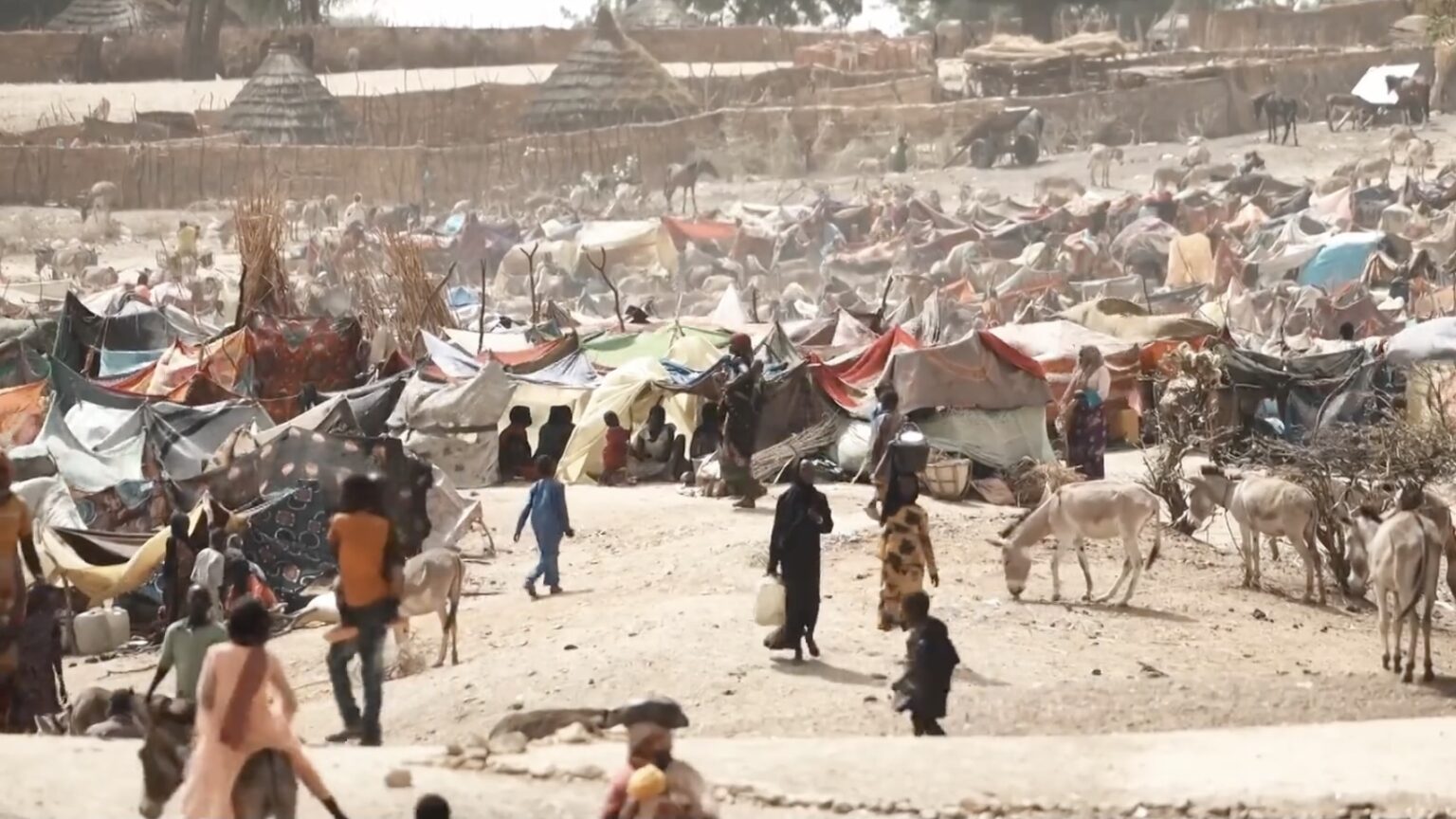
    Sudanese refugees in Chad. Over 10 million people have been forcibly displaced in over a year of war in Sudan. Photo: Wikimedia commons

    Famine looms in Sudan, forcing people to flee to neighboring countries, while talks between warring parties and a UN envoy are still under way in Geneva

    The governments of 15 Arab and African countries issued a statement on Tuesday, July 16, expressing their deep concerns regarding the escalating food security crisis in war-torn Sudan. The countries included the United Arab Emirates, Jordan, Morocco, Mauritania, Chad, Comoros, Guinea-Bissau, Benin, Seychelles, Senegal, Kenya, Sierra Leone, Uganda, Mozambique and Nigeria.

    The statement came as a reaction to the Integrated Food Security Phase Classification (IPC) report, which was published on June 27, 2024. “Fourteen months into the conflict, Sudan is facing the worst levels of acute food insecurity ever recorded by the IPC in the country,” the report said, pointing out that more than half of the population in Sudan have experienced severe hunger, which makes Sudan the world’s largest hunger crisis. 

    The number of starving people is estimated at 25.6 million people, with 14 areas at the risk of famine including greater Darfur, Greater Kordofan, Al Jazirah and some hotspots in Sudan’s capital Khartoum. Many starving Sudanese people have been reportedly fleeing Sudan to seek asylum in neighboring countries due to hunger and looming famine. 

    The countries who issued the statement expressed their concern about what was set out in the IPC report as a “stark and rapid deterioration” in food security, and its dire impact on the safety and well-being of civilians, including thousands of children, who have suffered from severe acute malnutrition.

    According to a Save the Children report published on July 7, due to the war in Sudan 30% of children are acutely malnourished and 20% of the overall population is facing extreme food shortages.

    Since the conflict between the Sudanese Armed Forces (SAF) and the Rapid Support Forces (RSF) began in April 2023, the destruction caused by the fighting resulted in a sharp decrease in the agricultural production, and therefore a hike in food prices and food scarcity. The hunger crisis in Sudan has been further deepened by the severe restriction on the movement of food and aid convoys due to the ongoing conflict.

    Reiterating the United Nations Security Council’s call from June of 2023, the countries urged all the parties to the conflict to ensure immediate, safe, and unrestricted access to civilian humanitarian aid. They also called on the conflicting parties to adhere to international humanitarian law and to comply with all relevant Security Council resolutions. 

    The statement also addressed foreign actors requesting them to stop providing armed or material support to the parties involved in the conflict and to refrain from any action which may ignite the conflict. Furthermore, it called on the international community for immediate and coordinated international response to tackle the urgent needs of the affected Sudanese population. The countries encouraged the international community to scale up the humanitarian assistance it provides, and to support the IPC recommendations for increasing nutrition interventions, restoring productive systems and improving data collection.

    While the humanitarian situation in Sudan is constantly deteriorating, talks between a United Nations envoy and delegations from both conflicting parties continue in Geneva this week. The talks started last Thursday, focusing on humanitarian aid and the protection of civilians.

    There were a few “promising signs” emerging from Monday’s talks in Geneva, the Representative of the World Health Organization (WHO) in Sudan, Shible Sahbani commented. “Let’s wait for the coming hours and days, and we hope that if we don’t get a ceasefire, at least we can get the protection of civilians and the opening of humanitarian corridors,” he added. 

    Original article by Aseel Saleh republished from peoples dispatch under a Creative Commons Attribution-ShareAlike 4.0 (CC BY-SA) license.

  • Israel’s latest massacres have exacerbated the crisis in Gaza’s healthcare facilities

    Spread the love

    Original article by Ana Vračar republished from peoples dispatch under a Creative Commons Attribution-ShareAlike 4.0 (CC BY-SA) license.
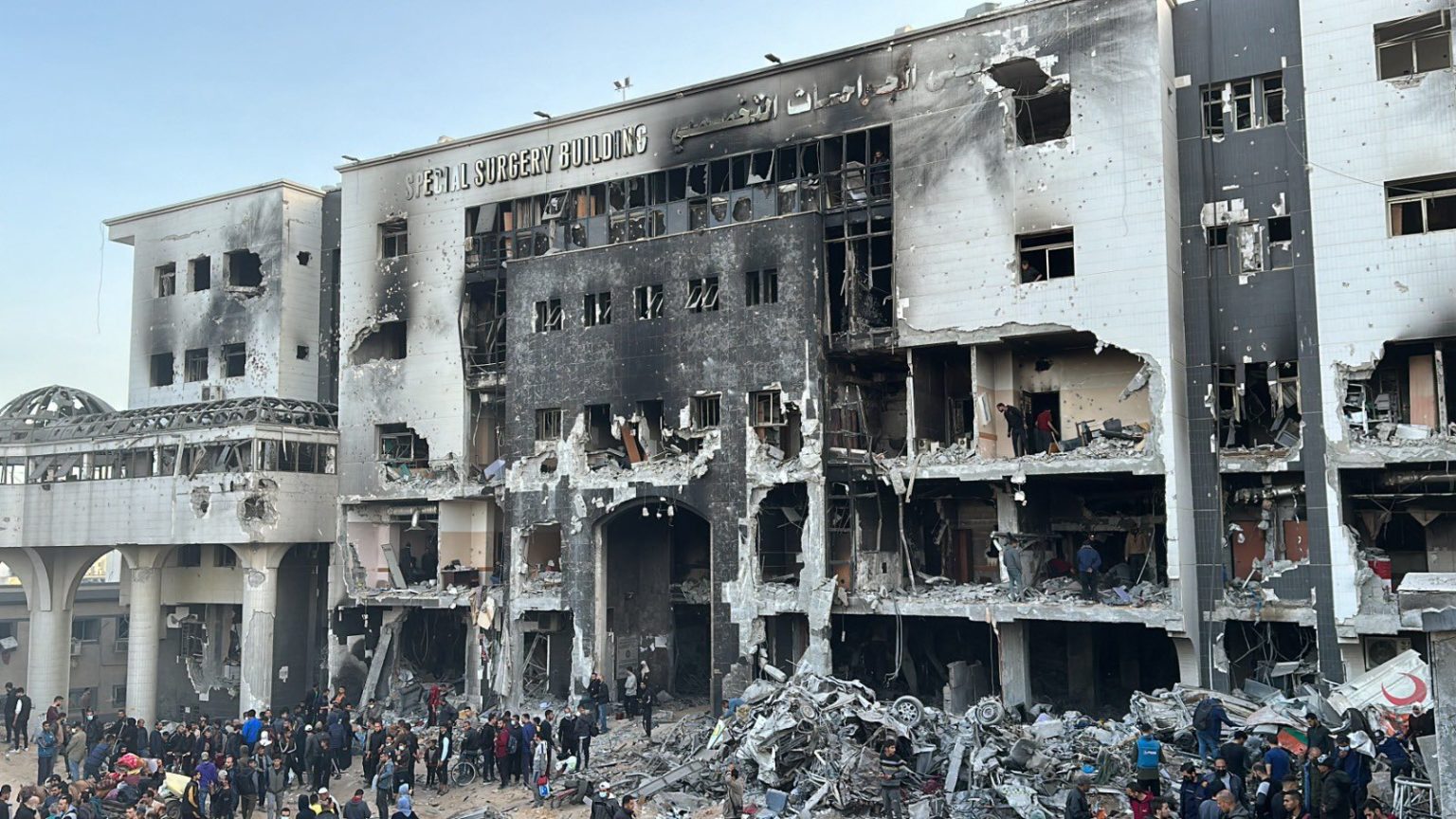
    Al Shifa Hospital after a two-week Israeli siege, April 2024.

    Gaza’s hospitals, already overwhelmed, are struggling with an influx of casualties following brutal attacks on refugee camps. Sugary drinks have become the most affordable food as aid delivery obstructions persist

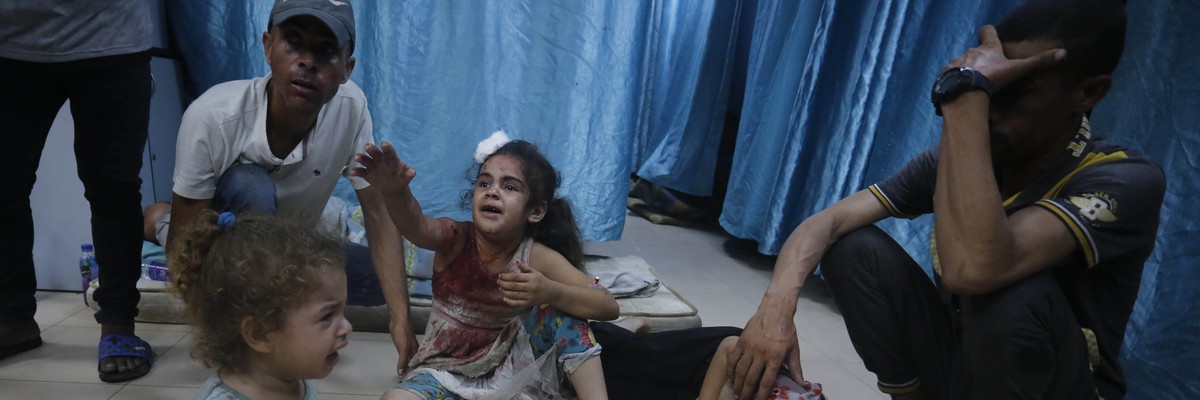
    Brutal attacks by the Israeli Occupation Forces (IOF) have, yet again, intensified pressure on the few functional hospitals in the Gaza Strip. Health workers at Nasser Medical Complex reported harrowing scenes following attacks on Khan Younis on July 13, where they received over 100 new casualties despite the hospital already operating over capacity.

    “At one point, you had people in the hallway moaning in pain,” said Amy Kit-Mei Low, Doctors Without Borders (MSF) project medical referent. “Even though they had [wound] dressings, the dressings were oozing blood. […] the hospital was trying to cope, but it can barely cope with normal cases.”

    UNRWA representative Scott Anderson described the scene at the hospital, stressing the lack of beds, disinfectants, and electricity to run ventilation at Nasser. “I saw toddlers who are double amputees, children paralyzed and unable to receive treatment, and others separated from their parents. I also saw mothers and fathers who were unsure if their children were alive,” Anderson said.

    In addition to the relentless IOF attacks, including those targeting healthcare facilities that have killed 2.5% of Gaza’s health workforce since October 7, hospitals are also struggling with aid delivery restrictions imposed by Israel. Since the beginning of the war on Gaza, and especially since the beginning of May, the flow of essential goods to hospitals has been drastically reduced. Hospitals are particularly burdened by the ban on certain medications, including anesthetics, strong painkillers, and even diabetes drugs. Recently, a consortium of organizations providing health care in Gaza warned of a shortage of antibiotics safe for pregnant and breastfeeding women due to the blockade.

    Read more: Israel continues its efforts to undermine UNRWA

    Despite having hundreds of kilos of aid ready for dispatch, supplies are blocked from reaching hospitals and health centers. The blockade is reinforcing severe food shortages, exacerbating the health crisis. Reports indicate that Israel prioritizes commercial trucks over humanitarian ones at crossings, leaving people with limited and extremely expensive food options. The same consortium of organizations reported that sugary drinks are currently the most affordable food in Gaza.

    Famine is spreading rapidly across all regions of Gaza. Nearly 10,000 pregnant and breastfeeding women are on the verge of famine, and 7,000 are already living in famine conditions, according to the United Nations. As a result, more babies are being born preterm and underweight.

    Read more: UN experts say, there is already famine in Gaza

    For older children, mental health persists as a critical issue. The Gaza Community Mental Health Program (GCMHP) recently estimated that half a million children in Gaza require mental health support. Displaced families report that children are struggling with bedwetting, continuous shaking, violent outbursts, and likely PTSD due to living under constant attack.

    GCMHP warns that mental health is also deteriorating among adults, as needs in Gaza far exceed available services. Many people are becoming emotionally numb as a consequence of not being able to receive any mental health support, and are disillusioned by the international community’s failure to halt the genocide perpetrated by Israel. GCMHP teams have encountered people in a state of emotional stagnation, recounting the loss of entire families as if it were a routine event. While scaling up mental health services is crucial for addressing this, GCMHP and other organizations insist that this will not be enough without a ceasefire.

    ​​People’s Health Dispatch is a fortnightly bulletin published by the People’s Health Movement and Peoples Dispatch. For more articles and to subscribe to People’s Health Dispatch, click here.

    Original article by Ana Vračar republished from peoples dispatch under a Creative Commons Attribution-ShareAlike 4.0 (CC BY-SA) license.

  • Greens propose that equalising capital gains tax could pay for lifting the two-child benefit cap many times

    Spread the love
    Image of Keir Starmer and a poor child.
    Zionist Keir ‘Kid Starver’ Starmer. Image thanks to The Skwawkbox.

    Capital Gains Tax is paid at a lower rate than Income Tax so that unearned income is taxed less than earned income: rich people who don’t even have to watch it coming in are taxed less than the hard-working families that we hear so much about. The Green Party argues that hundreds of thousands of children can be lifted out of poverty if Labour committed to equalising capital gains tax to pay to scrap the two-child benefit cap. The four newly elected Green MPs, will be proposing a reasoned amendment to the King’s Speech that includes the scrapping of the two-child benefit.  

    The IFS estimates that the cap will impact 2.63 million children by the end of this parliament and that scrapping the cap would cost in the region of £3.4billion – before taking into account the wider economic impact of poverty on health and welfare systems. In their recent manifesto, the Green Party estimated that making Capital Gains Tax fairer could raise £16bn, a move that would impact less than 2% of income taxpayers. This £16bn figure is supported by research conducted by Arun Advani, a tax expert at the University of Warwick, who estimated that equalising CGT and income tax rates would raise £16.7bn a year.

    Green MPs will today propose an amendment to propose the government scraps the two-child benefit cap. Green Party Co-Leader and Bristol Central MP Carla Denyer, speaking on behalf of the Green group of MPs said

    “I think Labour are serious when they say they want to change the country. But the change they are looking to achieve will always be hamstrung for as long as they limit their own potential to raise additional revenue to spend on frontline services. The impact of this approach is already clear. Every day we have children going hungry, unable to concentrate in school or struggling to ascertain even the very basics – this is the real world impact of child poverty.  And so today we’re offering Labour a positive fairer taxation that will allow them to redistribute money from some of the wealthiest to some of the very poorest. This is a political choice that they must now make.”   

    Green Party Work, Employment and Social Security Spokesperson, Prof Catherine Rowett said, “Scrapping the two-child benefit cap is a moral and practical imperative. It is a matter of social, economic and racial justice. Today we have outlined one way that Labour, if they had the political will, could choose to help millions of children. And child poverty blights lives and costs millions, as generations of children are condemned to lower achievement and a lifetime of poor health. When they say there is no money, remember this is a political choice – they’re ignoring the political, social and economic costs of keeping children in poverty.”  

  • World ‘Cannot Remain Silent in the Face of This Endless Massacre,’ Says Lula

    Spread the love

    Original article by JAKE JOHNSON republished from Common Dreams under Creative Commons (CC BY-NC-ND 3.0). 

    Palestinians, including children, wounded by Israeli airstrikes are pictured at Al-Aqsa Martyr’s Hospital in Deir al-Balah, Gaza on July 15, 2024. 
    (Photo: Ashraf Amra/Anadolu via Getty Images)

    “The Israeli government continues to sabotage the peace process and the cease-fire in the Middle East,” said the Brazilian president after a deadly weekend of bombings.

    Brazilian President Luiz Inácio Lula da Silva condemned the Israeli government on Sunday after bombings across the Gaza Strip killed more than 140 people and wounded hundreds more, adding to the gruesome death toll and worsening the enclave’s humanitarian emergency as cease-fire talks continue.

    Lula specifically decried Israel’s Saturday attack on al-Mawasi, an overcrowded town on Gaza’s southern coast to which Israeli forces previously ordered Palestinians to flee. Israel claimed to be targeting Hamas’ military chief in the attack; Hamas said Sunday that the commander was not harmed in the strikes, which killed around 90 people—including children.

    The New York Times reported that one of the Israeli strikes “exploded directly in front of two vehicles clearly marked as belonging to Gaza Civil Defense, an emergency services agency, spraying them with shrapnel and apparently killing and injuring first responders.”

    Lula said Sunday that “the Israeli government continues to sabotage the peace process and the cease-fire [negotiations] in the Middle East” with its relentless bombing campaign in the Gaza Strip, which has been utterly decimated by Israel’s assault—a military campaign fueled by billions of dollars of weaponry from the United States, Germany, and other major countries.

    “It is appalling that they continue to collectively punish the Palestinian people,” Brazil’s president said. “There have already been tens of thousands of deaths in consecutive attacks since last year, many of them in delimited humanitarian zones that should be protected.”

    “We, the political leaders of the democratic world, cannot remain silent in the face of this endless massacre,” he added. “The cease-fire and peace in the region need to be priorities on the international agenda. All our efforts must be focused on securing the release of the Israeli hostages and ending the attacks on the Gaza Strip.”

    Brazil under Lula’s leadership has backed the South Africa-led genocide case against Israel at the International Court of Justice and been a vocal supporter of a permanent cease-fire and an end to Israel’s decadeslong occupation of Palestinian territory.

    “I saw toddlers who are double amputees, children paralyzed and unable to receive treatment, and others separated from their parents.”

    Israel’s weekend onslaught in Gaza came as “Hamas and Israel appear closer to some form of a Gaza cease-fire deal than at any time since the brief truce last November,” as Drop Site‘s Jeremy Scahill put it late last week.

    “Hamas is considering an approach that would not immediately require a commitment to a permanent cease-fire and complete withdrawal of Israeli forces from Gaza as a precondition to move forward in phased negotiations,” Scahill reported. “This would mark a significant concession by Hamas, which has long insisted any agreement must include defined steps that end Israel’s war. Instead, Hamas officials said, they would consider entering an initial six-week phase that would include a conditional cease-fire and an exchange of Israeli civilian and female soldiers held in Gaza in return for the release of hundreds of Palestinians.”

    The Associated Press reported Sunday that Hamas—which led the deadly October 7 attack on Israel—intends to keep participating in cease-fire talks in the face of incessant Israeli airstrikes, though a spokesperson for the group said there is “no doubt that the horrific massacres will impact any efforts in the negotiations.”

    Scott Anderson, the United Nations’ deputy humanitarian coordinator, described the appalling scene he witnessed over the weekend at Nasser Hospital, the overwhelmed medical facility in southern Gaza where many wounded Palestinians were taken following Israel’s Saturday attack on al-Mawasi.

    “With not enough beds, hygiene equipment, sheeting, or scrubs, many patients were treated on the ground without disinfectants,” said Anderson. “Ventilation systems were switched off due to a lack of electricity and fuel, and the air was filled with the smell of blood. I saw toddlers who are double amputees, children paralyzed and unable to receive treatment, and others separated from their parents. I also saw mothers and fathers who were unsure if their children were alive. Parents told me in despair that they had moved into the ‘so-called humanitarian zone’ in the hope that their children would be safe there.”

    “Impediments to humanitarian operations prevent us from supporting people anywhere near the scale necessary,” Anderson continued. “Civilians must be protected at all times. We urgently need a cease-fire, the release of all remaining hostages, respite for the people of Gaza, and a meaningful opportunity for healing to begin.”

    Original article by JAKE JOHNSON republished from Common Dreams under Creative Commons (CC BY-NC-ND 3.0). 

    Zionist Keir Starmer is quoted "I support Zionism without qualification." He's asked whether that means that he supports Zionism under all circumstances, whatever Zionists do.
    Zionist Keir Starmer is quoted “I support Zionism without qualification.” He’s asked whether that means that he supports Zionism under all circumstances, whatever Zionists do.
  • ‘Shocking’: UNRWA Chief Decries Israel’s Destruction of Agency Headquarters

    Spread the love

    Original article by JAKE JOHNSON republished from Common Dreams under Creative Commons (CC BY-NC-ND 3.0). 

    A United Nations worker surveys destruction caused by an Israeli airstrike on the Nuseirat camp in the central Gaza Strip on July 15, 2024. (Photo: Majdi Fathi/NurPhoto via Getty Images)

    “Another episode in the blatant disregard of international humanitarian law,” said the commissioner-general of the United Nations agency for Palestinian refugees.

    The head of the United Nations agency for Palestinian refugees expressed horror Monday over Israeli forces’ destruction of the key aid organization’s headquarters in Gaza City, which Israel’s military recently attacked and left in ruins.

    “Shocking,” Philippe Lazzarini, commissioner-general of the U.N. Relief and Works Agency for Palestine Refugees in the Near East (UNRWA), wrote in a social media post, which included photos of the bombed-out headquarters complex.

    “UNRWA headquarters in Gaza, turned into a battlefield and now flattened,” Lazzarini continued. “Another episode in the blatant disregard of international humanitarian law. United Nations facilities must be protected at all times. They must never be used for military or fighting purposes. Every war has rules. Gaza is no exception.”

    Photos of UNRWA’s destroyed headquarters emerged following a deadly weekend of Israeli bombings across the Gaza Strip that were overshadowed in the media by the attempted assassination of former U.S. President Donald Trump on Saturday.

    More than 140 people were killed and hundreds more were wounded on Saturday and Sunday, including in Israeli airstrikes on a so-called “safe zone” in southern Gaza.

    Tamara Alrifai, UNRWA’s head of external relations, told Al Jazeera on Monday that “the last week has been one of the deadliest weeks in Gaza since the war started.”

    “The images coming out of the UNRWA headquarters are really shocking,” said Alrifai. “What I saw today in the footage is unrecognizable.”

    UNRWA and its infrastructure in Gaza, including schools, have been major targets of Israel’s far-right government since its latest assault on the Palestinian enclave began in October following a deadly Hamas-led attack. Israeli officials have repeatedly claimed—without providing evidence—that a significant number of UNRWA employees are members of terrorist organizations.

    Nearly 200 UNRWA facilities in Gaza, most of which have been serving as shelters for displaced people, have been damaged during Israel’s war on the besieged territory, Alrifai noted Monday. Around 500 people have been killed in Israeli attacks on UNRWA facilities, according to Alrifai.

    “It speaks volumes to the blatant disregard for international humanitarian law,” she said.

    Israel’s aerial and ground attacks on Gaza continued Monday as much of the territory’s population is facing catastrophic levels of hunger. Since the start of the assault, Israel has dramatically restricted the flow of humanitarian assistance to the Gaza Strip, depriving Palestinians of food, medicine, clean water, and other basic necessities.

    Reuters reported that Israel “struck the southern and central Gaza Strip” on Monday and “blew up several homes.”

    “Medical officials said they recovered 10 bodies of Palestinians killed by Israeli fire in eastern areas of the city, some of which had already begun to decompose,” the news agency added. “The military also stepped up aerial and tank shelling in central Gaza in the al-Bureij and al-Maghazi historic refugee camps. Health officials said five Palestinians were killed in an Israeli air strike on a house in Maghazi camp.”

    Original article by JAKE JOHNSON republished from Common Dreams under Creative Commons (CC BY-NC-ND 3.0). 

    Zionist Keir Starmer is quoted "I support Zionism without qualification." He's asked whether that means that he supports Zionism under all circumstances, whatever Zionists do.
    Zionist Keir Starmer is quoted “I support Zionism without qualification.” He’s asked whether that means that he supports Zionism under all circumstances, whatever Zionists do.