The move will save families up to £1,000 per child over the two-year period, according to analysis by City Hall.
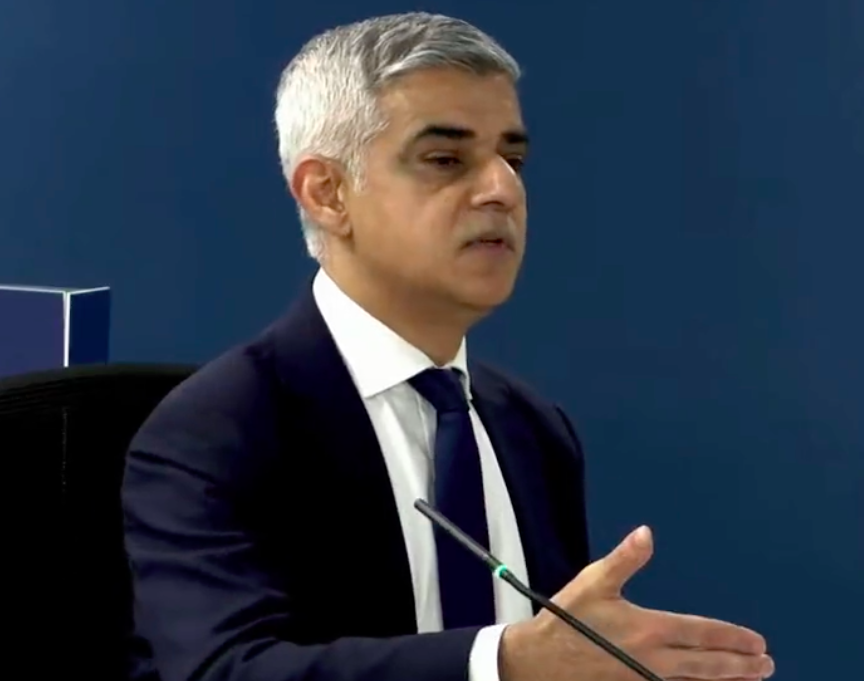
The Mayor of London is being praised for rolling out free school meals for another year for primary school pupils across the city, as families grapple with the cost of living crisis with millions more pushed into poverty under Tory austerity and soaring bills.
Sadiq Khan put forward plans worth £140 million to extend universal provision of hot meals for the 2024/25 school year, after piloting the approach in state-funded primaries across the Capital from September.
The move will save families up to £1,000 per child over the two-year period, according to analysis by City Hall.
The Mayor of London said that he was ‘thrilled to extend this lifeline for another year’.
Research from the Child Poverty Action Group, shows that nationally, around 800,000 children who are living in poverty are currently missing out on free school meals, due to restrictions on eligibility.
Khan’s scheme provides lunches for every other London pupil not already covered under government funding.
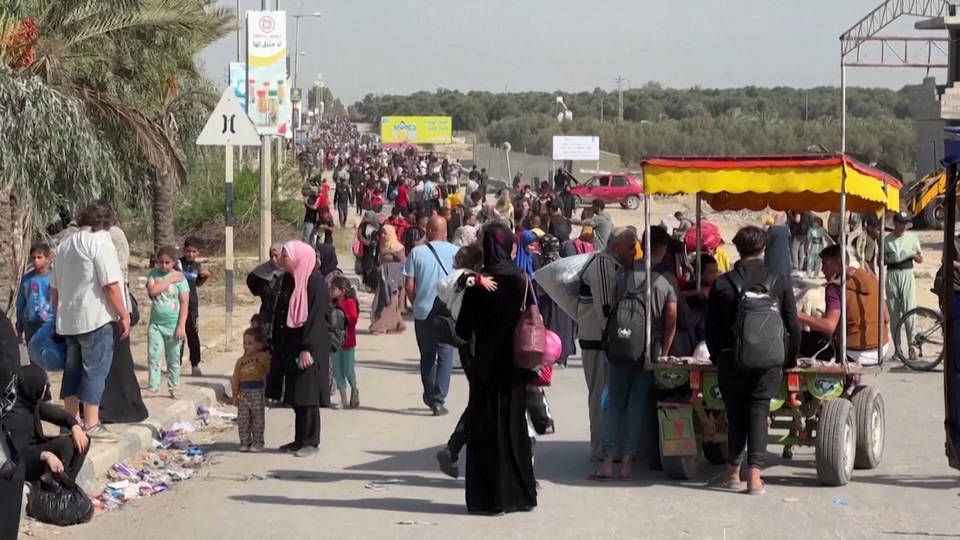
Dozens of Palestinians have been killed in a 41st consecutive day of unrelenting attacks by Israel’s military on the Gaza Strip. Overnight, Israel’s Air Force dropped leaflets over parts of the southern city of Khan Younis ordering people to leave their homes and shelters “for their own safety.” Many are being expelled for a second time, after Israel last month ordered more than a million Palestinians to leave their homes in northern Gaza.
On Wednesday, Israeli authorities allowed the first shipment of fuel into the Gaza Strip since early October. The U.N.’s agency for Palestinian refugees, UNRWA, says just over 6,000 gallons of fuel — half a tanker truck’s worth — was allowed to cross from Egypt. That’s just 9% of what UNRWA says is needed daily to sustain life-saving activities. Israel is not allowing the fuel to be used in hospitals or to power water and sewage pumps.
The U.N.’s human rights chief, Volker Türk, said outbreaks of disease and hunger in Gaza now appear “inevitable.” His remarks came amid a worsening humanitarian catastrophe at Gaza’s largest hospital, the Al-Shifa medical complex, which is being occupied by Israel’s army. Thousands of patients, medical workers and displaced Palestinians remain trapped inside the hospital and unable to leave. Medical workers report Israeli attacks have severely damaged Al-Shifa’s main surgery building, and about 200 people were reportedly blindfolded by Israeli troops and led away to interrogations. The World Health Organization’s Dr. Tedros Adhanom Ghebreyesus says 26 out of Gaza’s 36 hospitals are now closed due to damage from Israeli strikes or because they have run out of fuel.
Tedros Adhanom Ghebreyesus: “Israel’s military incursion into Al-Shifa Hospital in Gaza City is totally unacceptable. Hospitals are not battlegrounds.”
Millions of people in the UK are unable to meet their most basic physical needs: to stay warm, dry, clean and fed. This is known as destitution.
Recent analysis from charity the Joseph Rowntree Foundation (JRF) estimates that around 3.8 million people in the UK experienced destitution at some point during 2022. This is a 61% increase since 2019 – and a 148% increase since 2017.
Living in destitution means severe material hardship. The JRF’s 2022 survey of crisis service users in the UK found that 61% reported going without food in the month before the survey. They often put other needs, such as accommodation or feeding their children, over feeding themselves.
About half of the people surveyed were not able to afford adequate clothing and basic necessities, such as toiletries. Many talked of living in insecure and low quality housing.
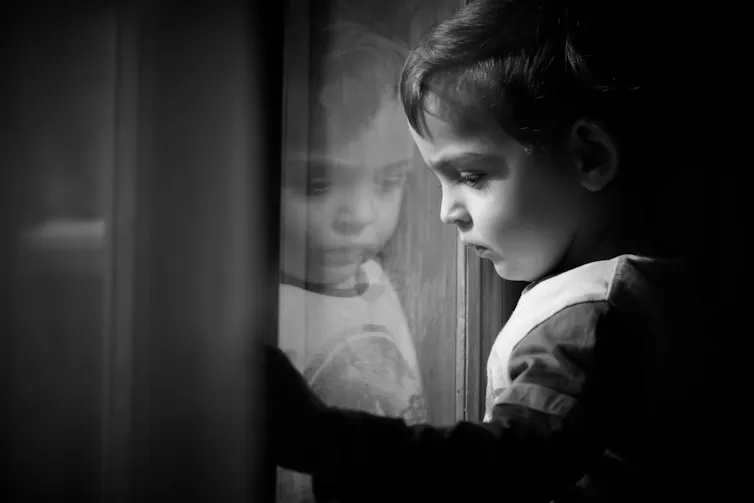
One particularly alarming aspect of these most recent statistics is the steep increase in the number of children living in destitution. In 2022, around 1 million children lived in households who experienced destitution. This is an increase of 88% since the charity’s corresponding 2019 study, and a 186% increase since the 2017 study.
Impact on children
Destitution causes immediate suffering. But for these children, this experience of hardship at a young age will have consequences that last throughout their lives. There is little doubt that both money and environment (housing quality, parental mental health and nutrition, for example) contribute to inequalities in child development. Both of these factors are affected by living in destitution.
When children reach the age of three, stark differences are already evident between those who live in poverty and those who do not. Children from more well-off families have better developed skills in both cognitive tasks, such as understanding basic concepts like colours, letters, numbers and shapes, as well as socio-emotional skills, such as self-control and resilience.
Other factors that are important in shaping children’s skills include housing quality and parental mental health.
Inequalities so early in life can compound and widen over time. These differences between the disadvantaged and the better off can be seen in educational achievement, health and criminal activity.
These types of inequalities were also exacerbated by the pandemic. While pupils everywhere missed out on education, these learning losses were not equally distributed: young people from lower socio-economic background fell further behind.
Despite large increases in funding for the early-year sectors, socio-economic inequalities in child development have not generally narrowed, particularly in recent years.
And now, the sharp increase in the share of children living in destitution does not paint a optimistic picture for the future.
Making a difference
However, many of these issues can be changed by government policy. For example, we know that being hungry at school makes it difficult to concentrate and learn. Measures that address hunger, then, can make a difference. Analysis of a trial of breakfast clubs in English schools, which offered free breakfast to disadvantaged children aged six and seven, found that the free breakfast lead to the equivalent of two months’ extra progress in reading, writing and maths across the course of one year.
Research has shown that many early interventions – such as high quality childcare and education programmes for at-risk children – can have long-lasting positive effects. From an economic perspective, acting early to lift children out of poverty and improve their home and learning environments can be a cost-effective way of helping in the long run, both for individuals as well as wider society.
Another option would be reform of the benefits system to make sure families have enough money to live. In the 2022 Joseph Rowntree Foundation survey of people who used crisis centres, 72% did receive social security benefits – but were still destitute.
This rise in children living in household experiencing destitution must be given serious attention. Successive governmentsclaim to hold upward social mobility as a important goal – that is, the ability of people to move up the economic and social ladder, regardless of their own upbringing and social background. Reducing destitution would not only benefit children right now, but would help them throughout life.