One year of Israel’s war on Gaza’s health system

Spread the love

Original article by Ana Vračar republished from peoples dispatch under a Creative Commons Attribution-ShareAlike 4.0 (CC BY-SA) license.
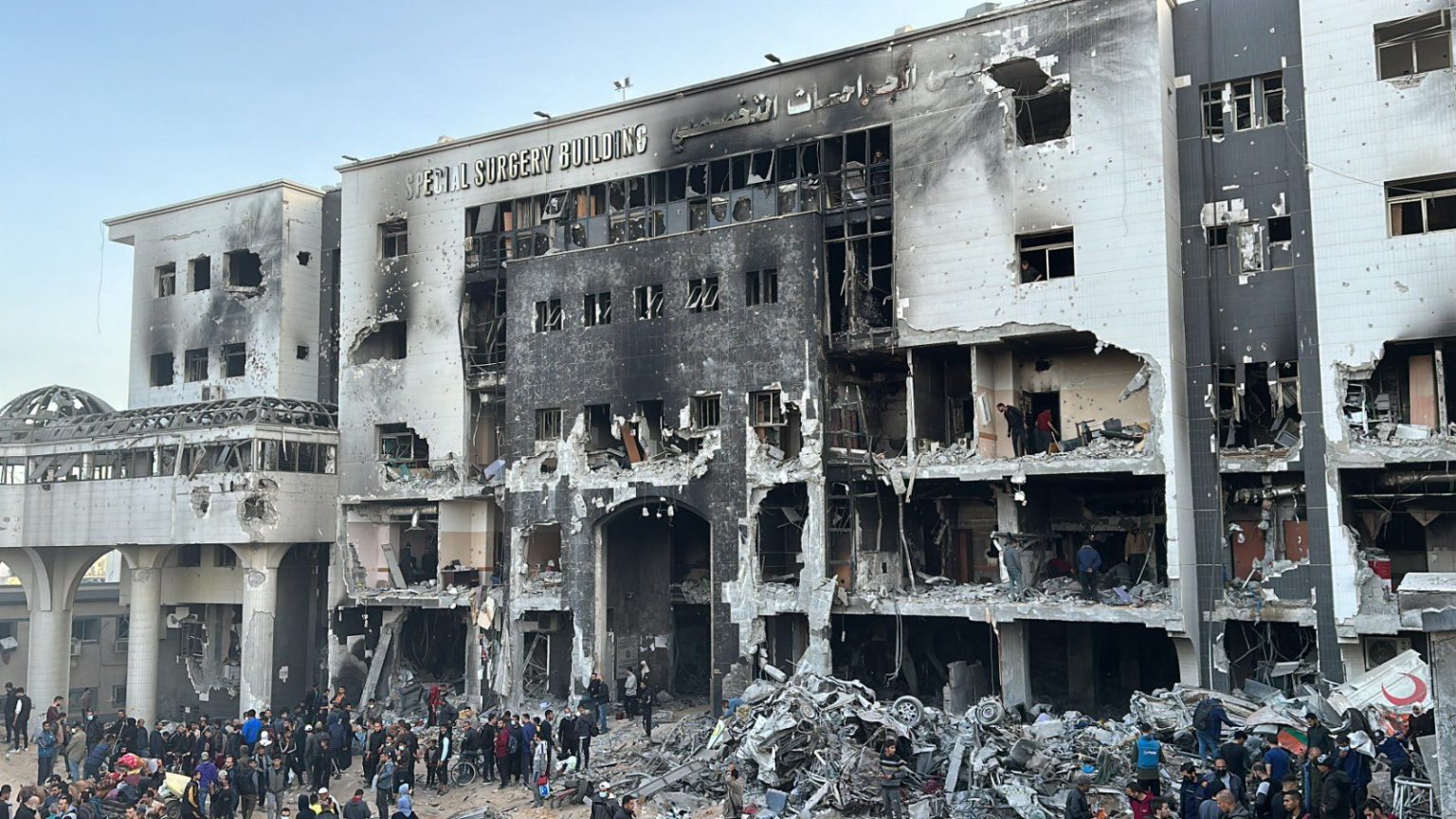
Al Shifa Hospital after a two-week Israeli siege, April 2024.

After a year of unrelenting Israeli attacks, Gaza’s healthcare system lies in ruins. Yet, health workers continue their steadfast efforts to provide care

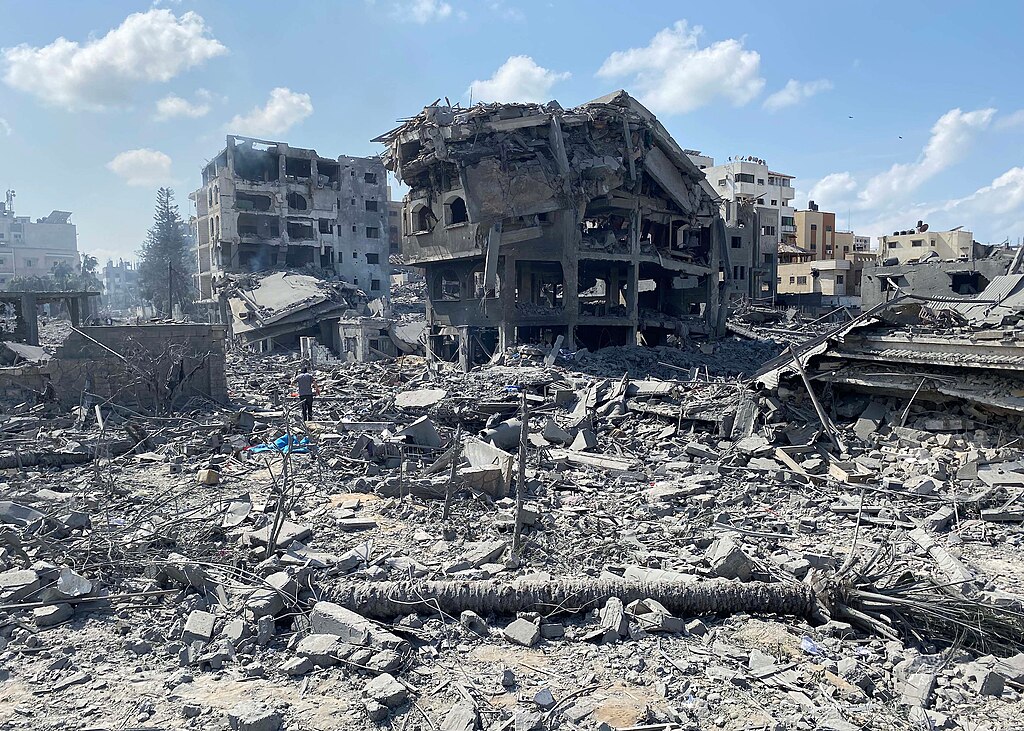
After a year of relentless bombardment, Gaza’s healthcare system lies in ruins, and the warnings Palestinians have issued for decades are being confirmed: hospitals, clinics, and health workers are deliberate targets of Israeli Occupation Forces (IOF). What was once a systematic campaign against healthcare has escalated into an all-out assault, resulting in the decimation of most of the infrastructure. As the one-year anniversary of this ongoing genocide approached, Israeli forces continued their siege on northern Gaza, intensifying their attacks on health facilities.

Three hospitals still barely functioning in the area — including Al-Awda and Kamal Adwan — were just issued so-called “evacuation orders,” which, as pointed out by Medical Aid for Palestinians (MAP), are nothing short of forced removal orders. Kamal Adwan’s director, Hussam Abu Safiya, stressed the impossible position the hospital faced soon after the orders were issued. With critically injured children in their care, no means to safely evacuate them, and no other facility able to accept them, health staff are faced with the excruciating decision of either abandoning their patients or staying at the risk of their own lives.

“In between the constant bombardment occurring on the hospital and the surrounding buildings, the healthcare staff have become terrorized to a point where they are struggling to do their jobs,” Abu Safiya stated. Their situation is similar to that faced in other health facilities. Around the same time Abu Safiya recorded his statement, medics in Al-Awda were also issued forced removal orders—for the third time in a year—says Matilde De Cooman from Viva Salud, a Belgian organization partnering with the hospital.

The risks health workers face are all too real. Israeli forces have systematically besieged and destroyed healthcare infrastructure over the past 12 months, including Gaza’s largest hospitals, such as Al-Shifa. Under the pretext of searching for resistance fighters, the IOF raided operating rooms, destroyed medical equipment, and abducted patients and medical staff. In the aftermath of the attacks, civil defense teams discovered seven mass graves containing 520 bodies on hospital grounds.

Read more: Remember the Palestinian doctors killed by Israel

Over 1,000 health workers have been killed since the genocide began, with hundreds more kidnapped and held in Israeli concentration camps. Those who have been released share harrowing accounts of torture: shackles, electric shocks, broken limbs, and sexual violence. Families of those still missing, like Dr. Ahmed Muhanna, the director of Al-Awda Hospital in northern Gaza, are not granted any official information about prisoners’ conditions. Dr. Muhanna was abducted in December 2023. Since then, no official word has emerged about his mental or physical condition, says De Cooman.

International campaigns to secure the release of Dr. Muhanna and other abducted health workers are ongoing, though disturbing reports of their treatment in Israeli camps have sparked both outrage and fear about what the future holds. Despite these developments, Gaza’s health workers remain resolute, refusing to abandon their patients. Their unwavering commitmentsumud (steadfastness), has been lauded by global health workers since the beginning of the genocide. Operating without pay or essential supplies due to the blockade, they have continued their work tirelessly since last October. “Even with Dr. Muhanna’s fate in mind, Al-Awda’s operating director, Mohammed Salha, never once considered abandoning the hospital,” says De Cooman. “As long as there is even one person left in the area, the hospital will remain open and stand by its people.”

Read more: Fears of flooding add to Gaza’s health crisis

The health suffering in Gaza extends far beyond the hospitals. With more than two million people pushed into poverty by the attacks and the aid blockade, food and clean water are scarce. Recent reports reveal that 35% of children and 40% of pregnant or breastfeeding women in Gaza are surviving on just one type of food. Malnutrition is rampant, and the World Health Organization (WHO) has documented cases of children starving to death as humanitarian aid convoys are blocked at Israeli-controlled checkpoints.

Hunger and disease go hand-in-hand, as the WHO continues to repeat. Gaza is witnessing a hard-to-imagine surge in infectious diseases—respiratory infections, skin diseases, Hepatitis A, and even polio, a virus that had been eradicated decades ago but resurfaced, paralyzing a 10-month-old child. The shortage of basic hygiene products, such as soap and clean water, only adds to the crisis.

The spread of diseases is anything but collateral damage: it is a calculated weapon in Israel’s strategy. As Jewish Voice for Peace remarked, in prisons, “skin diseases are a method of punishment. Prison authorities are allowing scabies to spread by restricting Palestinian inmates’ water supply and depriving them of clean clothes and medical care.”

Read more: Palestinian health workers in Gaza describe torture and abuse in Israeli detention

On top of it all, Gaza’s whole environment is contaminated with asbestos dust raised by the constant bombardment. An estimated 800,000 tonnes of debris in Gaza could contain asbestos particles, as reported by Al Jazeera, raising the prospect of soaring cancer rates in the coming years.

“After a year, the occupying forces continue to practice an unprecedented genocide in modern history. What is particularly painful is the disgusting silence of the international community,” stated Hani Serag, Co-Chair of the People’s Health Movement. “We hope that activists across the world will continue expressing their solidarity to Palestinian people and refuse the barbaric practices of the occupying forces.”

Israeli crimes against healthcare are not confined to Gaza. In less than a month, Israeli forces have killed over 100 health workers in Lebanon and forced the closure of dozens of health centers. The destruction unfolding in Gaza serves as a blueprint for the invasion of Lebanon, raising the question: how long will the West look away while Israel continues its rampage?

People’s Health Dispatch is a fortnightly bulletin published by the People’s Health Movement and Peoples Dispatch. For more articles and subscription to People’s Health Dispatch, click here.

Original article by Ana Vračar republished from peoples dispatch under a Creative Commons Attribution-ShareAlike 4.0 (CC BY-SA) license.
Continue ReadingOne year of Israel’s war on Gaza’s health system

‘No End to Hell’: Disaster Spirals as Israeli Assault Traps 400,000 in Northern Gaza

Spread the love

Original article by Jake Johnson republished from Common Dreams under Creative Commons (CC BY-NC-ND 3.0). 

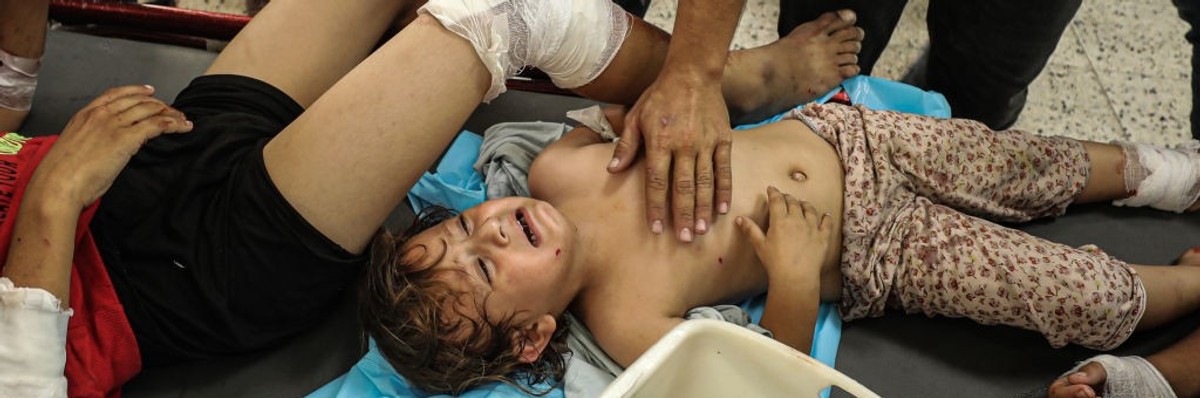
A Palestinian child who was wounded in an Israeli attack on Jabalia, Gaza receives treatment on October 9, 2024. (Photo: Dawoud Abo Alkas/Anadolu via Getty Images)

“The latest move to forcefully and violently push thousands of people from northern Gaza to the south is turning the north into a lifeless desert,” warned one aid worker.

The head of the United Nations agency for Palestinian refugees said Wednesday that at least 400,000 people are trapped in northern Gaza as Israeli forces ramp up their bombardment of the area, killing dozens and intensifying an already nightmarish humanitarian emergency.

“Northern Gaza: no end to hell,” Philippe Lazzarini, commissioner-general of the United Nations Relief and Works Agency for Palestine Refugees in the Near East (UNRWA), wrote on social media. “Recent evacuation orders from the Israeli authorities are forcing people to flee again and again, especially from Jabalia Camp. Many are refusing because they know too well that no place anywhere in Gaza is safe.”

Lazzarini said some UNRWA shelters and services in northern Gaza have been forced to shut down amid the Israeli assault “for the first time since the war began” over a year ago.

“With almost no basic supplies available, hunger is spreading and deepening again,” said Lazzarini. “This recent military operation also threatens the implementation of the second phase of the polio vaccination campaign for children. Children are as ever, the first and most to suffer. They deserve so much better, they deserve a cease-fire now, they deserve a future.”

Zero humanitarian aid has entered besieged northern Gaza in over a week, according to aid groups and the U.N., and incessant Israeli attacks have rendered the area’s hospitals largely inaccessible. Israeli forces have ordered the area’s hospitals to evacuate, endangering patients and healthcare workers.

The director of northern Gaza’s Kamal Adwan Hospital told Drop Site on Wednesday that he is refusing to comply with Israel’s evacuation order.

“As long as there are patients, I won’t leave,” said Dr. Hossam Abu Safia. “I’ve been here since the genocide started, and I am determined to continue helping my people.”

At least dozens of people have reportedly been killed in the Israeli military’s latest assault on northern Gaza, but emergency workers on the ground have said it’s impossible to determine the true toll given Israel’s ongoing bombing campaign, which has targeted the Jabalia refugee camp and other areas in the region.

Citing Gaza’s Civil Defense, The Associated Press reported Wednesday that an Israeli airstrike “hit a family home” in the Jabalia camp, “killing at least nine people”—including two women and two children.

“Footage shared by the Civil Defense showed first responders recovering dead bodies and body parts from under the rubble,” the outlet noted.

On Monday—the one-year anniversary of the Hamas-led October 7 attack and the beginning of Israel’s devastating response—Israeli forces ordered swaths of famine-stricken northern Gaza to evacuate, instructing residents to move south to Deir Al-Balah and Al-Mawasi, badly overcrowded so-called “humanitarian zones” that the Israeli military has repeatedly bombed.

After ordering most of northern Gaza to evacuate, Israeli forces fired on Palestinians desperately trying to flee.

Médecins Sans Frontières (MSF), also known as Doctors Without Borders, said Tuesday that Israel’s forced displacement of Palestinians is “turning the north of Gaza into an unlivable wasteland, effectively emptying out the whole north of the strip of Palestinian life.”

“The latest move to forcefully and violently push thousands of people from northern Gaza to the south is turning the north into a lifeless desert, while aggravating the situation in the south, where more than one million people have already been squeezed into a small portion of the Gaza Strip and live in deplorable conditions,” said Sarah Vuylsteke, an MSF project coordinator in Gaza.

“Access to water, healthcare, and safety is already almost nonexistent, and the thought of more people fitting into this space is impossible to imagine,” Vuylsteke added. “People have been subjected to endless displacement and relentless bombing for the past 12 months. Enough is enough, this must stop now.”

In a joint statement on Wednesday, a coalition of 18 aid groups warned that the ongoing Israeli assault “will worsen the already dire humanitarian situation in the north” and has already “prevented international and national humanitarian organizations from carrying out already very limited lifesaving aid operations.”

“The new orders have obstructed humanitarian actors from providing necessities such as health services, clean water, food, and nutrition services, taking away the remaining lifelines for the civilian population,” reads the statement signed by Oxfam, ActionAid, Islamic Relief, and more than a dozen other groups.

“Nowhere in Gaza is safe for civilians,” the coalition said. “Given the severity of the needs, humanitarian actors must be able to distribute aid and continue their work, without threat of displacement or military operations. The undersigned aid organizations urge all parties to the conflict to uphold their obligations to protect civilians and facilitate unhindered humanitarian access at all times.”

Original article by Jake Johnson republished from Common Dreams under Creative Commons (CC BY-NC-ND 3.0). 

Continue Reading‘No End to Hell’: Disaster Spirals as Israeli Assault Traps 400,000 in Northern Gaza

Israeli attacks in northern Gaza kills dozens as death toll surpasses 42,000

Spread the love

https://morningstaronline.co.uk/article/israel-attacks-northern-gaza-kills-dozens-death-toll-surpasses-42000

Mourners gather around bodies of Palestinians killed in the Israeli bombardment of the Gaza Strip, outside the hospital morgue in Deir al-Balah on October 9, 2024

ISRAEL’S latest operations in northern Gaza have killed dozens and threaten to shut down hospitals, Palestinian officials and residents said today.

The Gaza Health Ministry revealed that the death toll from one year of attacks has risen over 42,000, with women and children making up over half the dead.

Israel has issued an evacuation order to people in northern Gaza, but Philippe Lazzarini from the United Nations Relief and Works Agency for Palestine Refugees (UNRWA) said that 400,000 people are trapped there where there is “no end to hell.”

“Hunger is spreading,” he warned.

An air strike in Jabaliya refugee camp early today killed at least nine people, including two women and two children, according to Al-Ahly Hospital in Gaza City which received the bodies.

Strikes in central Gaza killed another nine people, including three children, according to Al-Aqsa Martyrs Hospital in Deir al-Balah.

https://morningstaronline.co.uk/article/israel-attacks-northern-gaza-kills-dozens-death-toll-surpasses-42000

Continue ReadingIsraeli attacks in northern Gaza kills dozens as death toll surpasses 42,000

Israel’s siege now blocks 83% of food aid reaching Gaza, new data reveals

Spread the love
Palestinians inspect the damage following an Israeli airstrike on the El-Remal aera in Gaza City on October 9, 2023. Israel continued to battle Hamas fighters on October 10 and massed tens of thousands of troops and heavy armour around the Gaza Strip after vowing a massive blow over the Palestinian militants' surprise attack. Photo by Naaman Omar apaimages. licensed under the Creative Commons Attribution-Share Alike 3.0 Unported license.
Palestinians inspect the damage following an Israeli airstrike on the El-Remal aera in Gaza City on October 9, 2023. Israel continued to battle Hamas fighters on October 10 and massed tens of thousands of troops and heavy armour around the Gaza Strip after vowing a massive blow over the Palestinian militants’ surprise attack. Photo by Naaman Omar apaimages. licensed under the Creative Commons Attribution-Share Alike 3.0 Unported license.

15 aid organisations demand international pressure for an immediate ceasefire, arms embargo, and end to Israel’s systematic aid obstruction

New data has revealed the scale of aid obstruction, and the consequential drastic fall in aid entering Gaza. This is driving a humanitarian disaster, with the entire population of Gaza facing hunger and disease, and almost half a million at risk of starvation

While Israeli military attacks on Gaza intensify, lifesaving food, medicine, medical supplies, fuel, and tents have been systematically blocked from entering for almost a year. 

Data analysis by organisations working in Gaza has found that as a consequence of the Israeli government’s obstruction of aid: 

  • 83% of required food aid does not make it into Gaza, up from 34% in 2023.This reduction means people in Gaza have gone from having an average of two meals a day to just one meal every other day. An estimated 50,000 children aged between 6-59 months urgently require treatment for malnutrition by the end of the year.
  • 65% of the insulin required and half of the required blood supply are not available in Gaza. 
  • Availability of hygiene items has dropped to 15% of the amount available in September 2023. One million women are now going without the hygiene supplies they need. 
  • Only around 1,500 hospital beds in Gaza remain operational, compared to around 3,500 beds in 2023 which was already well below sufficient to meet the needs of a population of more than 2 million people. By comparison, cities of similar size, such as Chicago and Paris average 5 to 8 times more beds than in Gaza. 
  • 1.87 million people are in need of shelter with at least 60% of homes destroyed or damaged (January 2024). Yet tents for around just 25,000 people have entered Gaza since May 2024.

record low average of 69 aid trucks per day entered Gaza in August 2024, compared to 500 per working day last year; which was already not enough to meet people’s needs. In August more than 1 million people did not receive any food rations in southern and central Gaza. 

Now, only 17 out of 36 hospitals remain partially functional. Critical infrastructure such as water networks, sanitation facilities and bread mills have been razed to the ground. 

While humanitarian needs are ever increasing, agencies have detailed six main ways their life-saving aid is systematically obstructed on a daily basis.

These include the denial of safety, with more than 40,000 Palestinians and nearly 300 aid workers killed since last October; the sharp tightening of a 17-year blockade to a full siege, which prevents aid from entering Gaza; delays and denials which restrict the movement of aid around Gaza; tightly restrictive and unpredictable control of imports; the destruction of public infrastructure such as schools and hospitals; and the displacement of civilians and humanitarian workers (witnessed again in recent displacement orders from the so-called “humanitarian zone” in Deir el-Balah.)

Ahead of the UN General Assembly in New York this week, aid agencies are calling on governments to demand Israel end aid obstruction and to:

  • Secure an immediate and lasting ceasefire in Gaza. 
  • Implement an arms embargo and end the export of weapons and military equipment that risk being used in violations of international humanitarian law and human rights law. 
  • Demand compliance with the International Court of Justice’s findings and recommendations, an end to the Israeli government’s siege of Gaza, and heed the call of the ICJ in its advisory opinion to end the occupation of Palestinian territory. 

Jolien Veldwijik, CARE Country Director in the West Bank and Gaza, said:

“The situation was intolerable long before last October’s escalation and is beyond catastrophic now. Over 11 months, we have reached shocking levels of conflict, displacement, disease and hunger. Yet, aid is still not getting in, and humanitarian workers are risking their lives to do their jobs while attacks and violations of international law intensify. Aid, which is urgently required for 2.2 million people at risk of dying in the coming weeks and months, should never be politicised. We demand an immediate and sustained ceasefire, and the free flow of humanitarian aid into and throughout Gaza.” 

Amjad Al Shawa, the director of the Palestinian NGOs Network (PNGO), an umbrella organisation of 30 Palestinian NGOs and a partner of ActionAid, said:

 “There is a shortage of all humanitarian items. We are overwhelmed [with] these needs and [these] urgent requirements…People [are] starving due to the shortage of aid…100% of the population depend on humanitarian aid…It’s the worst situation that we [witnessed] during …. the Israel war in Gaza.”

  1. CARE International
  2. Save the Children
  3. ActionAid
  4. Christian Aid
  5. War Child
  6. Islamic Relief
  7. HelpAge International 
  8. American Friends Service Committee
  9. Oxfam
  10. DanChurchAid
  11. Norwegian Church Aid
  12. Mennonite Central Committee
  13. Danish Refugee Council
  14. Norwegian Refugee Council
  15. KinderUSA

Continue ReadingIsrael’s siege now blocks 83% of food aid reaching Gaza, new data reveals

Analysis Details How Israel’s Gaza Siege ‘Is Driving a Humanitarian Disaster’

Spread the love

Original article by Brett Wilkins republished from Common Dreams under Creative Commons (CC BY-NC-ND 3.0). 

Trucks carrying aid supplies to Gaza are seen at the Karem Abu Salem border crossing on February 17, 2024. (Photo: Abed Rahim Khatib/Anadolu via Getty Images)

“Over 11 months, we have reached shocking levels of conflict, displacement, disease, and hunger,” said one campaigner.

Israel’s “complete siege” of the Gaza Strip “is driving a humanitarian disaster,” with 83% of required food aid failing to enter the embattled enclave, where the entire population is facing hunger and disease and almost half a million Palestinians are at risk of starvation, an analysis published Monday revealed.starvation,

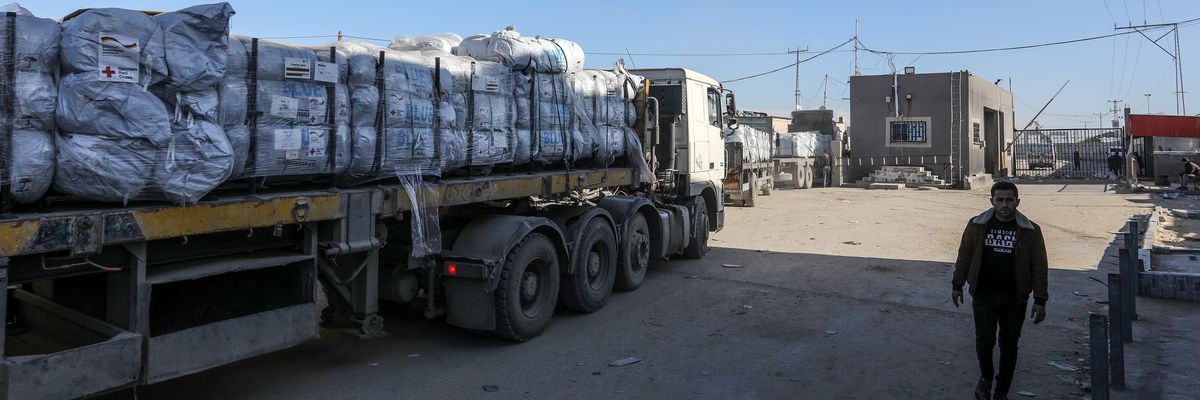
The analysis by 15 international aid organizations noted that a record-low average of just 69 aid trucks are entering the Gaza Strip each day, compared with an already insufficient 500 daily truckloads a year ago. Additionally, the groups said that “only 17 out of Gaza’s 36 hospitals remain partially functional, and “critical infrastructure such as water networks, sanitation facilities, and bread mills” have been destroyed.

“While Israeli military attacks on Gaza intensify, lifesaving food, medicine, medical supplies, fuel, and tents have been systematically blocked from entering for almost a year,” the aid groups—which include ActionAid, American Friends Service Committee, CARE International, Christian Aid, Islamic Aid, Oxfam International, and Save the Children—said in a statement.

The publication highlights numerous ways that “lifesaving aid is systematically obstructed on a daily basis” in Gaza.

“These include the denial of safety, with more than 40,000 Palestinians and nearly 300 aid workers killed since last October; the sharp tightening of a 17-year blockade to a full siege, which prevents aid from entering Gaza; delays and denials which restrict the movement of aid around Gaza; tightly restrictive and unpredictable control of imports; the destruction of public infrastructure such as schools and hospitals; and the displacement of civilians and humanitarian workers,” the analysis’ authors wrote.

Zenab, a 33-year-old Palestinian woman pregnant with her second child, said that her pregnancy “has been the hardest time of my life.”

“It was also hard to get the medication I needed,” she continued. Sometimes I had to walk for hours to different pharmacies, hospitals, and health centers to see if anyone had my medication available. For me as a pregnant woman, there has been hardly any healthcare support, no proper hygiene and sanitation, and no suitable mattress to sleep on.”

“I was suffering from complications during my pregnancy,” Zenab added. “We didn’t have enough water to drink, and had hardly any food. The doctors again told me that my pregnancy was in danger.”

Among the report’s key findings:

  • 83% of required food aid doesn’t make it into Gaza, up from 34% in 2023;
  • An estimated 50,000 children aged between 6-59 months urgently require treatment for malnutrition by the end of the year;
  • 65% of the insulin required and half of the required blood supply are not available in Gaza;
  • Availability of hygiene items has dropped to 15% of the amount available in September 2023, with 1 million women now going without the hygiene supplies they need;
  • Only around 1,500 hospital beds in Gaza remain operational, compared to around 3,500 beds in 2023 which was already well below sufficient to meet the needs of a population of more than 2 million people; and
  • 1.87 million people are in need of shelter with at least 60% of homes destroyed or damaged as of January, yet tents for around just 25,000 people have entered Gaza since May 2024.

“There is a shortage of all humanitarian items. We are overwhelmed [with] these needs and [these] urgent requirements,” said Amjad Al Shawa, director of the Palestinian NGOs Network. “People [are] starving due to the shortage of aid. One hundred percent of the population depends on humanitarian aid.”

The authors of the analysis—which was released ahead of this week’s United Nations General Assembly in New York—are demanding that Israel secure an immediate and lasting cease-fire. They are also calling for an arms embargo on Israel and Israeli compliance with the recent International Court of Justice (ICJ) advisory opinion, which found that the occupation of Palestine is an illegal form of apartheid that must end immediately. Israel is on trial for genocide in a separate ICJ case.

“The situation was intolerable long before last October’s escalation and is beyond catastrophic now.”

“The situation was intolerable long before last October’s escalation and is beyond catastrophic now,” CARE International West Bank and Gaza country director Jolien Veldwijik said in a statement. “Over 11 months, we have reached shocking levels of conflict, displacement, disease, and hunger.”

That includes dozens of children who have died due to malnutrition, dehydration, and lack of adequate medical care.

“Aid is still not getting in, and humanitarian workers are risking their lives to do their jobs while attacks and violations of international law intensify,” Veldwijik added. “Aid, which is urgently required for 2.2 million people at risk of dying in the coming weeks and months, should never be politicized. We demand an immediate and sustained cease-fire, and the free flow of humanitarian aid into and throughout Gaza.”

Original article by Brett Wilkins republished from Common Dreams under Creative Commons (CC BY-NC-ND 3.0). 

Continue ReadingAnalysis Details How Israel’s Gaza Siege ‘Is Driving a Humanitarian Disaster’