Tag: hunger

  • One year of Milei: hunger and resistance

    Spread the love

    Original article by Pablo Meriguet republished from peoples dispatch under a Creative Commons Attribution-ShareAlike 4.0 (CC BY-SA) license.

    Argentine President Javier Milei. Photo: Milei / X

    At one year of Milei’s presidency, we take stock of his economic policies, the impact on the working class, and perspectives for the future

    A year ago, what many considered unthinkable a couple of years ago happened: Javier Milei, the eccentric libertarian economist who was almost compulsively invited by the media to increase ratings, was sworn in as president of Argentina. Gone was the neoliberal and demure option of the Argentine right wing that managed to triumph with Mauricio Macri, as well as the always latent Peronist option, which could not overcome the obstacles that the government of Alberto Fernandez left in its path.

    Milei became a celebrated outsider who confronted his adversaries directly (often insulting and humiliating them), promising to lift the country out of poverty through a radical liberalization of the economy, with bold, or absurd, proposals to dollarize the economy and the eliminate the central bank. Indeed, his style as a guest on television programs was not too far removed from his actions as president of Argentina.

    Erika Giménez, social communicator and a journalist with ARG Medios told Peoples Dispatch that Milei arrived with a promise that he was going to “break the State” and end all state social programs and aid to impoverished sectors because they are “a waste of money that prevents Argentina’s resurgence as a great country.” Did he succeed in his grandiose vision? What did the “lion” of Argentina manage to accomplish in his first year of governance?

    Falling inflation and rising poverty

    One of Milei’s main obsessions was to reduce inflation at all costs. After several setbacks that ended up increasing inflation, in October it was recorded that inflation had risen by 2.3%, the lowest percentage in several years. To achieve this, he had no qualms about firing tens of thousands of state workers (almost 36,000 according to the National Institute of Statistics and Census) and aggressively cutting the number of ministries (from 18 to 9). Social programs that had been a bulwark of the Republic for several decades were eliminated. Of the state workers who survived the layoffs, almost all have seen a reduction in their purchasing power as a consequence of the economic retrenchment policies.

    Similarly, despite the fact that year-on-year inflation stood at 193%, retirees’ pensions only increased by 105%, meaning that retired elderly workers today, thanks to Milei’s government, can buy fewer things than before, because their pension was not adjusted for inflation. This incongruity provoked several mobilizations by retirees.

    Likewise, Milei has refused to increase the public education budget so as not to affect the much-desired “fiscal balance”, which has led to a decline in the quality of education in the country. Also, hospital workers (doctors, nurses, and others) have reported that they have lost almost 104% of their purchasing power, which puts the country’s health care system at risk.

    During Milei’s administration, poverty increased. According to data from the Observatory of the Argentine Social Debt of the Catholic University of Argentina, in the second half of 2023, 41.9% of the inhabitants of the South American country were poor, while, in the first half of 2024, the figure reached 52.9%. Similarly, private consumption fell by 9.8%.

    In addition, according to Erica Giménez, inflation is currently decreasing, among other things, because people are not able to buy goods, which causes stores to reduce prices to sell more. This can lead to a distorted view of inflation as the only measure of economic improvement because, in reality, it is actually masking a more serious problem: people have lost purchasing power. “[The decrease in inflation] is quite a deceptive figure because people cannot consume because their salary is not enough to do so…The macroeconomic meters improve (as Milei wants) by not generating fiscal deficit, but this happens at the cost of the increase of unemployment, of retirement pensions, of the most needy, and of so many who are nowadays below the poverty line,” Giménez affirms.

    One of the cases which shone a light on the ridiculous nature of his radical adjustment was what happened with the social kitchens, soup kitchens run oftentimes by left and progressive community organizations. Milei’s government and his Minister of Human Capital Sandra Pettovello were involved in a serious controversy when it was shown that, while the kitchens were subjected to serious budget cuts as part of the fiscal adjustment which made it impossible to feed the increasing number of hungry people, several tons of food were rotting in State warehouses. The Argentine courts had to order the immediate distribution of the food.

    The defunding of university education

    Probably the most important internal challenge faced by Milei during this first year was the massive demonstrations of students, professors, and university workers against the Executive’s refusal to increase the university budget. The Legislature had passed a law allowing for the budget increase, but Milei refused to comply with it and vetoed it completely. This generated a lot of discontent among Argentine students who took to the streets against the austerity policies of Milei’s libertarian government, and even went so far as to take over dozens of universities and hold university classes in the streets as a form of protest.

    Giménez says in this regard, “Those who lose the most with [the veto of the law] are the professors of public universities who today are within the poor population…According to several surveys, the majority of the population agrees with the public character of health, education, etc., and of the Argentine State as protector and benefactor of these areas, so Mieli’s discourse against universities did not work because…public university education has great popular support.”

    International relations

    Milei has repeatedly stated that Argentina was, at some point in its history, the first world power. Therefore, what his government should do, according to his rhetoric, is to turn it into a great world power again. This “messianic” bet is synthesized in the often-used slogan “Make Argentina Great Again”, which evidently is reminiscent of Trump’s MAGA. “But Argentina never had a geopolitical weight that Milei says it once had as a first power,” Giménez tells us.

    During the vote on whether or not to lift the US economic blockade of Cuba, Argentina voted along with almost all countries to call for an end to the blockade. In retaliation, Milei fired his foreign minister for this vote. According to Giménez, Argentina has historically voted against the blockade and supported other progressive international issues because it hopes that other countries will support its intention to recover the Malvinas Islands, which are currently under British control. Milei however, has wanted to assume a Trumpist international logic, says Giménez, and has assumed a fight against LGBTIQ+ groups and measures to curb climate change, while manifesting strong support in favor of Israel and the United States.

    That is why the discussions at the UN on the prevention of violence against girls and women, the ceasefire in Palestine, and the withdrawal of the Argentine delegation from COP29, show the rejection of certain political causes which the president himself calls “the Cultural Battle”. As part of this battle he has attacked journalists, politicians and intellectuals, and founded the new think tank Faro Foundation whose objective is to: “To promote the ideas of economic liberalism and the historical values of Argentine culture, in order to contribute to the economic and social development of our Nation, fighting the cultural battle.” This confrontational attitude has led him to have several impasses with regional political leaders such as Colombian President Gustavo Petro.

    But this confrontational attitude, more typical of a media commentator, has its limits. For example, Giménez reminds us that after announcing before his presidency that he would never negotiate with China because they are communists, Milei eventually had to negotiate with Beijing because of the importance of that country for the Argentine economy.

    Read: Milei and Trump: allies in the battle for “freedom” and to combat “wokeism”

    Likewise, Milei has openly positioned himself behind the geopolitical line of US President-elect Donald Trump, attending several select meetings organized by the US president. Milei, according to Giménez, intends to position himself, unsuccessfully, as an international leader who will inspire a global political transformation. Perhaps that is why he has made more trips abroad than within the country, especially to the United States. Likewise, his closeness with the International Monetary Fund stands out.

    His revisionist ideological struggle

    Milei has also had a significant impact on the ideological dispute in Argentina with his bizarre and aggressive speeches.

    For example, he said that he would be delighted to drive the last nail in the coffin of former Peronist president Cristina Fernández, who is the subject of a judicial process that seeks to disqualify her politically and put her in prison.

    He has also questioned the figures of human rights organizations on the number of dead and disappeared caused by the last military dictatorship in Argentina. His vice-president, Victoria Villarruel, is a descendant of a military family and before his death, had paid a personal visit to Rafael Videla, head of the last military dictatorship. Milei wants Argentines to forget the dictatorship as if it’s something that can be left behind, says Giménez. In order for Milei to advance his political and ideological project to “make Argentina great again”, he must break certain established and socially consensual notions “and generate other discourses closer to capitalism, revisionist, discuss the importance of the university and public employment…and that includes relativizing one of the darkest periods of Argentine history such as the military dictatorship,” Giménez explains.

    Milei has vigorously gone after his ambitious goals of economic liberalization and austerity, without asking “at what cost?” The significant rejection of such policies by broad sectors of the population and the deepening of social conflict will continue and intensify. Milei still has three years left in his presidency, so the future of his government is uncertain. What is certain is that he does not seem to be slowing down his pretensions, but rather accelerating the radical neoliberal program that he defends to the hilt.

    Original article by Pablo Meriguet republished from peoples dispatch under a Creative Commons Attribution-ShareAlike 4.0 (CC BY-SA) license.
  • UN Says Food Availability Has Hit ‘All-Time Low’ in Gaza as Forced Famine Takes Hold

    Spread the love

    Original article by Jake Johnson republished from Common Dreams under Creative Commons (CC BY-NC-ND 3.0). 

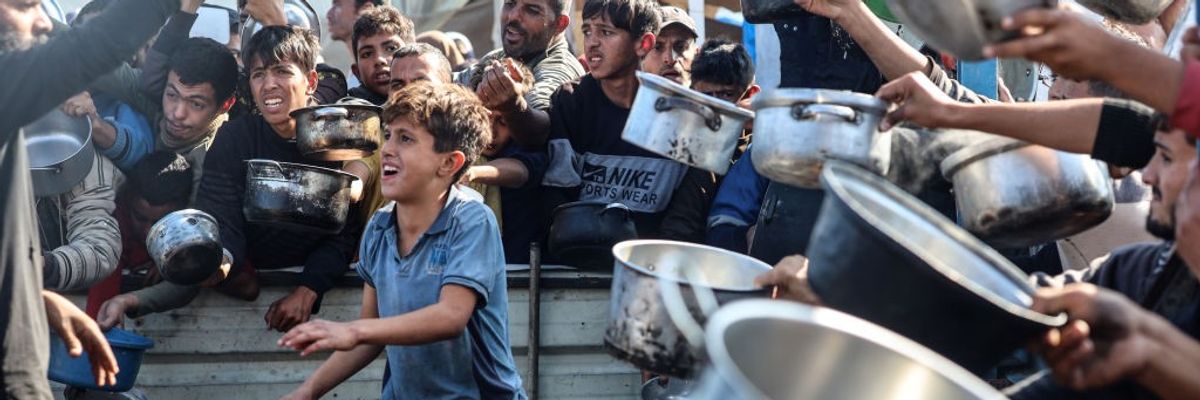
    Palestinians gather to receive food cooked by a charity kitchen in Khan Younis, Gaza on December 1, 2024.  (Photo: Majdi Fathi/NurPhoto via Getty Images)

    “The window of opportunity to deliver assistance is now, today, not tomorrow,” said the deputy director-general of the United Nations Food and Agriculture Organization.

    A top official at the United Nations Food and Agriculture Organization said Monday that food availability across Gaza has reached “an all-time low” under Israel’s suffocating blockade, which has heavily restricted the entrance of lifesaving humanitarian assistance and plunged the enclave into famine.

    “Food supply has sharply deteriorated,” FAO Deputy Director-General Beth Bechdol said at a conference in Cairo, Egypt. “The window of opportunity to deliver assistance is now, today, not tomorrow. Food, medicine, and fuel are self-evident priorities, but we must also prioritize the ability to grow food locally where it is needed most to ensure survival.”

    Bechdol’s grim assessment came weeks after the Biden administration pressured Israel to improve conditions on the ground in Gaza, which has been utterly devastated by more than a year of bombing.

    Aid organizations say that far from improving, Gaza’s humanitarian crisis has only gotten worse since the Biden administration threatened to cut off the supply of U.S. weapons to Israel. Last month, the U.S. effectively dropped its pressure campaign by concluding that Israel was not violating international law by blocking American humanitarian assistance.

    Most of Gaza’s population is currently experiencing “high levels of food insecurity,” according to the latest Integrated Food Security Phase Classification (IPC) figures, and the “risk of Famine persists across the whole Gaza Strip.”

    “The catastrophe in Gaza is nothing short of a complete breakdown of our common humanity. The nightmare must stop.”

    In addition to obstructing aid deliveries, Israeli forces have decimated Gaza’s agricultural infrastructure and cropland, repeatedly attacked aid workers, and facilitated the looting of humanitarian supplies, fueling desperation among Gaza’s starving population. Last week, as The Associated Pressreported, “two children and a woman were crushed to death… as a crowd of Palestinians pushed to get bread at a bakery in the Gaza Strip amid a worsening food crisis in the war-ravaged territory.”

    Amina Mohammed, the U.N.’s deputy secretary-general, said at the Cairo conference on Monday that “conditions for Palestinians in Gaza are appalling and apocalyptic,” with malnutrition running “rampant” and famine “imminent.”

    “In the past four months alone, nearly 19,000 children were hospitalized due to acute malnutrition—nearly double the cases in the first half of the year,” Mohammed said. “In the face of the gigantic needs, humanitarian aid is—outrageously—being blocked. This flies in the face of the clear requirements under international humanitarian law to respect and to protect civilians and to ensure their essential needs are met.”

    “It’s past time for an immediate cease-fire and the immediate and unconditional release of all hostages,” she added. “The catastrophe in Gaza is nothing short of a complete breakdown of our common humanity. The nightmare must stop. We cannot continue to look away.”

    Original article by Jake Johnson republished from Common Dreams under Creative Commons (CC BY-NC-ND 3.0). 

    Experiencing issues with this image not appearing. I suspect because it's so critical of Zionist Keir Starmer's support of and complicity in Israel's genocides.
    Genocide denier and Current UK Prime Minister Keir Starmer is quoted that he supports Zionism without qualification. He also confirms that UK air force support has been essential in Israel’s mass-murdering genocide. Includes URLs https://www.declassifieduk.org/keir-starmers-100-spy-flights-over-gaza-in-support-of-israel/ and https://youtu.be/O74hZCKKdpA
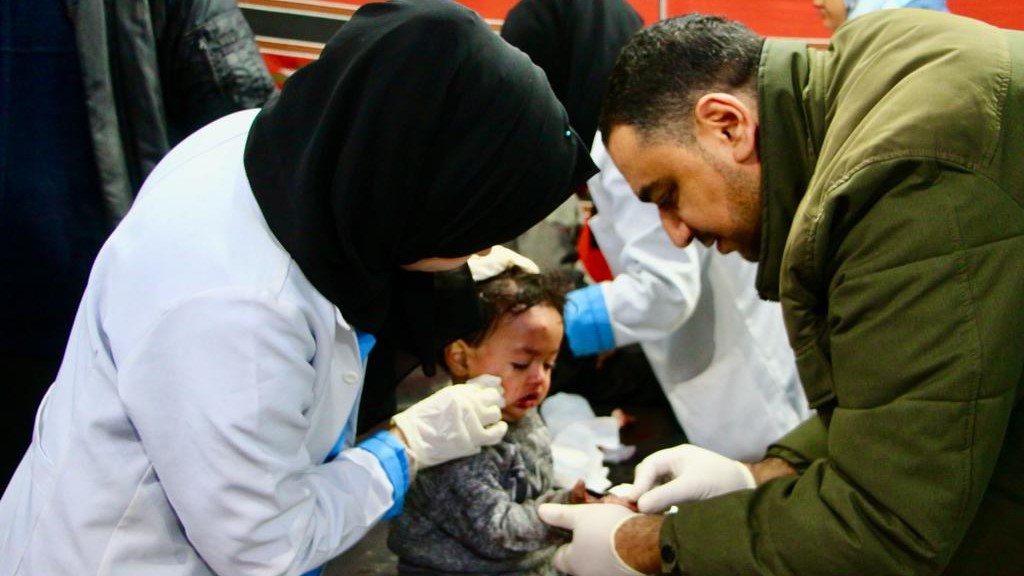
    Genocide denying UK Foreign Secretary David Lammy says that UK is suspending 30 of 350 arms licences to Israel. He also confirms the UK government's support for Israel's Gaza genocide and the UK government and military's active participation in genocide.
    Genocide denying UK Foreign Secretary David Lammy says that UK is suspending 30 of 350 arms licences to Israel. He also confirms the UK government’s support for Israel’s Gaza genocide and the UK government and military’s active participation in genocide.
  • Children in Gaza face health crisis and hunger amid continued Israeli attacks

    Spread the love

    Original article by Ana Vračar republished from peoples dispatch under a Creative Commons Attribution-ShareAlike 4.0 (CC BY-SA) license.
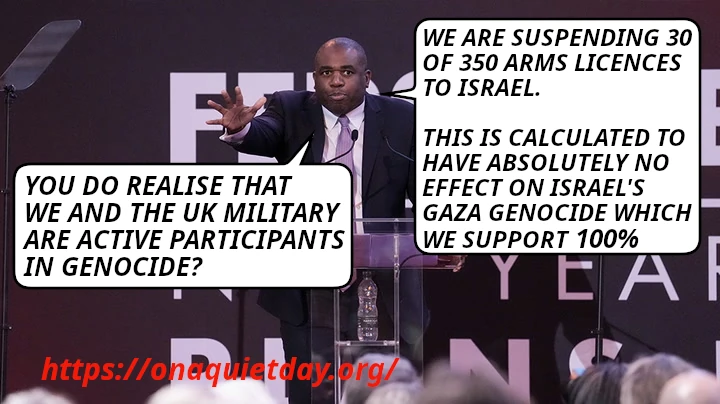
    Photo: AWDA Health & Community Association

    Children in Gaza are becoming increasingly hungry and unhealthy as the destruction of healthcare infrastructure exacerbates the spread of infectious diseases

    The health of children in Gaza is deteriorating rapidly. Between June and October 2024, Nasser Medical Complex treated 300 children daily for infectious diseases like diarrhea, respiratory issues, and skin infections. These numbers are compounded by Israeli attacks on hospitals, obstruction of humanitarian aid, and the dire living conditions faced by more than one million forcibly displaced Palestinians preparing for winter in makeshift shelters.

    The situation is equally critical regarding hunger and related conditions among children. Since the beginning of the year, nearly 33,000 children have been admitted for acute malnutrition. Health workers have also reported a rise in cases of nutritional edema, a condition that causes swelling due to a lack of protein intake. For over a year, children in the Gaza Strip have struggled to access adequate nutrition because of Israel’s blockades.

    Child health experts have repeatedly warned about the long-term consequences of hunger for generations growing up in Palestine. Now, they caution that “there are clear signs of a rapidly worsening nutritional situation across Gaza, with two-thirds of the children admitted for outpatient treatment of acute malnutrition since the beginning of 2024 recorded in the past five months alone.”

    Read more: UN experts say, there is already famine in Gaza

    Many child health services have been damaged or destroyed by Israeli attacks, leaving families reliant on sparse healthcare facilities still providing support. Doctors Without Borders (MSF) recently reported that, as a result, many mothers are forced to undertake dangerous journeys on foot to access healthcare for their infants. These journeys, MSF stated, expose both mothers and children to potential attacks and “put them [ill children] at high risk of health complications.”

    “Even after receiving treatment, newborns and children return to unsanitary living conditions, which in turn leads to a deterioration of their health conditions and ability to heal properly,” MSF said. “My son doesn’t laugh, doesn’t play, doesn’t drink milk. He sleeps all the time,” a forcibly displaced mother shared with MSF.

    Poor hygiene conditions, resulting from Israeli bombardment of water and sanitation infrastructure, are set to worsen further as the rainy season progresses. Thousands of tents have already been destroyed by heavy rains in recent days. Humanitarian agencies expect that heavy rainfall and rising sea tides will make sewage accumulation worse, fueling the spread of disease.

    Read more: Dr. Adnan Al-Bursh’s death by torture underscores brutal targeting of Palestinian health workers by Israel 

    Meanwhile, Israeli attacks on healthcare facilities and other civilian infrastructure in Gaza continue. Kamal Adwan Hospital in northern Gaza is still being targeted, including by quadcopters, resulting in damage to essential medical equipment and critical injuries to more healthcare personnel. Among the injured is the hospital’s director, Hussam Abu Safiya.

    Israeli authorities are still trying to justify the attacks by alleging the presence of Palestinian resistance groups in the hospitals they are attacking, despite not providing any proof. However, UN human rights experts emphasize that even if such claims were true, “Israeli forces are still bound by their obligations under international humanitarian law.”

    “The manner in which this Israeli operation [the attack on Kamal Adwan] has been conducted is raising concerns about the likelihood that northern Gaza will be emptied of Palestinians through death and displacement,” the UN Human Rights Office in Palestine stated.

    People’s Health Dispatch is a fortnightly bulletin published by the People’s Health Movement and Peoples Dispatch. For more articles and subscriptions to People’s Health Dispatch, click here.

    Original article by Ana Vračar republished from peoples dispatch under a Creative Commons Attribution-ShareAlike 4.0 (CC BY-SA) license.
    dizzy: Israel’s genocides should be regarded as a joint enterprise involving the United States, United Kingdom and Israel.

    Experiencing issues with this image not appearing. I suspect because it's so critical of Zionist Keir Starmer's support of and complicity in Israel's genocides.
    Genocide denier and Current UK Prime Minister Keir Starmer is quoted that he supports Zionism without qualification. He also confirms that UK air force support has been essential in Israel’s mass-murdering genocide. Includes URLs https://www.declassifieduk.org/keir-starmers-100-spy-flights-over-gaza-in-support-of-israel/ and https://youtu.be/O74hZCKKdpA
    Genocide denying UK Foreign Secretary David Lammy says that UK is suspending 30 of 350 arms licences to Israel. He also confirms the UK government's support for Israel's Gaza genocide and the UK government and military's active participation in genocide.
    Genocide denying UK Foreign Secretary David Lammy says that UK is suspending 30 of 350 arms licences to Israel. He also confirms the UK government’s support for Israel’s Gaza genocide and the UK government and military’s active participation in genocide.

  • Dr. Adnan Al-Bursh’s death by torture underscores brutal targeting of Palestinian health workers by Israel

    Spread the love

    Original article by Ana Vračar republished from peoples dispatch under a Creative Commons Attribution-ShareAlike 4.0 (CC BY-SA) license.
    Dr. Adnan Al-Bursh

    New details have emerged in the case of the Palestinian surgeon who was tortured to death and sexually abused by Israeli forces. Meanwhile, the health situation in Gaza remains dire.

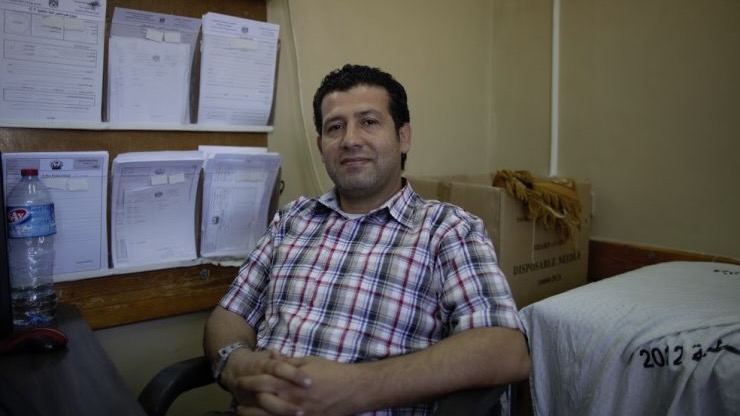
    New reports have surfaced regarding the death of Palestinian surgeon Dr. Adnan Al-Bursh, who was abducted by Israeli armed forces in December 2023 during an attack on Al-Awda Hospital in northern Gaza. His case sheds further light on the abuse endured by health workers in Israeli prisons and detention camps. Palestinian prisoner associations had previously reported that Dr. Al-Bursh died as a result of torture. Now, testimonies from other detainees reveal that his abuse included sexual abuse.

    These reports indicate that Israeli soldiers subjected Al-Bursh to exceptionally harsh treatment as soon as they identified him at Al-Awda Hospital. Dr. Khalid Hamouda, another physician detained by Israeli forces, recounted the severe injuries Dr. Al-Bursh sustained during his imprisonment in Sde Teiman concentration camp. At one point, Dr. Al-Bursh had difficulty walking or using the toilet without help, and feared his ribs had been broken in the beatings. Dr. Hamouda described meeting him in this state before Dr. Al-Bursh was transferred to Ofer prison.

    When Dr. Al-Bursh was transferred to the new facility, fellow prisoners described his state as “deplorable.” They recounted visible injuries across his body, evidence of severe assault, and reported that he had been left naked “in the lower part of his body.” Soon after, he died.

    “A doctor. A stellar surgeon. The embodiment of Palestinian ethics. Likely raped to death,” UN Special Rapporteur Francesca Albanese wrote on X following the release of the new reports. She condemned the lack of reaction to the atrocities committed by Israeli soldiers, stating, “The racism of Western media who are not covering this, and Western politicians who are not denouncing this, together with the thousand other testimonies and allegations of rape and other forms of mistreatment and torture that Palestinians have suffered in Israeli jails, is absolutely sickening.”

    Read more: Remember the Palestinian doctors killed by Israel

    Accounts of torture and abuse similar to what Dr. Adnan Al-Bursh endured have been shared by other health workers recently released from Israeli detention. Many have highlighted that health workers represent a significant proportion—up to one quarter in some camps—of the total number of detainees held by Israeli Occupation Forces (IOF). This supports reports that the IOF systematically targets health workers in an effort to undermine Palestinian resistance and destroy any prospects for rebuilding.

    Among those who described their imprisonment is Dr. Khaled Al Serr, a doctor originally employed at the Nasser Medical Complex, who spent six months in detention. He described following a similar path to Dr. Al-Bursh, being transferred from Sde Teiman to Ofer prison, where he endured regular beatings, including to intimate areas. “It was humiliating, but worse than that, they treated us like criminals,” he said in recent interviews. “We were just doctors trying to save lives.”

    Read more: In Palestine, healthcare is also a form of resistance

    Despite targeted attacks and the acute shortage of medical supplies, nurses, doctors, and other health workers in Gaza continue to provide care under dire circumstances. Recent efforts by the World Health Organization (WHO) and other UN agencies finally succeeded in reaching the few remaining hospitals in northern Gaza to facilitate medical evacuations and deliver some essential supplies, including fuel, food, and medicine. However, these missions were obstructed by Israeli soldiers, who blocked parts of the deliveries. This has led to even more uncertainty about how much longer these facilities can remain operational.

    The consequences of shortages and ongoing attacks in Gaza are escalating by the day. Hunger is spreading rapidly, with health and nutrition experts warning that signs of famine in the northern regions are becoming increasingly alarming. They are urgently calling for the immediate delivery of food across the Strip and an end to Israeli obstructions of humanitarian aid, emphasizing that delays will have fatal outcomes. People will die of hunger even before a famine is officially declared, and this would have “irreversible consequences that can last generations,” warned Rein Pulsen of the Food and Agriculture Organization.

    Read also: UN experts say, there is already famine in Gaza

    The number of people hospitalized due to hunger, including many children, is rising, with their health further deteriorated by critical living conditions. Infectious diseases are spreading, compounded by the destruction of water and sanitation infrastructure. Most forcibly displaced people are living in makeshift tents and are forced to rely on improvised absorption trenches for sanitation. These trenches, mostly dug by the displaced themselves, pose severe risks: children have fallen into them, collapses caused by oversaturation are not uncommon, and they have become breeding grounds for diseases like cholera. “We relieve ourselves in a pit that smells and certainly causes us disease, but we have no choice but to use it,” Abdul Salam Al-Aswad, one of the displaced, told The Electronic Intifada.

    The impact on chronic diseases in Gaza is equally worrying. Cancer patients are being denied access to lifesaving care, while Israeli bombardments have exposed thousands of pregnant women to toxic materials found in explosives. Doctors have noted a troubling increase in infants born with congenital conditions, such as underdeveloped lungs, limbs, and other severe abnormalities, warning of correlations with the use of white phosphorus. Without adequate medical care in Gaza and with medical evacuations systematically denied, many of these children die.

    As an immediate ceasefire is the only true solution to the destruction of healthcare in Gaza, health workers and activists are urging more international pressure on Israel. This pressure is essential not only to stop the attacks, but also to ensure the entry of medical supplies and, critically, food into the besieged Strip, offering at least some immediate relief.

    People’s Health Dispatch is a fortnightly bulletin published by the People’s Health Movement and Peoples Dispatch. For more articles and subscription to People’s Health Dispatch, click here.

    Original article by Ana Vračar republished from peoples dispatch under a Creative Commons Attribution-ShareAlike 4.0 (CC BY-SA) license.
    Experiencing issues with this image not appearing. I suspect because it's so critical of Zionist Keir Starmer's support of and complicity in Israel's genocides.
    Genocide denier and Current UK Prime Minister Keir Starmer is quoted that he supports Zionism without qualification. He also confirms that UK air force support has been essential in Israel’s mass-murdering genocide. Includes URLs https://www.declassifieduk.org/keir-starmers-100-spy-flights-over-gaza-in-support-of-israel/ and https://youtu.be/O74hZCKKdpA
  • ‘Grotesque’: Israeli Knesset Bans UN Agency in Charge of Humanitarian Aid in Gaza

    Spread the love

    Original article by Jessica Corbett republished from Common Dreams under Creative Commons (CC BY-NC-ND 3.0). 

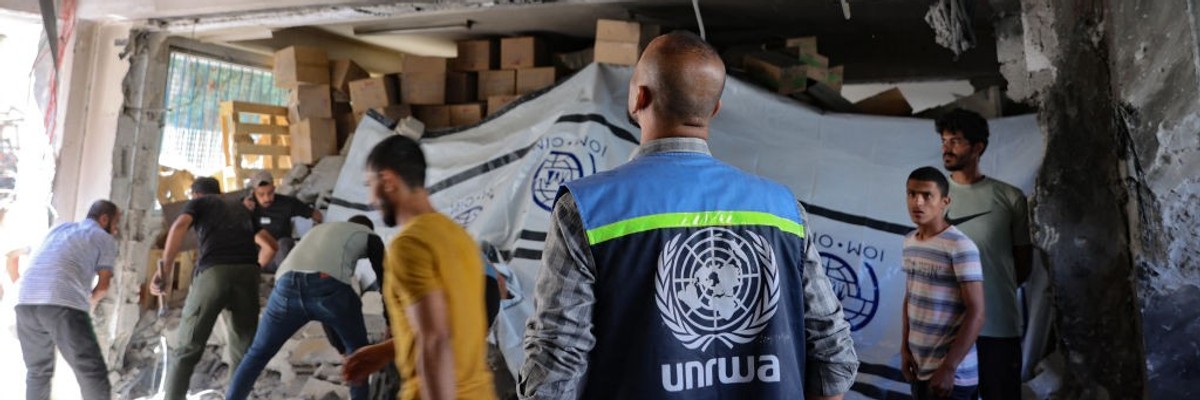
    A worker with the United Nations Relief and Works Agency for Palestine Refugees in the Near East and displaced Palestinians check the damage inside a U.N. school-turned-shelter near Gaza City after a reported Israeli strike on October 19, 2024. (Photo: Omar al-Qattaa/AFP via Getty Images)

    “This legislation not only contravenes the basic principles of human rights that led to the U.N. General Assembly’s founding of UNRWA, but also violates a range of Israel’s international legal obligations.”

    Over a year into Israel’s obliteration of the Gaza Strip, Israeli lawmakers faced sharp criticism on Monday after voting for a pair of bills targeting the United Nations agency responsible for humanitarian aid in the illegally occupied Palestinian territories.

    The first bill, which says that the United Nations Relief and Works Agency for Palestine Refugees in the Near East (UNRWA) “will not operate any missions, won’t provide any service, and won’t hold any activity—directly or indirectly—in the sovereign territory of the state of Israel,” passed the Israeli parliament 92-10.

    The second legislative proposal—under which the Israeli agency that handles humanitarian issues, the Coordinator of Government Activities in the Territories (COGAT), will have to cut off contact with UNRWA—passed the 120-member Knesset 87-9. Critics called the votes “grotesque” and “outrageous.”

    The Israel-based organization Adalah said in a statement that “despite widespread international pressure and condemnation, the Knesset has nearly unanimously passed two bills aimed at dismantling UNRWA, all while Israel continues its genocidal assault on Gaza and intensifies violence across the West Bank, including East Jerusalem.”

    “This legislation threatens a vital lifeline for over 2.5 million Palestinian refugees throughout the occupied Palestinian territory,” the group warned. “It represents a deliberate attempt to fundamentally undermine UNRWA and its essential mission of supporting the relief, education, and human development of Palestinian refugees. Specifically, the laws aim to strip Palestinians—who were forcibly displaced from their homes during the 1948 Nakba and the 1967 war—of their status as refugees and their right of return.”

    The United Nations General Assembly created UNRWA in 1949, in the wake of the Nakba, or “catastrophe,” when more than 750,000 Palestinians fled or were forced from their homeland to establish the modern state of Israel—whose officials have claimed without providing evidence that a dozen of the agency’s 13,000 staffers in Gaza were involved with the Hamas-led October 7, 2023 attack on Israel.

    “This legislation not only contravenes the basic principles of human rights that led to the U.N. General Assembly’s founding of UNRWA, but also violates a range of Israel’s international legal obligations, including those under the Genocide Convention and the Rome Statute of the International Criminal Court,” said Adalah. “The international community must hold Israel accountable.”

    Although Israel faces a South Africa-led genocide case at the International Court of Justice over its war on Hamas-controlled Gaza—which has killed at least 43,020 people and injured another 101,110 since last October—governments around the world have not acted to stop the bloodshed. The U.S. Congress and President Joe Biden’s administration have even provided Israel with billions of dollars in military aid and blocked cease-fire resolutions at the United Nations.

    Earlier this month, the Biden administration finally threatened to cut off weapons if the Israeli government does not take “urgent and sustained actions” to improve humanitarian conditions in Gaza within 30 days. U.S. Secretary of State Antony Blinken and Secretary of Defense Lloyd Austin’s letter specifically raised concerns about the legislation that passed the Knesset Monday.

    Asked about the Israeli bills on Monday, Matthew Miller, a U.S. State Department spokesperson frequently slammed for his statements about Israel, pointed to the secretaries’ criticism of the legislation in the recent letter and acknowledged that UNRWA serves the West Bank and plays “an irreplaceable role” in Gaza, where Palestinians are starving to death.

    Sally Abi Khalil, Oxfam’s regional director in the Middle East and North Africa, said Monday that “Israel has bombed Palestinians to death, maimed them, starved them, and is now ridding them of their biggest lifeline of aid. Piece by piece, Israel is systemically dismantling Gaza as a land that is autonomous and liveable for Palestinians.”

    “Its banning of UNRWA today is condemnable and another step in this crime,” she argued. “The decision will further undermine the ability of the international community to provide sufficient humanitarian aid and to save lives in any safe, independent, and impartial way. UNRWA was not only the biggest and most established agency that has been delivering aid and sustenance to the people of Gaza for years, it was also a thread that connected them in some hope of solidarity and security to the United Nations.”

    “We are in no doubt that Israel and its allies are fully aware of the terrible consequences that this decision will have on Palestinians living in Gaza, many of whom are already starving,” she added. “We join others in warning again that this will result in more death, more suffering, and more forced displacement of people from their besieged homeland. It is impossible not to believe that this is their aim.”

    Leading up to the votes, human rights advocates have been sounding the alarm. On Saturday, over 50 groups including Oxfam, Human Rights Watch, and ActionAid released a joint statement demanding action and warning that “dismantling UNRWA would be catastrophic for Palestinians especially in Gaza and the West Bank as they are deprived of essentials such as food, water, medical aid, education, and protection. It will also have catastrophic consequences for millions of Palestinian refugees in Lebanon, Jordan, and Syria, where essential humanitarian aid is crucial for both the refugees and the host communities.”

    https://twitter.com/KarimMakdisi/status/1851005575238210013?ref_src=twsrc%5Etfw%7Ctwcamp%5Etweetembed%7Ctwterm%5E1851005575238210013%7Ctwgr%5Eedf71eefaa7a0754b678ab66f07a6c64e3d19dbb%7Ctwcon%5Es1_c10&ref_url=https%3A%2F%2Fwww.commondreams.org%2Fnews%2Funrwa-gaza-israel


    Philippe Lazzarini, the UNRWA commissioner-general, delivered a similar warning on social media Monday, declaring that the Knesset action not only “is unprecedented and sets a dangerous precedent” but “it opposes the U.N. Charter and violates the state of Israel’s obligations under international law.”

    “This is the latest in the ongoing campaign to discredit UNRWA and delegitimize its role towards providing human-development assistance and services to Palestine Refugees,” he continued. “These bills will only deepen the suffering of Palestinians, especially in Gaza where people have been going through more than a year of sheer hell.”

    “It ⁠will deprive over 650,000 girls and boys there from education, putting at risk an entire generation of children,” Lazzarini added. “These bills increase the suffering of the Palestinians and are nothing less than collective punishment.”

    Original article by Jessica Corbett republished from Common Dreams under Creative Commons (CC BY-NC-ND 3.0).