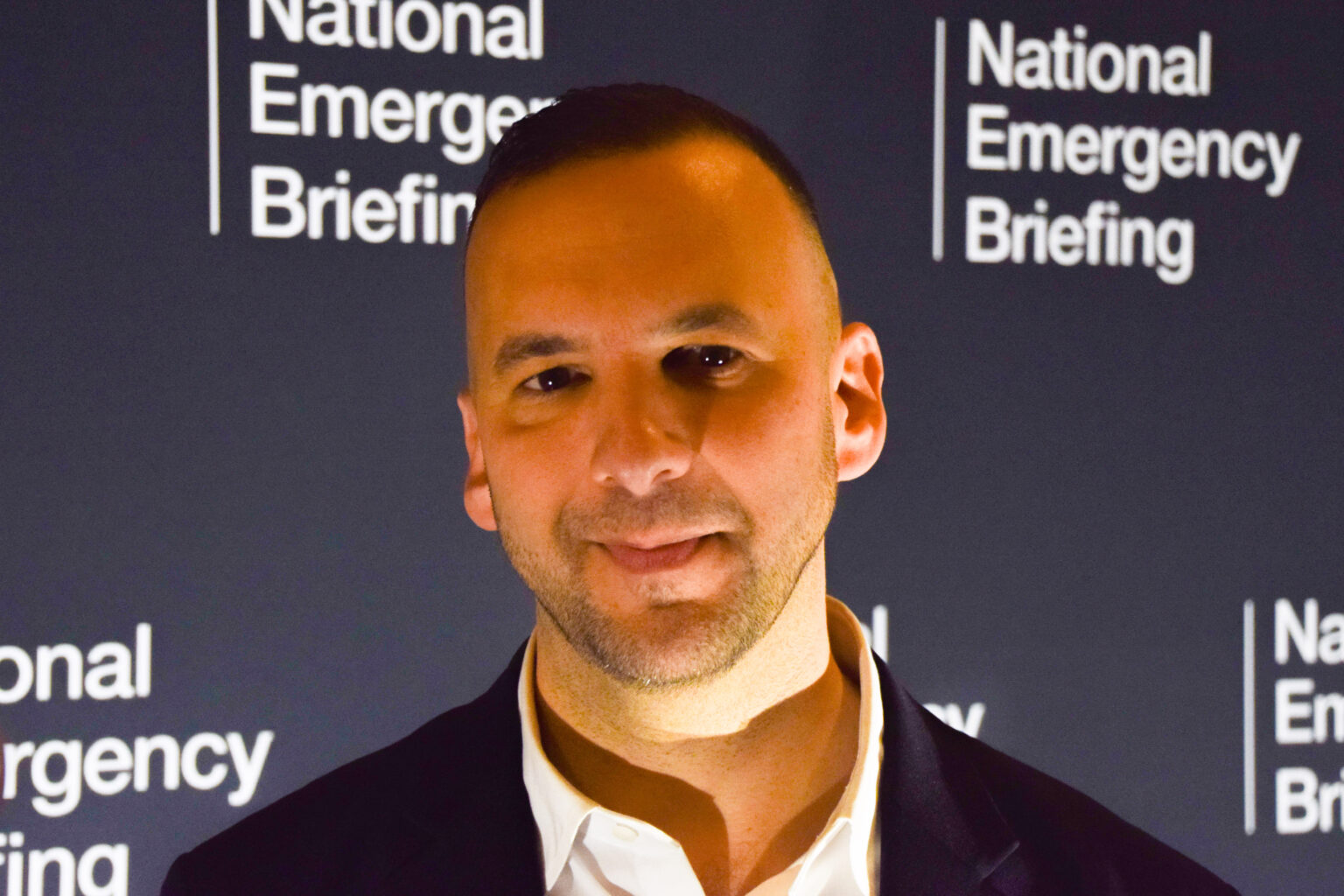
Green party leader Zack Polanski speaks to media following the National Emergency Briefing on climate and nature at the Central Hall Westminster, 27 November 2025, London, UK. Vuk Valcic/ZUMA Press Wire
It predicts a UK national security crisis with war, pandemics and food shortages.
Zack Polanski is calling on the government to publish the full, unredacted version of a report outlining how ecosystem collapse will plunge Britain into a national security crisis.
The report from UK intelligence chiefs warns that global ecosystem degradation and collapse will have devastating security consequences for Britain, including price rises, geopolitical instability, food and water shortages, greater pandemic risk, increased migration and conflict.
The Joint Intelligence Committee’s report was published in a redacted version in January and despite pressure from MPs and journalists, the Labour government has so far refused to release it in full.
Green party leader Polanski called on prime minister Andy Burnham to “tell the truth”, arguing that the public has a right to know the full scale of the threat.
Speaking at the Wild Summit in Bristol, Polanski said: “We’ve already seen how fragile our food systems are this year, with farmers warning that we could see empty shelves as a result of drought and flooding, and the government whispering that we should start stocking up on tinned food and bottled water.
“And these buried reports lay bare how unprepared we are for what is coming.”
Donald Trump urges you to be a Climate Science denier like him. He says that he makes millions and millions for destroying the planet, Burn, Baby, Burn and Flood, Baby, Flood.Nigel Farage urges you to ignore facts and reality and be a climate science denier like him and his Deputy Richard Tice. He says that Reform UK has received £Millions and £Millions from the fossil fuel industry to promote climate denial and destroy the planet.
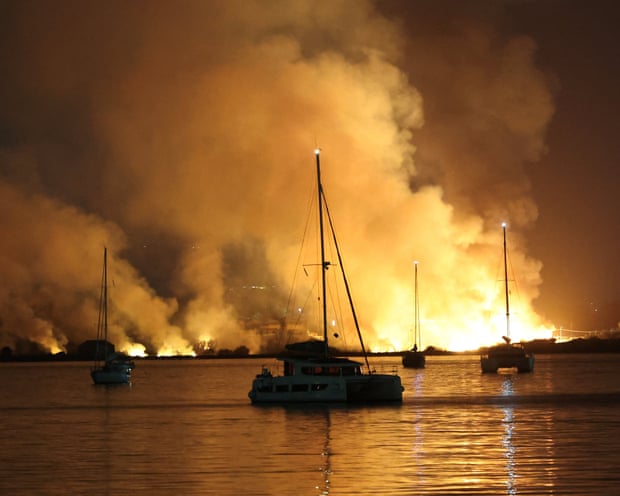
A wildfire burning near the coast of Syracuse in Sicily, Italy, toward the end of last month. Photograph: Stéphane Mahé/Reuters
WMO report details extreme weather events causing climatic feedback loop with serious health consequences
Big increases in wildfires and heatwaves supercharged by the climate crisis are hindering improvements to air quality around the world, UN experts have said.
Regions that had recorded a fall in pollution emitted by cars and industrial sites are facing new threats to air quality because of exposure to smoke from wildfires, according to a new report, while rising temperatures caused by intense heatwaves are causing a surge in ground-level ozone.
In turn, the pollution generated by these climate-linked events is itself contributing to climate breakdown, creating a feedback loop that risks dragging the world deeper into environmental catastrophe.
“Air quality and climate cannot be treated as separate subjects; they are deeply intertwined and have to be treated together,” said Lorenzo Labrador, a scientific officer of the World Meteorological Organization (WMO), which issued the report.
Elon Musk urges you to be a Fascist like him, says that you can ignore facts and reality then.Donald Trump urges you to be a Climate Science denier like him. He says that he makes millions and millions for destroying the planet, Burn, Baby, Burn and Flood, Baby, Flood.Nigel Farage urges you to ignore facts and reality and be a climate science denier like him and his Deputy Richard Tice. He says that Reform UK has received £Millions and £Millions from the fossil fuel industry to promote climate denial and destroy the planet.
As the latest UNEP reports we will blow past 1.5°C, we must prioritise solutions that work, rather than focusing on complex, unproven technologies
For anyone who’s been paying attention, it’s no surprise that the United Nations Environment Program (UNEP) reports that we will now inevitably blow past the global average temperature threshold of 1.5°C above pre-industrial levels.
Climate scientists like myself have been warning for years that we are about to cross this invisible red line, while quietly worrying that global average temperatures will end up being double that. Personally, I said goodbye to 1.5°C several years ago, but it still feels momentous to see it written in print, and that too by the UN.
The target to keep warming to 1.5°C above pre-industrial temperatures isn’t some hard red line in the sand, because all warming carries some risk, but it’s relevant because limiting warming to 1.5°C gives us a good chance of avoiding some of the worst impacts of climate heating. We’ve already had a glimpse of what this looks like in the myriad heatwaves, wildfires, floods, droughts and storms that have made headlines this year.
Every tenth of a degree of heating means real-terms impacts for peoples’ lives, livelihoods and property, and increases the risk of the extreme events that we’ve already seen tragically claim so many lives. It also increases the likelihood of exceeding critical tipping points such as the collapse of the West Antarctic Ice Sheet, beyond which there’s no return.
We’ve already had single years that have exceeded the 1.5°C limit, but the widely discussed Paris Agreement target is a multi-year average. That means we won’t know we’ve reached it until it’s in the rearview mirror, but it’s also possible to “overshoot” 1.5°C, temporarily peak at higher temperatures, and then bring them back down – and that’s now the best-case scenario outlined by UNEP.
This would mean we would have to take drastic action to bring temperatures back down again rather than continuing to drive them ever upwards. Which, in the current political climate, feels like a bit of a stretch.
Temperatures won’t stabilise until we reach net zero emissions, where we remove as much carbon from the atmosphere as we add to it. Until then, we will still be increasing greenhouse gas concentrations in the atmosphere and turning up the dial on the thermostat. Net zero isn’t a nice to have, despite what certain parts of the political spectrum would have you believe, it’s an essential if we want to have a liveable planet.
In fact, UNEP’s latest report points to the need to take action beyond net zero:
Once we have limited heating to 2°C or below — which currently feels optimistic — we will have to roll out carbon dioxide removal (CDR) to reduce temperatures on an enormous scale.
CDR often connotes high-tech solutions to suck carbon dioxide out of the atmosphere, but it can also mean one of the oldest technologies in the world: trees. That’s why restoring nature and preventing deforestation is so important for climate action.
But UNEP reports that CDR only works if we limit heating to 2C or below. As the stakes of climate heating continue to rise, another idea is moving from the sidelines to centre-stage: geoengineering, or deliberate technological interventions to alter the Earth’s climate.
Geoengineering is a spectrum, ranging from the comparatively reasonable and well-researched (injecting particles into the stratosphere to reflect incoming sunlight and cool the surface, much like major volcanic eruptions have done) to downright barmy (launching mirrors into space – you can imagine which silicon valley billionaires love that idea). And while there are sensible (if heated) scientific discussions about how to actually do it, there are also some very serious ethical and governance hurdles to overcome.
The tech bros will tell you that geoengineering will save us and allow us to keep doing what we’re doing while still ‘fixing’ climate change. But beware any arguments that downplay the importance of emissions cuts. We can’t simply geoengineer our way out of this crisis.
For example: who decides when to deploy? What happens if an intervention makes things better for some and worse for others? How do we safeguard against bad actors acting unilaterally? These questions are largely unanswered, and that’s before we get to the scientific questions around unintended consequences, like disrupting the Arctic food chain while trying to refreeze ice, or what happens if we stop the intervention, resulting in a so-called termination shock, where temperatures would shoot back up with devastating effect.
In some senses the climate crisis is relatively simple: we’re pumping planet-heating carbon dioxide into the atmosphere, and it’s heating the planet. To reverse it, we need first to stop adding planet-heating carbon dioxide to the atmosphere, and then to start removing it.
The good news is that we do know what we need to do to achieve that. Climate action is less a knowledge problem, and more an implementation one.
Proponents of geoengineering argue that it’s not an either/or between emissions cuts and major interventions. But in a world with finite resources, expensive and unproven geoengineering solutions should not be a priority, rather, we should prioritise the simple stuff we know works: decarbonising energy production, improving public transport, retrofitting and building greener housing, reducing meat and dairy consumption, restoring natural ecosystems.
That said, we are now committed to some level of change, and we need to behave as such. That means we need to prepare for the sea level rise that’s to come, and adapt societies, behaviours and infrastructure to a less predictable and more extreme climate.
If the summer of 2026 has taught us anything in the UK, it’s that our houses, schools, offices, railways, emergency services, power networks and public transport are simply not fit for purpose in the heat. Nor are they built to withstand the wet, stormy, flood-prone autumn and winter that is on its way. We’re not equipped to deal with the rapidly extremifying climate or the weather whiplash it brings. Simply put: our infrastructure was built for a climate that no longer exists.
If we are to survive the coming decades, we need to build preparedness and climate resilience into our society. Extreme events are already exposing our vulnerabilities, and if we thought 2026 was bad, count my words: we ain’t seen nothing yet.
In the wake of our hottest summer on record, it’s abundantly clear that we need to slash emissions to save lives, and at the same time prepare for the changes that are now committed.
The geoengineers are right about one thing: It’s not an either/or. We have to reduce emissions to net zero and remove carbon from the atmosphere and adapt to what’s in store. There’s no other safe option.
Dr. Ella Gilbert is a climate scientist and multi-award-winning presenter with a PhD in Antarctic climate change.
Donald Trump urges you to be a Climate Science denier like him. He says that he makes millions and millions for destroying the planet, Burn, Baby, Burn and Flood, Baby, Flood.Nigel Farage urges you to ignore facts and reality and be a climate science denier like him and his Deputy Richard Tice. He says that Reform UK has received £Millions and £Millions from the fossil fuel industry to promote climate denial and destroy the planet.Elon Musk urges you to be a Fascist like him, says that you can ignore facts and reality then.
A person using an electric fan to cool down on the underground in London. Education, health services and transport all suffered in the heat. Photograph: Tolga Akmen/EPA
Meteorologists say mean average temperature of 16.5C was made 130 times more likely by climate crisis
This year’s summer was the UK’s hottest on record, according to provisional data, and the Met Office said the season’s mean temperature was made 130 times more likely by the climate crisis.
Record-breaking and back-to-back heatwaves have scorched much of Europe. In England, temperatures peaked at 38.1C (100.1F) at Kew Gardens in London on 13 August, and June had already been confirmed as the country’s hottest since records began in 1884. Scientists have said these heatwaves are only possible because of the climate crisis driven by burning fossil fuels.
The Met Office said an average mean UK temperature of 16.5C made this summer provisionally the warmest on record as well as the warmest season in a series going back to 1884. England, Wales and Northern Ireland broke their respective mean temperature records for summer while Scotland recorded its joint sixth hottest summer.
This is the second year in a row that temperature records have been broken, with 2025 and 2026 both the warmest UK summers since records began.
The infamous summer of 1976 is now the seventh warmest on record in terms of mean temperature.
Donald Trump urges you to be a Climate Science denier like him. He says that he makes millions and millions for destroying the planet, Burn, Baby, Burn and Flood, Baby, Flood.Nigel Farage urges you to ignore facts and reality and be a climate science denier like him and his Deputy Richard Tice. He says that Reform UK has received £Millions and £Millions from the fossil fuel industry to promote climate denial and destroy the planet.Orcas comment on killer apes destroying the planet by continuing to burn fossil fuels.
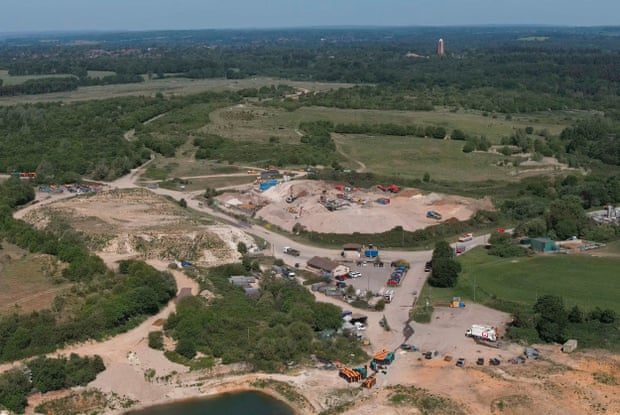
Aerial view of the construction site for the proposed datacentre at Wapseys Wood in Buckinghamshire. Photograph: sdcm40campus
[Guardian] Exclusive: Buckinghamshire and Bedfordshire sites predicted to emit 4.5m tonnes a year when fully running
The carbon emissions from just two planned datacentres in England will exceed all of the fossil fuel company ExxonMobil’s UK emissions, analysis has revealed.
Experts have said this demonstrates the “serious threat” datacentres pose to the UK’s legally binding climate goals.
Analysis by the non-profit group Foxglove reveals that when fully operational, the Wapseys Wood datacentre in Buckinghamshire and the Quest Park datacentre in Bedfordshire will use 1.3GW of power and will produce more than 4.5m tonnes of carbon emissions.
ExxonMobil emitted 3.9m tonnes in 2023, according to the global energy thinktank Ember.
AI datacentres use a massive amount of electricity to power servers and cooling equipment, and to run facility systems. There are currently 315 datacentres in the queue to connect to the UK’s electricity grid, representing 73GW of demand. This is almost double the peak winter energy demand for the entire UK.
Because of the long wait to connect to the grid, the Wapseys Wood and Quest Park datacentres are seeking to build their own on-site gas-fired power stations.
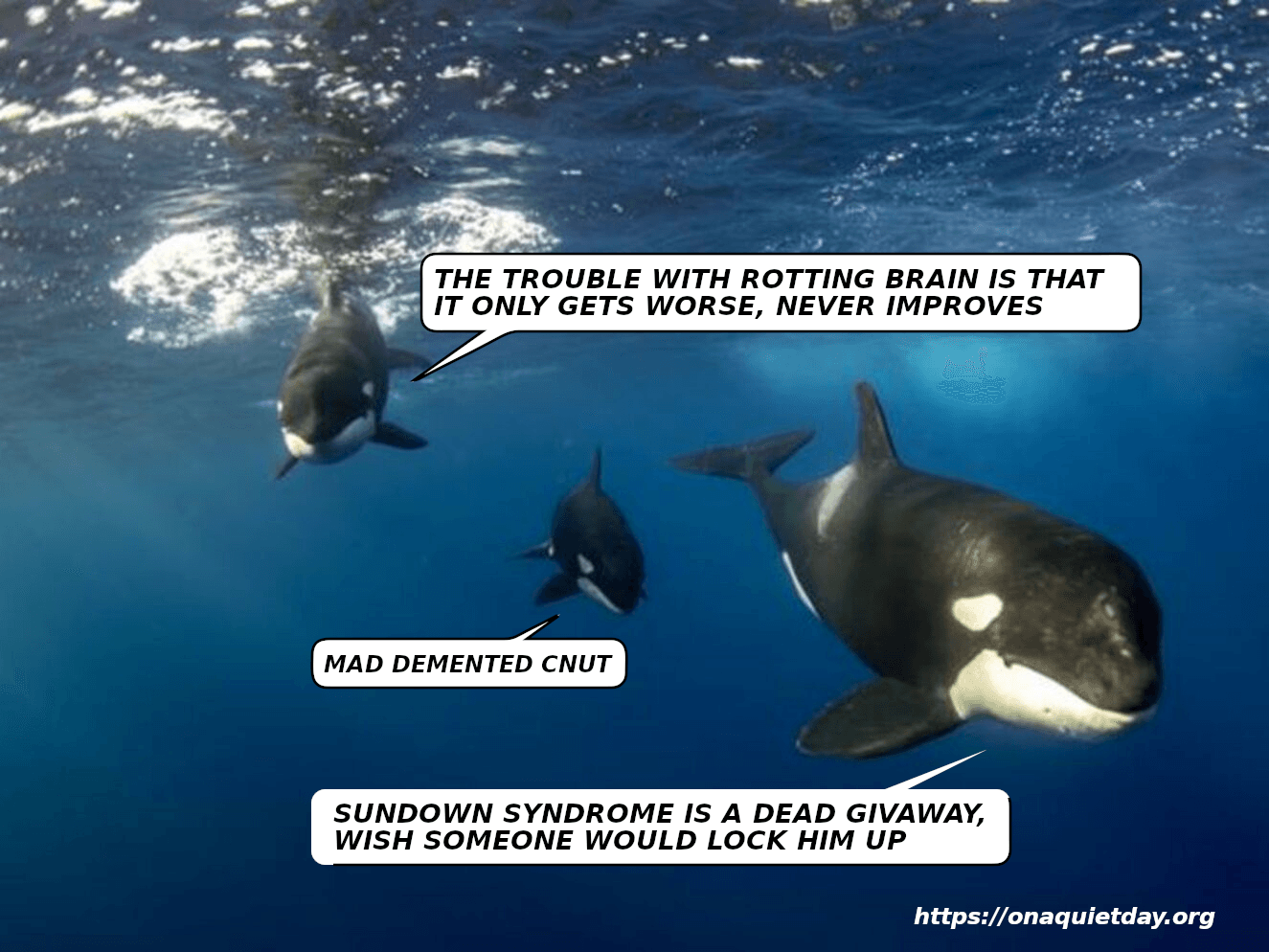
Donald Trump urges you to be a Climate Science denier like him. He says that he makes millions and millions for destroying the planet, Burn, Baby, Burn and Flood, Baby, Flood.Nigel Farage urges you to ignore facts and reality and be a climate science denier like him and his Deputy Richard Tice. He says that Reform UK has received £Millions and £Millions from the fossil fuel industry to promote climate denial and destroy the planet.Orcas discuss rotting brain, front Orca says Sundown Syndrome is a dead givaway and he wishes someone would Lock Him Up