


Original article by Stephen Prager republished from Common Dreams under Creative Commons (CC BY-NC-ND 3.0).
The Trump administration has removed all references to human-caused climate change from Environmental Protection Agency webpages, as well as large amounts of data showing the dramatic warming of the climate over recent decades and the resulting risks.
According to a Tuesday report from the Washington Post, one page on the “Causes of Climate Change” stated as recently as October that “it is unequivocal that human influence has warmed the atmosphere, ocean, and land,” a statement that reflects the overwhelming consensus in peer-reviewed literature on climate.
RECOMMENDED…

That statement is now nowhere to be found, with those that remain only mentioning “natural” causes of planetary warming like volcanic activity and variations in solar activity.
“The new, near-exclusive emphasis on natural causes of climate change on the EPA’s website is now completely out of sync with all available evidence demonstrating overwhelming human influence on contemporary warming trends,” explained Daniel Swain, a climate scientist at the University of California Agriculture and Natural Resources, who posted about the changes on social media.
The Intergovernmental Panel on Climate Change (IPCC), which examines tens of thousands of studies from around the globe, found that virtually all warming since the dawn of the industrial era can be attributed to human carbon emissions.
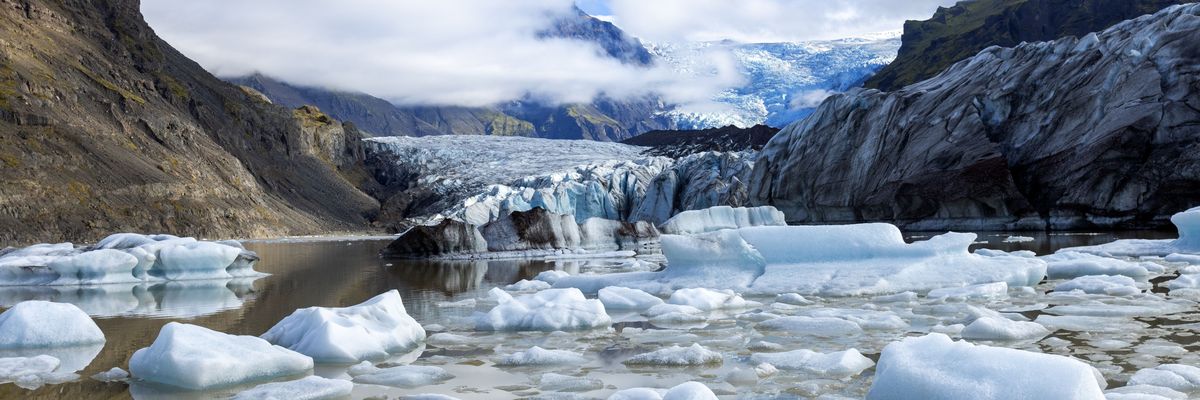
Pages about the catastrophic results of climate change have also been scrubbed: One of them allowed users to view several climate change indicators, like the historic decline of Arctic sea ice and glaciers and the increased rates of coastal flooding due to rising sea levels. That page has been deleted entirely.
Another page, which answered frequently asked questions about climate change, now no longer includes questions like, “Is there scientific consensus that human activities are causing today’s climate change?” “How can people reduce the risks of climate change?” and “Who is most at risk from the impacts of climate change?” The page provides no indication that climate change is a human-caused phenomenon, instead only discussing natural factors.
That page links to another that has since been deleted. It once provided extensive information about the risks climate change poses to human health, “from increasing the risk of extreme heat events and heavy storms to increasing the risk of asthma attacks and changing the spread of certain diseases carried by ticks and mosquitoes.” Another deleted page discussed the impacts of climate change on children’s health and low-income populations.
“This is, I think, one of the more dramatic scrubbings we’ve seen so far in the climate space,” said Swain. “This website is now completely incorrect regarding the changes in climate that we’re seeing today and their causes… It’s clearly a deliberate effort to misinform.”
During his 2024 campaign for reelection, President Donald Trump and his affiliated super political action committees received more than $96 million in direct contributions from oil and gas industry donors, according to a January report from Climate Power. Since retaking office, he has moved to dramatically expand the extraction and use of planet-heating fossil fuels while eliminating investment in clean energy and electric vehicles.
Rachel Cleetus, senior policy director for the Climate and Energy Program at the Union of Concerned Scientists, said, “Deleting and distorting this scientific information only serves to give a free pass to fossil fuel polluters who are raking in profits even as communities reel from extreme heatwaves, record-breaking floods, intensified storms, and catastrophic wildfires.”
Cleetus said that the purging of climate information from EPA sites was a prelude to “the likely overturning of the endangerment finding, a legal and scientific foundation for standards to limit the heat-trapping emissions driving climate change and threatening human health.”
In July, EPA Administrator Lee Zeldin unveiled a proposal to rescind the 2009 finding, which determined that climate change endangers human life and serves as the legal basis for greenhouse gas regulations under the Clean Air Act.
Undermining climate science is core to that effort, which Andrew Dessler, a climate scientist at Texas A&M, said at the time, “could unravel virtually every US climate regulation on the books, from car emissions standards to power plant rules.”
Shortly after Zeldin announced the rule change, the Department of Energy cobbled together a “Climate Working Group” comprising five authors handpicked by Secretary Chris Wright to produce a climate report that disputes the IPCC’s findings and the scientific consensus on climate change.
The report did not undergo peer review and omitted around 99% of the scientific literature the IPCC relied on for its comprehensive findings. A group of climate scientists that independently reviewed the paper found that it “exhibits pervasive problems with misrepresentation and selective citation of the scientific literature, cherry-picking of data, and faulty or absent statistics.”
Cleetus said Tuesday that “EPA is trying to bury the evidence on human-caused climate change, but it cannot change the reality of climate science or the harsh toll climate impacts are taking on people’s lives… This isn’t just about data on a website; it’s an attack on independent science and scientific integrity.”
Original article by Stephen Prager republished from Common Dreams under Creative Commons (CC BY-NC-ND 3.0).
Original article by Marianne Lavelle republished from Inside Climate News under Creative Common License (CC BY-NC-ND 3.0).
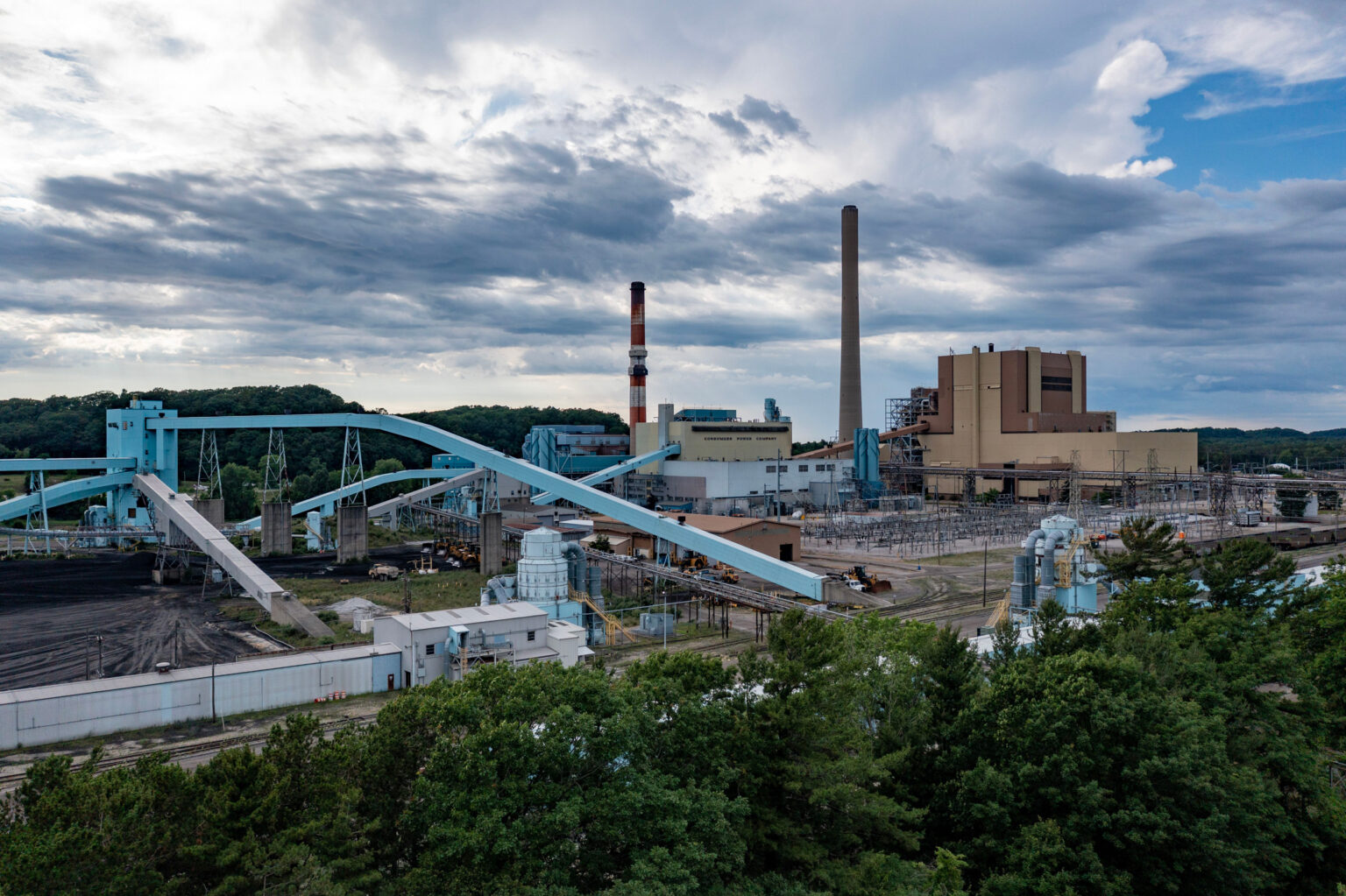
The Trump administration’s emergency order to keep the huge J.H. Campbell coal plant on Lake Michigan operating past its planned retirement date has cost at least $80 million since May, its operator, Consumers Energy, told regulators and investors this week.
The company said in its third-quarter earnings report Thursday that it would pursue the process laid out in the U.S. Department of Energy’s order for collecting those costs: It will seek payment from ratepayers across the Midwest.
Even though the peak summer electricity demand season has passed, executives at Consumers, Michigan’s largest energy provider, said that they see no sign of let-up in the emergency orders.
“We expect those to continue for the long-term,” said CEO Garrick Rochow in a conference call for investors. “And we’re prepared to continue to operate the plant and comply with those orders.”
He said the costs—$615,385 per day—should be shared beyond the 1.9 million electricity customers of Consumers Energy. The company plans to propose the tab be split among ratepayers (an estimated 42 million to 45 million electricity customers) in the nine states served by the regional electric grid operator, the Midcontinent Independent System Operator (MISO).
“The benefits go to MISO,” Rochow said. “Not just to our customers, they go to MISO.”
Rochow said the Trump administration envisioned this approach. “That order from the Department of Energy has laid out a clear path to cost recovery,” he said. Consumers Energy will have to apply to the Federal Energy Regulatory Commission in order to pass the costs to the ratepayers, and states that oppose such a cost allocation could move to intervene in those proceedings.
U.S. Energy Secretary Chris Wright issued two consecutive 90-day orders—on May 23 and on Aug. 20—to keep the Campbell plant open under the emergency provisions of the Federal Power Act. In the past, such orders have been used to ensure energy delivery at times of natural disasters. But Wright used the act to execute Trump’s agenda to ramp up energy production, saying Campbell needed to stay open to minimize the risk of power outages and address critical grid security issues in the Midwest.
The Department of Energy did not immediately respond to a request for comment on the Campbell cost figures, nor did MISO. When he extended the Campbell order in August, Wright said that he was directing MISO “to take every step to minimize cost to the American people.”
“This order will help ensure millions of Americans can continue to access affordable, reliable, and secure baseload power,” he said in that statement.
But critics say the operation of the 63-year-old plant is generating unnecessary costs as well as pollution. In a September regulatory filing challenging the DOE’s order, a coalition of environmental groups pointed out that even on the day of highest peak demand this summer, MISO had an unused surplus of resources greater than 10 times the power provided by the Campbell plant.
And indeed, according to recent Environmental Protection Agency data, two of the three units at the Campbell plant were not operating at all for about 30 days of the 131 days from the start of the DOE order through Sept. 30. The third unit at the plant only ran for 18 days. Such stoppages could occur for maintenance or simply because the grid operator did not call on the plant to deliver energy to the grid.
“Forcing this unnecessary coal plant to keep operating is bilking consumers for the benefit of the coal industry,” said Michael Lenoff, senior attorney for Earthjustice, which is representing the environmental groups.
Because DOE did not respond to their petition for reconsideration of the Campbell order within 30 days, the environmental groups and the states of Michigan, Minnesota and Illinois have asked the D.C. Circuit Court of Appeals to review the case. The purpose of the litigation, Lenoff said, is “to stop the administration from harming consumers, trampling markets and unlawfully usurping the authority of states and regulators to make decisions in the public interest.”
Campbell is by far the largest of three fossil fuel electricity plants that are staying open beyond their planned retirements under Trump administration emergency orders. Campbell released 6.6 million metric tons of carbon in 2023, the most recent year for which data is available. Talen Energy’s Wagner plant near Baltimore and Constellation Energy’s Eddystone plant just south of Philadelphia, both run on oil and natural gas. Some detail on their costs for keeping open may emerge next week, when Talen and Constellation report their third-quarter earnings.
Consumers Energy, which is continuing to work toward its previously stated goal of achieving net-zero carbon emissions by 2040, had projected that the retirement of the Campbell plant would save its customers $600 million over the next 20 years, or $30 million per year. Instead, running the plant for the past five months has cost close to three times that annual amount.
Original article by Marianne Lavelle republished from Inside Climate News under Creative Common License (CC BY-NC-ND 3.0).
https://www.theguardian.com/environment/2025/nov/12/fossil-fuel-projects-health-research
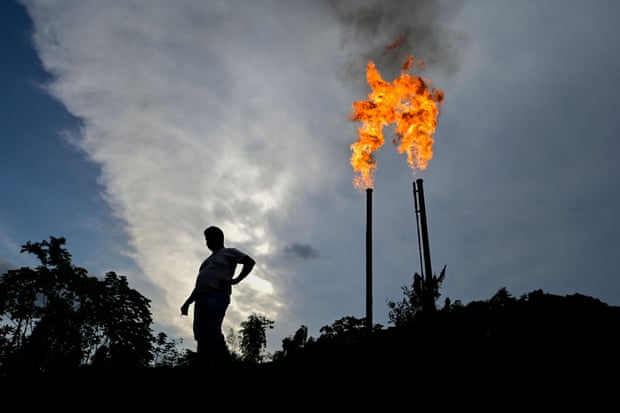
A quarter of the world’s population lives within three miles (5km) of operational fossil fuel projects, potentially threatening the health of more than 2 billion people as well as critical ecosystems, according to first-of-its-kind research.
A damning new report by Amnesty International, shared exclusively with the Guardian, found that more than 18,300 oil, gas and coal sites are currently distributed across 170 countries worldwide, occupying a vast area of the Earth’s surface.
Proximity to drilling wells, processing plants, pipelines and other fossil fuel facilities elevates the risk of cancer, respiratory conditions, heart disease, premature birth and death, as well as posing grave threats to water supplies and air quality, and degrades land.
Almost half a billion (463 million) people, including 124 million children, now live within 0.6 miles (1km) of fossil fuels sites, while another 3,500 or so new sites are currently proposed or under development that could force 135 million more people to endure fumes, flares and spills, according to Extraction Extinction: Why the Lifecycle of Fossil Fuels Threatens Life, Nature, and Human Rights.
Most active projects have created pollution hotspots, turning nearby communities and critical ecosystems into so-called sacrifice zones – heavily contaminated areas where low-income and marginalized groups bear the disproportionate burden of exposure to pollution and toxins.
…
Article continues at https://www.theguardian.com/environment/2025/nov/12/fossil-fuel-projects-health-research
Farah Nibbs, University of Maryland, Baltimore County
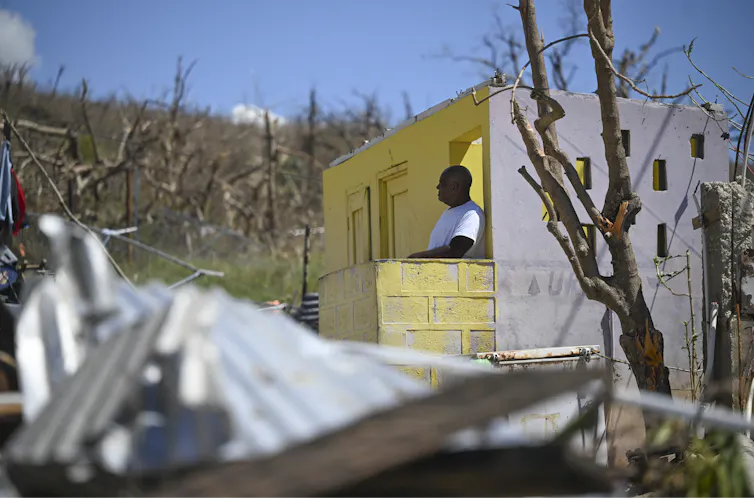
Headlines have been filled with talk of the catastrophic power of Hurricane Melissa after the Category 5 storm devastated communities across Jamaica, Cuba and Haiti in October 2025. But to see this as a singular disaster misses the bigger picture: Melissa didn’t hit stable, resilient islands. It hit islands still rebuilding from the last hurricane.
Jamaica was still recovering from Hurricane Beryl, which sideswiped the island in July 2024 as a Category 4 storm. The parish of St. Elizabeth – known as Jamaica’s breadbasket – was devastated. The country’s Rural Agriculture Development Authority estimated that 45,000 farmers were affected by Beryl, with damage estimated at US$15.9 million.

In Cuba, the power grid collapsed during Hurricane Oscar in October 2024, leaving 10 million people in darkness. When Melissa arrived, it struck the same fragile infrastructure that Cubans had barely begun to rebuild.
Haiti’s fragile situation before Hurricane Melissa cannot be overstated. The island nation was still reeling from years of cascading disasters – deadly hurricanes, political instability, gang violence, an ongoing cholera crisis and widespread hunger – with over half the population already in need of humanitarian assistance even before this storm hit.
This is the new reality of the climate crisis: Disasters hitting the Caribbean are compounding and can trigger infrastructure collapse, social erosion and economic debt spirals.
I study disasters, with a focus on how Caribbean island systems absorb, adapt to and recover from recurring shocks, like the nations hit by Melissa are now experiencing.
It’s not just that hurricanes are more frequent; it’s that the time between major storms is now shorter than the time required for a full recovery. This pulls islands into a trap that works through three self-reinforcing loops:
Infrastructure collapse: When a major hurricane hits an already weakened system, it causes simultaneous infrastructure collapses. The failure of one system – such as power – cascades, taking down water pumps, communications and hospitals all at once. We saw this in Grenada after Hurricane Beryl and in Dominica after Hurricane Maria. This kind of cascading damage is now the baseline expectation for the Caribbean.
Economic debt spiral: When countries exhaust their economic reserves on one recovery, borrow to rebuild and are then hit again while still paying off that debt, it becomes a vicious cycle.
Hurricane Ivan, which struck the region in 2004, cost Grenada over 200% of its gross domestic product; Maria, in 2017, cost Dominica 224% of its GDP; and Dorian, in 2019, cost the Bahamas 25% of GDP. With each storm, debt balloons, credit ratings drop and borrowing for the next disaster becomes more expensive.
Social erosion: Each cycle weakens the human infrastructure, too. More than 200,000 people left Puerto Rico for the U.S. mainland in Maria’s aftermath, and nearly one-quarter of Dominica’s population left after the same storm. Community networks fragment as people leave, and psychological trauma becomes layered as each new storm reopens the wounds of the last. The very social fabric needed to manage recovery is itself being torn.

The trap is that all three of these loops reinforce each other. A country can’t rebuild infrastructure without money. It can’t generate economic activity without infrastructure. And it can’t retain the skilled workforce needed for either when people are fleeing to safer places.
The Caribbean is not merely recovering from disasters – it is living within a system of overlapping recoveries, meaning that its communities must begin rebuilding again before fully recovering from the last crisis.
Each new attempt at rebuilding happens on the unstable physical, social and institutional foundations left by the last disaster.
The question isn’t whether Jamaica will attempt to rebuild following Melissa. It will, somehow. The question is, what happens when the next major storm arrives before that recovery is complete? And the one after that?
Without fundamentally restructuring how we think about recovery – moving from crisis response to continuous adaptation – island nations will remain trapped in this loop.
The compounding disaster trap persists because recovery models are broken. They apply one-size-fits-all solutions to crises unfolding across multiple layers of society.
Breaking free requires adaptive recovery at all levels, from household to global.

At the household level: Helping amid trauma
Recovery isn’t just about repairing a damaged roof. When families experience back-to-back disasters, trauma compounds. Direct cash assistance and long-term, community-based mental health services can help restore dignity.
Cash transfers allow families to address their own needs, stimulate local economies and restore control to people whose lives have been repeatedly upended.
At community level: Mending the social fabric
Repairing the “social fabric” means investing in farmer cooperatives, neighborhood associations and faith groups – networks that can lead recovery from the ground up.
Local networks are often the only ones capable of rebuilding trust and participation.
At the infrastructure level: Breaking the cycle
The pattern of rebuilding the same vulnerable roads or power lines only to see them wash away in the next storm fails the community and the nation. There are better, proven solutions that prepare communities to weather the next storm:

At the global level: Fixing the debt trap
None of this is possible if recovery remains tied to high-interest loans. There are ways for internal financial institutions and global development lenders to allow for breathing room between disasters:
The current international disaster finance system, controlled by global lenders and donors, requires countries to prove their losses after a disaster in order to access assistance, often resulting in months of delay. “Proof” is established by formal evaluations or inspections, such as by the United Nations, and aid is released only after meeting certain requirements. This process can stall recovery at the moment when aid is needed the most.
The Caribbean needs a system that provides support before disasters strike, with agreed-upon funding commitments and regional risk-pooling mechanisms that can avoid the delays and bureaucratic burden that slow recovery.
What’s happening in Jamaica, Cuba and Haiti today is a glimpse of what’s coming for coastal and island communities worldwide as climate change accelerates. In my view, we can either learn from the Caribbean’s experiences and redesign disaster recovery now or wait until the trap closes around everyone.
Farah Nibbs, Assistant Professor of Emergency and Disaster Health Systems, University of Maryland, Baltimore County
This article is republished from The Conversation under a Creative Commons license. Read the original article.