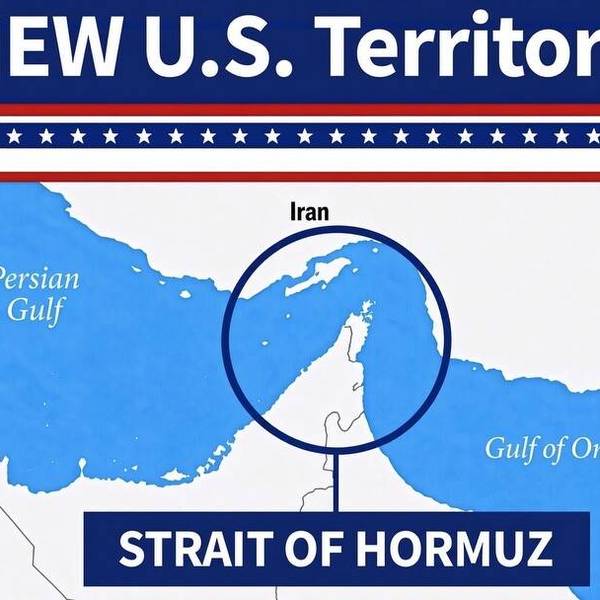
Iran rejects UK-France Hormuz statement, warns against foreign military presence

Spread the love

This work by Middle East Monitor is licensed under a Creative Commons Attribution-NonCommercial-ShareAlike 4.0 International License.

Iran’s UN ambassador Kazem Gharibabadi in Vienna, Austria on 10 July 2019 [Aşkın Kıyağan/Anadolu Agency]

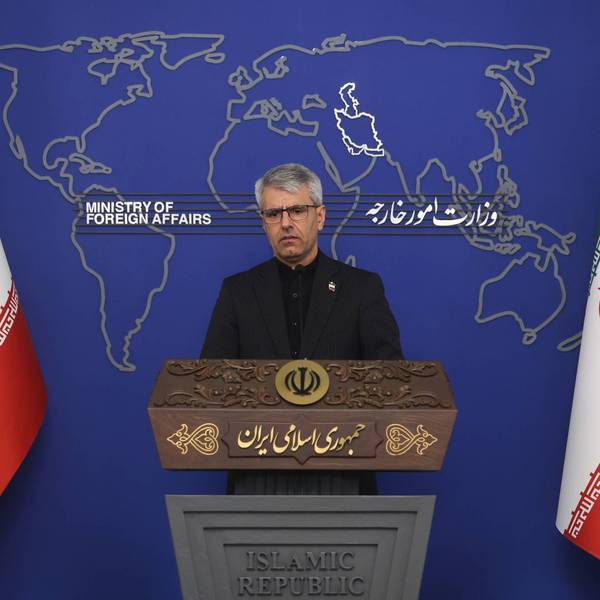
Iran’s Deputy Foreign Minister Kazem Gharibabadi on Saturday said the Strait of Hormuz “is not a stage for extra-regional powers to display military force,” warning against “any military activity” in the key waterway, Anadolu reports.

“The Strait of Hormuz is not a stage for extra-regional powers to display military force.

“As a responsible power and the guarantor of security in the strait, Iran warns against any military activity in this sensitive waterway,” Gharibabadi wrote on US social media company X.

His remarks came in a post in which he shared a UK-France joint statement on the Strait of Hormuz, saying the two countries “stand ready to deploy the wider Multinational Military Mission to support freedom of navigation” in the waterway.

In response, Gharibabadi said the strait’s security “rests with the littoral states.”

“Those who create crises will bear responsibility for the consequences of their adventurism. This is a serious warning,” he added.

A memorandum of understanding between Iran and the US, brokered under Pakistani mediation, entered into force on June 18 after being electronically signed by Iranian President Masoud Pezeshkian and US President Donald Trump.

It provides a framework for ending the conflict and addressing outstanding issues between Tehran and Washington through negotiations, including a cessation of hostilities, sanctions relief, the nuclear issue, the reopening of the Strait of Hormuz, and broader regional security arrangements.

READ: Israel planned to target Iranian negotiators to derail talks, US acted to prevent it – report

This work by Middle East Monitor is licensed under a Creative Commons Attribution-NonCommercial-ShareAlike 4.0 International License.

Keir Starmer explains that UK is actively supporting Israel's genocidal expansion and repeats his previous quotation that he supports Zionism "without qualification". Keir Starmer said “I said it loud and clear – and meant it – that I support Zionism without qualification.” here: https://www.jewishnews.co.uk/keir-starmer-interview-i-will-work-to-eradicate-antisemitism-from-day-one/
Keir Starmer explains that UK is actively supporting Israel’s genocidal expansion and repeats his previous quotation that he supports Zionism “without qualification”. Keir Starmer said “I said it loud and clear – and meant it – that I support Zionism without qualification.” here: https://www.jewishnews.co.uk/keir-starmer-interview-i-will-work-to-eradicate-antisemitism-from-day-one/
Donald Trump explains why he established his Bored of Peace

Continue ReadingIran rejects UK-France Hormuz statement, warns against foreign military presence

Analysis: UK newspapers have already printed 63 editorials in 2026 backing North Sea drilling 

Spread the love

This article republished from CarbonBrief under a CC license

North Sea oil rigs. Credit: imageBROKER.com / Alamy Stock Photo

UK newspapers have already published 63 editorials this year calling for more oil and gas extraction in the North Sea, according to Carbon Brief analysis.

The national outlets, including the Sun, the Daily Telegraph and the Times, argue that the nation “needs” more North Sea drilling to provide “home-sourced oil and gas” amid a “full-blown energy crisis”.

These newspapers seek to blame energy secretary Ed Miliband’s “net-zero crusade” for curbing UK fossil-fuel production – despite supplies dwindling for decades before he took the role.

The push for North Sea drilling in newspaper editorials – considered a publication’s formal “voice” – is part of a wider rejection of net-zero policies by the UK’s right-leaning press.

Figures ranging from ex-Labour prime minister Tony Blair to hard-right Reform UK leader Nigel Farage have repeated similar arguments that more drilling will “boost” the UK economy.

Even US president Donald Trump has weighed in, attributing, in part, the resignation of Keir Starmer as UK prime minister to him “fail[ing] badly” on North Sea oil.

Despite these claims, experts say trying to extract the last barrels of domestic oil and gas would have no impact on people’s energy bills and very little effect on energy security.

More drilling

North Sea oil and gas production is a highly politically charged issue in the UK, especially under the current Labour government.

When Labour won the general election in 2024, the new government committed to a “phased and responsible” transition away from fossil-fuel extraction in the North Sea. 

As part of this pledge, it ruled out issuing new exploration licences for oil and gas. Since then, the government has allowed some “tiebacks”, where new drilling is undertaken close to existing sites. 

Roughly 90% of the fossil fuels that are likely to be extracted in the North Sea have already been burned. North Sea oil and gas extraction was, therefore, already on a clear downward trajectory long before Labour came to power, having dropped 75% between 2000 and 2024.

Nevertheless, many newspapers have relentlessly called for more oil and gas production, framing the Labour policy as “self-destructive” and compromised by “green ideology”. 

This has ramped up significantly in 2026. Just six months into the year, newspapers have already published 63 pro-North Sea editorials, according to analysis by Carbon Brief. This is more than double the number published in 2025, as shown in the figure below.

Chart showing that there have already been 63 newspaper editorials in 2026 calling for more North Sea drilling
Cumulative number of UK newspaper editorials supporting more fossil-fuel extraction in the North Sea in 2025 (blue) and January-June 2026 (red). Source: Carbon Brief analysis.

Right-leaning newspapers have led this campaign, with the Sun alone publishing 25 editorials, while the Daily Telegraph and the Times have published 10 each. 

‘Full-blown energy crisis’

The biggest surge in pro-North Sea drilling editorials came in March, as the Iran war escalated and a global energy crisis began to take shape. Newspapers published 24 such editorials that month, despite the crisis largely arising from the world’s reliance on fossil fuels.

The Daily Express said the UK needed more “home-sourced oil and gas” and the Daily Mail highlighted the “perverse limit on domestic fossil-fuel production”. 

As the weeks progressed, the Sun lamented price rises and potential fuel shortages, proposing North Sea drilling as a solution to the “full-blown energy crisis”.

Yet, UK oil and gas is sold by private companies on the open market at international rates. This means UK consumers have no particular right to the fuels or control over the prices they are bought for.

The Sun claimed – without evidence – that if the North Sea had been prioritised, the UK “might just have the cheapest electricity in the world”. It also said net-zero “forces us to spend billions” on imports.

In fact, the UK’s high energy prices are primarily the result of its reliance on gas to generate electricity. 

The nation is reliant on oil and gas imports, in part, because the North Sea is a “mature basin” that saw its output collapse long before the UK even had a net-zero target. 

Renewables and low-carbon technologies – often dismissed by the same newspapers – are expected to have a far greater impact on cutting imports than new drilling ever could.

Miliband’s ‘crusade’

Much of the criticism by these newspapers of Labour’s North Sea stance is tied to their highly personal criticism of Miliband. Of the 63 editorials arguing for more drilling, nearly three-quarters also attacked him as a “net-zero zealot” on a “green crusade”. 

The Times said the energy and net-zero secretary was pursuing a “masochistic policy” by not expanding North Sea drilling and that he had “cloaked his zealotry in spurious rationality”.

This all fits with a broader trend that has seen right-leaning newspapers launch frequent, personal attacks on Miliband. 

In the roughly two years since Labour won the election, giving the government a clear mandate for its net-zero policies, there have been around 230 editorials criticising Miliband. 

(These have redoubled in recent days, amid rumours that he may be made chancellor under Andy Burnham, if the new Makerfield MP becomes the next prime minister, as is widely expected.)

Such attacks have increasingly spilled over into politics. Conservative shadow energy secretary Claire Coutinho has accused Miliband of “fanaticism” and Conservative leader Kemi Badenoch has even likened him to a “Nigerian military dictator”.

The newspapers have also interpreted any support for North Sea drilling as a rebuke of Miliband. Both the Sun and the Daily Telegraph welcomed an essay by Blair, in which he argued that “we must…use what is left of our North Sea oil and gas resources”.

The Sun heralded Blair as Labour’s “most successful election winner” and said he “nailed the chief mistakes” of the current government, including:

“Allowing Ed Miliband free rein on net-zero – especially the banning of North Sea drilling.”

Several of the newspapers have also thrown their support behind the Conservative party, as it frames itself as an anti-net-zero, pro-fossil fuel alternative to Labour.

The Daily Mail described Badenoch’s proposal to drill more in the North Sea as a “concrete plan”, while the Sun – in an echo of Trump’s slogan – has simply urged her to “drill, Kemi, drill”.

This article republished from CarbonBrief under a CC license

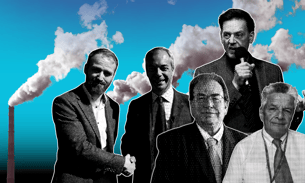
Nigel Farage urges you to ignore facts and reality and be a climate science denier like him and his Deputy Richard Tice. He says that Reform UK has received £Millions and £Millions from the fossil fuel industry to promote climate denial and destroy the planet.
UK Conservative Party leader Kemi Badenoch explains her reality that the Earth is flat, the Moon is made of cheese and that she was born from Unicorn horn dust
UK Conservative Party leader Kemi ‘not a genocide’ Badenoch explains her reality that the Earth is flat, the Moon is made of cheese and that she was born from
Unicorn horn dust
Elon Musk urges you to be a Fascist like him, says that you can ignore facts and reality then.
Continue ReadingAnalysis: UK newspapers have already printed 63 editorials in 2026 backing North Sea drilling 

Israeli opposition leader accuses Netanyahu of fabricating Iran nuclear claims to frighten public

Spread the love

This work by Middle East Monitor is licensed under a Creative Commons Attribution-NonCommercial-ShareAlike 4.0 International License

Israeli opposition leader and former army chief Gadi Eisenkot gives a speech at Reichman University in Herzliya on June 24, 2024. [GIL COHEN-MAGEN/AFP via Getty Images]

Former Israeli army chief and opposition leader Gadi Eisenkot on Wednesday accused Prime Minister Benjamin Netanyahu of fabricating claims that Iran possesses nuclear weapons in order to frighten the Israeli public.

According to Israeli daily Yedioth Ahronoth, Eisenkot made the remarks at a conference in central Israel, saying Netanyahu’s recent statements on Iran’s nuclear capabilities were false.

“Netanyahu said repugnant things. Iran had no nuclear bombs whatsoever. He is fabricating reality to frighten the Israeli public,” Eisenkot, who is also the head of Yashar party, was quoted as saying.

The newspaper said Eisenkot was referring to comments Netanyahu made Tuesday in an interview with Israel’s Channel 14, in which the prime minister said: “I entered Iran twice to save us from annihilation by atomic bombs that were already in their hands.”

Eisenkot, who served as Israel’s military chief of staff from 2015 to 2019, announced Tuesday that he intends to run for prime minister.

In February 2026, the US and Israel launched strikes targeting Iranian military installations and infrastructure, before the confrontation expanded into direct exchanges of fire.

READ: National forces join Gaza wounded in sit-in outside Red Cross, demanding travel and medical care

Israel also carried out a large-scale military operation against targets inside Iran in June 2025, saying it targeted Tehran’s nuclear program and missile capabilities. Iran denied seeking nuclear weapons, insisting its nuclear program is exclusively peaceful.

No international report has confirmed that Iran possesses nuclear weapons.

Netanyahu’s interview with the right-wing Channel 14 came as Israel prepares for general elections expected in the coming months.

The US and Israel accuse Iran of maintaining nuclear and missile programs that threaten Israel and US regional allies. Tehran maintains its nuclear program is peaceful and says it is not pursuing nuclear weapons.

Israel, which occupies Palestinian territories as well as land in Lebanon and Syria, is widely believed by international experts to be the only country in the Middle East possessing a nuclear arsenal, although it has never officially acknowledged it. Its nuclear facilities are not subject to International Atomic Energy Agency safeguards.

READ: Netanyahu admits failure to dismantle Hamas civil rule, says ‘voluntary migration’ still an option

This work by Middle East Monitor is licensed under a Creative Commons Attribution-NonCommercial-ShareAlike 4.0 International License

Keir Starmer explains that UK is actively supporting Israel's genocidal expansion and repeats his previous quotation that he supports Zionism "without qualification". Keir Starmer said “I said it loud and clear – and meant it – that I support Zionism without qualification.” here: https://www.jewishnews.co.uk/keir-starmer-interview-i-will-work-to-eradicate-antisemitism-from-day-one/
Keir Starmer explains that UK is actively supporting Israel’s genocidal expansion and repeats his previous quotation that he supports Zionism “without qualification”. Keir Starmer said “I said it loud and clear – and meant it – that I support Zionism without qualification.” here: https://www.jewishnews.co.uk/keir-starmer-interview-i-will-work-to-eradicate-antisemitism-from-day-one/
Experiencing issues with this image not appearing. I suspect because it's so critical of Zionist Keir Starmer's support of and complicity in Israel's genocides.
Genocide denier and Current UK Prime Minister Keir Starmer is quoted that he supports Zionism without qualification. He also confirms that UK air force support has been essential in Israel’s mass-murdering genocide. Includes URLs https://www.declassifieduk.org/keir-starmers-100-spy-flights-over-gaza-in-support-of-israel/ and https://youtu.be/O74hZCKKdpA
Donald Trump calls for help from NATO allies in securing the Strait of Hormuz despite saying on 7 March 2026 that they don't need people to join wars after they've already won. He's challenged with the claim that he lies as much as the IDF.
Donald Trump calls for help from NATO allies in securing the Strait of Hormuz despite saying on 7 March 2026 that they don’t need people to join wars after they’ve already won. He’s challenged with the claim that he lies as much as the IDF.

Continue ReadingIsraeli opposition leader accuses Netanyahu of fabricating Iran nuclear claims to frighten public

Trump’s Iran Disaster an Even Bigger US Strategic Defeat Than Vietnam: Expert

Spread the love

Article by Brad Reed republished from Common Dreams republished under Creative Commons (CC BY-NC-ND 3.0).

US President Donald Trump hosts a cabinet meeting in the Cabinet Room of the White House in Washington, DC, on March 26, 2026. (Photo by Jim Watson/AFP via Getty Images)

“The United States is inarguably in a weaker position than when it began this war of choice, with core US strategic objectives harmed.”

President Donald Trump’s illegal war of choice with Iran has dealt the United States an even bigger strategic defeat than the one it suffered in the Vietnam War, according to one expert.

In an essay published on Tuesday by Foreign Policy, Paul Musgrave, associate professor of government at Georgetown University in Qatar, made the case that the damage done to the United States’ reputation and credibility in the wake of the Iran war are significantly more severe than anything the country suffered in the wake of Vietnam.

RECOMMENDED…

US-POLITICS-TRUMP-CABINET

Scholar Says Trump Disaster in Iran Helps Prove That Era of ‘American Empire Is Over’

US President Donald Trump speaks during a Cabinet meeting

‘Sounds a Lot Like a Nuclear Threat’: Trump Floats ‘Ultimate Alternative’ If Iran Talks Collapse

Even though the Vietnam War went on for far longer and resulted in far more deaths than Trump’s Iran war, Musgrave argued, the US nonetheless exited it with little long-term damage to its global power.

“Compare that situation with the aftermath of Trump’s war,” Musgrave continued. “The United States is inarguably in a weaker position than when it began this war of choice, with core US strategic objectives harmed.”

Musgrave noted that while the US and Israel had initial success in decapitating Iran’s leadership at the beginning of the conflict, this only left the hardliners in the Islamic Revolutionary Guard Corps (IRGC) to run the country.

By failing to achieve the stated aim of regime change and by empowering even more radical elements within Iran, Musgrave added, Trump has severely damaged other nations’ willingness to trust the US for national security protection.

“Regional allies, many of whom reportedly argued against the venture, bore the brunt of the costs of the fighting,” the scholar wrote. “Most tellingly, Iran learned that its capacity to throttle the Strait of Hormuz could deliver economic leverage on a worldwide scale.”

Writing in The New York Times on Wednesday, national security journalist WJ Hennigan argued that the United States’ strategic defeat has laid bare the limits of US military power to bend weaker nations to its will.

In particular, he pointed out that the US, which spent $1 trillion on its military last year, could not take out even a majority of Iran’s missile stockpiles.

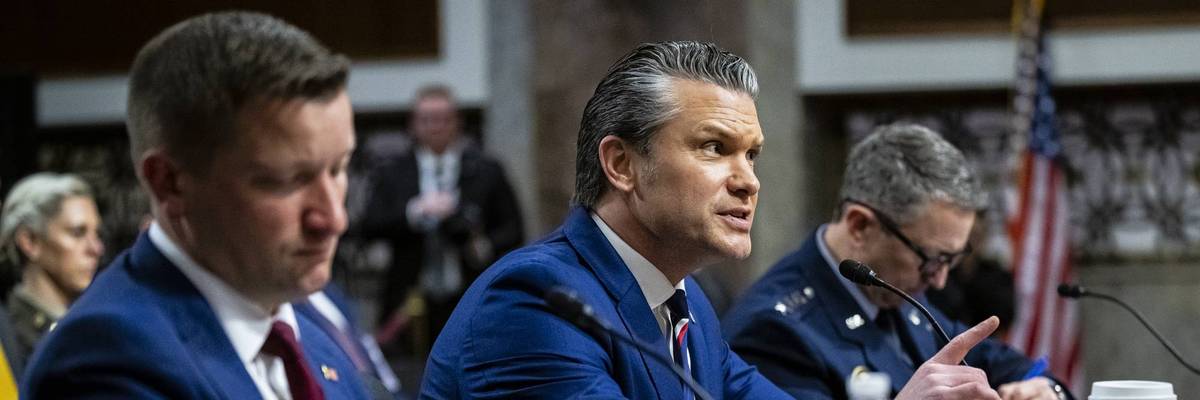
“Yes, the wonder weapons that American industry cranks out, like cruise missiles and air-defense interceptors, have proven impressive on the battlefield,” Hennigan wrote. “But the war has exposed the underlying weaknesses of depending on weaponry that’s extremely expensive and time-consuming to deliver. During an April 30 congressional hearing, Defense Secretary Pete Hegseth estimated it could take ‘months and years’ to replenish the stocks that had been used in the war.”

Matt Duss, executive vice president at the Center for International Policy, similarly said that Trump’s Iran war had resulted in a strategic defeat for the US. However, he also expressed hope that this defeat could mark a turning point in US foreign policy circles regarding the applications of American power throughout the world.

“There’s a longstanding US bipartisan consensus around wildly inflating the Iranian threat,” Duss wrote in a social media post. “Trump’s war, a strategic defeat, was an expression of that consensus. If… ending the war puts the US and Iran on path to a more normal relationship, that will be a positive thing.”

Article by Brad Reed republished from Common Dreams republished under Creative Commons (CC BY-NC-ND 3.0).

Orcas discuss rotting brain, front Orca says Sundown Syndrome is a dead givaway and he wishes someone would Lock Him Up

Continue ReadingTrump’s Iran Disaster an Even Bigger US Strategic Defeat Than Vietnam: Expert

3 Months of Trump’s Disastrous Iran War Has Cost US Consumers $60 Billion in Extra Energy Costs​

Spread the love

Article by Julia Conley republished from Common Dreams under Creative Commons (CC BY-NC-ND 3.0).

Shelton Seworth pumps gas at a QuikTrip gas station on May 11, 2026, in Irving, Texas. (Photo by Chitose Suzuki/The Dallas Morning News via Getty Images)

The average US household, according to Moody’s, has shouldered nearly $450 in extra fuel costs due to the Republican president’s unprovoked Middle East war.

Americans have made clear since President Donald Trump joined Israel in beginning an unprovoked war on Iran that they view the conflict-of-choice as damaging to their financial well-being—and that they blame the president for the higher cost of fuel since the war started in February.

On Friday, Moody’s Analytics put an exact number on the heightened financial anxiety families across the country have been feeling over the past three months as Iran’s closure of the Strait of Hormuz has sent fuel prices soaring: $447.19.

RECOMMENDED…

Price Of Gas Continues To Rise As War With Iran Drags On

Trump’s Iran War Has Already Cost Americans Over $40 Billion Extra on Gas and Diesel

Trump's Iran War Will Cost US Families $1,753 Extra at the Pump This Year: Analysis

Trump’s Iran War Will Cost US Families $1,753 Extra at the Pump This Year: Analysis

That’s how much the average US household has had to additionally spend on fuel-related expenses since Trump and Israeli Prime Minister Benjamin Netanyanu launched their attack on February 28, Moody’s told CNBC.

Altogether, Americans have spent a total of nearly $60 billion on gas, airline fares, and other related costs as the strait, a key shipping route for oil, has remained effectively closed.

According to AAA, the average price of a gallon of regular gas stands at $4.39—up close to 50% since early March. Diesel now costs $5.52 per gallon, forcing consumers to pay $20 billion more in additional expenses on groceries and other goods.

“The economy isn’t just soft, it’s struggling,” Mark Zandi, Moody’s chief economist, said Thursday. “The Iran war needs to end, and the Strait of Hormuz needs to be reopened soon, or recession will become more likely than not.”

“Unless the war ends soon, financially pressed consumers will have no option but to turn more cautious in their spending.”

As CNBC reported Friday, “higher energy costs can force consumers to raid their savings and lean more on debt to cover expenses.”

Trump flatly said earlier this month that he doesn’t consider Americans’ financial situation “even a little bit” when it comes to the war on Iran, while National Economic Council Director Kevin Hassett posited earlier this week that Americans are “spending more money” not because higher prices are forcing them to but because they’re “very, very optimistic about the state of the economy.” He also bragged recently that “credit card spending is through the roof”—a sign several observers took not as a positive omen for the economy but as a sign that families are being forced to take on debt to pay for gas and other essentials.

Zandi provided a reality check Friday.

“Unless the war ends soon, financially pressed consumers will have no option but to turn more cautious in their spending, threatening the already soft economy,” he told CNBC, warning that families could end up spending nearly $2,000 extra on fuel-related costs if the war continues reaches the one-year mark.

Republicans emphasized last year that Trump’s One Big Beautiful Bill Act would give bigger tax returns to families across the country. Any benefit, said Zandi, has now been canceled out by the president’s war.

On Thursday, US Sens. Elizabeth Warren (D-Mass.), Chuck Schumer (D-NY), and Jeff Merkley (D-Ore.) said the White House is in denial about the fact that Americans are struggling with the impact of Trump’s foreign policy decisions as the Pentagon vastly underestimates how much the conflict has cost in public statements.

The acting comptroller of the Pentagon told Congress in April that the war had cost $25 billion, increasing the estimate to $29 billion two weeks later.

The senators told the Congressional Budget Office Friday that independent analyses had put the real cost of the war at $40 billion-$50 billion.

“It is essential,” said the lawmakers, “that Congress and the American public receive accurate, comprehensive estimates of the costs of the war in Iran.”

Article by Julia Conley republished from Common Dreams under Creative Commons (CC BY-NC-ND 3.0).

Keir Starmer explains that UK is actively supporting Israel's genocidal expansion and repeats his previous quotation that he supports Zionism "without qualification". Keir Starmer said “I said it loud and clear – and meant it – that I support Zionism without qualification.” here: https://www.jewishnews.co.uk/keir-starmer-interview-i-will-work-to-eradicate-antisemitism-from-day-one/
Keir Starmer explains that UK is actively supporting Israel’s genocidal expansion and repeats his previous quotation that he supports Zionism “without qualification”. Keir Starmer said “I said it loud and clear – and meant it – that I support Zionism without qualification.” here: https://www.jewishnews.co.uk/keir-starmer-interview-i-will-work-to-eradicate-antisemitism-from-day-one/
Donald Trump sings and dances, says that it's fun to kill everyone ... unless he gets distracted or falls asleep.
Donald Trump sings and dances, says that it’s fun to kill everyone … unless he gets distracted or falls asleep.
Continue Reading3 Months of Trump’s Disastrous Iran War Has Cost US Consumers $60 Billion in Extra Energy Costs​