Starmer’s Iran war lies exposed


Original article by Julia Conley republished from Common Dreams under Creative Commons (CC BY-NC-ND 3.0).

President Donald Trump on Tuesday lashed out at European countries over the message leaders have been clear about since the US joined Israel in waging an unprovoked war against Iran—an assault that swiftly led Iran to retaliate by closing the Strait of Hormuz, sending global oil prices skyrocketing.
The war, Europe has said, is not one the United States’ longtime allies have started or that they’ll be “dragged into,” and the worldwide economic consequences are the responsibility of the countries that chose to attack Iran.
RECOMMENDED…


Reports that France over the weekend barred US military planes headed for Israel from flying over its territory appeared to particularly send Trump into a rage, prompting him to call the French government “VERY UNHELPFUL” on his social media platform, Truth Social.
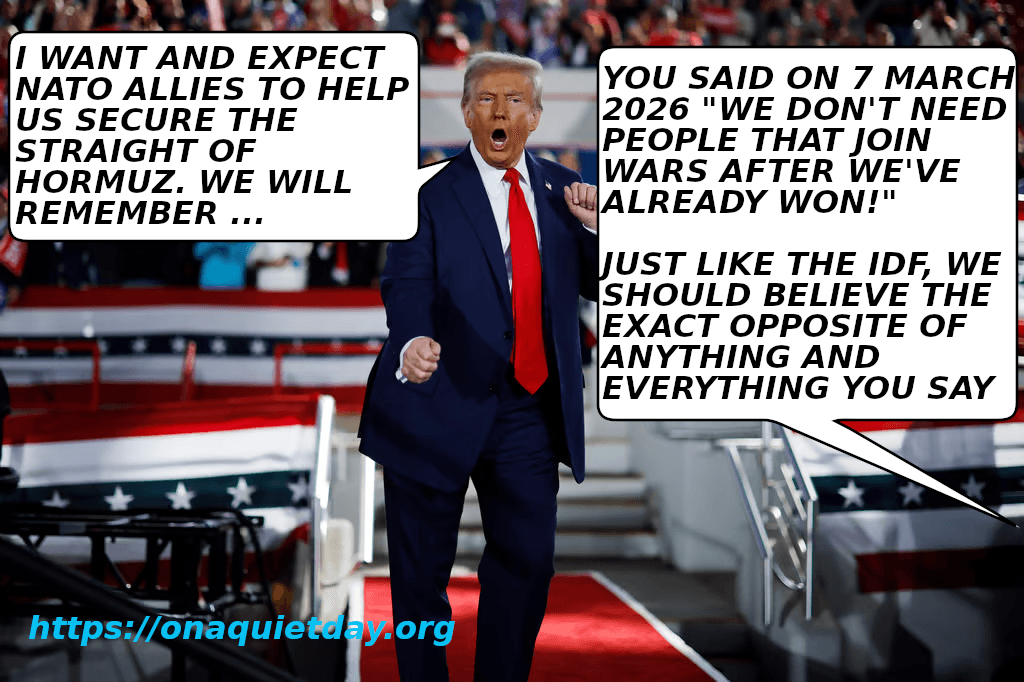
“The U.S.A. will REMEMBER!!” said the president Tuesday morning.
He then took aim at countries across Europe, writing, “Go get your own oil!” in a separate missive.
Trump repeated previous suggestions that US allies are “cowards” for not offering their assistance in the unprovoked war, demanding that they “build up some delayed courage, go to the Strait, and just TAKE” the oil by force.
“You’ll have to start learning how to fight for yourself, the U.S.A. won’t be there to help you anymore, just like you weren’t there for us,” he added.
France denied the reports that it had prevented US planes from flying over its airspace, but it is one of a number of longtime US allies that have reportedly taken action to avoid complicity in the US-Israeli war, which experts say is a clear violation of international law, including the United Nations Charter, and which has killed nearly 2,000 Iranians and over 1,000 people across the Middle East as the conflict has widened.
Italian officials have denied the US military the use of an airbase in Sicily, saying the Trump administration had not gone through the required authorization procedure. Spanish Prime Minister Pedro Sánchez has been most vocal about refusing to help the US war effort, saying Trump had embarked on an “illegal war” as his administration announced the US military would be barred from Spanish airspace after an earlier statement that the US could not use Spain’s military bases for operations involving the Iran war.
One senior European government official told Politico last week that Trump’s demands for help have been “absurdly incoherent to put it mildly,” considering the White House has also demanded that countries in Europe step up their efforts to defend Ukraine without relying on the US.
“The big picture is: The US has asked us to take care of and defend our own countries, take care of supporting Ukraine… and now [the] Middle East and global supply chains,” the official said.
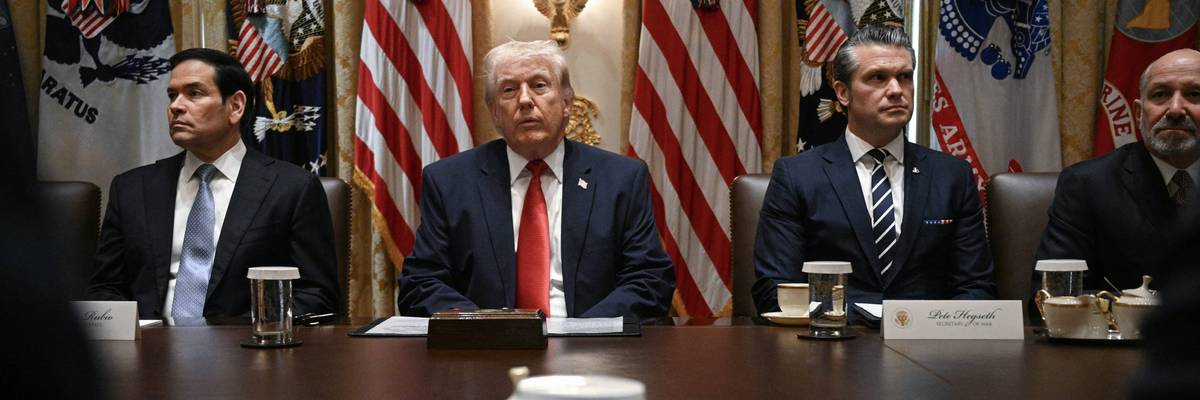
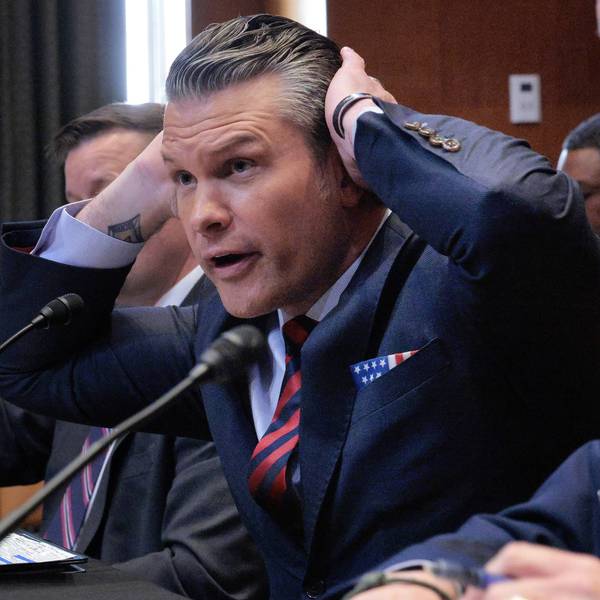
Defense Secretary Pete Hegseth on Tuesday reiterated Trump’s message, saying that “there are countries around the world who ought to be prepared to step up on this critical waterway as well.”
“It’s not just the United States Navy,” said Hegseth, who has attempted to rebrand the Department of Defense as the Department of War. “Last time I checked, there was supposed to be a big, bad Royal Navy that could be prepared to do things like that as well.”
On Sky News in the UK on Tuesday, military analyst Sean Bell issued a reminder after Hegseth’s and Trump’s comments that “it’s not a [North Atlantic Treaty Organization] war.”
“NATO is a defensive alliance,” said Bell. “It’s not been clear what the legal justification for the war is.”
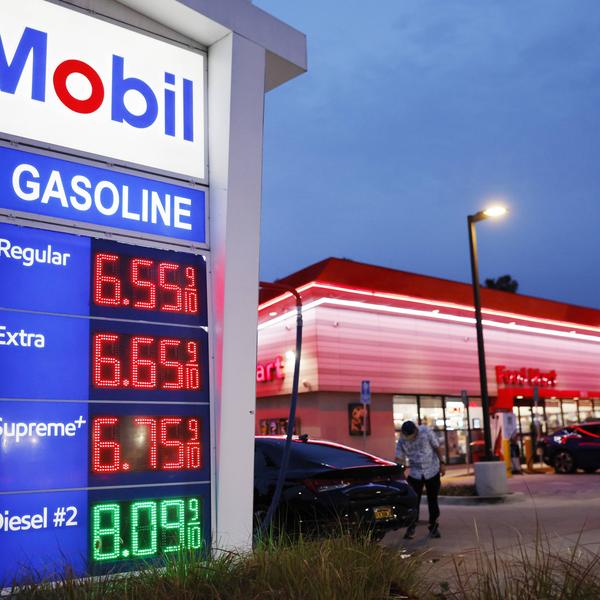
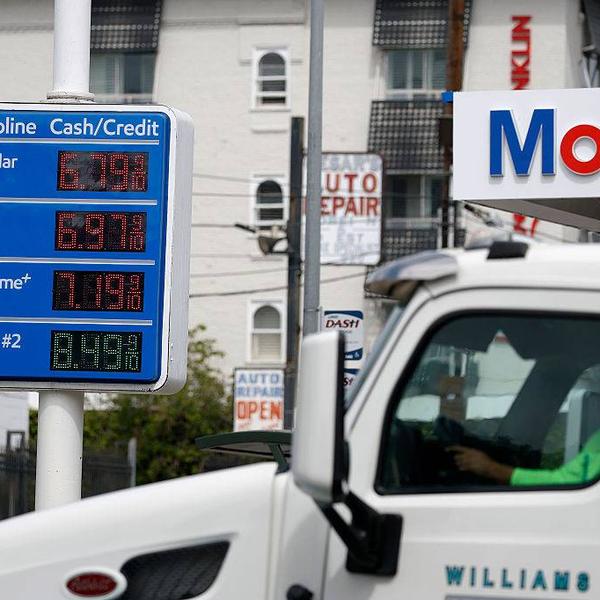
Iran’s closing of the Strait of Hormuz, through which about 20% of the worldwide oil supply flows, has sent oil prices soaring in the US and around the world. In the US, gas prices hit an average of $4 per gallon on Tuesday, and Europe has seen prices go up by about 70% since the war began.
European leaders on Tuesday were meeting to discuss the growing energy crisis, with the European Commission urging governments to consider a public call for people to reduce their use of energy, particularly in the transport sector.
As the global community faces the economic consequences of the war, Trump’s comments on Tuesday bolstered the previous day’s reporting by The Wall Street Journal that the president is “willing to end the US military campaign against Iran even if the Strait of Hormuz remains largely closed, administration officials said, likely extending Tehran’s firm grip on the waterway and leaving a complex operation to reopen it for a later date.”
At Drop Site News, journalist Murtaza Hussain joined co-founder Ryan Grim for a discussion on Tuesday about Trump’s latest comments.
While noting that Trump has “engaged in deception” and could actually “be gearing up to launch some operation intended to open the strait” by force, Hussain said that the suggestion that the US will no longer ensure global shipping routes are flowing could be a a “fall of the Berlin Wall moment.”
“The entire basis of the American empire is that it’s a maritime empire,” said Hussain. “So if now, very perfunctorily, the US is saying, ‘We’re not going to defend one of the most important shipping lanes on the entire planet,’ where 20% of the world’s energy comes out of… It’s kind of like the Suez crisis, which put the nail in the coffin of the British empire.”
https://twitter.com/i/broadcasts/1nxeLyewNPnJX
Grim added that despite Hegseth’s claim that the US has “set the conditions for success” in the Strait of Hormuz, the Trump administration actually “took an open strait, made it closed, and are now going to walk away.”
The end result of the US and Israel’s decision to attack Iran could be the further isolation of the two countries, said Grim.
“If the US decides it doesn’t have the military capacity or willingness to open the strait violently, the idea that France is going to do it is preposterous,” he said. “What France would more likely do is call up Iran and say, ‘What’s the price?’… If you’re Israel and you’re calling Iran, you’re probably not going to get the same deal… You would imagine Iran would say, ‘Here’s what it costs, and it gets a little cheaper if you cut ties with Israel…’ All of a sudden, they’re a global player now, because they have this leverage.”
Original article by Julia Conley republished from Common Dreams under Creative Commons (CC BY-NC-ND 3.0).


Original article by Ramzy Baroud republished form Common Dreams under Creative Commons (CC BY-NC-ND 3.0).

The judgment on the Trump administration’s war on Iran is already largely settled across mainstream media, public opinion, and much of the analytical sphere.
What remains supportive of the war is limited to two predictable camps: official government discourse and the president’s most loyal supporters, along with entrenched pro-Israel constituencies.
RECOMMENDED…


Beyond these circles, the war is widely understood as reckless, unjustified, and strategically incoherent.
Among the wider American public, this conclusion is not abstract. It is shaped by growing unease, economic anxiety, and a mounting sense that the war lacks both purpose and direction.
A defeat in Iran would not simply be a policy failure; it would represent the collapse of that identity. For a leader driven by narcissistic imperatives, such a collapse is existential, threatening not only his political standing but his relationship with his own base.
Since the outbreak of the war on February 28, 2026, polling has consistently pointed in one direction. A Pew Research poll in late March found that 61 percent of Americans disapprove of Trump’s handling of the conflict.
Another AP-NORC survey showed that six in ten Americans believe US military action against Iran has already “gone too far,” while even Fox News polling found 58 percent opposition.
These numbers confirm a broader trend that began early in the war and has only intensified. Reuters reported on March 19 that just 7 percent of Americans support a full-scale ground invasion.
In that same reporting, nearly two-thirds of respondents said they believe Trump is likely to pursue one anyway, highlighting a growing disconnect between policy and public will.
Days later, Reuters noted that Trump’s approval rating had dropped to 36 percent, with rising fuel prices and economic instability cited as key drivers.
The longer the war continues, the more its consequences are internalized by ordinary Americans, turning distant conflict into immediate economic pressure.
Among the American intelligentsia, opposition is no longer confined to traditional anti-war circles. It now spans ideological boundaries, including segments of Trump’s own political base.
Reporting from the 2026 Conservative Political Action Conference, The Guardian observed that many MAGA supporters warned the war risks becoming another “forever war.”
This convergence is significant, reflecting not a passing disagreement but a deeper structural shift in public perception.
Yet mainstream media—from CNN to Fox News—has largely avoided confronting what many Americans already recognize: that the war aligns closely with the agenda of Israeli Prime Minister Benjamin Netanyahu.
Within Washington itself, unease is also becoming more explicit. The Wall Street Journal reported in March that lawmakers from both parties are increasingly skeptical of the administration’s approach.
At the strategic level, the war’s foundational assumptions have already begun to unravel. Israel’s early calculations that escalation might trigger internal collapse in Iran have failed to materialize.
Iran’s political system remains intact, its leadership stable, and its military cohesion unbroken under Supreme Leader Ali Khamenei.
At the same time, Tehran has demonstrated its ability to retaliate across multiple fronts, targeting Israeli territory and US military assets in the region.
Its geographic leverage over the Strait of Hormuz continues to exert pressure on global energy markets, amplifying its strategic position despite sustained attacks.
The structural reality is therefore unavoidable. Regime change in Iran would require a massive ground invasion, a broad coalition, and a prolonged occupation.
Even under such conditions, success would remain uncertain, as the experience of Iraq has already demonstrated with devastating clarity.
This raises the central question: why continue a war whose strategic premises are already collapsing?
Part of the answer lies not in strategy, but in psychology. A substantial body of political psychology research, frequently cited in relevant 2026 analyses, describes Trump’s leadership style as deeply narcissistic. Traits such as grandiosity, hypersensitivity to criticism, and an overriding need to project dominance are not incidental—they actively shape decision-making.
Trump’s rhetoric has long relied on humiliation, domination, and spectacle, framing politics as a contest of strength rather than negotiation.
Within this framework, escalation becomes a psychological necessity. To retreat risks appearing weak, while compromise risks humiliation.
For a leader whose identity is built on projecting strength, such outcomes are politically and personally intolerable.
This dynamic is reinforced by the broader culture of the administration, where senior officials have repeatedly relied on language such as “obliteration” and “total destruction.”
Such rhetoric, however, has not been matched by evidence of a coherent long-term strategy, exposing a widening gap between performance and planning.
At the same time, the administration’s fixation on masculine power—on dominance, strength, and spectacle—has contributed to a profound underestimation of its adversary.
Iran is not a fragmented state waiting to collapse, but a regional power with decades of experience in asymmetric warfare and strategic resilience.
Yet Trump appears to have operated under the assumption that American power alone guarantees outcomes, an illusion reinforced by past displays of military force.
Reuters reported in late March that Trump is now increasingly pressured to “end the war” quickly, as the administration confronts what it described as “only hard choices.”
The same report cited officials acknowledging that there is no clear exit strategy, leaving the administration caught between escalation and political fallout.
One official told Reuters that there are “no easy solutions” left, underscoring the depth of the strategic impasse.
Another added that any withdrawal would have to be framed carefully to avoid appearing as a defeat, reflecting the administration’s concern with optics as much as outcomes.
This is where the psychological dimension becomes decisive. Trump has constructed a political identity rooted in strength, dominance, and victory.
A defeat in Iran would not simply be a policy failure; it would represent the collapse of that identity. For a leader driven by narcissistic imperatives, such a collapse is existential, threatening not only his political standing but his relationship with his own base.
This is why some analysts—and even figures within Trump’s own orbit—have begun to float a theatrical exit strategy. As Reuters reported on March 14, White House adviser David Sacks stated bluntly that the United States should “declare victory and get out” of the war on Iran, calling for disengagement despite the absence of a clear strategic outcome.
Such a move would allow Trump to claim success while disengaging from an increasingly untenable conflict, preserving the image of strength even in the face of strategic failure.
But this reveals the deeper truth of the war. The “victory” being pursued is not military—it is psychological.
The US-Israeli war on Iran is therefore not only a moral and legal crisis. It is also a geopolitical catastrophe shaped, in no small part, by the psychology of a leader unwilling to confront the consequences of his own disastrous decisions.
Original article by Ramzy Baroud republished form Common Dreams under Creative Commons (CC BY-NC-ND 3.0).


https://morningstaronline.co.uk/article/starmer-lying-over-war-iran

SIR KEIR STARMER is “lying to the British public” on the war on Iran that has “detonated a bomb” on the world’s economy, campaigners slammed yesterday.
The comments came as the Prime Minister insisted Britain would not get “dragged into the Iran war” during Labour’s launch of its local elections campaign in Wolverhampton.
He said: “People look at their screens and they’re worried when they see explosions, infrastructure blown up, the rhetoric that goes with it.
“And therefore it’s really important that I reiterate where I stand and where this government stands, because this is not our war and we are not going to be dragged into it.”
He said that this applies “whatever the pressure” to join in and “whoever it’s coming from.”
[Linked Youtube video not in original article]
But campaigners pointed out that the claims were not true.
Stop the War Coalition convener Lindsey German said: “Keir Starmer is lying to the British public when he claims Britain isn’t being dragged into the US’s war on Iran.
“And people aren’t fooled by his claims that our military bases are being used only for defensive purposes, because the fact is that RAF Fairford is being used to illegally attack Iran.”
…
https://morningstaronline.co.uk/article/starmer-lying-over-war-iran


The Iran war has led to a surge in pessimism in the UK as half of households are already struggling to afford everyday essentials.
The escalating conflict in the Middle East, which has driven the price of oil, gas, crop fertiliser and other raw materials sharply higher, threatens to cause another cost of living shock.
The latest Which? consumer insight tracker found that price pressures were forcing half of households, an estimated 14 million, to make at least one adjustment – dip into savings, sell possessions or borrow money – to cover the cost of essentials on a daily basis.
Confidence in the future of the UK economy plummeted by 13 points to a score of -56 in the month to 13 March, the lowest level recorded since the end of 2022, the tracker found.
Which? said this score reflected “a deep-seated pessimism across the country”, with two-thirds (67%) of UK adults now expecting the national economy to worsen over the next 12 months, while just 12% think it will improve.
Confidence has not yet reached the depths of the pandemic, when the score hit -78, or the 2022 cost of living crisis, when it fell to -70, but the drop highlights a growing strain as millions of households continue to struggle.
…
Article continues at https://www.theguardian.com/business/2026/mar/30/pessimism-takes-root-uk-shoppers-struggle-essentials-iran-war-prices