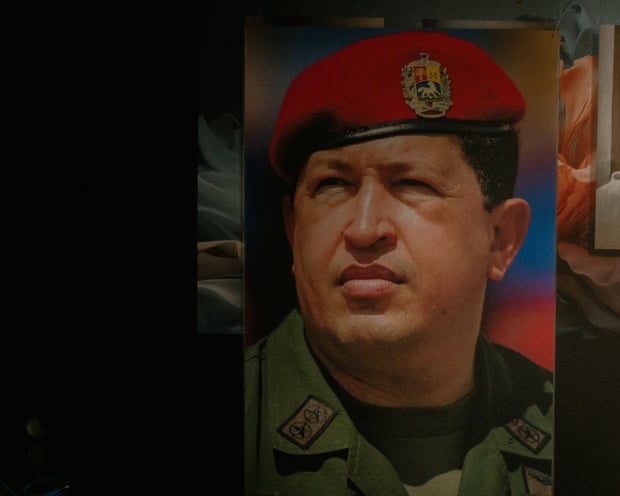
An image of Venezuela’s former president Hugo Chávez in Mario Silva’s home studio in La Guaira. Photograph: Andrea Hernández Briceño/The Guardian
Diehard Hugo Chávez supporters struggle to comprehend ideological U-turn being executed by Delcy Rodríguez’s interim administration
He was one of the most passionate propagandists for Hugo Chávez’s Bolivarian revolution: a feisty leftist TV personality who spent more than two decades singing the movement’s praises on his state-funded show, The Razorblade.
Mario Silva’s devotion was such that he often hosted his programme with Chávez’s portrait behind him and he had El Comandante’s curly signature tattooed on to his left wrist.
But nine months after Venezuela’s political landscape was scrambled by Donald Trump’s abduction of Chávez’s heir, Nicolás Maduro, Silva’s show has been cancelled, and its host is livid about the revolution’s direction under Maduro’s former deputy, Delcy Rodríguez.
“[I feel] a lot of disappointment – depressed … and sometimes I wake up and feel like the world is collapsing around me,” the 66-year-old said during a rare interview at his home studio in the mountains outside the capital, Caracas.
Silva has spent recent weeks railing against Rodríguez’s interim administration on YouTube, his home since his programme on state TV was axed, berating those he blames for Venezuela’s “shameful and utterly illegitimate surrender” to the US.
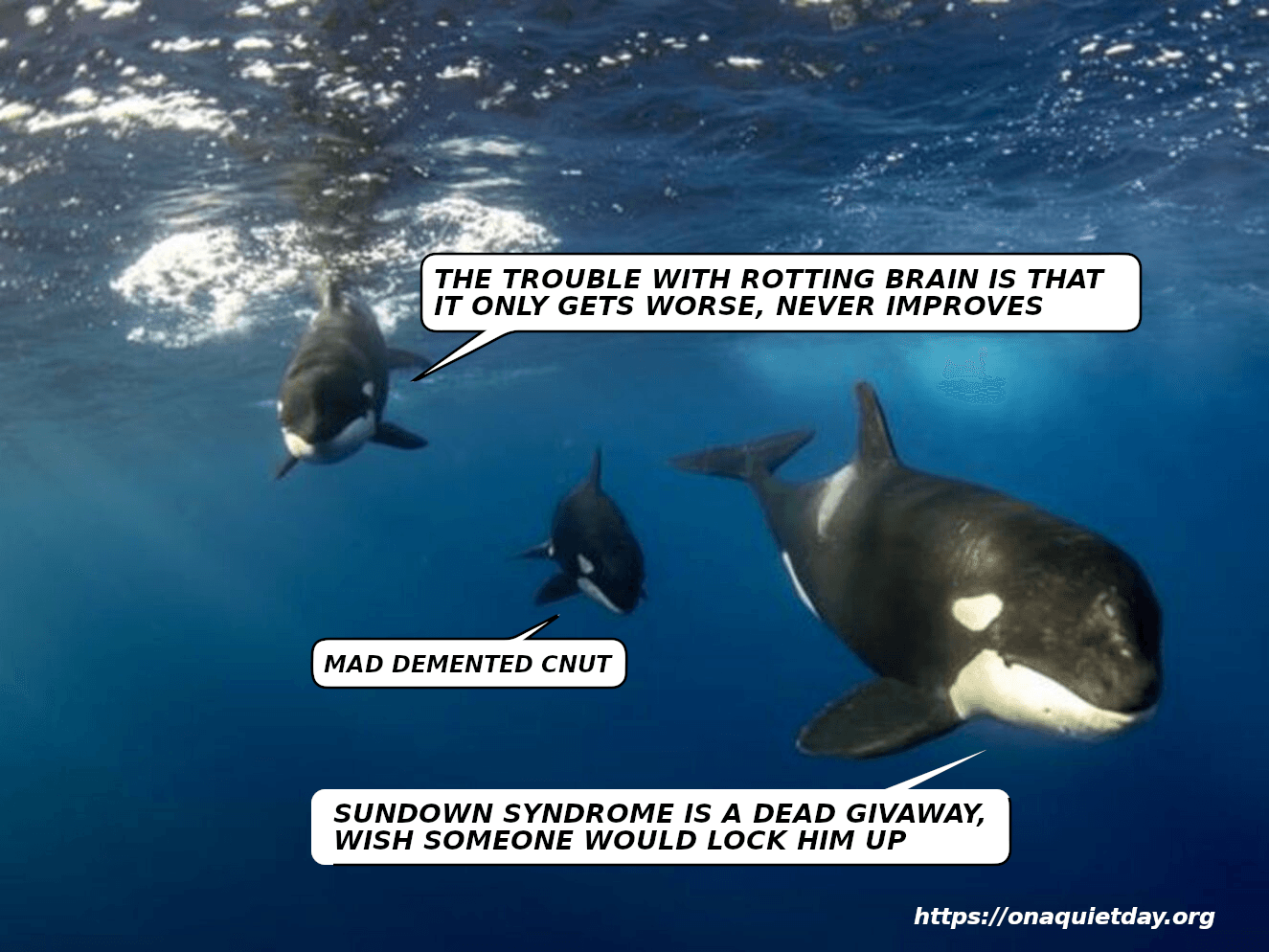
Climate science denier Donald Trump confirms that he knows nothing about democracy and that more liquid gold is being secured according to his policy of global privateering.Donald Trump sings and dances, says that it’s fun to kill everyone … unless he gets distracted or falls asleep.Orcas discuss rotting brain, front Orca says he wishes someone would lock him up, small Orca speaks bluntly.
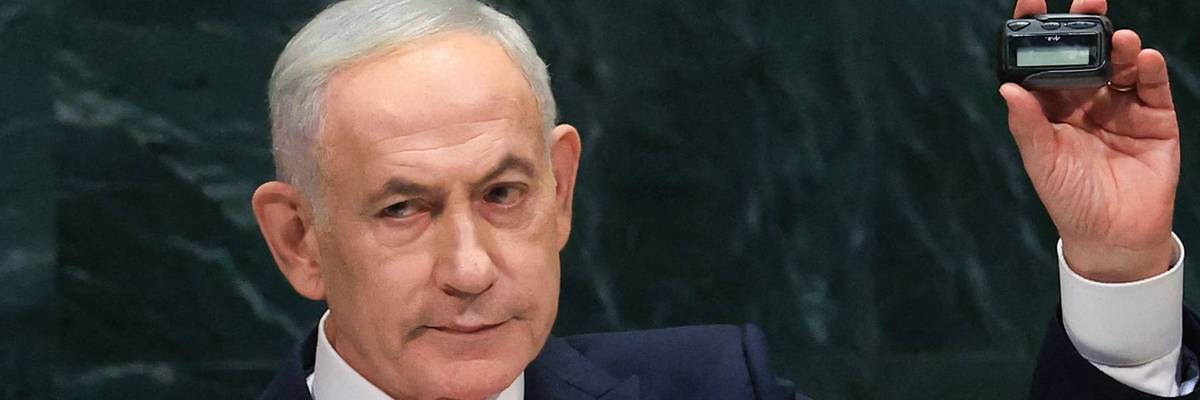
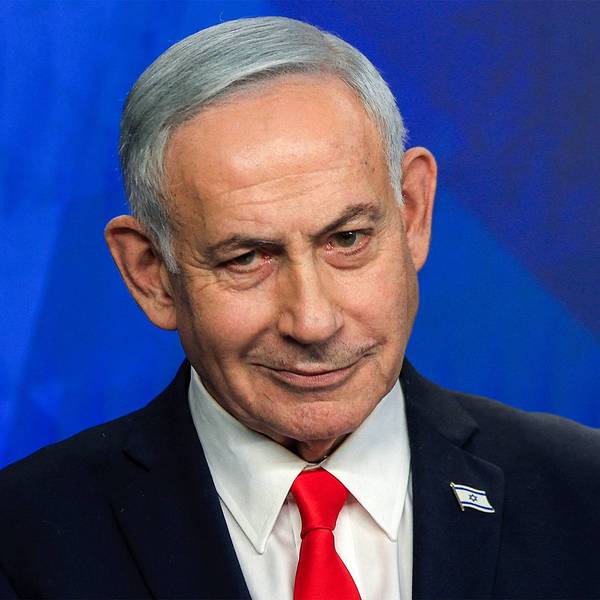
Israeli Prime Minister Benjamin Netanyahu holds up a pager as he speaks during the 81st United Nations General Assembly at UN Headquarters in New York on September 24, 2026. (Photo by Timothy Clary/AFP via Getty Images)
“No lie can change the fact that he remains the subject of an International Criminal Court arrest warrant alleging war crimes and crimes against humanity,” New York City’s mayor said of the Israeli prime minister
New York City Mayor Zohran Mamdani hit back Thursday after Israeli Prime Minister Benjamin Netanyahu took to the United Nations General Assembly podium to accuse him of supporting Hamas and making Jewish New Yorkers feel unsafe—remarks that came after delegates from scores of countries walked out of the chamber to protest the far-right fugitive’s presence.
Refuting allegations that Israel is committing genocide in Gaza—where Israeli forces have killed more than 73,000 Palestinians, including more than 21,500 children, since the Hamas-led attack of October 2023—Netanyahu said, “To all those spreading these lies about my country and about our brave soldiers, whether they sit in this hall or in the office of the antisemitic mayor of New York City, I say this: Shame on you.”
“Mr. Mamdani, since you were elected mayor of this city, many Jews no longer feel safe in New York,” the prime minister claimed. “It’s no wonder… You falsely and repeatedly accuse Israel of genocide. Israel didn’t commit genocide. Israel prevented genocide. And that’s exactly what Mr. Mamdani’s Hamas buddies would have done to us had we not stopped them. They would have killed every last one of us.”
Mr. Netanyahu, you do not speak for New York’s Jewish community.
Your government arrests hundreds of innocent yeshiva students each week, while we in New York practice our faith and live freely and safely.
Mayor Zohran Mamdani is a friend and ally to our community
Mamdani issued a statement later Thursday saying: “As he has done time and again, Prime Minister Netanyahu used his speech to repeat baseless lies meant to sanitize his genocide of Palestinians. Yet no lie can change the fact that he remains the subject of an International Criminal Court arrest warrant alleging war crimes and crimes against humanity.”
Netanyahu and Yoav Gallant, his former defense minister, are fugitives from the International Criminal Court, where they are accused of murder and forced starvation of Palestinians in Gaza. The ICC also issued arrest warrants for three Hamas leaders, but Israel assassinated them.
While neither Israel nor the United States is a party to the Rome Statute governing the ICC, the treaty states that people from nonsignatory states who commit alleged crimes in states that are party to the treaty—as Palestine is—can be arrested in third countries and subsequently tried by the court.
Mamdani has said that Netanyahu should be arrested and brought before the Hague-based tribunal for trial, but that he lacks the legal authority to apprehend the prime minister in New York.
The International Court of Justice—also located in The Hague, Netherlands—is currently processing a genocide case filed against Israel by South Africa and formally supported by nearly 20 nations. The case is based on what the ICJ called the plausibility that Israel is committing genocide in Gaza. The court has issued a series of provisional orders for Israel to adhere to the Genocide Convention—orders that critics say Israel has simply ignored.
Last year, an independent UN commission of inquiry found that Israel had committed genocide in Gaza, a conclusion shared by the International Association of Genocide Scholars and other experts including many Israeli and diaspora Jewish academics, jurists, human rights campaigners, and others.
As Netanyahu prepared to deliver his UN speech Thursday, delegates from a reported 77 nations walked out of the chamber in protest.
“If there are any other moral cowards who haven’t yet left this hall—please do so now,” the prime minister said. “Thank you very much.”
While some observers applauded the display of solidarity with Palestinians, others expressed disgust that Netanyahu was allowed to address the world body and that he has not yet been brought to justice.
“The head of the genocidal Israeli apartheid regime, a fugitive indicted for crimes against humanity, was allowed to enter the US and to address the UNGA today, without arrest,” said Craig Mokhiber, a former senior UN official who resigned in protest of what he described as the world body’s failure to stop Israel’s genocidal war.
“Netanyahu insulted delegations, openly celebrated the regime’s many crimes, bragged about its terrorist pager attacks on Lebanon, repeated the regime’s debunked genocide propaganda, defended the illegal occupation of Palestine and Syria, lied incessantly, called violent, racist, illegal Zionist settlers ‘peaceful’ and ‘honorable people,’ labeled human rights defenders as ‘antisemites,’ even arrogantly attacked American citizens and officials for speaking out against the regime’s crimes,” he continued.
“This violent psychopath cannot hide behind [US President Donald] Trump’s skirts forever,” Mokhiber added. “He (and his collaborators) must be captured and brought to justice. And the UN must finally act to isolate the regime and hold it accountable. ”
Referring to Netanyahu’s address and Trump’s threat on Tuesday to “annihilate” Iran during his rambling, lie-laden General Assembly speech, University of Colorado Law School associate professor Maryam Jamshidi said on social media, “Between Trump threatening Iran w/annihilation and Netanyahu bragging about Israel’s pager attacks, the UN podium has become a venue for promoting genocide, crimes against humanity, and war crimes.”
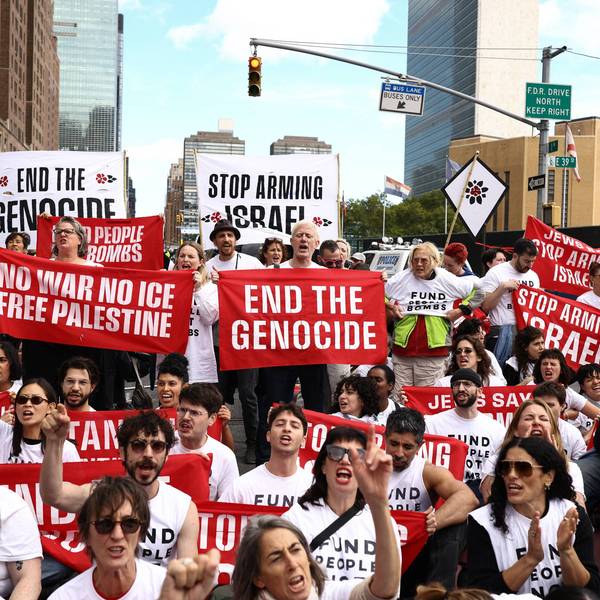
Meanwhile, people took to the streets of New York to protest Netayahu’s presence in the city, US complicity in Israeli crimes, and to show solidarity with Palestinians.
Hundreds of protesters gathered outside UN headquarters in Turtle Bay for a sit-in demonstration led by Jewish Voice for Peace. Demonstrators blocked roads while chanting slogans including, “Netanyahu you can’t hide, you are wanted for genocide!”
As Common Dreams reported earlier Thursday, more than 100 demonstrators were arrested.
THEY’RE PUTTING THEM IN THE BUS! Susan Sarandon Chelsea Manning, and MANY OTHER CELEBS ARRESTED at UN protest ahead of Israeli Prime Minister Benjamin Netanyahu's address! 👀
The 79-year-old actress – who has previously said she's been blacklisted over pro-Palestinian comments… pic.twitter.com/pvzuRGwGG4
Among those reportedly arrested were progressive congressional candidate Darializa Avila Chevalier; actors Susan Sarandon, Hannah Einbinder, and Cynthia Nixon; New York state Assemblymember Emily Gallagher (D-50); Democratic New York City Councilmembers Chi Ossé and Alexa Avilés; former Army whistleblower Chelsea Manning; and Palestinian American political activist Linda Sarsour.
“I will never, ever be silent,” Sarsour said on Facebook. “I will never just accept the world as it is. I want history to record for future generations of Palestinians that we fought. At every turn. In every way. When it was easy and when it was hard.”
“I want Palestinian girls in Gaza to see me in my hijab and my unapologetic Palestinian blood fighting for them to live FREE,” she added. “This is bigger than all of us. Netanyahu is a war criminal and belongs in The Hague, not the United Nations.”
Climate science denier Donald Trump confirms that he knows nothing about democracy and that more liquid gold is being secured according to his policy of global privateering.Orcas discuss Donald Trump and the killer apes’ concept of democracy. Front Orca warns that Trump is crashing his country’s economy and that everything he does he does for the fantastically wealthy.
This work by Middle East Monitor is licensed under a Creative Commons Attribution-NonCommercial-ShareAlike 4.0 International License.
Israel official government aircraft, Wing of Zion. [wikipedia]
The plane carrying Israeli Prime Minister Benjamin Netanyahu to the United States to attend the UN General Assembly again used the airspace of Greece, Italy, and France despite an arrest warrant issued against him by the International Criminal Court, Anadolu reports.
According to flight-tracking website Flightradar24, Netanyahu’s plane left Israel early Thursday for the United States to attend the 81st session of the UN General Assembly and crossed the airspace of European countries that are members of the International Criminal Court.
All three countries are parties to the Rome Statute, the treaty that established the ICC, and are generally required to cooperate with the court’s requests to arrest and surrender wanted individuals found on their territory.
The treaty, however, does not explicitly require a member state to intercept or force down an aircraft merely because a person subject to an ICC arrest warrant is flying through its airspace.
Netanyahu’s plane followed a similar route during his trip to the US in July, also crossing the airspace of Greece, Italy and France.
When Netanyahu traveled to the United States in September 2025 to attend the previous UN General Assembly, his plane took a route over the Mediterranean Sea and through the Strait of Gibraltar, apparently to avoid the airspace his plane used this year.
On Nov. 21, 2024, the International Criminal Court issued arrest warrants for Netanyahu and former Israeli Defense Minister Yoav Gallant on charges of war crimes and crimes against humanity in the Gaza Strip.
Israeli daily Yedioth Ahronoth reported Wednesday that Netanyahu would not land at John F. Kennedy International Airport in New York due to concerns that New York City Mayor Zohran Mamdani might not allow the plane to remain on the tarmac.
His plane instead will land at a military airport in New Jersey — exclusively under the control of the federal government under the Trump administration — or at Newark Airport in the neighboring state of New Jersey, it added.
Netanyahu is scheduled to address the 81st session of the UN General Assembly at 2 pm New York time (1800GMT) Thursday.
His visit comes amid expectations of protests against Netanyahu in New York, in condemnation of Israel’s genocidal war on the Gaza Strip and attacks in the occupied West Bank.
Israel has been waging an extermination war in Gaza since Oct. 8, 2023, killing nearly 74,000 Palestinians and injuring over 175,000, most of them children and women.
In addition to the casualties, Israel has destroyed around 90% of Gaza’s civilian infrastructure, while the UN has estimated the cost of reconstruction at about $70 billion.
Alongside its genocidal war in Gaza, attacks by the Israeli army and occupiers against Palestinians and their property in the occupied West Bank, including East Jerusalem, have intensified, drawing rising international condemnation in recent months.
This work by Middle East Monitor is licensed under a Creative Commons Attribution-NonCommercial-ShareAlike 4.0 International License.
Climate science denier Donald Trump confirms that he knows nothing about democracy and that more liquid gold is being secured according to his policy of global privateering.Orcas discuss Donald Trump and the killer apes’ concept of democracy. Front Orca warns that Trump is crashing his country’s economy and that everything he does he does for the fantastically wealthy.
This work by Middle East Monitor is licensed under a Creative Commons Attribution-NonCommercial-ShareAlike 4.0 International License.
United States President Donald Trump and Israeli Prime Minister Benjamin Netanyahu hold a joint press conference in the East Room at the White House in Washington, D.C., United States on February 04, 2025. [Celal Güneş – Anadolu Agency]
Israeli analysts and figures criticized the global standing of Prime Minister Benjamin Netanyahu and Israel as he visits New York this week to address the UN General Assembly, saying he will hold few meetings during his short stay, as he is now internationally shunned, Anadolu reports.
One analyst said US President Donald Trump – a longtime ally of the Israeli leader – would rather not meet with Netanyahu.
Barak Seri, an Israeli military intelligence analyst and former officer, said Netanyahu’s visit to New York was “very unusual, very short, and almost devoid of meetings.”
“Netanyahu is now ostracized, and Trump does not want to meet him,” Seri told local radio station 103 FM.
Eli Ohana, a former soccer star and former president of Israeli club Beitar Jerusalem, said the situation in Israel is “not ideal,” adding that he avoids revealing his nationality while on foreign soil.
“The situation in Israel is not ideal, and we did not reveal our Israeli identity outside our country. When I was on vacation in Greece, I hid my identity,” Ohana told the same radio station.
“Today, we are going through an abnormal period,” he added.
Dan Shapiro, the former US ambassador to Tel Aviv, said Israel’s standing is facing an “unprecedented decline” in the US and that Netanyahu “is not part of the solution.”
Israeli radio station Reshet Bet quoted Shapiro, who served as ambassador from 2011 to 2017, as saying: “There is an unprecedented decline in Israel’s standing in the United States.”
He added that the decline is “unprecedented even among Republicans” – members of Trump’s party, who also tend to be pro-Israel – and that “it is difficult to see Netanyahu as part of the solution to this situation.”
“Trump may also reach the conclusion that it would be easier to deal with another government in Israel,” Shapiro added, with the Oct. 27 Israeli elections currently too close to call.
Netanyahu has headed the current government since late December 2022, a government described as the most right-wing in Israel’s history.
– Under a legal cloud
Netanyahu is scheduled to address the 81st session of the UN General Assembly at 2 pm New York time (1800GMT) Thursday.
Netanyahu’s current schedule in New York does not include a meeting with Trump, despite previous Israeli efforts to arrange a meeting between them, according to Israeli media reports.
The visit comes amid expectations of protests against Netanyahu in New York, in condemnation of Israel’s genocidal war on the Gaza Strip and attacks in the occupied West Bank.
Israel has been waging an extermination war in Gaza since Oct. 8, 2023, killing nearly 74,000 Palestinians and injuring over 175,000, most of them children and women.
In addition to the casualties, Israel has destroyed around 90% of Gaza’s civilian infrastructure, with the UN estimating the cost of reconstruction at about $70 billion.
Alongside its genocidal war in Gaza, attacks by the Israeli army and occupiers against Palestinians and their property in the occupied West Bank, including East Jerusalem, have intensified, drawing growing international condemnation.
Israel is scheduled to hold general elections on Oct. 27.
Netanyahu also faces charges of bribery, fraud, and breach of trust in three separate corruption cases. Critics in Israel and elsewhere say he has prolonged Israel’s military offensives to be able to continue delaying his court hearings.
Separately, in November 2024, the International Criminal Court issued arrest warrants for Netanyahu, accusing him of war crimes and crimes against humanity.
This work by Middle East Monitor is licensed under a Creative Commons Attribution-NonCommercial-ShareAlike 4.0 International License.
Climate science denier Donald Trump confirms that he knows nothing about democracy and that more liquid gold is being secured according to his policy of global privateering.Orcas discuss Donald Trump and the killer apes’ concept of democracy. Front Orca warns that Trump is crashing his country’s economy and that everything he does he does for the fantastically wealthy.
This work by Middle East Monitor is licensed under a Creative Commons Attribution-NonCommercial-ShareAlike 4.0 International License.
Israeli forces uproot 400 olive trees belonging to Palestinians and destroy 31 dunams of land with heavy machinery in the town of Beit Rima, northwest of Ramallah, in the West Bank, Palestine on September 24, 2026. [Issam Rimawi – Anadolu Agency]
The Israeli army uprooted 400 olive trees and bulldozed 31 dunams (3.1 hectares, 7.6 acres) of Palestinian-owned land Thursday in Beit Rima in northwestern Ramallah in the occupied West Bank as harvest season approaches, Anadolu reports.
Sources told Anadolu Agency that bulldozers cleared the land and uprooted the trees, two days after Israeli authorities issued a military order targeting two areas of land in the town.
They added that the military order demanded “removing wild vegetation and uprooting olive and other trees from the targeted areas.”
The Palestinian Colonization and Wall Resistance Commission said Tuesday that Israeli authorities issued five military orders targeting the uprooting of trees and removal of wild vegetation from 533.5 dunams of Palestinian land in the Jenin, and Ramallah and Al-Bireh governorates in the northern and central West Bank.
Since the beginning of 2026 through Sept. 22, Israel has issued 51 orders to remove trees and vegetation in the occupied West Bank, targeting 2,093 dunams of land, according to data from the Colonization and Wall Resistance Commission.
The uprooting operation comes as the olive harvest season approaches. Olive trees are a major source of income for thousands of Palestinian families. Bulldozing and uprooting operations cause losses to farmers and threaten their ability to access and cultivate their land.
Afrah Qadura, 65, from Beit Rima, told Anadolu Agency that residents learned of the military order two days ago and saw a map at the municipality building showing the areas targeted for the removal of olive trees.
He said landowners were given 12 hours to remove trees before the Israeli army would implement the order. “How can we remove trees planted by our fathers and uproot them with our own hands?” he asked rhetorically.
Qadura said the olive trees had been planted over decades, beginning in the late 1960s and continuing through the 1970s and 1980s, as well as trees planted in the 1990s.
He said some of the trees uprooted Thursday had become highly productive for years, adding that olive trees are a primary source of livelihood for residents.
Palestinians in the occupied West Bank are preparing for the olive harvest season, which usually begins in October.
Thousands of Palestinians rely on olive trees and their crops as a source of income, alongside their connection to the land and agricultural heritage passed down through generations.
“We are proud of those trees like our children,” said Qadura, noting the years he and his father spent cultivating the land, caring for the trees and watering them.
He added that he used to bring water from a well to water the saplings and follow their growth during the years. “My father worked hard planting the trees, and we also worked hard caring for them.”
He said his family continued to tend, clean and care for the trees until they became part of their lives. Losing them in this way was, for him, like losing one of his children.
Qadura said uprooting the trees would not force his family to abandon their land, stressing that he and his family intend to replant the trees uprooted by the Israeli army.
“We will continue planting trees like my father did, and our children will continue after us,” he said, citing his family’s connection to the land and its cultivation across generations.
Abdul Rahman al-Rimawi, mayor of Bani Zeid al-Gharbia, which includes Beit Rima and other towns, told Anadolu Agency that everybody was surprised Thursday when Israeli army bulldozers began uprooting mature olive trees in the town in an area of 31 dunams.
Rimawi said the trees “are hundreds of years old,” and that uprooting them not only destroys the trees, but also affects the livelihoods of Palestinian families that depend on them.
He said the operation comes as the olive harvest season approaches, describing it as part of “arbitrary Israeli practices against people, trees and stones.”
Rimawi said the residents of Beit Rima “are not isolated from this people” and what Palestinians are subjected to in terms of harassment, killings, displacement and the uprooting of olive trees.
He implored international institutions and relevant parties to work to halt the decision to uproot the trees, noting that there is ongoing communication with the Colonization and Wall Resistance Commission to that end.
Rimawi said Israeli authorities had not, according to him, explained the grounds for implementing the decision, and that what is happening represents “Israeli practices against all members of the Palestinian people” in the occupied West Bank.
This work by Middle East Monitor is licensed under a Creative Commons Attribution-NonCommercial-ShareAlike 4.0 International License.
Climate science denier Donald Trump confirms that he knows nothing about democracy and that more liquid gold is being secured according to his policy of global privateering.Orcas discuss Donald Trump and the killer apes’ concept of democracy. Front Orca warns that Trump is crashing his country’s economy and that everything he does he does for the fantastically wealthy.