This work by Middle East Monitor is licensed under a Creative Commons Attribution-NonCommercial-ShareAlike 4.0 International License.
A view of the vessels passing through Strait of Hormuz following the two-week temporary ceasefire reached between the United States and Iran on the condition that the strait be reopened, seen in Oman on April 08, 2026. [Shadi J. H. Alassar – Anadolu Agency]
Tehran says Washington has accepted some of its 7 conditions but must clarify unresolved issues
Iran considers Washington’s response to its seven conditions for reopening the Strait of Hormuz “insufficient,” a senior Iranian official said, according to the semi-official Tasnim News Agency.
Mohsen Rezaei, secretary of Iran’s Supreme National Security Council, said the US had accepted some of Tehran’s conditions, while others remained unclear.
Rezaei said Washington had approached Tehran over the past two months through three channels — Pakistan, Qatar and Iraq — asking Iran to submit its proposals.
About two weeks ago, Iran conveyed seven conditions to the US, explicitly stating that the Strait of Hormuz would not reopen to Washington and no negotiations would take place until those conditions were met, he said.
Rezaei said Tehran was no longer in the process of responding to Washington because the US had already submitted its response, which Iran considered “insufficient.”
“They must clarify the issues that remain ambiguous to us,” he said.
The report did not detail all seven conditions or specify which ones Washington had accepted.
Rezaei also said the Gulf could not be secure without Iran’s management of the Strait of Hormuz, describing control over the waterway as an “immense source of national wealth and a major national asset.”
He said Iran’s interests extended beyond closing the passage and collecting transit fees.
Iranian Foreign Minister Abbas Araghchi said in late September that Tehran could reopen the strategic waterway within seven days if Washington accepted a proposal conveyed through Qatari mediation.
Under the plan, the US would be expected to take agreed steps during the first four or five days, allowing normal navigation through the strait to resume on the sixth day and negotiations on a final agreement to begin on the seventh.
Tehran’s demands include an end to hostilities, the release of frozen Iranian assets, the lifting of restrictions on Iranian oil exports and an end to the US naval blockade on Iranian ports.
Iran has kept the Strait of Hormuz restricted while demanding that Washington fulfill commitments under a June memorandum of understanding.
Tehran has said the waterway will not fully reopen until its conditions are met and US commitments are implemented.
The US and Israel launched a war against Iran on Feb. 28. Tehran responded with missile and drone attacks across the region and effectively closed the Strait of Hormuz, while Washington later imposed a naval blockade on Iranian ports.
Washington and Tehran subsequently signed a memorandum of understanding in June concerning freedom of navigation in the Strait of Hormuz, but implementation stalled over disagreements related to security in the strategic waterway.
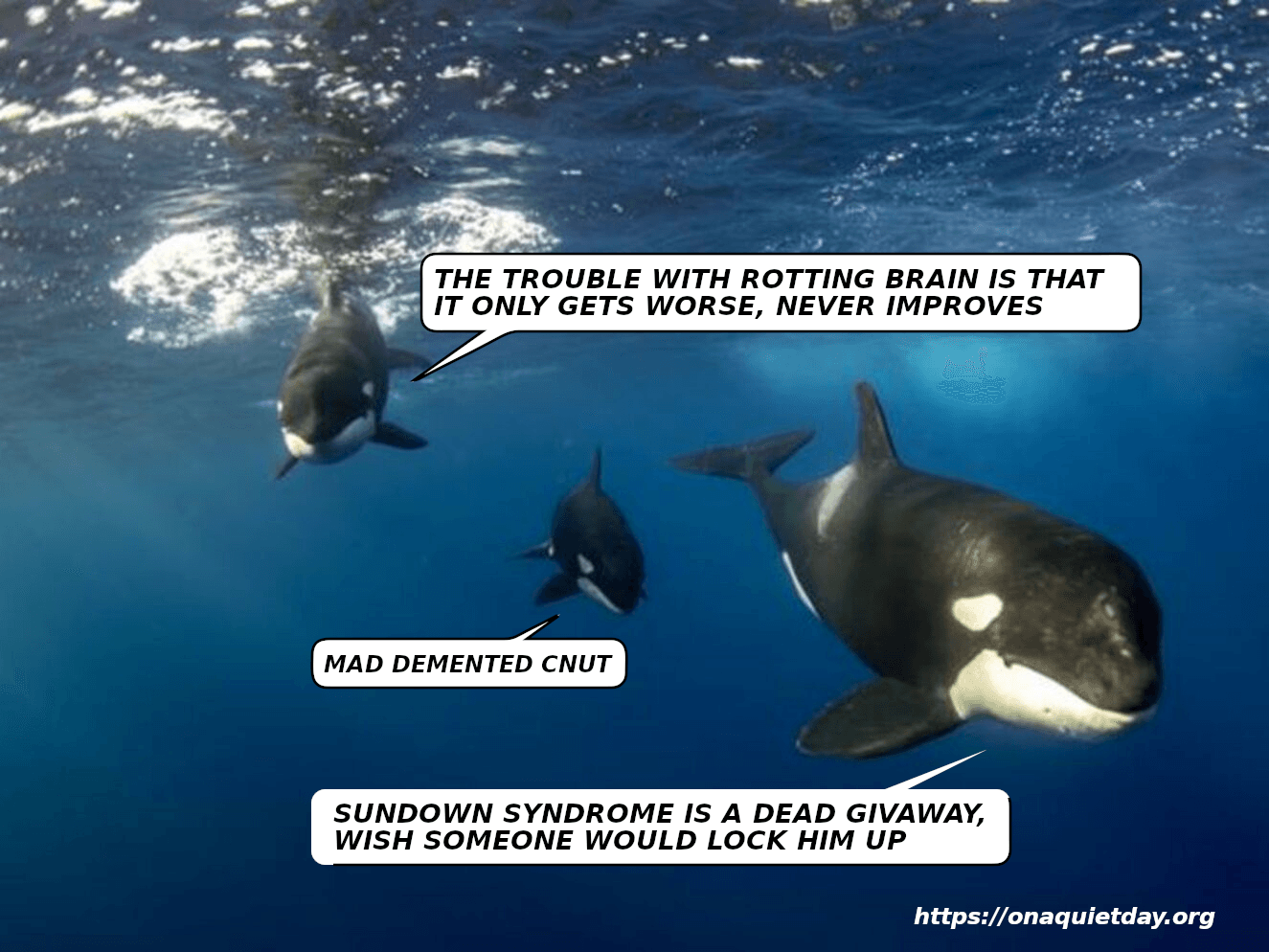
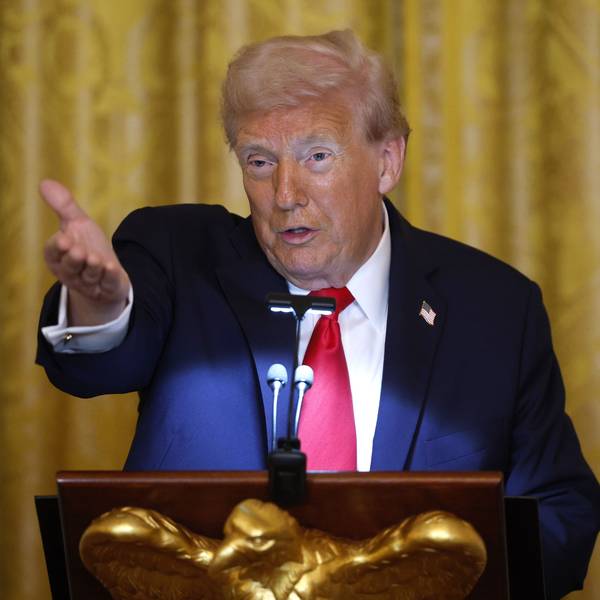
Climate science denier Donald Trump confirms that he knows nothing about democracy and that more liquid gold is being secured according to his policy of global privateering.Orcas discuss rotting brain, front Orca says Sundown Syndrome is a dead givaway and he wishes someone would Lock Him Up
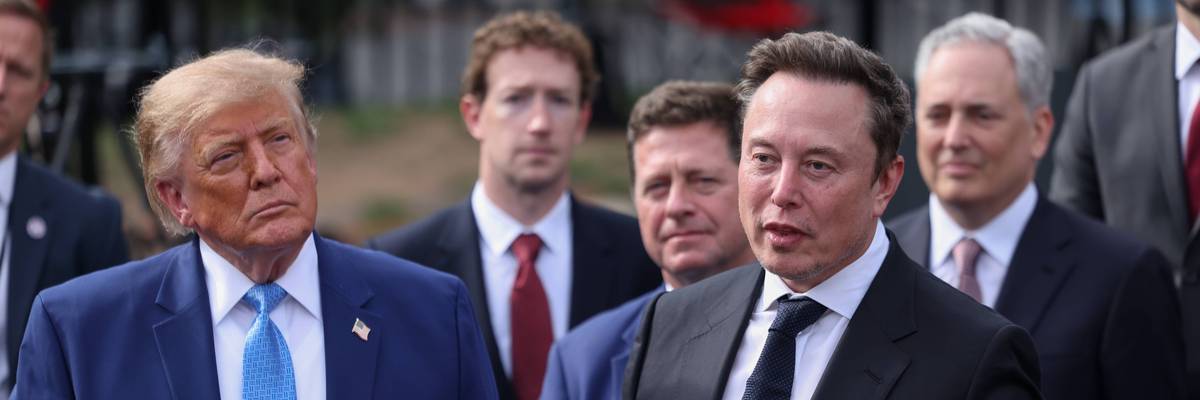
SpaceX CEO Elon Musk speaks to reporters as US President Donald Trump looks on outside the White House on September 29, 2026 in Washington, DC.(Photo by Tierney L. Cross/Pool/For The Washington Post via Getty Images)
“Allowing corporations to make political payments in order to make enforcement go away is hardly a model for governing that supposedly prioritizes ‘law and order,’” said one researcher.
The Trump administration’s canceled enforcement actions against at least 205 corporations accused of wrongdoing have been cases of powerful companies “getting what they paid for,” according to a new report by government watchdog Public Citizen.
Building on an analysis it released earlier this week regarding hundreds of canceled investigations and dismissed lawsuits against companies, many of which have ties to the administration, the group on Thursday published a follow-up report detailing just how much some of the corporations paid to have their legal troubles wiped away.
Companies that have benefited from the cancellation of enforcement have given $210.5 million in contributions and pledges to MAGA, Inc. and other super political action committees (PACs) that worked to elect President Donald Trump and other Republicans in 2024 and are continuing to back right-wing candidates in the midterms.
As Common Dreams reported Wednesday, SpaceX and Tesla CEO Elon Musk has benefited from at least eight canceled actions, with lawsuits filed against the former company by the Department of Justice’s Civil Rights Division and the National Labor Relations Board dismissed and an investigation into data center pollution presumably closed. Tesla has avoided three investigations that the National Highway Traffic Safety had begun and one that the Department of Labor has opened into contract compliance.
The cancellations didn’t come for free, Public Citizen said. Musk—who also served in the administration last year and is now helping with a Pentagon project—donated $5 million to MAGA, Inc. and has pledged to spend $100 million to help elect Republicans this year.
“Corporations and ultrawealthy executives with enormous financial interests before the federal government are pouring extraordinary sums into the president’s political operation,” said Public Citizen co-president Robert Weissman. “Once the check is cashed, the administration is pulling back enforcement actions meant to punish corporate misconduct. It’s a great deal for the corporate wrongdoers—at the expense of their victims and the American people.”
Crypto.org is another top beneficiary of Trump’s favorable treatment of the cryptocurrency industry, Wall Street, Big Tech, and large corporations that have pledged to help push his far-right agenda in the elections.
The Securities and Exchange Commission had been investigating allegations that the crypto platform was trading unregistered securities. The probe was abruptly closed in March 2025, after the company gave $35 million to MAGA, Inc. and $2 million to Keep America Great, another super PAC aligned with the president.
“Once the check is cashed, the administration is pulling back enforcement actions meant to punish corporate misconduct.”
Gemini, co-founded by Tyler and Cameron Winklevoss, had been facing a similar investigation, but it was also closed after the company gave $20 million to MAGA, Inc.—on top of $10 million each that the two founders personally donated.
“Allowing corporations to make political payments in order to make enforcement go away is hardly a model for governing that supposedly prioritizes ‘law and order,’” wrote Rick Claypool, research director for Public Citizen, in the report. “On the contrary, it is indicative of a profoundly unjust and arbitrary mode of enforcement organized around the principles of rewarding insiders, punishing outsiders, and concentrating power in the hands of an increasingly authoritarian president.”
He noted that while the Trump administration has demonstrated little interest in addressing corporate wrongdoing, “enforcement personnel and resources are being channeled toward punishing immigrants, activists, and perceived political opponents.”
“Restoring the rule of law will be a challenge for the future,” wrote Claypool, “and the path forward will require a rebalance of priorities that ensures that corporations and the powerful cannot pay to protect themselves from federal enforcement that holds them accountable when they break the law.”
Orcas discuss Donald Trump and the killer apes’ concept of democracy. Front Orca warns that Trump is crashing his country’s economy and that everything he does he does for the fantastically wealthy.Climate science denier Donald Trump confirms that he knows nothing about democracy and that more liquid gold is being secured according to his policy of global privateering.
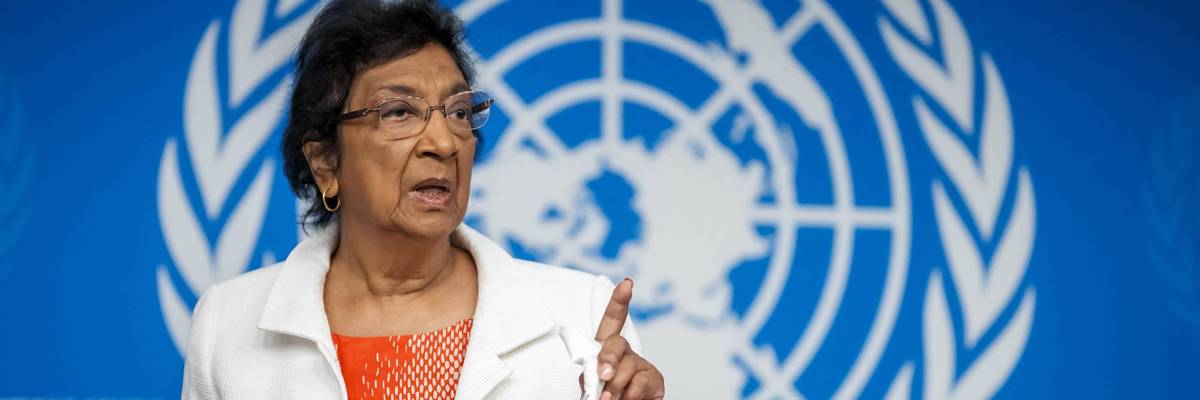
South African judge Navanethem “Navi” Pillay, chair of the Independent International Commission of Inquiry on the Occupied Palestinian Territory, including East Jerusalem, and Israel, gestures after a press conference in Geneva on September 16, 2025. The Inquiry Commission on September 16, 2025 accused Israel of committing “genocide” in Gaza in a bid to “destroy the Palestinians” there, and blamed Israel’s prime minister and other top officials for incitement.(Photo by Fabrice Coffrini / AFP via Getty Images)
“Thank you so much,” said the international jurist in a moment of jest. “If you clap a little bit more, I may share this prize with Trump.”
The international reputation of the Nobel Peace Prize, which has suffered in progressive and human rights circles over recent years, may be on the path to improvement after Friday’s announcement that this year’s award has been given to Navi Pillay, a person of “exceptional courage” who has been at the forefront of accountability efforts for apartheid, prosecuting war crimes, and upholding international law for decades.
In its statement, The Norwegian Nobel Committee said Pillay—who during her career served as a judge on the High Court in South Africa, her native country, and later the International Criminal Tribunal for Rwanda and the International Criminal Court (ICC)—“has been instrumental in ensuring that war crimes, crimes against humanity and genocide are prosecuted.”
Pillay also served for six years as the United Nations High Commissioner for Human Rights, from 2008 to 2014, and more recently chaired the UN Independent International Commission of Inquiry on the Occupied Palestinian Territory, which generated a 2025 report concluding that the Israeli government had committed genocide in Gaza.
"The last thing I did is the report on Gaza naming what is happening there as genocide. One of the main reactions to that report [was] paying tribute to me for my courage.. why would you need courage to speak the truth?"
“The last thing I did is the report on Gaza naming what is happening there as genocide,” Pillay said Friday. “One of the main reactions to that report is paying tribute to me for my ‘courage.’ And you can imagine our surprise—why would you need courage to speak the truth?”
“Is it true?” asked Pillay when first notified of the award, fittingly while at the Nuremburg Court where Nazi’s were tried for their atrocities of last century.
In a moment of levity, surrounded by colleagues applauding her achievement, Pillay said, “Thank you so much. If you clap a little bit more, I may share this prize with [US President Donald] Trump.”
Trump, accused of war crimes himself, has notoriously said he deserves the Nobel Peace Prize despite his record of violating international laws, kidnapping or assassinating foreign heads of state, initiating wars of aggression, and carrying out a lawless campaign of lethal attacks in the Pacific Ocean and Caribbean which human rights experts have denounced as “murder spree.”
Volker Türk, the current UN high commissioner for human rights, said the award going to Pillay represents “a proud moment for the global human rights movement,” and that to call it “well-deserved” would be “a understatement.”
“At a time when human rights are under attack on so many fronts, including from those who wield enormous power, this award is particularly poignant,” Türk continued. “It is an award to all those who, around the world, dedicate their lives to the defense of human rights—at great risk to their security.”
Agnes Callamard, secretary general of Amnesty International, called Pillay’s selection an “amazing moment” for human rights.
“We are at the Nuremberg Court; I cannot think of a stronger symbol for her Nobel prize,” said Callamard. “We are all so thrilled!”
“At a time of existential challenges—including more wars and conflicts than the world has seen in a long time—international law is no longer just a supplement to peace and security. It is an absolute necessity,” the Nobel Committee said in its announcement.
YouTube: Sorry, this content could not be embedded.
Warning that “the system of international law is under tremendous pressure, and its institutions are under attack,” the committee said “a shift towards power politics at the expense of legal frameworks and global respect for law and justice” threatens peace and stability worldwide, a veiled but clear reference to the antagonism the US government under Trump has shown to the ICC, the United Nations, and other legal institutions and frameworks.
“Whenever might overtakes right, it undermines stability, trust and peaceful co-existence,” the statement said. And continued:
History has shown that a world operating without the rule of law is unjust, unwise and inhumane. The judges – those who guard the thin red line between order and chaos—are therefore highly deserving of our praise. But today, as these same judges are sanctioned, and their institutions are attacked, we need people of courage, vision and determination—qualities that Navi Pillay demonstrates in her work on the bench.
Pillay, it concluded, “is one of the great defenders of international legal principles in our time. Her distinguished career reminds us of the need to support, fortify and expand the global rule of law. Navi Pillay’s commitment to justice and human dignity is a source of hope and inspiration to all who seek to bring about a more peaceful world.”
As Türk put it in his remarks, recognition of Pillay’s work and legacy by the Nobel committee is “a reaffirmation that human rights, the rule of law and justice and accountability are fundamental to everything—to peace, security and prosperity.”
Climate science denier Donald Trump confirms that he knows nothing about democracy and that more liquid gold is being secured according to his policy of global privateering.Orcas discuss Donald Trump and the killer apes’ concept of democracy. Front Orca warns that Trump is crashing his country’s economy and that everything he does he does for the fantastically wealthy.Donald Trump says that he obviously deserves a Peace prize because Obama got one and explains why he established his Bored of Peace
An oil pipeline stretches across the landscape outside Prudhoe Bay in North Slope Borough, Alaska on May 25, 2019.(Photo by Bonnie Jo Mount/The Washington Post via Getty Images)
Just over a week after a leading US Senate Democrat described President Donald Trump’s relationship with fossil fuel giants as “old-fashioned corruption, by a thuggish government and a desperate industry,” his administration on Thursday announced yet another giveaway to climate polluters who want to exploit the Arctic.
The US Department of the Interior is moving forward with a plan to allowoil and gas companies to conduct certain wintertime activities at the National Petroleum Reserve in Alaska without reviews generally required by the National Environmental Policy Act—a landmark law long targeted by Trump’s Republican Party.
“In issuing this categorical exclusion, this administration is seeking to fast-track large-scale oil drilling and seismic exploration without any further environmental analysis or public input,” warnedEarthjustice attorney Janet Bering. “It is cutting the public out of this decision and future decisions.”
“The administration finalized this new approach with zero public input,” Bering noted. “Combined with a similar proposal that rubber-stamps new oil production, this is a one-two punch. It’s bad policy, and it is unlawful.”
The 60-day public comment period is ongoing for the earlier proposal she cited, which is designed to streamline decision-making for construction and operation of oil and gas production sites in the same 23-million-acre Alaska reserve.
When the Interior Department unveiled that policy in early September, Earthjustice Attorney Erik Grafe declared that “what we’re seeing here is a concerted attack by the Trump administration to greenlight oil and gas drilling in the Western Arctic while ignoring the harm it will cause to these irreplaceable public lands and also the government’s obligation to protect these lands for wildlife and future generations.”
“These are large-scale, industrial activities that cause permanent damage to sensitive Arctic ecosystems, nearby communities, and the climate,” Grafe stressed. “The administration’s proposal flaunts basic environmental laws meant to protect land, wildlife, and people and allow for fully informed decision-making.”
Earthjustice is far from alone in blasting Trump’s recent attacks on the Arctic. Dan Ritzman, director of Sierra Club’s conservation campaign, condemned last month’s proposal as “another piece of the administration’s relentless effort to expand drilling across Alaska’s public lands.”
“The Western Arctic is home to caribou, migratory birds, and countless other wildlife, and decisions about its future deserve careful scrutiny—not a permitting process designed around the demands of the oil and gas industry,” Ritzman said at the time.
His colleague Mike Scott, Sierra Club’s national oil and gas campaign manager, was similarly critical of Thursday’s announcement.
“The Trump administration is handing Big Oil another free pass to exploit America’s public lands, this time by gutting environmental oversight in one of the most fragile ecosystems on the planet,” said Scott. “Oil companies have already shown the risks they pose to the Western Arctic, and now this administration wants to make it even easier for them to drill without scrutiny.”
“This isn’t about lowering energy costs or helping Alaskans,” he continued—as the president drives up fuel costs with an illegal war on Iran. “It’s about doing the fossil fuel industry’s bidding at the expense of wildlife, Alaska Native communities, and our public lands. The Trump administration is putting corporate profits ahead of people and the planet, and the Western Arctic will pay the price.”
Oil companies have already shown the risks they pose to the Western Arctic.
Now Trump wants to make it even easier for them to drill without scrutiny, threatening sensitive Arctic wildlife and the communities that depend on them.
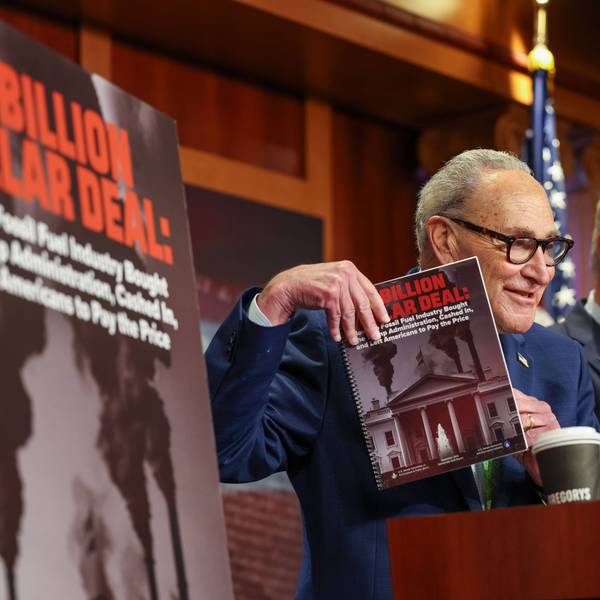
Trump campaigned for a second term on a pledge to serve fossil fuel interests—even telling industry executives that he’d roll back climate policies if they poured $1 billion into his campaign. Last week, US Senate Minority Leader Chuck Schumer (D-NY) and Committee on Environment and Public Works Ranking Member Sheldon Whitehouse (D-RI) released a report detailing how the president has delivered on that promise since returning to power last year.
“The fossil fuel industry and their allies bought their way into the Trump White House with hundreds of millions of dollars in political donations, after Trump promised fossil fuel bigwigs at a Mar-a-Lago fundraiser that he’d do anything and everything they wanted, for the right price,” Whitehouse said. “Now, their minions run the government from the inside, driving up energy bills to deliver payouts to the donors that put Trump back in office.”
Climate science denier Donald Trump confirms that he knows nothing about democracy and that more liquid gold is being secured according to his policy of global privateering.Orcas discuss Donald Trump and the killer apes’ concept of democracy. Front Orca warns that Trump is crashing his country’s economy and that everything he does he does for the fantastically wealthy.Donald Trump urges you to ignore facts and reality and be a Climate Science denier like him. He says that he makes millions and millions for destroying the planet, Burn, Baby, Burn and Flood, Baby, Flood.
This work by Middle East Monitor is licensed under a Creative Commons Attribution-NonCommercial-ShareAlike 4.0 International License.
The United States Capitol building is seen in Washington DC, United States on April 22, 2026, [Celal Güneş – Anadolu Agency]
Foreign policy is rarely the principal factor shaping how Americans vote in congressional primaries or midterm elections. The 2026 cycle, however, appears to be different, as crises abroad increasingly spill over into concerns at home. The issues emphasised by Republican and Democratic candidates, the results of the primaries and shifts in public opinion suggest that Iran and the Palestinian question have emerged as additional factors in the domestic political contest. Iran has entered the electoral calculus through the economic costs of the war and majority opposition to military action, while the Palestinian issue has gained salience amid a discernible shift in American attitudes towards Israel and the Palestinians. These developments could influence the outcome of November’s midterms, against a backdrop of falling approval of the administration’s foreign policy and a growing Democratic lead in congressional polling.
The war with Iran shows this most clearly. Its repercussions have spread beyond foreign policy into the economy and the cost of living, the issues that weigh most heavily on American voters. The effects of the US-Israeli war on Iran have fed through into energy prices, inflation and interest rates in the United States, while consumer confidence has fallen to its lowest level. Public opposition is also substantial: 60 per cent of voters opposed US military action against Iran in a Quinnipiac poll conducted in July, and only 29 per cent approved of Trump’s handling of Iran in a Reuters/Ipsos poll in June.
Attitudes towards Israelis and Palestinians point to a notable shift in American public opinion, one that is increasingly reflected in the positions of the candidates of both parties and in the electoral mood. For nearly two decades, Gallup polling showed a wide and persistent sympathy gap in favour of the Israelis, exceeding 40 percentage points in many years and averaging 43 points between 2001 and 2018.
That gap had begun to narrow even before 7 October 2023, particularly among Democrats and younger Americans. In February 2023, Gallup found that, for the first time, Democrats sympathised more with the Palestinians than with the Israelis. The war in Gaza, however, accelerated and deepened that trend. The change has not been confined to Democrats. Movement within the Republican electorate, historically the constituency most sympathetic to Israel, has also contributed to the broader evolution of American opinion. Republicans still sympathise overwhelmingly with the Israelis, but that advantage has begun to erode. Gallup found that Republican sympathy for the Israelis had fallen by 10 percentage points since 2024, to its lowest level. More striking still is the emerging generational divide: among Republicans under 30, Pew found favourable views of the Israeli and Palestinian peoples almost evenly matched, at 42 and 40 per cent respectively. The most consequential movement, however, has come among independents. In 2025, they sympathised more with the Israelis than with the Palestinians by 42 to 34 per cent; a year later, that balance had reversed to 41 per cent for the Palestinians and 30 for the Israelis, a swing Gallup identifies as the principal driver of the latest change in public opinion. The trajectory across the three political groups underscores how far this realignment broadened during the war.
Between 2023 and 2026, Gallup recorded an increase in sympathy for the Palestinians from 49 to 65 per cent among Democrats, from 32 to 41 per cent among independents and, more modestly, from 11 to 13 per cent among Republicans.
The scale of the movement varied considerably across the partisan spectrum, but its consistent direction suggests that the war marked an important inflection point in a process already under way. Taken together, these trends indicate that the latest change is neither sudden nor transitory, but part of a deeper and more gradual realignment in American public opinion attitudes. Against this backdrop, Gallup’s finding in February this year that 41 per cent of Americans sympathised more with the Palestinians, compared with 36 per cent who sympathised more with the Israelis, appears less an isolated polling result than the culmination of a longer-term trend cutting across the country’s partisan divide.
The change is not confined to sympathy. It is increasingly extending to the terms of the US relationship with Israel itself, and particularly to whether American military and financial support should remain as extensive and as largely unconditional as it has traditionally been. A Quinnipiac University poll conducted between 18 and 22 June found that 48 per cent of registered voters considered the United States too supportive of Israel, the highest proportion since the question was first asked in 2017. That sentiment has begun to find expression in Congress. In April, 40 of the 47 members of the Senate Democratic caucus voted to block a $295 million sale of bulldozers to Israel, while 36 opposed a $151.8 million sale of 1,000-pound bombs. The votes marked a significant expansion of Democratic support for placing limits on arms transfers to Israel and reflected a widening gap between the two parties over the terms of US support. Within the Republican coalition, the change is more limited, but potentially significant. Support for Israel remains dominant within the party, yet an increasingly visible America First current on the right has begun to question whether extensive US military commitments to Israel serve American interests.
Tucker Carlson has become one of the most prominent voices articulating that argument, accusing the Republican establishment of placing Israel’s security ahead of America’s. Such arguments remain far from commanding the Republican mainstream, but their growing visibility, particularly alongside weakening support for Israel among younger Republicans, suggests that a debate once concentrated largely within the Democratic Party is beginning to reach parts of the American right as well.
The 2026 congressional primaries offer an early indication of how these shifts may play out in November, both in the issues candidates chose to emphasise and in the results themselves. According to Ballotpedia, 2,497 candidates ran in congressional primaries covering 468 seats: all 435 in the House of Representatives and 33 in the Senate. With two special Senate elections in Ohio and Florida, 470 congressional seats are being contested this year. Of those running, 2,232 sought House seats, the highest number since 2014, while 265 competed for the Senate, the third-highest figure over the same period. The cycle also featured 547 competitive primaries: 272 Democratic, 209 Republican and 66 conducted under the “top-two” system, in which parties do not hold separate primaries. Instead, all candidates appear on a single ballot, and the two who receive the highest votes advance to the general election regardless of party affiliation.
In the 2024 congressional primaries, the MAGA wing accounted for 43 per cent of Republican winners, compared with 40 per cent for traditional conservatives and 11 per cent for moderates, according to Brookings. On the Democratic side, the mainstream wing, the party’s dominant force, accounted for 67 per cent of winners, while progressives made up 30 per cent and democratic socialists remained marginal.
With no comprehensive breakdown of the balance of forces within either party yet available following the primaries, concluded in mid-September 2026, Brookings offers partial results that allow for a comparison between the two cycles. Its analysis is confined to the most competitive contests in 33 House districts and 10 Senate races, covering a total of 300 candidates.
Among Republicans, MAGA candidates won only around 26.7 per cent of the competitive races, while more than 92 per cent of Trump-endorsed candidates prevailed. Around half of those endorsed by Trump, however, were incumbents, giving them an inherent advantage in seeking re-election. Even with that qualification, Trump-backed candidates recorded a markedly higher success rate than MAGA candidates across these swing races.
Among Democrats, progressives won only 17.8 per cent of competitive races, while democratic socialists remained marginal, broadly in line with their showing in 2024. Yet other analyses suggest that progressives’ success rates were close to those of previous cycles, and that more progressive candidates won. The wing also registered notable victories, among them those of candidates endorsed by Zohran Mamdani in New York. An important caveat is that the 2026 figures measure each faction’s success rate in competitive races, rather than its share of all winners, as the 2024 figures do. They therefore offer an indication of the broader direction of travel, not a definitive numerical comparison between the two cycles.
These results point to a pattern among Democratic winners whose campaigns centred on issues of particular concern to their constituencies, rather than necessarily signalling an ideological shift to the left. More broadly, across the most competitive districts and states in 2026, the outcomes in both parties show an advantage for their mainstream, less ideological wings, reflecting the premium placed on general-election viability and the ability to reach voters beyond each party’s ideological core.
The issues on which the winners of the latest primaries campaigned offer an important measure of each party’s voter priorities, as well as a guide to what may matter most in the coming midterms. Republican candidates were more supportive of Israel than their Democratic counterparts, and less so of military and economic assistance to Ukraine.
Among Republicans, immigration, security and the border featured more prominently. Only 23.5 per cent of those running in swing or contested states defended the administration’s record on the economy and the cost of living, while none acknowledged shortcomings in its handling of these issues. Healthcare went unaddressed by roughly half of the party’s candidates, and most of those who did discuss it focused on containing spending. In competitive races in swing states, success was associated with a combination of Trump’s endorsement, electability and the avoidance of ideological positions that might narrow a candidate’s broader electoral appeal.
Among Democrats, the economy and the cost of living came to the fore, with affordability emerging as the overriding economic concern. Around 56 per cent of Democratic candidates addressed inflation, most using it to criticise the Trump administration’s record, while 94 per cent made healthcare an issue in their campaigns. In competitive districts, no candidate embraced an “open borders” policy or called for defunding the police, and many steered clear of more divisive positions, including on transgender issues. On immigration, the small number who took more conservative stances performed well. In safe Democratic seats with competitive primaries, progressive candidates backed by Zohran Mamdani defeated their rivals with a more left-wing message centred on economic inequality, immigration, the Palestinian question and higher taxes on the wealthy. The results underscored how the issues that decide a party primary can vary with the electoral character of the district.
Trump’s endorsement emerged as a powerful factor in Republican candidates’ performance, while the economy, the cost of living and healthcare featured prominently in Democratic messaging. Across both parties, candidates in competitive races sought to balance the issues that mobilise their party base with the need to appeal to swing voters.
Pew polling in 2026 shows a clear divide between Republican and Democratic priorities on illegal immigration, security and crime. In a Reuters/Ipsos poll conducted this month, 79 per cent of Republicans approved of Trump’s handling of immigration, revealing a marked gap between the Republican base and the public at large. Among Americans overall, only 36 per cent approved of his immigration policy and 55 per cent disapproved. Democratic priorities, according to Pew, are more heavily concentrated on the cost of living, healthcare, gun violence and climate, while only 17 per cent of Democrats regarded illegal immigration as a very big problem. Yet the economy, the cost of living and healthcare are concerns that extend well beyond Democratic voters. On healthcare policy, Democrats held a clear advantage over Republicans, 42 per cent to 28 per cent, and also led on climate, abortion and education, positions that broadly align with public opinion. Republicans, by contrast, led clearly on crime and more narrowly on immigration.
This alignment may help explain the broader electoral mood, which in recent months has tilted towards the Democratic Party ahead of the midterms. A Reuters/Ipsos poll in the middle of this month put Democrats at 44 per cent, against 37 per cent for Republicans. In 37 swing House districts, a Cook Political Report poll conducted in September found Democrats ahead by 49 per cent to 47 per cent. Trump had carried these districts collectively in 2024. In a separate poll, his approval rating fell to 32 per cent.
The seven Senate races rated Toss Up by the Cook Political Report are in Alaska, Iowa, Maine, Michigan, New Hampshire, Ohio and Texas, with Republicans currently holding five of those seats. The balance of the Senate stands at 53 Republicans and 45 Democrats, alongside two independents who caucus with the Democrats. This leaves Republicans defending more of the most competitive seats at a time when late-September polling shows Democrats ahead in several swing races. The battle for the Senate has therefore become more competitive, although current polling is not sufficient to determine which party will hold the chamber after the elections.
Domestic concerns nevertheless continue to carry greater electoral weight. Seventy per cent of voters said the cost of living was important to their vote in House elections, compared with 59 per cent for healthcare, 57 per cent for immigration and 41 per cent for the Israeli-Palestinian conflict, according to a national Quinnipiac University poll released on 24 June 2026.
The polling therefore does not suggest that foreign policy has displaced the economy as a principal determinant of electoral outcomes. It does, however, show that Iran and the Palestinian question have become factors whose impact on these elections can no longer be overlooked.
The views expressed in this article belong to the author and do not necessarily reflect the editorial policy of Middle East Monitor.
This work by Middle East Monitor is licensed under a Creative Commons Attribution-NonCommercial-ShareAlike 4.0 International License.
Orcas discuss rotting brain, front Orca says he wishes someone would lock him up, small Orca speaks bluntly.
Donald Trump sings and dances, says that it’s fun to kill everyone … unless he gets distracted or falls asleep.Climate science denier Donald Trump confirms that he knows nothing about democracy and that more liquid gold is being secured according to his policy of global privateering.