Revealed: Lobbying firm selling access to ministers for £30,000

Spread the love

Original article by Ethan Shone republished from Open Democracy under a Creative Commons Attribution-NonCommercial 4.0 International licence.

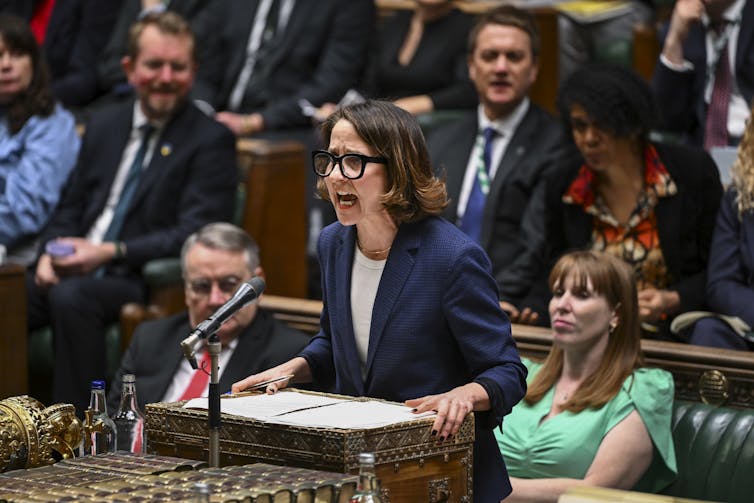
Science, Innovation and Technology Secretary Liz Kendall is due to appear at the summit in July 
| (Photo by Jack Taylor/Getty Images)

Firms can get direct access to tech minister and No 10 advisers in exchange for sponorsing tech event, brochure says

A Labour-linked lobbying firm is selling access to government officials, including tech secretary Liz Kendall and “top advisers to the prime minister”, for tens of thousands of pounds, openDemocracy can reveal.

Businesses looking to sponsor July’s Future of Tech Summit, which is coordinated by Arden Strategies and tech industry lobbying group Startup Coalition, can choose from a tiered range of packages, according to a brochure sent out to prospective sponsors this week.

The most expensive costs £30,000 and entitles the sponsor to make a speech at the reception, be introduced to key policymakers and attend a “private post-conference tech dinner” with senior advisers to Keir Starmer and chancellor Rachel Reeves.

The half-day summit will take place at County Hall in Westminster and involve two panel discussions, private roundtables with MPs, a “fireside chat” with Kendall and a drinks reception. It will “bring together the brightest minds in policy, business and technology to discuss and shape a long-term vision for the UK’s role in the global tech landscape”, the brochure promises.

openDemocracy understands that the document, which we have reviewed, was sent to lobbying agencies and in-house public affairs teams in the tech sector. It has not been made public or reported elsewhere.

Arden Strategies and Startup Coalition hosted a similar event last year, where tech firms, venture capitalists and consultants mingled with then-tech secretary Peter Kyle and a dozen other Labour politicians and aides. One company that attended last year’s event now sits on a government panel shaping data policy.

Founded by former Labour minister Jim Murphy, Arden established itself as arguably the lobbying firm with the best connections to Starmer’s Labour Party in the run-up to the 2024 general election, when it hosted numerous private meetings introducing clients to members of the shadow cabinet.

While this year’s event is unlikely to breach parliamentary rules, ‘cash-for-access’ style arrangements are controversial as they allow companies and interest groups with significant resources opportunities to influence government policy. This is especially concerning on issues like AI and social media, where companies stand to gain significantly from light-touch regulation or government backing.

Campaign group Spotlight on Corruption described the arrangement as “hugely problematic” and has called for the government to review “cash for access schemes”.

‘Guaranteed access?’ ‘Yes’

An FAQ section in this year’s brochure foresees prospective sponsors asking, “Will we be guaranteed a policymaker?” The answer is simply: “Yes”. The level of access afforded to a business, though, appears to depend on which sponsorship package they opt for.

For £7,500, companies can sponsor and co-host a 90-minute roundtable with a “VIP guest”. At last year’s event, the guests were generally MPs with an interest in tech and AI policy, including now-AI minister Kanishka Narayan and the chair of the influential Labour Growth Group of MPs, Chris Curtis, a former aide to Starmer.

For £20,000, a senior representative from a sponsoring business can join or introduce one of two panel discussions taking place on the day. The topics up for discussion are yet to be confirmed, but could include AI regulation and “cybersecurity in a time of geopolitical instability”, the document says.

It adds that while “the vision for the day [is] set in stone… different topics can be approached in different ways and we are happy to work with you to ensure the content is the best it can be”.

For £30,000, businesses can sponsor a drinks reception where attendees will network after the fireside chat with Kendall. This package includes the chance to make a “three-minute” speech during the reception and pose for photos with the minister.

Sponsors who have paid at least £20,000 will also receive “stakeholder introductions” at the reception – likely meaning they will be introduced directly to influential politicians and advisers.

The summit will be followed by an exclusive post-conference dinner for 25 guests, which the brochure describes as “a VIP dinner with top advisors to the prime minister, chancellor and other senior tech policymakers for sponsors and top UK business leaders.”

There are seemingly three seats at this dinner available to sponsors, one each for the businesses that spend £20,000 to sponsor one of the two panels or £30,000 to sponsor the reception.

Another question in the FAQs asks: “Are package pricing set?” To which the response is: “No, we are open to a conversation.”

Brochure Screenshot FAQ1
A screenshot of the brochure showing that sponsors are ‘guaranteed’ access to a policymaker

While transparency rules will require any ministers attending the event declare their attendance, the vast majority of the engagement that will take place will not be captured either by government transparency rules or lobbying regulation.

“When access to politicians is packaged and priced, it shows yet again that it is wealth that determines who gets influence,” Kamila Kingstone, senior campaigner at Spotlight on Corruption, told OpenDemocracy.

“Not only does it fuel public cynicism about who politicians really listen to, it risks distorting major policy decisions in favour of the tech sector rather than the public interest.

“The newly created Ethics and Integrity Commission should conduct a review of cash-for-access schemes to ministers, MPs, and advisers, examining who is selling access, who buys it, and the impact it ultimately has on decision making,” Kingston added.

These concerns were echoed by Jim Killock, the executive director of Open Rights Group, who said: “In recent years, the tech industry has successfully lobbied UK governments to halt AI regulation, weaken data protection rights and undermine competition law. The voice of the public and civil society, meanwhile, is kept out.

“The odds are already stacked in corporates’ favour. Promising paid access to policymakers entrenches that imbalance and is harmful to the public, effective policymaking and the wider economy.”

Arden Strategies

The document describes Arden Strategies as “an advisory and communications firm founded and led by former cabinet minister Jim Murphy”, which works to “ensure exceptional professionals from across the public and private sector get their voices heard by the right people at the right time”.

As openDemocracy reported in September 2024, Arden Strategies organised and sponsored fundraising events for around 40 prospective Labour MPs ahead of that year’s general election, the vast majority of whom were elected successfully.

In all but a handful of cases, these donations were never declared due to a loophole that allows a single donor to give several MPs donations that all fall just under the registrable threshold – even if the total amount donated is significantly above the threshold for individual declaration.

The firm was later criticised for arranging private access to an event at the Treasury to meet with Ian Corfield, a Labour donor employed as a Treasury adviser after the election, but later stepped down.

“If we had a government meeting, we would always choose the cast list ourselves. We wouldn’t ask a lobbying firm to curate it,” said Henry Newman, a former political adviser to Tory ministers including Boris Johnson and Michael Gove, at the time.

Original article by Ethan Shone republished from Open Democracy under a Creative Commons Attribution-NonCommercial 4.0 International licence.

Continue ReadingRevealed: Lobbying firm selling access to ministers for £30,000

Disability cuts pass in Parliament after repeated government concessions

Spread the love

https://morningstaronline.co.uk/article/disability-cuts-pass-parliament-after-repeated-government-concessions

Keir Starmer

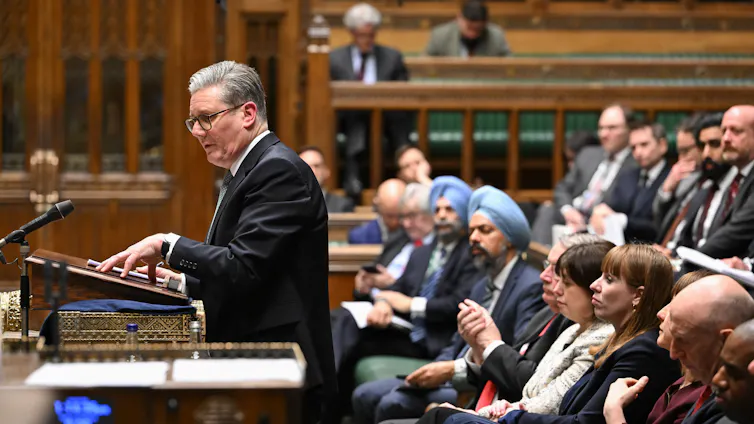
Keir Starmer won Commons backing for his welfare Bill this evening after making further concessions to Labour rebels which leave the legislation eviscerated.

MPs rejected an amendment to sink the bill by 328 votes to 149 after an impassioned debate, suggesting a significant backbench revolt.

A further vote on approving the Bill was passed by 335 votes to 260, with the Tories voting against, cutting the government’s majority in half. It is believed 42 Labour MPs voted against the whip on the amendment.

Still facing defeat after earlier retreats that left benefits to disabled people already claiming Personal Independence Payments (PIP) untouched but threatened cuts for future claimants, Starmer backed down further at the eleventh hour.

Changes to PIP payments for future disabled claimants will now be paused until the conclusion of a review by Welfare Minister Stephen Timms, rather than being imposed from November 2026.

The latest retreat leaves the Bill bereft of most of its original purpose and without the £5 billion savings Chancellor Rachel Reeves was eager for.

And it leaves the Prime Minister’s authority radically diminished after bruising criticisms from normally loyal Labour MPs.

Article continues at https://morningstaronline.co.uk/article/disability-cuts-pass-parliament-after-repeated-government-concessions

Keir Starmer says that the Labour Party under his leadership all feel a small part of Scunthorpe.
Continue ReadingDisability cuts pass in Parliament after repeated government concessions

Labour is divided over disability cuts – here’s what the public thinks

Spread the love
Keir Starmer’s MPs are rebelling en masse against cuts to the benefits system. Flickr/UK Parliament, CC BY-NC-ND

John Curtice, National Centre for Social Research

Keir Starmer has been dealing with his most serious parliamentary challenge since he became prime minister. More than a hundred Labour MPs backed a motion to stop in its tracks the government’s attempt to reduce the welfare bill, including by raising the threshold at which someone can claim disability benefit.

This issue has divided the parliamentary Labour party. But what does the public think?

Although there are signs people recognise that spending on disability benefits is now relatively high, the latest annual British Social Attitudes (BSA) report reveals that it is far from clear that they are supportive of cutbacks. And, unfortunately for the government this is especially true of those who voted Labour last year.

Ever since the late 1990s, BSA has regularly asked its respondents whether they would like “to see more or less government spending than now on benefits for disabled people who cannot work”. In 1998, 78% indicated they would like to see more spending. By 2011, that figure had fallen to 53%, and it was still no more than 56% in 2021.

A chart showing what percentage of the public favour more and less spending on disability benefits.
Attitudes to spending on disability benefits, 1998-2024. British Social Attitudes, CC BY-ND

Now, though, only 45% would like to see more money spent on disability benefits. For the first time, less than half the country backs giving those with a disability more help.

However, that does not mean most voters would like to see actual cutbacks. Only 11% say the government should spend less on disability benefits. The rest are content with the status quo.

Meanwhile, just 5% of those who voted Labour last year back less spending. Over half (53%) are in favour of an increase.

The government’s central argument is that it has become too easy to claim disability benefits and that this is discouraging people from getting back into employment.

Liz Kendall speaking in parliament.
Work and pensions secretary Liz Kendall first announced the cuts in March 2025. Flickr/UK Parliament, CC BY-NC-ND

There is some support for this view. Among the public in general, 29% say it is “too easy” to claim disability benefit. The trouble is, just as many, 29%, take the opposite view and say it is “too difficult”. The most popular response, given by 35%, is that it is “neither too easy nor too difficult”.

Meanwhile, among Labour voters, the balance of opinion is clearly tilted towards the view that claiming disability benefit is “too difficult”. As many as 39% say so, while only 20% feel it is “too easy”.

Similarly, most voters (62%) feel the requirement for people on disability benefits to take “active measures to find appropriate work” is “about right”. Just 11% feel it is “too weak”, while more than twice as many (23%) believe it is “too tough”. Only 6% of Labour voters believe it is “too weak”.


Want more politics coverage from academic experts? Every week, we bring you informed analysis of developments in government and fact check the claims being made.

Sign up for our weekly politics newsletter, delivered every Friday.


These figures help explain why the government has seemingly been struggling to head off the rebellion. Already burned by voters’ reaction to last year’s cutback to the winter fuel allowance, and with their party trailing Reform in the polls, Labour MPs now find themselves presented with another cut that threatens to be unpopular with many of those who put them into Westminster. Little wonder there are now signs the government is having to bend to their view.

.

John Curtice, Professor of Politics, University of Strathclyde and Senior Research Fellow, National Centre for Social Research

This article is republished from The Conversation under a Creative Commons license. Read the original article.

Continue ReadingLabour is divided over disability cuts – here’s what the public thinks

Work and pensions secretary tells MPs controversial disability benefit reforms will go ahead next year

Spread the love

https://news.sky.com/story/work-and-pensions-secretary-tells-mps-controversial-disability-benefit-reforms-will-go-ahead-next-year-13382300

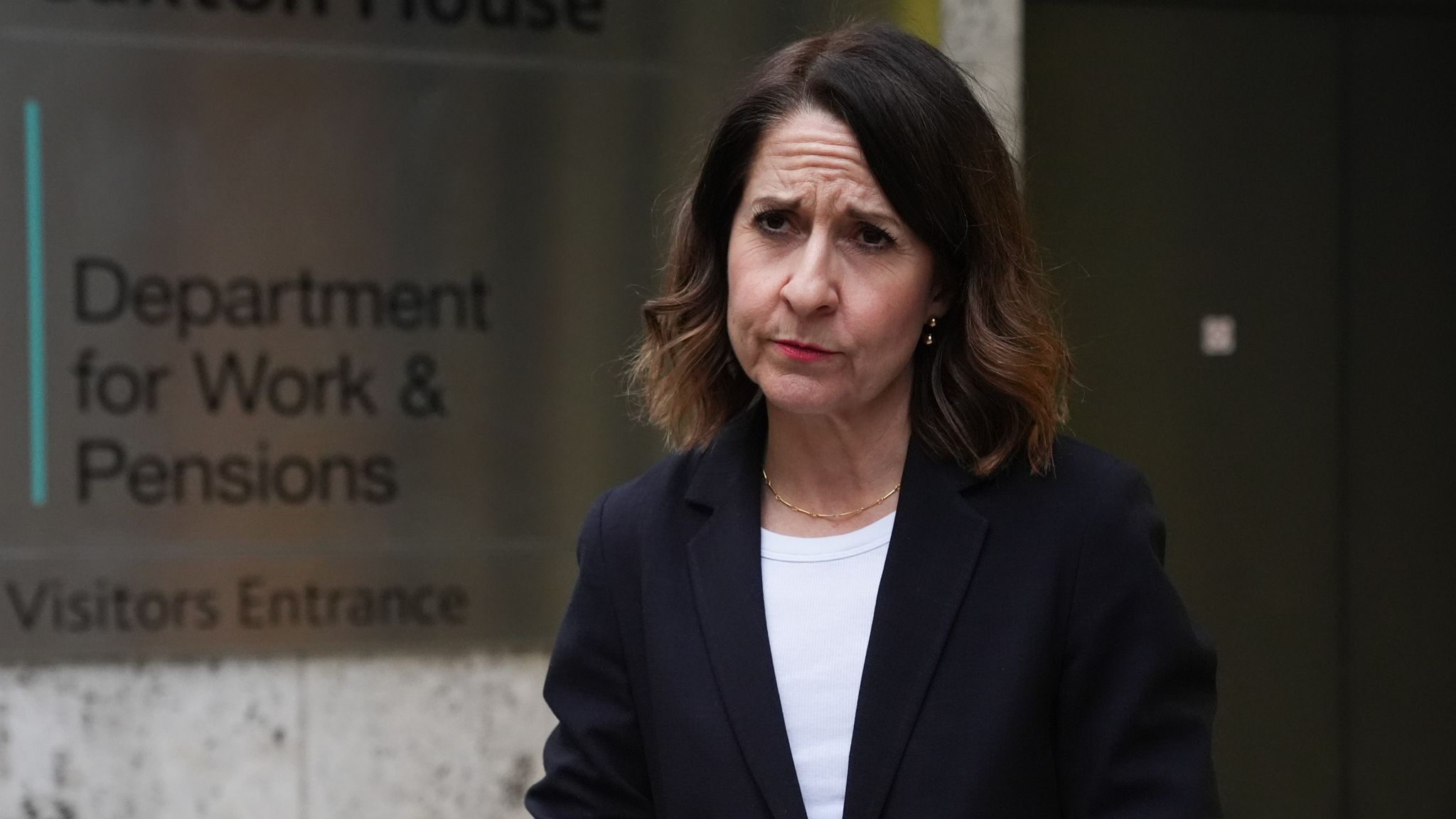
Work and Pensions Secretary Liz Kendall. File pic: PA

Liz Kendall rejects calls to delay the changes until a full assessment is carried out of the impact on employment, poverty and health.

The government has told MPs it will not back down from its controversial reforms to disability benefits, which are set to be introduced to parliament later this month.

More than 100 Labour MPs are thought to have concerns about the plans to cut nearly £5bn from the welfare bill by restricting personal independence payments (PIP) and the health top-up to Universal Credit.

Charities say the changes will have a “catastrophic” effect on vulnerable people.

The chair of the Commons’ Work and Pensions Committee wrote to the secretary of state, Liz Kendall, last month, calling on the government to delay the changes until a full assessment is carried out of the impact on employment, poverty and health.

Labour MP Debbie Abrahams wrote that while there was a case for reform to disability benefits, “the evidence indicated [these changes] might not improve outcomes for most claimants, but instead push many into poverty and further away from the labour market”.

‘Reforms are needed now’

But Ms Kendall has written back, in a letter made public on Wednesday, to reject the idea because the bill needs final approval from parliament in November in order for the changes to take effect in 2026.

Article continues at https://news.sky.com/story/work-and-pensions-secretary-tells-mps-controversial-disability-benefit-reforms-will-go-ahead-next-year-13382300

Keir Starmer says that the Labour Party under his leadership all feel a small part of Scunthorpe.
Keir Starmer explains the moral case for cutting disability benefits. He says work will set you free.
Continue ReadingWork and pensions secretary tells MPs controversial disability benefit reforms will go ahead next year

Charities warn welfare cuts will push more people into homelessness

Spread the love

https://morningstaronline.co.uk/article/charities-warn-welfare-cuts-will-push-more-people-homelessness

 A homeless man in a tent in the centre of Liverpool, April 1, 2025

INFLICTING welfare cuts will push more people into homelessness, charities warned today.

Disability groups also accused the government, which aims to cut £5 billion a year from welfare spending by 2030, of “playing with fire by risking the lives of disabled people to meet arbitrary fiscal goals.”

Central to Labour’s welfare cuts is the tightening of eligibility criteria for personal independence payments (PIP) — a key disability benefit for working-age adults both in and out of work.

Those under 22 with long-term illnesses or disabilities will also no longer be able to claim the health top-up to universal credit under the plans.

Westminster’s own analysis shows the cuts risk pushing 250,000 people into poverty, including 50,000 children. 

A letter co-ordinated by St Mungo’s, co-signed by 13 other homelessness organisations, is urging Work and Pensions Secretary Liz Kendall to rethink the changes.

Cuts designed to get people back into work will actually “push people further away from the labour market, increase homelessness and put excessive pressure on statutory services,” the charities warn.

Article continues at https://morningstaronline.co.uk/article/charities-warn-welfare-cuts-will-push-more-people-homelessness

Keir Starmer says that the Labour Party under his leadership all feel a small part of Scunthorpe.
Continue ReadingCharities warn welfare cuts will push more people into homelessness