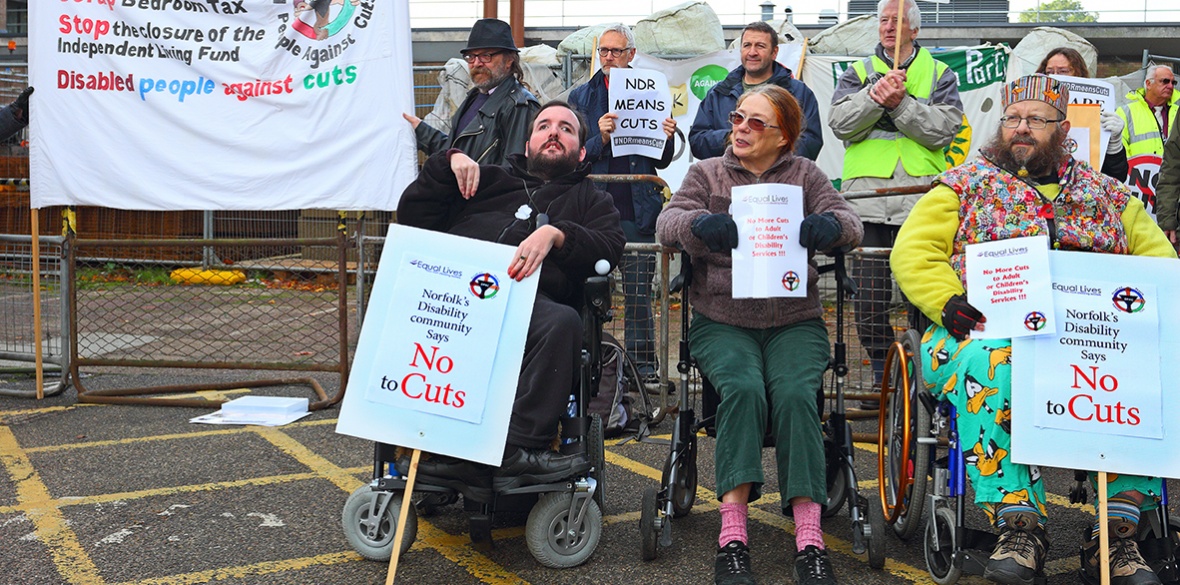
TORY 2015/LABOUR 2025 SPOT THE DIFFERENCE: (Above) Workers and disabled people protesting outside Norfolk County Hall against Norfolk County Council cuts to services on October 2015Photo: Roger Blackwell/flickr/CC
DR DYLAN MURPHY asks why Labour is continuing the Tory war on the disabled, when viable alternatives have been spelt out in detail
IN LATE February of 2025 the UN Committee on Economic, Social and Cultural Rights issued a damning report into the failures of Labour to address income inequality and the deepening levels of poverty in the UK.
The UN committee criticised Labour for failing to address “income inequality or reducing poverty,” which hamper “the progressive realisation of economic, social and cultural rights.’’
Ironically enough, the UN called on Labour to increase spending on housing, health, education and social security in order to reverse the huge damage caused by blue Tory austerity from 2010 to 2024. Since this call the red Tories in power have announced their intention to make massive cuts to public spending across all government departments except defence and maybe health.
On the issue of social security, over which Labour is determined to make killer cuts, the UN expressed serious concern about the impact of blue Tory austerity which had “resulted in severe economic hardship, increased reliance on food banks, homelessness, negative impacts on mental health and the stigmatisation of benefit claimants.”
Of course, food bank usage under Labour continues to grow as does the stigmatisation of benefit claimants which Starmer and company have engaged in with relish over the last few months.
Starmer, Reeves and Kendall seem to take a sadistic glee in attacking the disabled through the platforms of the Tory media using ultra right-wing rags such as The Telegraph and Sun to stigmatise the sick and disabled.
The biggest irony in this recent UN report is its call for Labour to actually increase the value of disability benefits such as PIP so that the UK can meet “the recommendations made by the special rapporteur on extreme poverty and human rights.”
Keir Starmer says pensioners can freeze to death and poor children can starve and be condemned to failure and misery all their lives.Keir Starmer explains the moral case for cutting disability benefits. He says work will set you free.
Keir Starmer’s government is expected to announce a host of cuts to sickness and disability support in the coming days. The UK’s ageing and increasingly unwell population has led to what has been described as “unsustainable” and “indefensible” spending on benefits.
As researchers of poverty and welfare reform, we find it both shocking and sadly unsurprising that, after more than a decade of cuts to social security, the government seems to have once again decided that austerity is the answer to the economic pressures they are facing.
We have spent many years documenting the real harms created by reforms to social security. It was disappointing to hear Starmer describe Britain’s social security system as an expensive way to “trap” people on welfare, rather than helping them find work.
The expected proposals are intended to incentivise people into work, by reducing the generosity of support offered to people claiming disability-related benefits. But in reality, many of the measures already implemented to reduce spending by cutting or capping benefits have pushed people further away from the labour market.
The relationship between welfare and work is more complex than it first appears. Around 37% of people on universal credit are currently in work.
Approximately 23% of those out of work are engaging with advisers whose job is to support them back into the labour market. The majority of the rest of universal credit claimants are people who are not expected to be in work – often people who have health challenges that make it difficult for them to work most jobs.
The UK’s social security payments cover a much smaller proportion of the average wage than most other countries in Europe.
A single person’s allowance on universal credit is £393.45 per month if they are 25 or over, while under-25s receive £311.68. This averages out at less than £100 a week to meet all essential living costs, bar support with housing.
Disabled people received additional support in the form of personal independence payments (Pip) or disability living allowance if you live in England, Wales or Northern Ireland, and adult or child disability payments in Scotland.
This support is designed to help people meet the additional costs that come with disabilities and long-term health conditions. It is not means-tested, and is available to people in employment as well as those not currently working.
Ministers are expected to make it more difficult to access Pip, freezing its value so this does not rise with inflation, and to reduce the amount of universal credit received by those judged unable to work. These proposals are likely to face strong opposition from many Labour MPs.
Want more politics coverage from academic experts? Every week, we bring you informed analysis of developments in government and fact check the claims being made.
Currently, if people are not able to engage in paid work for long periods, they are entitled to an additional payment through universal credit. This amount – equivalent to approximately £400 a month – could go down. The problem is that this is already not enough to live on, and often necessitates going without essentials, such as food or electricity.
Families with dependent children receive additional support through child elements of universal credit, and through child benefit. But this support is subject to caps – the controversial and poverty-producing two-child limit, and the benefit cap, which restricts the support any household can receive where no one is working or claiming disability benefits.
The government is trying to solve the wrong problem. They are focusing on those who are out of work, when it is increasingly clear that one big reason people with disabilities are not in employment is because work environments have fewer roles they can fill.
While spending on disability-related support has gone up in recent years, the overall welfare bill has not. On top of that, the proportion of people who are not in work and who are claiming disability-related social security is actually about the same as it has been for the last 40 years. Indeed, the fact it is so low, given population ageing, could be read as good news.
Research shows cutting access to benefits does not necessarily get people into work. Shutterstock
There have also been wider changes in the labour market. There has been a rapid decline in “light work”, like lift attendants, cinema ushers, or low-physical exertion roles in factories. As work environments have become more intense, people with disabilities have found it increasingly difficult to stay in work.
So, what would work to entice more people into work? The truth is we know far more about what does not work than what does.
The best evidence we have right now suggests that making it more difficult to claim social security and placing more strenuous work-search requirements on claimants will simply push people with poor health (particularly mental ill-health) further away from the labour market.
The welfare narrative
Behind the cuts currently being trailed is a popular but ill-founded logic which views social security as the cause of the country’s economic woes. Welfare itself is seen as the problem, with whole generations supposedly left parked on what is depicted as too-easy-to-claim and too-generous support.
But this narrative grossly misrepresents what it’s actually like to try and claim social security. It is, in fact, notoriously complex. Often, this complexity is intentional.
Making accessing social security difficult is not necessarily (or always) about meanness, but this “nasty strategy” is a product of a system that assumes that many people are not eligible for the support they claim.
The system has always assessed eligibility for benefits, but the way these assessments have been done in recent years has often been experienced as degrading and dehumanising. On the flip side, some have claimed that people are not being assessed regularly enough, and suggest that some people who have claimed benefits in the past may now be fit to work.
Where this is true is unclear, but the failure to reassess is also a product of cuts to this system – so taking more money out will not address this problem either.
Britain’s social security system has been stripped to the bones: it provides neither security nor enough support to those who receive it, and is ripe for reform. But the reform required is not of the type Labour is proposing, which will succeed only in further decimating what little remains of our social security safety net.
This article was co-published with LSE Blogs at the London School of Economics.
Keir Starmer, Angela Rayner and Rachel Reeves wear the uniform of the rich and powerful. They have all had clothes bought for them by multi-millionaire Labour donor Lord Alli. CORRECTION: It appears that Rachel Reeves clothing was provided by Juliet Rosenfeld.Keir Starmer says pensioners can freeze to death and poor children can starve and be condemned to failure and misery all their lives.
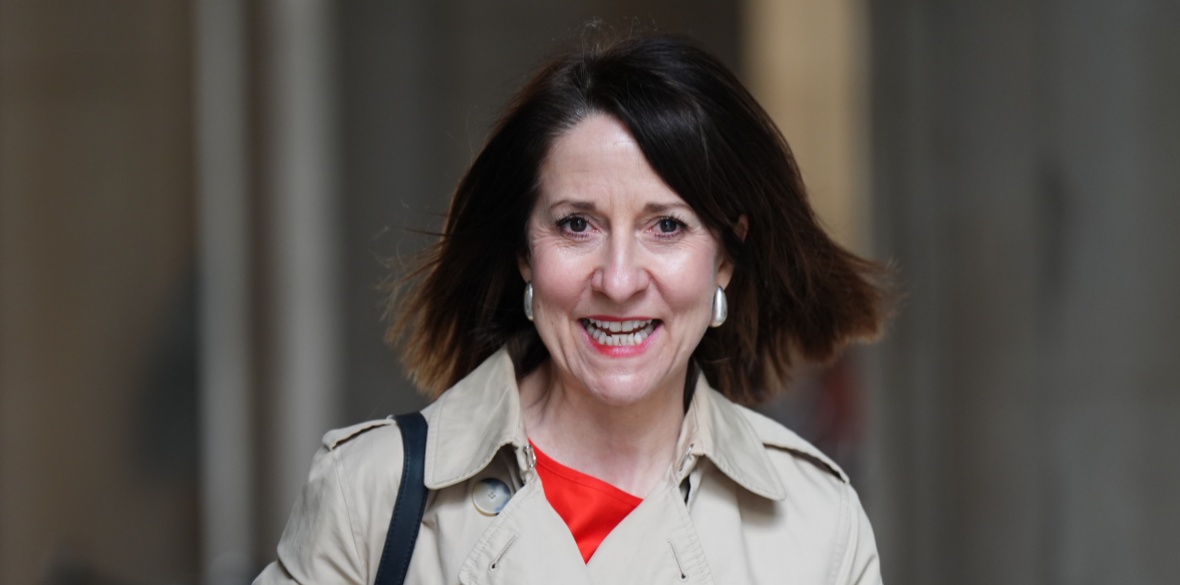
Work and Pensions Secretary Liz Kendall arrives in Downing Street, London, for a Cabinet meeting, March 11, 2025
ALMOST two-thirds of disabled people on Personal Independence Payments (PIP) “will not cope” without it, a charity has warned, amid reports that the government will reduce the benefit.
Work and Pensions Secretary Liz Kendall is expected to unveil reforms aimed at reducing welfare costs that ministers have described as “unsustainable.”
Reports suggest that PIP, the main benefit for working-age adults both in and out of work, could be frozen rather than increased in line with inflation, delivering a real-terms cut for 3.6 million claimants.
A new analysis from Sense has found that 38 per cent of PIP recipients with complex needs are already behind on energy bills. Almost half — 46 per cent — are struggling to afford essential costs such as council tax and water, while 41 per cent are living in debt due to benefits failing to cover the cost of essentials like food.
Fifty-eight per cent of those polled reported significant ongoing extra costs due to disability and 53 per cent said their PIP payments were insufficient to cover those expenses.
Sense chief executive James Watson-O’Neill said PIP “exists because living with a disability means facing higher costs, from increased energy bills to specialised equipment and specific diets.”
“These additional expenses won’t disappear if eligibility is tightened. It will only plunge more disabled people into poverty.
“Making it harder to access benefits won’t help disabled people find jobs either. It will only deepen the struggle.”
Keir Starmer confirms that he’s proud to be a red Tory continuing austerity and targeting poor and disabled scum.Keir Starmer, Angela Rayner and Rachel Reeves wear the uniform of the rich and powerful. They have all had clothes bought for them by multi-millionaire Labour donor Lord Alli. CORRECTION: It appears that Rachel Reeves clothing was provided by Juliet Rosenfeld.
Far from addressing the causes of ill-health and disability, Starmer, Reeves and Kendall are committed to unleashing more misery for disabled people, argues Dr DYLAN MURPHY
In 2016 the UN Committee for the Rights of Persons with Disabilities conducted an investigation into the treatment of disabled people in Britain.
It produced a damning report, which concluded that disabled people in this country faced systematic discrimination on multiple levels.
In 2024, following the submission of evidence by Disabled People Against Cuts and other disability rights groups, the UN investigated Britain for a second time.
In late April the UN committee for disabled people issued a 14-page report which concluded that Britain “has failed to take all appropriate measures to address grave and systematic violations of the human rights of persons with disabilities and has failed to eliminate the root causes of inequality and discrimination.”
It also called on Britain to take measures to prevent disabled people on benefits from killing themselves. At the UN committee hearing in March 2024 it noted how hundreds of disabled people had killed themselves due to sanctions and other repressive measures of the Department for Work and Pensions (DWP), which really should be called the Department for War on the Poor.
Since this UN report Labour has been elected with a landslide majority. Yet in the many Bills announced for the new parliament not one addresses the serious issues raised by the United Nations.
Sadly, both Liz Kendall, new boss of the DWP, and Rachel Reeves the Chancellor, between them have made it clear that people on sickness benefits are a burden on our society and that the money spent on sick people claiming universal credit, employment support allowance (ESA) and personal independence payments (PIP) could be better spent on more “important things” in our society. They have repeated reactionary Tory propaganda which the UN cites as a reason for a spike in disability hate crime which is massively under reported and rarely investigated by the police.
Keir Starmer confirms that he’s proud to be a red Tory continuing austerity and targeting poor and disabled scum.Keir Starmer, Angela Rayner and Rachel Reeves wear the uniform of the rich and powerful. They have all had clothes bought for them by multi-millionaire Labour donor Lord Alli. CORRECTION: It appears that Rachel Reeves clothing was provided by Juliet Rosenfeld.
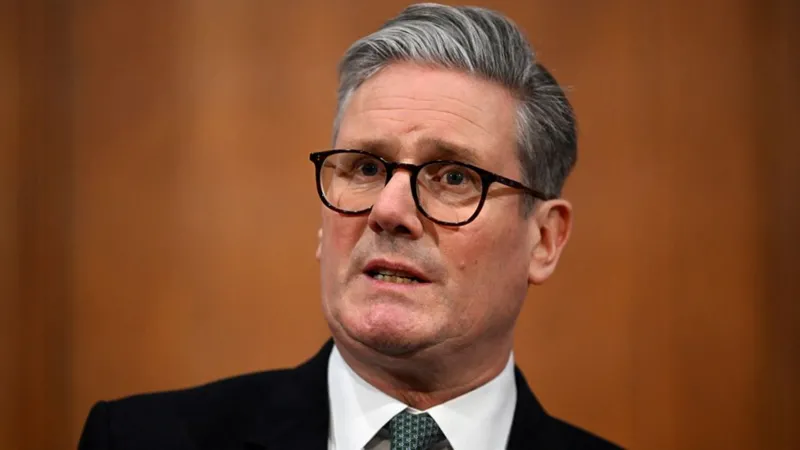
Sir Keir Starmer has called the current benefits system unsustainable, indefensible and unfair, and said the government could not “shrug its shoulders and look away”.
Addressing Labour MPs on Monday evening, the prime minister said the current welfare system was “the worst of all worlds”, discouraging people from working while producing a “spiralling bill”.
The comments come as Work and Pensions Secretary Liz Kendall prepares to set out changes to the welfare system and cut the benefits bill in the coming weeks.
Chancellor Rachel Reeves has earmarked several billion pounds in draft spending cuts to welfare and other government departments ahead of the Spring Statement.
There is unease over the plans within the party, with Labour MP Rachael Maskell warning against “draconian cuts” that risk “pushing disabled people into poverty”.
Maskell told the BBC she had picked up “deep, deep concern” among Labour MPs.
Keir Starmer confirms that he’s proud to be a red Tory continuing austerity and targeting poor and disabled scum.Keir Starmer, Angela Rayner and Rachel Reeves wear the uniform of the rich and powerful. They have all had clothes bought for them by multi-millionaire Labour donor Lord Alli. CORRECTION: It appears that Rachel Reeves clothing was provided by Juliet Rosenfeld.