Tag: net zero

  • Scientists Condemn Last Minute Push to Overturn EU Nature Law

    Spread the love

    Original article by Clare Carlile republished from DeSmog.

    The Melitaea trivia butterfly, one of many endangered species in the EU. The nature restoration law offers a lifeline for natural habitats in the bloc where one in three bees, butterflies and hoverflies are disappearing.

    At the eleventh hour, right-wing politicians have launched a bid to block the passing of the EU’s flagship nature protection law, which scientists have described as a “cornerstone of food security and human health”. 

    The pro-nature plan, which could see as much as 90 percent of damaged ecosystems repaired across the bloc, is due for final sign off in Parliament on Tuesday (27 February).

    Usually a formality, the vote follows six months of intense – and at times bitter – negotiation of the law between the European Commission, Parliament and EU member states that saw an agreement reached in November last year.

    But on Wednesday the right-wing European Conservatives and Reformists (ECR) party filed amendments calling for Members of the European Parliament (MEPs) to reject outright the so-called Nature Restoration Law – an extremely rare move so late in the decision-making process.

    Scientists have condemned the call, as well as six other amendments that could see the law delayed or weakened. They say the proposed policy offers a lifeline for natural habitats in the bloc where one in three bees, butterflies and hoverflies are disappearing.

    “In Europe we are in a critical biodiversity situation, which climate change is accelerating,” Daniel Hering, professor of aquatic ecology at the University of Duisburg-Essen, told DeSmog. “Without such an ambitious legislation, it will not be possible to bend the curve of declining biodiversity.”  

    A number of proposed green laws have been rolled back or delayed over the last 12 months, as opposition mounts to the EU’s Green Deal – a flagship plan to reach net zero by 2030.

    The eurosceptic ECR party has justified its last-minute attempt to block the law citing “great social unrest”, in apparent reference to farmer protests that have spread across the continent in recent weeks, with tractors blocking roads and motorways in the majority of EU countries.

    But scientists told DeSmog that derailing the law could come at significant cost to farmers, who are facing increasingly uncertain conditions due to climate breakdown and biodiversity loss.

    The former EU climate chief Frans Timmerman has stated that “already half of crops in the EU that depend on pollination face a deficit.”

    If any of the ECR’s amendments – such as deleting a target to restore 30 percent of Europe’s damaged ecosystems by 2030 – are accepted, a final decision on the law would be delayed until after the EU elections in June when right-wing parties are expected to make major gains.

    It is so far unclear whether the proposals will succeed in gaining a majority in the vote next week. But the choice made by the centre-right European Peoples’ Party (EPP) – the largest in the EU parliament – will be a deciding factor. 

    The EPP’s Christine Schnieder, chief negotiator on the nature law, told DeSmog that her party had “serious concerns” and would “determine its voting behaviour for the vote on Tuesday at the Group meeting on Monday evening”.

    Misinformation’

    The law has long been portrayed as a burden to the farming industry. The EPP has repeatedly attempted to block the legislation following intense lobbying by farm union Copa-Cogeca, which represents producers and agribusinesses across the bloc. It succeeded in deleting the most ambitious agriculture clauses from the law, including targets to re-wild 10 percent of farmland.

    However, scientists told DeSmog that jettisoning the legislation would cause major harms to the industry – a stance backed up by some small scale producers who are calling for more environmental support. 

    “Our food systems are at extreme risk. Looking outside and seeing the current temperatures, we can see that the coming summer will be even worse than the last one,” said Guy Pe’er, an ecologist at the German Centre for Integrative Biodiversity Research and the Helmholtz Centre for Environmental Research. “Farmers will soon need help maintaining production under very difficult conditions. The Nature Restoration law is a crucial part of this package.”

    Pe’er also told DeSmog he was concerned Tuesday’s outcome could be “based on misinformation”. He was one of more than 6,000 scientists to sign an open letter in July, warning of a “lack of scientific evidence” for arguments opposing the law, including suggestions that it would harm EU food security and take away farming jobs across the continent.

    Christine Schneider of the EPP told DeSmog that the EPP remained concerned that the law would lead to onerous regulations in member states with “far-reaching monitoring and reporting obligations for agriculture and forestry”. 

    ‘Election Strategy’

    If parliament supports any amendments on 27 February, negotiations on the Nature Restoration Law will extend beyond EU elections, which are due to take place between 6-9 June later this year.

    Polls are currently suggesting a major ballot swing towards right-wing parties, which have  pledged to use election success to fight the Green Deal. 

    In France, Marine Le Pen’s far-right party National Rally is expected to claim more than 30 percent of the country’s vote. It said in January it planned to form a “blocking majority” with other parties that target environmental laws. 

    The EPP, which is likely to retain the largest number of seats in the EU parliament, has likewise opposed multiple environmental regulations in the run-up to the elections in recent months, including overturning plans to halve pesticide use.

    The ECR is so far not expected to gain many seats in the coming election. 

    Environmental activist Chloé Miko told DeSmog that if the law was voted down on Tuesday it would be “the final nail in the coffin for the Green Deal” – which has been seen as the lead policy package for the current Commission. 

    She added that the ECR was deploying a cynical “election strategy”, by linking its opposition to the law to farmer protests across the continent. 

    “It is not a sign of goodwill towards farmers,” she said. “The far-right, sometimes with the help of the Conservatives, have been on a journey to weaken, delay or even kill every remaining part of the Green deal. It is part of this process.”

    Jutta Paulus, the Greens’ negotiator on the law in Parliament, told DeSmog: “The ECR’s attempt to stop the legislative procedure is typical for this euro-sceptic group,” adding that the EPP’s concerns about the law had already been addressed during trialogue negotiations between parliament, the commission and the council over recent months. 

    “I expect the constructive, pro-European parties to take a firm position and vote in favour of the trilogue agreement,” she said.

    ECR did not respond to Desmog’s request for comment.

    Original article by Clare Carlile republished from DeSmog.

  • New Liz Truss Faction ‘Pops’ With Climate Science Denial and Fossil Fuel Ties

    Spread the love

    Original article by Adam Barnett republished from DeSmog.

    Jacob Rees-Mogg, Lee Anderson and Liz Truss at the launch of ‘Popular Conservatism’. Credit: PA Images / Alamy

    The launch of Popular Conservatism saw attacks on “net zero zealots” and the Climate Change Committee.

    Liz Truss’s new ‘Popular Conservatism’ faction of the Conservative Party launched today with attacks on net zero targets and environmental bodies, using the playbook established by libertarian lobby groups.

    The self-styled PopCons included politicians critical of climate policies and science, including Lord Frost, who is a director of the climate science denial Global Warming Policy Foundation, as well as Conservative MP Lee Anderson and Reform party president Nigel Farage

    PopCon director Mark Littlewood is the outgoing managing director of the Institute of Economic Affairs (IEA), an influential free market think tank that has talked up its access to government. 

    The IEA received funding from oil company BP every year from 1967 to 2018, according to an Unearthed investigation confirmed by the IEA. Both IEA and BP have declined to say if this funding continues, when asked by DeSmog. 

    A branded leaflet handed out at the event, under the heading “what we stand for”, stated: “End net zero zealotry and promote energy pragmatism to provide both security of supply and low prices”. 

    The leaflet also named the Climate Change Committee (CCC), the government’s independent advisory body on hitting its climate targets, as one of the institutions which “stand in the way of meaningful reform”.  

    Littlewood’s speech criticised the UK’s net zero target, complaining about “the Climate Change Committee, pronouncing on our progress to the eye-wateringly [sic] expensive and almost certainly unachievable aim of being carbon net zero”. 

    Lee Anderson, former deputy chair of the Conservative Party, repeatedly attacked net zero in his speech, which he claimed “never comes up on the doorstep” aside from when it is brought up by “the odd weirdo”.

    Anderson said: “if we became net zero tomorrow, this country… it wouldn’t make a blind bit of difference to the earth’s atmosphere”, pointing to the higher emissions produced by other countries. 

    Anderson argued that net zero would cost voters money, calling for an “opt-in, opt-out” approach to what he called “green levies” on energy bills, adding: “Not one politician can put their hand on their hearts and tell you how much it’s [net zero] going to cost.”

    The CCC has estimated the cost of net zero at less than one percent of GDP, while the Office for Budget Responsibility has said that “the costs of failing to get climate change under control would be much larger than those of bringing emissions down to net zero”.

    Liz Truss used her speech to say: “If we look at the net zero zealots that Lee has just been talking about, the need for cheaper energy is being drowned out by some very active campaigners.” She claimed voters “don’t like the net zero policies which are making energy more expensive”. 

    The International Monetary Fund found in September 2022 that the energy crisis was hitting UK households harder than any country in western Europe, due to the UK’s reliance on gas for heating homes.

    Politicians fronting the PopCon group have a history of working with anti-green think tanks and supporting more fossil fuel extraction. 

    Truss (who went to the University of Oxford with Littlewood) has extensive ties to the IEA, which is part of the Tufton Street network – a cluster of libertarian pressure groups and think tanks that oppose state-led climate action.

    In 2022, Truss’s campaign for Tory leader was run by Ruth Porter, a former communications director at the IEA. Once in 10 Downing Street, Truss hired Porter as her senior special advisor, and has since appointed her to the House of Lords. A number of former Tufton Street figures were appointed to government advisory roles during Truss’s short-lived tenure in Downing Street.

    The IEA publicly supported Truss’s ‘mini-budget’, which caused economic chaos by promising large tax cuts without explaining how they would be funded. While in office, Truss lifted the UK’s ban on fracking for shale gas, a policy advocated by the IEA. (The policy was ditched by her successor Rishi Sunak.) 

    The IEA has consistently opposed UK government climate policies, preferring “market solutions”. In October 2022, IEA executive Andy Mayer said the government should “get rid of” its net zero target, which he called a “very hard left, socialist, central-planning model”.

    During her 2022 leadership campaign, Truss received £5,000 from Lord Vinson, one of the few known funders of the Tufton Street-based Global Warming Policy Foundation (GWPF), the UK’s main climate science denial group. 

    Rees-Mogg also has a long record of opposing climate policies. Earlier this month he said: “the current headlong rush to net zero risks impoverishing the nation to no global benefit on emissions”.

    The UK government’s legally-binding target to cut carbon dioxide emissions to net zero by 2050 is part of international efforts to keep global warming below 1.5C. 

    As Business and Energy Secretary in 2022, Rees-Mogg supported overturning the UK’s ban on fracking, and said “we have to stop demonising oil and gas” in a meeting with the UAE’s state investment company. 

    He also receives around £29,000 per month to host a show on right-wing broadcaster GB News. A DeSmog investigation last year found one in three GB News hosts spread climate science denial on air in 2022, while more than half attacked net zero policies. The channel‘s co-owner, Paul Marshall, has £1.8 billion invested in fossil fuels via his investment fund Marshall Wace.

    Science Denial

    Several figures with ties to climate science denial turned out for the PopCon launch. They included Lord Frost, a trustee of the GWPF who last year said global warming could be “beneficial”, along with Dame Andrea Jenkyns, who sits on the board of the GWPF’s campaign arm, Net Zero Watch

    The IEA and GWPF have both received funding from Neil Record, a Conservative donor who was IEA chairman until July 2023 and remains chair of Net Zero Watch. Record has donated thousands to Tory MP Steve Baker, an IEA ally and former GWPF trustee who has claimed much climate science is “contestable” and “propagandised”. 

    The PopCon launch was also attended by GB News host Nigel Farage, honorary president of right-wing party Reform UK, which campaigns to “scrap net zero”. Last year the party received £135,000 from donors who spread climate denial or had fossil fuel interests. Reform leader Richard Tice has claimed that “CO2 isn’t poison; it’s plant food”.

    Farage posed for a photo at the PopCon event with Lois Perry, director of climate denial group CAR26, who is running for leader of UKIP and last month said she does not believe in human-caused climate change. 

    Original article by Adam Barnett republished from DeSmog.

    Lettuce complains about being compared to Liz Truss.
    Lettuce complains about being compared to Liz Truss.

    Liz Truss attacks ‘left-wing extremists’ at Tory PopCon launch 

    Addressing the audience Truss made a series of bizarre attacks on the Left, taking aim at “wokeism” and said the Tories had failed to “take on the left-wing extremists”. 

    “Wokeism seems to be on the curriculum,” said Truss. “There is confusion about basic biological facts, like what is a woman. 

    “Look at the net zero zealots, if you listen to the Today programme, I don’t recommend it, you’ll hear demands for more public spending.”

    Truss went on to warn that the left were “on the march and actively organising”. 

    “These people have repurposed themselves, they don’t believe they are socialist or communists anymore. They say they’re environmentalists, they say they’re in favour of helping people across all communities, they are in favour of supporting LGBT people or groups of ethnic minorities. 

    “So they no longer admit that they are collectivists but that is what their ideology is about.” 

    She went on to claim that anti-capitalists were being “pandered to” by the Government and that Conservative values were being eroded and said it was “only through Conservative values that we can give the British people what they want”, however fell short on saying what this was exactly. 

    Liz Truss attacks ‘left-wing extremists’ at Tory PopCon launch 

    Lettuce complains about being compared to Liz Truss.
    Lettuce complains about being compared to Liz Truss.

    Truss summons ‘Secret Tories’ to fight Davos and Left

    Former prime minister Liz Truss during the launch of the Popular Conservatism movement at the Emmanuel Centre in central London, in a bid to rally right-wing Tory MPs ahead of a general election this year, February 6, 2024

    Running through a list of enemies almost longer than her catastrophic time in Downing Street, Ms Truss nevertheless claimed that Britain was “full of secret Conservatives — people who agree with us but don’t want to admit it,” while the Tory party had been appeasing “left-wing extremists.”

    Painting a picture of a world on the edge of socialism, the former prime minister, best known for crashing the economy in a matter of days, asserted that “the left have been on the march.”

    “They have been on the march in our institutions, they have been on the march in our corporate world, they are on the march globally,” she claimed.

    Taking on this menace and “changing the system itself” will require “resilience and bravery,” Ms Truss added.

    Unfortunately, rather than resilience and bravery, she had to hand only Lee Anderson and Jacob Rees-Mogg, former frontbenchers taking a break from their present gigs on GB News.

    Truss summons ‘Secret Tories’ to fight Davos and Left

    Lettuce complains about being compared to Liz Truss.
    Lettuce complains about being compared to Liz Truss.
  • Government has blown pretence of climate leadership with ‘max out’ fossil fuels pledge say Greens

    Spread the love

    The Climate Change Committee (CCC) has accused the UK government of giving ‘mixed messages’ at the COP28 climate summit held in Dubai in December.

    The CCC said: “The international perception of the UK’s climate ambition suffered from mixed messages following announcements on new fossil fuel developments and the prime minister’s speech to soften some net zero policies. The committee urges a continued visible presence at future Cops and even greater domestic climate ambition to reinforce the UK’s international standing.”

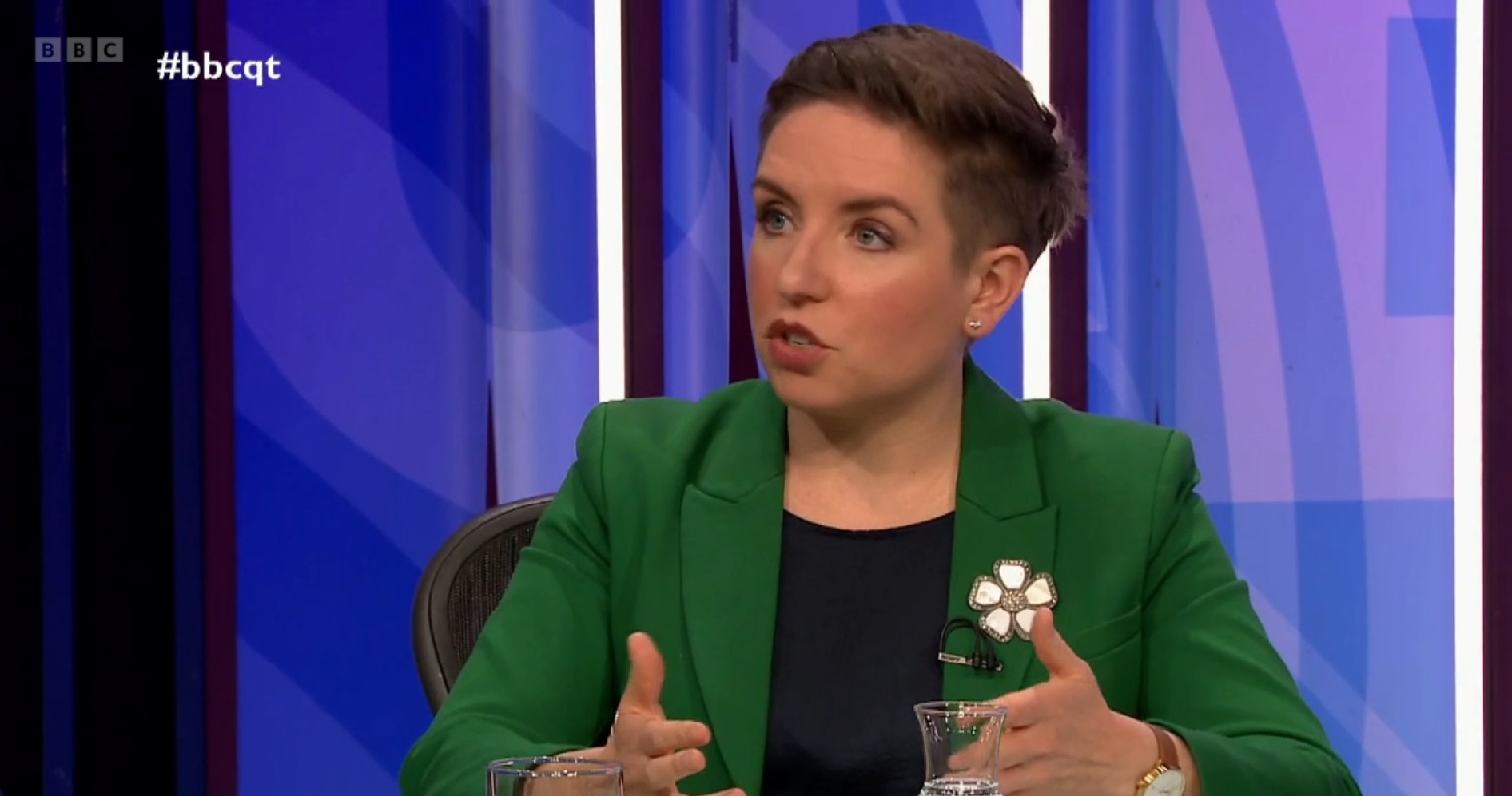
    Image of the Green Party's Carla Denyer on BBC Question Time.
    Image of the Green Party’s Carla Denyer on BBC Question Time.

    Responding, co-leader of the Green Party, Carla Denyer, said:

    “Through its drive to ‘max out’ on North Sea fossil fuels, the UK government has blown any pretence of global leadership on tackling the climate crisis. Ministers have been forced into admitting that their energy security defence of the Offshore Petroleum Licensing Bill was nonsense because oil and gas corporations sell to the highest bidder on the open market.

    “So at odds with the government’s target of reducing emissions is this dangerous Bill that it has led to the resignation of Chris Skidmore who chaired the government’s Net Zero Review.  

    “We need to call time on all new licences for fossil fuel exploration, accelerate the move towards renewable energy and implement a large scale home insulation programme. That is how the UK can show climate leadership.”

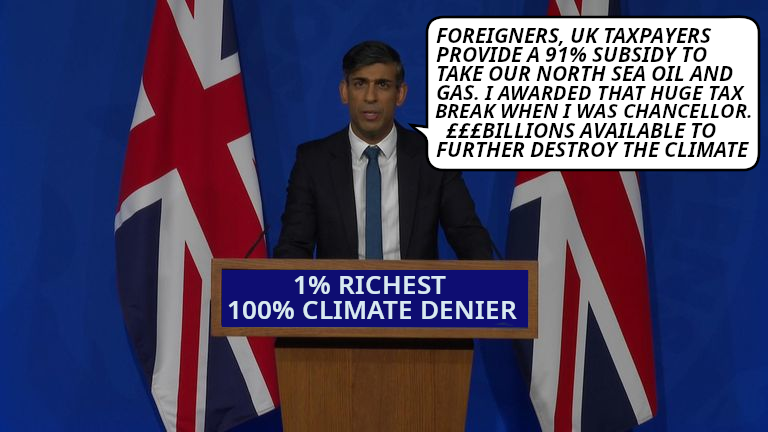
    Rishi Sunak offers huge fossil fuel subsidies to develop fossil fuel extraction in UK.
    Rishi Sunak offers huge fossil fuel subsidies to develop fossil fuel extraction in UK.
  • Three million households doomed to fuel poverty

    Spread the love

    https://morningstaronline.co.uk/article/three-million-households-doomed-to-be-trapped-in-fuel-poverty-by-2030

    A gas fuelled fire in a home

    THREE million households are doomed to remain trapped in fuel poverty by 2030 as the government is set to fail to meet its energy efficiency targets, according to new research.

    The report surfaced as the Office of National Statistics (ONS) issued new data today that found that some four in 10 adults reported finding it “very” or “somewhat” difficult to afford their energy bills, while 14 per cent of those finding it hard to keep warm in their home also experienced difficulties affording food.

    The National Energy Action and Energy Action Scotland report has found that the poorest households could be left paying £480 more a year to meet their energy needs while remaining in cold, damp and unhealthy homes.

    It found that the government is projected to miss its target to upgrade the energy efficiency of homes to at least a band C “by a staggering margin.”

    An independent analysis by Gemserv found there is a funding shortfall of at least £18 billion for the measures needed to meet the legal requirement to ensure fuel-poor homes in England are brought up to standard by 2030.

    https://morningstaronline.co.uk/article/three-million-households-doomed-to-be-trapped-in-fuel-poverty-by-2030

  • HSBC helped oil and gas industry raise $47bn despite net-zero pledge

    Spread the love

    Original article by Josephine Moulds republished from The Bureau of Investigative Journalism under a Creative Commons Attribution-NonCommercial-NoDerivs 3.0 Unported License.

    The bank’s work for businesses expanding production of fossil fuels is a stark contrast to its climate change promises

    Every year business and world leaders jet into Davos to discuss climate change and other global issues at the World Economic Forum. And every year they are met with vigorous accusations of hypocrisy. Those accusations may well be levelled at the executives from HSBC – one of the world’s top funders of fossil fuel expansion – as they mingled with their peers in the pretty Swiss ski town this week, discussing how to develop a long-term strategy for climate, nature and energy.

    HSBC says delivering a net-zero global economy is “a pillar of our strategy as a business”. In December 2022, the bank made the shock announcement that it would stop financing new oil and gas fields. Environmental campaigners celebrated, with the responsible investment charity ShareAction saying the decision set “a new minimum ambition for all banks committed to net zero”.

    But on the same day, HSBC bankers started selling shares in the refining business of Saudi Aramco, one of the most aggressive expanders of oil and gas. An investor in HSBC told the Bureau of Investigative Journalism that the bank’s policy has been cleverly worded to allow it to fund some of the world’s biggest polluters while boasting about its green credentials.

    An analysis of Refinitiv data by TBIJ has found that in the year since HSBC’s new policy was announced, the bank has helped raise more than $47bn (£37bn) for companies that are expanding the production of oil and gas, despite dire warnings from scientists that this will push the world beyond its survivable limits.

    Fatih Birol, executive director of the International Energy Agency, told ITV News: “In the world, if we make large scale oil, gas and coal development, we cannot reach our 1.5 degrees target, full stop.” He said if a bank is serious about aligning its business with net zero, it cannot continue to fund companies developing new oil and gas fields.

    Andrew Harper, chief responsibility officer at Epworth, an investment manager that holds HSBC shares, said: “[HSBC’s] policy, which is supposed to act as a safety net for the climate, is by design letting the bank circumvent its pledges by allowing them to adhere to the letter rather than the spirit of what they’re claiming.

    “As investors, we’re not going to be fooled by the marketing, by the pledges, by these policies. We want to see real change and for them to seriously end new fossil fuel financing, no loopholes. Anything short of that is the bank trying to dupe its key stakeholders.”

    HSBC said its policy allows the bank to continue providing finance “at a corporate level” and its approach “is based on the latest science for achieving net zero and follows the UN-backed approach for climate target setting and net zero alignment for banks”.

    New projects, no problem

    In its feted policy, HSBC notes that global demand for oil and gas to 2050 is “more than met by existing [oil and gas] fields”. It says the bank will therefore no longer provide finance for “new oil and gas fields and related infrastructure whose primary use is in conjunction with new fields”.

    However, that has not stopped HSBC from funding companies that are exploiting new oil and gas fields, and providing the necessary infrastructure to do so.

    In the first half of last year, HSBC, with other banks, helped the UAE’s state oil and gas company, Adnoc, raise $3.2bn from selling shares in its gas and logistics businesses. Adnoc will receive a further cash boost of $3bn in hefty dividends from Adnoc Gas.

    Separately, HSBC helped arrange a $3.2bn loan for Borouge 4, a petrochemicals plant that will be a key customer for Adnoc’s gas, and was described by its project director as “an enabler of Adnoc’s growth strategy”.

    Scientists agree that we cannot develop any new oil and gas fields if we are to limit global heating to 1.5C. Adnoc plans to increase oil production by 25% between 2023 and 2027, however, which would dramatically overshoot these limits.

    Last year, Adnoc rubber stamped the exploitation of a vast new gas field off the UAE coast, which threatens a vital habitat for sea cows. Burning the gas Adnoc plans to extract from this field would produce 30m tonnes of carbon dioxide per year – more than Denmark’s annual emissions.

    HSBC has similarly close ties with Saudi Arabia’s national oil company. The share sale for Saudi Aramco’s refining business, Luberef – which HSBC bankers were working on as it unveiled its new oil and gas policy – raised $1.3bn. After the share sale, Saudi Aramco remains a 70% shareholder of Luberef and has management control of the business.

    A couple of months later HSBC bankers helped raise $3bn in bonds for Greensaif, a company set up for the sole purpose of taking a stake in Saudi Aramco’s gas pipelines business, alongside Saudi Aramco, which retained the controlling stake.

    And in another wildly successful share offering, HSBC helped raise $1.2bn for Ades Holding, which provides oil drilling rigs primarily to Saudi Aramco, among other oil and gas expanders in the region. Adnoc and Saudi Aramco declined to comment.

    Adnoc is investing heavily in offshore expansion in the United Arab Emirates Giuseppe Cacace/AFP via Getty Images

    HSBC rejected the suggestion that its policies allow for financing that is at odds with a net zero transition. “Net zero-aligned scenarios require continued, though declining, financing of fossil fuel supplies to meet energy demand, security, and affordability during the transition.”

    The bank said its policy makes clear that it will continue to provide finance for companies with transition plans that align with its climate commitments. “HSBC’s approach is to engage with our major oil and gas clients on their targets and transition plans, and to align our oil and gas financing portfolio to a 2030 net zero aligned financed emissions target.”

    Transition plans

    Saudi Aramco, the world’s biggest polluter, does not appear to be preparing for a transition away from fossil fuels. The company expects to grow oil production by 8% by 2027, and increase gas production by up to 60% by 2030. Last year UN experts sent a letter of concern to Aramco – and its banks, including HSBC – saying its ongoing expansion of fossil fuel production threatens human rights by worsening climate change.

    HSBC has chased business in the oil-rich Middle East and was last year named the region’s best bank for financing by Euromoney. Julian Wentzel, HSBC’s head of global banking in the region, told the magazine: “We have been at the nucleus of every major deal in the region, providing the full suite of banking services to our valued partners.”

    Ed Matthew, campaigns director of think tank E3G, told TBIJ: “There’s a complete conflict between [HSBC’s] ambition to be at the heart of Middle Eastern oil and gas development and their commitment to start to pull out of fossil fuel financing globally.

    “They can’t have their cake and eat it. Either they’re serious about delivering on the Paris Agreement or they’re not. At the moment, they’re putting short-term profits ahead of a habitable planet.”

    Aggressive fossil fuel expansion

    HSBC also funded oil and gas businesses far beyond the Middle East. In December, the bank helped arrange a $5bn loan for TransCanada Pipelines, which is among the top companies in the world expanding infrastructure for oil and gas, according to the Rainforest Action Network. (TC Energy, which owns TransCanada Pipelines, said: “Sustainability is foundational in everything we do.”) A few weeks later, the bank helped secure a $4.7bn loan for Occidental Petroleum, which is buying a Texas oil driller to expand its operations in the biggest shale field in the US.

    In Europe, HSBC was among the banks that arranged a $3.3bn loan for Eni, the Italian oil and gas expander. Eni announced last year that it plans to increase its oil and gas extraction by 3-4% a year until 2027.

    Experts have praised HSBC’s oil and gas policy for prohibiting funding for infrastructure linked to new oil and gas fields, in addition to the projects themselves. But the bank has continued to raise money for companies involved in the frantic building of export terminals for natural gas on the US southern coast.

    The expansion of gas drilling and export in the region has been described as a “carbon bomb” – if all the planned projects are built, the associated annual emissions would outstrip those of Russia. Last year, HSBC, together with a slew of other banks, helped arrange loans worth $14.3bn for two of the companies building gas export hubs in the region.

    HSBC was also among a group of banks to arrange loans worth $6bn for Baker Hughes, which provides oilfield services and equipment to oil and gas companies around the world. It helped raise a further $790m in share sales for oil drilling services companies Saipem and Nabors during the year.

    At Davos there has been plenty of debate about how to limit global heating to 1.5C but campaigners fear it will remain just that. “Davos has always been a lot of talk and not much action,” said E3G’s Matthew. He would like to see stricter regulation of fossil fuel funding. “We can’t just leave it in the hands of banks, we need stronger action by governments and central banks to help prevent these investments. They need to introduce penalties for banks which are continuing to finance fossil fuel expansion.”

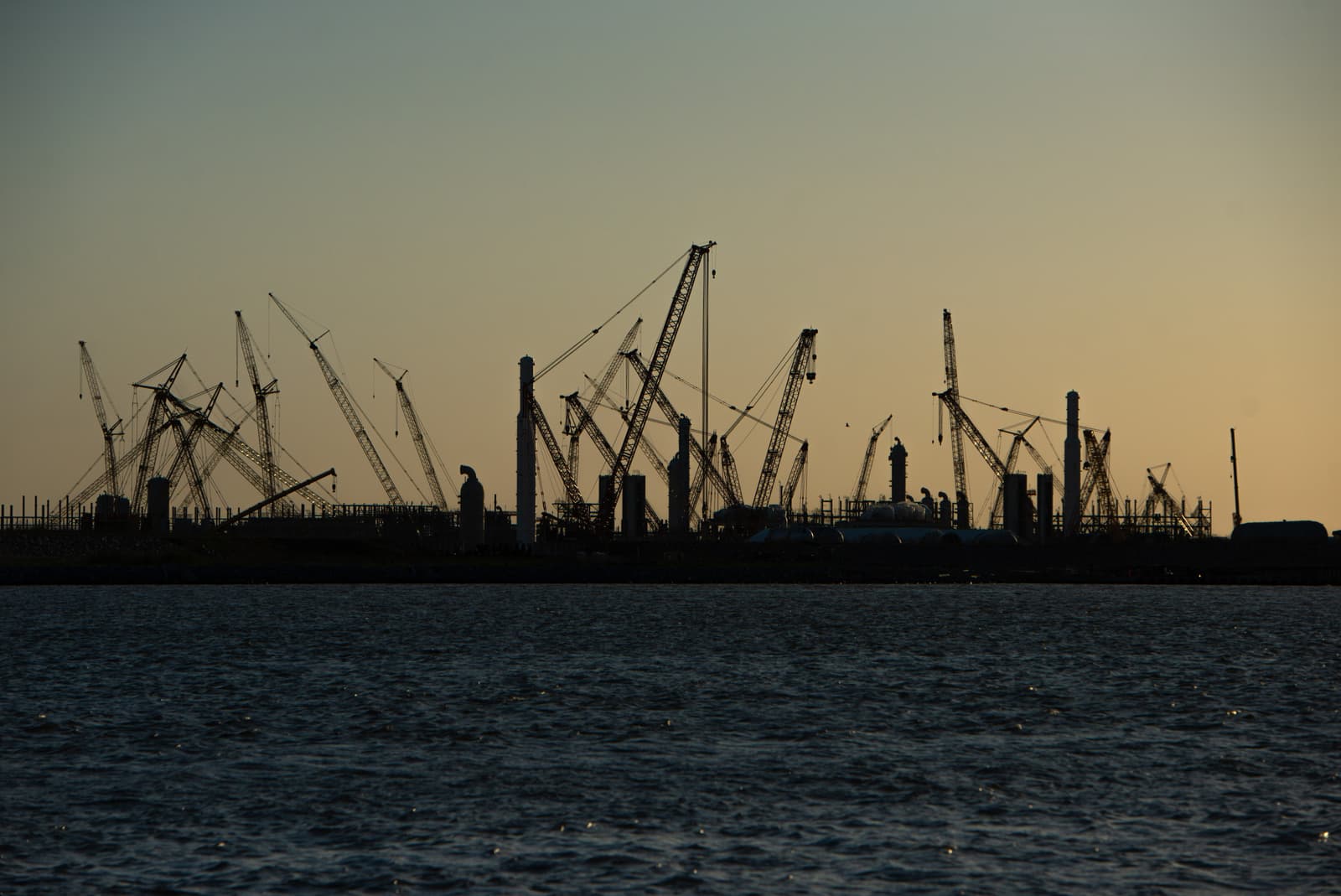
    Header image: A liquified natural gas terminal on the Texas Louisiana border in the United States. Credit: The Washington Post via Getty Images.

    Reporters: Josephine Moulds
    Environment editor: Robert Soutar
    Impact producer: Grace Murray
    Deputy editor: Chrissie Giles
    Editor: Franz Wild
    Production editor: Frankie Goodway
    Fact checker: Alice Milliken

    This reporting is funded by the Sunrise Project. None of our funders have any influence over our editorial decisions or output.

    Original article by Josephine Moulds republished from The Bureau of Investigative Journalism under a Creative Commons Attribution-NonCommercial-NoDerivs 3.0 Unported License.