Tag: net zero

  • Fossil Fuel Firms ‘Building Bridge to Climate Chaos’

    Spread the love
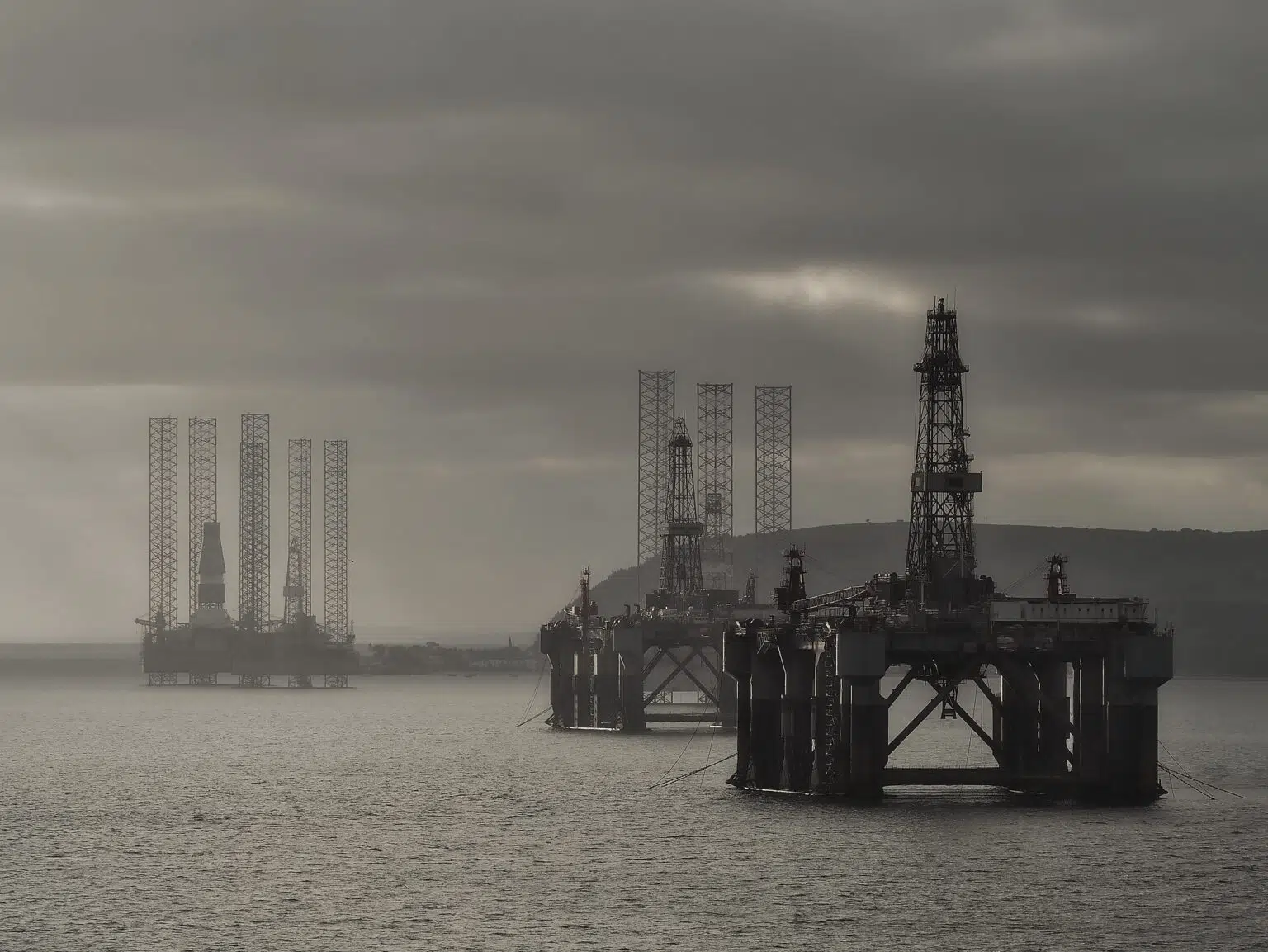
    North Sea oil rigs in Cromarty Firth, Scotland. Credit: joiseyshowaa (CC BY-SA 2.0)
    North Sea oil rigs in Cromarty Firth, Scotland. Credit: joiseyshowaa (CC BY-SA 2.0)

    Original article by JAKE JOHNSON republished from Common Dreams under Creative Commons (CC BY-NC-ND 3.0).
    An updated database shows that more than 1,000 oil and gas companies around the world are planning to expand their planet-wrecking infrastructure.

    More than a thousand fossil fuel companies around the world are currently planning to build new liquefied natural gas terminals, pipelines, or gas-fired power plants even as scientists warn that fossil fuel expansion is incompatible with efforts to prevent catastrophic warming.

    That’s according to an updated database released Wednesday by Urgewald and dozens of partner groups. Described as the most comprehensive public database on the fossil fuel industry, the Global Oil & Gas Exit List (GOGEL) covers 1,623 companies that are operating in the upstream, midstream, or gas-fired power sector and collectively account for 95% of global oil and gas production.

    According to the 2023 GOGEL, 96% of the 700 upstream oil and gas companies in the database are exploring or actively developing new oil and gas fields, projects that Urgewald said “severely jeopardize efforts to limit global temperature increase to 1.5 °C.”

    Nearly 540 companies in the database are collectively planning to produce 230 billion barrels of oil equivalent (bboe) over the short term, the database shows.

    “The seven companies with the largest short-term expansion plans are Saudi Aramco (16.8 bboe), QatarEnergy (16.5 bboe), Gazprom (10.7 bboe), Petrobras (9.6 bboe), ADNOC (9.0 bboe), TotalEnergies (8.0 bboe) and ExxonMobil (7.9 bboe),” Urgewald noted. “These seven companies are responsible for one-third of global short-term oil and gas expansion.”

    The database also shows that fossil fuel companies are planning to expand global LNG capacity by 162%, a significant threat to critical climate targets. A United Nations-backed report published last week warned that fossil fuel expansion plans are “throwing humanity’s future into question.”

    Urgewald pointed specifically to the LNG boom in the U.S., which the group said is “cementing its position as the world’s largest export hub for LNG” with 21 new export facilities planned along the Gulf Coast. Those facilities account for more than 40% of worldwide LNG expansion documented in the GOGEL database.

    “Most of the fossil gas that will be exported from these terminals stems from the Permian Basin, the heart of the U.S. fracking industry,” Urgewald observed.

    The updated database shows that nearly 80 companies—including Exxon, Chevron, and BP—are currently operating in the Permian Basin, located in the U.S. Southwest.

    Climate campaigners and experts have also sounded alarm over Calcasieu Pass 2 (CP2), a planned $10 billion LNG export hub that would ship up to 24 million tons of gas annually once it is completed.

    “The fossil fuel industry wants to pave undeveloped wetlands all along the coast with LNG facilities like NextDecade Corporation’s Rio Grande LNG Terminal, Rebekah Hinojosa, a member of the South Texas Environmental Justice Network said Wednesday. “Besides their environmental implications, these plans violate Indigenous sacred lands, and people working in fishing, shrimping, and eco-tourism risk losing their jobs. Our communities refuse to be sacrificed for the fracking industry’s dirty gas exports.”

    Original article by JAKE JOHNSON republished from Common Dreams under Creative Commons (CC BY-NC-ND 3.0).

  • UK Conservatives heading to elections with a growing green policy gap

    Spread the love
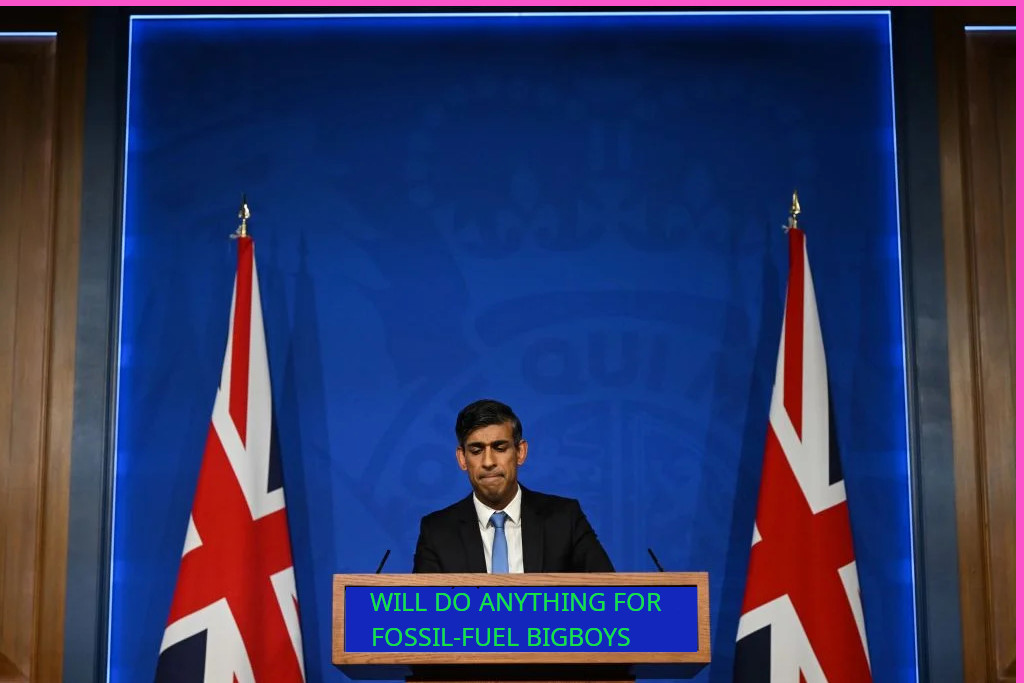
    UK Prime Minister Rishi Sunak denies climate change.
    UK Prime Minister Rishi Sunak denies climate change.

    https://www.energymonitor.ai/policy/net-zero-policy/weekly-data-uk-conservatives-heading-to-elections-with-a-growing-green-policy-gap/

    There is now a 21% share of required emissions cuts in the UK’s 2028–32 carbon budget that is not covered by policy.

    …

    Green Alliance’s Net Zero Policy Tracker analyses the gap between confirmed policy and what would be required for net zero by 2050, according to the UK’s five-yearly carbon budgets. 

    At the start of 2023, there was a 13% share of required emissions cuts in the 2028–32 carbon budget that was not covered by policy. Following the government’s so-called Energy Security Day in March – which saw 2,800 pages of new energy and climate policy – the share of emissions cuts not covered by policy grew to 15%. 

    Since Sunak’s latest speech in March, the gap has grown to 21%: a near-doubling of the gap that existed at the start of the year. 

    “The Prime Minister delayed vital policies that would have lowered energy bills, increased UK energy security, and played a critical role in creating a green and growing economy,” said Chris Venables, Green Alliance’s deputy director of politics and partnerships, in a statement following Sunak’s speech. “This represents a deeply alarming pivot that has undermined business confidence, and put at serious risk the hard-won, cross-party and evidence-based approach we have had to actually reaching our legally binding net-zero targets.”

    …

    https://www.energymonitor.ai/policy/net-zero-policy/weekly-data-uk-conservatives-heading-to-elections-with-a-growing-green-policy-gap/

  • “Reckless and irresponsible”: critics speak out against the UK’s U-turn on net-zero targets 

    Spread the love

    https://www.energymonitor.ai/policy/net-zero-policy/uk-net-zero-targets-critics-delay-climate/

    UK Prime Minister Rishi Sunak has rowed back on UK net-zero targets, incurring the wrath of industry, charities and academics.

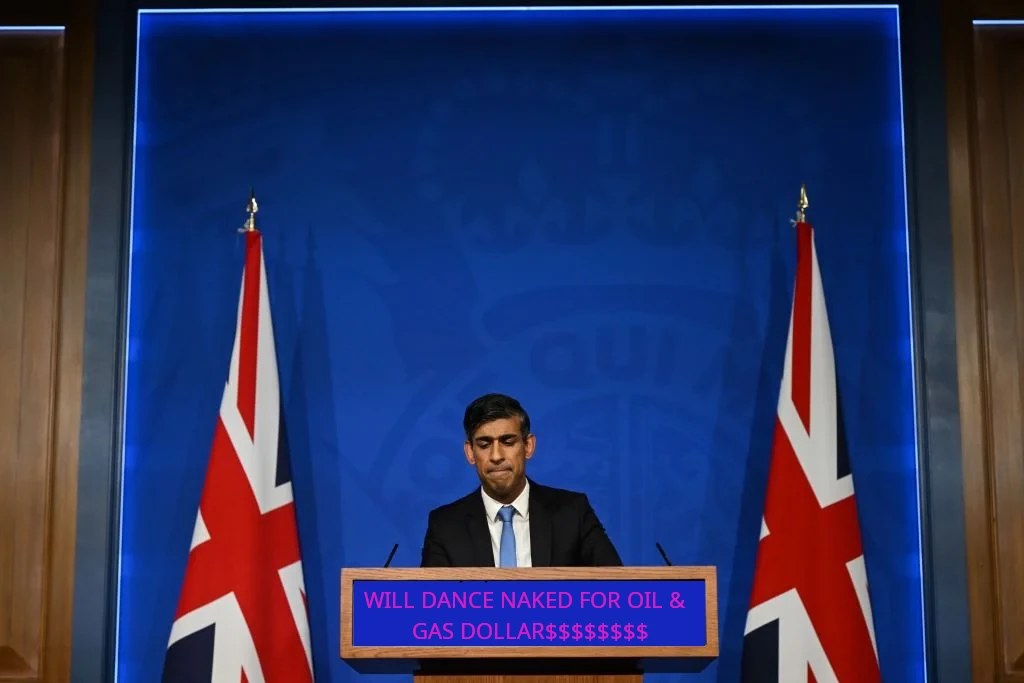
    Rishi Sunak will dance naked for oil a& gas dollar$$$$$$$$
    Rishi Sunak offers to dance

    The UK will water down policies aimed at achieving its target of net-zero carbon emissions by 2050 following Prime Minister Rishi Sunak’s decision, announced on 20 September, to push back the ban on the sale of new petrol and diesel cars in the UK from 2030 to 2035. 

    Sunak also announced an easing of energy efficiency targets for rental properties and backtracked on plans to make homeowners replace gas boilers with heat pumps.

    “We can adopt a more pragmatic, proportionate and realistic approach to meeting net zero” that would bring the UK in line with countries such as France and Germany, he said.

    Reacting to the news, Halima Begum, CEO of ActionAid UK, told our sister site Investment Monitor that the UK Government’s sudden reversal of its net-zero commitments “is reckless and irresponsible”.

    “Climate action is not a political bargaining chip that can be taken on and off the table to satisfy party political squabbles, but a global imperative,” she added. “The climate crisis is not a future event, it is happening now. People are facing flash floods, droughts, rising sea levels and irreversible damage that has already led to tragic deaths around the world this year alone.”

    Meanwhile, Nick Kirsop-Taylor, an expert in environmental governance from the University of Exeter, joined a chorus of other academics in saying it is “truly disappointing news” since time is running out for the global action required to keep global temperatures to below 1.5°C, let alone 2°C.

    …

    https://www.energymonitor.ai/policy/net-zero-policy/uk-net-zero-targets-critics-delay-climate/

  • COP28 host UAE to extract nearly 40 billion barrels of oil and gas over 70 years

    Spread the love
    Dr. Sultan al Jaber. Image: Arctic Circle, CC BY 2.0, via Wikimedia Commons
    Dr. Sultan al Jaber. Image: Arctic Circle, CC BY 2.0, via Wikimedia Commons

    https://www.energymonitor.ai/sectors/industry/exclusive-cop28-host-uae-to-extract-nearly-40-billion-barrels-of-oil-and-gas-over-70-years/

    If all oil-producing nations followed the United Arab Emirates’ strategy, the world’s carbon budget for 1.5°C would be exceeded many times over.

    COP28 host the United Arab Emirates (UAE) has plans in place to extract 38 billion barrels of oil and gas between now and 2085 – with significant further reserves that could also be extracted in that time.

    If all oil producing nations followed such a strategy, the world’s carbon budget for 1.5°C would be exceeded many times over. As one of the wealthiest petrostates in the world – with a gross domestic product (GDP) per capita of $44,000 (Dh161,590) – the “common but differentiated responsibility” clause of the 2015 Paris Agreement could arguably mean that the UAE should end oil and gas production sooner than other, less wealthy nations – but as yet the UAE has no such plans.

    According to exclusive data from Energy Monitor’s parent company, GlobalData, there are some 28.3 billion barrels of oil remaining in active fields in the UAE, with a further 1.5 billion barrels in fields that are currently planned.

    Active fields in the UAE also have some 38.2 trillion cubic feet (trcf) of gas remaining, while planned fields contain 10.5trcf of gas. The combined volume of hydrocarbons in active and planned oil and gas fields in the UAE adds up to 38.4 billion barrels of oil equivalent.

    The UAE is continuing to develop new oil and gas fields despite the International Energy Agency (IEA) repeatedly warning that for the world to meet its target of net zero by mid-century, oil and gas use must go into managed decline, with no new oil and gas fields approved for development beyond those already in existence.

    The UAE’s oil plans are in the spotlight right now given the country’s high-profile role hosting the next annual UN climate conference, COP28, which is taking place in Dubai at the end of November.

    Given that the burning of fossil fuels is by far the largest contributor to global warming, the UAE’s position as the world’s seventh-largest oil producer, and 14th-largest gas producer, is a major point of concern among climate experts. 

    …

    https://www.energymonitor.ai/sectors/industry/exclusive-cop28-host-uae-to-extract-nearly-40-billion-barrels-of-oil-and-gas-over-70-years/

  • Rishi Sunak is wrong: we polled the British public and found it largely supports strong climate policies

    Spread the love
    Campaigners take part in a Stop Rosebank emergency protest outside the U.K. Government building in Edinburgh, after the controversial Equinor Rosebank North Sea oil field was given the go-ahead Wednesday, September 27, 2023. (Photo: Jane Barlow/PA Images via Getty Images)
    Campaigners take part in a Stop Rosebank emergency protest outside the U.K. Government building in Edinburgh, after the controversial Equinor Rosebank North Sea oil field was given the go-ahead Wednesday, September 27, 2023. (Photo: Jane Barlow/PA Images via Getty Images)

    Christian Bretter, University of Leeds and Felix Schulz, University of Leeds

    The UK’s Tory government is rolling back climate legislation and is continuing to fund the expansion of domestic oil and gas reserves. Our new research suggests this might be based on a misreading of public opinion.

    Since winning a July 2023 by-election in the London suburb of Uxbridge, the UK government has made polarising voters on climate policy one of its main strategies. The Tory campaign had focused on opposing a new low emission zone for cars, and prime minister Rishi Sunak took its victory as vindication of a clear “pro-motorist” and anti-climate policy stance.

    The apparent lack of public support for strict climate policies such as a ban of fossil-fuelled cars is now being used as an excuse to roll back policies urgently necessary to reach net zero targets.

    In a recently study in the journal Climate Policy, we demonstrate that, by betting on a public tired of stringent climate policies, the government is backing the wrong horse.

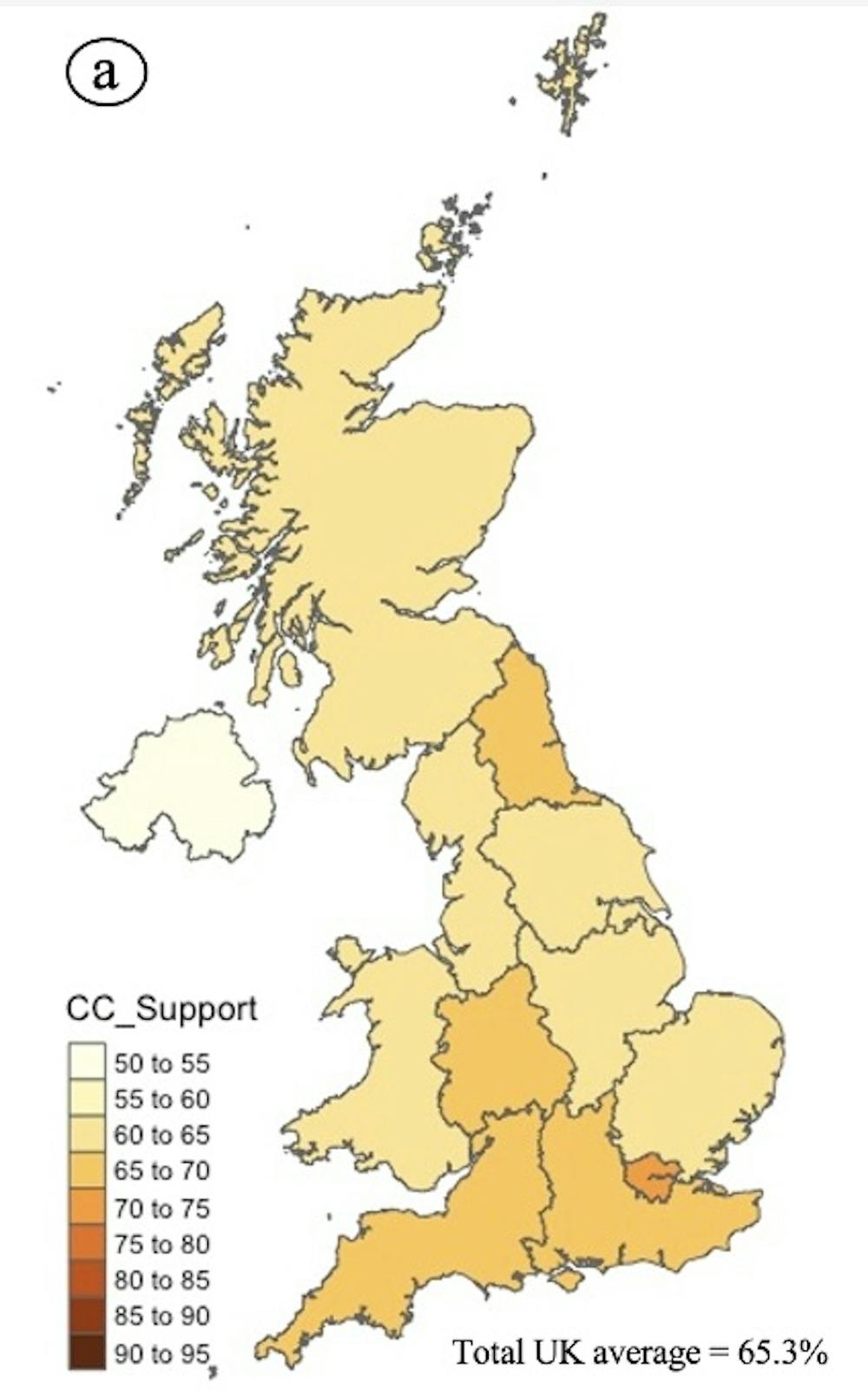
    We asked 1,911 people that are representative of the UK population in terms of age, gender and ethnicity to indicate the extent to which they support different climate policy instruments. Almost two thirds support the most stringent climate policies, while others receive even higher support.

    In short, people in the UK favour all kinds of policy instruments to tackle climate change, even the most stringent ones. There is a lesson here for the opposition too, which should put forward more effective climate policies, and not shy away from regulation.

    A vote in favour of UK climate politics

    In our study, we asked people about actual policy proposals by UK government bodies and political parties (as opposed to hypothetical ones).

    We put each into one of four categories based on the type of policy instrument: regulation (such as banning the sale of fossil-fuel-powered cars or stopping drilling for oil and gas), market instruments (carbon trading, stopping fossil fuel subsidies), informational tools (consumer labels, advertising campaigns), and voluntary initiatives (carbon offsets, non-binding product standards).

    Cars in traffic jam on wet day
    The UK public is mostly happy to support measures like phasing out petrol cars.
    Kittipong33 / shutterstock

    Contrary to the government’s rhetoric, our findings point towards a more optimistic view of the UK’s future climate politics – at least from a voter perspective. A large majority supports strict regulations that mandate or prohibit specific behaviour. An even larger share backs market-based initiatives (78%), information tools (86%) and voluntary measures (87%).

    While the important thing here is that the UK public wants a package of different policy instruments to decarbonise the economy and reach net zero, one could rightly argue that more still needs to be done to increase support for stricter measures. So what drives public support for climate policies?

    Drivers of public support

    In line with previous research, our study found that free market and environmental beliefs have the biggest impact on whether someone supports climate policies.

    The more people believed that a free market acts in the interests of the public, the less they supported all climate policies. Similarly, people that believe nature is important voiced stronger support for all policies.

    Interestingly, support for regulatory and market-based policies didn’t change according to a person’s income. This is important because the current government usually tries to appeal to working class voters in its attempts to demonise ambitious climate policies.

    These are important findings that highlight the need to challenge free market ideologies by publicly and repeatedly scrutinising their validity for a functioning and just society. We also should start recognising their detrimental effect on climate policy preferences.

    Regional variations in public support

    However, only looking at national results might hide important differences. Our research found important regional variation, with London often being an exception compared to the rest of the UK.

    People living in other regions were about 30% less likely to support regulatory and market-based climate policies compared to people in Greater London, for instance.

    Shaded map of UK
    Regulatory measures were the least popular around the country, though still had majority support everywhere and a strong majority in London.
    Bretter and Schulz, CC BY-SA

    Drivers of these differences are both ideological and structural. People living in Greater London tend to believe less in the free market system compared to people in regions which had significantly lower support for climate policies. This indicates that neoliberal ideology favouring free markets is discouraging climate action.

    Yet it is not only what people believe in. Those in more rural regions with higher emissions show less support for stricter climate policies. These tend to be regions with less access to public transport where people have to rely more heavily on high-emitting cars.

    More needs to be done to improve public infrastructure in rural areas. This will require investment in affordable, low-carbon transport networks rather than championing the continuation of the combustion engine.

    How the media may shape policy support

    Of course, our study only captured a snapshot of people’s policy preferences. We are constantly confronted by news stories, particularly through social media.

    These often act as echo chambers to reinforce existing ideologies (and by extension, policy preferences), thereby strengthening existing polarisations. This will make it harder to engage people with contrasting beliefs in a discussion on climate policies.

    On the other hand, being repeatedly confronted with particular views and ideas can shift one’s beliefs. In psychology, this is referred to as “repeated priming”. In Germany, we have seen how newspaper campaigns against the slow phase-out of gas boilers have further undermined public support for this specific climate policy.

    Could something similar happen in the UK? To avoid the gradual weakening of support by particular news outlets, the UK opposition parties need to be consistent and persistent in their communication of climate policies and their effects.


    Imagine weekly climate newsletter

    Don’t have time to read about climate change as much as you’d like?

    Get a weekly roundup in your inbox instead. Every Wednesday, The Conversation’s environment editor writes Imagine, a short email that goes a little deeper into just one climate issue. Join the 20,000+ readers who’ve subscribed so far.The Conversation


    Christian Bretter, Research Fellow in Environmental Psychology, University of Leeds and Felix Schulz, Research Fellow, University of Leeds

    This article is republished from The Conversation under a Creative Commons license. Read the original article.

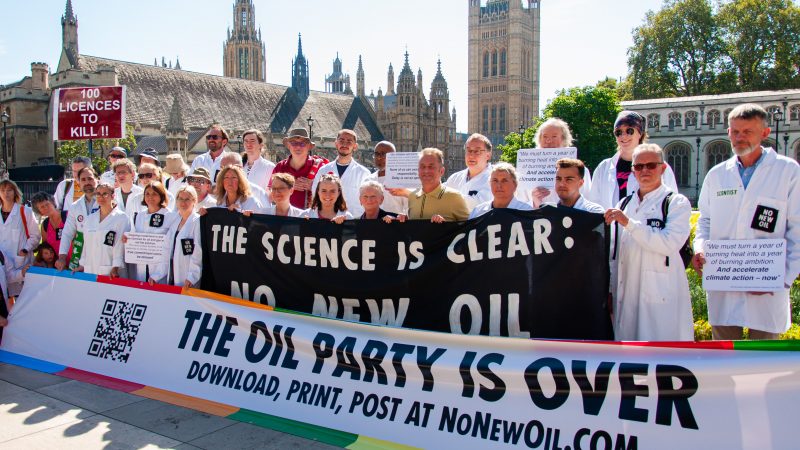
    Scientists protest at UK Parliament 5 September 2023.
    Scientists protest at UK Parliament 5 September 2023.