Tag: net zero
Only 4% of top companies’ net-zero pledges meet UN climate guidelines, report finds

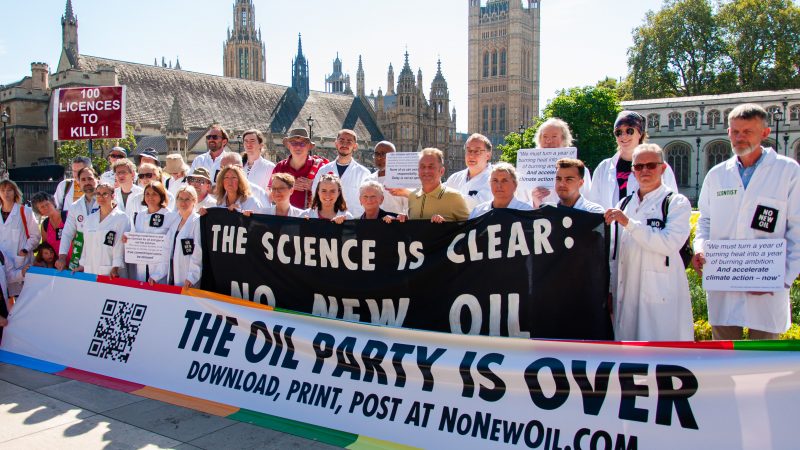
Scientists protest at UK Parliament 5 September 2023. The pace of change among governments and corporations is set to form a central part of the COP28 climate talks in Dubai.
Half of the world’s 2,000 biggest listed companies have set a target to get to net-zero emissions by 2050 but just a fraction meet tough United Nations guidelines for what constitutes a quality pledge, a report released on Monday shows.
That is according to the latest analysis of the Forbes Global 2000 – a list of the world’s largest companies – by Net Zero Tracker, an independent data consortium including Oxford University.
It says that the number of companies setting net zero emissions targets has risen by 40 per cent from 702 in June 2022 to 1,003 in October 2023.
Quantity over quality?
The group warns, however, that despite progress in terms of the number of companies setting net-zero targets, there is an urgent need to ensure these targets are credible and deliver on promised emissions reductions.
Just 4 per cent of targets meet the criteria laid down by the UN’s Race to Zero campaign for example, by ensuring that they cover all greenhouse gas emissions, start to cut them immediately, and include an annual progress update on interim and longer-term targets.
…
Science shows the severe climate consequences of new fossil fuel extraction

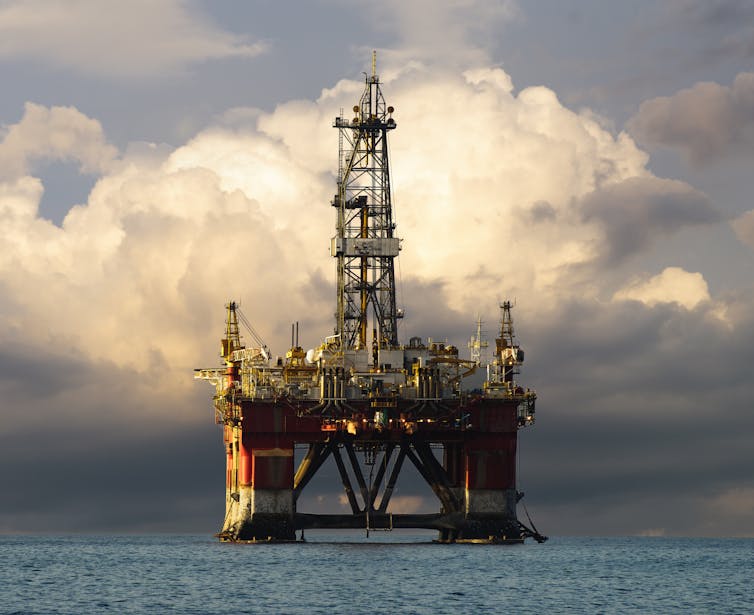
An offshore drilling platform.
Mike Mareen/ShutterstockEd Hawkins, University of Reading
The world has just suffered through its warmest month ever recorded. Heatwaves have swept across southern Europe, the US and China, breaking many temperature records in the process.
Climate scientists have been sounding the alarm for decades that this type of event will become more frequent as the world continues to warm. The major culprit behind this is the burning of fossil fuels. So it’s extremely concerning that the UK government has announced its intention to grant hundreds of licences for new North Sea oil and gas extraction.
Although burning fossil fuels to generate power and heat has enabled society to develop and flourish, we are now experiencing the unintended side effects. The carbon dioxide that has been added to the atmosphere is leading to a rise in global temperatures, causing heatwaves to become hotter and downpours more intense. The resulting large-scale disruption and suffering is becoming ever more visible.
This warming will continue, with worsening climatic consequences, until we reduce global carbon dioxide emissions to “net zero”. After that, we will still have to live and suffer in a warmer climate for generations. The collective choices we make now will matter in the future.
The small-scale, but high-profile, disruptions caused by Just Stop Oil protesters in the UK are extremely frustrating for many. But their single demand – for no licenses for new UK coal, oil and gas projects – is consistent with the science underpinning the international agreements that the UK has signed.
Temperatures are rising
Since the 1860s, the scientific community has understood that adding more carbon dioxide to the atmosphere would warm the climate. And as long ago as 1938, the burning of fossil fuels was linked to the observed rise in both carbon dioxide levels and global temperatures. Fast forward to now and global temperatures are warmer, and increasing faster, than at any point in human civilisation.
In response to the overwhelming scientific evidence, the UK and 193 other nations came together in 2015 to ratify the Paris agreement on climate change. One of the agreed goals is to limit global warming to well below 2°C, and even aim for 1.5°C, compared to the pre-industrial era.
However, the latest synthesis report from the Intergovernmental Panel on Climate Change, which all governments explicitly endorsed, paints a stark reality. If we burn all of the fossil fuels that we currently have access to, then global warming will exceed 1.5°C and may reach 2°C.
To avoid breaching the limits set out by the Paris agreement, some of the coal, oil and gas that we can already extract must remain unburnt. New fossil fuel extraction projects will make it even harder to stop further global warming.
Build up renewable infrastructure
There are other options. The UK government’s official advisers, the Climate Change Committee, have put forward a vision for UK power generation consistent with a net zero future. They say that the UK could provide all of its energy needs by 2050 through a combination of renewables, bioenergy, nuclear, hydrogen, storage and demand management, with some carbon capture and storage for fossil gas-based generation in the meantime.

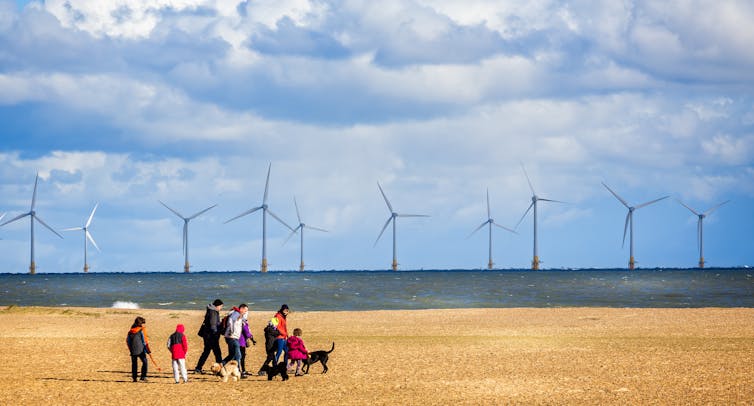
The UK can achieve energy security without causing additional global warming.
Nigel Jarvis/ShutterstockIf the UK followed the example of China and rapidly increased its investments in renewable energy, then it could achieve energy security without causing additional global warming. China emits the most carbon dioxide of any country in the world. But it is installing more renewable energy generation than the rest of the world combined.
Rapidly reducing our reliance on fossil fuels, and not issuing new licenses to extract oil and gas, is the most effective way of minimising future climate-related disruptions. The sooner those with the power to shape our future recognise this, the better.

Don’t have time to read about climate change as much as you’d like?
Get a weekly roundup in your inbox instead. Every Wednesday, The Conversation’s environment editor writes Imagine, a short email that goes a little deeper into just one climate issue. Join the 20,000+ readers who’ve subscribed so far.
Ed Hawkins, Professor of Climate Science, University of Reading
This article is republished from The Conversation under a Creative Commons license. Read the original article.
Theresa May urges government ‘not to roll backwards’ on net zero commitment

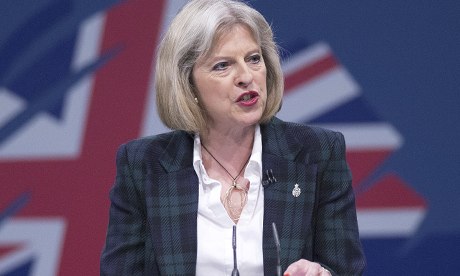
Former UK Prime Minister Theresa May Theresa May has said the “best long-term decision” the government can make is on climate change because action is integral to the “long-term future” of the UK.
Speaking in the debate on the King’s Speech yesterday, the former prime minister suggested the government was not being sufficiently “strong in ambition” to meet the 2050 net zero target.
…
The King’s Speech contained plans to have licences for oil and gas projects in the North Sea awarded annually.
There have recently been questions raised about the government’s ability to meet its 2050 net zero target, with its climate advisers warning the UK risks falling behind without much faster action.
In its latest progress report, the Committee on Climate Change (CCC) said the “expansion of fossil fuel production is not in line with net zero“.
…
Green Party urges Rishi Sunak to focus on environment and climate in King’s Speech
Green Party co-leader Adrian Ramsay has called for next week’s King’s Speech to tackle the climate and nature emergencies.

Green Party Co-leader Adrian_Ramsay. Wikipedia CC. Ramsay said:
“Rishi Sunak has decided when in a climate hole keep digging. Pushing ahead with new oil and gas drilling licences is an act of environmental vandalism. Especially at a time when the country is reeling from hugely damaging storms and floods, which scientists warn will become more frequent, ferocious and destructive as our planet heats.
“It seems fossil fools are driving government energy policy – pushing a false narrative that extracting more climate-wrecking oil and gas out of the North Sea will lead to energy security and lower bills. Nothing could be further from the truth.
“Green lighting energy giants to exploit fossil fuel reserves they then sell on the global market at global prices cannot provide either security or cheaper energy bills. This can only come from ramping up cheaper and abundant renewable resources such as solar and onshore wind together with a mass home insulation programme.
“That’s why Green MP Caroline Lucas has set out five Bills that the government ought to introduce to tackle the climate and nature emergencies and address the cost-of-living crisis, including a Just Fossil Fuel Phaseout Bill and a Green New Deal Bill.
“The attack on road safety measures is a further deplorable and desperate attempt to pick up a few votes through creating a culture war. But the fact that the Conservatives need to go to such extremes to create a wedge issue with Labour shows that Labour simply aren’t offering the bold alternative or hopeful vision that our communities so desperately need.
“It is clear, whoever forms the government after the next general election, we are going to need more Green MPs pushing legislation that will lead to a greener, fairer, healthier and safer country.”