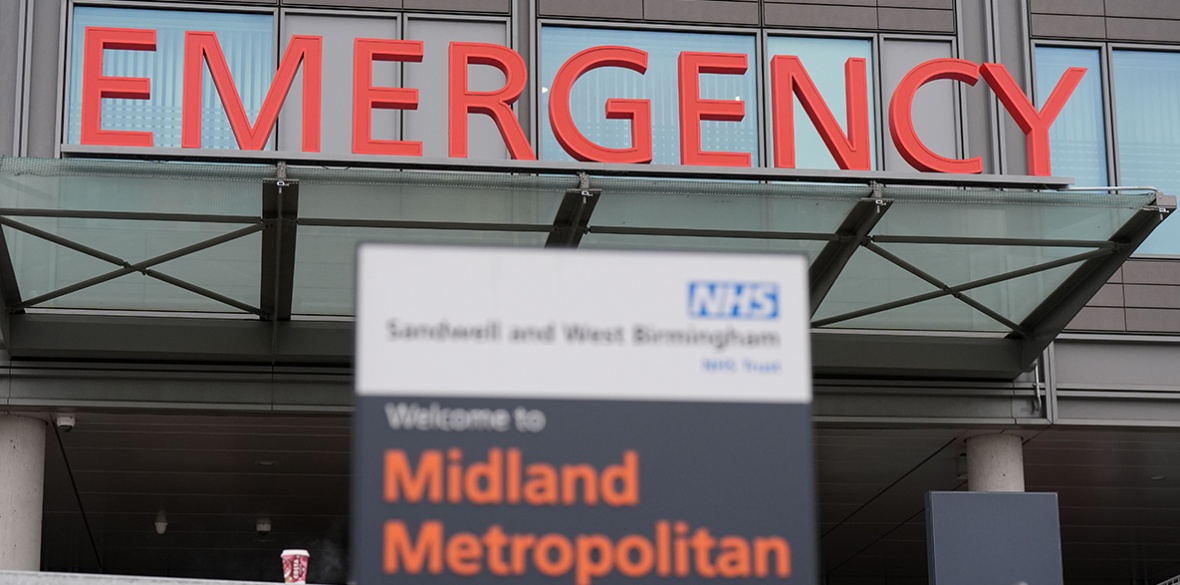
The emergency department at Midland Metropolitan University Hospital, Smethwick, January 8, 2025
Royal College of Emergency Medicine says advertisement is ‘normalising’ patients being treated in the corridors
A LONDON hospital has advertising for “corridor care” nurses because so many A&E patients are being cared for while waiting for beds or treatment.
The 12-hour shifts were advertised by Whittington hospital in north London.
The Royal College of Emergency Medicine (RCEM) said the advertisement indicated the “normalising” of patients being treated in the corridors of hospital A&E departments.
…
Retired paediatrician Dr John Puntis, co-chair of campaign group Keep Our NHS Public, said: “There can be no bleaker illustration of the current state of the NHS than ‘care’ delivered in corridors.
“Winter pressures on an already overstretched service were entirely predictable.
“Six months in power and Labour has done nothing pro-active to alleviate this situation.”
He accused the government of instead “throwing money at the private sector.”
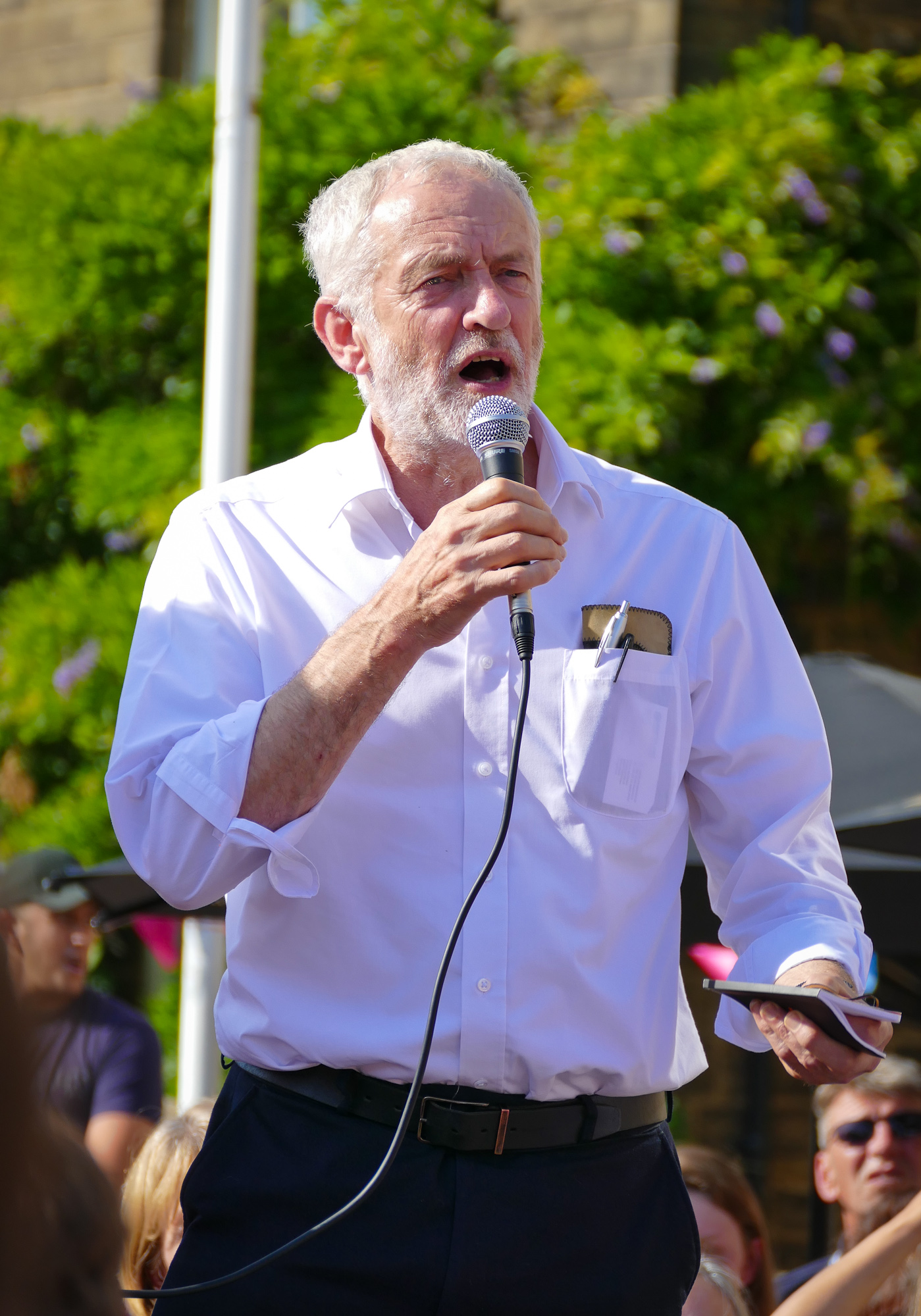
As the government unveils its plans for NHS patients to be treated privately in a bid to cut the waiting list backlog, former Labour MP Jeremy Corbyn says this administration is repeating the mistakes of the last
…
During the general election, I stood on a platform that pledged to defend a fully public, fully funded healthcare system. We knew Labour’s decision to drop its previously held manifesto promise that “the NHS is not for sale” was no accident. We said the future of our NHS was on the line – and we were right.
This week, the government announced that private operators will receive an extra £2.5bn a year in government funding. Under their plans, the role of the private sector in providing outpatient appointments will rise by 20 per cent. Meanwhile, the secretary of state for health, Wes Streeting, refuses to rule out the involvement of the private sector in a reformed care service – a refusal he will no doubt maintain for the next four years until elderly and disabled people are finally allowed to hear his plans.
To the prime minister and health secretary, welcoming privatisation is proof of their commitment to pragmatism. “We will not let ideology… stand in the way.” To anyone who knows the reality of privatisation, their dogmatic refusal to look at the evidence is the very definition of ideology itself.
A privatised health service leads to worse quality care, higher mortality rates and a reduction in staffing. Privatisation has even been linked to higher rates of patient infections, in part because cleaning staff are typically the first to be cut in the name of efficiency. There is only one beneficiary of privatisation: investors and shareholders making money out of people’s ill health.
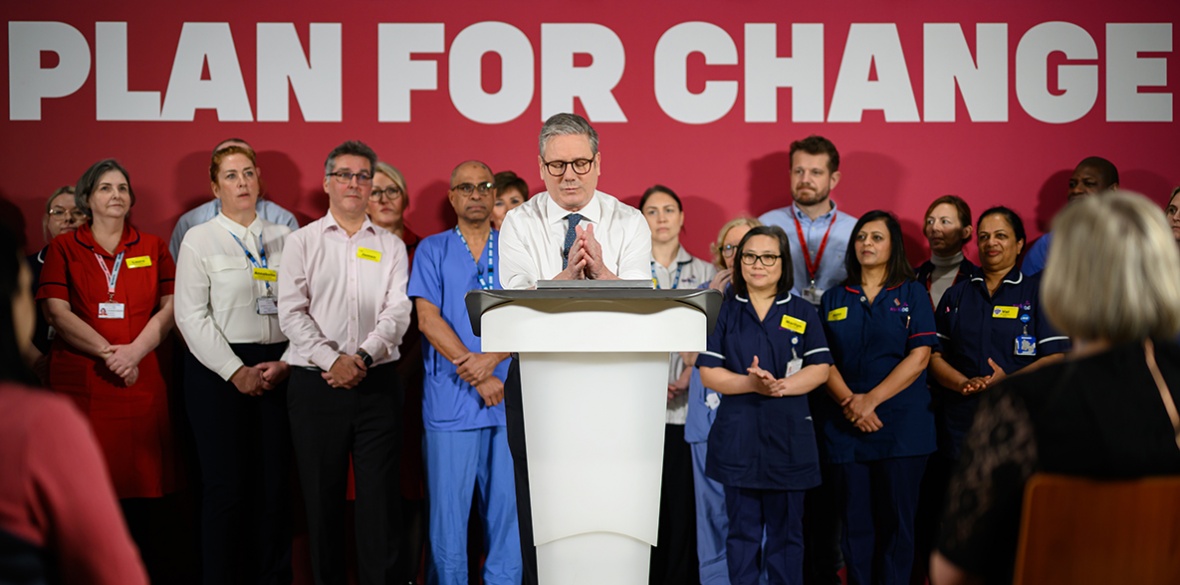
Prime Minister Sir Keir Starmer speaks to medical staff and media during a visit to Elective Orthopaedic Centre in Epsom, Surrey, to highlight his ‘plan for change’ commitments on health, January 6, 2025
KEIR STARMER says he is expanding NHS dependence on the private sector because he is “not interested in putting ideology before patients.”
But continuing to increase outsourcing of NHS care to private providers ignores the evidence of the last decade and puts corporate profit, not patients, first.
Labour’s plans for the NHS represent continuity with Tory policy, not change.
The number of procedures outsourced by the NHS has steadily grown since 2014, without any discernible impact on waiting lists, which have soared in the same period.
Private hospitals have claimed an ever greater share of routine operations, now performing about a quarter of hip and knee replacements and the same proportion of cataract removals: extracting sizeable profits on simple operations which would cost less in-house.
In the process, they undermine the NHS’s capacity to deliver such treatments. Most medics working in the private sector also carry out work for the NHS, while private providers are constantly seeking to recruit more NHS staff: the greater the demand for private operations, the greater the drain on the NHS workforce. Outsourcing is not driven simply by need but by greed: with higher rates available in the private sector, some doctors have an incentive to refer patients for private treatment at public expense.
Starmer wants to raise the number of privately provided operations by another 20 per cent. But with a shared workforce, this could mean the NHS paying more for the same number of procedures rather than slashing waiting lists.
Keir Starmer, Angela Rayner and Rachel Reeves wear the uniform of the rich and powerful. They have all had clothes bought for them by multi-millionaire Labour donor Lord Alli. CORRECTION: It appears that Rachel Reeves clothing was provided by Juliet Rosenfeld.
Prime Minister Sir Keir Starmer (centre) and Health Secretary Wes Streeting (left), with NHS CEO Amanda Pritchard (right) during a visit to Elective Orthopaedic Centre in Epsom, Surrey, to highlight his ‘plan for change’ commitments on health, January 6, 2025
TARGETING a 20 per cent increase in the use of the private sector to cut waiting lists risks “permanently embedding the profit-taking parasite” into the health service, campaigners have warned.
Prime Minister Sir Keir Starmer claimed he is “not interested in putting ideology before patients” as he unveiled the NHS’s growing use of private healthcare in a major speech today.
Private operators will receive an extra £2.5 billion a year in government funding under his new elective reform plan to address a waiting list for planned care on which 6.4 million people are waiting for 7.5m treatments.
This amounts to as many as a million extra appointments, scans and operations a year by the for-profit sector, with the official aim of patients no longer having to wait more than 18 weeks for non-urgent hospital care by spring 2029.
During his speech in Surrey, the prime minister acknowledged some people will “not like” expansion of the private sector in the NHS, but said: “To cut waiting times as dramatically as possible, our approach must be totally unburdened by dogma.”
Keep Our NHS Public co-chair Dr Tony O’Sullivan said: “The commitment of Keir Starmer and Wes Streeting to long-term contracts with the private sector threatens to permanently embed the profit-taking parasite in the NHS host, undermining the prospect of NHS recovery as a publicly provided universal service meeting the needs of the population.
“Starmer says he will ‘not let ideology stand in the way’ but it is their ideological choice that will stand in the way of sustainable NHS recovery.
“Safe and prompt community care will only be delivered through an urgent expansion of skilled staff.”
We Own It lead campaigner Johnbosco Nwogbo said: “Using the private sector to cut waiting lists was the centrepiece of the Conservative government’s Elective Recovery Plan in February 2022, but waiting lists kept going up.
“Starmer’s ‘new’ initiative looks suspiciously similar to the Conservatives’ failed plan.
“Hospitals are crumbling while the NHS is haemorrhaging at least £10m a week to private shareholder profits — money which could build a new operating theatre every week.
Health Secretary Wes Streeting meeting staff during a visit to London Ambulance Service headquarters in south London, December 9, 2024
Campaigners warn Labour’s ‘pro-business approach to data’ has ‘potential for further loss of public trust’ in the NHS
HEALTH Secretary Wes Streeting’s plans to sell GP data to the private sector “make no sense,” warned experts raising fresh privacy concerns yesterday.
Campaigners also warned Labour’s “pro-business approach to data” had the potential for further loss of public trust in the health service.
…
Mr Streeting in October said that data “is the future of the NHS” and Britain “could lead the world in medical research.”
He plans to create a “single access system” for information from GP surgeries, hospitals and other care settings after NHS England awarded a controversial £330 million contract to US spy tech giant Palantir in 2023 to develop a new platform.
Today Keep Our NHS Public co-chair Dr John Puntis said: “The Data Use and Access Bill currently going through Parliament illustrates Labour’s pro-business approach to data as a valuable resource, and highlights the potential for further loss of public trust.
“It aims to make data, including our personal heath data, widely available to public authorities and the private sector.
“The Secretary of State will be given power to erode safeguards over use of personal data for research.
“Labour intends to reduce the regulatory burden on businesses at the expense of safeguards for citizens.
“An alternative vision would include investment in a publicly owned national digital infrastructure aimed at storing and managing NHS data currently being processed through cloud computing services that are owned by large technology companies.
“There must be safeguards against the private sector gaining access to data for profit, and the public should be fully informed about the use of people’s health data and the right to protection and privacy.”
A spokesman for Momentum said: “Selling off patients’ data is no way to fix the NHS.
“We must fully renationalise our healthcare system and defend it from corporate interests, not welcome them.”
Keir Starmer, Angela Rayner and Rachel Reeves wear the uniform of the rich and powerful. They have all had clothes bought for them by multi-millionaire Labour donor Lord Alli. CORRECTION: It appears that Rachel Reeves clothing was provided by Juliet Rosenfeld.