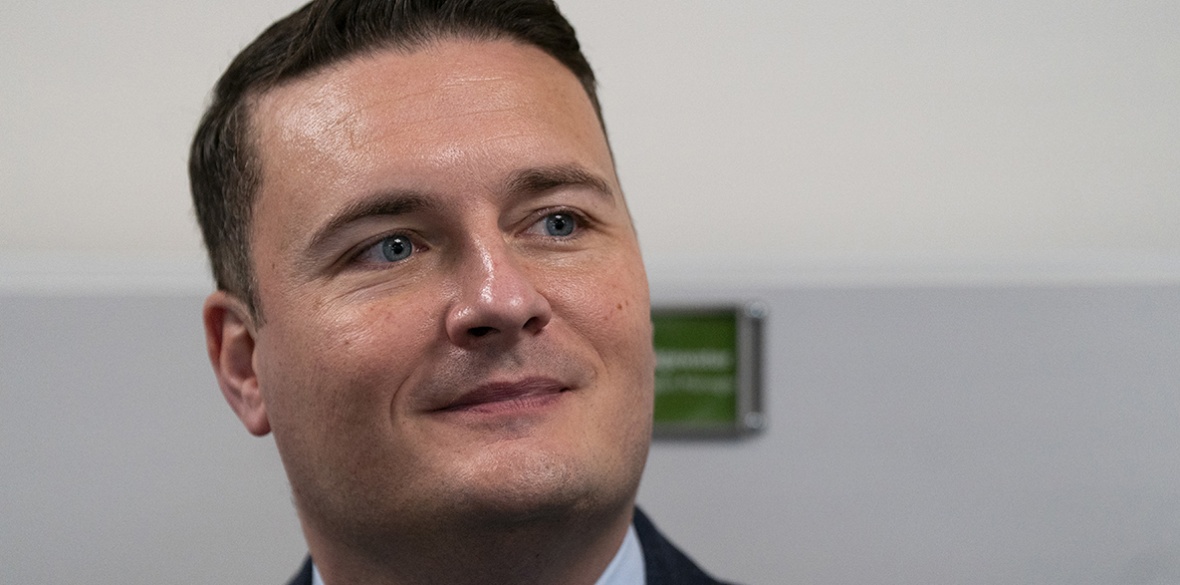
Prime Minister Sir Keir Starmer (centre) and Health Secretary Wes Streeting (left), with NHS CEO Amanda Pritchard (right) during a visit to Elective Orthopaedic Centre in Epsom, Surrey, to highlight his ‘plan for change’ commitments on health, January 6, 2025
TARGETING a 20 per cent increase in the use of the private sector to cut waiting lists risks “permanently embedding the profit-taking parasite” into the health service, campaigners have warned.
Prime Minister Sir Keir Starmer claimed he is “not interested in putting ideology before patients” as he unveiled the NHS’s growing use of private healthcare in a major speech today.
Private operators will receive an extra £2.5 billion a year in government funding under his new elective reform plan to address a waiting list for planned care on which 6.4 million people are waiting for 7.5m treatments.
This amounts to as many as a million extra appointments, scans and operations a year by the for-profit sector, with the official aim of patients no longer having to wait more than 18 weeks for non-urgent hospital care by spring 2029.
During his speech in Surrey, the prime minister acknowledged some people will “not like” expansion of the private sector in the NHS, but said: “To cut waiting times as dramatically as possible, our approach must be totally unburdened by dogma.”
Keep Our NHS Public co-chair Dr Tony O’Sullivan said: “The commitment of Keir Starmer and Wes Streeting to long-term contracts with the private sector threatens to permanently embed the profit-taking parasite in the NHS host, undermining the prospect of NHS recovery as a publicly provided universal service meeting the needs of the population.
“Starmer says he will ‘not let ideology stand in the way’ but it is their ideological choice that will stand in the way of sustainable NHS recovery.
“Safe and prompt community care will only be delivered through an urgent expansion of skilled staff.”
We Own It lead campaigner Johnbosco Nwogbo said: “Using the private sector to cut waiting lists was the centrepiece of the Conservative government’s Elective Recovery Plan in February 2022, but waiting lists kept going up.
“Starmer’s ‘new’ initiative looks suspiciously similar to the Conservatives’ failed plan.
“Hospitals are crumbling while the NHS is haemorrhaging at least £10m a week to private shareholder profits — money which could build a new operating theatre every week.
Health Secretary Wes Streeting meeting staff during a visit to London Ambulance Service headquarters in south London, December 9, 2024
Campaigners warn Labour’s ‘pro-business approach to data’ has ‘potential for further loss of public trust’ in the NHS
HEALTH Secretary Wes Streeting’s plans to sell GP data to the private sector “make no sense,” warned experts raising fresh privacy concerns yesterday.
Campaigners also warned Labour’s “pro-business approach to data” had the potential for further loss of public trust in the health service.
…
Mr Streeting in October said that data “is the future of the NHS” and Britain “could lead the world in medical research.”
He plans to create a “single access system” for information from GP surgeries, hospitals and other care settings after NHS England awarded a controversial £330 million contract to US spy tech giant Palantir in 2023 to develop a new platform.
Today Keep Our NHS Public co-chair Dr John Puntis said: “The Data Use and Access Bill currently going through Parliament illustrates Labour’s pro-business approach to data as a valuable resource, and highlights the potential for further loss of public trust.
“It aims to make data, including our personal heath data, widely available to public authorities and the private sector.
“The Secretary of State will be given power to erode safeguards over use of personal data for research.
“Labour intends to reduce the regulatory burden on businesses at the expense of safeguards for citizens.
“An alternative vision would include investment in a publicly owned national digital infrastructure aimed at storing and managing NHS data currently being processed through cloud computing services that are owned by large technology companies.
“There must be safeguards against the private sector gaining access to data for profit, and the public should be fully informed about the use of people’s health data and the right to protection and privacy.”
A spokesman for Momentum said: “Selling off patients’ data is no way to fix the NHS.
“We must fully renationalise our healthcare system and defend it from corporate interests, not welcome them.”
Keir Starmer, Angela Rayner and Rachel Reeves wear the uniform of the rich and powerful. They have all had clothes bought for them by multi-millionaire Labour donor Lord Alli. CORRECTION: It appears that Rachel Reeves clothing was provided by Juliet Rosenfeld.
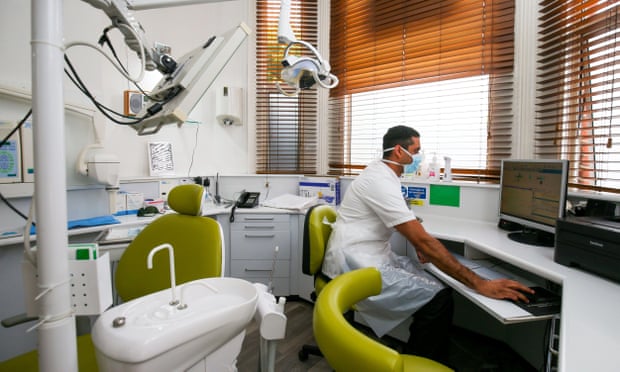
A plan to provide ‘golden hellos’ to new dentists in specific regions has been found to have failed. Photograph: Andrew Fosker/Alamy
National Audit Office finds ‘significant uncertainty’ as to whether pledge for extra 1.5m treatments will be fulfilled
Plans to end the deepening crisis in access to NHS dental care are failing, leaving patients unable to get treatment, according to a warning from the government’s spending watchdog.
The National Audit Office’s (NAO) damning verdict on the “dental recovery plan” prompted patient groups to voice alarm that people’s struggles with decayed teeth represents “a serious public health concern”.
A pledge to provide an extra 1.5m treatments in England this year is in disarray amid falls in both the number of dentists doing NHS work and people receiving help from them.
There is “significant uncertainty” as to whether that ambition will be fulfilled because two key elements of the plan have not been achieved, an NAO investigation found. None of the promised new fleet of mobile dental vans has appeared and £20,000 “golden hellos”, to entice 240 dentists to work in areas of acute shortage, have only produced one extra dentist.
Health workers and activists ramp up their campaign to oppose surveillance company Palantir’s role in managing NHS data
Health workers and activists in Britain are intensifying their campaign against US-based surveillance and data company Palantir, as Keir Starmer’s government accelerates its push to involve the notorious firm in managing National Health Service (NHS) data.
Palantir first gained a foothold in the NHS during the COVID-19 pandemic, securing contracts outside standard procurement processes and enjoying popularity among high-ranking health officials. The company, infamous for its involvement in operations such as the US-led invasions of Afghanistan and Iraq and migrant persecution under the US Immigration and Customs Enforcement (ICE), soon expanded its role in Britain. By last year, it had won a £330 million (USD 417 million) contract to implement the Federated Data Platform (FDP), intended to modernize medical data management across England.
Not all NHS institutions are currently able to share data because of differing systems. Both Conservative and Labour governments have identified this as the main reason for bottlenecks in the health system and claimed that resolving the problem would lead to improvements to care. However, organizations like Medact, Just Treatment, and Corporate Watch warn that entrusting this task to Palantir could deepen issues rather than solve them.
Similarly, many health experts have highlighted how the FDP would effectively lock the NHS into dependency on Palantir. The company’s systems are designed in a way to make data extraction difficult and integration with industry-standard analytics costly and complicated, so users are compelled to keep using them. “Palantir’s system pushes people to its own proprietary systems; and switching costs [for the NHS] will be very high,” Doctors’ Association and Foxglove warned in a 2023 report.
The current government is pushing forward with this form of private sector expansion in the NHS despite warnings from trusts and experts that the results will fall far short of expectations. In fact, some NHS organizations being forced to adopt the FDP under Labour’s administration have said that the new platform could result in a loss of functionality compared to the systems they currently rely on.
While there is general agreement among analysts that data sharing and usage within the NHS could be significantly improved, they argue that these improvements can and should be achieved through local and regional initiatives. In contrast to the top-down model ushered in by the FDP, these initiatives would build on existing systems and expertise, avoiding handing over control to a private company with a track record of human rights abuses.
Concerns that the FDP could make the NHS entirely dependent on Palantir are sharpened by fears over how patient data might be used. As one of the world’s largest public healthcare systems, the NHS holds an unique health dataset. While such data has immense potential to strengthen public services, entrusting it to corporate partners poses great risks. For instance, it could be exploited for purposes such as tracking and criminalizing migrants—a practice that has been systematically pursued under Britain’s hostile environment policies.
Palantir takes pride in finding new applications for data, specifically to reinforce Western dominance. Given that the full scope of the FDP remains unclear, there is significant concern that NHS data could also be exploited to boost Palantir’s surveillance tools. These tools are already being deployed in Israel’s ongoing genocide against Palestinians in the Gaza Strip.
Palantir’s leadership has been outspoken in its support for Israel, openly aligning with Benjamin Netanyahu’s government even as it proceeded to kill tens of thousands of Palestinians. The company is actively testing—or rather, showcasing—its artificial intelligence (AI) models through Israel’s attacks in Palestine and Lebanon. This indicates a clear intent to monetize these tools further by marketing them to other states preparing to go on killing sprees.
Handing over NHS medical data to Palantir would deepen the Starmer administration’s complicity in Israel’s war crimes, health justice organizations warn. Such a move risks staining the NHS’s reputation, turning its dataset into a tool for oppression internationally while undermining public trust in the healthcare system at home.
Many had hoped that a change in government in July would mean an end to the FDP. However, “instead of hitting reset, Labour hit accelerate,” Just Treatment remarked during a No Palantir in the NHS meeting in November. This response reflects Labour’s priorities when it comes to the public healthcare provider. “If the government were setting out to implement reforms in the way that our data is held to improve health outcomes and improve the NHS, they would be going about it in a way that maximizes public trust, maximizes public and health service and health worker support for those initiatives,” the organization remarked during the meeting.
Instead, the government appears more interested in using national health data for economic gain. This approach aligns closely with recommendations from neoliberal policy advisors, such as those at the Tony Blair Institute for Global Change, who have recently called for the use of NHS data as a means to boost Britain’s economic standing.
Although the implementation of the FDP is progressing, activists argue that it is not too late to stop it—especially if local groups escalate their efforts. They emphasize that by increasing pressure, health workers and activists could not only push for the cancellation of Palantir’s FDP contract but also demand the termination of all agreements with companies complicit in Israel’s occupation. While Palantir is currently a key focus, the organizations highlighted that this campaign is just the beginning, serving as a starting point for broader action.
An exclusive poll for LFF shows huge public support for nationalisation of key industries and utilities, with the public having little confidence in the private sector, showing just how badly privatisation has failed.
Our poll shows that a majority of the public support public ownership of key industries and utilities like energy, water, railways, buses and the postal service – including among Conservative voters.
Buses: 67% want public ownership
67% of voters want to see buses in public ownership, with just 23% wanting private sector involvement. Support for public ownership of buses is highest among 18-24 year olds at 77%, with 64% of those aged 65 and over also supporting public ownership.
When it comes to party affiliation, a majority of Conservative Party voters want to see buses in public ownership (61%) as do Labour voters (72%) and Lib Dem voters (66%).
Water: 73% want public ownership
When it comes to water companies, 73% of voters want public ownership of water companies, compared to 18% who want them to be run by the private sector. Once again, a majority of Tory voters also want to see public ownership (70%) as do Labour voters (81%) and Lib Dem voters (77%). 88% of Green Party voters also want to see water companies taken into public ownership.