Tag: poverty

  • Forget Wealth Tax. We Should Abolish Extreme Wealth Altogether

    Spread the love

    Original article by C.J. POLYCHRONIOU republished from Common Dreams under Creative Commons (CC BY-NC-ND 3.0). 

    “The idea that rich and poor are equal before government in democratic societies is ludicrous,” writes Polychroniou. “As disparities in wealth and income grow, so do the disparities in political influence.” (Photo: flickr/Creative Commons)

    Wealth taxation may sound like a good idea, but can it really address, let alone solve, the problem of inequality?

    Economic inequality is the scourge of the 21st century. The rich are getting richer and faster than any other time since the onset of neoliberalism, which calls for “free-market” capitalism, regressive taxation, fiscal austerity and the rejection of the social state. They get richer not only when the economy is on an upswing but even amid crises. Billionaires more than doubled their net worth during the pandemic, according to Bloomberg Billionaires Index.

    The latest analysis shows that the richest 1 percent gained $42 trillion in new wealth over the past decade, which amounts to “nearly 34 times more than the entire bottom 50 percent of the world’s population.” In the meantime, the very poor and low-income people across the globe, including the U.S., are actually getting poorer. So much for trickle-down economics which was popularized during the 1980s by the Reagan administration’s vast capital gains and income tax cuts and continues to persist to this day in spite of its major flaws. Cutting taxes on the rich not only increases economic inequality but has no effect on economic growth and unemployment.

    There must be something very rotten with an economic system that allows individuals to generate obscene amounts of wealth to the point they can hijack the political system and undermine democracy.

    However, inequality should not be examined purely from an economic perspective. Over the years, numerous studies have shown that economic inequality influences public attitudes toward democracy by generating political disillusion and low trust in government and other institutions, like Congress. Inequality also undermines social mobility, contributes to political polarization and fuels authoritarianism.

    Finally, inequality contributes to climate change. The richest 1 percent is responsible for more carbon emissions than the poorest 66 percent, according to a 2023 report by Oxfam. Of course, while the world’s wealthiest people make a huge contribution to climate change, they are also able to insulate themselves from the worst impacts of global warming.

    In sum, the super-rich can be blamed for many of the most serious ills confronting societies in the twentieth-first century. The only consequential question here is this: what can be done about it then?

    One of the most frequent responses to the problem of rising inequality is a call for the implementation of a wealth tax. Wealth taxation may sound like a good idea, but can it really address, let alone solve, the problem of inequality? The answer is an unqualified “no.” At least for the world’s advanced economies. Indeed, even if it’s possible to discover all the wealth that the very rich people own (much of which is hidden in companies or put in trusts) and then proceed with an accurate asset valuation, this will have very little impact, if any, on the daily lives of people who try to survive on minimum wages. Wealth taxation alone will have no impact on workers without social protection and no bargaining power at companies. It won’t protect workers at the “gig economy” and part-time workers.

    To effectively address economic inequality, we must identify the root cause of the problem, and one simple way to do this is by asking a rather simple question: How does one become superrich? Where does this immense wealth come from? Because as the renowned progressive economist James K. Boyce recently put it “nobody ‘earns’ a billion dollars.

    There must be something very rotten with an economic system that allows individuals to generate obscene amounts of wealth to the point they can hijack the political system and undermine democracy. Democracy cannot exist when we have wealth concentrated in the hands of a few. The idea that rich and poor are equal before government in democratic societies is ludicrous. As disparities in wealth and income grow, so do the disparities in political influence.

    Take corporations, for example, which exert enormous influence, thanks primarily to campaign donations and lobbying Their actions, which range from opposing labor laws and policies that benefit workers to restricting unionization, exacerbate inequalities at all levels of society and across the globe. Moreover, the surge in billionaire wealth and the surge in “corporate power and monopoly power” form a powerful connection. The very rich are not simply beneficiaries of the existing economic order. They are in control of the working arrangements of the global economic system. Yet despite the enormous power that corporations have on people’s lives and the communities in which they operate, there are very few policies and mechanisms at national or international level to curtail that power.

    Of course, we know that billionaires and big corporations pay very little in taxes, but we need much more than wealth and corporate taxation. We need ways to curb the power of big corporations and their drive to maximize shareholder value at the expense of everything else. We should also set a cap on extreme wealth. There is no social value for having billionaires. We should abolish the superrich, perhaps an easier task, politically speaking, than finding ways to tax them. Democratic societies could hold a referendum on whether we should abolish extreme wealth.

    In addition, we could create economic arrangements that provide a minimum income to ensure that everyone’s basic needs are met. This can be done either through universal basic income or guaranteed income programs.

    Last, but not least, we can challenge the rule of capital by advancing democratic forms of economic governance and economic planning. Participatory economics is one such alternative that would change the economy as we know it since it entails social ownership of production and self-managed workplaces. Worker cooperatives are established is various parts of Europe, particularly in Italy and Spain. The Mondragon Corporation in the Basque region of Spain is owned by its workers and represents the biggest and most successful case of worker cooperatives. Of course, for economic transformation to occur, breaking down hierarchical structures and putting workers in charge of business activities is not enough. What needs to happen is that the values of worker cooperatives spread across the economy and that power is wrested away from the capitalist class.In today’s world, we can tackle economic inequality only by shifting the conversation to its root causes and then coming up with blends of policies that work together to put an end to the driving forces behind inequality. Spending all political capital on something like a wealth tax will only help to prolong the life of an immensely cruel and dangerous economic system. An easier and far more effective way to end plutocracy is through the power of democracy via a binding referendum that calls on citizens to decide whether or not we should abolish altogether extreme wealth.

    Original article by C.J. POLYCHRONIOU republished from Common Dreams under Creative Commons (CC BY-NC-ND 3.0). 

  • Morning Star Editorial: ‘Fixing the foundations of the economy’ must address the structure of ownership and wealth

    Spread the love
    Image of cash and pre-payment meter key
    Image of cash and pre-payment meter key

    https://morningstaronline.co.uk/article/fixing-foundations-economy-must-address-structure-ownership-and-wealth

    AFTER months in which Labour argued that such is the dire state of the economy that Tory spending limits must be maintained, the Chancellor of the Exchequer now says that further cuts in public expenditure are needed.

    …

    The question raised by any talk about varying the structure of taxation is where taxes fall. The richest 10 per cent of families hold 43 per cent of all wealth. The bottom 50 per cent — and be sure that this includes the greater proportion of people who see themselves as working class — possess less than 10 per cent of wealth.

    …

    When the overwhelming majority of voters, including Tory voters, see public ownership of rail, mail, water and energy as desirable this is not simply a yearning for the more efficient delivery of these services and utilities than private ownership is able to provide. More, it is an expression of a clear understanding that revenues from these myriad transactions should not be privately appropriated but applied to the common good.

    The present Labour administration has, with rare exceptions, ruled out the recovery into public ownership of privatised sectors and, less performatively than Gordon Brown in his day but no less systematically, has assured the corporate world that not only are the foundations of private ownership safe but that Labour, even more than its Tory predecessors, holds appeasing the bond markets a central part of its economic strategy. Hence the cuts announced today.

    Reeves’s dilemma is highlighted by the necessity to find £1 billion to fund the juniors doctors’ pay increase; something similar for the teachers and a backlog of other public-sector pay claims.

    Under this system spending is always about priorities. But there is money about. She is already committed by Starmer’s diktat to find £57.1bn in defence spending in 2024-25 which is a 4.5 per cent increase in real terms. No cuts there!

    A bigger source of revenue would result from taxing wealth at the same level as income by raising the capital gains and dividend tax rates to the level at which workers pay on their wages.

    An even bigger windfall would result from a socialist economy in which all rents, interest and profits arising from human economic activity were held in common rather than being privately acquired.

    https://morningstaronline.co.uk/article/fixing-foundations-economy-must-address-structure-ownership-and-wealth

  • Starmer suspends MPs who voted to scrap the two-child benefit cap

    Spread the love
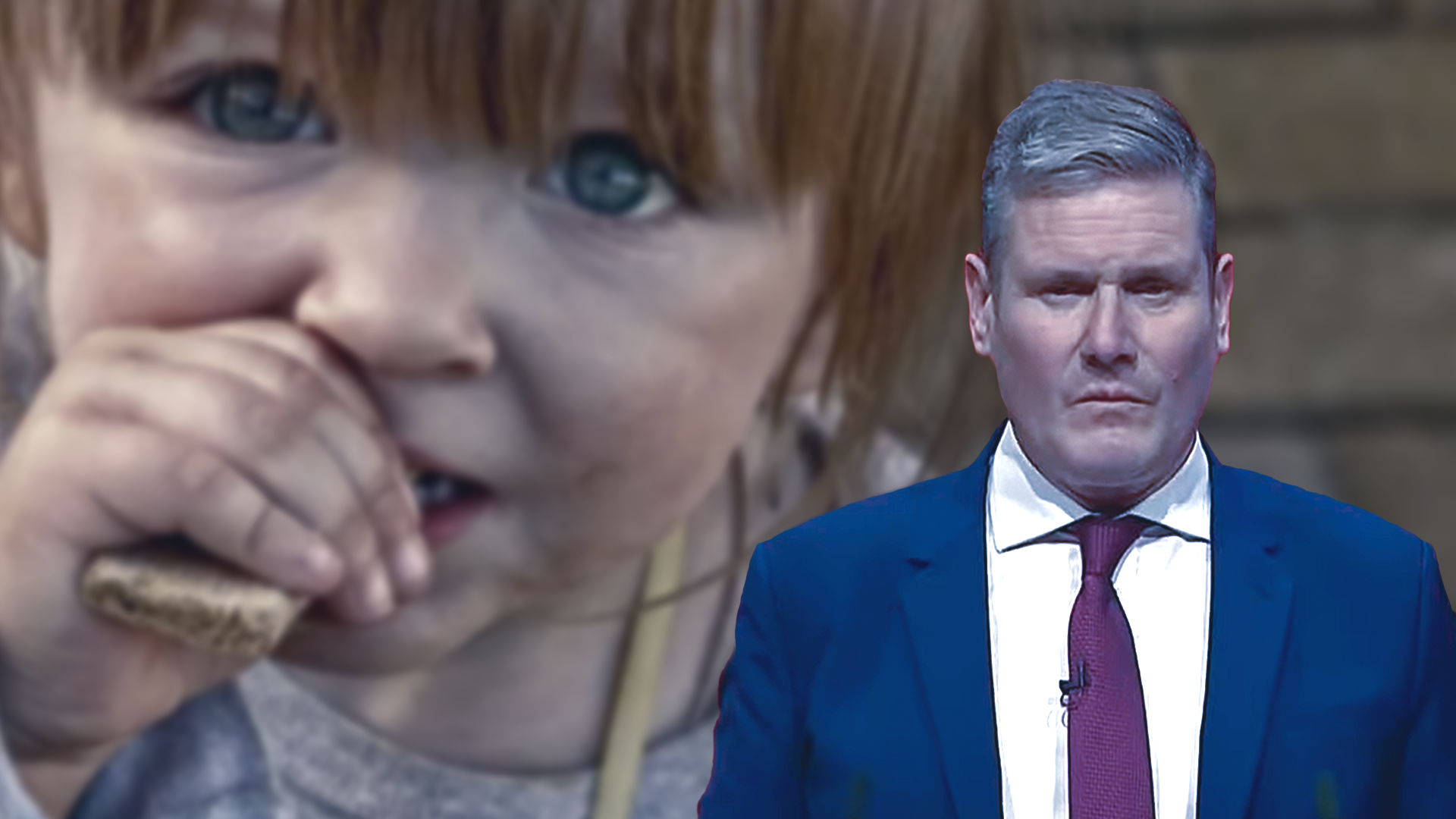
    Image of Keir Starmer and a poor child.
    Zionist Keir ‘Kid Starver’ Starmer. Image thanks to The Skwawkbox.

    https://morningstaronline.co.uk/article/starmer-suspends-mps-who-voted-to-scrap-the-two-child-benefit-cap

    Union leaders condemn the Prime Minister’s ‘disgraceful’ decision

    SIR KEIR STARMER has been condemned by union leaders for suspending seven Labour MPs for voting to scrap the two-child benefit cap, as independents including Jeremy Corbyn vowed to work with them to offer a “real alternative.”

    Leaders of fire, education, civil service, bakeries and mail unions hit out at the Prime Minister’s “disgraceful” and “completely wrong” decision as they joined thousands backing a grassroots petition calling for their reinstatement.

    Former shadow chancellor John McDonnell, ex-shadow business secretary Rebecca Long Bailey, Apsana Begum, Richard Burgon, Ian Byrne, Zarah Sultana and Imran Hussain were kicked out of the Parliamentary Labour Party for six months for backing an SNP amendment calling for the cap to be scrapped on Tuesday night.

    Ms Sultana, MP for Coventry South, suggested she was the victim of a “macho virility test” today.

    “This isn’t a game … this is about people’s lives,” she added.

    “I slept well knowing that I took a stand against child poverty that is affecting 4.3 million people in this country and it is the right thing to do and I am glad I did it.”

    MP for Poplar and Limehouse Ms Begum said: “Labour’s own 11 affiliated unions support the scrapping of the two-child benefit cap; there’s popular support among the Labour Party membership to see the cap lifted.”

    …

    By disciplining MPs for voting to pull children out of poverty, Keir Starmer has shown us who he really is Owen Jones

    Labour will say this is just a matter of party discipline, but it is a clear demonstration of the government’s priorities

    The Labour leadership has told you who it is, over and over again: it is time to believe it. Keir Starmer has suspended seven Labour MPs because they voted to overturn a Tory policy which imposes poverty on children. Sure, another tale will be spun: that by voting for the Scottish National party’s amendment to abolish the two-child benefit cap, the seven undermined the unity of the parliamentary Labour party and were duly disciplined. But that is nonsense.

    Such parliamentary rebellions are scattered through our democratic history, and are accepted almost as a convention of government. Boris Johnson suspended multiple Brexit rebels in 2019 and it was rightly seen as an aberration. He did not, for example, exact the same punishment when five Tory MPs backed a Labour motion extending free school meals in 2020. When it comes to Labour history, even Tony Blair never resorted to such petty authoritarianism. Forty-seven Labour MPs rebelled over a cut to the lone parent benefit in 1997 – none had the whip removed.

    This episode tells us many things. Firstly, it completely undermines Starmer’s slogan of choice: “country before party”. Starmer knows a policy devised by George Osborne to prevent parents from claiming benefits for a third or fourth child is cruel and fails on its own terms. When Starmer stood for leader, he promised to scrap the limit. After all, it imposes poverty on 300,000 kids, and drives another 700,000 further into hardship. Fifty-nine per cent of families affected have at least one parent in work – like the care workers, supermarket workers and cleaners applauded by politicians on porches and balconies during the pandemic. Research has found that it does not increase employment levels, and may actually make it harder to find work, while having no impact on family size. Charities have identified it as one of the single biggest generators of poverty in Britain.

    It is hard to imagine Starmer is unaware of the fact that Osborne devised the policy to stoke public hostility towards and create a Victorian caricature of the undeserving, overbreeding poor. No decent society punishes children for choices they have not made and parents should not be punished for having more children. In Britain in 2024, kids turn up to schools with bowed legs and heart murmurs because of malnourishment, but a vast cost is also imposed on society as the scarring effect of poverty produces lasting lower productivity and employment levels.

    Starmer knew this when he told the BBC almost exactly a year ago that he would retain this wicked Tory policy. He made the commitment to sound tough. Contrast with how he genuflects before powerful interests such as the Murdoch empire. By endorsing the two-child benefit cap, Starmer decided to gain partisan advantage, rather than fix an injustice afflicting his country. Party first, country second. Or rather, to be specific: playing politics with the lives of our most vulnerable children.

    There isn’t the money available, we are told. The price tag is £1.7bn, a pittance given annual government expenditure is £1.2tr. According to the Sunday Times rich list, the 350 wealthiest British households have a combined fortune of £795bn: is leaving their taxes at the same level more important than parents skipping hot meals to feed their little ones? When Starmer told Volodymyr Zelenskiy that the UK would give Ukraine £3bn a year “for as long as it takes”, he acknowledged there is money available for what the government considers a priority. This Labour government simply does not regard child poverty as a priority.

    …

  • Labour suspends seven rebel MPs over two-child benefit cap

    Spread the love
    Image of Keir Starmer and a poor child.
    Zionist Keir ‘Kid Starver’ Starmer. Image thanks to The Skwawkbox.

    https://www.bbc.com/news/articles/c978m6z3egno

    Seven Labour MPs have had the whip suspended for six months after voting against the government on an amendment to scrap the two-child benefit cap.

    Ex-shadow chancellor John McDonnell was among the Labour MPs who voted for an SNP motion calling for an end to the policy, which prevents almost all parents from claiming Universal Credit or child tax credit for more than two children.

    Mr McDonnell backed the SNP motion alongside Richard Burgon, Ian Byrne, Rebecca Long-Bailey, Imran Hussain, Apsana Begum and Zarah Sultana.

    MPs rejected the SNP amendment by 363 votes to 103, in the first major test of the new Labour government’s authority.

    Losing the whip means the MPs are suspended from the parliamentary party and will now sit as independent MPs.

    Nearly all of the rebels were allies of the former Labour leader Jeremy Corbyn, who now sits as an independent MP and put his name to the SNP motion.

    In a statement on social media, Ms Sultana said she would “always stand up for the most vulnerable in our society”, adding that scrapping the cap would “lift 33,000 children out of poverty”.

    …

    https://www.bbc.com/news/articles/c978m6z3egno

  • Scrap two-child benefit cap to end child poverty, Labour told: ‘Good intentions are not enough’

    Spread the love

    https://www.bigissue.com/news/social-justice/two-child-benefit-cap-poverty-taskforce/

    The new Labour government has promised an ‘ambitious plan’ to end child poverty, but it is yet to commit to ending the two-child limit

    The new Labour government has launched a taskforce to work towards ending child poverty, but charities have warned that “good intentions are not enough” as they ramp up calls for the two-child benefit cap to be scrapped.

    Keir Starmer’s party has promised an “ambitious” plan for ending child poverty, but it has so far refused to commit to removing the two-child limit, which is also referred to as the two-child benefit cap and has been described as “one of the cruellest welfare policies of the past decade”.

    It means that families who have a third child or subsequent children born after April 2017 are denied up to £3,500 a year compared with those whose children were born sooner.

    …

    Alison Garnham, chief executive of Child Poverty Action Group, said: “The taskforce is a welcome first step towards fulfilling the government’s pledge to bring in an ambitious child poverty strategy.  

    “But with a record number of kids in poverty now, scrapping the two-child limit on benefits has to happen in the government’s first budget.  The two-child limit is driving up child poverty more than any other policy, children need it to be removed as a priority.”

    https://www.bigissue.com/news/social-justice/two-child-benefit-cap-poverty-taskforce/