MORE than four in five professionals who deal with children experiencing neglect say there are not enough services to support them in England, according to new research.
The NSPCC said its poll of 700 workers from across police, healthcare, social care and education found they believe child neglect — defined as a persistent failure to meet a child’s basic physical and psychological needs — has become normalised.
More than half of those surveyed said they had seen an increase in neglect cases during their professional life, with nine in 10 saying the rising cost of living and poverty rates were driving factors.
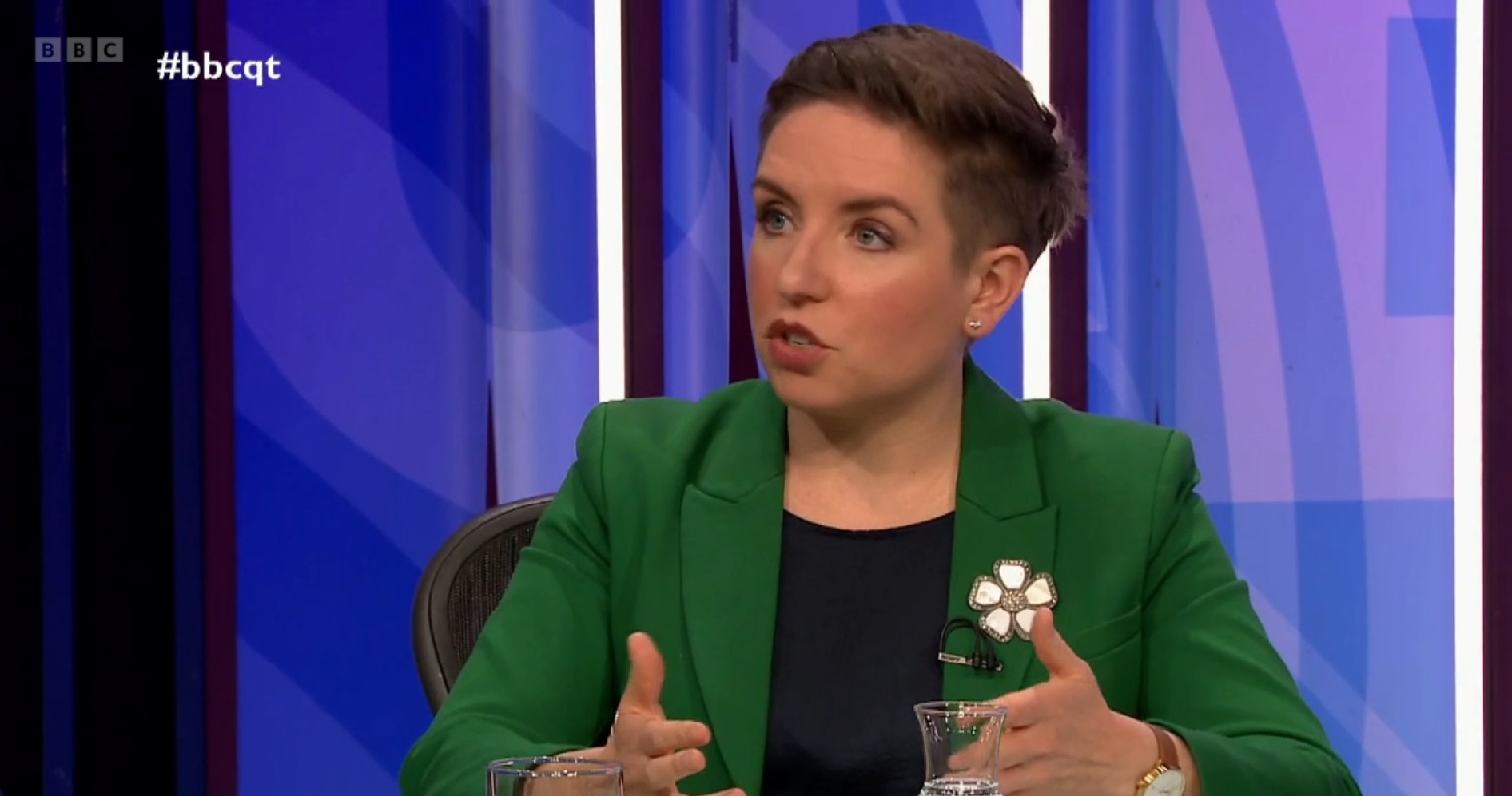
Image of the Green Party’s Carla Denyer on BBC Question Time.
Responding to news that energy regulator Ofgem has raised the price cap by 9.5 per cent just before the onset of winter, Green Party co-leader Carla Denyer said:
“Consumers are paying high prices for a crisis not of their making. This will be deeply worrying news for all those people already struggling to pay their bills.
“The government has said that establishing GB Energy will reduce bills in the future, which would be welcome. However, that aim will only be achieved if the government invests in improving the energy efficiency of homes too.
“We need a nationwide programme of government-backed, council-delivered home insulation starting immediately to help people keep their bills down for good.
“We also now need the government to maintain the winter fuel payments for all pensioners and end means testing so that they know they can afford to keep warm.
“We could reduce bills for the long term and help reduce greenhouse gas emissions by building new homes that are easier and cheaper to heat and boosting insulation in existing homes. Insulating people’s homes means they can stay warm while using less energy, save money and produce fewer harmful carbon emissions.”
ENERGY prices are set to rise by 9 per cent in October, experts revealed today — with the “alarming” increase accompanying winter fuel payment cuts.
A typical household’s energy bills are expected to rise to £1,714 a year, up from £1,568, according to energy consultancy Cornwall Insight.
The group said that while the figure is less than the cap previously predicted, there are also likely to be further “modest increases” in January and more rises early in the year due to “recent tensions in the Russia-Ukraine war.”
…
End Fuel Poverty Coalition co-ordinator Simon Francis said that instead of offering help, the government has axed winter fuel payments to millions and refuses to confirm if the Household Support Fund will be extended.
…
“The reality is that bills will go up compared to today and will be around 65 per cent higher than they were before the energy bills crisis started.
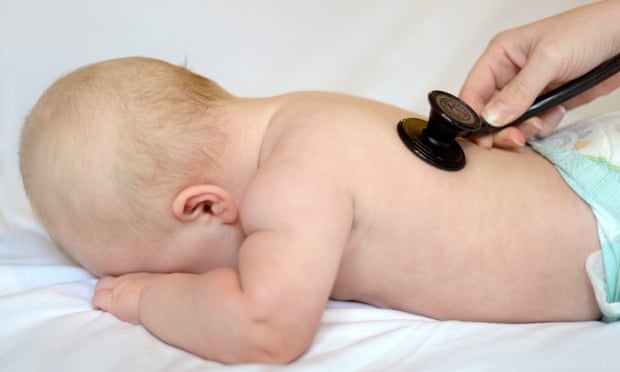
A poverty reduction of 35% on 2023 levels could avoid 293 infant deaths, 458 childhood admissions with nutritional anaemias and 32,650 childhood emergency admissions. Photograph: Andrew Matthews/PA
England research shows huge benefits with resulting savings for NHS and councils
Curbing child poverty by scrapping the two-child benefit cap would save hundreds of lives a year and avoid thousands of admissions to hospital, the largest study of its kind suggests.
Keir Starmer has faced repeated demands from within Labour ranks and opposition leaders to abolish the policy, which was announced in 2015 by George Osborne, then chancellor. Almost half of all children in some towns and cities now live below the breadline.
Now researchers from the universities of Glasgow, Liverpool and Newcastle have shown for the first time the extraordinary impact that reducing child poverty with measures such as ditching the two-child benefit cap could have in England.
Tackling it would substantially cut the number of infant deaths and children in care, as well as rates of childhood nutritional anaemia and emergency admissions, with the most deprived regions, especially in north-east England, likely to benefit the most, the projections indicate.
“The idea that rich and poor are equal before government in democratic societies is ludicrous,” writes Polychroniou. “As disparities in wealth and income grow, so do the disparities in political influence.” (Photo: flickr/Creative Commons)
Wealth taxation may sound like a good idea, but can it really address, let alone solve, the problem of inequality?
Economic inequality is the scourge of the 21st century. The rich are getting richer and faster than any other time since the onset of neoliberalism, which calls for “free-market” capitalism, regressive taxation, fiscal austerity and the rejection of the social state. They get richer not only when the economy is on an upswing but even amid crises. Billionaires more than doubled their net worth during the pandemic, according to Bloomberg Billionaires Index.
The latest analysis shows that the richest 1 percent gained $42 trillion in new wealth over the past decade, which amounts to “nearly 34 times more than the entire bottom 50 percent of the world’s population.” In the meantime, the very poor and low-income people across the globe, including the U.S., are actually getting poorer. So much for trickle-down economics which was popularized during the 1980s by the Reagan administration’s vast capital gains and income tax cuts and continues to persist to this day in spite of its major flaws. Cutting taxes on the rich not only increases economic inequality but has no effect on economic growth and unemployment.
There must be something very rotten with an economic system that allows individuals to generate obscene amounts of wealth to the point they can hijack the political system and undermine democracy.
However, inequality should not be examined purely from an economic perspective. Over the years, numerous studies have shown that economic inequality influences public attitudes toward democracy by generating political disillusion and low trust in government and other institutions, like Congress. Inequality also undermines social mobility, contributes to political polarization and fuels authoritarianism.
Finally, inequality contributes to climate change. The richest 1 percent is responsible for more carbon emissions than the poorest 66 percent, according to a 2023 report by Oxfam. Of course, while the world’s wealthiest people make a huge contribution to climate change, they are also able to insulate themselves from the worst impacts of global warming.
In sum, the super-rich can be blamed for many of the most serious ills confronting societies in the twentieth-first century. The only consequential question here is this: what can be done about it then?
One of the most frequent responses to the problem of rising inequality is a call for the implementation of a wealth tax. Wealth taxation may sound like a good idea, but can it really address, let alone solve, the problem of inequality? The answer is an unqualified “no.” At least for the world’s advanced economies. Indeed, even if it’s possible to discover all the wealth that the very rich people own (much of which is hidden in companies or put in trusts) and then proceed with an accurate asset valuation, this will have very little impact, if any, on the daily lives of people who try to survive on minimum wages. Wealth taxation alone will have no impact on workers without social protection and no bargaining power at companies. It won’t protect workers at the “gig economy” and part-time workers.
To effectively address economic inequality, we must identify the root cause of the problem, and one simple way to do this is by asking a rather simple question: How does one become superrich? Where does this immense wealth come from? Because as the renowned progressive economist James K. Boyce recently put it “nobody ‘earns’ a billion dollars.
There must be something very rotten with an economic system that allows individuals to generate obscene amounts of wealth to the point they can hijack the political system and undermine democracy. Democracy cannot exist when we have wealth concentrated in the hands of a few. The idea that rich and poor are equal before government in democratic societies is ludicrous. As disparities in wealth and income grow, so do the disparities in political influence.
Take corporations, for example, which exert enormous influence, thanks primarily to campaign donations and lobbying Their actions, which range from opposing labor laws and policies that benefit workers to restricting unionization, exacerbate inequalities at all levels of society and across the globe. Moreover, the surge in billionaire wealth and the surge in “corporate power and monopoly power” form a powerful connection. The very rich are not simply beneficiaries of the existing economic order. They are in control of the working arrangements of the global economic system. Yet despite the enormous power that corporations have on people’s lives and the communities in which they operate, there are very few policies and mechanisms at national or international level to curtail that power.
Of course, we know that billionaires and big corporations pay very little in taxes, but we need much more than wealth and corporate taxation. We need ways to curb the power of big corporations and their drive to maximize shareholder value at the expense of everything else. We should also set a cap on extreme wealth. There is no social value for having billionaires. We should abolish the superrich, perhaps an easier task, politically speaking, than finding ways to tax them. Democratic societies could hold a referendum on whether we should abolish extreme wealth.
In addition, we could create economic arrangements that provide a minimum income to ensure that everyone’s basic needs are met. This can be done either through universal basic income or guaranteed income programs.
Last, but not least, we can challenge the rule of capital by advancing democratic forms of economic governance and economic planning. Participatory economics is one such alternative that would change the economy as we know it since it entails social ownership of production and self-managed workplaces. Worker cooperatives are established is various parts of Europe, particularly in Italy and Spain. The Mondragon Corporation in the Basque region of Spain is owned by its workers and represents the biggest and most successful case of worker cooperatives. Of course, for economic transformation to occur, breaking down hierarchical structures and putting workers in charge of business activities is not enough. What needs to happen is that the values of worker cooperatives spread across the economy and that power is wrested away from the capitalist class.In today’s world, we can tackle economic inequality only by shifting the conversation to its root causes and then coming up with blends of policies that work together to put an end to the driving forces behind inequality. Spending all political capital on something like a wealth tax will only help to prolong the life of an immensely cruel and dangerous economic system. An easier and far more effective way to end plutocracy is through the power of democracy via a binding referendum that calls on citizens to decide whether or not we should abolish altogether extreme wealth.