Tag: protest

  • How police in England can now stop basically any protest

    Spread the love

    Original article republished from openDemocracy under a Creative Commons Attribution-NonCommercial 4.0 International licence.

    New anti-protest legislation forced through by Suella Braverman has been labelled “unlawful”

    Adam Ramsay

    15 June 2023, 3.55pm

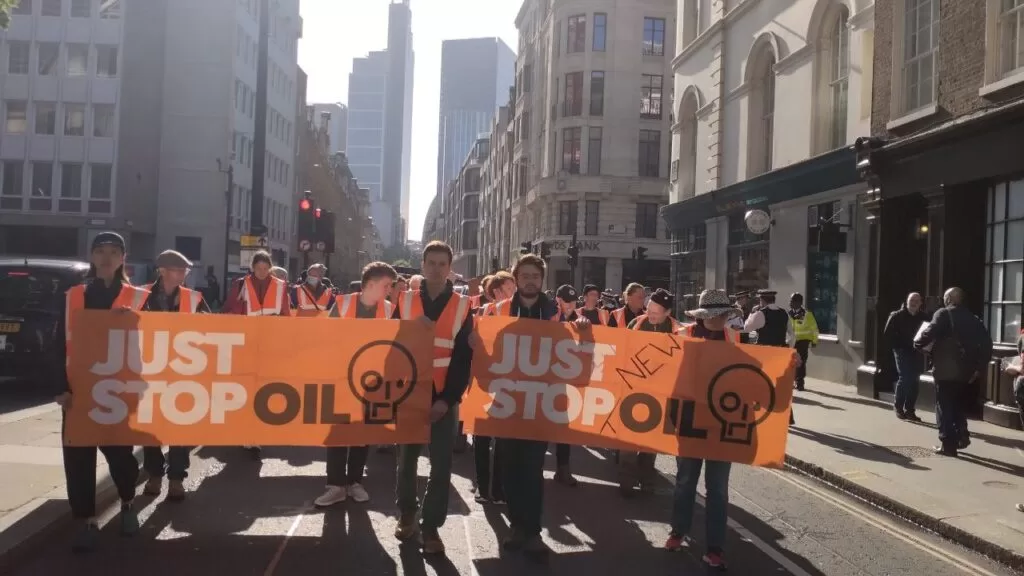
    A Just Stop Oil protest in central London
    Suella Braverman forced through new anti-protest laws after slow-marching demonstrations from Just Stop Oil activists in London

    At midnight last night, the right to protest in England and Wales became a matter of police discretion.

    Yesterday, the police could restrict or stop a protest to prevent it causing either “serious public disorder, serious damage to property, or significant and prolonged disruption to the life of the community”.

    Those powers already allowed plenty of room for interpretation, but from today the threshold is even lower. This week, home secretary Suella Braverman forced through new laws in a way never seen before in the UK. Here’s what you need to know.

    What are the new police powers targeting protests?

    Changes to the Public Order Act mean police can now restrict or stop a protest if they believe it could cause “more than minor disruption to the life of the community”. They have the power to arrest anyone taking part in a protest, or even anyone encouraging others to take part.

    Officers are also now required to consider “cumulative disruption” from protest, even if the protests in question are organised by different people and about different issues. And the definition of “community” has been changed to include anyone affected by a protest, not just people who live or work in the area it’s happening in.

    “The regulations also say the police will be required to take into account all relevant disruption. For example, if there are regular traffic jams in the area, that would have to be taken into account [when the police decide whether to ban a protest], even if it had nothing to do with the protest”, Jodie Beck, policy and campaigns officer at Liberty told openDemocracy.

    Braverman argued the new laws were needed to target slow-marching protests from climate activists Just Stop Oil and Extinction Rebellion.

    What do they mean?

    In reality, the police could find a way to argue that any protest meets the threshold for imposing restrictions, if they wanted to. The new law, says Beck, is a “huge expansion of police powers” that could also lead to police allowing some protests to go ahead while imposing restrictions on others, simply based on how the officers felt about the message behind them.

    While the government has focused on one particular type of protest – slow-marching – all protests are potentially impacted.

    Beck gives the example of striking railway workers and their supporters holding a rally outside a train station. The police “could decide that means a more than minor disruption to people’s travel,” and so ban the gathering, and arrest anyone taking part.

    It could even be that police officers rule that a picket line causes “more than minor” disruption to the workplace it is picketing – after all, that’s the point.

    But it’s not just the new laws which have shocked experts. It’s also how they came about this week.

    How did the new laws restricting protests get passed?

    Originally, Suella Braverman tried to sneak the new legislation into the Public Order Act, which passed earlier this year and came into effect just before the coronation. Rather than allowing these changes to face the usual scrutiny in the House of Commons, the home secretary had them added as last minute amendments to the bill in the House of Lords, after MPs had already voted on it. Her attempt failed – the Lords thought these measures were too draconian and voted them down, though they approved the broader new bill.

    Undeterred, Braverman turned to a constitutional trick that’s never been used before. Because while new bills – known as ‘primary legislation’ – require line-by-line scrutiny in both houses, various laws already on the statute book give ministers powers to make small changes via something called ‘secondary legislation’. And secondary legislation doesn’t get nearly as much scrutiny, with both the Commons and Lords simply voting for or against.

    The home secretary argued that another act passed last year by then-home secretary Priti Patel – the Police, Crime, Sentencing and Courts Act – already gave her the power to make these changes via secondary legislation. So that’s what she did this week, making it the first time ever that a government has used secondary legislation to push through a measure that had already been voted down by parliament.

    The secondary legislation passed through the Commons on Monday, with the Tories taking full advantage of their majority. In the Lords, Green peer Jenny Jones filed a highly unusual fatal motion, a rare procedure used to try and kill off the passage of a bill. Normally, because it’s an unelected house, the Lords tweaks legislation passed by the Commons, but doesn’t ultimately vote it down. Jones argued that, because the government was bringing back a law which had already been voted down by parliament through a route which requires almost no scrutiny, this should be an exception.

    Labour, although they complained about Braverman’s shenanigans, refused to back Jones, and abstained on the motion, meaning it passed. Police, Crime and Fire minister Chris Philp then enacted the new measures from midnight last night (secondary legislation doesn’t need royal assent). And so now, the police can shut down any protest they like.

    The story doesn’t end there. Liberty is taking the government to court, calling the move “unlawful” and arguing that it broke many of the basic principles of the British constitution.

    What do human rights campaigners say?

    Katy Watts, a lawyer at Liberty, accused the government of “putting itself above the law” and said the move gives police “almost unlimited powers to stop any protest the government doesn’t agree with”.

    And Beck believes we need to see this in the context of a much broader attack on our democratic rights. Noisy protests have been banned. The government is already attacking the right to strike, making it easier for bosses to sack people who vote to withdraw their labour. They’ve made it harder to vote, and harder to challenge them in the courts.

    “Even if you’ve never been to a protest, you never know when you might need to,” she said.

    With the new laws, there is a growing chance you’ll be arrested if you do.

    Original article republished from openDemocracy under a Creative Commons Attribution-NonCommercial 4.0 International licence.
  • Climate activists arrested as private jets receive more protection than planet

    Spread the love

    https://www.greenpeace.org/international/story/59935/climate-activists-arrested-private-jets-receive-protection-planet/

    At least 102 climate activists from seventeen countries representing Greenpeace, Stay Grounded, Extinction Rebellion, Scientist Rebellion and other climate justice groups are still being detained in Geneva, Switzerland 20 hours after a peaceful protest against Europe’s largest annual private jet fair, the European Business Aviation Convention & Exhibition (EBACE) in Geneva.

    “A unique, European coalition of courageous activists from 17 countries severely disrupted the excessive champagne party of a super-rich elite – Europe’s largest private jet sales event. Their demand is unequivocal, private aviation should be consigned to the history books. We support the activists and demand their immediate release.” – said Klara Maria Schenk, a transport expert for the European Mobility For All campaign.

    A hundred climate activists supporting Greenpeace, Stay Grounded, Extinction Rebellion, Scientist Rebellion and other climate movement groups from 17 countries have disrupted Europe’s biggest private jets sales fair, the annual European Business Aviation Convention & Exhibition (EBACE) in Geneva
    © Thomas Wolf / Stay Grounded / Greenpeace

    Activists peacefully occupied jets exhibited at the business event by the Geneva airport and chained themselves to aircraft gangways in order to keep prospective buyers from entering. The protestors held giant tobacco-style health warning label hand banners marking the jets as toxic objects and warning that ‘Private Jets Burn Our Future’, ‘Kill Our Planet’, and ‘Fuel Inequality’. Public service announcements from loudspeakers carried by the activists exposed the devastating consequences of private jets for our planet and revealed the hypocrisy of promoting private jets amidst rising social inequality.

    Contrary to several misleading media reports, the activists never entered the taxiways or runways of the airport. The activists make it clear that at no time they intended to disrupt commercial air traffic at Geneva Airport. A spokeswoman for air traffic control agency Skyguide confirmed protestors had not accessed the runway during the incident, according to Aviation International News.

    …

    https://www.greenpeace.org/international/story/59935/climate-activists-arrested-private-jets-receive-protection-planet/

  • Surfers Against Sewage protest actions Sat 20th May

    Spread the love
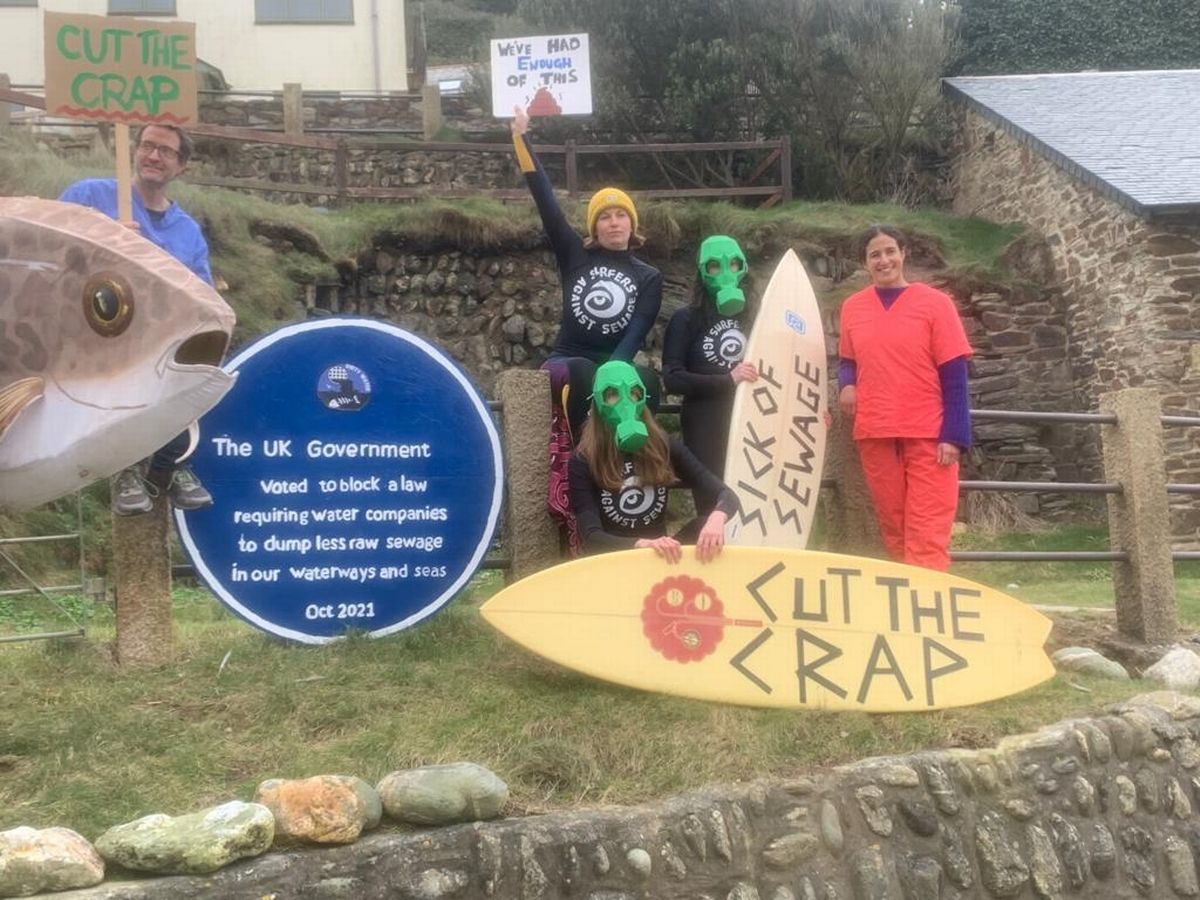
    April 2023 Surfers Against Sewage and Extinction Rebellion protests in St Agnes, Perranporth, Truro and Charlestown which unveiled spoof Blue Plaques to the MPs and Conservative Government who allowed raw sewage to be dumped in the sea (Image: Surfers Against Sewage)
    April 2023 Surfers Against Sewage and Extinction Rebellion protests in St Agnes, Perranporth, Truro and Charlestown which unveiled spoof Blue Plaques to the MPs and Conservative Government who allowed raw sewage to be dumped in the sea (Image: Surfers Against Sewage)

    From Surfers Against Sewage’s website:

    Surfers Against Sewage are hosting a national day of action on Saturday the 20th May 2023. There will be 12 lead protests hosted nation wide on this date, each one protesting against each of the UK water companies, as well as a few smaller DIY protests.

    Check our map for your local protest location.

    …

    The UK sewage system is at breaking point. It’s under huge strain from a growing population and the increasing frequency of extreme weather events caused by climate change. Built on a Victorian system, our decaying sewage infrastructure is in desperate need of investment.

    But rather than spending money where it’s needed, water companies are stuffing their pockets with our money while failing environmental targets and pillaging our waterways. They continue to get away with regularly dumping untreated sewage into our blue spaces for millions of hours every year whilst regulators and The Government turn a blind eye. This needs to stop now.

    We REFUSE to spend another summer swimming in sh*t and we DEMAND that water companies stop making a profit from pollution and start investing in our future, for the sake of people and the planet.

  • Extinction Rebellion calls out HSBC’s Greenwash at AGM in Birmingham

    Spread the love

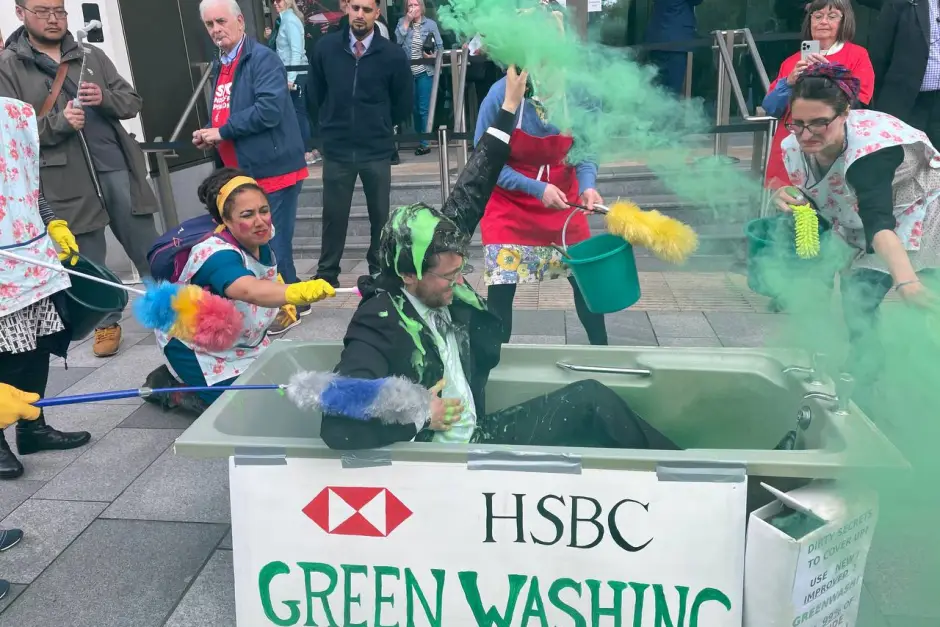
    At 10:30am this morning, around fifty protesters descended on HSBC’s annual general meeting at the Eastside Rooms in Birmingham to call out the bank’s shameful climate policies. It comes as the bank announces soaring quarterly profits of $12.9 billion.

    Members of Extinction Rebellion Midlands and Money Rebellion arrived with a bath of greenwash, while a group of ‘dirty scrubbers’ dressed in pinafores and headscarves offered to clean up the bank’s soiled image in return for cash. 

    Inside the conference centre protesters brought the AGM to a standstill as they unfurled banners, sang songs, the dirty scrubbers reappeared with dramatic skits, and people repeatedly called out HSBC’s broken promises over its climate pledges, accusing them of ‘climate genocide’ and ‘lies’. Security eventually removed protesters after 45 minutes of disruption. 

    HSBC has invested $145bn in fossil fuels since the Paris Agreement in 2016 and the bank’s climate pledges have been tarnished by a series of damaging exposes. 

    In December, HSBC made a surprise announcement that it was updating its energy policy and would stop new investment in oil and gas fields in an apparent change of policy. However, it’s climate pledges to date have been revealed as mere greenwash. in January, it was revealed that HSBC had given energy giant RWE a secret $340m loan as bulldozed a village to expand a coal mine in Germany, just three months after the bank had pledged to stop financing new coal. Last October, investigators showed that HSBC’s $1 trillion investment in ‘sustainable financing’ and ‘green bonds’ was being used by fossil fuel companies to bankroll mines, pipelines, and oil rigs.[4] 

    Questions have also been raised about the bank’s pledge to stop direct funding of fossil fuel projects, while continuing to indirectly fund fossil fuel companies like Saudi Aramco, ExxonMobil and Shell. The bank is also financially supporting ConocoPhillips, the company behind the controversial Alaskan oil drilling Willow project. Despite its various pledges HSBC invested a total of $11.074b in fossil fuels last year.

    Andrew Taylor from Money Rebellion said: “HSBC continues to fund new devastating coal,oil and gas projects. These projects destroy the health and livelihoods of communities who live near them, and are fuelling climate chaos. We will use every tool in the box to stop HSBC and other banks from pursuing this deadly business plan – from disrupting their AGMs to building the biggest bank boycott in history.”

  • May the 4th be with you: Darth Vader, Dr Evil and Thanos seek alliances at deep sea mining summit

    Spread the love
    Three of the world’s most infamous supervillains – Darth Vader, Dr Evil and Thanos attend the deep sea mining summit in central London. The terrible trio are excited by the prospect of meeting like-minded people who they felt would share their passion for large-scale destructive machinery and wiping out entire ecosystems. Deep sea mining would strip bare vast areas of the deep ocean floor – one of the last untouched ecosystems on earth, causing irreversible damage to marine life.

    London, Star Wars Day, 2023 – Three of the world’s most infamous supervillains – Darth Vader, Dr Evil and Thanos – convened today at a deep sea mining summit in central London.

    VIDEO HERE

    The terrible trio were reportedly excited by the prospect of meeting like-minded people who they felt would share their passion for large-scale destructive machinery and wiping out entire ecosystems. Darth Vader had insisted the three attend the conference instead of ‘making a fuss’ over him for Star Wars Day. 

    Known for his strong track record of destroying whole planets with his death star, Darth Vader said of the conference: “Light doesn’t penetrate the bottom of the ocean so it’s the perfect place for the dark side to operate.”

    Dr. Evil flew in directly from his volcano-lair to tell conference goers that he felt the ocean could undoubtedly be exploited for personal gain “in excess of one million dollars”. He urged those in attendance to join him in his quest for global domination, promising riches and power beyond their wildest dreams.

    Thanos was quieter, possibly a little overwhelmed by the number of attendees, but sources say he was overheard asking delegates for the location of the “precious stones”. 

    Walking onstage with Dr Evil and Thanos to address conference attendees during a Q&A, Darth Vader said: “I’m delighted to be here and to learn more about deep sea mining because together, we can destroy the oceans!”

    The three left the conference to the sound of The Imperial March from Star Wars, played on the kazoo, and laughter from the audience. 

    Andrew Tobert, Greenpeace UK Oceans campaigner, said:
    “Monetising the seabed might seem like a far-fetched, dastardly plan, but it’s worryingly real and the people trying to do it don’t wear obvious, villainous costumes. We have explored just 1% of the deep sea, on each visit discovering fascinating species found nowhere else on Earth – it’s one of our last untouched ecosystems. But it would be stripped bare by deep sea mining, causing irreversible damage to marine life. There’s no way it can be done sustainably. 

    “Companies from Samsung to Renault have called for a moratorium on deep sea mining. And governments from Europe to the Pacific are doing the same. It’s no surprise when the proposals read less like a business plan and more like a masterplan for ecological destruction. Deep sea mining poses untold threats to our already plundered oceans. It’s got to be stopped before it starts.”

    The International Seabed Authority will meet in July where it faces commercial pressure to allow deep sea mining to start. From July any deep sea mining company can submit an application to start mining despite the absence of any rules or regulations to govern it and, thanks to the invocation of a controversial loophole, governments are legally obliged to “consider” it. The Metals Company, one of the most prominent and determined deep sea mining companies in the race, has stated it will put in an application this year. 

    Deep sea mining is a dangerous distraction from creating a truly green economy by profit-hungry companies wanting to make a quick buck. Vast areas of the deep ocean floor – one of the last untouched ecosystems on earth – would be stripped bare by deep sea mining, causing irreversible damage to marine life. 

    The UK government is currently supporting research into deep sea mining having approved exploratory deep sea mining licences 10 years ago to UK Seabed Resources (UKSR). The UK now sponsors some of the largest areas for deep sea mining exploration, covering 133,000km2 of the Pacific Ocean, through UKSR. That’s an area larger than the size of England.

    But the rest of the world is waking up to the significance of the threat from deep sea mining. As well as leading green tech companies calling for a pause, many governments are saying no to deep sea mining. Recent months have also seen Indigenous advocates reject deep sea mining, scientific warnings of the risks grow ever stronger, and the longest-standing and biggest corporate backer of the industry call it quits. And just this week Maersk announced it was jumping ship, selling its stake in The Metals Company, and becoming the latest big name to divest from deep sea mining.