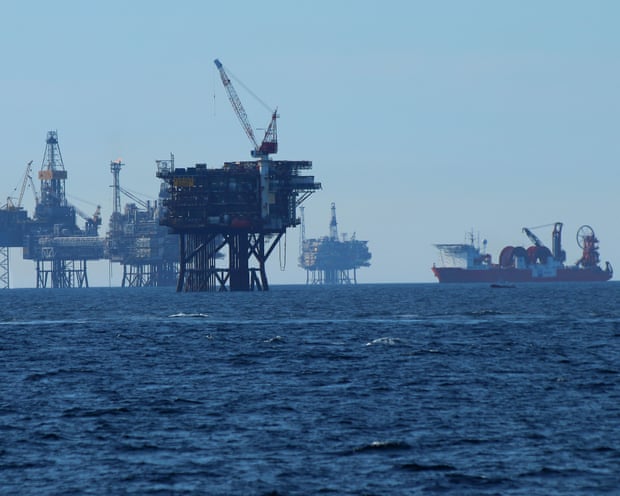
“We are going to get all our oil and gas out of the North Sea”, Conservative Party leader Kemi Badenoch said recently. Her promise to “maximise extraction” sets up a clash between political ambitions, economic reality and geological limits.
Reform UK has also said drilling for more oil and gas in the North Sea would be a “day one” priority. But even if the Conservatives or Reform were to be elected and lifted the current moratorium on new exploration licenses, there might not be the promised prizes of oil and gas under the seabed – or enough appetite from investors – to deliver on that promise.
BP, in those days British Petroleum, first extracted gas from under the North Sea in 1967. It marked the start of what was to become, for decades, one of the most valuable sectors of the UK economy, with more than 400 separate oil and gas fields developed to date.
But production peaked in 1999 and the North Sea now produces less than half as much as in its heyday.
It is now a “mature” basin: most of the biggest and easiest-to-develop fields have already been discovered and depleted. What remains are smaller, sometimes more remote, and often more technically challenging or expensive resources and reserves.
This is typical of ageing oil and gas provinces, where production declines even as operating costs rise. New projects must compete with oil and gas extracted from other parts of the world where it is easier and cheaper and more appealing to investors.
Finding oil and gas
Historically, only one in eight exploration wells in the North Sea led to a field producing oil and gas. That ratio has improved: between 2008 and 2017, a bit more than one in four wells led to a commercial success.
But far fewer wells are being drilled today. Even with the advances in technology, such as improved geophysical imaging which allows us to better define opportunities ahead of drilling, the big discoveries were probably made decades ago.
UK exploration wells vs offshore fields by year:
The number of exploration wells is down hugely from its peak in the 1980s and early 90s. Mark Ireland / NSTA
The UK government’s North Sea Transition Authority estimates there could still be around 3.5 billion barrels of oil equivalent in more than 400 undeveloped prospects. But most of these potential fields are small, isolated or technically complex. Developing them will require high oil and gas prices, fiscal stability, and a lot of investor confidence.
Politics vs geology
Even if a future government relaxes exploration licensing rules, geology will remain the bigger constraint. The North Sea is simply not as cheap as it was, and global fossil fuel giants have many other options. It is currently far cheaper to produce oil and gas in other regions, the Middle East or North Africa for example. Projects in these countries are all competing for the same capital.
Volatility in the energy sector will continue to make investors cautious. The 2015 oil price crash cut activity in the UK sector to its lowest level in decades, and it has never fully recovered. As fossil fuels are sold on the global market, political volatility, international and national, can lead to rapid shifts in investor confidence.
In the UK the introduction of a windfall tax in 2023 and changing requirements for environmental impact assessments are all making decision making on long-term projects riskier. And while the UK still needs considerable volumes of gas in future (and more modest amounts of oil) both are declining as our energy system evolves and renewable energy expand.
The UK’s mix of economic uncertainty, mature geology and smaller discoveries will make it harder to attract major international energy firms.
The future of the North Sea
That doesn’t mean the North Sea has finished as a source of oil and gas. For instance, undeveloped discoveries – where oil or gas has been confirmed but not yet produced – represent a lower-risk opportunity. But returns may be modest as many are relatively small and isolated from existing infrastructure.
New exploration licenses, if issued, might extend production modestly, but they are unlikely to deliver another game-changing discovery.
Some analysts argue that future licensing should be highly strategic, limited to projects with clear economic importance or climate compatibility. That approach could reduce reliance on imported gas, which tends to be more carbon-intensive than gas produced domestically. This would certainly make more sense than restarting fracking. But it would still not recreate the industry’s heyday.
Easy oil is over
The North Sea will still produce oil and gas for years to come, but its role will shrink. Even with friendlier policies, the era of big discoveries and rapid growth isn’t coming back.
Maximising extraction may sound appealing to politicians, but geology, economics and climate commitments all point to the North Sea’s best oil and gas days being behind it. The real challenge now is managing the investment during decline while investing in the cleaner solutions that will replace it.
UK Conservative Party leader Kemi ‘not a genocide’ Badenoch explains her reality that the Earth is flat, the Moon is made of cheese and that she was born from
Unicorn horn dust
Reform UK leader Nigel Farage at the party’s 2024 annual conference in Birmingham. Credit: Reform UK / YouTube
DeSmog and the New World have been blacklisted by Nigel Farage’s party.
A leading press freedom group has accused Reform UK of drawing from the “authoritarian playbook” by blocking media outlets from attending its annual conference this weekend.
The party informed DeSmog and the New World yesterday that its journalists would not be accredited for this year’s event. It did not offer an explanation.
The New World (formerly the New European) is a weekly newspaper with 35,000 subscribers whose contributors and editors include former New Labour communications chief Alastair Campbell, former global editor of the Bureau of Investigative Journalism James Ball, and former Spectator editor Matthew d’Ancona.
DeSmog is one of the UK’s leading climate investigations platforms. This year alone it has published stories in partnership with the likes of the BBC, The Guardian, the Financial Times, Private Eye, and The Mirror.
“It is shocking to see UK political parties seeking to pick and choose who can report on them,” said Fiona O’Brien, UK director of Reporters Without Borders (RSF).
“For democracy to work, journalists must be free to cover political events like party conferences and hold those in power to account, on behalf of the public.
“Reform UK’s actions in recent weeks – which include banning councillors from speaking to local journalists and falsely accusing journalists of activism – are straight out of the authoritarian playbook and should immediately be reversed.”
Reform’s leader of Nottinghamshire County Council, Mick Barton, has banned his councillors from speaking to local press outlet the Nottinghamshire Post and its online arm Nottinghamshire Live. The ban followed critical coverage of Reform by the publication, whose journalists were accused of acting “as activists” by the party’s deputy leader Richard Tice.
Reform’s leader Nigel Farage is paid more than £300,000 a year as a presenter on the anti-climate media outlet GB News, while Tice was formerly employed by GB News and its Murdoch-owned rival TalkTV.
Farage sported a GB News badge in Congress yesterday as he testified to U.S. lawmakers about supposed “free speech” issues in the UK.
The Reform leader used the session to compare Britain to North Korea, and to urge the U.S. to punish the UK for its alleged free speech infringements.
However, Farage was also held to account for his own questionable free speech record. Democrat Jamie Raskin asked the Reform leader: “Why do you ban journalists who oppose your views from coming to your events?”
“I don’t,” Farage responded. “I can’t think, if I go back over the past 25 years, of banning anybody.”
That statement is contradicted by Reform’s decision to ban DeSmog and the New World from this year’s conference.
Byline Times also announced today that it has been banned from attending this year’s Conservative Party conference. DeSmog and a number of other independent outlets were banned from last year’s Tory conference.
Reform Conference 2025
As reported by DeSmog yesterday, Reform’s conference in Birmingham will feature climate science deniers, anti-vaccine conspiracy theorists, and dark money campaign groups.
They include the Heartland Institute, a group close to Donald Trump’s administration that has called human-induced climate change a “delusion”, and Net Zero Watch – the campaign arm of the Global Warming Policy Foundation, which has claimed that carbon dioxide has been “mercilessly demonised”.
By giving them a platform, Reform is “showing open contempt for the British public already living with the realities of climate breakdown,” said Tessa Khan, executive director of the research and campaign group Uplift.
A recent report by the New Economics Foundation found that Reform’s climate policies – which include scrapping clean energy investment and drilling for more fossil fuels – would cost more than 60,000 jobs and wipe £92 billion off the UK economy.
DeSmog previously revealed that Reform is offering access to Farage during the conference in exchange for hefty donations. A sum of £250,000 buys 10 seats at a champagne breakfast with the Reform leader during the two-day event, as well as “chauffeur-driven travel”, a personal assistant, and the sponsor’s logo on the main conference stage and battle bus.
DeSmog asked Reform to explain why it had been banned from the event, but did not receive a response.
Nigel Farage explains the politics of Reform UK: Racism, Fake anti-establishmentism, Deregulation, Corporatism, Climate Change Denial, Mysogyny and Transphobia.Nigel Farage urges you to ignore facts and reality and be a climate science denier like him. He says that Reform UK has received millions and millions from the fossil fuel industry to promote climate denial and destroy the planet.Nigel Farage reminds you that he’s the man that brought you Brexit and asks what could possibly go wrong.
Reform is also giving a platform to a number of groups belonging to the Tufton Street network – an alliance of anti-government campaign outfits that lobby for more fossil fuel extraction and keep their donors a secret.
For the second year in a row, DeSmog has been banned from attending the event, which will be held in Birmingham.
The conference will also feature Together, a prominent anti-vaccine conspiracy theory group that has launched a campaign against the UK’s 2050 net zero emissions target.
“By giving a platform to climate deniers like Net Zero Watch and the Heartland Institute, Reform is showing open contempt for the British public already living with the realities of climate breakdown,” said Tessa Khan, executive director of the research and campaign group Uplift.
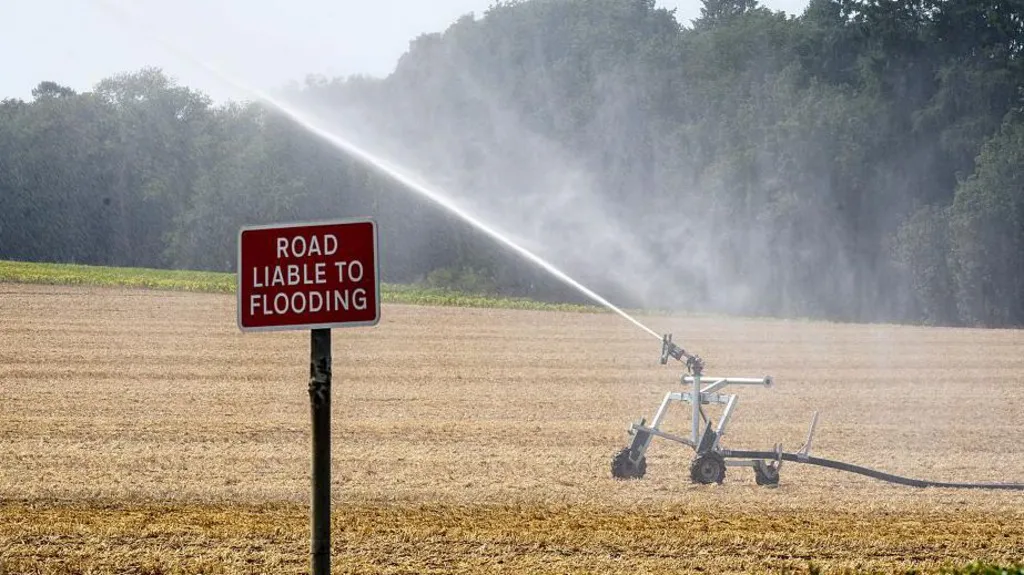
“Homes are being flooded again and again, farmers are losing billions to drought, and Scotland’s firefighters are battling wildfires. This is not theory – it’s people’s lives and livelihoods at stake,” Khan said.
“Reform’s deluded energy policy wilfully ignores the fact that the UK has already burnt most of its gas. Official projections show, even with new drilling, the UK will be 94 percent reliant on expensive, dirty imports by 2050. All this while Reform seeks to block the UK from profiting from some of the world’s best resources for offshore wind.
“Our dangerous dependence on fossil fuels is exactly why energy bills are so high and why millions of families across the UK have been driven into fuel poverty. Reform knows this. And it simply does not care.”
Most senior Reform politicians, including Farage, deny basic climate science. At the Alliance for Responsible Citizenship conference in February, the Reform leader said it was “absolutely nuts” for CO2 to be considered a pollutant. In the same month, Farage’s deputy Richard Ticetold Sky News: “There’s no evidence that man-made CO2 is going to change the climate. Given that it’s gone on for millions of years, it will go on for millions of years.”
Last month, Reform’s Great Lincolnshire Mayor Andrea Jenkynssaid in an interview with Times Radio: “Do I believe that climate change exists? No.”
They have expressed these views despite representing areas exposed to the worst effects of extreme heat.
Reform received 92 percent of its donations between the 2019 and 2024 UK elections from polluting sources and climate science deniers, while its treasurer Nick Candy has claimed the party is actively raising money from oil executives.
In Farage’s constituency of Clacton, 68 percent of the public is worried about rising temperatures, according to a YouGov poll published last August – slightly above the national average of 66 percent.
A recent report by the New Economics Foundation found that Reform’s climate policies would cost more than 60,000 jobs and wipe £92 billion off the UK economy. The science of climate change is also unequivocal: scientists at the UN’s Intergovernmental Panel on Climate Change (IPCC) have stressed that “it is a statement of fact, we cannot be any more certain; it is unequivocal and indisputable that humans are warming the planet”.
DeSmog previously revealed that Reform is offering access to Farage during the conference in exchange for hefty donations. A sum of £250,000 buys 10 seats at a champagne breakfast with the Reform leader during the two-day event, as well as “chauffeur-driven travel”, a personal assistant, and the sponsor’s logo on the main conference stage and battle bus.
Reform didn’t respond to DeSmog’s request for comment.
Below is a summary of the key anti-climate groups to be given a platform at Reform’s conference.
Heartland Institute
The Heartland Institute is a U.S. climate science denial group with close ties to the Trump administration.
It has denied that humans are driving climate change, which it has called a “delusion”. The group claims it is “the world’s most prominent think tank supporting scepticism about man-made climate change”.
Heartland received at least $676,000 between 1998 and 2007 from U.S. oil giant ExxonMobil, and has received donations from foundations linked to the owners of Koch Industries – a fossil fuel giant and a leading sponsor of climate science denial.
The Heartland Institute previously told DeSmog that it ”stands resolute in its mission to advance sound science, economic prosperity, and individual liberty”. It added that “our support comes from a diverse array of individuals and organisations who share our vision for a freer, more prosperous world.”
Heartland was one of the groups involved in drafting Project 2025, the radical blueprint for Trump’s second term, which proposed reversing climate policies, slashing restrictions on fossil fuel extraction, scrapping state investment in renewable energy, and gutting the Environmental Protection Agency (EPA).
Earlier this month, President Trump hired Roy Spencer, a policy advisor at the Heartland Institute and a former fellow at the Heritage Foundation – the key group behind Project 2025 – as an advisor to the Department of Energy.
Heartland’s UK-EU director Lois Perry has claimed that the institute boasts “very strong affiliations” with “certain big individuals” in Trump’s team.
Nigel Farage attended a fundraising dinner for the institute in September 2024 during which he called for more fossil fuel extraction and the victory of Trump in November’s presidential election, saying: “Let’s get Trump back; let’s drill baby drill”.
He also advocated what he called “a bit of reverse colonialism”.
“Maybe it’s time that Heartland came and set up in Britain and Europe and brought some of the wisdom that you’ve brought to the American debate,” he said – adding: “I’d love to see Heartland on the other side of the pond.”
Farage soon got his wish. In December, Heartland announced it was setting up a UK-EU branch. The Reform leader was the “special guest of honour” at the group’s launch event in London, which also featured disgraced former Conservative prime minister Liz Truss.
Cementing his Heartland links, Farage headlined an invite-only event in June this year entitled “Net Zero: The New Brexit?” held at 55 Tufton Street.
As revealed by DeSmog, Heartland has been working closely with far-right politicians in Europe to undermine the bloc’s green reforms.
Perry, who is speaking at Reform’s conference, has previously said she does not believe climate change is caused by humans. She has said it’s her “personal belief” that climate change “is happening” but “is not man made”.
Like Farage, Perry is a former leader of the UK Independence Party (UKIP). She used to run the anti-net zero pressure group CAR26, which has claimed that carbon dioxide is “essential to all life” and that its “welcome growth has greened our planet saving countless human and other lives”.
She recently claimed on a Heartland Institute podcast that she “knows for a fact” Farage credits Heartland with helping to shape Reform’s climate policies.
Heartland Institute president James Taylor told DeSmog: “Climate realism and energy realism are gaining traction throughout the world. The Heartland Institute appreciates that the Reform Party is on board and recognises Heartland as the global leader courageously providing truthful information on these topics. We also appreciate the encouragement and support provided by many policymakers among the UK Conservative Party. A rising tide lifts all boats and we are excited to be prominently leading the charge in the UK and throughout Europe.”
Institute of Economic Affairs
The Institute of Economic Affairs (IEA) is a radical anti-government campaign group that is part of the Tufton Street network.
The IEA, which has close ties to Liz Truss, advocates for increased fossil fuel production and against state-led climate action.
The IEA is a prominent supporter of the continued and extended use of fossil fuels. The group has advocated for the ban to be lifted on fracking for shale gas, calling it the “moral and economic choice”. The IEA has also said that the ban on new North Sea oil and gas licences is “madness”, has criticised the windfall tax imposed by the UK on fossil fuel firms, and said that the previous government’s commitment to “max out” the UK’s oil and gas reserves was a “welcome step”.
In 2018, Greenpeace’s investigative journalism unit Unearthed revealed that the IEA had received funding from oil major BP every year since 1967. In response to the story, an IEA spokeswoman said: “It is surely uncontroversial that the IEA’s principles coincide with the interests of our donors.”
The IEA also received a £21,000 grant from U.S. oil major ExxonMobil in 2005. The IEA is a member of Atlas Network, a Washington-based umbrella organisation that suppors over 450 “free market” groups around the world. Both the IEA and Atlas were founded by Antony Fisher. Fisher’s daughter, Linda Whetstone, was chair of the Atlas Network as well as a director of the IEA until her death in December 2021.
The IEA does not publicly declare its donors, and it’s not known if the pressure group has received funding from BP or ExxonMobil in more recent years.
The group is currently under investigation by the Charity Commission. The IEA was approached for comment.
TaxPayers’ Alliance
The TaxPayers’ Alliance (TPA), based in 55 Tufton Street, also campaigns in favour of fossil fuel extraction and against climate policies.
The group, which claims to be a grassroots movement while being supported by anonymous private donors, has supported ending the windfall tax on oil companies, scrapping the UK’s 2050 net zero target, and restarting fracking.
The TPA was approached for comment.
Net Zero Watch
Reform’s conference will also feature Net Zero Watch – one of the UK’s most notorious anti-climate campaign groups – on a panel entitled “Drill baby drill: abandoning net zero and restoring energy abundance”.
Net Zero Watch has urged the government to “recommit to fossil fuels”, including “a new fleet of coal fired power stations”, and has called for renewable energy from wind and solar to be “wound down completely”. From May 2023 to 2025, Reform’s Andrea Jenkyns sat on the Net Zero Watch board.
In a report published last March, the GWPF claimed it was “naive and entirely unrealistic” to believe that CO2 is causing climate change, that record global temperatures are “normal”, and that “there is no observational evidence for any global climate crisis”.
The group has previously expressed the view that carbon dioxide has been “mercilessly demonised”, when in fact it is a “benefit to the planet” and should be “two or three times” higher than its current level.
Net Zero Watch campaign director will be speaking alongside Kathryn Porter, a fossil fuel industry consultant who has written several reports for the GWPF and Net Zero Watch.
Net Zero Watch and the GWPF were approached for comment.
Prosperity Institute
The Prosperity Institute – formerly known as the Legatum Institute – is hosting several events at Reform conference.
A pro-Brexit think tank, the Prosperity Institute is run by the Dubai-based investment firm Legatum Group, which co-owns the anti-climate broadcaster GB News alongside hedge fund mogul Paul Marshall. GB News employs Farage to the tune of more than £300,000 a year.
In May, after Reform’s local election gains, Prosperity published an article entitled “Farage has the power to defund Net Zero” which claimed that “energy bills have skyrocketed, industries have fled and living standards have fallen” due to the UK’s climate policies.
According to the Spectator Australia, at a Prosperity Institute event in July, Farage said he would need the think tank to bring “fresh young talent into current affairs” and provide “policy solutions we can give to the electorate next time round”.
He said “the great revolution that took place from 1979” – a reference to the election of Margaret Thatcher – was based on the “hard work and good thinking” of neo-liberal economists like Keith Joseph and Milton Friedman.
“That in many ways is your role today”, he told the Prosperity Institute audience – urging the group to produce “the ammunition” to “those of us on the front lines”.
As revealed by DeSmog, the Prosperity Institute previously donated £50,000 to the New Conservatives – a faction of the Conservative Party.
Centre for a Better Britain
The conference will also feature the Centre for a Better Britain – a new Reform-aligned think tank set to launch this month.
The group is funded by Mark Thompson, an investor with interests in metals, fossil fuels, and renewable energy, and his business associate David Lilley, a senior metals trader and former Conservative donor who has given over £270,000 to Reform.
The Centre for a Better Britain, which is attempting to raise £25 million – including from Trump donors – intends to “support Reform with policy development, briefing and rebuttal,” according to plans seen by the Financial Times.
The think tank is chaired by James Orr, a Cambridge academic who has been described as the “philosopher king” of U.S. Vice President JD Vance.
Orr has expressed radical anti-climate positions, claiming in an interview with the European Conservative last month that the UK’s energy policies are “crazy” and that the pursuit of net zero is “fiscal suicide”.
At an event in Hungary last month hosted by the oil-funded think tank Mathias Corvinus Collegium (MCC), Orr also accused the UK of adopting a “naive and dangerous” approach to Russia’s invasion of Ukraine and instead praised Hungary’s approach, which has seen the country systematically block and delay EU military aid packages, and sanctions on Russian oligarchs.
In the European Conservative interview, Orr suggested the war was a “regional Slavic conflict”.
“It is a conflict happening in the world that I don’t care very much about,” he added.
Farage, who used to appear regularly on state broadcaster Russia Today, has previously said that Putin is the world leader that he most admires, though he has also called him a “bad man”.
Together and Farmers to Action
Established in 2021 to oppose mandatory Covid-19 protection measures, such as lockdowns and vaccines, Together has since launched a “no to net zero” campaign that calls for the UK to scrap climate policies.
In January last year, the group said it was “incredible” that the then prime minister Rishi Sunak should “mindlessly assert ‘Covid vaccines are safe’” in a post on X. It has also backed a report which called for the government to pause its vaccination programme over a number of widely debunked conspiracy theories about its safety, including that the vaccine alters human DNA.
Together has recently partnered with Farmers To Action – a protest group also set to feature at Reform’s conference. The group has used recent anti-inheritance tax campaigns to spread anti-climate views.
The leader of Farmers to Action, Justin Rogers, has claimed that “climate change is one of the biggest scams that has ever been told”, propagated by “our governments and their puppet masters.” He has also claimed that oil and gas are renewable, and that carbon dioxide cannot be dangerous because it “feeds plants”.
At an event co-hosted by Together and Farmers to Action in February, Farage endorsed a conspiracy theory popular among the far-right.
Speaking in front of around 50 tractors at Belmont Farm in North London, Farage insinuated that the Labour government had a “sinister agenda” to acquire “lots of land because they’re planning for another five million people to come into the country”.
This claim is borne from the “Great Replacement” conspiracy theory, which holds that progressive immigration policies are a mechanism to replace white people in the West, and has been cited by Donald Trump in recent months.
Farmers to Action and Together were approached for comment.
Nigel Farage urges you to ignore facts and reality and be a climate science denier like him. He says that Reform UK has received millions and millions from the fossil fuel industry to promote climate denial and destroy the planet.Nigel Farage explains the politics of Reform UK: Racism, Fake anti-establishmentism, Deregulation, Corporatism, Climate Change Denial, Mysogyny and Transphobia.Nigel Farage reminds you that he’s the man that brought you Brexit and asks what could possibly go wrong.
Up and down the country, Jeremy Corbyn is drawing large crowds | Jeff J Mitchell/Getty Images
As Nigel Farage dominates headlines, Jeremy Corbyn is being overlooked by the media – just as he was in 2017
In May 2017, British Conservative prime minister Theresa May called a snap election three years early, despite having a comfortable majority in Parliament and having told the country she would not do so.
May was polling well and assumed it would be easy to push Jeremy Corbyn’s Labour opposition to a crushing defeat, winning an even bigger majority that would strengthen her hand in Brexit negotiations. Most pundits agreed this was the likely outcome.
But on polling day, May failed dismally. The Tories lost their majority. Corbyn, despite having faced bitter opposition from within his own party since being elected leader two years earlier, somehow managed to reach out over them to speak to a much wider public.
Something had happened to the body politic that had been missed by the media. Now, with the announcement of Corbyn and former Labour MP Zarah Sultana’s new party, a similar shift is underway – and is once again flying under the radar.
As I wrote for openDemocracy at the time, back in 2017, Corbyn was drawing large crowds across the country ahead of the election. When his rallies and meetings were held in public spaces, thousands turned up, often at short notice. If scheduled for indoor venues, these would be full to bursting, and he often had to repeat his speech to those waiting outside.
In one sense, there had already been signs of something going on below the political surface. When Corbyn first ran for the party leadership in 2015 – a contest in which he was the runaway winner – there were early indications that he was attracting considerable support from the grassroots.
A year later, strong opposition from within his own party led to a leadership challenge that he won, again achieving a hugely positive reaction at public meetings in spite of his internal critics.
History is repeating itself. Corbyn and Sultana’s new left-wing offering – not yet officially named but for now known as Your Party – may be a work in progress, but the enthusiasm with which it has been greeted is palpable.
Some 800,000 people have signed up to support the idea. If just a quarter follow through to become members when it is formally established, it may well become the UK’s largest political party by membership overnight, given the collapse in Labour membership.
The idea that a new decidedly left party could come to the fore and acquire serious political power may seem impossible, given Westminster’s First Past the Post voting system, but just look at what is happening across the UK political scene, especially in England.
It’s hard to say how many groups have sprung up across the country to form local concentrations of support for Your Party in the past four or so weeks, but it almost certainly runs into the many hundreds. In the West Yorkshire council where I live, two groups have already met, with two more due to do so in the next week, all with loose coordination yet covering the whole area of the metropolitan council.
In contrast, Labour’s practised and experienced membership bureaucracy is seeing support ebbing away. Accurate, up-to-date figures are not easy to come by, but the party reportedly had 309,000 members six months ago, down from a peak of 532,000 under Corbyn in 2019. Some constituency party treasurers are reporting recent membership losses of up to a third over the past year alone.
There are many factors involved in this decline, not least the Labour leadership maintaining a marked degree of austerity and failing to confront Nigel Farage and Reform UK head-on. But perhaps the key problem is the party’s even greater failure to confront Benjamin Netanyahu and his Israeli government over the appalling genocide they are inflicting in Gaza. This issue, probably more than any other, is leading Labour activists who would normally be at the forefront of projecting its policies to leave the party in droves.
Can Labour’s decline and Your Party’s rise, not to mention the current considerable strength of Farage and Reform UK, lead to a radical re-ordering of the political environment in England? Several things suggest it could be possible.
For a start, we’re likely three years away from a general election being called. That gives enough time for Reform’s weaknesses to show themselves.
The party is substantially trading on fear, principally of migrants, but which commonly extends to a more general ‘fear of the other’. Corbyn is particularly effective at countering this head-on with hope, which is thoroughly appealing and especially so to younger people, as can be seen in new polling showing that one in five 16 and 17-year-olds would vote for Corbyn and Sultana’s new party.
Reform is also vulnerable in its attempts to claim it is standing up for the ordinary person against a woke and distant elite. That simply doesn’t add up; given the considerable wealth floating around the Reform leadership and its funders, it is not difficult to present them as the true elite.
Finally, a serious weakness for Reform and the Tories is their Cnut-like denial of climate breakdown and their addiction to fossil carbon. The folly of that stance may well come to haunt them over the next three years, as more and more ordinary people across the UK experience floods, or wildfires, or other climate crisis-related weather phenomena.
Then there is the other side of the political scales, starting with the election this week of Zack Polanski as the Green Party leader. Polanski has not yet ruled out working with Sultana and Corbyn, and there is time for local electoral pacts to be negotiated in forthcoming elections, especially the many local elections and the Scottish and Welsh national elections taking place next May.
We also should not discount the Liberal Democrats, who have considerable geographical concentrations, north and south of the border. In Scotland, in particular, there are plenty of new, younger politicians coming through, just as there are in the Scottish National Party. Your Party is also likely to lead to the emergence of new political figures on the progressive left in the coming months, while others may decide to defect from Labour to the party.
A couple of other elements are worth watching, too. Sultana, Polanski and Corbyn are all highly committed politicians and very effective communicators. Expect to see a lot more of them, even on the legacy media.
Of them, Corbyn is key. He is not remotely a rabble-rouser, yet for the past ten years, he has maintained a formidable and dedicated network of supporters – even at very difficult times. It is very easy to dismiss what he stands for as being from the past, but perhaps it is actually from the future.
Genocide denier and Current UK Prime Minister Keir Starmer is quoted that he supports Zionism without qualification. He also confirms that UK air force support has been essential in Israel’s mass-murdering genocide. Includes URLs https://www.declassifieduk.org/keir-starmers-100-spy-flights-over-gaza-in-support-of-israel/ and https://youtu.be/O74hZCKKdpAUK Labour Party government ministers Keir Starmer, Angela Rayner and Rachel Reeves explain that they are partners complicit in Israel’s Gaza genocide. The UK has provided Israel with arms, military and air force support. They explain that they don’t do gas chambers but do do forced marches, starvation, destroy hospitals, mass-murders of journalists and healthcare workers.Nigel Farage urges you to ignore facts and reality and be a climate science denier like him. He says that Reform UK has received millions and millions from the fossil fuel industry to promote climate denial and destroy the planet.