Tag: the conversation

  • ‘Energy security’ is being used to justify more fossil fuels – but this will only make us less secure

    Spread the love

    corlaffra / shutterstock

    Freddie Daley, University of Sussex and Peter Newell, University of Sussex

    The UK government is about to host a summit with the International Energy Agency (IEA) on the future of energy security. It does so as the world grapples with war, geopolitical realignments and trade barriers, against a backdrop of accelerating climate upheavals. One of the expected outcomes of this summit is a new, agreed definition of what constitutes energy security in the 21st century.

    Common understandings of energy security have focused on making supplies reliable and affordable, with less attention paid to ensuring sources of energy are sustainable and less volatile over the medium- and long-term. This neglect compromises our collective security.

    The IEA’s 31 member countries and 13 associates include most of the world’s most powerful states. Its influence means that this new definition of energy security will be used to inform government policies and investment decisions around the world. Given the cost of energy infrastructure, and the lengthy time it takes to build these projects, this definition is set to shape our future, economically and climatically.

    But there is a very real risk that this definition will open the door to further investments into fossil fuel production under the guise of energy security.

    Annotated world map
    International Energy Agency (IEA) member and ‘association member’ countries. IEA, CC BY-SA

    After Russia invaded Ukraine, governments rushed to cut their reliance on Russian fossil fuels. This caused major disruptions as prices spiked and millions were pushed into energy poverty.

    Europe alone spent an extra €517–€831 billion (£444–£713 billion) on energy in 2021 and 2022, even though some imports from Russia continued through so-called “shadow fleets”. Some argued that high fossil fuel prices only embolden leaders like Putin and help fund their conflicts.

    Governments responded with “energy nativism”, as they sought to secure as much energy as possible for their citizens at whatever cost. This typically meant boosting renewables and bulk buying oil and gas. In the UK’s case, it also meant the previous government issuing hundreds of new licenses to drill for oil and gas to “increase energy security” – licenses the current government says it will honour).

    Shipments of liquified natural gas (LNG) were also redirected from poorer countries like Pakistan and Bangladesh towards the highest bidders in Europe and Asia. This raises the question of who exactly is becoming more energy secure and at what cost.

    Meanwhile, large fossil fuel exporters like Qatar, the US and Australia ramped up production. A US official even referred to its gas exports as “molecules of freedom”. Australia has exported so much natural gas it may have to buy its own gas back from Japan at market price.

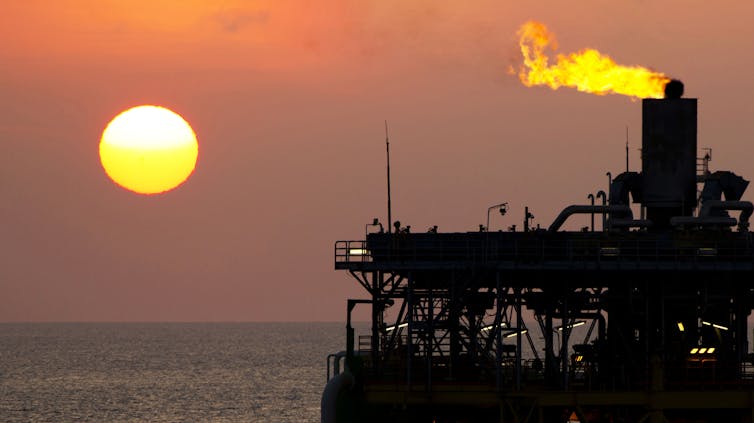
    The sheer volume of investment in new oil and gas infrastructure like offshore rigs or LNG terminals, combined with long build times, has locked in higher fossil fuel production and pushed emissions to record levels. This poses significant risks for both exporters and importers, especially as future demand is uncertain and energy markets remain volatile.

    Fossil fuels remain dominant

    More fundamentally, continued reliance on fossil fuels is making humanity less secure. The vast majority of emissions still come from burning coal, oil or gas. Preventing climate catastrophe therefore requires us to phase out fossil fuels as fast as possible – with wealthy nations leading the charge. In their place, we’ll have to generate energy from renewable sources that do not replicate the volatility of globally traded fossil fuels.

    Yet despite some progressive policies, fossil fuels remain dominant across the global economy. Investment in oil and gas today is almost double the level it must fall below if the world is to reach net zero by 2050, according to the IEA’s own modelling.

    The pursuit of energy security has boosted renewables, but adding additional clean energy isn’t enough – it must ultimately displace fossil fuels entirely. This will require a whole-economy shift. That means cutting production of fossil fuels while also reducing demand, stabilising prices and building out clean energy fast enough to support the electrification of transport, industry and heating.

    But supply chains for batteries, solar panels and other key technologies are vulnerable. Delays and shortages could mean electricity prices spike, sparking social unrest. This is yet another risk of getting energy security wrong: if inflationary pressures drive the immiseration of the general public, governments and their energy plans will be short lived.

    The definition of energy security that comes out of the IEA summit should reflect the fact we’re now in a world of constant crises. True energy security means charting a path towards a world that is more socially, economically and environmentally secure. This means developing a well-managed global plan to phase out fossil fuels.

    Freddie Daley, Research Associate, Centre for Global Political Economy, University of Sussex and Peter Newell, Professor of International Relations, University of Sussex

    This article is republished from The Conversation under a Creative Commons license. Read the original article.
  • China has identified how to fight back against Trump’s tariffs, and is not ready to back down

    Spread the love
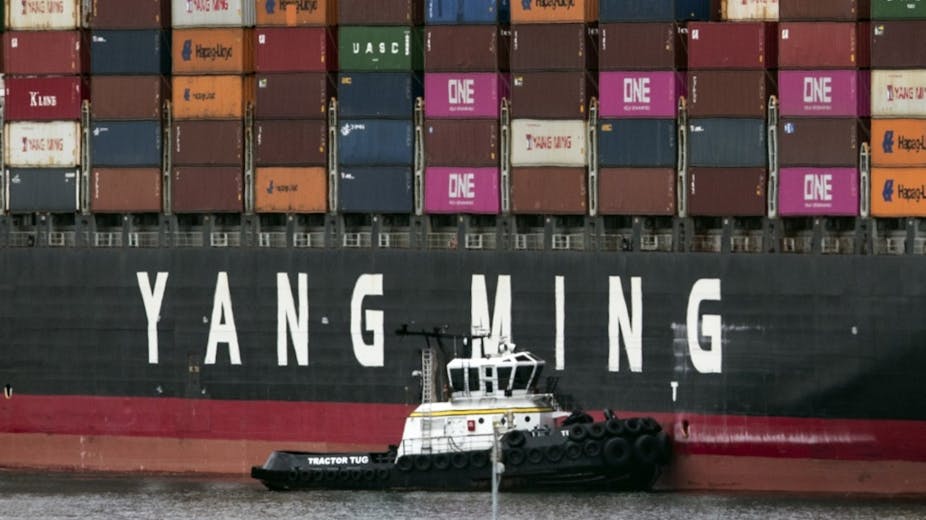
    Chinese goods arrive at the Port of Los Angeles. But arrivals from China are decreasing. ETIENNE LAURENT/EPA

    Chee Meng Tan, University of Nottingham

    US ports are now starting to see scheduled shipments from China decline as the result of Donald Trump’s 145% tariffs on Chinese goods. The port of Los Angeles, the biggest port for Chinese goods in the US, is predicting scheduled shipments in early May to be about a third lower than the same time last year.

    Declining numbers of ships arriving stocked with Chinese imports are likely to affect US supermarket shelves soon, and after warnings from US supermarket bosses, Trump responded by saying trade talks between the US and China were under way in the past few days. But Chinese president Xi Jinping quickly denied talks were happening, suggesting he has no intention of backing away from a fight with the US.

    As one of the most powerful leaders in the history of the People’s Republic of China, Xi has fashioned himself as a nationalistic icon. So if China perceives Trump’s tariffs as a bully tactic designed to undermine it, backing down from a confrontation with the US would seriously undermine Xi’s strongman image and rhetoric.

    This is something that Trump probably hadn’t considered. At a rally marking his 100 days in office, the US president was still suggesting that China would just back down and “eat the tariffs”.

    While tariffs appear to be the primary weapon in the trade war, China might have more tactics to hit back at Trump and the US economy. The question is what might they be?

    A few weeks ago it seemed like Washington might punish China’s lack of willingness to negotiate with more tariffs, but now it’s clear that Trump is willing to make a deal and is trying to get China to come to the table. Trump is now implying that US tariffs on China could come down substantially. And US treasury secretary Scott Bessent has called the trade war with China “unsustainable”.

    Leveraging agriculture and energy

    China has reduced its reliance on US farm imports since the trade war began in Trump’s first presidency. This is bad news for Washington as agriculture is one few sectors in the US that actually has a large trade surplus with China. The 125% retaliatory tariffs will harm the sector’s profitability.

    But China’s retaliatory tariffs aren’t the only issue American farmers have to contend with. As the trade war escalates, China has been using bureaucratic hurdles to restrict US agricultural products from entering China and as a potential negotiation tool. For instance, China has delayed the renewals of export license renewals of US pig farmers, and refused to renew licenses of poultry farmers for “health and safety” reasons.

    Beijing’s actions might be designed to particularly hit the economy in core Trump supporting states. A major part of Trump and the Republican party’s base lies in “red states”, such as Nebraska, Iowa and Kansas, all have significant farming communities. Focusing on agricultural issues is a tactic that Beijing realises will hit home with Trump voters.

    Out of the 444 US counties designated by the United States Department of Agriculture (USDA) as farming-dependent, 77.7% voted for Trump during the 2024 US presidential election. So, any hardship faced by the agriculture sector due to Trump’s own actions is likely to lose him support from a major political base. And with mid-term elections in 2026, Trump has to tread carefully when antagonising Beijing.

    Another support base that Beijing might seek to undermine is those involved in the fossil fuel sector. In the past, the US has been a top supplier of natural gas to China.

    China has not imported natural gas from the US since early February 2025, and has sought its natural gas from Australia, Indonesia, and Brunei. As the trade war continues, it is unlikely that the US would be able to sell its natural gas to China anytime soon, and this will have an impact on the energy industry – one of Trump’s major political support bases.

    Restricting minerals

    Another huge problem that the US faces stems from China’s restriction of the export of critical minerals. They include seven rare earth minerals namely samarium, gadolinium, terbium, dysprosium, lutetium, scandium and yttrium. While these are used in the clean energy and automobile sectors, the biggest concern would come from the US defence complex.

    These critical minerals are used in manufacturing fighter jets, submarines, missiles, and radar systems. China has an effective monopoly on the extraction and processing of rare earths, while the US lacks such capabilities. This means that China’s export restrictions are likely to affect America’s defence industry, while Beijing rapidly expands its ammunition and military technology.

    The White House probably anticipated export restrictions of critical minerals from China. After all, Beijing had banned the export of critical minerals to Japan in 2010 over a fishing trawler dispute, and stopped exporting “dual-use” metals that can be used to produce civilian and military technology, such as gallium, germanium and tungsten.

    What’s next?

    For the last few years, China has been trying to overcome an ailing economy that was primarily fuelled by a real-estate crisis. Trump probably expected China to buckle under pressure and come crawling to the negotiation table. After all, the Chinese Communist Party needs to fix its economy fast. The establishment has long relied on delivering economic prosperity to legitimise its rule over China.

    Right now the tit-for-tat battle continues. By April 11, US tariffs on China peaked at 145%, while China’s retaliatory tariffs on US goods reached an unprecedented 125%.

    Although it is clearly fighting back, China could go even further by selling off US treasuries and increasing US interest rates and thus borrowing cost. But unlike Trump, Xi often plays the long game. After all, Trump’s term as president will be over in less than four years, while Chinese president Xi has no term limits. All the latter has to do is exercise patience, and a friendlier US president might come around.

    Chee Meng Tan, Assistant Professor of Business Economics, University of Nottingham

    This article is republished from The Conversation under a Creative Commons license. Read the original article.

  • Tony Blair opposes phasing out fossil fuels. These academics disagree

    Spread the love

    Jack Marley, The Conversation

    Rapidly phasing out fossil fuels and limiting energy consumption to tackle climate change is “a strategy doomed to fail” according to former UK prime minister Tony Blair.

    In the foreword of a new report, Blair urges governments to rethink their approach to reaching net zero emissions.

    Instead of policies that are seen by people as involving “financial sacrifices”, he says world leaders should deploy carbon capture and storage, including technological and nature-based approaches, to meet the rising demand for fossil fuels.

    But speak to many academic experts on climate change and they will tell a very different story: that there is no strategy for addressing climate change that does not involve ending, or at least massively reducing, fossil fuel combustion.


    This roundup of The Conversation’s climate coverage comes from our award-winning weekly climate action newsletter. Every Wednesday, The Conversation’s environment editor writes Imagine, a short email that goes a little deeper into just one climate issue. Join the 45,000+ readers who’ve subscribed.


    A fossil fuel phase-out is ‘essential’

    “There is a wealth of scientific evidence demonstrating that a fossil fuel phase-out will be essential for reining in the greenhouse gas emissions driving climate change,” says Steve Pye, an associate professor of energy at UCL.

    “I know because I have published some of it.”

    Ed Hawkins, a climate scientist at the University of Reading, agrees.

    “Rapidly reducing our reliance on fossil fuels, and not issuing new licenses to extract oil and gas, is the most effective way of minimising future climate-related disruptions,” he says.

    “The sooner those with the power to shape our future recognise this, the better.”

    Fossil fuels are responsible for 90% of the carbon dioxide heating the climate. The amount burned annually is still rising, and so is the rate at which the world is getting hotter. Scientists now fear we are approaching irreversible tipping points in the climate system, hence their support for an urgent replacement of fossil fuels with renewable energy.

    Blair is confident that an emergency response on this scale can be avoided by absorbing CO₂ immediately after burning fossil fuels, from the smokestacks where the greenhouse gas is concentrated.

    Not all of the emissions responsible for climate change would be prevented. UCL earth system scientist Mark Maslin says that natural gas, which would linger as an energy source thanks to carbon capture, still leaks from pipelines and storage vessels upstream of power plants.

    Commercial applications of the technology also have a poor track record. Just two large-scale coal-fired power plants are operating with CCS worldwide – one in the US and one in Canada.

    “Both have experienced consistent underperformance, recurring technical issues and ballooning costs,” Maslin says.

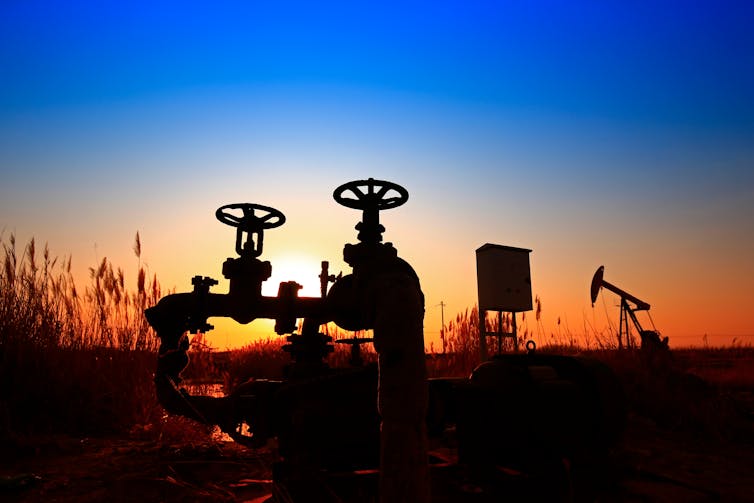
    A valve and an oil derrick at dusk.
    CCS is no alternative to turning off the fossil fuel taps. Pan Demin/Shutterstock

    Blair might baulk at what he perceives to be the expense of ditching fossil fuels. But economic modelling led by Oxford University’s Andrea Bacilieri suggests his concern is misplaced. A rapid phase-out of fossil fuels could save US$30 trillion (US$1 trillion a year) by 2050 she concludes, compared with allowing power plants and factories to keep burning them with CCS.

    Developing CCS will be necessary to help manage an orderly transition from fossil fuels according to Myles Allen, a professor of geosystem science at Oxford University. But it is not a substitute for undergoing that transition, he says.

    “Above all, we need to make sure the availability of CCS does not encourage yet more CO₂ production.”

    Keeping the public on board

    Is Blair right to fret about a public backlash to lower energy use? Academics suggest multiple reasons to think otherwise if the alternative is prolonging the use of fossil fuels.

    Replacing a gas boiler with a heat pump that runs on electricity, for example, can lower a household’s energy consumption without a deliberate effort. That’s because renewable appliances convert power to heat more efficiently (how much depends on how well insulated the home is).

    In fact, it’s dependence on fossil fuel that is preventing many households from making this switch. The high wholesale price of gas determines the cost of electricity for UK consumers.

    And surveys repeatedly show that support for net zero policies is broad and deep in the UK – including those that would involve lifestyle changes say Lorraine Whitmarsh (University of Bath), Caroline Verfuerth and Steve Westlake (both Cardiff University), who research public behaviour and climate change.

    “Crucially, the public wants and needs the government to show clear and consistent leadership on climate change,” they say.

    Meanwhile, what can corrode public acceptance of sacrifices is the high-consuming behaviour of a minority (think pop stars in rockets, as Westlake recently argued). And, arguably, the statements of powerful people like Blair.

    New research even suggests the politics that Blair and many others like him favour might also play a role here. Felix Schulz (Lund University) and Christian Bretter (The University of Queensland) are social scientists who study how ideology affects personal views on climate policy.

    They identified respondents in six countries (the UK, US, Germany, Brazil, South Africa and China) who shared Blair’s neoliberal worldview, which the pair define as a belief that individuals are primarily responsible for their own fortune, and need to take care of themselves – as well as an abiding faith in the free market.

    “We observed a strong link between a neoliberal worldview and lack of support for the climate policies in our study,” they say.

    Schulz and Bretter urge us to consider how someone’s ideology ultimately shapes their understanding of the problem and its solutions as well.

    Jack Marley, Environment + Energy Editor, The Conversation

    This article is republished from The Conversation under a Creative Commons license. Read the original article.

  • How global inequality hinders climate action

    Spread the love
    Leaders from around the globe are meeting in Davos. Michael Derrer Fuchs/Shutterstock

    Susan Ann Samuel, University of Leeds

    World leaders have gathered for the World Economic Forum annual meeting in Davos, Switzerland. One of their main goals is to align their responses to geopolitical shocks such as floods and wildfires that hamper trade, investment and more.

    The meeting also supposedly aims to find ways to stimulate economic growth to improve living standards, foster a just and inclusive energy transition, achieve security and cooperation amidst conflicts, and accelerate the economic response to an “intelligent age” of AI.

    But, a new report from Oxfam International, published on the first day of the meeting in Davos, highlights how global inequality is more rampant than ever. The report, written by a team of policy campaigners and inequality research advisers outlines how billionaire wealth rose sharply in 2024 worldwide, with the pace of the increase three times faster than in 2023.

    The World Economic Forum lists extreme weather as one of the top global risks. But, as world leaders convene in Davos, the high-profile anti-climate stances of some of them stand in stark opposition to any meaningful progress for climate action.

    The Oxfam report highlights the exploitation involved in creating and sustaining wealth and outlines how, as inequalities deepen, vulnerable communities are disproportionately affected. The most vulnerable – overwhelmingly women, people of colour, Indigenous groups and low-wage workers – are caught in a cycle of insufficient wages, limited services and minimal political influence.

    The report also highlights how wealth inequality is often intertwined with historical processes of extraction — both within countries (for example, through weak labour protections that lowers wages) and between countries (through trade, finance, and resource exploitation).

    The climate connection

    Other research has also shown how inequality is deeply interwoven with climate breakdown. Each crisis exacerbates the other. Historically, the richest nations – and within them, the wealthiest people – have contributed the most to greenhouse gas emissions.

    Meanwhile, lower-income countries that bear little responsibility for global heating suffer the most. These countries, already burdened by debt and systemic inequality, have fewer resources to protect communities from extreme weather, crop failures and infrastructure damage. This makes day-to-day survival a struggle for billions.

    When climate change exacerbates existing inequalities, marginalised communities are denied basic human rights. For instance, droughts reduce crop yields and deplete water sources, so more people — often women and children — have to ration supplies or go without. This directly infringes on their rights to food, safe drinking water and sanitation.

    In these ways, without climate action, the warming planet threatens to widen inequalities by affecting the poorest people most severely. A 2020 World Bank report estimated that an additional 68 to 135 million people could be pushed into poverty by 2030 because of climate change. French researchers identified that climate change also slows down the economic catch-up of poorer countries.

    The reality on the ground is bleak. Floods in Pakistan displaced thousands and affected more than 33 million people in 2023. That’s ten times more than the total population of Los Angeles where, when the recent wildfires struck, 170,000 people had to be evacuated.

    Around the world, climate movements continue. Law suits that demand climate action are transforming governance. High-level negotiations like the UN’s annual climate summit carry on seeking progress, although the processes could be improved to accelerate change.

    What can Davos do? World leaders need to look at how wealth and power can be redistributed (reparations for climate damages is one way to do this) and low-income, climate-vulnerable nations can be better represented in global decision-making.

    Without this kind of change, there’s a risk climate action will perpetuate the same structural imbalances that first enabled environmental exploitation. Only by tackling both climate injustice and economic inequality together can the world prevent further climate disasters and ensure a more equitable future.


    Don’t have time to read about climate change as much as you’d like?
    Get a weekly roundup in your inbox instead. Every Wednesday, The Conversation’s environment editor writes Imagine, a short email that goes a little deeper into just one climate issue. Join the 40,000+ readers who’ve subscribed so far.


    Susan Ann Samuel, PhD Candidate, School of Politics and International Studies, University of Leeds

    This article is republished from The Conversation under a Creative Commons license. Read the original article.

  • Do aliens exist? We studied what scientists really think

    Spread the love
    PeopleImages.com – Yuri A/Shutterstock

    Peter Vickers, Durham University; Henry Taylor, University of Birmingham, and Sean McMahon, University of Edinburgh

    News stories about the likely existence of extraterrestrial life, and our chances of detecting it, tend to be positive. We are often told that we might discover it any time now. Finding life beyond Earth is “only a matter of time”, we were told in September 2023. “We are close” was a headline from September 2024.

    It’s easy to see why. Headlines such as “We’re probably not close” or “Nobody knows” aren’t very clickable. But what does the relevant community of experts actually think when considered as a whole? Are optimistic predictions common or rare? Is there even a consensus? In our new paper, published in Nature Astronomy, we’ve found out.

    During February to June 2024, we carried out four surveys regarding the likely existence of basic, complex and intelligent extraterrestrial life. We sent emails to astrobiologists (scientists who study extraterrestrial life), as well as to scientists in other areas, including biologists and physicists.

    In total, 521 astrobiologists responded, and we received 534 non-astrobiologist responses. The results reveal that 86.6% of the surveyed astrobiologists responded either “agree” or “strongly agree” that it’s likely that extraterrestrial life (of at least a basic kind) exists somewhere in the universe.

    Less than 2% disagreed, with 12% staying neutral. So, based on this, we might say that there’s a solid consensus that extraterrestrial life, of some form, exists somewhere out there.

    Scientists who weren’t astrobiologists essentially concurred, with an overall agreement score of 88.4%. In other words, one cannot say that astrobiologists are biased toward believing in extraterrestrial life, compared with other scientists.

    When we turn to “complex” extraterrestrial life or “intelligent” aliens, our results were 67.4% agreement, and 58.2% agreement, respectively for astrobiologists and other scientists. So, scientists tend to think that alien life exists, even in more advanced forms.

    These results are made even more significant by the fact that disagreement for all categories was low. For example, only 10.2% of astrobiologists disagreed with the claim that intelligent aliens likely exist.

    Optimists and pessimists

    Are scientists merely speculating? Usually, we should only take notice of a scientific consensus when it is based on evidence (and lots of it). As there is no proper evidence, scientists may be guessing. However, scientists did have the option of voting “neutral”, an option that was chosen by some scientists who felt that they would be speculating.

    Only 12% chose this option. There is actually a lot of “indirect” or “theoretical” evidence that alien life exists. For example, we do now know that habitable environments are very common in the universe.

    We have several in our own solar system, including the sub-surface oceans of the moons Europa and Enceladus, and arguably also the environment a few kilometres below the surface of Mars. It also seems relevant that Mars used to be highly habitable, with lakes and rivers of liquid water on its surface and a substantial atmosphere.

    It is reasonable to generalise from here to a truly gargantuan number of habitable environments across the galaxy, and wider universe. We also know (since we’re here) that life can get started from non-life – it happened on Earth, after all. Although the origin of the first, simple forms of life is poorly understood, there is no compelling reason to think that it requires astronomically rare conditions. And even if it does, the probability of life getting started (abiogenesis) is clearly non-zero.

    This can help us to see the 86.6% agreement in a new light. Perhaps it is not, actually, a surprisingly strong consensus. Perhaps it is a surprisingly weak consensus. Consider the numbers: there are more than 100 billion galaxies. And we know that habitable environments are everywhere.

    Let’s say there are 100 billion billion habitable worlds (planets or moons) in the universe. Suppose we are such pessimists that we think life’s chances of getting started on any given habitable world is one in a billion billion. In that case, we would still answer “agree” to the statement that it is likely that alien life exists in the universe.

    Thus, optimists and pessimists should all have answered “agree” or “strongly agree” to our survey, with only the most radical pessimists about the origin of life disagreeing.

    Bearing this in mind, we could present our data another way. Suppose we discount the 60 neutral votes we received. Perhaps these scientists felt that they would be speculating, and didn’t want to take a stance. In which case, it makes sense to ignore their votes. This leaves 461 votes in total, of which 451 were for agree or strongly agree. Now, we have an overall agreement percentage of 97.8%.

    This move is not as illegitimate as it looks. Scientists know that if they choose “neutral” they can’t possibly be wrong. Thus, this is the “safe” choice. In research, it is often called “satisficing”.

    As the geophysicist Edward Bullard wrote back in 1975 while debating whether all continents were once joined together, instead of making a choice “it is more prudent to keep quiet, … sit on the fence, and wait in statesmanlike ambiguity for more data”. Not only is keeping quiet a safe choice for scientists, it means the scientist doesn’t need to think too hard – it is the easy choice.

    Getting the balance right

    What we probably want is balance. On one side, we have the lack of direct empirical evidence and the reluctance of responsible scientists to speculate. On the other side, we have evidence of other kinds, including the truly gargantuan number of habitable environments in the universe.

    We know that the probability of life getting started is non-zero. Perhaps 86.6% agreement, with 12% neutral and less than 2% disagreement, is a sensible compromise, all things considered.

    Perhaps – given the problem of satisficing – whenever we present such results, we should present two results for overall agreement: one with neutral votes included (86.6%), and one with neutral votes disregarded (97.8%). Neither result is the single, correct result.

    Each perspective speaks to different analytical needs and helps prevent oversimplification of the data. Ultimately, reporting both numbers – and being transparent about their contexts – is the most honest way to represent the true complexity of responses.

    Peter Vickers, Professor in Philosophy of Science, Durham University; Henry Taylor, Associate Professor, Department of Philosophy, University of Birmingham, and Sean McMahon, Reader in Astrobiology, University of Edinburgh

    This article is republished from The Conversation under a Creative Commons license. Read the original article.