




A quarter of freshwater animals threatened with extinction, finds major new study

Spread the love

Iwan Jones, Queen Mary University of London

For far too long, the decline in the biodiversity of our rivers and lakes has been out of sight and out of mind. As a freshwater ecologist I have long felt frustrated as conservation and research is dominated by land and sea species, even though our rivers, lakes, ponds and other wetlands host a hugely disproportionate amount of the world’s biodiversity in their relatively small area.

The first comprehensive assessment of the risk of extinction of freshwater species, now published in the journal Nature, is set to change this. The scientists involved in the new study used the recently completed “red list” for freshwater fishes, and the one for dragonflies and damselflies.

Red lists are official inventories of conservation status compiled by the International Union for Conservation of Nature (IUCN). They combined this with data from the previously published red list for freshwater crabs, crayfishes and shrimps. In total, they assessed more than 23,000 species.

The authors conclude that close to a quarter (24%) of freshwater species are threatened with extinction. That is, they have been officially assessed as vulnerable, endangered, critically endangered or extinct in the wild.

These include the critically endangered European eel, and the endangered white-clawed crayfish, both of which were abundant in the streams of my childhood.

small crayfish on river weed
Once abundant, now endangered: a juvenile white clawed crayfish. valda butterworth / shutterstock

There is some uncertainty in the estimates, especially as there is insufficient data to establish the extinction risk for some species. The authors use an accepted and robust method to address this uncertainty but note that this lack of data affects a substantially larger proportion of freshwater species than those that live on land.

In fact, despite indications that a greater proportion of freshwater mollusc species are at risk of extinction, the authors could not include molluscs in their analysis as so many species are data deficient.

Furthermore, we have only the most rudimentary understanding of the status of the wide array other freshwater species, particularly invertebrates such as mayflies, stoneflies, or various beetles, many of which are highly sensitive to pollution. Although this new study represents an important step forward in our understanding, it should also act as a clarion call to galvanise efforts to fill these critical data gaps.

Freshwater species overlooked

While shocking, this figure of 24% of freshwater species threatened with extinction is comparable with the estimate for predominantly land-based amphibians, reptiles, birds and mammals, of which 23% are threatened. Comprehensive assessments of birds, amphibians and mammals have been available for over 20 years, with repeat assessments now available.

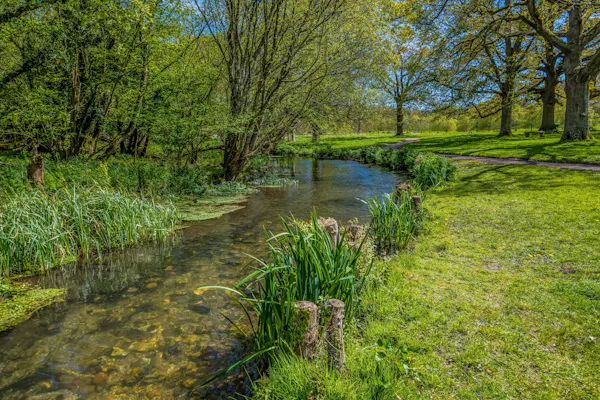
Rivers and lakes support whole ecosystems with all sorts of species. Martine Liu 58 / shutterstock

As the IUCN’s red lists are used to document trends in biodiversity and therefore to inform national and global strategy, data on terrestrial vertebrates has dominated conservation science and policy. Hence, to date, global environmental governance has focused on land and sea ecosystems, despite evidence that freshwaters require distinct management needs.

With this assessment, it is now clear that policy will have to be developed that protects and delivers improvements for freshwater species. That means thinking about entire river basins as a whole, rather than the immediate area occupied by the species.

It also means considering things like how rivers and lakes are connected and how the water available varies from season to season. Bodies of freshwater are like islands in a sea of land. Facilitating movement between these islands can help preserve species, particularly where they disappear seasonally.

Most species face multiple threats

In the new study, pollution, dams, water abstraction, land-use change, over-exploitation, invasive species and disease feature prominently as threats, with most species impacted by more than one. Freshwaters in areas of limestone and other porous calcium-rich rocks host consistently more threatened species than would be expected, highlighting the importance of chalk streams for example, where pressure due to exploitation of water resources and pollution is pronounced.

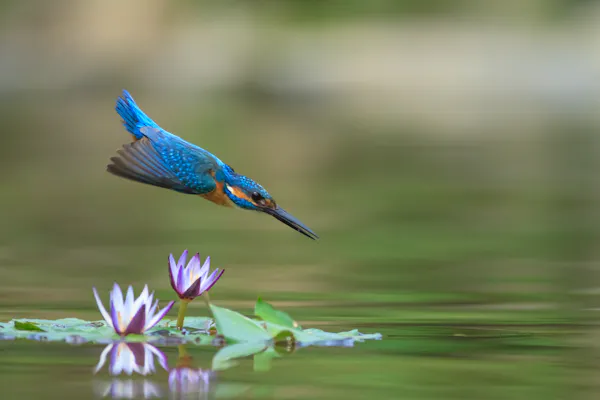
Chalk streams are valuable habitats for salmon, trout, otters, kingfishers and many other species. Tony Martin Long / shutterstock

While current efforts to hold UK water companies responsible for reducing inputs of sewage to rivers and lakes are commendable, water use efficiency and run-off should be considered throughout the decision-making process, from building design and town planning though to our individual daily use of water. Nature-based solutions such as tree planting or wetland protection offer a way forward that simultaneously benefit biodiversity and human well-being.

A lack of understanding can no longer be used as an excuse for inaction. As the authors of the new study point out, freshwaters support more than 10% of all known species, including about a third of vertebrates and half of fishes, while covering less than 1% of the surface of the Earth.

Many of the freshwater species considered in this study are socially and economically important. Freshwater fish provide an important source of protein for many human societies, and species such as Atlantic salmon support a fishing-tourism industry critical to many areas with limited opportunities to generate income.

Other species, while superficially unimportant to human society, thrive in clean water. The widespread decline in these species reflects increasing pollution and other pressures, which does not bode well for our society in the face of climate change and diminishing water availability.

Iwan Jones, Freshwater Ecologist and Head of the River Communities Group, Queen Mary University of London

This article is republished from The Conversation under a Creative Commons license. Read the original article.

Continue ReadingA quarter of freshwater animals threatened with extinction, finds major new study

Repression of climate and environmental protest is intensifying across the world

Spread the love
Image of a Just Stop Oil participant getting arrested at Kingsbury oil terminal.
A Just Stop Oil participant getting arrested at Kingsbury oil terminal. A JSO / Vladamir Morozov image.

Oscar Berglund, University of Bristol and Tie Franco Brotto, University of Bristol

Climate and environmental protest is being criminalised and repressed around the world. The criminalisation of such protest has received a lot of attention in certain countries, including the UK and Australia. But there have not been any attempts to capture the global trend – until now.

We recently published a report, with three University of Bristol colleagues, which shows this repression is indeed a global trend – and that it is becoming more difficult around the world to stand up for climate justice.

This criminalisation and repression spans the global north and south, and includes more and less democratic countries. It does, however, take different forms.

Our report distinguishes between climate and environmental protest. The latter are campaigns against specific environmentally destructive projects – most commonly oil and gas extraction and pipelines, deforestation, dam building and mining. They take place all around the world.

Climate protests are aimed at mitigating climate change by decreasing carbon emissions, and tend to make bigger policy or political demands (“cut global emissions now” rather than “don’t build this power plant”). They often take place in urban areas and are more common in the global north.

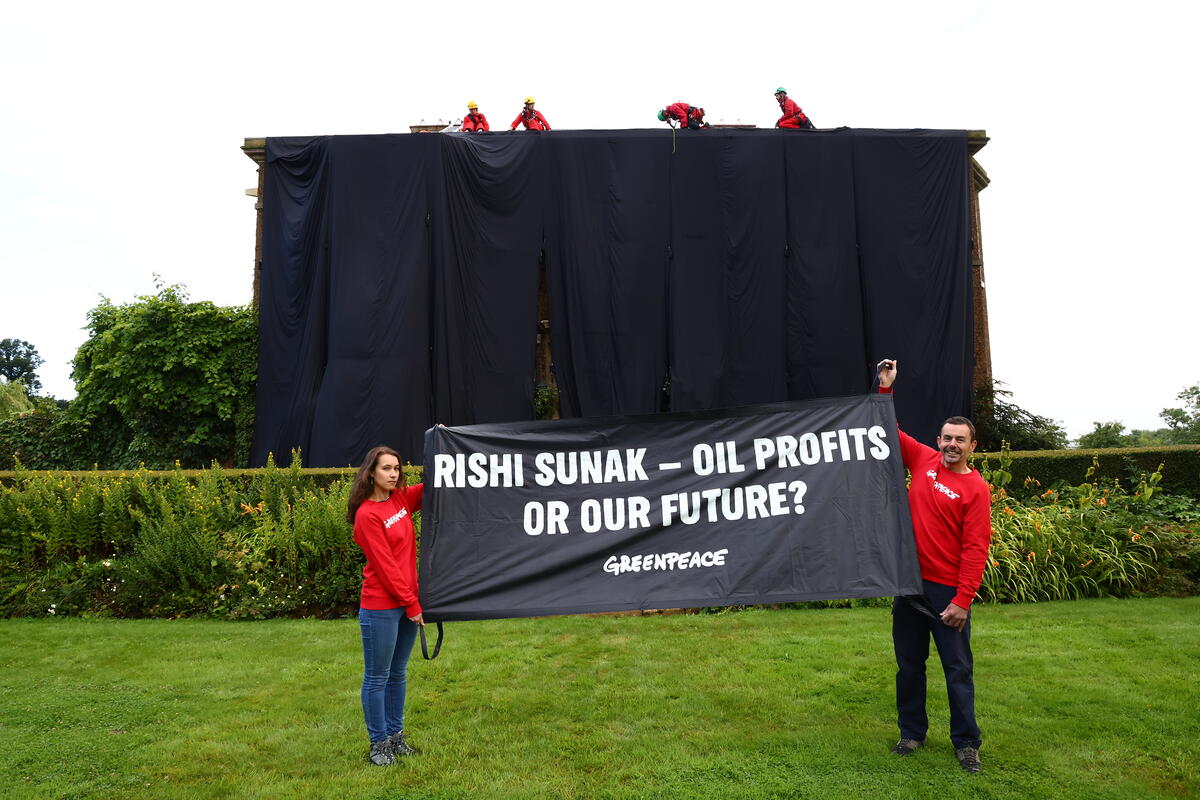
Greenpeace cover Rishi Sunak's home in black oily fabric in protests at Sunak's intended huge expansion of North Sea fossil fuel exploration.
Greenpeace cover Rishi Sunak’s home in black oily fabric in protests at Sunak’s intended huge expansion of North Sea fossil fuel exploration. Image © Greenpeace.

Four ways to repress activism

The intensifying criminalisation and repression is taking four main forms.

1. Anti-protest laws are introduced

Anti-protest laws may give the police more powers to stop protest, introduce new criminal offences, increase sentence lengths for existing offences, or give policy impunity when harming protesters. In the 14 countries we looked at, we found 22 such pieces of legislation introduced since 2019.

2. Protest is criminalised through prosecution and courts

This can mean using laws against climate and environmental activists that were designed to be used against terrorism or organised crime. In Germany, members of Letzte Generation (Last Generation), a direct action group in the mould of Just Stop Oil, were charged in May 2024 with “forming a criminal organisation”. This section of the law is typically used against mafia organisations and had never been applied to a non-violent group.

In the Philippines, anti-terrorism laws have been used against environmentalists who have found themselves unable to return to their home islands.

Criminalising protest can also mean lowering the threshold for prosecution, preventing climate activists from mentioning climate change in court, and changing other court processes to make guilty verdicts more likely. Another example is injunctions that can be taken out by corporations against activists who protest against them.

3. Harsher policing

This stretches from stopping and searching to surveillance, arrests, violence, infiltration and threatening activists. The policing of activists is carried out not just by state actors like police and armed forces, but also private actors including private security, organised crime and corporations.

In Germany, regional police have been accused of collaborating with an energy giant (and its private fire brigade) to evict coal mine protesters, while private security was used extensively in policing anti-mining activists in Peru.

4. Killings and disappearances

Lastly, in the most extreme cases, environmental activists are murdered. This is an extension of the trend for harsher policing, as it typically follows threats by the same range of actors. We used data from the NGO Global Witness to show this is increasingly common in countries including Brazil, Philippines, Peru and India. In Brazil, most murders are carried out by organised crime groups while in Peru, it is the police force.

Protests are increasing

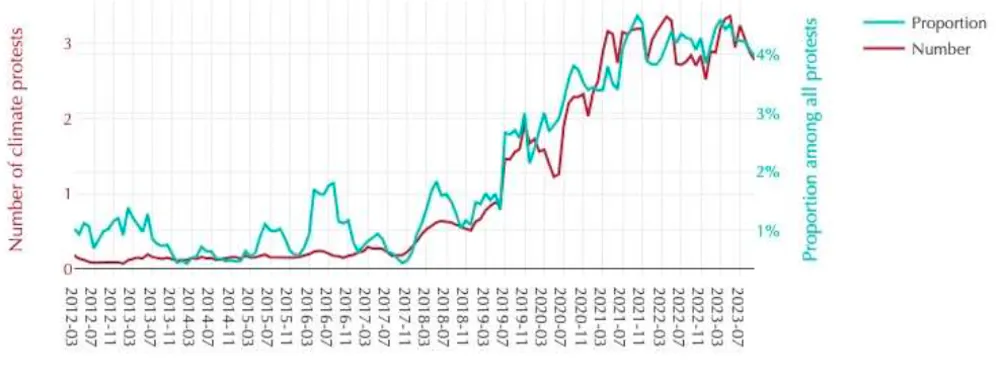
To look more closely at the global picture of climate and environmental protest – and the repression of it – we used the Armed Conflicts Location Event database. This showed us that climate protests increased dramatically in 2018-2019 and have not declined since. They make up on average about 4% of all protest in the 81 countries that had more than 1,000 protests recorded in the 2012-2023 period:

Graph
Climate protests increased sharply in the late 2010s in the 14 countries studied. (Data is smoothed over five months; number of protests is per country per month.) Berglund et al; Data: ACLED, CC BY-SA

This second graph shows that environmental protest has increased more gradually:

Graph
Environmental protests in the same 14 countries. Data: ACLED, CC BY-SA

We used this data to see what kind of repression activists face. By looking for keywords in the reporting of protest events, we found that on average 3% of climate and environmental protests face police violence, and 6.3% involve arrests. But behind these averages are large differences in the nature of protest and its policing.

A combination of the presence of protest groups like Extinction Rebellion, who often actively seek arrests, and police forces that are more likely to make arrests, mean countries such as Australia and the UK have very high levels of arrest. Some 20% of Australian climate and environmental protests involve arrests, against 17% in the UK – with the highest in the world being Canada on 27%.

Meanwhile, police violence is high in countries such as Peru (6.5%) and Uganda (4.4%). France stands out as a European country with relatively high levels of police violence (3.2%) and low levels of arrests (also 3.2%).

In summary, while criminalisation and repression does not look the same across the world, there are remarkable similarities. It is increasing in a lot of countries, it involves both state and corporate actors, and it takes many forms.

This repression is taking place in a context where states are not taking adequate action on climate change. By criminalising activists, states depoliticise them. This conceals the fact these activists are ultimately right about the state of the climate and environment – and the lack of positive government action in these areas.

Oscar Berglund, Senior Lecturer in International Public and Social Policy, University of Bristol and Tie Franco Brotto, PhD Candidate, School for Policy Studies, University of Bristol

This article is republished from The Conversation under a Creative Commons license. Read the original article. [Accompanying images are selected by dizzy deep of https://onaquietday.org.]

Youth Demand shit in Rishi Sunak's private lake 25/6/24
Youth Demand shit in Rishi Sunak’s private lake 25/6/24

Continue ReadingRepression of climate and environmental protest is intensifying across the world

Unveiling the Antarctic ‘plastisphere’, a unique and potentially hazardous new ecosystem – new research

Spread the love

Oleksandr Matsibura/Shutterstock

Pere Monràs i Riera, Universitat de Barcelona and Elisenda Ballesté, Universitat de Barcelona

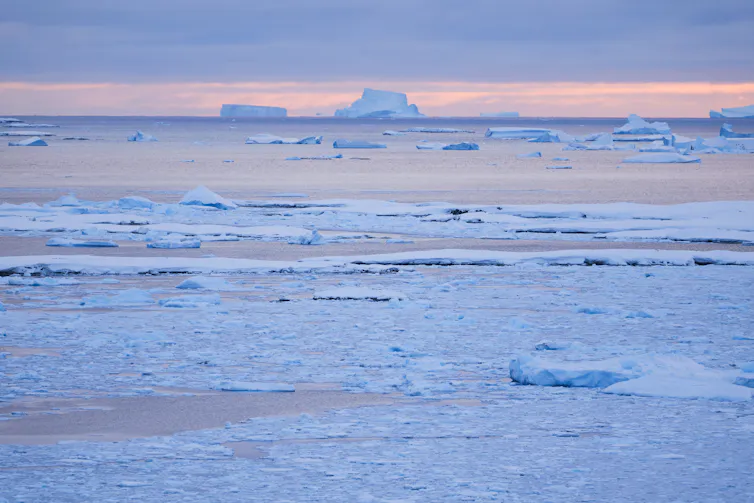
Antarctica, the world’s most remote, harsh and pristine continent, is not free from marine pollution. Where human activity goes, plastic debris inevitably follows.

What might the early explorers of this icy wilderness think today, upon discovering a continent transformed by permanent fishing activities, research stations, military presence, tourism, and all their environmental impacts? Among these, plastic pollution stands out, as it has created a unique new ecological niche in the ocean.

Once it gets into the water, plastic debris provides surfaces that can be quickly colonised by microbial communities, forming a biofilm. This plastic-borne community is known as the plastisphere, and it poses a serious threat to marine ecosystems, particularly in the cold, understudied waters of the Southern Ocean.

The plastisphere: an emerging threat

As plastic debris drifts through the ocean, the plastisphere develops through typical ecological succession, eventually becoming a complex and specialised microbial community. Plastics not only provide shelter for these microorganisms but also act as a vector, allowing potentially harmful pathogens like Vibrio spp., Escherichia coli, and bacteria carrying antibiotic resistance genes, to spread across marine environments, even reaching remote, untouched areas.

Beyond being a home for microbes, the plastisphere can disrupt the natural balance of ocean life at the microscopic level. These changes don’t stay in the water, as they can spread outward, potentially affecting how the ocean absorbs carbon and produces greenhouse gases. This has consequences for the air we breathe around the world.

However, it’s not all bad news, as bacteria known for their potential to degrade plastics or hydrocarbons – such as Alcanivorax sp., Aestuariicella sp., Marinobacter sp. and Alteromonas sp. – are frequently identified on plastics.

The Antarctic plastisphere under the microscope: bacteria colonizing polystyrene. Author’s own

A hostile research environment

We currently know very little about the plastisphere, especially in the Southern Ocean, where uncovering its dynamics is key to understanding its impacts on one of the planet’s most remote and vulnerable marine environments. For this reason, our recent study sought to investigate the abundance and diversity of microbial communities in the Southern Ocean plastisphere, particularly following the initial colonisation of plastic debris.

Working in Antarctica is not an easy task. Just reaching this continent is a challenge, and once there, scientists have to contend with harsh environmental conditions: freezing temperatures, powerful winds, icebergs, and the constant pressure of limited time to carry out their work. These challenges make every moment in the field both demanding and invaluable.

This is why we approached our study with a controlled and manageable experiment. We set up aquariums filled with seawater collected near the Spanish research station on Livingston Island, South Shetlands. Inside, we placed small, rounded pellets of the three most common types of plastic polluting the sea – polyethylene, polypropylene, and polystyrene. We left them at environmental conditions (around 0 ºC and between 13 – 18 h of sunlight) for 5 weeks, aiming to recreate the most plausible outcomes in the field.

We compared the colonisation of plastics with glass, an inert surface. Samples of plastics and glass were collected periodically to track bacterial colonisation.

Plastisphere dynamics in Antarctica

Studying bacteria means making the invisible visible, so we combined several techniques to get a better picture of the plastisphere. Using scanning electron microscopy, we obtained biofilm images. We combined flow cytometry and bacterial culture to count total cells and colonies, and we sequenced the 16S rRNA gene to identify the succession of bacterial settlers.

This meticulous approach revealed that time was the key driver of change. Microbes quickly colonised the plastic, and within less than two days, bacteria like genus Colwellia were already fixed in the surface, showing a clear progression from initial settlers to a mature diverse biofilm including other genera like Sulfitobacter, Glaciecola or Lewinella.

These species, although also detected in water, show a clear preference for the social life of a biofilm community. Moreover, we did not detect clear differences between the bacterial communities from plastics and glass, suggesting that any stable surface can host these communities.

While similar processes happen in the other oceans, in Antarctica the process seems slower. The region’s lower temperatures slow bacterial development.

Plastic-eating bacteria?

One key discovery was the presence of Oleispira sp. on polypropylene. This bacteria is hydrocarbon-degrading, meaning it belongs to a group of microorganisms that can break down oil and other pollutants.

Their role within the Antarctic plastisphere raises important questions, like whether these kinds of bacteria could mitigate the impacts of plastic pollution. If so, they could be key to the future of Antartica and our oceans.

However, there is still much to be discovered, particularly regarding their potential for bioremediation in extreme environments. Understanding these processes could pave the way for innovative strategies to address the growing challenge of plastic waste in marine ecosystems.

Pere Monràs i Riera, Investigador predoctoral en conservación y gestión de la biodiversidad, Universitat de Barcelona and Elisenda Ballesté, Profesora agregada en Microbiologia, Universitat de Barcelona

This article is republished from The Conversation under a Creative Commons license. Read the original article.

Continue ReadingUnveiling the Antarctic ‘plastisphere’, a unique and potentially hazardous new ecosystem – new research

10 reasons why US president-elect Donald Trump can’t derail global climate action

Spread the love
Ahn Young-joon/AP

Wesley Morgan, UNSW Sydney and Ben Newell, UNSW Sydney

If you care about saving Earth from catastrophe, you might be feeling a little down about the re-election of Donald Trump as United States president. Undeniably, his return to the White House is a real setback for climate action.

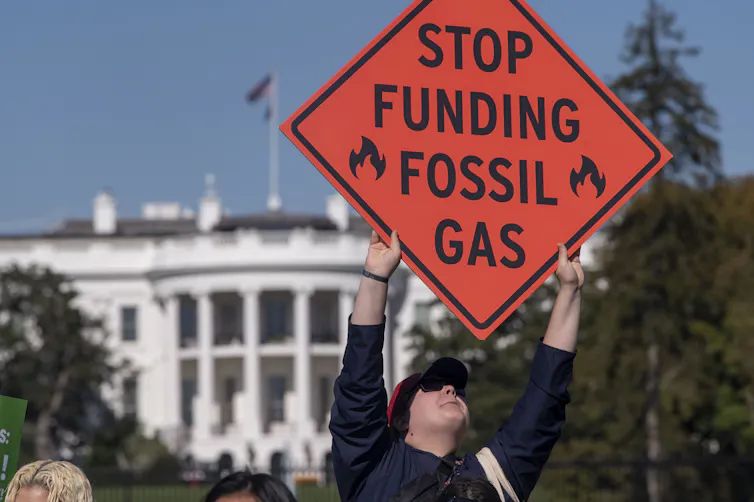
Trump is a climate change denier who has promised to increase fossil fuel production and withdraw the US from the Paris climate deal, among other worrying pledges.

But beyond Trump and his circle, there remains deep concern about climate change, especially among younger people. Support for climate policy remains high in the US and around the world. And studies based on data from 60,000 people in more than 60 countries suggest individuals’ concern about climate change is widely underestimated.

So now is a good time to remember that efforts to tackle the climate crisis – both in Australia and globally – are much bigger than one man. Here are ten reasons to remain hopeful.

Beyond Trump and his circle, there remains deep concern about climate change around the world. HAYOUNG JEON/EPA

1. The global clean energy transition can’t be halted

The global shift to clean energy is accelerating, and Trump can’t stop it. Investment in clean energy has overtaken fossil fuels, and will be nearly double investment in coal, oil and gas in 2024. This is a historic mega-trend and will continue with or without American leadership.

2. Clean energy momentum is likely to continue in the US

Much of the Biden-era spending on clean energy industries went to Republican states and Congressional districts. New factories for batteries and electric vehicles will still go ahead under the Trump administration. After all, entrepreneur Elon Musk – who is expected to join the Trump administration – makes electric vehicles.

Some of Trump’s financial backers are receiving subsidies for clean energy manufacturing and 18 Republican Congress members have gone on record to oppose cuts to clean energy tax credits.

The clean energy shift will continue in the US. Piictured: a solar panel array floats on a water storage pond in New Jersey. Seth Wenig/AP

3. The US still wants to beat China

There is bipartisan concern in Washington about the US losing a technological edge to Beijing. China currently dominates global production of electric vehicles, batteries, wind turbines and solar panels. So internal pressure in the US to counter China’s manufacturing might will continue.

4. The federal government is not everything in the US

When Trump was last in power, he withdrew the US from some climate commitments, such as the Paris Agreement. But many state and local governments powered ahead with climate policy, and that will happen this time around, too. For example, California – the world’s fifth largest economy – plans to eliminate its greenhouse gas footprint by 2045. Even Texas, a Republican heartland, is leading a shift toward wind and solar power.

5. The US climate movement will be more energised than ever

During Trump’s first presidency, the US climate movement developed policy proposals for a “Green New Deal”. Many of these proposals were later implemented by the Biden administration. Initial reactions to Trump’s re-election suggest we can expect similar policy advocacy this time around.

Efforts to tackle the climate crisis are much bigger than one man in the White House. Kevin Wolf/AP

6. Global climate cooperation is bigger than Trump

If Trump makes good on his promise to leave the Paris Agreement (again), he will only be leaving the room where the world’s future is being shaped. The US has walked away from global climate agreements before – for example, refusing to join the Kyoto Protocol in 2001. But other nations rallied for global action, and will do so again.

7. The rules-based global order will remain

When a nation walks away from rules that have been agreed after decades of negotiation, responsible countries must work together to bolster global cooperation. This applies to trade and security – and climate is no different.

As our Foreign Minister Penny Wong recently explained, Australia, as a middle power on the world stage, wants:

a world where disputes are resolved by engagement, negotiation and by reference to rules [and] norms […] We don’t want a world in which disputes are resolved by power alone.

8. Australian diplomacy matters

Australia is seeking to co-host the United Nations climate talks with Pacific island countries in 2026, and is emerging as the favourite. Hosting the conference, known as COP31, would be a chance for Australia to help broker a new era of international climate action, even if the US opts out under Trump.

Hosting the talks would also help cement Australia’s place in the Pacific and assist our Pacific neighbours to deal with the climate threat.

Co-hosting COP31 would help assist our Pacific neighbours to deal with the climate threat. Mick Tsikas/AAP

9. Australia’s clean energy shift is accelerating

About 40% of Australia’s main national electricity grid is powered by renewables and this is set to rise to 80% by 2030. Some states are surging ahead – for example, South Australia is aiming for 100% renewables by 2027.

Australians love clean energy at home, too. One in three households have rooftop solar installed, making us a world-leader in the technology’s uptake. Trump’s occupation of the Oval Office cannot stop this momentum.

10. Trump cannot change the science of climate change

The science is clear – burning coal, oil and gas fuels climate change and increases the risk of disasters that are harming communities right now. In Australia, we need look no further than the Black Summer bushfires in 2019-20 and unprecedented Lismore floods in 2022.

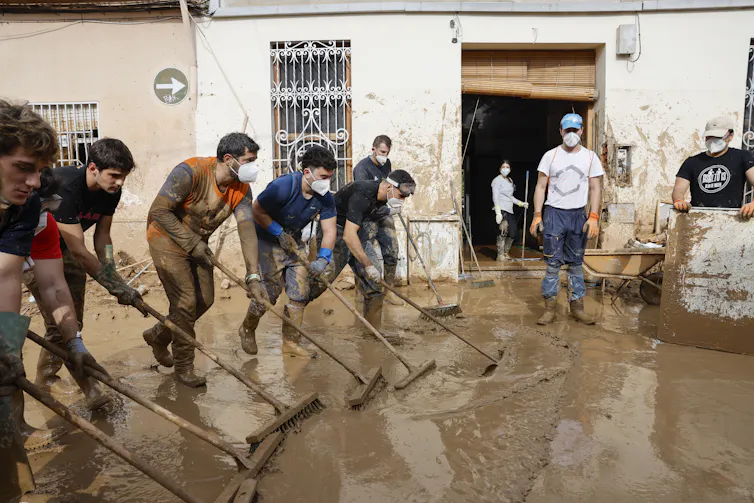
And the damage is happening across the globe. In October, twin hurricanes in the US – made stronger by the warming ocean – left a damage bill of more than US$100 billion. And hundreds of people died when a year’s worth of rain fell in one day in Spain last month.

The devastating floods in Spain remind us that climate change has arrived. ANA ESCOBAR/EPA

On gloomy days – like, say, the election of a climate denier to the White House – it might feel humanity won’t rise to Earth’s biggest existential challenge. But there are many reasons for hope. The vast majority of us support policies to tackle climate change, and in many cases, the momentum is virtually unstoppable.

Wesley Morgan, Research Associate, Institute for Climate Risk and Response, UNSW Sydney and Ben Newell, Professor of Cognitive Psychology and Director of the UNSW Institute for Climate Risk and Response, UNSW Sydney

This article is republished from The Conversation under a Creative Commons license. Read the original article.

Continue Reading10 reasons why US president-elect Donald Trump can’t derail global climate action

Intense downpours in the UK will increase due to climate change – new study

Spread the love

A flash flood in London in October 2019.
D MacDonald/Shutterstock

Elizabeth Kendon, University of Bristol

In July 2021, Kew in London experienced a month’s rain in just three hours. Across the city, tube lines were suspended and stations closed as London experienced its wettest day in decades and flash floods broke out. Just under two weeks later, it happened again: intense downpours led to widespread disruption, including the flooding of two London hospitals.

Colleagues and I have created a new set of 100-year climate projections to more accurately assess the likelihood of heavy rain downpours like these over the coming years and decades. The short answer is climate change means these extreme downpours will happen more often in the UK – and be even more intense.

To generate these projections, we used the Met Office operational weather forecast model, but run on long climate timescales. This provided very detailed climate projections – for every 2.2km grid box over the UK, for every hour, for 100 years from 1981 to 2080. These are much more detailed than traditional climate projections and needed to be run as a series of 20-year simulations that were then stitched together. Even on the Met Office supercomputer, these still took about six months to run.

We ran 12 such 100-year projections. We are not interested in the weather on a given day but rather how the occurrence of local weather extremes varies year by year. By starting the model runs in the past, it is also possible to verify the output against observations to assess the model’s performance.

At this level of detail – the “k-scale” – it is possible to more accurately assess how the most extreme downpours will change. This is because k-scale simulations better represent the small-scale atmospheric processes, such as convection, that can lead to destructive flash flooding.

The fire service attending to a vehicle stuck in floodwater.
Flash flooding can be destructive.
Ceri Breeze/Shutterstock

More emissions, more rain

Our results are now published in Nature Communications. We found that under a high emissions scenario downpours in the UK exceeding 20mm per hour could be four times as frequent by the year 2080 compared with the 1980s. This level of rainfall can potentially produce serious damage through flash flooding, with thresholds like 20mm/hr used by planners to estimate the risk of flooding when water overwhelms the usual drainage channels. Previous less detailed climate models project a much lower increase of around two and a half times over the same period.

We note that these changes are assuming that greenhouse gas emissions continue to rise at current rates. This is therefore a plausible but upper estimate. If global carbon emissions follow a lower emissions scenario, extreme rain will still increase in the UK – though at a slower rate. However, the changes are not inevitable, and if we emit less carbon in the coming decades, extreme downpours will be less frequent.

The increases are significantly greater in certain regions. For example, extreme rainfall in north-west Scotland could be almost ten times more common, while it’s closer to three times more frequent in the south of the UK. The greater future increases in the number of extreme rainfall events in the higher resolution model compared with more traditional lower resolution climate models shows the importance of having k-scale projections to enable society to adapt to climate change.

As the atmosphere warms, it can hold more moisture, at a rate of 7% more moisture for every degree of warming. On a simple level, this explains why in many regions of the world projections show an increase in precipitation as a consequence of human-induced climate change. This new study has shown that, in the UK, the intensity of downpours could increase by about 5% in the south and up to about 15% in the north for every degree of regional warming.

Group of girls with an umbrella walking through a city.
The projected increase in the intensity of rainfall is significantly greater in certain regions.
NotarYES/Shutterstock

However, it is far from a simple picture of more extreme events, decade by decade, as a steadily increasing trend. Instead, we expect periods of rapid change – with records being broken, some by a considerable margin – and periods when there is a pause, with no new records set.

This is simply a reflection of the complex interplay between natural variability and the underlying climate change signal. An analogy for this is waves coming up a beach on an incoming tide. The tide is the long-term rising trend, but there are periods when there are larger waves, followed by lulls.

Despite the underlying trend, the time between record-breaking events at the local scale can be surprisingly long – even several decades.

Our research marks the first time that such a high-resolution data set has spanned over a century. As well as being a valuable asset for planners and policymakers to prepare for the future, it can also be used by climate attribution scientists to examine current extreme rainfall events to see how much more likely they will have been because of human greenhouse gas emissions. The research highlights the importance of meeting carbon emissions targets and also planning for increasingly prevalent extreme rainfall events, which to varying degrees of intensity, look highly likely in all greenhouse gas emissions scenarios.

The tendency for extreme years to cluster poses challenges for communities trying to adapt to intense downpours and risks infrastructure being unprepared, since climate information based on several decades of past observations may not be representative of the following decades.


Imagine weekly climate newsletter

Don’t have time to read about climate change as much as you’d like?

Get a weekly roundup in your inbox instead. Every Wednesday, The Conversation’s environment editor writes Imagine, a short email that goes a little deeper into just one climate issue. Join the 10,000+ readers who’ve subscribed so far.The Conversation


Elizabeth Kendon, Professor of Climate Science, University of Bristol

This article is republished from The Conversation under a Creative Commons license. Read the original article.

Continue ReadingIntense downpours in the UK will increase due to climate change – new study