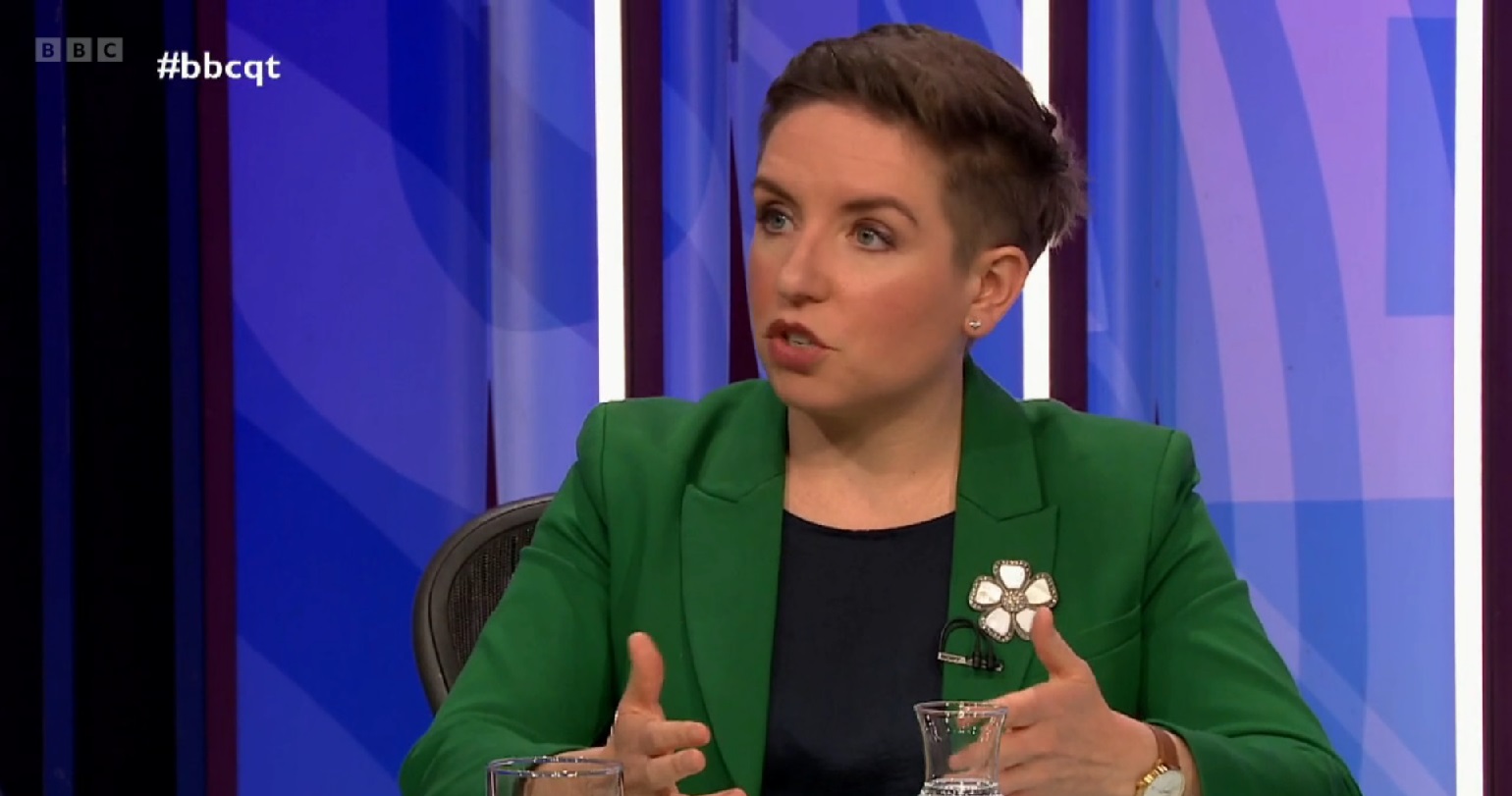
“Tony Blair has decided to mimic Nigel Farage on net zero and sounds like he is speaking on behalf of petro-states like Saudi Arabia and Kazakhstan for whom he has lobbied for more years than he was prime minister.
“It is vital that the government distance itself from this latest dodgy dossier from Blair and turn its attention instead to what the Climate Change Committee is saying today. Their report could not be clearer: we are woefully unprepared for the impacts of climate breakdown as a country. Tomorrow is likely to be the hottest local election day on record – a potent reminder that we need a comprehensive plan to prepare for increasingly extreme weather events.
“The future is green; Labour must not allow yesterday’s man to drag us back into the dark ages. The government must press ahead with the drive towards clean energy and the green economy and all the advantages that will bring in creating good quality jobs, cutting energy bills and creating a healthier society.”
Rapidly phasing out fossil fuels and limiting energy consumption to tackle climate change is “a strategy doomed to fail” according to former UK prime minister Tony Blair.
In the foreword of a new report, Blair urges governments to rethink their approach to reaching net zero emissions.
Instead of policies that are seen by people as involving “financial sacrifices”, he says world leaders should deploy carbon capture and storage, including technological and nature-based approaches, to meet the rising demand for fossil fuels.
But speak to many academic experts on climate change and they will tell a very different story: that there is no strategy for addressing climate change that does not involve ending, or at least massively reducing, fossil fuel combustion.
“There is a wealth of scientific evidence demonstrating that a fossil fuel phase-out will be essential for reining in the greenhouse gas emissions driving climate change,” says Steve Pye, an associate professor of energy at UCL.
“I know because I have published some of it.”
Ed Hawkins, a climate scientist at the University of Reading, agrees.
“Rapidly reducing our reliance on fossil fuels, and not issuing new licenses to extract oil and gas, is the most effective way of minimising future climate-related disruptions,” he says.
“The sooner those with the power to shape our future recognise this, the better.”
Fossil fuels are responsible for 90% of the carbon dioxide heating the climate. The amount burned annually is still rising, and so is the rate at which the world is getting hotter. Scientists now fear we are approaching irreversible tipping points in the climate system, hence their support for an urgent replacement of fossil fuels with renewable energy.
Blair is confident that an emergency response on this scale can be avoided by absorbing CO₂ immediately after burning fossil fuels, from the smokestacks where the greenhouse gas is concentrated.
Not all of the emissions responsible for climate change would be prevented. UCL earth system scientist Mark Maslin says that natural gas, which would linger as an energy source thanks to carbon capture, still leaks from pipelines and storage vessels upstream of power plants.
Commercial applications of the technology also have a poor track record. Just two large-scale coal-fired power plants are operating with CCS worldwide – one in the US and one in Canada.
“Both have experienced consistent underperformance, recurring technical issues and ballooning costs,” Maslin says.
Blair might baulk at what he perceives to be the expense of ditching fossil fuels. But economic modelling led by Oxford University’s Andrea Bacilieri suggests his concern is misplaced. A rapid phase-out of fossil fuels could save US$30 trillion (US$1 trillion a year) by 2050 she concludes, compared with allowing power plants and factories to keep burning them with CCS.
Developing CCS will be necessary to help manage an orderly transition from fossil fuels according to Myles Allen, a professor of geosystem science at Oxford University. But it is not a substitute for undergoing that transition, he says.
“Above all, we need to make sure the availability of CCS does not encourage yet more CO₂ production.”
Keeping the public on board
Is Blair right to fret about a public backlash to lower energy use? Academics suggest multiple reasons to think otherwise if the alternative is prolonging the use of fossil fuels.
Replacing a gas boiler with a heat pump that runs on electricity, for example, can lower a household’s energy consumption without a deliberate effort. That’s because renewable appliances convert power to heat more efficiently (how much depends on how well insulated the home is).
In fact, it’s dependence on fossil fuel that is preventing many households from making this switch. The high wholesale price of gas determines the cost of electricity for UK consumers.
“Crucially, the public wants and needs the government to show clear and consistent leadership on climate change,” they say.
Meanwhile, what can corrode public acceptance of sacrifices is the high-consuming behaviour of a minority (think pop stars in rockets, as Westlake recently argued). And, arguably, the statements of powerful people like Blair.
New research even suggests the politics that Blair and many others like him favour might also play a role here. Felix Schulz (Lund University) and Christian Bretter (The University of Queensland) are social scientists who study how ideology affects personal views on climate policy.
They identified respondents in six countries (the UK, US, Germany, Brazil, South Africa and China) who shared Blair’s neoliberal worldview, which the pair define as a belief that individuals are primarily responsible for their own fortune, and need to take care of themselves – as well as an abiding faith in the free market.
“We observed a strong link between a neoliberal worldview and lack of support for the climate policies in our study,” they say.
Schulz and Bretter urge us to consider how someone’s ideology ultimately shapes their understanding of the problem and its solutions as well.
Keir Starmer confirms that he’s proud to be a red Tory continuing austerity and targeting poor and disabled scum.
WES STREETING appointed Baroness Camilla Cavendish, who previously led David Cameron’s Number 10 Policy Unit, onto the board of the Department for Health this month, saying he wanted to have “cross-party” figures of “different political persuasions” to guide the NHS.
He wants to build a “cross-party consensus” to “reform the NHS.” But what is this consensus? In 2007, when Labour’s Gordon Brown was prime minister Cavendish wrote that “the hungry maw of the NHS is swallowing more and more resources, at the expense of virtually everything else.”
Cavendish denounced the NHS as “Britain’s last big state monopoly,” complaining that “its powerful unions view any slowdown in spending growth as a ‘cut.’ And cut is a deadly word in political terms.”
Cavendish said the NHS badly needs more “innovation,” which is only possible “by introducing competition.” Cavendish said New Labour had not gone far enough down this road. She welcomed Tony Blair’s attempts to “introduce competition” by letting private providers carry out some operations, and the introduction of foundation trusts, but claimed: “Ministers are too easily persuaded that the battle is between public and private provision. They are ashamed to endorse the private.”
She was worried Brown did not believe enough in “market-based reform” of the NHS. She said the health service was “a bloated state” and argued “the writing is on the wall: a tax-funded free healthcare system is looking ever less sustainable.”
The NHS was certainly in better state in 2007 than now. However, while the idea it was bloated, overfunded and needed more privatisation might appeal to Streeting, it doesn’t appeal to Labour voters. Cavendish went on to join Cameron’s No 10 operation in 2015, when the Tory PM did indeed stick with more NHS privatisation and less NHS money.
Cavendish is expected by Streeting to sit with former Labour health minister Alan Milburn on the Department of Health board and build up a consensus for NHS reform. Both seem drawn to Cameron’s approach — accepting and accelerating New Labour’s NHS privatisation, while adding Tory spending reductions.
Starmer should be looking to Clement Atlee for inspiration, not Tony Blair
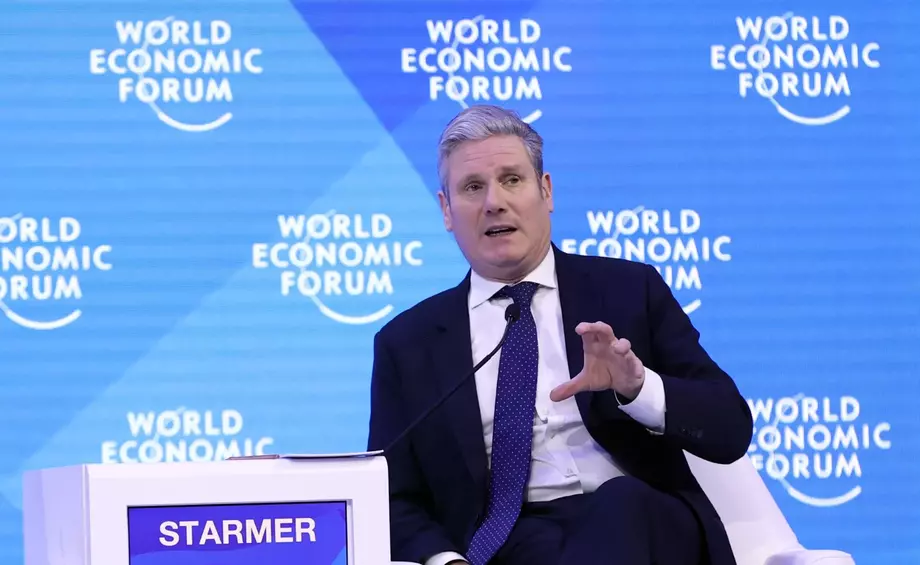
Keir Starmer sucking up to the rich and powerful at World Economic Forum, Davos.
With the Government on the rack amidst the austerity-fuelled school building crisis, yesterday’s shadow cabinet reshuffle gave Keir Starmer one final chance to live up to his leadership pledges: to unite the Labour Party and offer the country a transformative programme, one which is more urgent and popular than ever in the Tories’ broken Britain. Sadly, what we got, as commentators have concluded, was yet another shift to the Right.
Nowhere was this clearer than in moves against the soft left, particularly Lisa Nandy, who was demoted for the second time, now to shadow an international development ministry which doesn’t even exist. Preet Gill, in turn, left the shadow cabinet, while Nick Thomas-Symonds faced another demotion, to Shadow Minister without Portfolio. Rosena Allin-Khan left the Shadow Cabinet after Starmer told her he did “not see a space for a mental health portfolio in a Labour Cabinet”, despite having herself sat in the shadow cabinet in such a role
…
Meanwhile, the scrapping of the dedicated Shadow Development brief means that Starmer’s pledge to re-establish the department abolished by Boris Johnson will be added to his long list of broken promises. Nor will there be a dedicated employment rights role, the first time in nearly half a decade that Labour’s Shadow Cabinet has not contained such a role; big business has a dedicated secretary of state, but workers don’t. The loss of these roles signals danger for progressive politics.
Of course, it goes without saying that there were no promotions for members of the Socialist Campaign Group, who are uniformly excluded from the Shadow Cabinet. How far we are from the days when Starmer promised to build on Jeremy Corbyn’s anti-austerity agenda and ‘end factionalism’.
Sir Jeremy was Principal Private Secretary to Tony Blair from June 1999 to July 2003 and would thus have been party to every step of the scheming and untruths about the invasion and surely the plotting between Bush and Blair to attack, during their April 2002, three day meeting at the Bush ranch in Crawford, Texas.
Subsequently Heywood stepped into the same position when Gordon Brown became Prime Minister after Blair’s resignation, a post he held between January 2008 and May 2010, so would also have been party to the plans for, and structure of, the Chilcot Inquiry into the war, which was set up by Brown. Thus those involved in the bloodbath and invasion, convened the Inquiry into the illegality.
Gordon Brown, as Blair’s Chancellor of the Exchequer, wrote the cheques for the years of illegal UK bombings of Iraq and for the UK’s participation in “Operation Iraqi Liberation” (OIL.) He also wrote the cheques for Britain’s part in the disastrous invasion of Afghanistan.
According to Ministry of Defence figures, the total cost of UK military operation in Iraq, 2003-2009, was £8.4 Billion – ongoing since they are back bombing, with Special Forces in Northern Iraq – and it would be unsurprising if also elsewhere in the country, given Britain’s duplicitous track record. To 2013 the cost of UK operations in Afghanistan reached £37 Billion, also ongoing.
David Cameron, who voted to attack Iraq, told a news programme at the time: “You’ve got to do what you think right, even if it’s unpopular …”, near mirroring Blair’s “I know I’m right” of the same time. Cameron admires Blair, regarding him as a “mentor.” At every level of government past and present, there are vested interests in the truth on Iraq never coming out.