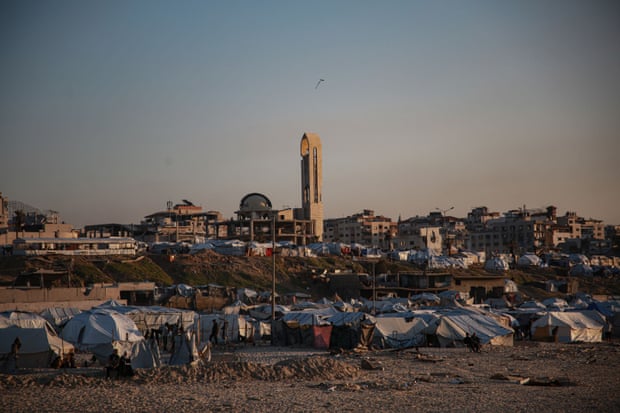
The beach in the Gaza Strip has become a makeshift camp for displaced people whose homes were destroyed. Photograph: Omar Ashtawy/APAImages/Shutterstock
White House says seven-strong board, chaired by Trump, will steer Gaza through next phase of reconstruction
Donald Trump has appointed the US secretary of state, Marco Rubio, and former British prime minister Tony Blair to a newly created Gaza “board of peace”, a body he claims will steer the next phase of reconstruction and governance in the war-ravaged territory.
The White House said the seven-strong “founding executive board” will also include Trump’s special envoy, the property developer Steve Witkoff; the World Bank president, Ajay Banga; and the president’s son-in-law and long-time adviser Jared Kushner. Trump himself will serve as chair, with further appointments expected in the coming weeks.
“Each executive board member will oversee a defined portfolio critical to Gaza’s stabilization and long-term success, including, but not limited to, governance capacity-building, regional relations, reconstruction, investment attraction, large-scale funding, and capital mobilization,” a White House statement said.
…
Blair’s inclusion is likely to prove contentious in the region. The former Labour leader remains a divisive figure in the Middle East for his role in the US-led invasion of Iraq in 2003.
Soon after leaving office in 2007 he became special representative of the Quartet, a group composed of the US, EU, Russia and the UN seeking peace between Israel and the Palestinians. But he became seen as too close to the Israelis and stepped down in 2015.
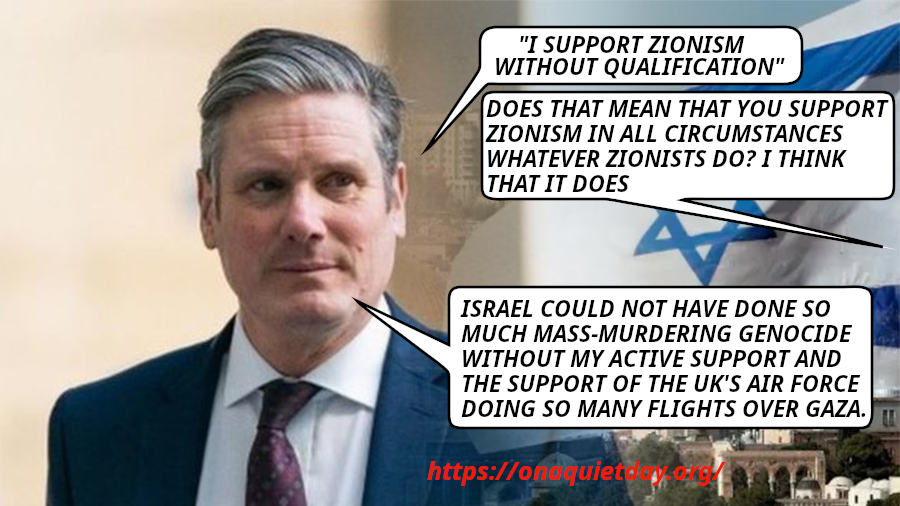
Genocide denier and Current UK Prime Minister Keir Starmer is quoted that he supports Zionism without qualification. He also confirms that UK air force support has been essential in Israel’s mass-murdering genocide. Includes URLs https://www.declassifieduk.org/keir-starmers-100-spy-flights-over-gaza-in-support-of-israel/ and https://youtu.be/O74hZCKKdpAKeir Starmer objects to criticism of the IDF. He asks how could anyone object to them starving people to death, forced marches like the Nazis did, bombing Gaza’s hospitals and universities, mass-murdering journalists, healthworkers and starving people queuing for food, killing and raping prisoners and murdering children. He calls for people to stop obstructing his genocide for Israel.Orcas discuss Genocide-supporting and complicit Zionists. Donald Trump, Keith Starmer, David Lammy, Rachel Reeves, Angela Rayner and Wes Streeting are acknowledged as evil genocide-complicit and supporting cnuts.
Tony Blair hosted Hugo Chávez at Downing Street months before the coup. (Photo: Gerry Penny / Alamy)
Exclusive: UK embassy feared backlash from “wealthier residents of Caracas” if it helped save Venezuelan president’s life in 2002
Britain’s embassy in Caracas rebuffed appeals to help Venezuela’s democratically elected president during a right-wing coup, newly unearthed documents reveal.
The coup that ousted Hugo Chávez on 11 April 2002 was orchestrated by dissident military officers and opposition figures, with support from Washington.
After 47 hours, however, Chávez had been reinstated as Venezuela’s president following massive popular mobilisations against his removal.
Newly released documents reveal how, during those two tumultuous days, Chávez appealed to the British embassy in Caracas to help save his life.
…
[T]he British embassy in Caracas was reluctant to help him during the coup.
UK officials worried about the possible reaction from Venezuela’s upper classes, who had overwhelmingly supported the coup against Chávez.
…
After appealing for Britain’s help, Chávez was arrested and taken to a military base during the early hours of 12 April.
“As Chavez is now under arrest”, the Foreign Office noted later that day, “the question” of helping him travel safely to the airport “no longer arises”.
The Revolution Will Not Be Televised: Venezuela 2002
The Revolution Will Not Be Televised  is a 2003 film focusing on events in Venezuela leading up to and during the April 2002 coup d'état attempt, which saw President Hugo Chávez removed from office for two days.

While the makers of this film are scrupulous in avoiding attributing the origins of the coup against the popular and progressive, democratically elected, Venezuelan President Hugo Chávez and his constitutional government, this contemporary film footage makes it abundantly clear that the imperialist government  and state agencies of the United States of America are behind this illegal and anti-democratic coup.

It is particularly important and timely to relive and remember this anti Chávez coup, at the present moment in early 2019, as the US is again attempting to remove the democratically elected president, and close comrade of Chavez, Nicholas Maduro.

There is no crime that capital will not commit to secure a high profit margin, and Venezuelan proven oil reserves are the largest on Earth. Larger even than Saidi Arabia's, and they are in Uncle Sam's back Yard.

The arrogant Monroe doctrine, that the American hemisphere 'belongs' to the US imperialists is the living creed of the billionaire parasites who grow fat by ensuring the poverty of the masses of the Latin American people.

They are aided and abetted by local elites throughout Latin America and accross the world. This documentary footage is a primary source that reveals the truth of their shady and conspiratorial dealings to cheat humanity of our rights - a share of the wealth that our labour generates, and the beautiful and harmonious society it could bring to the benefit of all.

The Venezuelan people deliver a mighty popular lesson that is recorded live in this film: that the people when organised and united hold real power, but require courageous and revolutionary leadership. This film is a tribute to the Venezuelan masses, and to Hugo Chávez! It is compelling viewing. Watch it and share. Be inspired to fight for a better world.

"The people, united, will never be defeated!"

With particular emphasis on the role played by Venezuela's private media, the film examines several key incidents: the protest march and subsequent violence that provided the impetus for Chávez's ousting; the opposition's formation of an interim government headed by business leader Pedro Carmona; and the Carmona administration's collapse, which paved the way for Chávez's return.
This work by Middle East Monitor is licensed under a Creative Commons Attribution-NonCommercial-ShareAlike 4.0 International License.
President Donald Trump gives opening remarks during a press conference with Israeli Prime Minister Benjamin Netanyahu in the State Dining Room of the White House in Washington, DC on September 29, 2025. [Stringer – Anadolu Agency]
US President Donald Trump said on Sunday that he was unsure whether former British Prime Minister Tony Blair would join the new “Peace Council” planned to oversee the governance of the Gaza Strip, amid ongoing criticism of Blair’s role in the Iraq war.
“I’ve always liked Tony, but I want to find out that he’s an acceptable choice to everybody,” Trump told reporters, without naming specific leaders who might have a say in Blair’s appointment.
The Gaza peace plan, announced by the White House last month, listed Blair as a proposed member of the new council.
Trump made his remarks to journalists aboard Air Force One during his flight to Israel, where he is scheduled to deliver a speech to the Knesset on Monday.
He also plans to attend a world leaders’ summit in Egypt aimed at formally ending the war in Gaza, as the ceasefire enters its fourth day.
Orcas discuss Genocide-supporting and complicit Zionists. Donald Trump, Keith Starmer, David Lammy, Rachel Reeves, Angela Rayner and Wes Streeting are acknowledged as evil genocide-complicit and supporting cnuts.Keir Starmer objects to criticism of the IDF. He asks how could anyone object to them starving people to death, forced marches like the Nazis did, bombing Gaza’s hospitals and universities, mass-murdering journalists, healthworkers and starving people queuing for food, killing and raping prisoners and murdering children. He calls for people to stop obstructing his genocide for Israel.Genocide denier and Current UK Prime Minister Keir Starmer is quoted that he supports Zionism without qualification. He also confirms that UK air force support has been essential in Israel’s mass-murdering genocide. Includes URLs https://www.declassifieduk.org/keir-starmers-100-spy-flights-over-gaza-in-support-of-israel/ and https://youtu.be/O74hZCKKdpA
[Insane Fascists] Benjamin Netanyahu and Donald Trump agreed to a 20-point plan that involves a temporary Palestinian governing body for Gaza, overseen by a board including Tony Blair. (AP/Reuters)
…
Foreign billionaires could be installed on a board that governs all aspects of life in Gaza while Palestinians have little input, according to a draft plan seen by the ABC.
A leaked document has revealed a possible structure for the so-called “Gaza International Transitional Authority” (GITA) which could take temporary control of the strip once the war ends.
The proposal, seen by the ABC, was drafted by the Tony Blair Institute for Global Change, a thinktank led by the former British prime minister.
The working document has since been updated and has informed, at least in part, US President Donald Trump’s 20-point plan for the occupied Gaza Strip. The document details what might be in store for the people of Gaza and who could be controlling their lives in the near future.
Under the plan, GITA would have a hierarchical structure led by an international board that “exercises supreme strategic and political authority” and a chairman who leads the entire operation as “senior political executive”.
…
At least one Palestinian representative would be on the board provided they were “qualified”.
The document did not say what qualifications were needed but did say the Palestinian representative could “potentially” come from the business or security sector.
…
Plan ‘will fail’, critics say
Critics who have seen the draft plan say it does not put Palestinian people first.
John Na’em Snobar, a former diplomat in Egypt and Pakistan, and a Palestinian Christian, said “the people who are sitting around the table are motivated by capital interests”.
Mr Snobar said trade and investment in Gaza was a positive thing, but questioned: “Who is looking out for Palestinian interests in that scenario?”
He also criticised Trump’s 20-point plan saying: “No Palestinian leader I am aware of was consulted … in that sense the great lesson of the Abraham Accords was not learnt. You cannot have peace with Palestinians without Palestinians at the table.”
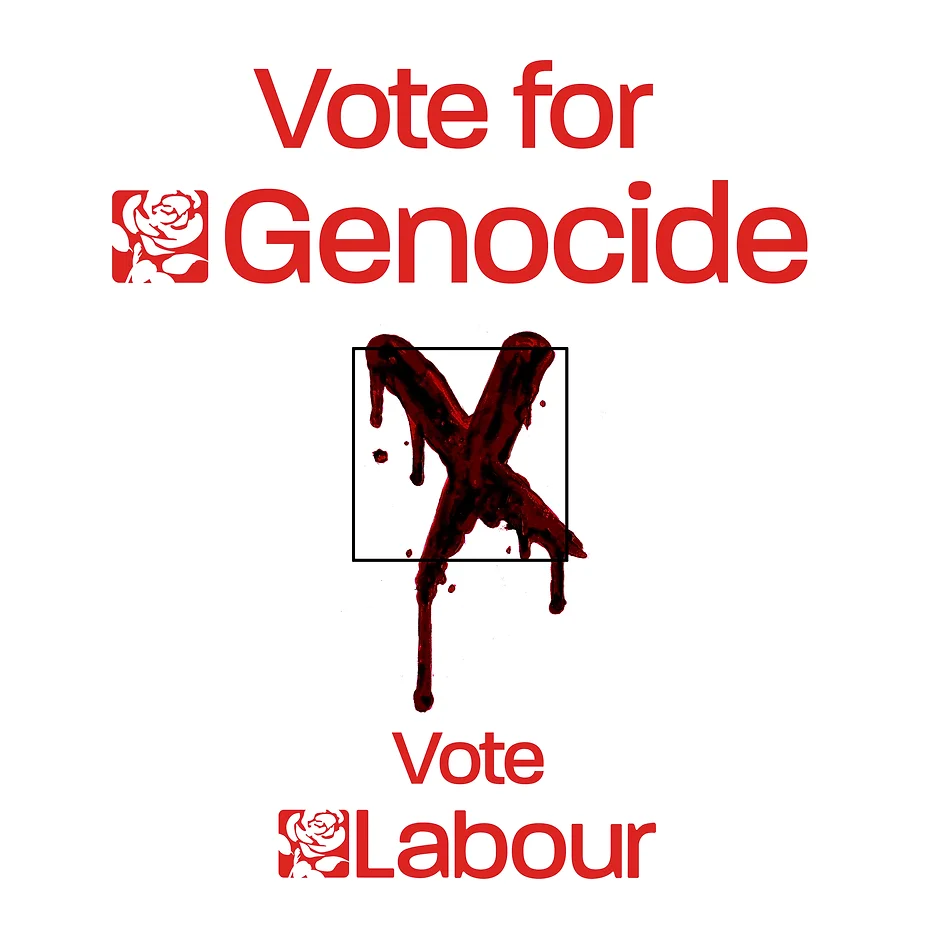
Keir Starmer objects to criticism of the IDF. He asks how could anyone object to them starving people to death, forced marches like the Nazis did, bombing Gaza’s hospitals and universities, mass-murdering journalists, healthworkers and starving people queuing for food, killing and raping prisoners and murdering children. He calls for people to stop obstructing his genocide for Israel.Current UK Prime Minister Keir Starmer is quoted that he supports Zionism without qualification. He also confirms that his active support and that of UK’s air force has been essential in Israel’s mass-murdering genocide.Vote Labour for Genocide.