Climate groups taking UK Government to court over Rosebank oil field approval

Spread the love

https://leftfootforward.org/2023/12/climate-groups-taking-uk-government-to-court-over-rosebank-oil-field-approval/

The UK government is facing two separate legal challenges over its approval of the massive Rosebank oil project in the North Sea.

Both Greenpeace UK and climate group Uplift argue the approval of the oil field breaks the Government’s net zero pledges and fails to acknowledge the project’s environmental harm and emissions impact.

Uplift claims the Energy Secretary failed to prove how the oil field was consistent with the UK’s legally binding net zero emissions target and argues, the government did not provide a good enough assessment of the environmental impact of Rosebank on marine life.

In Greenpeace UK’s application, it argues the Environmental Impact Assessment used to approve the oil field did not consider downstream emissions, and is therefore invalid. The campaign group also argues that there is no evidence Scottish Ministers were consulted on the impacts of Rosebank, which it claims breaches Conservation of Offshore Marine Habitats and Species Regulations.

Greenpeace also argue oil contamination could affect whales and wild birds, while the drilling and cable laying under the sea could destroy habitats for species that live on the seabed.

Rishi Sunak gave the go-ahead for the controversial undeveloped oil field in September, set to be the UK’s largest untapped oil field containing an estimated 500 million barrels of oil. With Norwegian owner Equinor set to receive £3 billion in tax breaks.

https://leftfootforward.org/2023/12/climate-groups-taking-uk-government-to-court-over-rosebank-oil-field-approval/

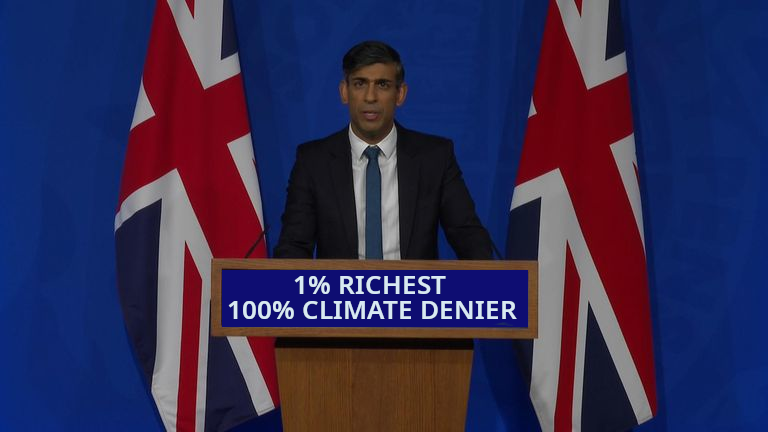
Image of UK Prime Minister Rishi Sunak reads 1% RICHEST 100% CLIMATE DENIER
Continue ReadingClimate groups taking UK Government to court over Rosebank oil field approval

Keeping 1.5 alive, phasing out fossil fuels and tackling climate inequality must be priorities for COP28 climate talks

Spread the love

As the COP28 climate talks begin today in Dubai, the Green Party has set out three key demands. They are to ‘keep 1.5 alive’; an agreement on the fair and managed phase-out of all fossil fuels; and measures to address ‘climate inequality.’ Greens are challenging the UK government to lead by example and put into practice policies that will help meet these demands. 

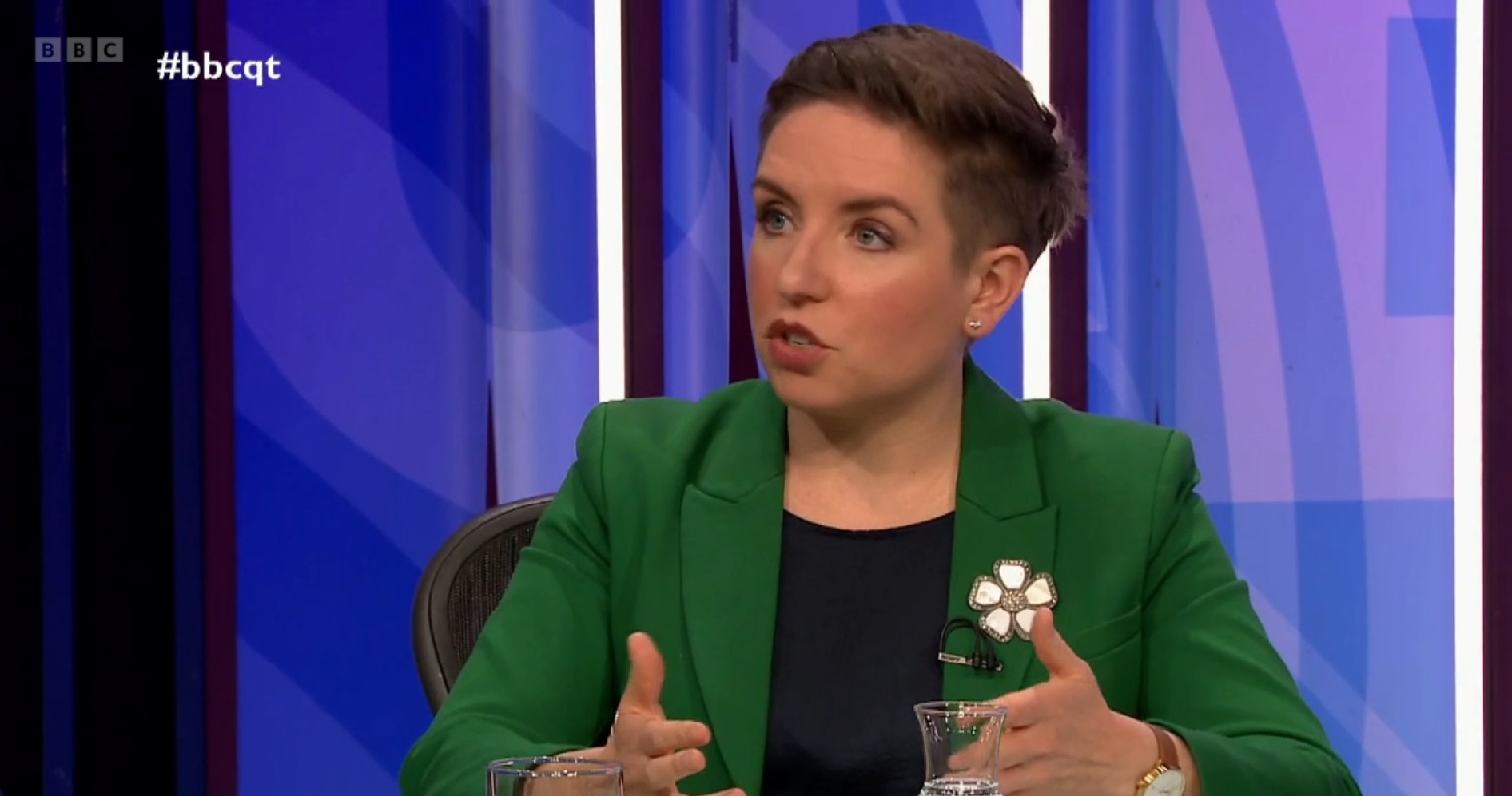
Image of the Green Party's Carla Denyer on BBC Question Time.
Image of the Green Party’s Carla Denyer on BBC Question Time.

Co-leader of the Green Party, Carla Denyer, said:  

“We need to hear a clear unambiguous commitment from the UK government to the 1.5C Paris Agreement target which was signed up to by 196 countries eight years ago at COP21. The government must agree to whatever it takes to get this target back on track. It’s going to require a hugely ambitious strategy, but the massive scaling up of climate action that is now necessary is because of dither and delay by countries like the UK in taking the bold action needed. 

“Another vital outcome of COP28 must be the fair and managed phase-out of all fossil fuels. As one of the rich countries most responsible for the climate crisis, the UK must stand on the side of future generations and those on the front line of climate breakdown and agree to urgently move away from fossil fuels. The UK government must resist pressure from the petrostates and others at COP who wish to continue with business as usual and keep the world hooked on fossil fuels. At home this means leading by example with an immediate end to all new oil and gas licences and a rapid acceleration towards renewable energy. 

“Thirdly, these climate talks must recognise that it is a super-rich elite who are super-heating the planet. The UK government must be willing to challenge the grotesque inequality driving climate breakdown and reform our tax system to make the polluter pay. This means taxing the wealth of the super-rich and introducing a carbon tax on the most polluting corporations and individuals. Such taxes, introduced globally, could generate the funds needed for a generous new Loss and Damage Fund to finance climate action in the poorest countries – those suffering the most from the impacts of climate breakdown but contributing the least to the crisis.” 

Continue ReadingKeeping 1.5 alive, phasing out fossil fuels and tackling climate inequality must be priorities for COP28 climate talks

Slow route to net zero will worsen global climate crisis, IPCC chief warns

Spread the love

https://www.theguardian.com/environment/2023/oct/02/slow-route-to-net-zero-will-worsen-global-climate-crisis-ipcc-chief-warns

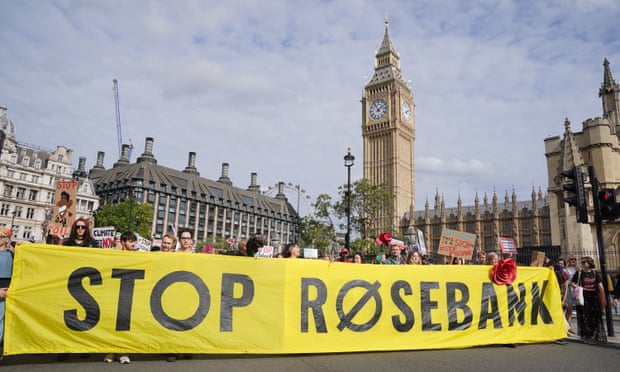
Protesters demonstrate against the British government’s approval of the Rosebank oil field’s development. Photograph: Lucy North/PA

Even if the 2050 goal is still met, postponing action – as the UK has done – will cause more heat and damage

Postponing action and taking a slower route to net zero emissions by 2050 will worsen the climate crisis even if the goal is still reached by that date, the new chair of the Intergovernmental Panel on Climate Change (IPCC) has warned.

Prof Jim Skea also said that approving new oil and gas fields only increased the already large amount of reserves that will have to be kept in the ground if global heating limits are to be reached.

The IPCC is the world’s foremost authority on climate change, under which thousands of the world’s best experts give advice to the 195 nations that founded the body. It does not comment on the climate policies of individual nations, but Skea’s comments on Monday clearly indicate that the recent actions of the UK government has slowed climate action, despite IPCC scientists warning of “a rapidly closing window of opportunity to secure a livable and sustainable future for all”.

Rishi Sunak weakened or abolished a number of green measures recently, including pushing back a ban on the sale of new petrol cars from 2030 to 2035. The UK also approved the exploitation of the large Rosebank oil field near Shetland on Wednesday.

https://www.theguardian.com/environment/2023/oct/02/slow-route-to-net-zero-will-worsen-global-climate-crisis-ipcc-chief-warns

Continue ReadingSlow route to net zero will worsen global climate crisis, IPCC chief warns

Greenpeace says new Energy Secretary Claire Coutinho has a lot of catching up to do

Spread the love
Greenpeace image, sign reads CHOOSE OCEANS, NOT OIL

Commenting on the appointment of Claire Coutinho as the new Energy and Net Zero Secretary, Greenpeace UK’s policy director Dr Doug Parr said:

“We don’t envy the new energy secretary’s job. She’s picked up the baton for the final leg of a relay where her fellow runners have mostly been walking, sometimes backwards. Her department has a huge amount of catching up to do to tackle both the energy and climate challenges in her new job title.

“Fortunately, there are plenty of things that will deliver on both, from removing absurd blockages to cheap renewables to fixing our energy-wasting homes and bringing our power grid into the 21st century.

“In her maiden speech, Claire Coutinho described renewables as ‘one of the most remarkable success stories in the UK today’. Perhaps she could persuade the Prime Minister to build on that success story instead of blocking it. If she can do that, it’ll be good news for bill payers, the climate and the economy. We wish her best of luck with that.”

Continue ReadingGreenpeace says new Energy Secretary Claire Coutinho has a lot of catching up to do

Extinction Rebellion scientists: why we glued ourselves to a government department

Spread the love

Charlie Gardner, University of Kent; Emily Cox, Cardiff University, and Stuart Capstick, Cardiff University

One recent Wednesday, while most scientists around the world were carrying out their research, we stepped away from our day jobs to engage in a more direct form of communication.

Along with more than 20 others from Scientists for Extinction Rebellion and assisted in our efforts by Doctors for Extinction Rebellion, we pasted scientific papers to the UK government’s Department of Business, Energy and Industrial Strategy (BEIS). A group of us glued ourselves to the building, and nine scientists were arrested.

This kind of action may seem extreme for a scientist, but these are no ordinary times. As most members of the UK public now recognise, addressing the climate crisis requires drastic changes across society. In 2019, the UK parliament itself declared a climate emergency – and in an emergency, one must take urgent action.

Seemingly endless academic papers and reports highlight the need for the immediate and rapid decarbonisation of the global economy if we are to avert climate change so serious that it risks the collapse of human civilisation. The International Energy Agency, a respected policy advisory body to countries around the world, warned in 2021 that “if governments are serious about the climate crisis, there can be no new investments in oil, gas and coal, from now – from this year”.

Prime Minister Boris Johnson has stated that “it is time for us to listen to the warnings of the scientists” on the climate emergency. But despite this, the UK government is choosing not to wind down the fossil fuel industry, but instead to expand it.

The government recently published its energy security strategy. However, rather than focusing on home insulation, energy efficiency and onshore wind as most experts suggest, the strategy promotes the expansion of oil and gas production.

Such measures do very little to address the pressing issues of rising fuel bills or heavy imports of Russian oil and coal. And as a self-proclaimed leader in global climate action, the UK’s doubling down on fossil fuels also sends a dangerous message to the rest of the world.

Evidence alone is easily ignored

In a choice between fossil fuels and a liveable planet, the government has chosen oil and gas. For scientists who have dedicated their lives to research, this is hard to take. Many of us do our work in the belief that, if we provide scientific information to decision-makers, they will use it to make wise decisions in the public interest.

Yet the global response to the climate crisis, despite decades of increasingly dire warnings, shows this to be naive. The reason is as simple as it is obvious: governments don’t respond to science on these matters, but to the corporate interests that invest so heavily in political donations and lobbying.

Scientists must face a difficult truth that doesn’t come easily to those of us who are most comfortable working diligently on experiments and journal articles: evidence alone, even if expertly communicated, is very easily ignored by those that do not wish to hear it.

If we are to help bring about the transition away from fossil fuels that the world so urgently needs, we are going to have to become much harder to ignore. This does not mean disregarding the evidence or abandoning our integrity: quite the opposite. We must treat the scientific warnings on the climate crisis with the seriousness that they deserve.

Become hard to ignore

History suggests that one of the most powerful ways to become hard to ignore – and one of the few options available to those who do not have deep pockets or the ear of politicians – may be through nonviolent civil disobedience, the refusal to obey certain laws in order to bring public and media attention to an unjust situation.

From universal suffrage to civil rights for people of colour and action on the Aids pandemic, many of the most progressive social changes of the 20th century were brought about in this way. Many would likely agree that such actions are morally justified in a planetary emergency.

The recent blossoming of environmental civil disobedience movements around the world, led by Extinction Rebellion and the Greta Thunberg-inspired youth strikes, has been hugely influential in changing the global conversation on climate. These movements have been linked to an unprecedented surge of public concern and awareness about the climate crisis.

The scientists arrested on that Wednesday included an expert in energy policy, an air pollution specialist, three ecologists and two psychologists, across all career stages from junior researchers to established professors. Some work on the planetary crisis itself, others on our societal responses to it, but none of us took our actions lightly.

Our understanding of our planetary peril obliges us to take action to sound the alarm, even if it means risking our civil liberties. And we are not alone. On April 6 more than 1,200 scientists in 26 countries participated in a global Scientist Rebellion, which included pasting scientific papers to the UK headquarters of oil giant Shell.

Civil disobedience doesn’t always need a particular target to be effective, because the main objective is to ring the alarm by generating media and wider public attention. Extinction Rebellion protests, for example, has targeted fossil fuel infrastructure, media and finance institutions and airports used by private jets, in addition to the general disruption caused by roadblocks.

But we went to BEIS because, as the government department responsible for climate change, it should be leading the transition away from fossil fuels. Instead, through enabling and promoting new fossil fuel extraction, it is doing the opposite.

Recent acts of law-breaking by scientists may seem radical, but the world’s most senior diplomat disagrees. On the release of the IPCC’s latest report, the UN Secretary General António Guterres said: “Climate activists are sometimes depicted as dangerous radicals. But the truly dangerous radicals are the countries that are increasing the production of fossil fuels.”

He could not have said it more clearly: while we scientists may have been breaking the law, it is the government that’s placing us all in danger.

The Conversation

Charlie Gardner, Associate Senior Lecturer, Durrell Institute for Conservation and Ecology, University of Kent; Emily Cox, Research Associate, Environmental Policy, Cardiff University, and Stuart Capstick, Senior Research Fellow in Psychology, Cardiff University

This article is republished from The Conversation under a Creative Commons license. Read the original article.

Continue ReadingExtinction Rebellion scientists: why we glued ourselves to a government department