As the COP28 climate talks begin today in Dubai, the Green Party has set out three key demands. They are to ‘keep 1.5 alive’; an agreement on the fair and managed phase-out of all fossil fuels; and measures to address ‘climate inequality.’ Greens are challenging the UK government to lead by example and put into practice policies that will help meet these demands.
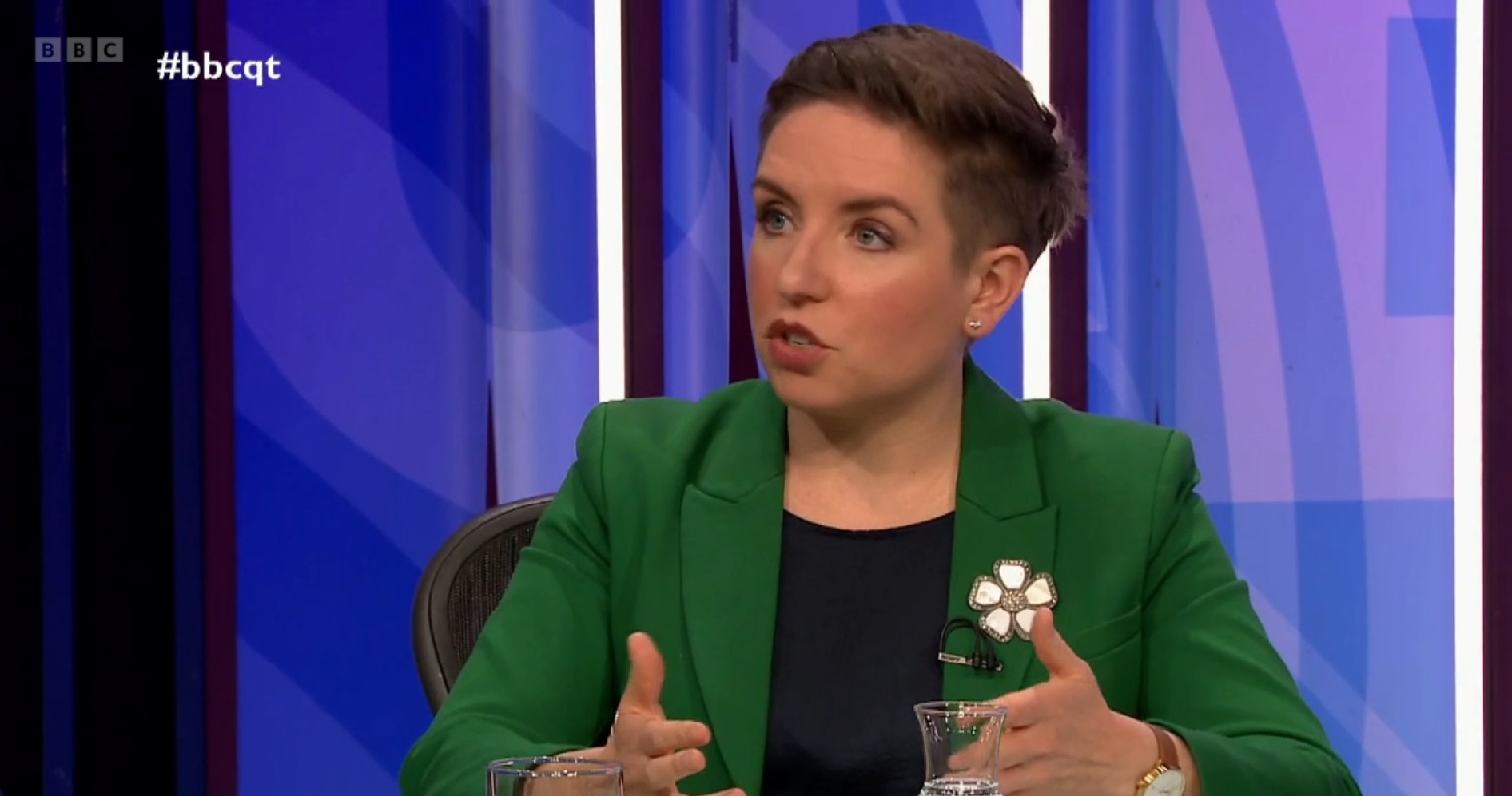
Image of the Green Party’s Carla Denyer on BBC Question Time.
Co-leader of the Green Party, Carla Denyer, said:
“We need to hear a clear unambiguous commitment from the UK government to the 1.5C Paris Agreement target which was signed up to by 196 countries eight years ago at COP21. The government must agree to whatever it takes to get this target back on track. It’s going to require a hugely ambitious strategy, but the massive scaling up of climate action that is now necessary is because of dither and delay by countries like the UK in taking the bold action needed.
“Another vital outcome of COP28 must be the fair and managed phase-out of all fossil fuels. As one of the rich countries most responsible for the climate crisis, the UK must stand on the side of future generations and those on the front line of climate breakdown and agree to urgently move away from fossil fuels. The UK government must resist pressure from the petrostates and others at COP who wish to continue with business as usual and keep the world hooked on fossil fuels. At home this means leading by example with an immediate end to all new oil and gas licences and a rapid acceleration towards renewable energy.
“Thirdly, these climate talks must recognise that it is a super-rich elite who are super-heating the planet. The UK government must be willing to challenge the grotesque inequality driving climate breakdown and reform our tax system to make the polluter pay. This means taxing the wealth of the super-rich and introducing a carbon tax on the most polluting corporations and individuals. Such taxes, introduced globally, could generate the funds needed for a generous new Loss and Damage Fund to finance climate action in the poorest countries – those suffering the most from the impacts of climate breakdown but contributing the least to the crisis.”
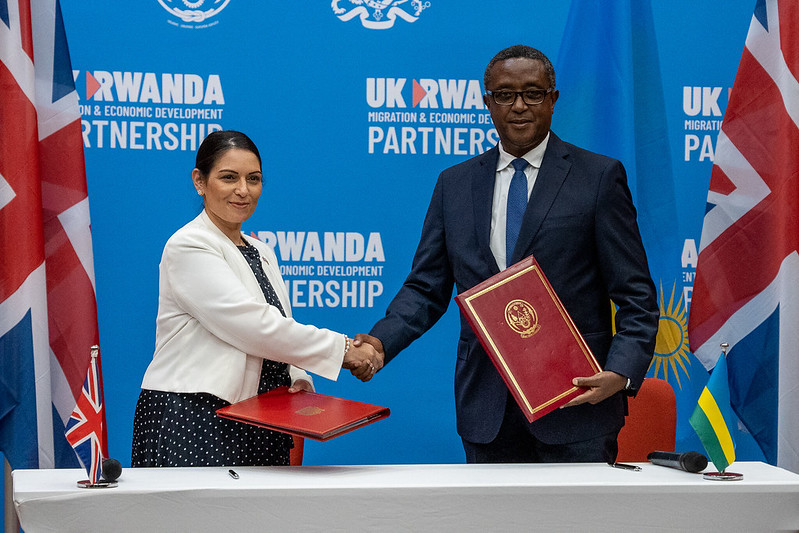
The Rwanda deal was signed when Priti Patel was home secretary. Rwanda visit April 14, 2022. Image: UK Home Office.
Before publishing this article unaltered, I draw your attention to these excerpts:
…
It is important to note that the supreme court’s decision is not a comment on the political viability of the Rwanda plan, or on the concept of offshoring asylum processes generally. The ruling focused only on the legal principle of non-refoulement, and determined that in this respect, Rwanda is not a “safe third country” to send asylum seekers.
…
This ruling is likely to revive discussion about the UK leaving the European convention on human rights (ECHR), which holds the UK to the non-refoulement obligation. Some Conservatives, including the former home secretary Suella Braverman, have argued that leaving the convention would make it easier to pass stronger immigration laws.
But while handing down the supreme court judgment, Lord Reed emphasised that there are obligations towards asylum seekers that go beyond the ECHR. The duty of non-refoulement is part of many other international conventions, and domestic law as well. In other words, exiting the ECHR would not automatically make the Rwanda plan lawful or easier to implement.
…
So it would appear that UK is not going to be sending refugees to Rwanda despite Rishi Sunak and Conservative claims that it will.
Supreme court rules Rwanda plan unlawful: a legal expert explains the judgment, and what happens next
The UK supreme court has unanimously ruled that the government’s plan to send asylum seekers to Rwanda is unlawful.
Upholding an earlier decision by the court of appeal, the supreme court found that asylum seekers sent to Rwanda may be at risk of refoulement – being sent back to a country where they may be persecuted, tortured or killed.
The courts cited extensive evidence from the UN refugee agency (UNHCR) that Rwanda does not respect the principle of non-refoulement – a legal obligation. The UNHCR’s evidence questioned the ability of Rwandan authorities to fairly assess asylum claims. It also raised concerns about human rights violations by Rwandan authorities, including not respecting non-refoulement with other asylum seekers.
It is important to note that the supreme court’s decision is not a comment on the political viability of the Rwanda plan, or on the concept of offshoring asylum processes generally. The ruling focused only on the legal principle of non-refoulement, and determined that in this respect, Rwanda is not a “safe third country” to send asylum seekers.
The ruling is another blow to the government’s promise to “stop the boats”. And since the Rwanda plan is at the heart of its new Illegal Migration Act, the government will need to reconsider its asylum policies. This is further complicated by Conservative party infighting and the firing of home secretary Suella Braverman, just two days before the ruling.
How did we get here?
For years, the UK government has been seeking to reduce small boat arrivals to the UK. In April 2022, the UK and Rwanda signed an agreement making it possible for the UK to deport some people seeking asylum in Britain to Rwanda, without their cases being heard in the UK. Instead, they would have their cases decided by Rwandan authorities, to be granted (or rejected) asylum in Rwanda.
While the Rwanda plan specifically was found to be unlawful, the government could, in theory, replicate this in other countries so long as they are considered “safe” for asylum seekers.
The government has not yet sent anyone to Rwanda. The first flight was prevented from taking off by the European court of human rights in June 2022, which said that British courts needed to consider all human rights issues before starting deportations.
A UK high court then decided in December 2022 that the Rwanda plan was lawful.
Catch up on our other coverage of the Rwanda plan:
Ten asylum seekers from Syria, Iraq, Iran, Vietnam, Sudan and Albania challenged the high court ruling, with the support of the charity Asylum Aid. Their claim was about whether Rwanda meets the legal threshold for being a safe country for asylum seekers.
The court of appeal said it was not and that asylum seekers risked being sent back to their home countries (where they could face persecution), when in fact they may have a good claim for asylum.
The government has since passed the Illegal Migration Act. The law now states that all asylum seekers arriving irregularly (for example, in small boats) must be removed to a safe third country. But now that the Rwanda deal has been ruled unlawful, there are no other countries that have said they would take asylum seekers from the UK.
What happens next?
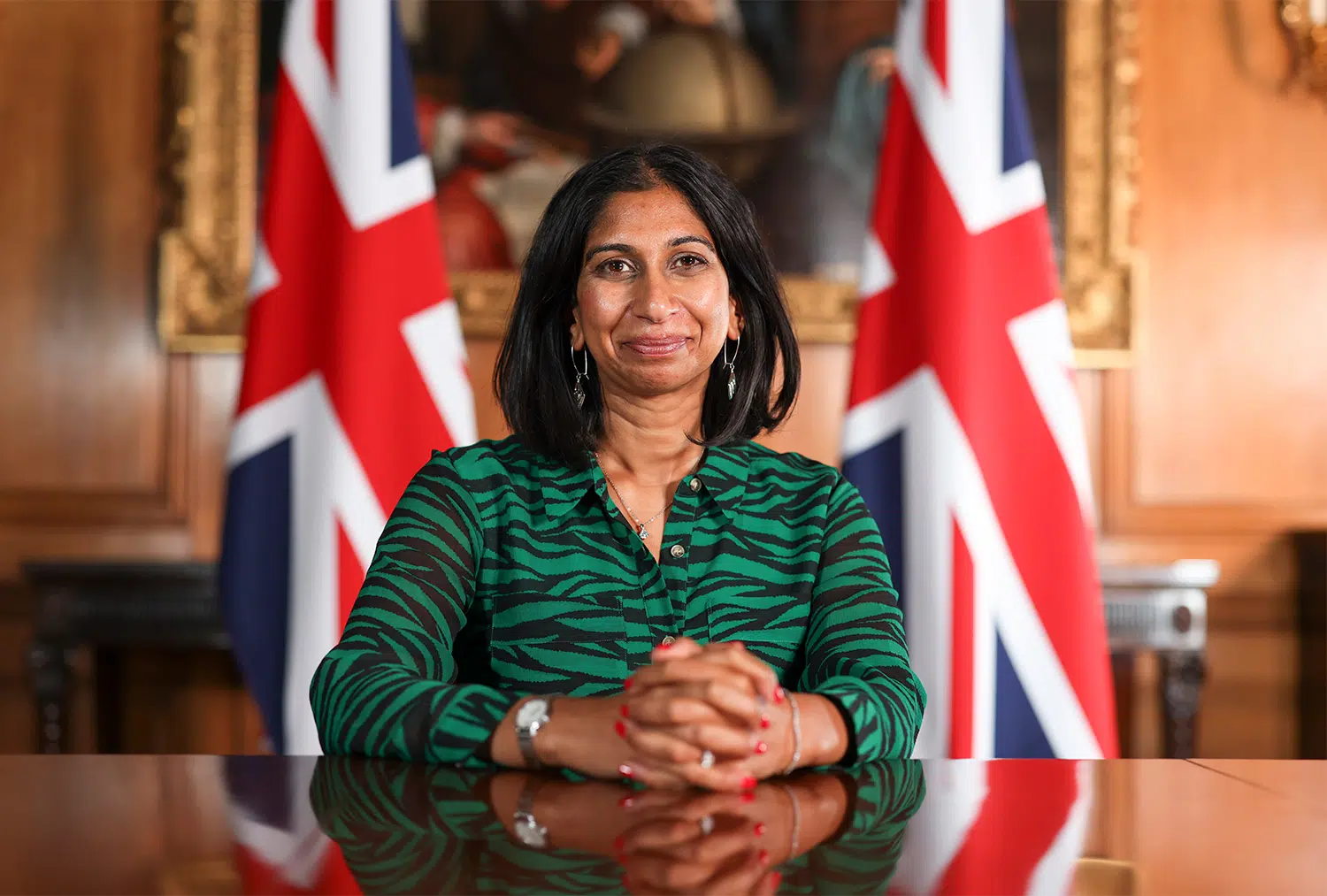
Former Home Secretary Suella ‘Sue-Ellen’ Braverman continued with the Rwanda policy.
It is clear that the government’s asylum policies will need rethinking. Should another country now be designated as a safe country and different arrangements put in place, these will probably be subject to further legal challenges, including in the European court of human rights and in British courts.
This ruling is likely to revive discussion about the UK leaving the European convention on human rights (ECHR), which holds the UK to the non-refoulement obligation. Some Conservatives, including the former home secretary Suella Braverman, have argued that leaving the convention would make it easier to pass stronger immigration laws.
But while handing down the supreme court judgment, Lord Reed emphasised that there are obligations towards asylum seekers that go beyond the ECHR. The duty of non-refoulement is part of many other international conventions, and domestic law as well. In other words, exiting the ECHR would not automatically make the Rwanda plan lawful or easier to implement.
The prime minister, Rishi Sunak, has said that he is working on a new treaty with Rwanda and is prepared to change domestic laws to “do whatever it takes to stop the boats”.
The UK is not the only country to attempt to off-shore asylum processing. Germany and Italy have recently been considering finding new safe third countries to accept asylum seekers as well.
But ensuring these measures comply with human rights obligations is complicated. International law requires states to provide sanctuary to those fleeing persecution or risk to their lives. As this ruling shows, the UK is not going to find an easy way out of these obligations.
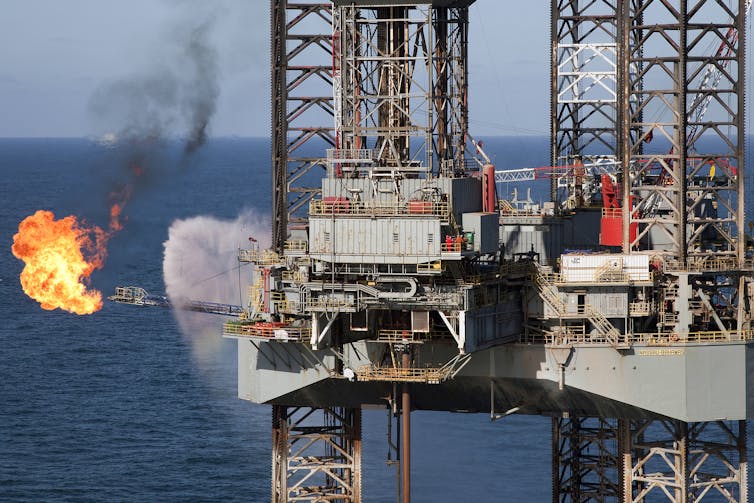
New areas for oil and gas development on the UK’s North Sea continental shelf are to be made available through annual licensing rounds subject to net zero tests. These proposals by the UK government, outlined in the 2023 king’s speech to parliament, fly in the face of recommendations by the Climate Change Committee – the government’s own independent advisers.
The move should not be summarily dismissed as “political posturing” ahead of a general election, however. It may cause significant damage, not least because it distracts from critical questions surrounding how the UK will transition to low carbon energy.
Licences, under the 1998 Petroleum Act, are how the UK government grants companies exclusive rights “to search and bore for, and get, petroleum”. Companies are invited to bid for access to areas on the UK continental shelf which are pre-selected by the regulator (in consultation with industry).
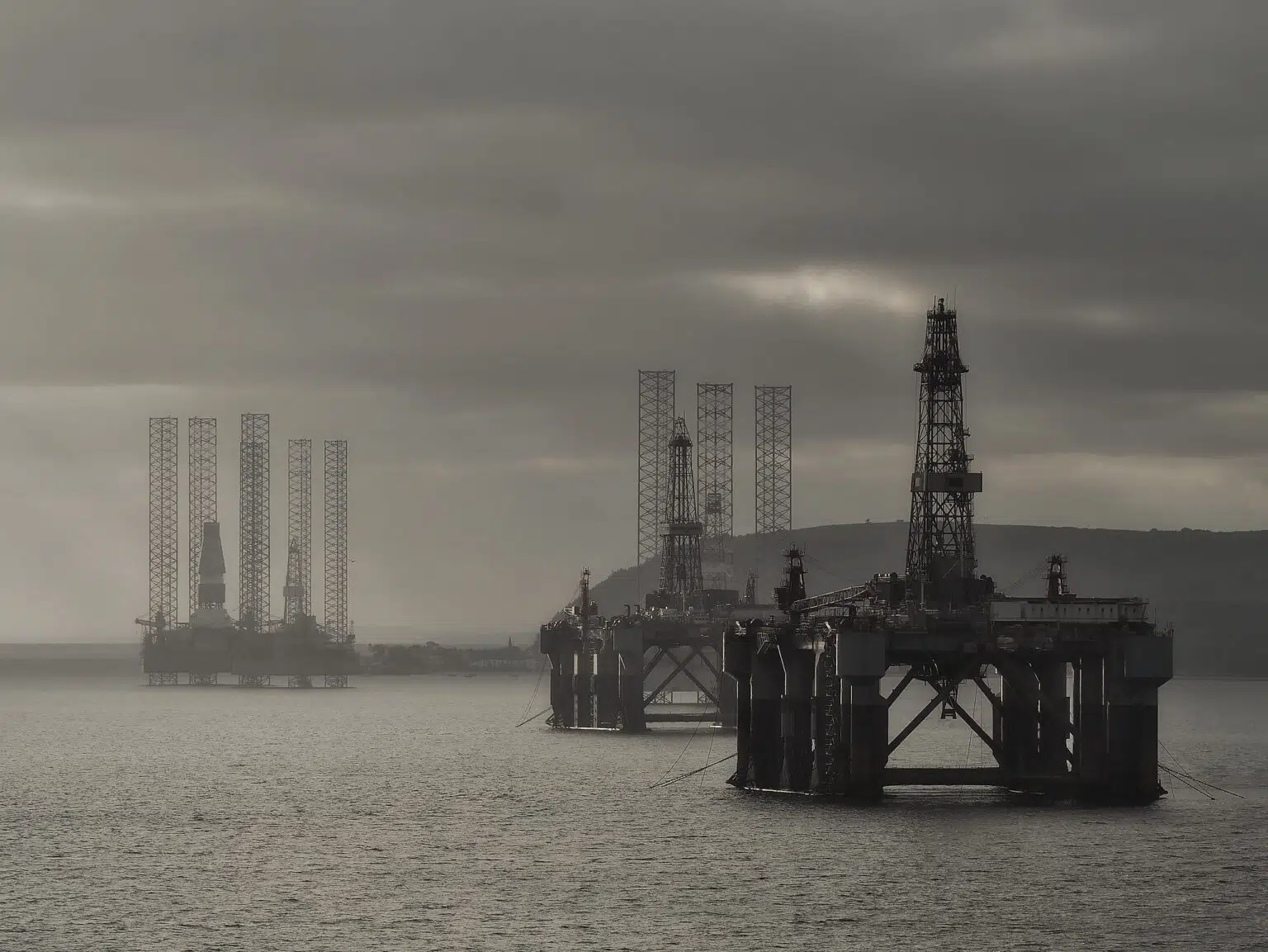
The government plans to introduce a bill aimed at granting new oil and gas drilling licences in the North Sea. Henk Honing/Shutterstock
Wrong answer, wrong question
The licensing system in place has arguably done the job of allocating access to the UK’s oil and gas. What’s questionable is whether, considering the climate emergency, annual licensing rounds will revive interest in what has long been a declining basin.
Handing out licences on its own is insufficient to attract investment. There is growing recognition among financial analysts of the risks of stranded assets in oil and gas. Shell’s withdrawal from the Cambo oil field northwest of Shetland in 2021 showed licence holders are willing to withhold their final investment decision if deemed economic or politically expedient.
The government’s focus on new licences is a red herring, as the bulk of remaining resources are in areas that are already licensed. It will be regulatory approval of field development plans, via a process known as consents, that will allow these existing licences to actually start producing oil or gas.
The recent decision to approve Rosebank (an oil field first licensed in 2001) is a case in point.
Annual licensing rounds will not ensure the UK’s energy security either. Recent licensing rounds have yielded relatively small volumes of gas that do not substantially add to UK reserves. Any oil and gas developed as a consequence of new licences is unlikely to come to market quickly and will be sold at international market prices. Producing oil and gas domestically has not insulated the UK from high prices.
The energy secretary, Claire Coutinho, has acknowledged that UK production “wouldn’t necessarily bring energy bills down”. The Skidmore Review of the UK’s net zero plans and the Climate Change Committee have made clear that the most effective method of helping households afford energy is to “cut fossil fuel consumption … improving energy efficiency, shifting to a renewables-based power system and electrifying end uses in transport, industry and heating”.
Offshore workers need training and support to transition to green jobs. Kichigin/Shutterstock
The government’s claim that two new “tests” will ensure the compatibility of new licences with the government’s net zero goal, too, does not bear scrutiny.
The first, whether oil and gas imports are projected to be larger than domestic production, is a very weak test as it captures the UK’s default position and will lock in dependence on fossil fuels rather than accelerate the transition.
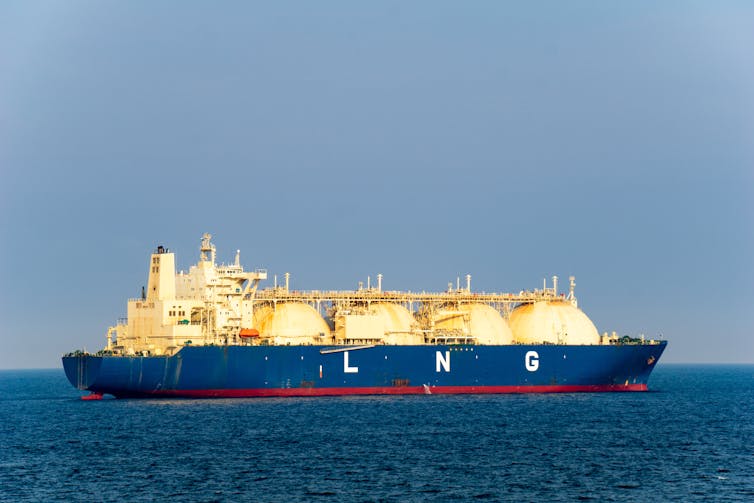
The second, “that the carbon emissions associated with the production of UK gas [must be] lower than the equivalent emissions from imported liquefied natural gas (LNG)”, ignores the emissions associated with burning gas (known as scope 3 under the international accounting protocol for greenhouse gases).
These scope 3 emissions account for 65%-85% of the total emissions and are often omitted from statements about the lower carbon content of UK gas. Instead of comparing the carbon footprint of UK gas with imported LNG, pipeline gas from Norway would be a more appropriate (and lower-carbon) comparison.
In any case, the UK oil and gas industry’s targets for decarbonisation set out in the North Sea transition deal signed in 2021 have been criticised by the Climate Change Committee as insufficiently ambitious.
The government plan proposes the carbon emissions of producing UK gas be compared with those of imported LNG. The Mariner 4291/Shutterstock
The prominence of oil and gas licensing in the government’s legislative plans is striking. Fossil fuel licensing is a potent political symbol, and not only for campaigners who have worked for years to get licensing onto the agenda. Sunak and Starmer are now harnessing that symbolism for political ends.
A fixation on new licensing, however, is a distraction. It offers comfort in the possibility of conserving oil and gas production through developing new fields, rather than grasping the challenge of a rapid transition.
It leaves untouched the pressing issue of how to phase down oil and gas production from existing licences in a just and equitable way. It deflects from the enormous challenge of decommissioning offshore infrastructures, and the questions that need to be asked about what the North Sea is for and how it can sustain our collective future.
Don’t have time to read about climate change as much as you’d like?
The UK government is in breach of international law over failing to tackle extreme levels of poverty and destitution in the country, according to a scathing assessment made by the UN’s special rapporteur on extreme poverty and human rights.
It comes after the Joseph Rowntree Foundation recently released a report showing that almost 4 million people experienced destitution in 2022, including more than a million children.
Government data recently revealed that 14.4 million people lived in relative poverty in 2021-22 – a million more than the previous year.
With a cost of living crisis and soaring food and fuel prices as well as increasing housing costs, Olivier De Schutter, the UN’s special rapporteur on extreme poverty and human rights, slammed the UK’s woefully inadequate welfare system, citing research showing universal credit payments of £85 a week for single adults over 25 were “grossly insufficient” and described the UK’s main welfare system as “a leaking bucket”.
Domestic energy prices more than doubled during 2022 compared with the year before. This meant that the number of UK households in fuel poverty who could not afford to heat their homes to a safe level rose from 4.5 million to 7.3 million.
The UK government attempted to alleviate the impact of rocketing bills with a package of support measures. This included capping the unit cost of electricity and gas, a £400 rebate to all households using mains gas for heating and £200 for those using alternative fuels, and a further £650 “cost of living payment” to claimants of means-tested benefits.
Many of these schemes ended in spring 2023. And with wholesale gas costs and the government’s energy price cap having come down somewhat, you could be forgiven for thinking that the worst of the energy crisis has passed.
But that’s not the case for many billpayers – in fact, this winter is likely to be worse than the last for many households.
The energy price cap, introduced in 2019 by market regulator Ofgem, limits how much people pay for each unit of gas and electricity. The latest price cap, set on October 1 2023, means that a typical household will pay £1,834 a year for energy – less than £2,000 for the first time in 18 months.
This might sound like good news, but it’s still a substantial increase on the pre-crisis cap. In August 2021, the most a typical household could expect to pay in a year for energy was £1,277.
Although the unit prices of electricity and gas have fallen, there has been a steep increase in standing charges. These are a levy on all energy bills which cover the costs associated with supplying energy to homes.
Standing charges have gone up from around £186 a year pre-crisis to just over £300 now – effectively adding £110 to bills.
Standing charges pay for the upkeep of the UK’s energy supply network. KingTa/Shutterstock
Standing charges are regressive because they are the same for everyone, regardless of how much energy you consume. Poorer households often use much less energy than wealthier ones, so standing charges make up a larger proportion of their energy costs.
The £400 energy bill rebate paid to all households last winter has now ended. Meanwhile, cost of living payments to claimants of means-tested benefits have increased from £650 to £900 a year. This will be helpful to those who qualify, but one third of households eligible for means-tested welfare payments do not claim them due to stigma, lack of awareness or bad experiences with the assessment process, and so will receive no assistance.
Many households who do receive these cost of living payments will spend it on other expenses, such as food, rather than heating their home. This reflects the fact that energy is often seen by struggling households as something that can be rationed.
If you’re in a household that does not qualify for the cost of living payment then the savings of around £150 that resulted from the lowering of the cap will soon be more than cancelled out by the lack of a rebate.
Cold homes can kill
Despite the financial support offered last winter, average levels of energy debt for people contacting Citizens Advice in England and Wales have risen sharply over the last year, from around £1,400 per household on average in March 2022 to £1,711 in July 2023. One-third of UK energy customers are now in arrears.
So although energy bills have fallen slightly, many households are less resilient to financial shocks than they were in early 2022. Volatile energy prices are predicted to last until the end of the decade.
Research last winter found that households in fuel poverty were underheating their homes, causing damp and mould that can create serious health problems and exacerbating anguish and stress. The health risks of a cold home increase with repeated exposure.
As temperatures begin to fall again, a range of measures are urgently needed to prevent a crisis worse than that of last winter.
What can be done to help?
Since energy prices are expected to remain high for years, long-term solutions are vital. There must be increased investment in efforts to insulate the UK’s leaky housing stock. But with winter just weeks away, what can the government do right now?
To start, it could offer greater energy bill rebates. Given the scale of the fuel poverty problem, eligibility for these rebates must be wide enough for anyone on a below average income to receive help.
Alternatively, the government could make the rebates universal again, and potentially recoup the costs by increasing taxes on the most wealthy or energy company profits. At the very least, unclaimed energy bill support from last winter should be used to support those likely to struggle in the coming winter, rather than being returned to the treasury.
Cut funding for government-backed advice services could also be restored. And there are reforms to the retail energy market that could be implemented fairly quickly, such as bringing standing charges in line with levels of usage.
More fundamentally, there are a number of proposals that would be fairer than the current system and could be implemented together for maximum impact. These include a “green power pool”, which would ensure that the cheap power generated by renewables such as wind and solar benefits those most in need first and foremost, social tariffs (discounted energy bills for low-income households), or a national energy guarantee that would secure access to enough free energy to meet everyone’s basic needs.
The government’s forthcoming autumn statement must not sidestep these issues if people in fuel poverty are to stay safe and warm this winter.
Don’t have time to read about climate change as much as you’d like?