Tag: UK

  • Climate change could lead to food-related civil unrest in UK within 50 years, say experts

    Spread the love
    Baby-Spider/Shutterstock

    Sarah Bridle, University of York and Aled Jones, Anglia Ruskin University

    The emptying of supermarket shelves during the COVID pandemic demonstrated the chaos that disruption to the UK’s food supply can provoke. Could this type of disruption have a different cause in the future? And what might the impact on society be?

    These are the questions we sought to answer in our new study, which involved surveying 58 leading UK food experts spanning academia, policy, charitable organisations and business.

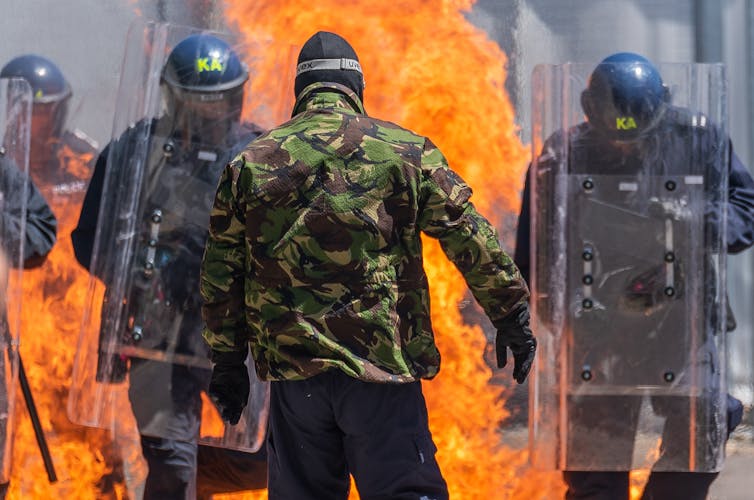
    Our findings indicate that food shortages stemming from extreme weather events could potentially lead to civil unrest in the UK within 50 years. Shortages of staple carbohydrates like wheat, bread, pasta and cereal appear to be the most likely triggers of such unrest.

    The UK’s food system appears to be particularly vulnerable to significant disruption. This vulnerability can be attributed, in part, to its emphasis on efficiency at the expense of resilience (the ability to withstand and recover from shocks). This approach includes a heavy reliance on seasonal labour and practices like “just-in-time” supply chains, where products are delivered precisely when needed.

    Our study emphasises the importance of developing plans to help the UK prepare for, and respond to, the risks associated with food shortages in the future.
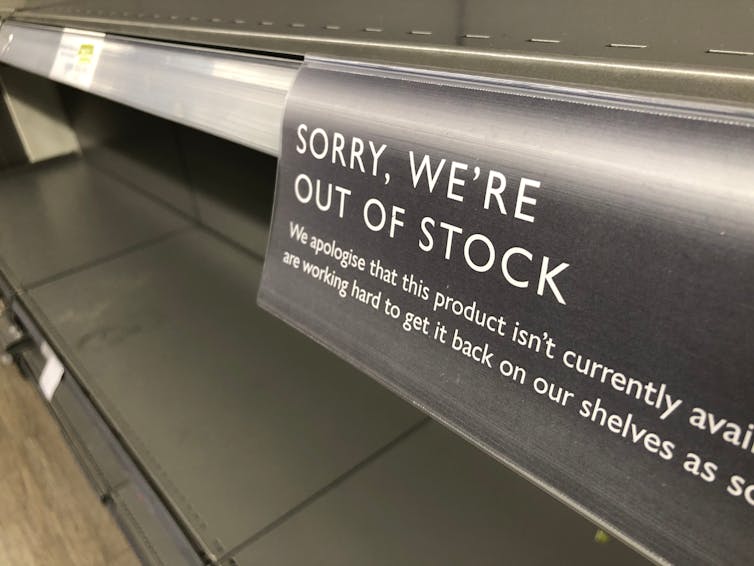
    Out of Stock sign on a supermarket shelf.
    Customers emptied supermarket shelves in a panic during the COVID pandemic.
    Kauka Jarvi/Shutterstock

    Expert survey

    We asked food experts to rate the likelihood of a scenario occurring in the UK in which more than 30,000 people suffered violent injury over the course of one year through events such as demonstrations or violent looting.

    Just over 40% of these experts said they thought such a scenario was either “possible” or “more likely than not” in the next ten years. Over 50 years, nearly 80% of experts believed civil unrest was either possible, more likely than not, or “very likely”.

    The experts were then asked about the potential causes of food system disruption that would lead to unrest. They were asked whether they thought this disruption would stem from an overall scarcity of food, or from issues related to food distribution, which could prevent food from reaching the right places and thus create isolated pockets of hunger.

    Our results show that most experts (80%) hold the belief that, within the next ten years, logistical distribution issues leading to shortages are the most probable cause of food-related civil unrest.

    However, when contemplating a 50-year timeframe, the majority (57%) said an insufficient food supply to sustain the UK population would be the most likely cause, potentially due to events such as a catastrophic harvest failure.

    Extreme weather – including storm surges, flooding, snow and drought – was chosen as the leading cause of future food supply shortages and distribution issues over both the ten- and 50-year time frames.

    UK already at risk

    Just under half of the UK’s entire food supply is imported, including 80% of fruit, 50% of vegetables, and 20% of beef and poultry. Any disruption to imports and supply chains can thus have a significant impact on food availability in the UK. A fall in the availability of food can lead to rising prices and, potentially, social unrest.

    COVID, Brexit and the cost of living crisis have highlighted the UK’s vulnerability to such a risk. Between April and August 2022, as inflation squeezed household incomes, over half of independent food banks in the UK reported that 25% or more of the people they supported hadn’t used their services before.

    Extreme weather events are also occurring more frequently. Many of these events are driven by climate change. It’s entirely possible that extreme weather will cause major crop yield failures across “multiple breadbaskets” in the coming decades.

    This scenario is not far-fetched. We have witnessed numerous instances of major shocks to food production in recent decades.

    One notable example, in 2007, saw an 8% decline in global cereal production due to droughts, floods and heatwaves in Australia, India and the US. These events, combined with low global cereal stocks, financial speculation and high fertiliser prices, resulted in cereal prices more than doubling. The crisis sparked food riots in more than 30 countries.

    To reduce the risk of civil unrest occurring in the UK as a result of food shortages, it’s crucial to address food poverty. By ensuring people can access and afford the food that is available, trust can be built between communities, government and food supply chains over time.
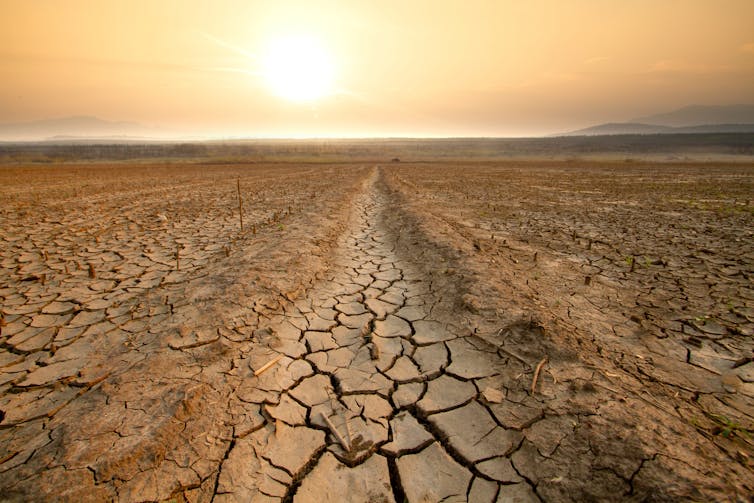
    A field baked by drought.
    A scenario where crops fail catastrophically is not far-fetched, say food experts.
    Piyaset/Shutterstock

    Redesigning the food system

    The UK needs a food system designed not just for optimal efficiency, but also for resilience. Government agencies and businesses must explore and fund options to make the food system more robust to shocks.

    This should include restoring degraded soils and the habitats used by pollinators, improving working conditions within the food supply chain, and prioritising sustainable farming practices.

    Growing more robust crop varieties and species, using resources more efficiently, and establishing backup storage and distribution systems to move away from just-in-time delivery are all key aspects of a more resilient food system too.

    Efforts to curb the harmful effects of climate change – the most probable cause of future food shortages and distribution issues – should also be ramped up.

    The COVID pandemic saw major challenges with food distribution, from which lessons can be learned. Creating a food system that is both resilient and efficient will safeguard against future disruptions, ensuring that food is accessible and affordable while preventing the emergence of civil unrest.


    Imagine weekly climate newsletter

    Don’t have time to read about climate change as much as you’d like?

    Get a weekly roundup in your inbox instead. Every Wednesday, The Conversation’s environment editor writes Imagine, a short email that goes a little deeper into just one climate issue. Join the 20,000+ readers who’ve subscribed so far.The Conversation


    Sarah Bridle, Professor of Food, Climate and Society, University of York and Aled Jones, Professor & Director, Global Sustainability Institute, Anglia Ruskin University

    This article is republished from The Conversation under a Creative Commons license. Read the original article.


  • Newsom shows Sunak the high road on climate action

    Spread the love

    https://www.energymonitor.ai/opinion/opinion-newsom-shows-sunak-the-high-road-on-climate-action/?cf-view&cf-closed

    One of the many occasions UK Prime Minister Rishi Sunak uses a private jet.
    One of the many occasions UK Prime Minister Rishi Sunak uses a private jet.

    Political leaders owe their citizens the truth about the costs and the challenges of the energy transition on a warming planet. Last week, UK Prime Minister Rishi Sunak failed – and California Governor Gavin Newsom passed – that test.

    …

    If Sunak had mustered the courage to tell Brits the truth, rather than throwing up flack about excessive costs and burdens, he could have taken a cue from Newsom and said this instead: “The cost-of-living crisis is a fossil fuel crisis. Inflation persists. It’s not complicated. It’s not complicated. It’s the burning of oil. It’s the burning of gas. It’s the burning of coal – and we need to call that out.”

    As my former colleague Isabeau van Halm reported for Energy Monitor in August 2022, energy bills in the UK and the EU skyrocketed that autumn because of an over-reliance on natural gas – not the clean energy transition.

    “The rise in energy prices started last winter, when many countries experienced low gas stocks, leading to a rise in gas prices. Russia’s invasion of Ukraine and volatile market conditions led to further price hikes,” wrote van Halm. European gas prices peaked in August 2022 at more than €300 per megawatt-hour (/MWh), she noted, when before the Covid-19 pandemic and Russia’s invasion of Ukraine, European gas prices were regularly around €10–20/MWh.

    In his address, Sunak should have doubled down on climate action, not pretended that the UK’s economic malaise was the fault of net-zero policies. He should have announced measures to ensure that offshore wind projects secured capacity in the UK’s next clean energy auction; to overhaul the government’s failed programmes to insulate homes; and to jump-start the country’s lagging heat pumps market. Instead, a few days later, Sunak’s government disbanded its energy efficiency taskforce.

    Back in New York, Gavin Newsom was clear that California would continue to “advance our low-carbon, green-growth future”.

    …

    https://www.energymonitor.ai/opinion/opinion-newsom-shows-sunak-the-high-road-on-climate-action/?cf-view&cf-closed

    Image of InBedWithBigOil by Not Here To Be Liked + Hex Prints from Just Stop Oil's You May Find Yourself... art auction. Featuring Rishi Sunak, Fossil Fuels and Rupert Murdoch.
    Image of InBedWithBigOil by Not Here To Be Liked + Hex Prints from Just Stop Oil’s You May Find Yourself… art auction. Featuring Rishi Sunak, Fossil Fuels and Rupert Murdoch.
  • Slow route to net zero will worsen global climate crisis, IPCC chief warns

    Spread the love

    https://www.theguardian.com/environment/2023/oct/02/slow-route-to-net-zero-will-worsen-global-climate-crisis-ipcc-chief-warns

    Protesters demonstrate against the British government’s approval of the Rosebank oil field’s development. Photograph: Lucy North/PA

    Even if the 2050 goal is still met, postponing action – as the UK has done – will cause more heat and damage

    Postponing action and taking a slower route to net zero emissions by 2050 will worsen the climate crisis even if the goal is still reached by that date, the new chair of the Intergovernmental Panel on Climate Change (IPCC) has warned.

    Prof Jim Skea also said that approving new oil and gas fields only increased the already large amount of reserves that will have to be kept in the ground if global heating limits are to be reached.

    The IPCC is the world’s foremost authority on climate change, under which thousands of the world’s best experts give advice to the 195 nations that founded the body. It does not comment on the climate policies of individual nations, but Skea’s comments on Monday clearly indicate that the recent actions of the UK government has slowed climate action, despite IPCC scientists warning of “a rapidly closing window of opportunity to secure a livable and sustainable future for all”.

    Rishi Sunak weakened or abolished a number of green measures recently, including pushing back a ban on the sale of new petrol cars from 2030 to 2035. The UK also approved the exploitation of the large Rosebank oil field near Shetland on Wednesday.

    …

    https://www.theguardian.com/environment/2023/oct/02/slow-route-to-net-zero-will-worsen-global-climate-crisis-ipcc-chief-warns

  • One in six UK species threatened with extinction – here’s what we could lose (plus how to save them)

    Spread the love
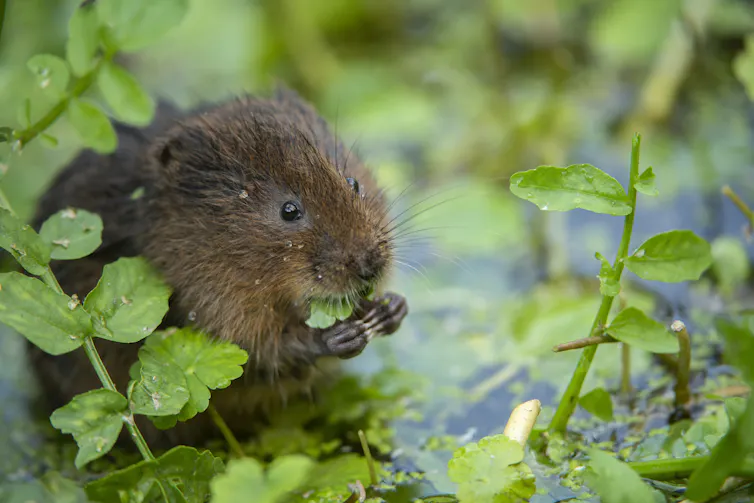
    Water voles are endangered mammals in the British Isles.
    Ben Andrew/RSPB

    Richard Gregory, UCL

    The UK is considered one of the most nature-depleted countries in the world. This is not surprising given its history of early industrialisation and agricultural intensification.

    These islands have lost species and unique habitats have shrunk to tiny remnants. Nearly every landscape and view has transformed.

    What is more surprising is that over the last 50 years or so, from when scientists started to collect information about biodiversity systematically, there has been no let-up in that downward slide.

    More than 750 assessed species have declined by 19% on average since monitoring began in 1970. The losses continue despite the heroic efforts of many passionate people and organisations. Today, out of over 10,000 species assessed, 16% (1,500, or one in six) are threatened with extinction.

    That is the sobering conclusion of the latest state of nature report, compiled by experts from over 60 of the top research and conservation organisations in the UK, using the latest and most accurate information about biodiversity on land, in freshwater, around the coast and in the ocean.

    The evidence that species and habitats are being lost is clear. And yet, as the report shows, there has never been a better understanding of the state of nature and, importantly, what is needed to fix it.

    Nature continues to decline

    Everyone depends on nature for the things it provides for free: so-called ecosystem services like healthy food, materials, clean air and water. You could add human wellbeing, physical and mental health – and for many, inspiration, solace and joy.

    There is cause to protect nature because it aligns with our values, from the moral responsibility we feel to future generations to the intrinsic worth we know nature has. These are all good reasons, but self-preservation is compelling.

    The new report presents evidence on how and why nature is changing in the UK and in its four constituent countries. To do this, the authors analysed three measures: species abundance (the number of individuals), species distribution (the proportion of sites occupied) and national extinction risk.

    These measures have been assessed for hundreds – and in some cases thousands – of species native to the UK. Our new findings are in line with previous reports (2013, 2016, 2019) in pointing to a pattern of continued biodiversity loss.

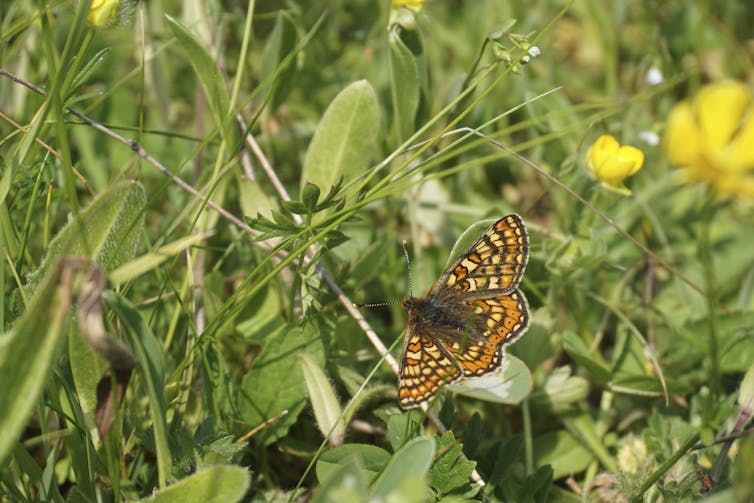
    An orange and brown patterned butterfly among wildflowers.
    The threatened marsh fritillary butterfly.
    Patrick Cashman/RSPB

    The new report’s key findings include:

    • The distributions of almost 5,000 invertebrate species have on average shrunk by 13% since 1970. Strong declines were seen in insect groups that perform key ecosystem functions, including pollinators (18% decrease) and pest controllers (34% decrease).
    • The distributions of 54% of flowering plant species and 59% of bryophytes (mosses and liverworts) have decreased across Britain since 1970. By comparison, only 15% and 26% of these groups have increased respectively.
    • The abundance of 13 species of seabird has fallen by an average of 24% in the UK since 1986. But these results pre-date an ongoing outbreak of Highly Pathogenic Avian Influenza, which has killed thousands of seabirds, some belonging to populations constituting the bulk of an entire species.
    • Roughly 2% of species (151) once found in the UK have disappeared. These include the great auk, Kentish plover, Norfolk damselfly, burbot and large copper butterfly.

    The report shows that climate change – which is predominantly caused by burning fossil fuels – is among the biggest threats to wildlife in all ecosystems. The intensive way in which land is managed for farming (with the loss of hedgerows, farm ponds and scruffy margins and the increasing use of pesticides and fertilisers, as well as changes in crops and cropping patterns) is also a major driver of biodiversity loss, and contributes to climate change.

    At sea, unsustainable fishing practices are a major factor. Added to these pressures on wildlife are invasive species, pollution and for some, such as birds of prey, persecution.

    Solving all of these problems will involve several actions that can be joined up to support each other. This must be swift and extensive to be effective.

    The report establishes what is known about the success or failure of conservation efforts. Fortunately, there are many success stories. Species like natterjack toads, Duke of Burgundy butterflies, bitterns, and large marsh grasshoppers have all benefited from bespoke conservation projects and are bouncing back.

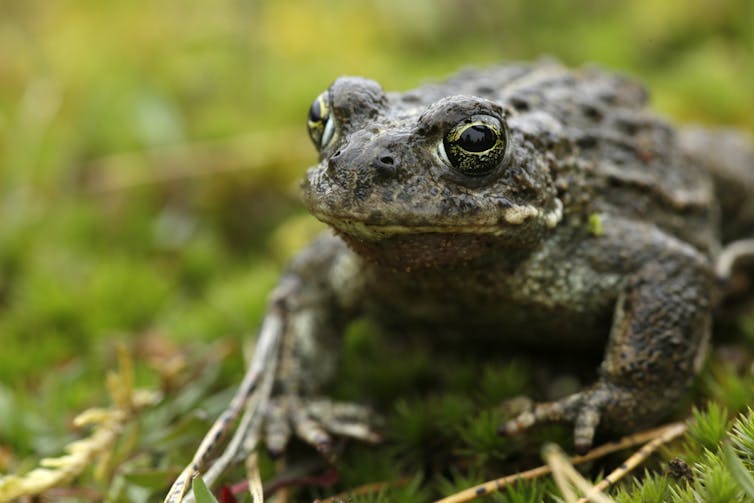
    A toad.
    Natterjack toads cling on in a handful of shallow coastal pools.
    Andy Hay/RSPB

    Cairngorms Connect is the UK’s largest habitat restoration project, covering 60,000 hectares in the Scottish national park. It aims to restore native woodland, peatlands and rivers over the next 200 years. This is the scale at which conservationists need to operate in order to reverse nature’s decline.

    Recovery by 2050?

    It is only through the collective efforts of thousands of people, most of them volunteers, that we can report on the state of nature with such clarity and breadth. Without their enthusiasm, commitment and skill, we’d only have a sketchy understanding of how the environment is changing, and whether conservation efforts are making a difference.

    The 2023 state of nature report is timely given the recent adoption of global targets to recover nature. The Convention on Biological Diversity’s new global framework, signed by nearly 200 countries in December 2022, aims to maintain, enhance, restore and expand ecosystems, reduce the number of species threatened with extinction and increase the abundance of native species by 2030, putting nature on a path to recovery by 2050.

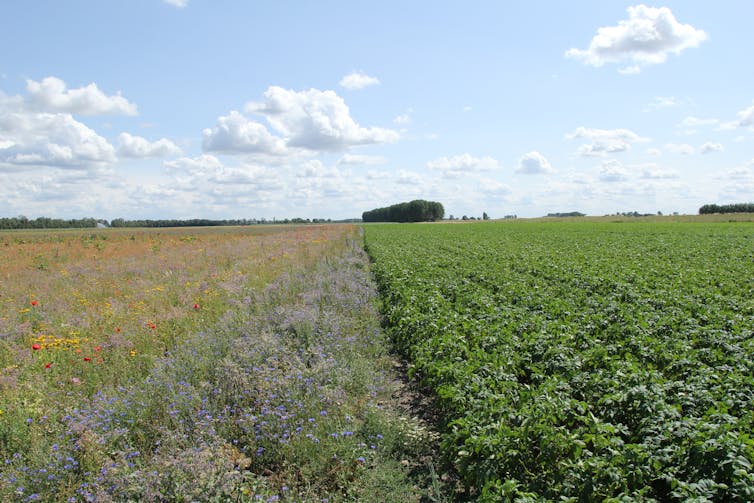
    A farm field margin covered in wildflowers.
    Restoring meadows on farmland could benefit pollinating insects.
    Angel217/Shutterstock

    To halt and reverse biodiversity loss in the UK, efforts to conserve and restore species and habitats must ramp up. But the underlying drivers of this loss must be addressed too, especially those attached to our food system.

    That means making food production more sustainable and nature-friendly on land and at sea, and adjusting our diets to cut demand for products that drive the loss of nature, such as meat.

    Nature-based solutions to climate change, such as restoring and protecting carbon-absorbing forests and wetlands in river catchments, or restoring coastal habitats, can also boost biodiversity if well designed (think saving two birds with one tree).

    We have never had a better understanding of the state of nature and what is needed to fix it. Now we need action.


    Imagine weekly climate newsletter

    Don’t have time to read about climate change as much as you’d like?

    Get a weekly roundup in your inbox instead. Every Wednesday, The Conversation’s environment editor writes Imagine, a short email that goes a little deeper into just one climate issue. Join the 20,000+ readers who’ve subscribed so far.The Conversation


    Richard Gregory, Honorary Professor of Genetics, Evolution & Environment, UCL

    This article is republished from The Conversation under a Creative Commons license. Read the original article.
  • London facing 45C days ‘in foreseeable future’, mayor Sadiq Khan warns

    Spread the love

    https://www.theguardian.com/uk-news/2023/sep/18/london-facing-45c-days-in-foreseeable-future-mayor-sadiq-khan-warns

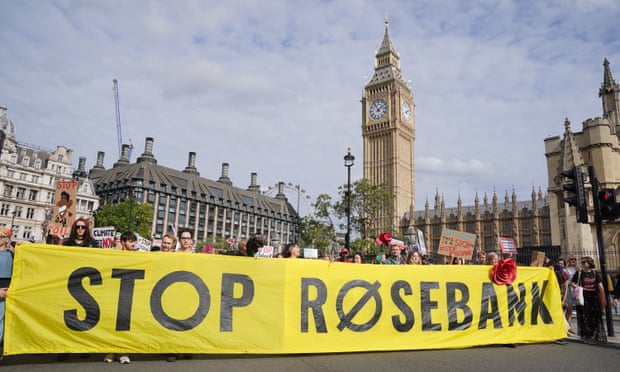
    London faces the “incredibly worrying” prospect of enduring days that hit 45C (113F) due to the worsening climate crisis, its mayor, Sadiq Khan, told the Guardian at a climate summit in New York where governments have gathered to discuss how to best cope with searing temperatures.

    Khan said an interim independent climate resilience report for London had found the capital could experience multiple 45C days “in the foreseeable future”, potentially buckling various basic functions of the city. “It means the Underground is not fit for purpose, some of the homes are too hot in the daytime, care homes and schools too,” Khan said.

    “It means we have to adapt for those temperatures now. It’s now time for those who are delaying action to wake up and smell the coffee because this is happening now. It’s now and it’s happening to us.”

    …

    https://www.theguardian.com/uk-news/2023/sep/18/london-facing-45c-days-in-foreseeable-future-mayor-sadiq-khan-warns