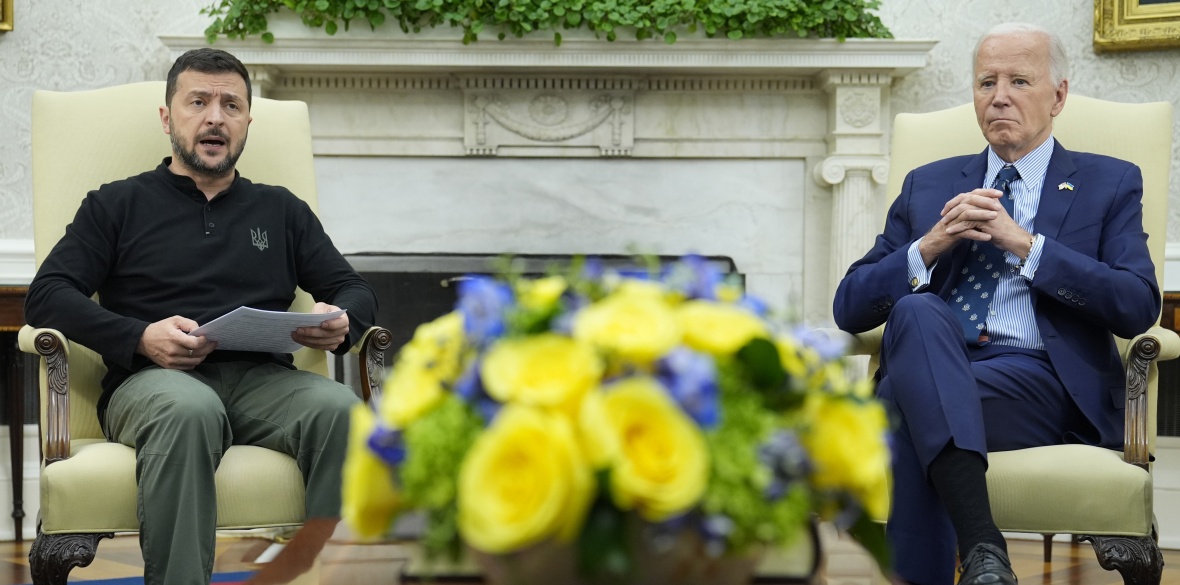
President Joe Biden (right) listens as Ukraine’s President Volodymyr Zelenskyy (left) speaks during their meeting in the Oval Office of the White House in Washington, September 26, 2024
IT SCARCELY gets more dangerous than this. The semi-senile President of the United States has determined to use his remaining months in office to dramatically ratchet up the war in Ukraine.
Joe Biden’s decision to allow Ukraine to fire US-supplied missiles deep into Russia, permission it has hitherto withheld, is a major step towards extending the conflict into an actual face-off between the world’s two major nuclear-armed powers.
Since the missiles concerned cannot easily be operated without full US logistical, intelligence and targeting support, this takes the prolonged proxy war much closer to a direct clash.
Biden’s move looks likely to be echoed, as ever, by Keir Starmer, who has been prevented by Washington from allowing Ukraine to use British Storm Shadow missiles to hit targets inside Russia. Those restrictions may now be cast aside.
Starmer is talking of “doubling down” on the war at the precise moment when hopes for an end to a bloody and unnecessary conflict should be rising.
…
The people must press for peace in Ukraine as a matter of urgency, on the basis of stable security for all. That is already the demand of most of the world’s nations, and it must be imposed on Labour’s warlords.
Keir Starmer was having trouble defining genocide at Prime Minister’s Questions yesterday but insisted that Israel was not committing genocide. He should have very little difficulty since he is often described as a human rights lawyer. The rest of us know that Israel is committing genocide. While not a definition, we can see that they are from indiscriminate mass-murder, targeting hospitals, healthcare workers, journalists, aid workers, using starvation and disease as weapons of war, forcible displacements and the statements made by Israeli ministers e.g. Smotrich and Ben-Gvir.
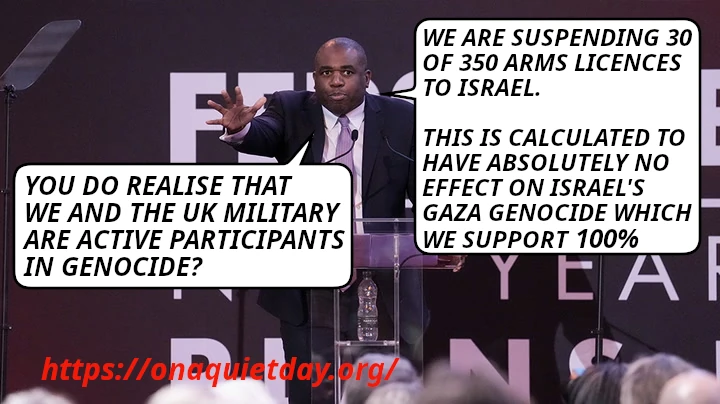
UK Foreign Secretary David Lammy says that UK is suspending 30 of 350 arms licences to Israel. He also confirms the UK government’s support for Israel’s Gaza genocide and the UK government and military’s active participation in genocide.
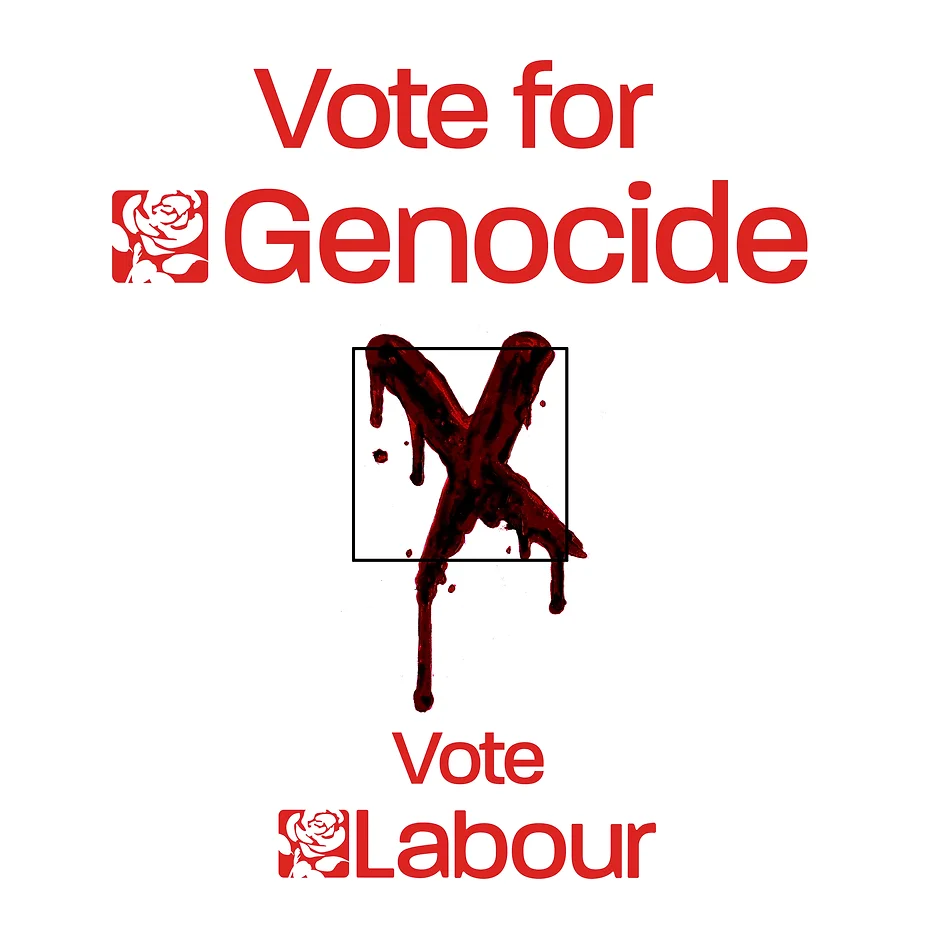
It should be recognised that the UK and US are active participants in Israel’s genocides and that Keir Starmer, David Lammy and others in the UK Labour Party are therefore genocidal war criminals. UK’s military forces are participating in genocide and the cabinet are supposedly held jointly responsible under UK law. [ed: The problem is that t] They need to be held accountable, prosecuted and convicted.
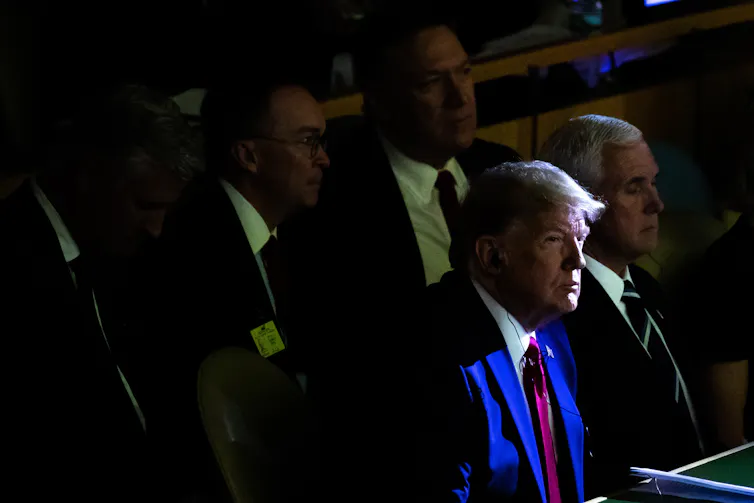
If you care about saving Earth from catastrophe, you might be feeling a little down about the re-election of Donald Trump as United States president. Undeniably, his return to the White House is a real setback for climate action.
But beyond Trump and his circle, there remains deep concern about climate change, especially among younger people. Support for climate policy remains high in the US and around the world. And studies based on data from 60,000 people in more than 60 countries suggest individuals’ concern about climate change is widely underestimated.
So now is a good time to remember that efforts to tackle the climate crisis – both in Australia and globally – are much bigger than one man. Here are ten reasons to remain hopeful.
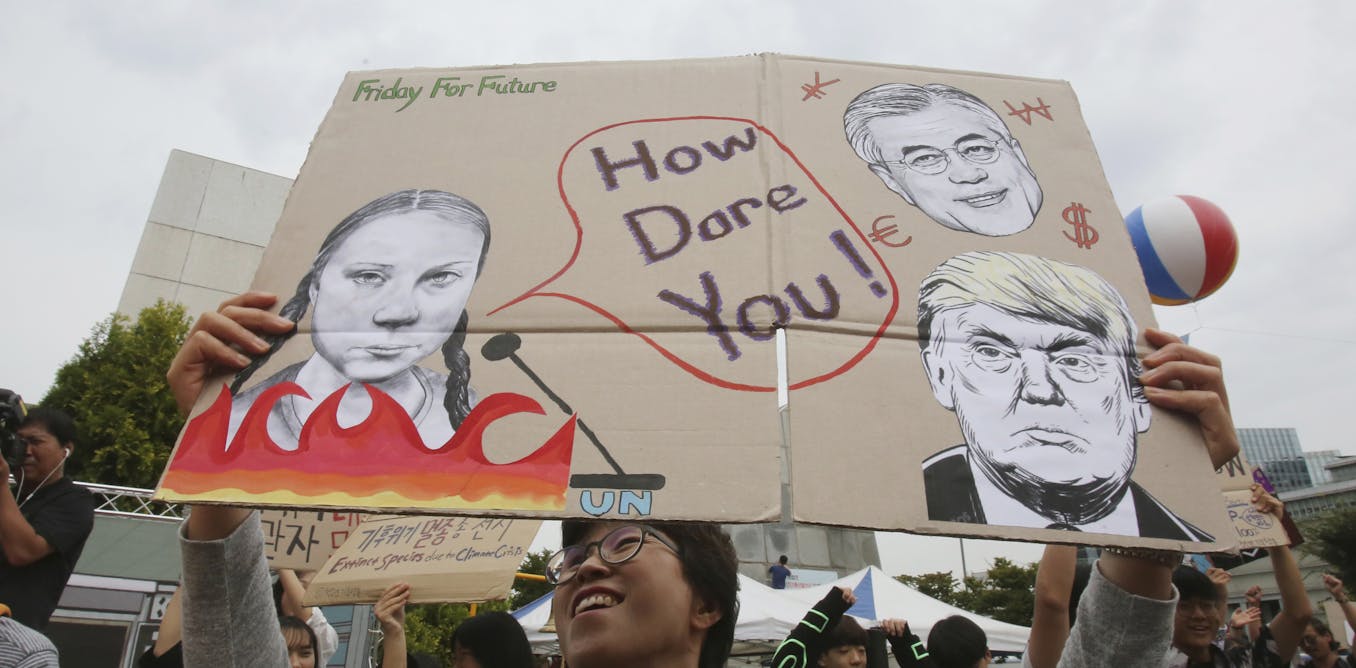
Beyond Trump and his circle, there remains deep concern about climate change around the world. HAYOUNG JEON/EPA
1. The global clean energy transition can’t be halted
4. The federal government is not everything in the US
When Trump was last in power, he withdrew the US from some climate commitments, such as the Paris Agreement. But many state and local governments powered ahead with climate policy, and that will happen this time around, too. For example, California – the world’s fifth largest economy – plans to eliminate its greenhouse gas footprint by 2045. Even Texas, a Republican heartland, is leading a shift toward wind and solar power.
5. The US climate movement will be more energised than ever
During Trump’s first presidency, the US climate movement developed policy proposals for a “Green New Deal”. Many of these proposals were later implemented by the Biden administration. Initial reactions to Trump’s re-election suggest we can expect similar policy advocacy this time around.
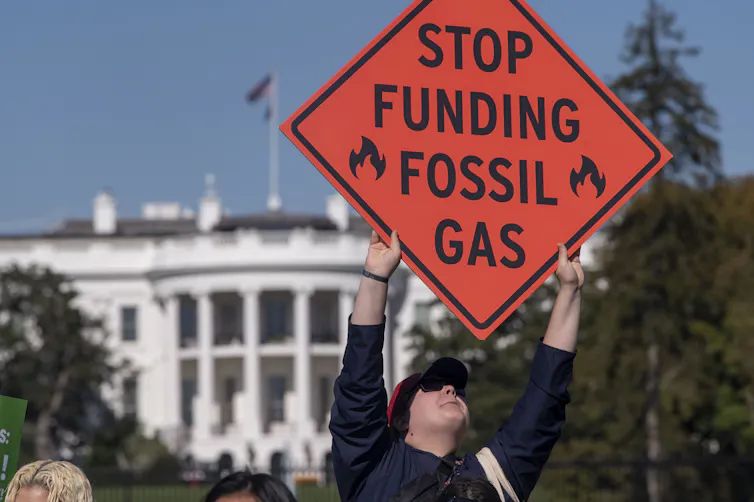
Efforts to tackle the climate crisis are much bigger than one man in the White House. Kevin Wolf/AP
6. Global climate cooperation is bigger than Trump
If Trump makes good on his promise to leave the Paris Agreement (again), he will only be leaving the room where the world’s future is being shaped. The US has walked away from global climate agreements before – for example, refusing to join the Kyoto Protocol in 2001. But other nations rallied for global action, and will do so again.
7. The rules-based global order will remain
When a nation walks away from rules that have been agreed after decades of negotiation, responsible countries must work together to bolster global cooperation. This applies to trade and security – and climate is no different.
As our Foreign Minister Penny Wong recently explained, Australia, as a middle power on the world stage, wants:
a world where disputes are resolved by engagement, negotiation and by reference to rules [and] norms […] We don’t want a world in which disputes are resolved by power alone.
8. Australian diplomacy matters
Australia is seeking to co-host the United Nations climate talks with Pacific island countries in 2026, and is emerging as the favourite. Hosting the conference, known as COP31, would be a chance for Australia to help broker a new era of international climate action, even if the US opts out under Trump.
Hosting the talks would also help cement Australia’s place in the Pacific and assist our Pacific neighbours to deal with the climate threat.
Co-hosting COP31 would help assist our Pacific neighbours to deal with the climate threat. Mick Tsikas/AAP
9. Australia’s clean energy shift is accelerating
About 40% of Australia’s main national electricity grid is poweredby renewables and this is set to rise to 80% by 2030. Some states are surging ahead – for example, South Australia is aiming for 100% renewables by 2027.
Australians love clean energy at home, too. One in three households have rooftop solar installed, making us a world-leader in the technology’s uptake. Trump’s occupation of the Oval Office cannot stop this momentum.
10. Trump cannot change the science of climate change
The science is clear – burning coal, oil and gas fuels climate change and increases the risk of disasters that are harming communities right now. In Australia, we need look no further than the Black Summer bushfires in 2019-20 and unprecedented Lismore floods in 2022.
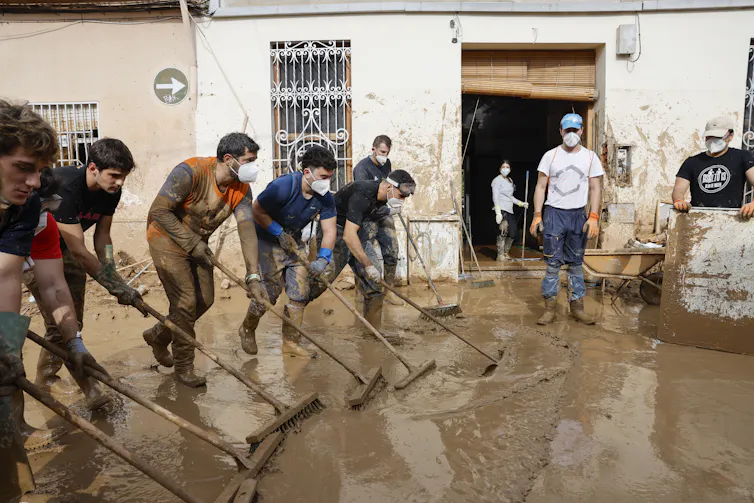
The devastating floods in Spain remind us that climate change has arrived. ANA ESCOBAR/EPA
On gloomy days – like, say, the election of a climate denier to the White House – it might feel humanity won’t rise to Earth’s biggest existential challenge. But there are many reasons for hope. The vast majority of us support policies to tackle climate change, and in many cases, the momentum is virtually unstoppable.
Wesley Morgan, Research Associate, Institute for Climate Risk and Response, UNSW Sydney and Ben Newell, Professor of Cognitive Psychology and Director of the UNSW Institute for Climate Risk and Response, UNSW Sydney
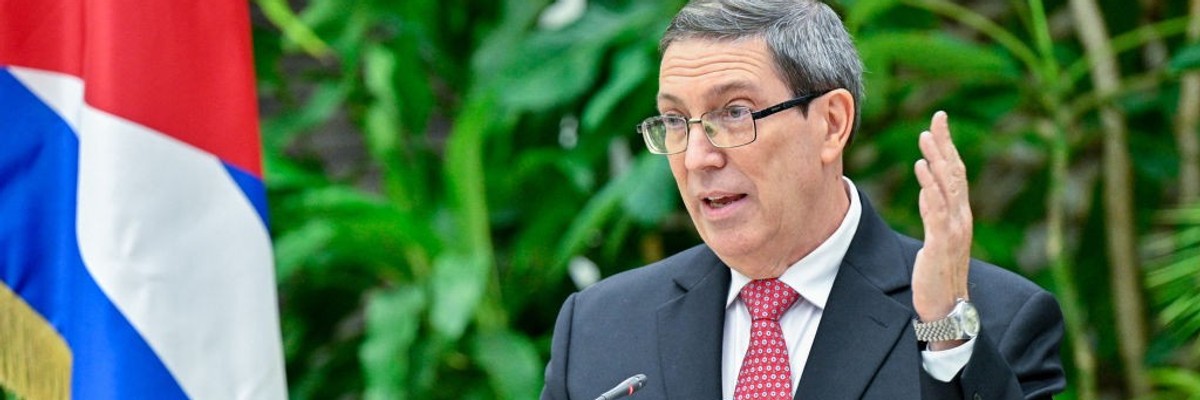
Cuban Foreign Minister Bruno Rodríguez speaks during a press conference on the impact of the U.S. embargo in Havana on September 12, 2024. (Photo: Adalberto Roque/AFP via Getty Images)
“The world has spoken—it’s time for the U.S. to listen and lift the blockade.”
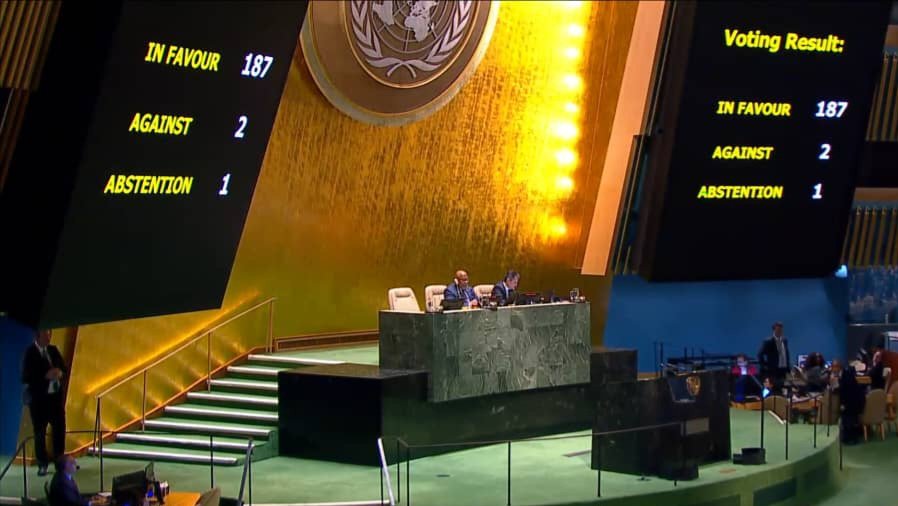
The United Nations General Assembly on Wednesday once again overwhelmingly urged the U.S. government to end its decadeslong blockade on Cuba, with just the United States and Israel voting against the measure and Moldova abstaining.
The UNGA’s other 187 members present voted to adopt the nonbinding resolution on “the necessity of ending the economic, commercial, and financial embargo imposed by the United States” against the Caribbean island.
This is the 32nd straight year that the U.N. body has approved a resolution against the embargo that began in 1962.
“The U.S. and Israel stand isolated as the only two votes against,” Democratic Socialists of America’s International Committee said after the Wednesday vote. “The world has spoken—it’s time for the U.S. to listen and lift the blockade.”
Though a few other nations have opposed the resolution over the years, Michael Galant of Progressive International and the Center for Economic and Policy Research noted that this vote was “two genocidaires v. the world.”
Israel faces a genocide case at the International Court of Justice for its yearlong assault of the Gaza Strip, which has killed at least 43,163 Palestinians and injured another 101,510, according to local officials in the Hamas-governed enclave. The U.S. Congress and Biden administration have given Israel billions of dollars in weapons and opposed U.N. cease-fire resolutions.
CodePink’s Medea Benjamin responded to the Wednesday vote with a video shared on social media, saying that Israel “loves blockades, because it’s doing its own blockade of Gaza,” and “is dependent on the United States to carry out its genocide.”
“Now this is not just some idle vote,” she said of the approved resolution. “This blockade that the U.S. maintains is a form of economic warfare. It’s no exaggeration to say that now, when there is an economic crisis in Cuba, the U.S. blockade, which keeps Cuba from using the financial markets, from having normal trade with countries all over the world, is actually leading to deaths, leading to people going hungry, leading to people lacking food and medicine that are essential for their lives.”
“And that’s why the United States must be condemned for this ongoing horrific, inhumane, and illegal blockade,” Benjamin added.
Cuba’s representative delivered similar remarks to the UNGA on Wednesday. As Reutersreported:
Cuban Foreign Minister Bruno Rodríguez said in a speech before the assembly that what is often referred to as the U.S. trade embargo is a “blockade” because the web of laws and regulations complicate financial transactions and the acquisition of goods and services not just from the United States but internationally.
“The blockade against Cuba is an economic, financial, and trade war which qualifies as genocide,” said Rodriguez, charging the U.S. policies were deliberately aimed at promoting suffering among the Cuban people to force change in the government.
Some international observers praised the countries who did condemn the blockade. Middle East expert Assal Rad declared, “This is the real international community.”
Manolo De Los Santos, a founder of the People’s Forum and a researcher at Tricontinental: Institute for Social Research, said that “this overwhelming consensus is in contrast with the indifference of the United States, which continues to deny any responsibility for sanctions while tightening its stranglehold on Cuba.”
Earlier this month, the People’s Forum published a letter in The New York Times to U.S. President Joe Biden, warning that he has “exactly 90 days to reverse” former Republican President Donald Trump’s “brutal policy on Cuba.”
Biden was vice president a decade ago when then-President Barack Obama “opened a hopeful new chapter in U.S.-Cuba relations by taking the first steps toward normalization,” the letter details. “People in both countries were optimistic that Cuba and the United States could become neighbors rather than Cold War enemies. However, Trump dismantled that policy, imposing pain and suffering on the Cuban people.”
“Removing the state sponsors of terrorism designation would allow Cuba to engage in financial transactions and restore its electrical grid, as well as address shortages of food and medicine to alleviate the immense hardship faced by the Cuban people, who have endured over 62 years of economic strife under the embargo,” the letter adds. “It’s time to act. Let Cuba live!”
Biden faced similar pressure in August, when hundreds of legal experts and groups called on him “to comply with existing international law by ending the use of broad unilateral coercive measures” particularly in “cases such as Cuba, Iran, North Korea, Syria, and Venezuela.”
The U.N. vote comes as early voting is underway for the November 5 election in which Trump is facing Biden’s vice president, Kamala Harris.
Neither campaign provided details on each candidate’s position when contacted by Reuters earlier this week, though Morgan Finkelstein, national security spokesperson for Harris, said that the Democrat “stands with the people of Cuba as they fight for their rights after decades of repression and economic suffering at the hands of the communist regime” and “will stand up to all authoritarians—including the very leaders that Trump has praised and embraced.”
In 2023, 187 nations voted in favor of lifting the US blockade against Cuba (Photo: Bruno Rodríguez Padilla via X)
The US blockade on Cuba has been widely condemned by the majority of the world, yet in recent years, instead of lifting it, successive US administrations have made it worse.
On October 29, the United Nations General Assembly began a series of debates to discuss the resolution on the long-standing economic blockade applied by the United States against the island of Cuba. Since the 1960s, the United States has systematically punished the Cuban people through a stringent blockade on its economy for having declared and built a political and economic model different from the one advocated and directed by the United States. The vote on the resolution will take place on Wednesday, October 30.
On more than 30 occasions, the United Nations Assembly has discussed the blockade against Cuba, which costs the island 5 billion dollars annually, according to some estimates. Every year the resolution is proposed and the whole world, through the vote of the absolute majority of the member countries of the United Nations General Assembly, has condemned the imperialist attitude of the United States towards Cuba.
This year, several regional platforms including, the Community of Latin American and Caribbean States (CELAC), the Association of Southeast Asian Nations, the Organization of Islamic Cooperation (OIC), the Non-Aligned Movement (NAM), the Caribbean Community (CARICOM), among others, announced their support for Cuba at the United Nations General Assembly in the face of the criminal blockade.
In this regard, the Russian delegate Vasily Alekseyevich Nebenzya said at the UN Assembly on Tuesday, “We continue to strongly advocate for the immediate lifting of the illegal embargo that has been imposed by the United States against Cuba for more than 62 years.”
The Mexican representative to the UN, Héctor Vasconcelos, stated in the session that he categorically rejects the blockade against Cuba and that it is in direct violation of international law. “It is time to open a new chapter and allow Cuba to participate fully in the global community without the restrictions imposed by this unjust and inhumane blockade,” Vasconcelos declared.
Almost all countries, except the United States, Israel, and one or two other governments allied with Washington’s policy, vote against the blockade and request the elimination of the sanctions against the socialist country. This, for many, reflects the anti-democratic attitude of the US government, which claims to represent the highest values of human rights and global cooperation, although, in this type of case, it scandalously ignores the demands of the vast majority of countries in the world.
For his part, the Cuban Secretary of State, Bruno Rodríguez, expressed his gratitude for the support given on October 29 by more than 30 delegations that expressed their desire for the United States to lift the blockade against Cuba: “We are grateful for the statements made by the 31 delegations that took the floor at the United Nations General Assembly, demanding the end of the US blockade against Cuba. Tomorrow [October 30] we will continue the debate and the vote against this genocidal policy will take place.”
The blockade tightens
Despite this enormous show of support for Cuba, the United States insists on the economic measure. It has even gone so far as to radicalize it, as happened during the administration of Donald Trump, who applied 243 new sanctions, including the removal of certain travel categories which allowed individual US citizens to visit the island, and included Cuba in the list of state sponsors of terrorism, which further hindered the development of the Cuban economy.
Instead of reversing the measures of his predecessor and returning to the opening policy started by Barack Obama, Biden maintained the more stringent measures against Cuba. In 2023, the US Department of Homeland Security added an additional coercive measure, stating that the ESTA visa waiver program, used largely by citizens of Europe, would be denied to anyone from eligible countries if they had traveled to Cuba anytime after July 2021. In essence, a direct punishment to anyone, even beyond US borders, who dares to visit the Caribbean nation.
A history of systematic political-economic punishment
The first time the US government applied an economic embargo on Cuba was in 1958, during the dictatorship of Fulgencio Batista. Although the Cuban Revolution overthrew that military government, the US government punished the Caribbean Island again in 1960.
In the beginning, the restrictions did not include food and medicine, but from 1962, during the radicalization of the Cuban Revolution, the embargo became almost absolute. Cuba’s natural and historical trading partner, both because of its large territorial extension and its purchasing power, had been the United States.
In 1959, 73% of Cuban exports were destined for the United States, which shows the enormous impact that the decision had on the island, aimed at promoting the fall of the government led by Fidel Castro. Nevertheless, the USSR and Cuba reached several economic agreements that allowed the island to somehow withstand (never easily) the portentous US punishment.
However, after the dissolution of the USSR, the blockade began to acquire increasingly challenging characteristics. This is even more so if one takes into account that since 1992, through the Cuban Democracy Act, the US government has not only prohibited US companies from trading with Cuba but also sanctioned any third party that does business with Cuba.
This makes any attempt to overcome the economic crisis induced by outside powers even more difficult. In addition, the US government in 2021 decided, without adequate technical justification, to include Cuba among the countries sponsoring terrorism.
It is foreseeable that Cuba will again feel the backing of international solidarity in the coming days, although the US government will ignore the request of the international community and continue to punish a small country that did not accept to be dominated and undertook a socialist revolution just a couple hundred miles south of the most powerful capitalist country in history.