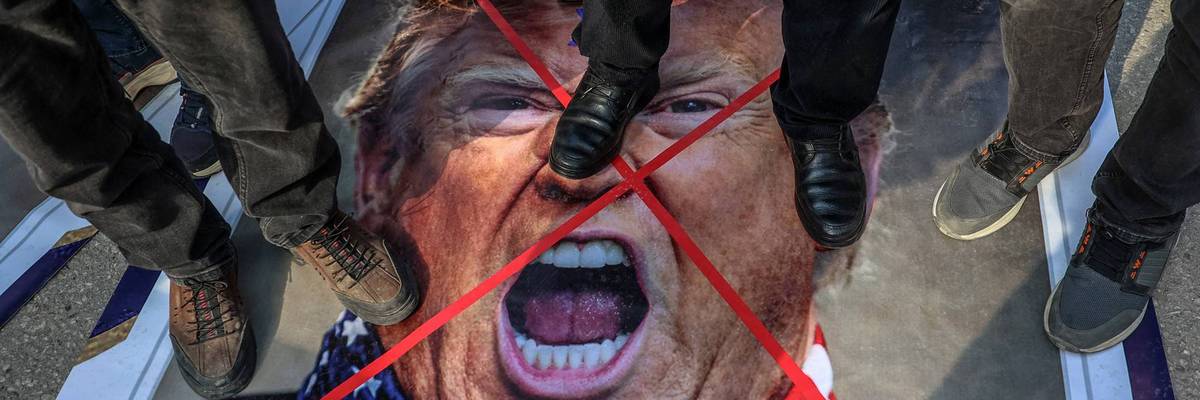
Protestors stand on an image depicting US President Donald Trump during a gathering to protest against the US and Israel attack of Iran and the killing of the Supreme leader in front of the US Embassy in Ankara on March 1, 2026. (Photo by Adem Altan/AFP via Getty Images)
“Trump’s illegal war on Iran and the rule of law,” said one pair of campaigners, “establish an intolerable pattern of egregious abuses of power, directly threatening our constitutional order, our safety, and our way of life.”
After the unprovoked bombing of Iran over the weekend by the United States and Israel—strikes that included the unlawful assassination of Iranian Supreme Leader Ali Hosseini Khamenei—the call for US President Donald Trump to be impeached and removed from office has grown as the straightest path to hold the US leader to account for the attacks which policy and human rights experts have condemned as a serious war crime.
With a regional war in the Middle East that was already boiling from Gaza to Lebanon and from Syria to Yemen now exploding in the wake of the US-Israeli attacks on Iran, Globe and Mail columnist Debra Thompson on Sunday called Trump “the most dangerous man on the planet.”
“Rather than ending wars,” Thompson notes, “Trump has initiated military action eight times, carrying out attacks in seven countries (Syria, Iraq, Iran, Nigeria, Yemen, Somalia, and Venezuela) in 2025.” Such a pattern of violence and warmongering should make clear that failure to restrain Trump has only emboldened him.
“The recurring danger in this latest presidential aggression is that there are no guardrails, no constraints, and no post-hoc justification,” writes Thomson, “other than that Mr. Trump is the President of the United States and can do whatever he wants.”
But American presidents cannot simply do whatever they want. According to a Reuters/Ipsos poll out Sunday, less than 25% support the president’s aggression against Iran. In the first wave of the US military attack, an Iranian school for girls was bombed, killing over 108 civilians, mostly children.
While some congressional lawmakers are pushing for a vote this week on a War Powers Resolution to curtail US military operations against Iran, others are demanding more robust action from Congress to bring Trump’s war-making to an end.
Has any member of congress called for Trump to be impeached? If they claim he should have asked permission before starting a war but aren't committed to filing articles of impeachment they are engaging in political theater.
“Under Article I, Section 8 of the U.S. Constitution, only Congress has the power to declare war, as well as to raise and support armies, provide and maintain a navy, and fund and regulate the military,” declared novelist and political activists Stephen King on Saturday. “Impeach the SOB.”
Mike Hersh and Alan Minsky, respectively the communications director and executive director of the Progressive Democrats of America, argued in a Sunday op-ed for Common Dreams that “Trump’s illegal, unconstitutional war on Iran is not only a moral and humanitarian disaster, but also a profound constitutional crisis.”
According to Hersh and Minsky:
Trump’s illegal war on Iran and the rule of law establish an intolerable pattern of egregious abuses of power, directly threatening our constitutional order, our safety, and our way of life. These intertwined crises cry out for an immediate, decisive response by the Congress and the US public.
Therefore, PDA demands that all members of Congress, Democrats, Republicans, and Independents alike, uphold their oath of office to defend our constitutional republic. The Constitution offers one and only one remedy when President a repeatedly breaks the law and arrogantly refuses to abide by the limits on the power clearly laid out in the Constitution. That remedy is impeachment, followed by removal from office.
Matt Duss, executive vice president for the Center for International Policy, said that US lawmakers, as well as the American people they represent, “must also be ready to hold the president and his administration accountable for this breach of US and international law.”
“The failure to hold past presidents liable for war crimes and related violations of our own laws has helped lead to this dangerous moment, with a seemingly unrestrained president endangering millions of lives with impunity,” warned Duss. “The forever wars and the imperial presidency must finally come to an end.”
Donald Fuhrump says that Amerikkka doesn’t bother with crimes or charges anymore, not being 100% Amerikkkan and opposing his real estate intentions is enough.Elon Musk urges you to be a Fascist like him, says that you can ignore facts and reality then.Orcas discuss rotting brain. Front Orca says “Wish someone would lock him up”.
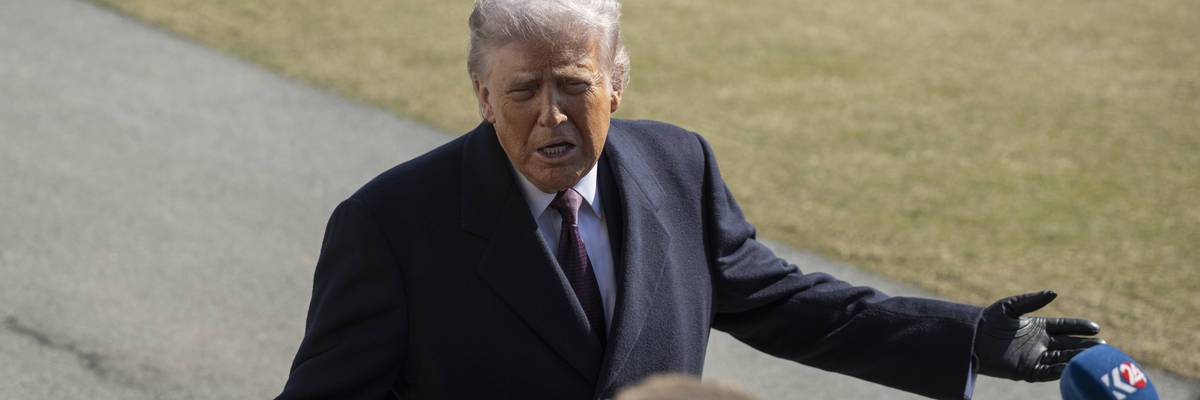
US President Donald Trump speaks to the press before he departs the White House in Washington, DC en route to Corpus Christi, Texas on February 27, 2026.(Photo by Celal Gunes/Anadolu via Getty Images)
“Trump ran on an explicitly anti-interventionist platform when he ran for president,” noted one critic. “He lied to the American people.”
As the world braces for a possible US war on Iran and people in Venezuela, Nigeria, and Yemen still reel from recent US attacks, President Donald Trump—the self-proclaimed “peace president” who has bombed more countries than any other American administration—said Friday that the United States may launch a “friendly takeover” of Cuba.
“The Cuban government is talking with us, they’re in a big deal of trouble, as you know,” Trump told reporters outside the White House before departing for Texas. “They have no money. They have no anything right now. But they’re talking to us, and maybe we’ll have a friendly takeover of Cuba.”
“We could very well end up having a friendly takeover of Cuba,” he added.
BREAKING: Trump floats a “friendly takeover” of Cuba while he pushes the U.S. closer to war in Iran. Trump ran on an explicitly anti-interventionist platform when he ran for president. He lied to the American people. pic.twitter.com/zs58bXb7Mw
— Trump Lie Tracker (Commentary Account) (@MAGALieTracker) February 27, 2026
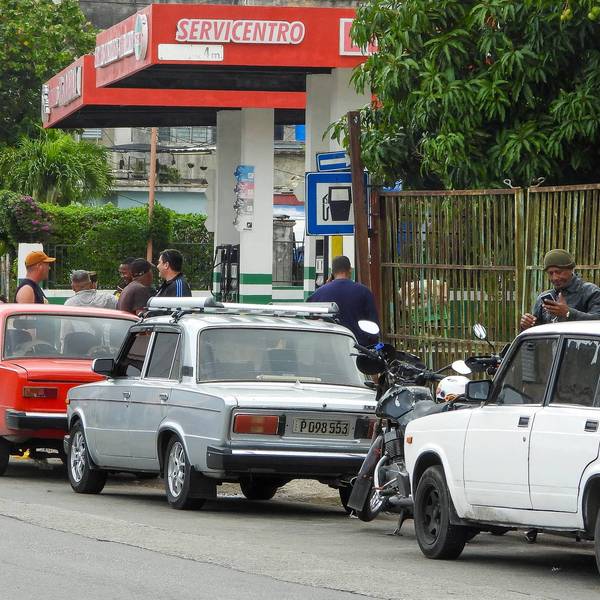
Cuban Deputy Foreign Minister Carlos Fernández de Cossío posted on social media Friday that “the US maintains its fuel embargo against Cuba in full force, and its impact as a form of collective punishment is unwavering.”
“Nothing announced in recent days changes this reality,” he added. “The possibility of conditional sales to the private sector already existed and does not alleviate the impact on the Cuban population.”
Trump’s comments sparked criticism on social media, with one X user writing: “A ‘friendly takeover’ is an interesting phrase in international diplomacy. If the US is discussing Cuba’s future, I’m sure [Russian President] Vladimir Putin is suddenly very interested in the definition of friendly’ too.”
University of North Texas, Dallas political science professor Orlando Pérez said on X that “more often than not, [Trump’s] mouth is his worst enemy.”
“This BS plays into the hands of hard-liners on both sides of the Florida Straits and reduces chances of a negotiated deal,” he added. “Why would anyone in Cuba agree to a deal that leads to a US ‘takeover’?”
Meanwhile, dozens of civil society groups on Friday sent a letter to Congress urging lawmakers “to press the Trump administration to reverse its aggressive policy towards Cuba.”
“Instead, Congress should call on the administration to expand humanitarian relief, support political and economic engagement, and foster a more vibrant private sector that can deliver a better quality of life for the Cuban people,” added the groups, which include Alianza Americas, American Friends Service Committee, CodePink, Demand Progress, Peace Action, Presbyterian Church USA, RootsAction, United Church of Christ, and Win Without War.
Trump’s remarks Friday came in response to a question from NBC News senior White House correspondent Gabe Gutierrez regarding Wednesday’s incident in which Cuban maritime defense forces killed four men and captured six others during a shootout with a Florida-registered speedboat allegedly carrying weapons intended for what Havana called “an infiltration for terrorist purposes.” South Florida has long been a base for right-wing Cuban exiles who have launched numerous terror attacks against the Cuban people and international tourists on the island, including by speedboat strafings.
Trump did not clarify his comments, seemingly suggesting that moves to topple Cuba’s socialist government—which has outlasted a dozen US presidents—could be freshly afoot. Since Cubans overthrew a brutal US-backed dictatorship in 1959, the United States or allied exile forces tried to assassinate former Cuban President Fidel Castro hundreds of times, backed an ill-fated invasion at Bay of Pigs, served as a base for perpetrators of some of the hemisphere’s worst terror attacks, and even hatched a plan to detonate a nuclear bomb high above the island to convince its people that the return of Jesus Christ was nigh and the only thing standing in the way of the so-called “Second Coming” was Castro.
A 64-year US economic embargo on Cuba, which Trump recently worsened by cutting off fuel, has been a leading force crippling Cuba’s economy and is now being blamed for a soaring infant mortality on the island.
Friday’s remarks by Trump came as Iranians and people across the Middle East and beyond are bracing for a possible US attack on Iran—the second in as many years—and less than than two months after the president ordered the bombing and invasion of Venezuela during an operation that ended with Venezuelan President Nicolás Maduro abducted and jailed in United States, where he is expected to face trial for dubious narco-trafficking charges.
If the US strikes Cuba, it will be the 11th country attacked during Trump’s two terms in office. The president—who says he deserves a Nobel Peace Prize—has ordered attacks on Afghanistan, Iran, Iraq, Libya, Nigeria, Pakistan, Somalia, Syria, Venezuela, and Yemen, and has bombed dozens of boats allegedly transporting drugs in international waters in the Caribbean Sea and Pacific Ocean.
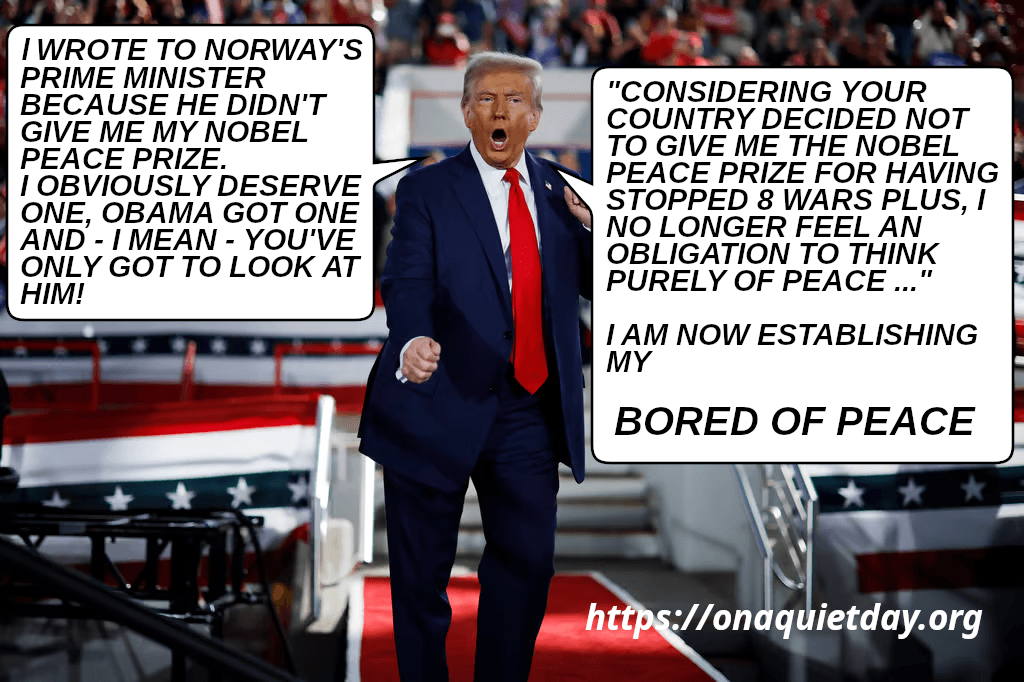
Donald Trump explains why he established his Bored of PeaceOrcas discuss how Trump was re-elected and him being an obviously insane, xenophobic Fascist.Elon Musk urges you to be a Fascist like him, says that you can ignore facts and reality then.
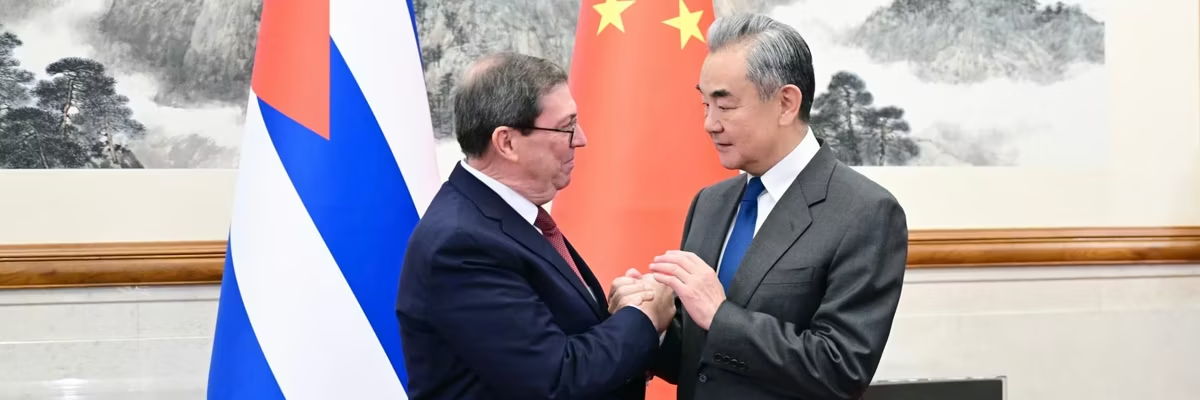
Chinese Foreign Minister Wang Yi shakes hands with his Cuban counterpart, Bruno Rodríguez Parrilla, in Beijing on February 5, 2026. (Photo by Lin Jian/X)
“China firmly supports Cuba in safeguarding national sovereignty and security and opposing external interference,” a Beijing spokesperson said.
As the Trump administration weaponizes its economic privation of the Cuban people in hopes of ousting their socialist government, China on Tuesday reaffirmed its pledge to help alleviate the island’s worsening oil shortage.
Emboldened by his recent abduction of socialist Venezuelan President Nicolás Maduro on legally dubious “narco-terrorism” charges, President Donald Trump is ratcheting up pressure on a people already ravaged by 64 years of what many critics call Washington’s “economic terrorism” and decades of actual terrorism committed by US-based right-wing Cuban exiles.
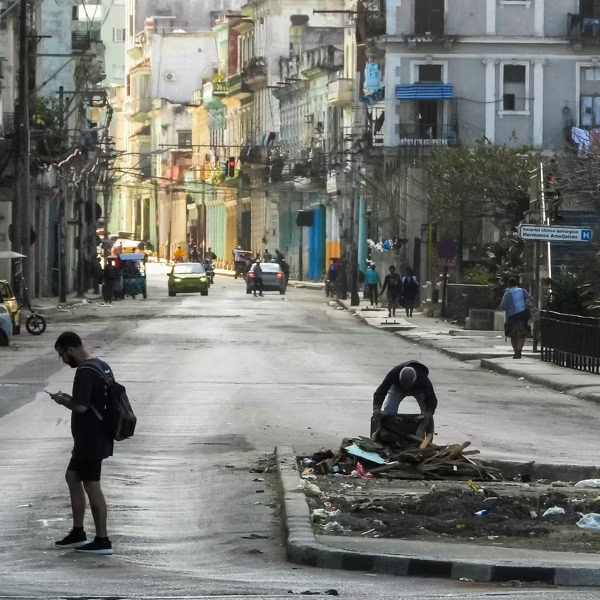
Cut off from the Venezuelan petroleum that provided around 75% of Cuba’s imported oil just a few years ago, the island is suffering a worsening energy emergency. The Cuban government has responded by strictly rationing fuel and seeking alternate sources of oil such as Mexico and, to a lesser extent, Russia.
“I would like to stress again that China firmly supports Cuba in safeguarding national sovereignty and security and opposing external interference,” Chinese Foreign Ministry spokesperson Lin Jian said during a press conference.
“China stands firmly against the inhumane actions that deprive the Cuban people of their right to subsistence and development,” he added. “China will, as always, do our best to provide support and assistance to Cuba.”
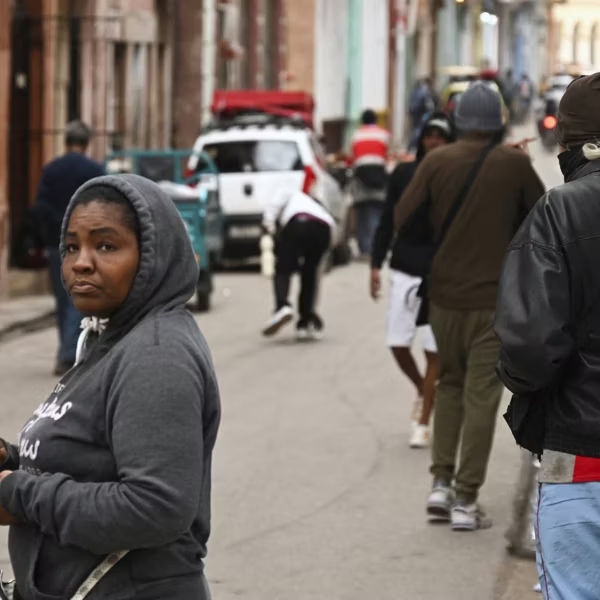
As is usually the case when Washington tightens the screws on Cuba, everyday Cubans are suffering the most.
“You can’t imagine how it touches every part of our lives,” Marta Jiménez, a hairdresser in Cuba’s eastern city of Holguín, told CodePink co-founder and frequent Common Dreams opinion contributor Medea Benjamin, who traveled to Cuba last week with a group to deliver 2,500 pounds of lentils.
“It’s a vicious, all-encompassing spiral downward,” Jiménez continued. “With no gasoline, buses don’t run, so we can’t get to work. We have electricity only three to six hours a day. There’s no gas for cooking, so we’re burning wood and charcoal in our apartments. It’s like going back 100 years.”
“The blockade is suffocating us—especially single mothers,” she added, “and no one is stopping these demons, Trump and [Secretary of State] Marco Rubio.”
The United Nations General Assembly has voted overwhelmingly every year but once since 1992 to condemn the US blockade on Cuba. Last October, the UNGA voted 165-7 against the embargo, with 12 abstentions.
Orcas discuss how Trump was re-elected and him being an obviously insane, xenophobic Fascist.Donald Fuhrump says that Amerikkka doesn’t bother with crimes or charges anymore, not being 100% Amerikkkan and opposing his real estate intentions is enough.Elon Musk urges you to be a Fascist like him, says that you can ignore facts and reality then.
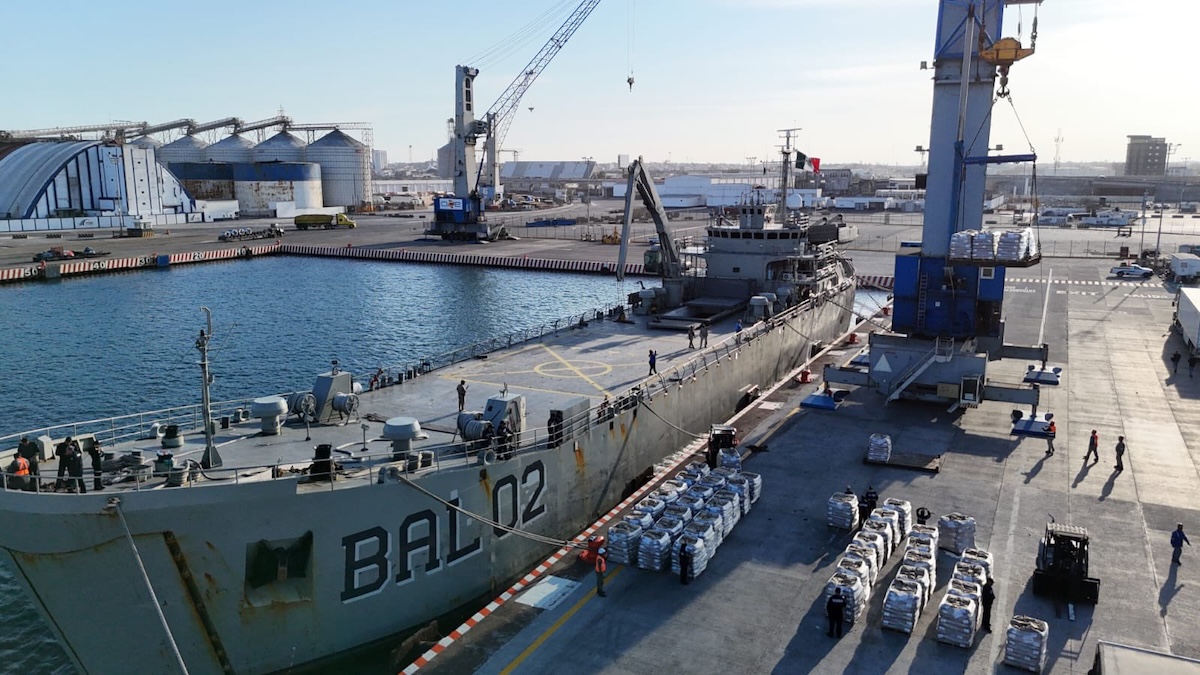
Shipment of humanitarian aid leavez Mexico for Cuba. Photo: MFA Mexico
Hundreds of tons of food were sent from the port of Veracruz to the island as the island faces one of its most critical challenges. Mexico also promised to send hundreds of tons of food in the coming weeks.
The government of Mexican President Claudia Sheinbaum announced the shipment of 814 tons of milk, meat, beans, rice, and other foodstuffs to Cuba on Sunday, February 8. The move came days after Cuban President Miguel Díaz-Canel presented a series of emergency measures being adopted by his government to mitigate the impact of the severe fuel shortage facing the island.
Cuba is currently facing a serious crisis, provoked by recent maneuvers from the US government which, emboldened by its massive military build up in the Caribbean and its recent bombing of Caracas, has sought to further tighten the blockade on the island, hoping to finally force the overthrow of the government. On January 29, Trump announced an executive order under which any country that trades hydrocarbons with Havana will see a 10% increase in tariffs on its products exported to the United States. The executive order was said to have targeted Cuba’s main energy suppliers: Venezuela, Mexico, and Russia.
Venezuela was already effectively forced to halt oil shipments to Cuba due to the naval blockade imposed by the US against Venezuela, which already resulted in the illegal seizure of a Cuba-bound Venezuelan oil tanker.
Russia, a country which, due to heavy sanctions, is the most decoupled from the US economy, has declared that it will continue supplying fuel to Cuba. The government has said that “the situation in Cuba is truly critical” and top government spokesperson Dimitry Peskov, said “We are in close contact with our Cuban friends through diplomatic and other channels.”
Mexico, for its part, announced that it was engaged in negotiations with the US over oil shipments. President Claudia Sheinbaum has openly declared her rejection of the Trump measure: “You can’t suffocate people like that. It is very unfair.”
She also promised that Mexico would continue to help Cuba in any way possible: “We will continue to support Cuba and take all necessary diplomatic action to resume oil shipments.” In recent days, after learning of the Trump administration’s “threat”. Mexico, one of the few countries that sent oil to Cuba, said it would consult with Washington to determine the extent of possible retaliation.
According to Cuban President Miguel Díaz-Canel, not a single drop of oil has entered the island in 2026, posing a serious threat to a country that depends heavily on fuel for its power grid and to keep transportation, health, education, and other key systems functioning. Government officials and political analysts have claimed that the recent measure seeks to annihilate the Cuban people.
Former Colombian President Ernesto Samper shared this opinion in a post: “SOS for Cuba. The genocide of the Cuban people is being prepared by suffocating their vital conditions for survival. A United Nations humanitarian mission could lead a deployment of humanitarian ships loaded with the fuel that the island needs today, like the oxygen we breathe every day to stay alive.”
Mexican solidarity with Cuba
For his part, the Cuban president said, regarding the Mexican shipment that departed in two ships from the port of Veracruz: “Thank you, Mexico. For your solidarity, affection, and always warm embrace of Cuba.”
Cuban Foreign Minister Bruno Rodríguez wrote on X: “We thank the Government of Mexico, under the leadership of President Claudia Sheinbaum, for sending more than 800 tons of aid to Cuba, amid the intensification of the blockade following the recent Executive Order by the US government. While some try to suffocate our population, sister nations extend their hand in solidarity.”
Orcas discuss Donald Trump and the killer apes’ concept of democracy. Front Orca warns that Trump is crashing his country’s economy and that everything he does he does for the fantastically wealthy.Elon Musk urges you to be a Fascist like him, says that you can ignore facts and reality then.Donald Fuhrump says that Amerikkka doesn’t bother with crimes or charges anymore, not being 100% Amerikkkan and opposing his real estate intentions is enough.
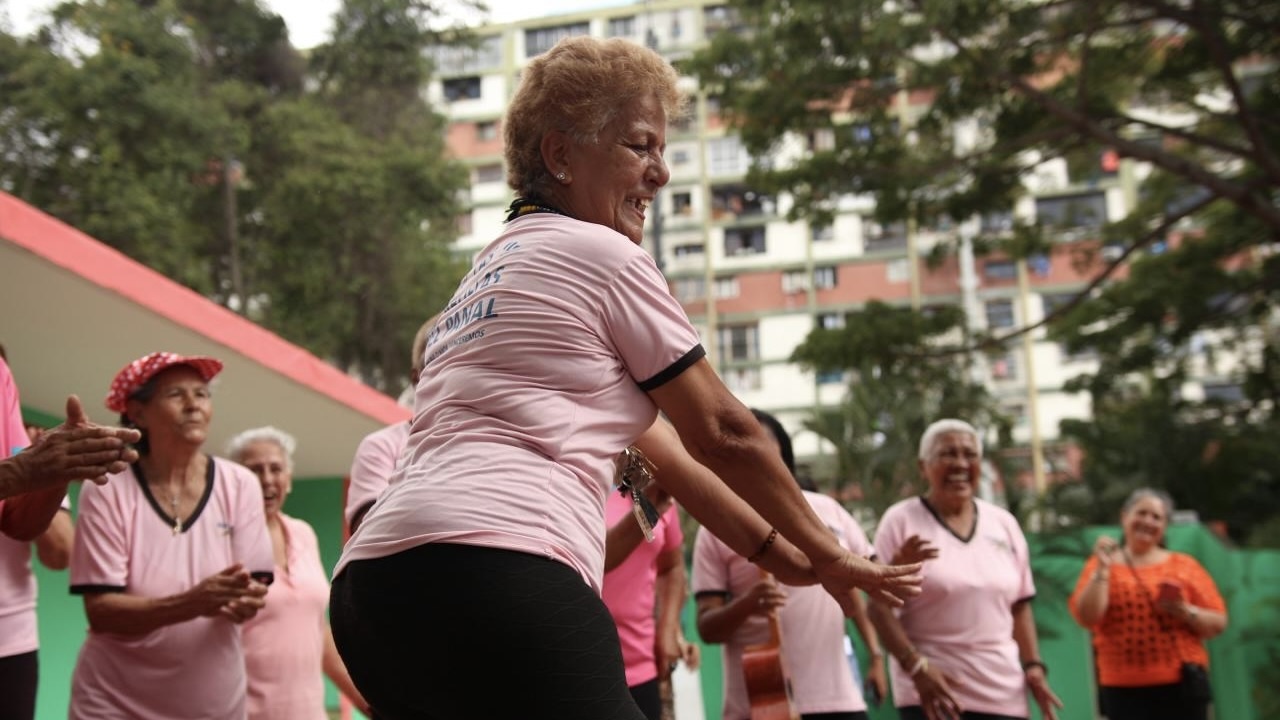
Las abuelas del Panal (The Grandmothers of the Panal, a commune in Caracas) dance as part of their regular exercise class. Photo: Celina della Croce
Unlike social democratic projects in the West, Venezuela’s Bolivarian Revolution has set out to fundamentally transform society and build a socialist project rooted in class struggle and run by its people.
US President Donald Trump has not shied away from admitting his thirst for Venezuelan oil. On December 16, 2025, in the leadup to the January 3 bombing of Caracas and kidnapping of the country’s president and first lady, Nicolás Maduro and Cilia Flores, he claimed ownership over Venezuela resources, stating that “America will not … allow a hostile regime to take our Oil, Land, or any other Assets, all of which must be returned to the United States, IMMEDIATELY”. In his previous administration, he echoed the same obsession with resource-driven regime change, decrying in June 2023 that “When I left [office], Venezuela was ready to collapse. We would have taken it over. We would have gotten all that oil. It would have been right next door.” Yet Venezuela is not only home to the world’s largest known oil reserve, but also the continent’s largest gold reserves and an ample supply of bauxite, diamonds, iron ore, nickel, and coal … And, not least of all, hope.
Trouble at home
Within his own borders, Trump faces heightened civil unrest, with over 100,000 people in Minneapolis alone taking to the streets (roughly a quarter of the city’s population) during a January 23 general strike (an action that has not been seen on this scale for decades) and again during a January 30 nationwide shutdown. Similar uprisings have spread across the country, from Los Angeles to New York, following ICE’s murder of Renée Good and Alex Pretti. This massive outpouring follows a year of discontent and marches decrying Trump’s anti-immigrant, anti-poor policies.
The escalation of ICE’s tactics under the Trump administration has cost US taxpayers, reaching an all-time high of 85 billion USD in allocated funds (compared to annual spending that has hovered around 10 billion USD or less for the past decade). Much of these funds go to benefit private corporations: for instance, 86% of detainees are held in private, for-profit prisons (whose stocks skyrocketed as a result of Trump’s election and subsequent policies), and the cost of deportation flights, also run by private companies, is astronomically higher than commercial flights (the per-person cost of a deportation flight from El Paso to Guatemala, for example, is USD 4,675—five times higher than a commercial first-class ticket for the same route). At the same time, Trump’s administration has slashed social spending, with a 186-billion USD reduction to Supplemental Nutrition Assistance Program (SNAP) benefits alone (a program that, up to that point, helped 1 in 8 people in the US with the basic provision of food).
In the United States, and the West in general, there is a deep-seated narrative that this is just the way things are. Perhaps we can tone back the violence – swap out a Donald Trump for a Joe Biden who is more cautious with his tactics and open to mild concessions but no less interested in protecting capitalist profits at all costs. Even key figures in Trump’s own party, from Senators Josh Hawley (R-MO) and Todd Young (R-IN) to Trump’s former Vice President Mike Pence, have sought to distance themselves from his extreme tactics and distaste for liberal democracy (a general audacity that risks backfiring lest it create sufficient dissent and turmoil to provoke a mass uprising and turn to the left). Yet neither party is willing to allow anything further than a meek liberal democracy beholden to the interest of a small but powerful elite, at most with enough provisions to keep the general population at bay.
Venezuela’s break with the end of history
The US population, like much of the world, has been told, time and time again, that History has ended. We may be able to eke out higher wages, and certainly demand that the heightened assault on liberal democracy through ICE and the openly fascistic declarations by Donald Trump be brought under control, but anything beyond that is painted as impractical at best, and perilous at worst. Just look at the Soviet Union, we are told – it just doesn’t work. Socialism sounds nice, but look at the suffering in Venezuela and Cuba. You don’t want that, do you?
Yet this way of understanding the past, present, and future not only seeks to protect the interests of capital, tricking many working-class people into betraying their own interests, but is wildly inaccurate through both omission and outright lies. And it seeks to cover up another extraordinary resource that Venezuela represents: a living example of hope, of unmovable dignity, of the success of a revolution that has not only brought a population out of extreme poverty but has lifted up its confidence and consciousness. In a country under extreme siege by more than 1,000 US-led unilateral coercive measures, there are nonetheless a fraction of the amount of homeless people in the US (where there are roughly 28 vacant homes to every 1 homeless person).
At the height of the crisis in Venezuela, as Trump ramped up his maximum pressure campaign, 40,000 Venezuelans died in a single year (2017-2018) due to the lack of medicines and healthcare that had previously been provided freely to the population. Even then, the vast majority of Venezuelans have continued to fight to defend not only their right to self-determination, but also to revolution and transformation. What exactly are the Venezuelan people fighting for that the US government tries so hard to cover up? What is the source of resiliency and loyalty to the Bolivarian Revolution, despite the tremendous human cost of US-led efforts to overthrow it? And, what is the “unusual and extraordinary threat” that Venezuela poses to the US – as then President Barack Obama decreed in a 2015 executive order that paved the way for the economic siege?
The Venezuelan “threat”
When President Hugo Chávez came to power in 1999, a revolutionary process began that would set out to repay the “social debt” owed to the Venezuelan people, beginning by dedicating 75% of national spending to social investment – funds, importantly, generated by the country’s historically predominant oil sector. Through missions that began the year Chávez was elected, the country elevated its population out of poverty and illiteracy, reaching a 100% literacy rate, with more than three million people learning how to read and write (Mission Robinson); training 6,000 professionals in universities and graduating one million high school students (Mission Sucre); granting nearly 5 million homes to families across the country (Mission Vivienda); building health clinics in 320 of Venezuela’s 355 municipalities (Mission Barrio Adentro); and restoring the eyesight of some 300,000 Venezuelans while providing eye surgery to 1 million (Mission Milagro).
President Nicolás Maduro has continued this legacy, despite the duress imposed by the US-led unilateral coercive measures imposed in the years following Chávez’s death, ensuring not only that the country’s resources benefit the well-being of the majority, but also that power is given back to the people through a model of direct democracy. Weeks before he was kidnapped, for instance, Maduro convened the Constitutional Congress of the Working Class, the culmination of 22,110 assemblies in workplaces across the country in which delegates debated and made proposals to the president about the future of the country’s labor sector and productive processes, such as strengthening domestic production of machinery components in order to reduce external technological dependency. Aprobada (“approved”), Maduro told delegate María Alejandra Grimán Rondón as she presented him with the conclusions of the congress in front of a packed auditorium; for another proposal, “the method still needs to be refined”, he replied, outlining next steps for further debate. Furthermore, communes (grassroots organizations at the heart of Venezuela’s direct democracy through which communities exercise self-governance) have engaged in quarterly national consults since 2024, with millions voting on the allocation of government funding for thousands of projects that most need attention in their communities, from updating medical equipment in their local health clinics to investing in water filtration supplies to ensure access to potable water.
Both of these processes are part of a model of direct democracy that, in the 27 years of the Bolivarian Revolution, has held 31 elections, carried out constitutional reform, and created structures for everyday people to make direct decisions about the path of the country. In short, while the accomplishments of the revolution are far too numerous to list here, at their core is a people who have reclaimed their dignity, taken control of their future, and made the irreversible decision to stand upright.
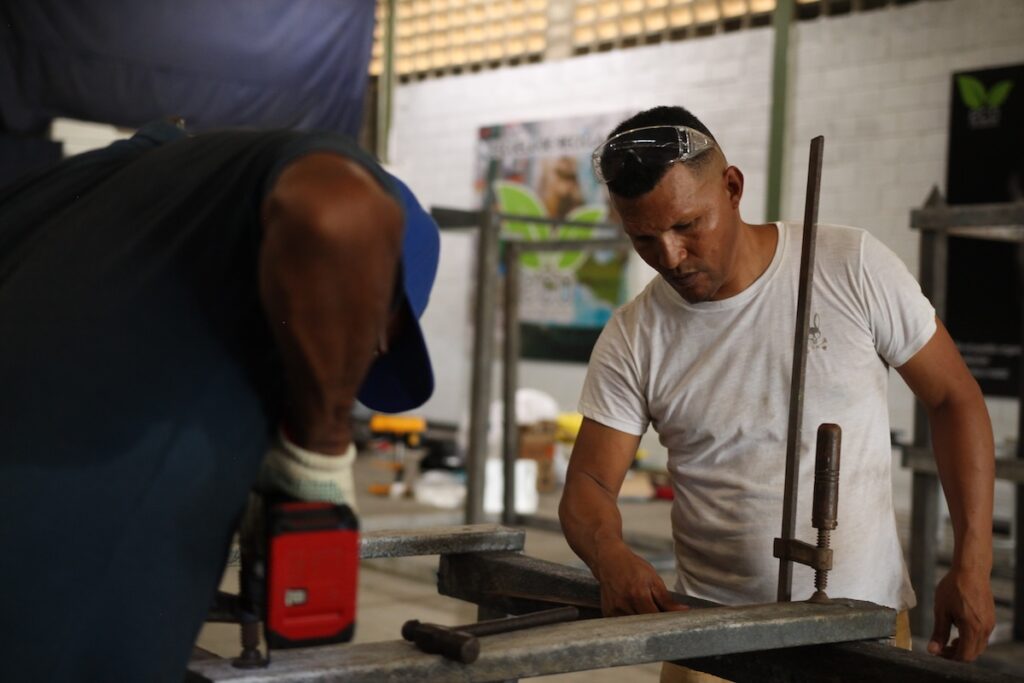
Members of the Fruto Vivas Recycling School (Escuela de Reciclaje Fruto Vivas) in Barcelona, Anzoátegui, assemble a playground with materials they produced from recycled plastic. Members of the school collect the plastic, sort it, melt it, and then mold it into the pieces required to build a given product based on the needs of the community as well as other paid contracts which generate funds to continue the school’s work. Photo: Celina della Croce
Unlike social democratic projects in the West, Venezuela’s Bolivarian Revolution has set out to fundamentally transform society and build a socialist project rooted in class struggle and run by its people. That means that the social advances are also tied to a process of raising consciousness among the population, whereby people become the protagonists of their own struggle in a process that ultimately seeks to give them the power and tools to run the country, replacing the bourgeois state with a communal one. In this system, decisions are made by the population which is organized into communes and various social and political movements across the country. Through these processes, people learn how to run productive processes, from coffee to construction materials, and be effective owners of their own means of production; how to engage in popular decision-making processes across thousands of households; run communications teams; carry out education programs; identify, prioritize, and fix issues in their communities; and other elements that are necessary for a productive society that prioritizes the well-being of its people. All of this is done in line with coreprincipals such as protecting the planet (with some communes collecting recyclable plastics and turning them into playgrounds, benches and chairs for the elderly and schoolchildren, and other needs expressed by the community) and centering the leadership and rights of women and marginalized sectors.
What does the future hold for the nobodies?
This dynamic process is a continuation of the path set out by Chávez, one that called upon the “nobodies” to be the makers of their own destiny. These “nobodies” (today the protagonists of one of the world’s most resilient and equitable democracies) have shown, time and time again, that they will not sacrifice their dignity nor sovereignty at any cost, no matter how severe the threat. This example is no less valuable a resource than the country’s oil, nor any less of a threat to the Trump regime and US agenda at large. The example set by the Bolivarian Revolution and its people creates a fissure in the narrative that the US (and the world) population must make the best of what we have, go to work every day with our heads down and spirits crushed, and forfeit our dreams of a better world. It opens a window for the nobodies of the world (and especially of the US) to see that on the other side of events like the mass uprisings sweeping the country, they, too, could live in a society where the wealth that they themselves generate is reinvested into the common good rather than paying for bombs and lining the pockets of the few.
Celina della Croce is a writer, editor, and the publications director of Tricontinental: Institute for Social Research. She has been an organizer and leader in internationalist, anti-imperialist, and working-class struggles in the United States for over a decade.
Donald Fuhrump says that Amerikkka doesn’t bother with crimes or charges anymore, not being 100% Amerikkkan and opposing his real estate intentions is enough.Elon Musk urges you to be a Fascist like him, says that you can ignore facts and reality then.