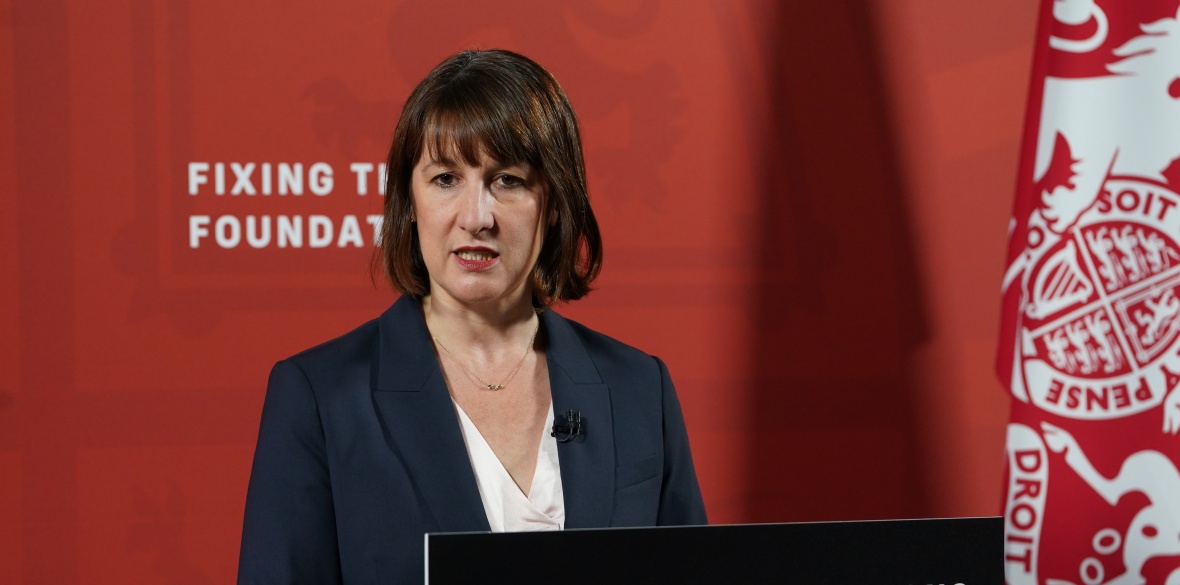
Labour urged to act over 9% rise to energy bills

Spread the love

https://morningstaronline.co.uk/article/b/splash-288

ENERGY prices are set to rise by 9 per cent in October, experts revealed today — with the “alarming” increase accompanying winter fuel payment cuts.

A typical household’s energy bills are expected to rise to £1,714 a year, up from £1,568, according to energy consultancy Cornwall Insight.

The group said that while the figure is less than the cap previously predicted, there are also likely to be further “modest increases” in January and more rises early in the year due to “recent tensions in the Russia-Ukraine war.”

End Fuel Poverty Coalition co-ordinator Simon Francis said that instead of offering help, the government has axed winter fuel payments to millions and refuses to confirm if the Household Support Fund will be extended.

“The reality is that bills will go up compared to today and will be around 65 per cent higher than they were before the energy bills crisis started.

https://morningstaronline.co.uk/article/b/splash-288

Continue ReadingLabour urged to act over 9% rise to energy bills

Labour hiding data on how many people Tory-led DWP killed

Spread the love

Original article by SKWAWKBOX (SW) republished from the Skwawkbox.

Liz Kendall – continuing the Tories’ treatment of the vulnerable (image: Skwawkbox)

Could anything provide better proof that Starmer’s party is just the red-badged version of the murderous Tories?

Liz Kendall’s (DWP) is trying to block the release of data from reports compiled under the Tories on how many people’s deaths were linked to the hated and punitive Universal Credit (UC). If released, the information is expected to show what internal investigations were carried out by the DWP into the deaths of claimants since 2019.

Data the Tories did release in 2021 showed that 43% of UC claimants were in food poverty – well before the steep rises in food and energy prices caused by corporate price-gouging in the so-called ‘cost of living emergency. The previous year, the Conservative government had been heavily criticised by the United Nations’ poverty expert for its intentional cruelty and the misery it inflicts on millions.

The Tories have a long record of hiding information about the impact of their policies on the vulnerable. Data on the impact of the punitive benefit ‘sanction’ regime on poor claimants was blocked by then-DWP Secretary Therese Coffey. The Tories had commissioned the research themselves into whether benefit sanctions did any good – then hid the results of their investigation and applied more sanctions anyway, more than half a million every year.

The Disability News Service (DNS) had been trying since November to obtain the DWP data on the number of internal process reviews (IPRs) it carried out following deaths of UC claimants and what actions investigators had recommended the DWP take to prevent further deaths.

Last month, the Information Commissioner’s Office (ICO) ordered the Labour DWP to release the information, but the ICO has announced that the Labour government is appealing the decision and trying to block the release.

DNS had also reported that Labour is also blocking the release of information about IPRs carried out into the work capability assessment (WCA) under the Tories. As commentator Kernow Damo has pointed out, Labour is withholding information that would damn the Tories – and the only feasible reason for doing that is because Keir Starmer’s DWP Secretary, right-wing horror Liz Kendall, is planning to continue the Tories processes and policies.

Despite the refusal of the Tories, and now Labour, to disclose the requested information, academic studies of the impact of austerity – of which benefit cuts and sanctions form a major part – have linked it directly to at least 300,000 deaths since 2010. A 2018 study found that almost half of disabled people claiming benefits had attempted suicide and another university study around the same time found that the Tories were using austerity to commit ‘social murder’.

Keir ‘Starver‘ Starmer has already suspended Labour MPs for voting against his plan to continue the two-child benefit cap that pushes hundreds of thousands of children into poverty and hunger, while Chancellor Rachel ‘Freeze’ Reeves has announced that most pensioners will lose the Winter Fuel Allowance that prevents them freezing in cold weather.

Despite these findings of the effect of austerity and punitive benefit systems, Labour plans to roll out UC to hundreds of thousands of disabled people from next month – and, as Skwawkbox exclusively revealed last year, did not even both to conduct an assessment of the impact on disabled people and other vulnerable claimants of its plans to ape Tory policies.

It’s hard to imagine a more perfect proof that Labour is the Tory party with a red rosette than the red Tories trying to hide proof of the evils of the blue Tories they’re supposed to be opposing.

Original article by SKWAWKBOX (SW) republished from the Skwawkbox.

Continue ReadingLabour hiding data on how many people Tory-led DWP killed

Pressure mounts on Labour to scrap cruel ‘sibling penalty’

Spread the love
Image of Keir Starmer and a poor child.
Zionist Keir ‘Kid Starver’ Starmer. Image thanks to The Skwawkbox.

https://morningstaronline.co.uk/article/pressure-piles-labour-scrap-cruel-sibling-penalty-campaigners-warn-most-large. Many articles from the Morning Star today.

PRESSURE piled on Labour to scrap the government’s cruel “sibling penalty” today as campaigners warned it’s set to push the majority of large families below the poverty line by the end of this parliament.

The two-child benefit limit, introduced in 2017, stops parents from claiming universal credit or child tax credit for more than two children.

But figures from the Department for Work and Pensions show 1.6 million children are now affected by the policy, rising by 100,000 in a year.

The Resolution Foundation warned the policy will push most large families below the breadline by the end of the parliament and said abolishing it would lift 490,000 children out of poverty.

Sir Keir Starmer pledged to reduce child poverty at Labour’s manifesto launch, but failed to commit to scrapping the cap.

https://morningstaronline.co.uk/article/pressure-piles-labour-scrap-cruel-sibling-penalty-campaigners-warn-most-large. Many articles from the Morning Star today.

Continue ReadingPressure mounts on Labour to scrap cruel ‘sibling penalty’

The UK doesn’t work for Disabled people. Neither Labour or the Conservatives will change that

Spread the love

Original article by Mikey Erhardt republished from Open Democracy under a Creative Commons Attribution-NonCommercial 4.0 International licence

Neither Keir Starmer nor Rishi Sunak has any real plan to improve the lives of Disabled people | Jonathan Hordle – ITV via Getty Images

So far, we’ve heard more about Starmer and Sunak’s parents than the UK’s 16 million Disabled people

“This election is about who our country works for — the patriotic belief that Britain can be better and must be better,” said Kier Starmer concluding the first leaders’ debate earlier this month.

There are at least 16 million Disabled people in the UK – we make up a quarter of the population. We know this country doesn’t work for us, we’ve known that our entire lives. We disproportionately live in poverty, achieve poorer outcomes in education, and are more likely to be unemployed or earn less.

Yet every leadership debate so far has given more time to talking about Starmer and Rishi Sunak’s parents than these problems, which face millions of Disabled people up and down the country.

The general election campaign has solidified that neither the Labour leader nor his rival, incumbent Conservative prime minister Rishi Sunak, has any interest in improving our lives.

It is not as if the Conservatives or Labour don’t know about the issues we face. A United Nations report published in April confirmed that the UK is violating our human rights; a parliamentary committee last month found that “Disabled people undeniably encounter unnecessary and severe barriers to accessing suitable housing in England”; and the Department of Work and Pensions is under investigation by the Equality and Human Rights Commission over its treatment of Disabled claimants.

Disabled people in the UK are not a homogenous group. Some of us experience greater injustice than others. But we also have many things in common. We all want to live in an inclusive society where everyone has a fulfilling life and feels connected and valued.

We know politicians do not place the same worth on our lives as others; every day we experience discrimination, oppression and barriers to our inclusion and full participation in society because they won’t take the action needed to change it.

Years of deep cuts to services and neglect mean societal infrastructure, such as housing, transport and street environment, consistently fails to meet our needs. This structural decline has coincided with anti-migrant, anti-trans and racist policies, leaving ever-increasing numbers of us in poverty, homeless, incarcerated or dead.

The UN report was clear: “There has been no significant progress for Disabled people throughout the UK concerning their right to living independently and being included in the community.

“While some reforms and policies have been undertaken to provide financial support, accessible housing, and transport, this has been inadequate considering the cost-of-living crisis.”

One would expect this damning conclusion to be a key feature of the election campaign. But over the past four weeks, Labour and the Tories have both failed to provide anything of substance to help Disabled people.

Sunak’s Conservatives have instead pledged to shave £12bn a year from the cost of benefits, much of which would come from a crackdown on the personal independence payment (PIP) given to people with extra care or mobility needs. The party also seeks to tighten the work capability assessment (WCA), which would see more Disabled people declared fit to work and denied their benefit.

Labour’s manifesto, meanwhile, is notable for what it lacks. Previous promises to overhaul the welfare system, end punitive sanctions and co-produce disability-related policy with Disabled people are all missing – as are commitments to end care charges, increase carers’ allowance and ensure better provision of accessible housing.

Labour’s vows to improve SEN (special education needs) provision in schools and introduce changes to support Disabled people to gain and retain jobs are sticking plasters at best. Its manifesto sports a glaring lack of immediate investment in disability and carer benefits and social care – and we all know you can’t fix things without investment.

With so little real change on offer, Disabled people must unite and fight back. We can draw inspiration from the experiences of UK-based Disabled activists and the radical disabled resistance of the past 40 years. No changes affecting us have come through without collective struggle and organising.

As part of the DPO Forum England, a collective of Disabled people’s organisations in England, we are committed to joining forces nationwide and unifying our demands. That’s why we came together to create the Disabled People’s Manifesto, which contains radical policy demands for systemic overhaul and transformation. 

We, as Disabled people, must now come together and demand our politicians take up the manifesto and commit to creating a country that values equity, dignity, respect, trust, and support as much as we value anything else. Our political system should be focused on supporting Disabled people to live the lives we have a right to, which no candidate sweating under the bright studio lights can deliver on their own.

Together, we can create space for ourselves and our ideas, and integrate the energy, dedication and skills of our community to create a new future.

Original article by Mikey Erhardt republished from Open Democracy under a Creative Commons Attribution-NonCommercial 4.0 International licence

Jeremy Hunt’s benefit crackdown will worsen an already terrible system

The government’s insulting Disability Action Plan won’t deliver any change

How the DWP fought to withhold evidence its policies kill disabled people

Continue ReadingThe UK doesn’t work for Disabled people. Neither Labour or the Conservatives will change that

How the UK’s social security system stopped tackling poverty

Spread the love
Ultraskrip/Shutterstock

Sharon Wright, University of Glasgow

The cost of living is the most important issue for many voters this election. It’s no surprise why. In 2022, nearly 4 million people in the UK experienced destitution, meaning they could not meet their basic physical needs such as having enough to eat and staying warm.

The UK’s social security system is failing in its core purpose to prevent poverty. And yet the Conservatives have promised more crackdowns on welfare, with the prime minister linking this with his pledge to lower taxes.

When the Conservative-Liberal Democrat coalition government came to power in 2010, they inherited a social security system in radically better shape than it is now. What happened?

During the previous Labour governments (1997-2010), 2.4 million people were lifted out of poverty, including 700,000 children. This was done during favourable economic conditions, but was also the result of progressive social security measures such as tax credits and child benefits.


Want more election coverage from The Conversation’s academic experts? Over the coming weeks, we’ll bring you informed analysis of developments in the campaign and we’ll fact check the claims being made. Sign up for our new, weekly election newsletter, delivered every Friday throughout the campaign and beyond.


People received working-age benefit payments for different needs: jobseeker’s allowance, income support for single parents and incapacity benefit for long-term illness and disability. Housing benefit went directly to landlords to cover claimants’ rent.

Enter the global financial crisis. The Conservative-led government’s response was austerity cuts: cutting back on welfare to tackle the budget deficit.

Lowering the value of benefits is the biggest austerity cut to have affected incomes. In 2010, the government switched from uprating the value of benefits each year in line with the retail price index to using a different measure of inflation, the consumer price index, instead. This is usually lower and effectively makes payments worth less.

This was expected to save the government around £6 billion pounds a year. In 2012, the value of benefits was capped to increase at 1% while inflation was forecast at 5.2%.

Benefit sanctions and caps

In 2012, the government introduced a new system of tougher rules and sanctions on people receiving benefits. Conservative politicians said this would end “the ‘something for nothing’ culture”, but the change has had lasting negative effects.

Benefit sanctions were always part of the system, but became extreme in 2012. If, for example, someone misses one Jobcentre appointment their benefit could be reduced or removed for 28 days.

Woman looking worried and tired sat by window with toddler
Many people receiving benefits have been penalised with sanctions. Bricolage/Shutterstock

Nearly a quarter of all jobseeker’s allowance claimants were sanctioned between 2010 and 2015. Research shows that sanctions have “profoundly negative outcomes”, including on people’s mental health.

Other cuts to incomes followed the Welfare Reform Act 2012. The “bedroom tax” penalised social housing tenants who had “extra” bedrooms. The idea was to reduce renters’ housing benefit so they would downsize to a smaller home. However long-term housing shortages mean that smaller properties are rarely available.

In 2013, the household benefit cap was introduced to limit the maximum amount a family could receive in benefits payments. It had the most impact on families with children and those with high rents.

Universal credit

Universal credit, introduced in 2013, was billed as the biggest shake-up of benefits in 70 years. It promised to make work pay and simplify the system. It replaced separate tax credit, unemployment, lone parent, disability and housing payments with a single payment.

Research from think tank the Resolution Foundation suggests that universal credit provides more support for working people who rent their homes than the previous system. But disabled people who cannot work are likely to be much worse off than under the old system.

There are other problems with universal credit. Unlike under the previous system that gave housing benefit straight to landlords, claimants have to pay their rent from a pot of money provided by the government that is almost certainly too small to cover all their costs.

The first universal credit payment takes around five weeks to arrive, meaning people may fall into rent arrears. A result is that some landlords take legal action to evict those receiving universal credit.

Further cuts

In 2015, the Conservatives abandoned targets set by Labour to reduce child poverty. Then in 2016, new legislation slashed spending again. Benefits were frozen for four years.

The two-child limit was applied to tax credits and universal credit in 2017 to remove income for third or subsequent children. Large families faced increased poverty as a result.

In 2020, the pandemic hit. Universal credit and tax credits were raised by £20 per week, but this ended in late 2021. The cost of living crisis has since widened the gap between benefits and prices.

Today, the value of universal credit falls £890 per month short of the cost of living for single people over 25. This is because of the changes to uprating and the benefit freeze.

In Feburary 2024, charity the Trussell Trust published research showing that over half of people on universal credit had run out of money for food in the previous month.

What can the next government do?

The next UK government must make emergency repairs to social security to halt harrowing declines in health and life expectancy. This should ensure a minimum acceptable standard of living, including restoring the value of benefits such as universal credit to cover the costs of living.

Since 71% of children living in poverty are in working families, employers should be required to pay the real living wage. In-work universal credit also needs to top up wages enough to make work pay.

Repairing the social safety net is an enormous challenge, but public support for it has been on the rise for years. In 2010, many people thought benefit claimants didn’t deserve any help. But from 2015 there has been a growing preference to help people receiving benefits.

Sharon Wright, Professor of Social Policy, University of Glasgow

This article is republished from The Conversation under a Creative Commons license. Read the original article.

Continue ReadingHow the UK’s social security system stopped tackling poverty