Category: benefits
Removing caps on benefits could save the government billions of pounds, study finds

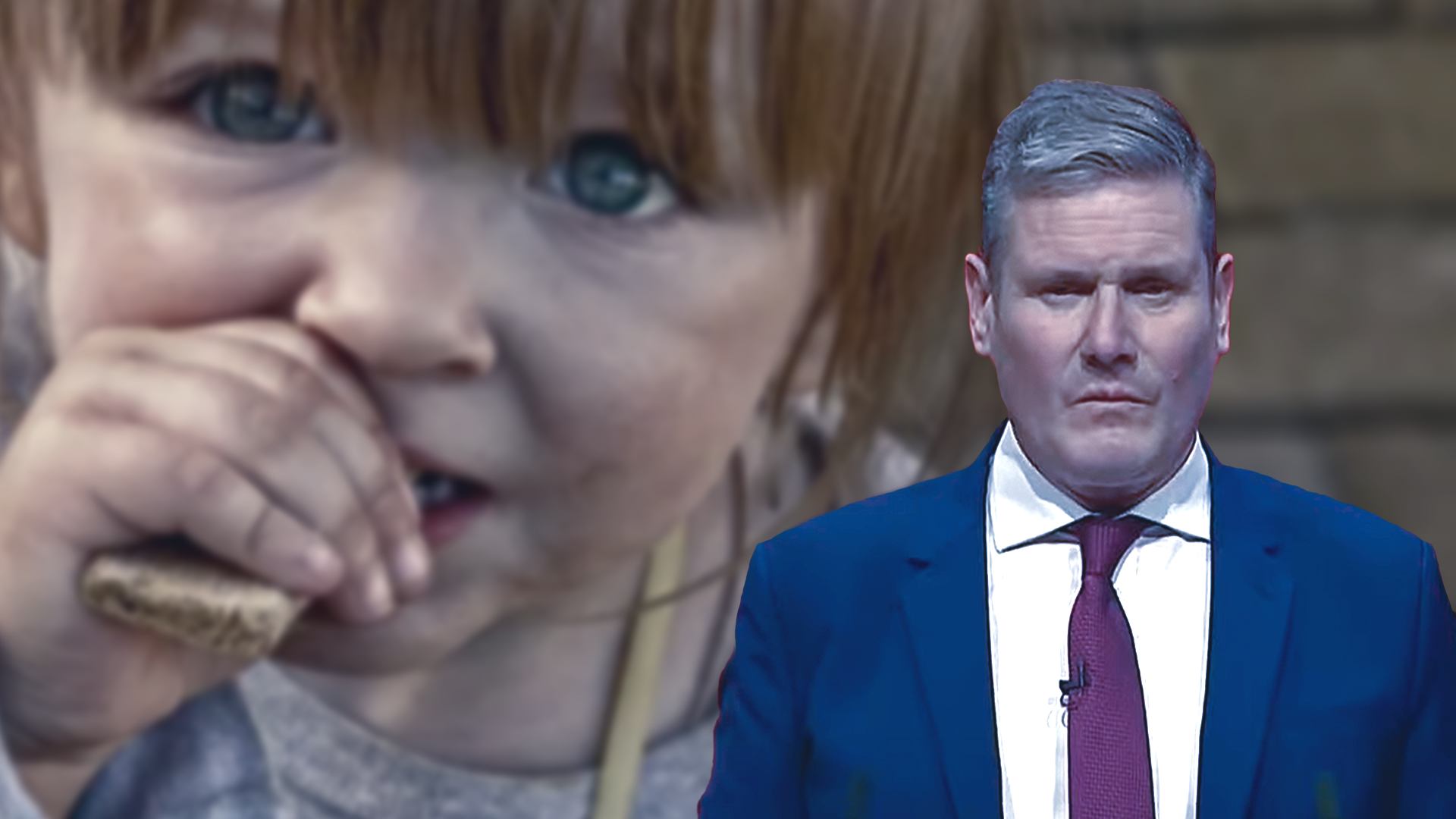
Zionist Keir ‘Kid Starver’ Starmer. Image thanks to The Skwawkbox. REMOVING caps on benefits could save the government billions of pounds rather than cost money, a progressive economic think tank says.
The New Economics Foundation (NEF) report, published today, says that the cost of benefit caps could be outweighed by the gains to be made from abolishing them.
Gains include easing extra pressure on the NHS and other services resulting from the poverty caused by the caps, according to the experts.
The benefit cap was introduced in 2013 by the Conservative and Liberal Democrat coalition government and limits the amount of benefits a household can receive.
The two-child limit was introduced by the Tory government in 2017. It restricts the application of child tax credit and universal credit to the first two children in households.
The NEF estimates that axing the caps could save £1.5 billion a year over the next five years alone through lower demand on public services.
In the longer term — in 20 or 25 years — children lifted from poverty could have estimated future net earnings of £920 million a year higher, with an extra £490m returned to government through taxation and reduced spending on social security.
“In reducing child poverty rates, pressures on the NHS, schools and social services will reduce, enabling the reallocation of resources to other areas of high demand,” the report states.
…

Keir Starmer says pensioners can freeze to death and poor children can starve and be condemned to failure and misery all their lives. 100 days of increasing solitude for Starmer

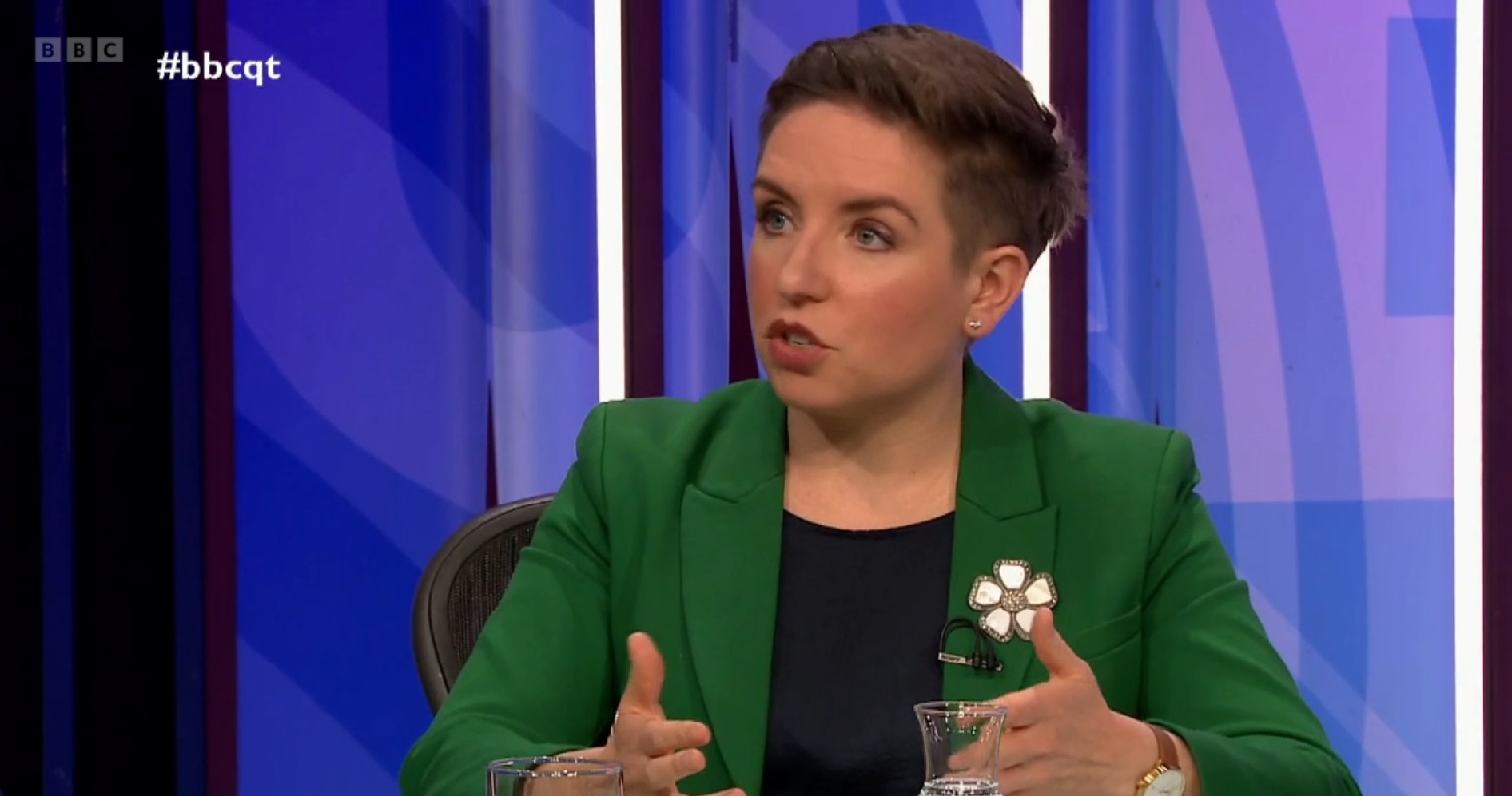
Image of the Green Party’s Carla Denyer on BBC Question Time. Commenting on Labour’s first 100 days in office, Green Party Co-Leader Carla Denyer MP said:
“The collapse in Starmer’s popularity since taking office has been remarkable. It was clear to me during the election campaign that voters across the country wanted change. After 14 years of Tory failure, they expected Labour to deliver it. The public’s sense of disappointment is palpable.
“Instead, we have a government aligned with Tory austerity. The two-child benefit cap and the scrapping of the Winter Fuel Payment for millions of pensioners are both examples of how this government’s default has been to make the most vulnerable in our society pay. The ‘black hole in our finances’ should, and could, be solved by asking the wealthiest to pay just a fraction more. Instead, Labour seems content with letting the poorest bear the brunt.
“It doesn’t have to be this way. We are one of the richest countries in the world, yet deeply unequal. The Chancellor has hinted that she is willing to borrow more to invest in much-needed infrastructure, which is welcome. But we also need to address the source of everyday revenue spending.
“The last fourteen years have seen the rich get richer, with the top fifth now owning a third of the country’s wealth. It’s only fair that those with the broadest shoulders should now pay a bit more to help our NHS, rebalance society, and improve living standards for everyone. A wealth tax, alongside other changes to the tax system, could deliver this.
“We as a country, and particularly the Labour government, face a political choice. Will they tax more fairly to properly invest in our crumbling frontline services, or will they continue to oversee managed decline and austerity economics? The Greens will, every day, keep pushing for them to properly invest in Britain.”
Keir Starmer commits to play the caretaker role for Capitalism through the “hard times”. Labour continues popularity freefall as it marks 100 days in government

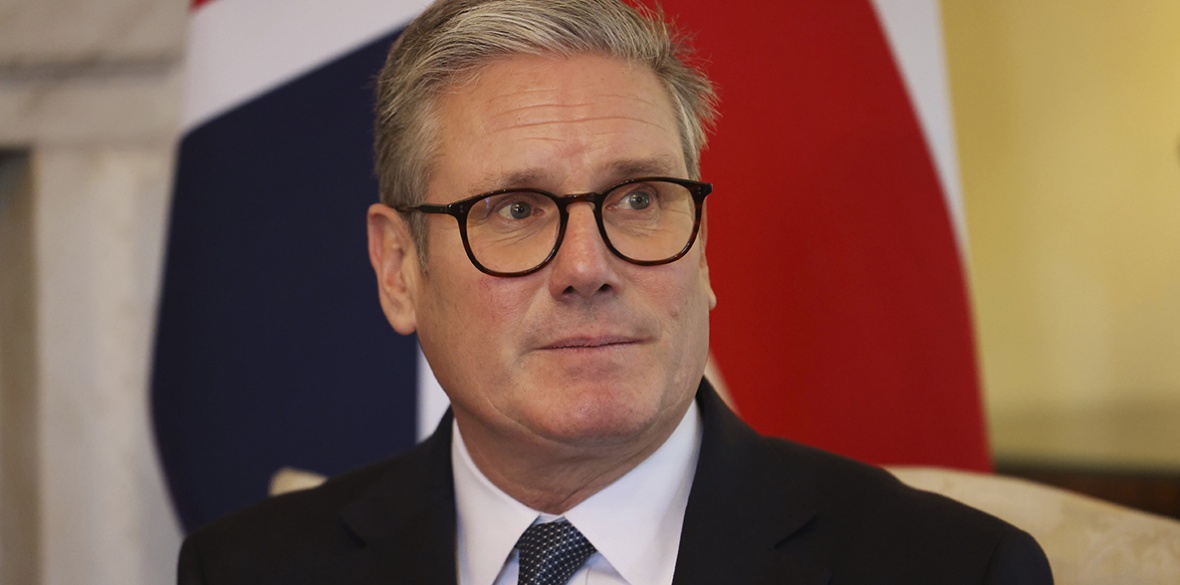
Prime Minister Keir Starmer during his talks with Nato Secretary General Mark Rutte in Downing Street, in London, October 10, 2024 LABOUR and Prime Minister Sir Keir Starmer’s approval ratings are still nosediving as the government marks 100 days in office tomorrow.
New Ipsos polling reveals Sir Keir’s net popularity has fallen to a record low of minus 26 points — worse than Reform leader Nigel Farage.
Rachel Reeves was doing even worse at minus 30 points with four in nine saying she is doing a bad job as Chancellor.
Experts blamed No 10 “turf wars,” scandals over ministerial freebies and cutting pensioner benefits as the Labour Party’s net popularity also plummeted 13.5 points to minus 21 points since the general election.
…
Keir Starmer explains that he feels no shame or guilt benefitting personally from gifts from the rich and powerful while insisting on policies of severe austerity causing suffering and death. 
Zionist Keir Starmer is quoted “I support Zionism without qualification.” He’s asked whether that means that he supports Zionism under all circumstances, whatever Zionists do. 
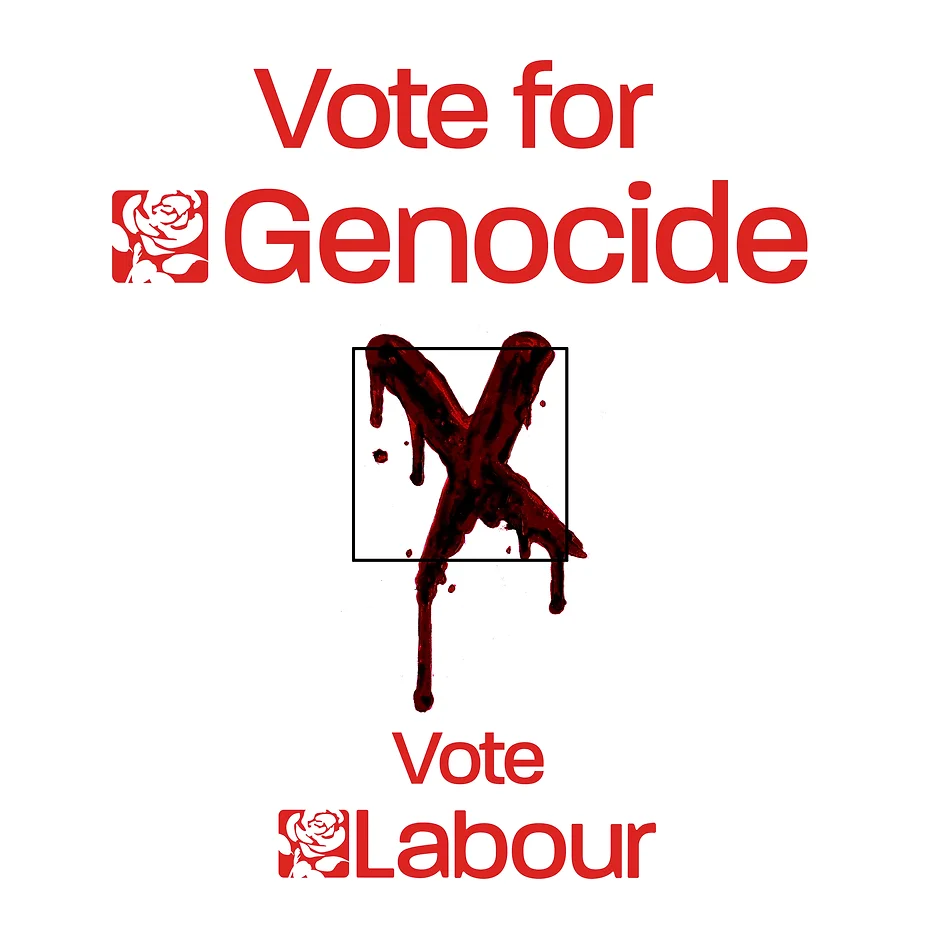
Vote For Genocide Vote Labour. Plans to spy on Disabled people’s bank accounts show Labour isn’t for change
Original article by Mikey Erhardt republished from Open Democracy under a Creative Commons Attribution-NonCommercial 4.0 International licence.

The prime minister may have changed, but the welfare policies are the same | Anthony Devlin/Bloomberg via Getty Images Disabled people are once again living under a government pursuing ever more surveillance of our lives
The Labour government is barely 100 days into office and even its supporters have been reduced to half-hearted attempts at optimism. But this ‘it’s not all doom and gloom’ narrative rings hollow to many Disabled people.
Yet again, we are living under a government pursuing ever more surveillance of our lives. Another prime minister is happy to subject us to increased benefit sanctions and reduced rights.
So much for the party of change. Keir Starmer used his first Labour Party Conference in power last month to make clear that when it comes to Disabled people, his government’s priorities are the same as its predecessors – namely “getting the welfare bill down”.
To this end, the prime minister will continue plans set out by the previous Conservative government to monitor the bank accounts of the 6.3 million people claiming disability benefits without their knowledge. The proposals are expected to be included in the Fraud, Error and Debt Bill, which was announced by the government last month.
Kieran Lewis, rights and migration policy officer at National Survivor User Network (NSUN), told openDemocracy that he is “disappointed at Keir Starmer’s repackaging of invasive bank-spying powers that we and so many other groups pushed back against under the last government”.
The NSUN – which works with people who have lived experience of mental ill-health, distress, and trauma – was a core part of the coalition opposing these powers when the Tory government proposed them mere months ago.
Lewis continued: “Surveillance of this kind is a threat to everyone, and those of us who live with mental ill-health, distress and trauma will feel its effects particularly sharply.
“The harsh rhetoric espoused by Keir Starmer, a continuation of previous governments’ negative messaging, has had considerable impact on Disabled people and other groups of marginalised people.”
Starmer’s conference pledge to “legislate to stop benefit fraud” may be a familiar rhetoric – but it’s one built on shaky foundations. Some 75% of Universal Credit overpayments recorded by the Department for Work and Pension’s debt manager system in 2021 were due to an ‘official error’ – meaning the government miscalculated the amount to be paid – according to new research from the Public Law Project.
The research also found that the subsequent deductions that the DWP inflicts following such ‘overpayments’ led 26% of people to report resorting to food banks. Almost one in ten said they had slept rough due to a deduction.
Elsewhere in his conference speech, Starmer vowed to be “a great reforming government”. Disabled people have already lost an average of £1,200 a year thanks to the ‘reforms’ of the past 15 years, including the introduction of Employment and Support Allowance, the Work Capability Assessment, Personal Independence Payment, the bedroom tax, the benefit cap, the two-child limit, and Universal Credit.
All of these measures have combined to leave the UK with one of Western Europe’s least generous welfare systems. Staff at the Greater Manchester Disabled People’s Panel, which runs regular peer-support group sessions for those navigating the social security system, told openDemocracy there is a serious risk that Starmer’s plans will lead to welfare payments for Disabled and working-class people being wrongfully suspended, forcing them to deal with burdensome appeals processes.
It is important to recognise that ‘benefits fraud’, which the Labour Party appears likely to dedicate so much time to, is a non-issue. The fraud rate for disability benefits is 0.2%. That’s far lower than the percentage of Labour ministers who took free Taylor Swift concert tickets this summer. When will there be a crackdown on that?
Ironically, Starmer closed his conference speech by saying that “every community” should have “the breathing space, the calm, the control to focus on the little things they love in life, not the anxiety and insecurity we have now.”
This is at odds with the experiences of the Greater Manchester Coalition, whose staff told openDemocracy: “We see Disabled people struggling to obtain much-needed benefits, and if obtained, struggling to keep those benefits.
“Having to already prove and then re-prove they’re not fraudsters, being assessed, reassessed and reviewed is a relentless often degrading, soul-destroying experience that leads many to abandon the process.”
This dire situation will only be worsened by the Fraud, Error and Debt Bill, which will massively increase financial surveillance and create yet another punitive, disabling barrier for Disabled people to contend with.
It will put many of us under tremendous stress and, as the Greater Manchester Coalition noted, could leave even more of us “isolated and particularly vulnerable. For some, especially those in mental health crisis, this places them in great harm.”
In short, Disabled people know this bill is not the way forward. If only our community had more music festivals and football games to invite ministers to – imagine how our social security system could look then.
Original article by Mikey Erhardt republished from Open Democracy under a Creative Commons Attribution-NonCommercial 4.0 International licence.
Keir Starmer confirms that he is continuing Tory policies and that he’s proud to be a red Tory.