Category: Climate Crisis

  • Climate Group Warns World Must Not Fall for Hydrogen ‘Hype’

    Spread the love

    Original article by JESSICA CORBETT republished from Common Dreams under Creative Commons (CC BY-NC-ND 3.0). 
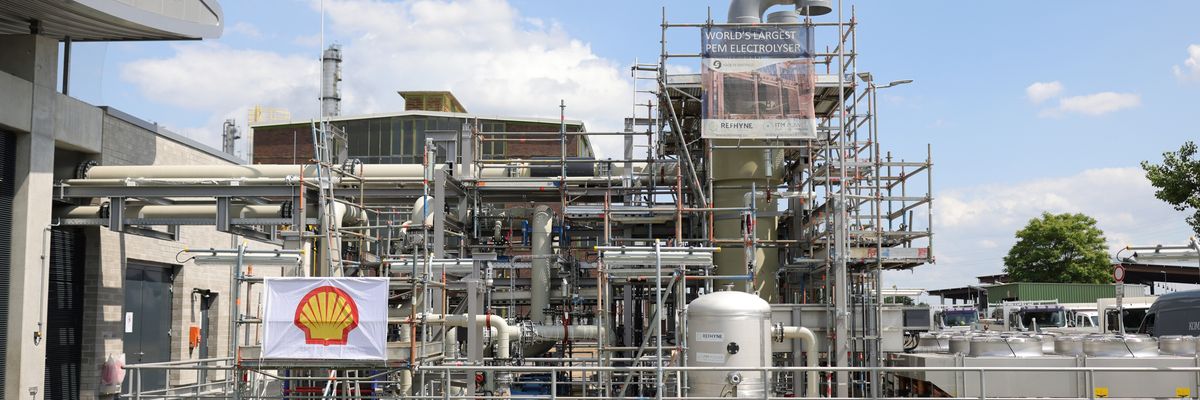
    The inauguration of a hydrogen production plant at the Shell Energy and Chemicals Park Rheinland in Wesseling, Germany was held on July 2, 2021.  (Photo: Andreas Rentz/Getty Images)

    “Rather than betting on unproven and inefficient hydrogen technologies, we need rich countries to put their money towards a just energy transition,” said a Friends of the Earth campaigner.

    Amid preparations for COP28, the United Nations climate summit kicking off next week, a leading green group warned Tuesday that “hydrogen is big polluters’ latest trick, and we can’t afford to fall for it.”

    “Hydrogen is being promoted as a ‘clean’ alternative to the fossil fuels used for domestic heating, transport, and heavy industry,” explains the new Friend of the Earth International (FOEI) paper, Don’t Fall for the Hydrogen Hype, put out ahead of the global clilmate talks. “But it’s expensive to produce, inefficient, and far from a low-carbon solution. In fact, the majority of the global hydrogen supply is made from fossil fuels.”

    An “energy carrier,” hydrogen stores and transports energy produced from resources such as biomass, fossil fuels, and water—but FOEI says industry promises of hydrogen’s potential should not be trusted.

    “Hydrogen, just like the fossil fuels and other false climate solutions pushed by that same industry, further reinforces neocolonial patterns of extractivism and exploitation.”

    The group’s paper begins by debunking the hydrogen “rainbow.” Citing the International Energy Agency, it states:

    Globally, more than 62% of hydrogen production is derived from fossil gas (known as grey hydrogen, blue hydrogen when coupled with carbon capture and storage, or turquoise hydrogen when produced from methane pyrolysis). About 21% comes from coal and lignite (black/brown hydrogen), 16% is produced as a byproduct at refineries, 0.5% derived from oil, whilst only 0.1% is produced via water electrolysis (green from renewable electricity, purple/pink from nuclear).

    While some groups support green hydrogen, critics including FOEI emphasize that along with being incredibly uncommon, it “demands huge amounts of cheap renewable electricity to function, rendering the process highly inefficient,” and “requires vast amounts of water, an increasingly rare and precious resource that shouldn’t be wasted.”

    “Pushed by the same fossil industry that has caused—and continues to fuel—the climate crisis, hydrogen is yet another false solution, sold by the industry as a magical fix which allows business as usual to continue,” the paper asserts. “Like other false solutions, it represents a dangerous distraction from the urgent, deep, real emission cuts that are needed to address the climate crisis.”

    Climate scientists and energy experts have long said that humanity must rapidly phase out fossil fuels to avoid the most catastrophic effects of heating the planet and meet the Paris agreement goal of limiting global temperature rise this century to 1.5°C. A U.N. analysis revealed Monday that currently implemented policies put the world on track for 3°C of warming by 2100.

    The FOEI paper points out that in addition to propping up polluters by “justifying more fossil gas, hydrogen conveniently allows the fossil industry to push another one of its lifelines: carbon capture and storage,” an “unproven techno-fix” that global climate groups are also warning about in the lead-up to COP28 in the United Arab Emirates.

    “It is unsurprising that hydrogen, just like the fossil fuels and other false climate solutions pushed by that same industry, further reinforces neocolonial patterns of extractivism and exploitation,” the publication continues, highlighting how the oil and gas sector “has shown time and again its disregard for communities and the environment, especially in the Global South.”

    Yegeshni Moodley from Friends of the Earth South Africa/groundWork said in a statement that “in the Global South, ‘green hydrogen’ receives public money yet serves only private interests. As governments collude with corporations over mega-infrastructure projects, communities struggle to keep their ancestral lands and scant water resources intact.”

    The paper notes that like other “false solutions” to the climate emergency—including geoengineering, offsets, and so-called nature-based solutions—on top of “disproportionate social and environmental costs, hydrogen also comes with a high financial cost.”

    FOEI advocacy officer Lise Masson argued that “rather than betting on unproven and inefficient hydrogen technologies, we need rich countries to put their money towards a just energy transition, one that puts power in the hands of people, not corporations.”

    Already, some governments are pouring money into hydrogen. U.S. President Joe Biden last month announced a “historic investment” of up to $7 billion for seven hubs across the United States, the nation that has historically contributed the most to human-caused global heating.

    Meanwhile, in the European Union, “the gas lobby has succeeded in securing several pieces of legislation promoting hydrogen—including legislation that allows public funds to go to fossil gas infrastructure as long as it promises to be ‘hydrogen ready’ despite the fact that Europe already has more gas infrastructure than necessary,” FOEI detailed.

    In Belgium, the European Commission, Hydrogen Europe, and the Clean Hydrogen Partnership are co-hosting European Hydrogen Week 2023—which activists with We Smell Gas disrupted with a protest involving fake green vomit on Tuesday.

    “From Chile, to Namibia to South Africa, the story is the same. Communities are not being consulted on [hydrogen projects] destined for European consumption [with] the costs of false solutions violently outsourced,” We Smell Gas said on social media Tuesday. “Hydrogen imports are imperial greed painted green.”

    “Our current energy system relies on appropriating space, resources, and cheap labor from racialized and working-class people inside and outside European borders,” the group continued. “For the profit of E.U. multinational and the economic dominance of Western states. [Hydrogen] at scale reproduces this system.”

    The FOEI position paper stresses that “addressing the climate crisis can only come through deep systemic change, dismantling the neocolonial, patriarchal, neoliberal capitalist system that created the crisis, to build a more just and equitable world for all.”

    Original article by JESSICA CORBETT republished from Common Dreams under Creative Commons (CC BY-NC-ND 3.0). 

  • Autumn Statement: Greens offer 10-point plan of distinctive tax and spend policies to create a fairer, greener society

    Spread the love
    Image of the Green Party's Carla Denyer on BBC Question Time.
    Image of the Green Party’s Carla Denyer on BBC Question Time.

    Green Party co-leader Carla Denyer has outlined a 10-point plan of distinctive tax and spend policies aimed at delivering a fairer, greener country. She will dismiss the chancellor’s Autumn Statement, saying it will be “another failed opportunity to end the cost-of-living crisis, tackle the climate crisis and restore crumbling public services on which we all rely.”    

    Denyer said: 

    “Our 10-point plan identifies around £30 billion of additional funds that would be available from simply rebalancing the tax system so that the super-rich pay their fair share and both people and planet benefit.”  

    “The extra revenue raised would enable the government to pay NHS staff an inflation-matching pay award, increase access to NHS dentists, increase Universal Credit, abolish the two-child benefit cap, improve bus services and help small businesses take advantage of the opportunities offered by greening the economy. 

    “Instead, the chancellor’s Autumn Statement will be another failed opportunity to end the cost-of-living crisis, tackle the climate crisis or restore crumbling public services. It’s clear that as the Tories continue to languish in the polls, Jeremy Hunt has more interest in electoral gimmickry that he has in creating a fairer and greener country.”  

    The Green Party’s 10-point plan would:   

    • Restore the public health budget by increasing spending by £1.4 billion  
    • Immediately increase NHS spending by £8 billion, to ensure NHS staff can be paid an inflation matching pay award
    • Meet the Government’s current plan to increase access to NHS dentists by increasing spending 50 per cent – £1.5 billion – of the total NHS dentistry budget
    • End the rise in homelessness caused by the cap on Local Housing Allowances at a cost of £700 million
    • Increase Universal Credit by £40 per week at a cost of £9bn  
    • Abolish the two-child benefit cap to reduce poverty for some of the most vulnerable children in the country by increasing the welfare budget by £1.3 billion
    • Provide the necessary powers and funding to rural local authorities to take back control of bus services so they can increase routes and service frequencies at a cost of £3bn
    • Turn ISAs green by linking their tax exemptions to investments in green bonds 
    • Invest an additional £3billion in Green Transition Grants for small businesses to help them prepare for and take advantage of the opportunities offered by greening the economy 
    • Rebalance the tax system to raise an extra £30 billion through changes to Capital Gains Tax, National Insurance and the abolition of “non dom status” which would pay for the proposed measures 

    Championing the Green’s alternative Autumn Statement, Carla Denyer said: 

    “These fairer, greener alternatives give just a flavour of what could be done if we had a Government willing to tackle the long-term crises we face. They would start to remove the fundamental injustice that means that wealthier people who own more assets often see a lower effective tax rate than less well-off people. 

    “Everyone deserves easy access to a dentist, improved public health, properly paid and supported doctors and nurses working with decent facilities, reduced poverty and homelessness, and accessible public transport.  

    “There is enough money in the economy to make our country fairer and greener. What is lacking is the political will to change priorities. And Starmer’s official opposition seems no more ready to offer this than the Government is. That is why we so desperately need more Greens in Parliament to make the case for the common-sense changes that can deliver a fairer greener country.” 

  • PM Sunak defends ‘severe’ Just Stop Oil sentences

    Spread the love
    Morgan Trowland and Marcus Decker protest and close the M25 Dartford Bridge.
    Morgan Trowland and Marcus Decker protest and close the M25 Dartford Bridge.

    https://www.bbc.com/news/articles/c6pxn4z1rqno

    At a glance

    • The PM has defended sentences handed to two Just Stop Oil activists
    • The United Nations had warned the long sentences could stifle protest
    • The protesters caused gridlock after climbing the Dartford Crossing bridge

    Prime Minister Rishi Sunak has defended sentences handed to two Just Stop Oil climate campaigners following criticism from the United Nations.

    Morgan Trowland, 40, was jailed for three years and Marcus Decker, 34, for two years for causing a public nuisance after scaling the Dartford Crossing Bridge.

    The UN had warned the government in a letter that the “severe” sentences could stifle protest.

    Mr Sunak said in response in a post on X, formerly Twitter, that those who break the law should feel the full force of it.

    “It’s entirely right that selfish protestors intent on causing misery to the hard-working majority face tough sentences,” he said.

    “It’s what the public expects and it’s what we’ve delivered.”

    …

    https://www.bbc.com/news/articles/c6pxn4z1rqno

    One of the many occasions climate change denier and UK Prime Minister Rishi Sunak uses a private jet.
    One of the many occasions climate change denier and UK Prime Minister Rishi Sunak uses a private jet.

    What an asshole Rishi Sunak is calling Just Stop Oil protesters selfish. So they’re protesting for the benefit of the planet and all it’s inhabitants human or animal, risking prison sentences and criminal records. C’mon Sunak you assole, you had better explain how exactly that is selfish?

    Isn’t it people like Sunak and fossil fuel investors that destroy our planet, nature and everybody’s future for profit who are the real selfish bastards? The oil industry has known since the 60s that their actions were destroying the planet and they did it regardless for profit. Isn’t that selfish? Of course, these are the selfish bastards.

    Sunak when he was Chancellor introduced huge fossil fuel subsidies that are intended to extract every last drop of oil from the North Sea despite knowing full well that that the World is likely to hit 3 degrees C warming as a result. This will lead to more and more extreme climate events as if we didn’t have enough already. It’s uncertain that humans or the planet can take 3 degrees increase due to fossil fuels and this total cnut has the audacity to call those campaigning against this selfish …

    Image of InBedWithBigOil by Not Here To Be Liked + Hex Prints from Just Stop Oil's You May Find Yourself... art auction. Featuring Rishi Sunak, Fossil Fuels and Rupert Murdoch.
    Image of InBedWithBigOil by Not Here To Be Liked + Hex Prints from Just Stop Oil’s You May Find Yourself… art auction. Featuring Rishi Sunak, Fossil Fuels and Rupert Murdoch.
  • ‘Emissions Canyon’: World on Track for 2.9°C of Warming

    Spread the love
    Just Stop Oil protesting in London 6 December 2022.
    Just Stop Oil protesting in London 6 December 2022.

    Original article by OLIVIA ROSANE republished from Common Dreams under Creative Commons (CC BY-NC-ND 3.0). 

    Keeping the 1.5°C temperature goal alive “requires tearing out the poisoned root of the climate crisis: fossil fuels,” U.N. Secretary-General António Guterres said.

    Nations’ current unconditional climate action plans under the Paris agreement would put the world on track for 2.9°C of warming by 2100, the United Nations Environment Program warned Monday.

    The UNEP’s 2023 Emissions Gap Report, released ahead of next week’s U.N. Climate Change Conference (COP28) in the United Arab Emirates, finds that policymakers must slash greenhouse gas emissions by 28% by 2030 to limit warming to 2°C above preindustrial levels and 42% to halt warming at 1.5°C.

    “The report shows that the emissions gap is more like an emissions canyon,” U.N. Secretary-General António Guterres said in a statement. “A canyon littered with broken promises, broken lives, and broken records. All of this is a failure of leadership, a betrayal of the vulnerable, and a massive missed opportunity.”

    The annual Emissions Gap Report calculates the difference between climate-warming emissions under current policies and what needs to be achieved to limit global heating to “well below” 2°C and ideally 1.5°C. This year’s report highlighted 2023’s string of broken temperature records and extreme weather events: Scientists predict it’s on track to be the hottest year in 125,000 years.

    At the same time, global greenhouse gas emissions rose by 1.2% between 2021 and 2022, hitting a record 57.4 gigatonnes of carbon dioxide equivalent (GtCO2e) last year.

    “Humanity is breaking all the wrong records when it comes to climate change,” UNEP Executive Director Inger Andersen said in the report foreword.

    “The 2023 edition of the Emissions Gap Report tells us that the world must change track, or we will be saying the same thing next year—and the year after, and the year after, like a broken record,” Andersen added.

    Even the report’s full title expressed a sense of exasperation: Emissions Gap Report 2023: Broken Record—Temperatures hit new highs, yet world fails to cut emissions (again).

    The report looked at both existing and promised policies, including countries’ Paris action pledges, known as nationally determined contributions (NDCs). It did find that national actions since the Paris agreement was negotiated in 2015 have made a difference. At the time, greenhouse gas emissions were projected to rise by 16% by 2030 and now they are on track to rise by 3% by the end of the decade.

    But that progress is not nearly enough to avoid ever more extreme climate impacts. Currently implemented policies put the world on track for 3°C of warming by 2100, unconditional NDCs for 2.9°C, conditional NDCs for 2.5°C, and conditional NDCs combined with net-zero pledges give temperatures a 66% chance of topping out at 2°C. Under the last, most optimistic scenario, the world is left with a 14% chance of limiting warming to 1.5°C. However, net-zero pledges are not currently seen as reliable, since no Group of 20 country is on pace to reduce its emissions in line with this goal.

    The report found that nations must cut their emissions by 14 GtCO2e by 2030 to reach 2°C and 22 GtCO2e to reach 1.5°C. The way this can be done is by phasing out fossil fuels as soon as possible.

    “The only way to curtail this spiraling crisis is through wholesale changes to the global energy system that will sharply drive down all heat-trapping emissions.”

    “We know it is still possible to make the 1.5°C limit a reality. And we know how to get there—we have roadmaps from the International Energy Agency and the IPCC [Intergovernmental Panel on Climate Change],” Guterres said. “It requires tearing out the poisoned root of the climate crisis: fossil fuels. And it demands a just, equitable renewables transition.”

    The report comes as nations prepare to gather on November 30 for COP28, which will include the first global stocktake of their progress toward meeting the goals of the Paris agreement. This will lead to a new round of NDCs through 2035.

    “Ambition in these NDCs must bring greenhouse gas emissions in 2035 to levels consistent with the 2°C and 1.5°C pathways. Stronger implementation in this decade will help to make this possible,” Andersen said in the foreword.

    “The world needs to lift the needle out of the groove of insufficient ambition and action, and start setting new records on cutting emissions, green and just transitions, and climate finance—starting now,” Andersen added.

    In response to the report, Rachel Cleetus, the policy director and a lead economist in the Climate and Energy Program at the Union of Concerned Scientists, also called for ambition at the upcoming climate talks.

    “The only way to curtail this spiraling crisis is through wholesale changes to the global energy system that will sharply drive down all heat-trapping emissions,” Cleetus said. “At COP28, nations must heed these scientific truths by agreeing to a fast and fair phaseout of fossil fuels, ramping up renewable energy and energy efficiency, and significantly expanding climate finance commitments from wealthier countries for an equitable clean energy transition.”

    Original article by OLIVIA ROSANE republished from Common Dreams under Creative Commons (CC BY-NC-ND 3.0). 

  • Biden’s Key Climate Law Gives Big Oil a ‘Massive Escape Hatch’: Analysis

    Spread the love

    Original article by JULIA CONLEY republished from Common Dreams under Creative Commons (CC BY-NC-ND 3.0).

    Freshly painted banners for the ‘People vs. Fossil Fuels’ protests on October 11-15, 2023 are seen outside the White House in Washington, D.C.  (Photo: Josh Yoder/Look Loud )

    “While the IRA was touted as the ‘largest investment in climate and energy in American history,’ it could turn out to be a failure if Biden doesn’t also take bold action on fossil fuels,” said Oil Change International.

    The 2022 law heralded as U.S. President Biden’s key climate achievement may support an expansion of clean energy, but a new analysis out Monday demonstrates how the Inflation Reduction Act leaves the fossil fuel industry with vast opportunities to extract more oil and gas and continue boosting its record-breaking profits at the expense of frontline communities.

    The report, said Oil Change International (OCI) as it released the new findings, proves that the Biden administration can’t rely on the IRA to demonstrate its commitment to the emissions reduction that scientists agree is needed to mitigate the climate crisis.

    Titled Biden’s Fossil Fuel Fail: How U.S. Oil and Gas Supply Rises Under the Inflation Reduction Act, Exacerbating Environmental Injustice and released 10 days before the 28th annual United Nations Climate Change Conference (COP28), the analysis uses previously unpublished data from climate modeling by the Rhodium Group, an environmental think tank.

    “The model projects that despite the IRA’s investment in renewable energy, electric vehicles, and batteries, the United States could still miss its Paris Agreement goal of reducing U.S. emissions by 50 to 52% below 2005 levels by 2030,” reads the report, noting that as the world’s largest historical emitter of fossil fuel emissions, the U.S. has a responsibility to “cut its emissions faster than the global average.”

    The group’s model projects that domestic fossil gas demand in the U.S. will decline by 16% by 2035, yet production is expected to rise by 7%. Petroleum demand is expected to decline by 20%, yet production will rise by 13%.

    “The gap between production and demand is filled by surging exports,” explained OCI. “Gas exports are projected to double by 2035, while oil and petroleum product exports rise 23%.”

    Wind and solar power are expected to replace gas domestically, added the organization, but the positive effects of the decline in gas demand in the U.S. are “tempered by an increase in gas consumption within the oil and gas industry itself.”

    The “energy-hungry” liquefied natural gas (LNG) export sector will essentially cancel out progress made by surging wind and solar power in the U.S., said OCI, with gas consumption by LNG export plants growing 140% by 2035.

    “The Biden administration touts the Inflation Reduction Act as a centerpiece of its achievements on climate,” said Collin Rees, U.S. campaign manager for OCI. “In reality, the bill leaves a massive escape hatch for the fossil fuel industry to continue business as usual.”

    Rhodium’s modeling projects that the U.S. will miss its targeted emissions reduction for 2030 by 16-18 percentage points if the Biden administration relies on the IRA and its investments in technological fixes like carbon capture and storage and fossil hydrogen production while allowing continued investments in oil and gas exports.

    “While the IRA was touted as the ‘largest investment in climate and energy in American history,’ it could turn out to be a failure if Biden doesn’t also take bold action on fossil fuels,” said OCI in a statement. “As the world gathers for COP28, Biden still has a chance to be the climate leader he claims he is by making a commitment to phasing out fossil fuels.”

    The phase-out of all oil and gas production in the U.S. is widely recognized as necessary by energy and climate experts, and has long been demanded by advocates for frontline communities, which bear a disproportionate public health burden due to the strong links between fossil fuel extraction, storage, and transport and harms including respiratory illnesses, cardiovascular disease, and poor outcomes for pregnant people and infants.

    Boosting fossil fuel production and exports “while exacerbating pollution in environmental justice communities,” said OCI, is a “deadly combination.”

    Roishetta Sibley Ozane, founder of the Vessel Project of Louisiana, said Biden’s approval of projects like the Willow oil drilling initiative in Alaska, nearly $2 billion for publicly financed fossil fuel projects abroad, and his support for the Mountain Valley Pipeline, among other pollution-causing infrastructure, has shown frontline communities that the president’s campaign promises regarding environmental justice were “nothing but a smokescreen.”

    “We supported [President Joe] Biden for change, not to deal with deadly decisions made without us at the table,” said Ozane. “The fight against climate disaster is collective, and the United States cannot preach about caring for communities while exporting pollution globally.”

    The pollution impacts of continued fossil fuel production and exports will be “disproportionately borne by Black, Brown, Indigenous, and poor communities—specifically in Appalachia, the Gulf of Mexico, and the Permian Basin of Texas and New Mexico,” said OCI.

    To align with Biden’s stated climate goals, the group said, the president’s efforts must go far beyond the IRA and include a phase-out of oil and gas exports, an end to fossil fuel leasing on federal lands, and a halt to all approvals for new fossil fuel infrastructure.

    “At COP28 the spotlight will be on our collective effort to end the fossil fuel era,” said Rees. “Will the United States deliver, or will Biden’s climate legacy be one of disastrous oil and gas expansion and failure to adequately tackle the climate crisis?”

    Original article by JULIA CONLEY republished from Common Dreams under Creative Commons (CC BY-NC-ND 3.0).