Guardian Exclusive: Fields run by climate summit host have burned gas near daily despite 20-year-old pledge, satellite monitoring reveals
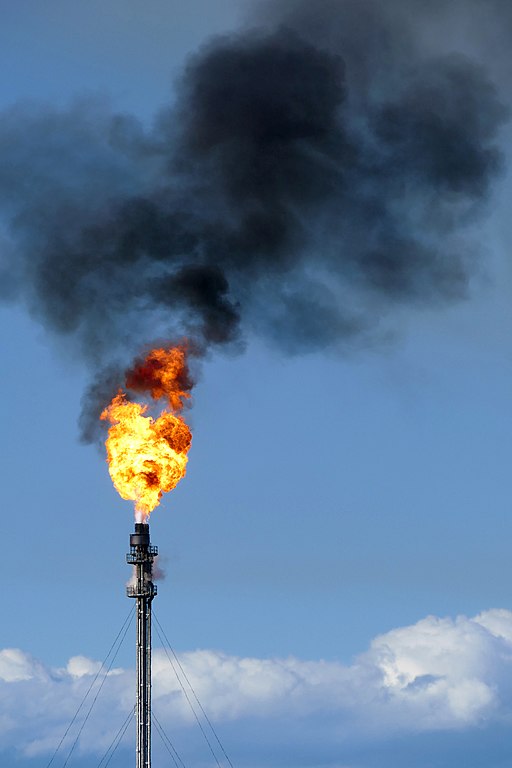
State-run oil and gas fields in the United Arab Emirates have been flaring gas virtually daily despite having committed 20 years ago to a policy of zero routine flaring, the Guardian can reveal.
The UAE is hosting the UN Cop28 summit, which starts on 30 November, and Sultan Al Jaber, the CEO of the state oil company Adnoc, will preside over the international negotiations to urgently tackle the climate crisis.
Flaring is the burning of extracted gas that is not captured and sold, and it has been called “wasteful and polluting” by the World Bank. Flaring occurs when no equipment has been installed to capture it or when gas has to be unexpectedly released for safety reasons. Flaring also allows the escape of some unburned methane gas, which is a powerful greenhouse gas.
One field, Adnoc LNG, flared gas on more than 99% of the days monitored by satellite from 2018 to 2022, according to data produced for the Guardian by the Centre for Research on Energy and Clean Air (Crea). One expert said this was routine flaring “by any normal definition”.
The analysis assessed flaring in 32 oil and gas fields in the UAE, 20 of which are run by Adnoc. It shows four fields flared on at least 97% of the days for which data was available, which was most days as measurements were interrupted by cloud cover on only one day in five.
Members of This Is Rigged covered the Sainsbury’s branch in Glasgow’s Buchanan Street with red paintPhoto: This is Rigged / Twitter
CLIMATE and social justice activists in Scotland have highlighted their opposition to food poverty by staging a series of stunts.
Members of This Is Rigged covered the Sainsbury’s branch in Glasgow’s Buchanan Street with red paint today as they demanded an end to “profiteering” by supermarkets.
The day before, the group entered Edinburgh Castle and smashed the glass case housing the Stone of Destiny, which had recently been returned to Scotland following the coronation of Charles Windsor.
Near the end of a year of high-profile interventions pressing for decisive action on climate change and a fair net-zero transition for workers, the group’s latest stunts are focused on the cost-of-greed crisis, which they argue is indivisible from the climate crisis.
The group warned that it would escalate actions in support of its demands that the Scottish government provide “food hubs” in every community and that supermarkets reverse their 24 per cent increase in baby food prices over the last two years.
Former chair of climate change committee says UK’s decision has encouraged other countries to keep exploiting fossil fuels
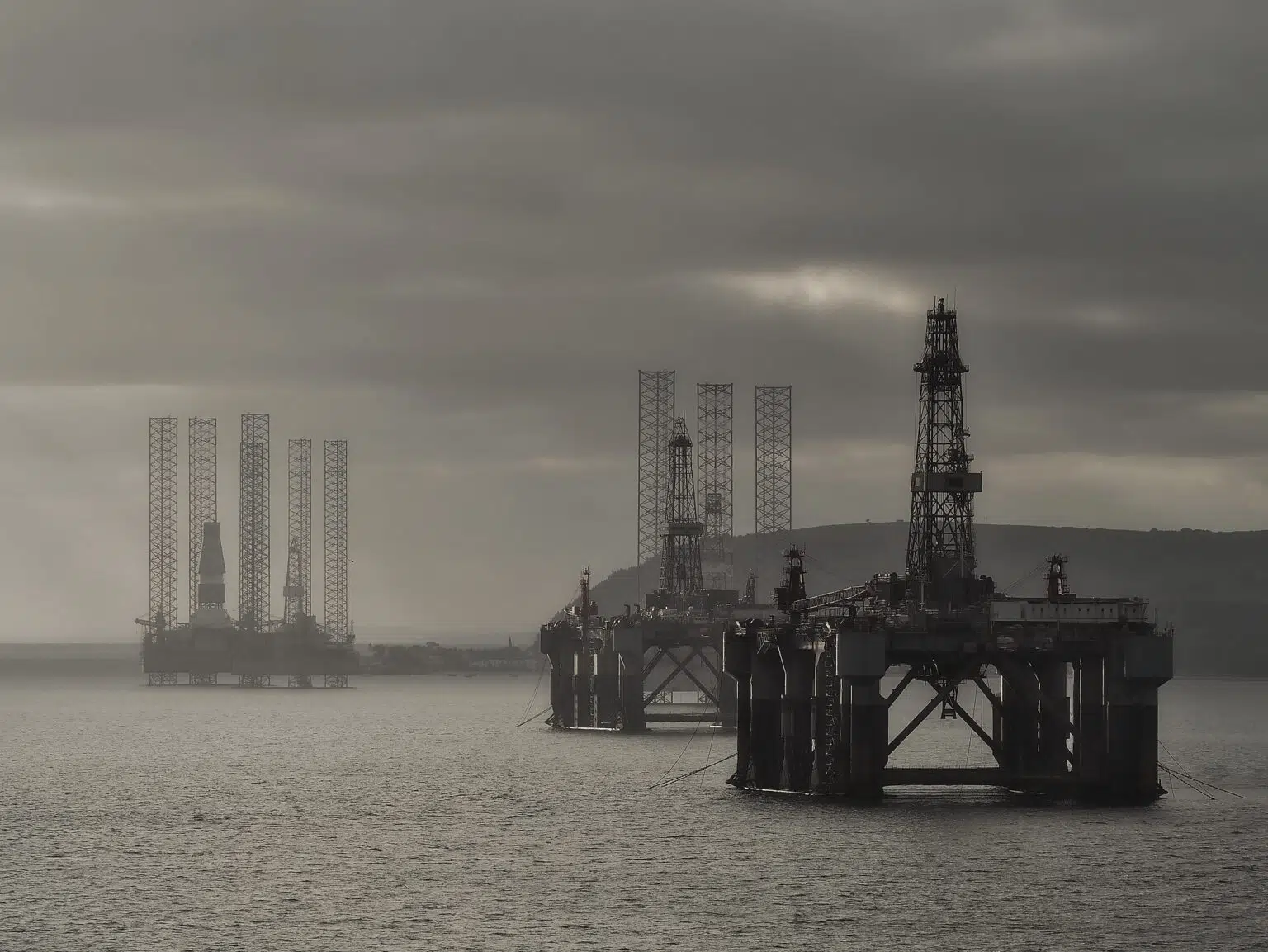
The UK’s decision to open a new coalmine in Cumbria was a “disaster” that encouraged other countries to press ahead with fossil fuels, and the continued expansion of North Sea oil and gas is likely to continue the harm, a former chief adviser to the government has said.
Other countries are using the UK as an excuse for pressing ahead with fossil fuel projects despite their climate commitments, according to Adair Turner, the first chair of the Committee on Climate Change and a former head of the CBI.
Lord Turner told the Guardian that he had “literally been involved in discussions” in China and India where UK decisions had been given as a reason for not moving faster on the climate.
“I can tell you that [the Cumbrian coalmine] was a disaster globally, and in China and India, where I was engaged in debates [on reducing greenhouse gas emissions], I have had people say ‘yeah, but you’re building a new coalmine in the UK’,” he said.
“So that was a disaster for our reputation, and it provides arguments for the people within government or within interest groups in China and India to say ‘oh look, the UK is supposedly committed to net zero, but it’s not serious, it’s building a new coalmine’. And the same occurs with new oil and gas fields in the North Sea.”
Turner is now chair of the Energy Transitions Commission (ETC), a thinktank that on Thursday published a report that says the production of and demand for fossil fuels must be reduced rapidly, and that this is achievable. “Unabated” fossil fuel use must be phased out, and there is only limited scope for the use of carbon capture and storage (CCS), the report finds.
An updated database shows that more than 1,000 oil and gas companies around the world are planning to expand their planet-wrecking infrastructure.
More than a thousand fossil fuel companies around the world are currently planning to build new liquefied natural gas terminals, pipelines, or gas-fired power plants even as scientists warn that fossil fuel expansion is incompatible with efforts to prevent catastrophic warming.
That’s according to an updated database released Wednesday by Urgewald and dozens of partner groups. Described as the most comprehensive public database on the fossil fuel industry, the Global Oil & Gas Exit List (GOGEL) covers 1,623 companies that are operating in the upstream, midstream, or gas-fired power sector and collectively account for 95% of global oil and gas production.
JUST RELEASED The Global Oil & Gas Exit List (GOGEL) with fresh numbers: Despite the climate crisis, almost every upstream company is still developing new oil&gas fields. In addition, 1,023 companies planning new LNG terminals, pipelines, gas power plants. https://t.co/DsBgFMR7QZpic.twitter.com/BCUGpd5PYJ
According to the 2023 GOGEL, 96% of the 700 upstream oil and gas companies in the database are exploring or actively developing new oil and gas fields, projects that Urgewald said “severely jeopardize efforts to limit global temperature increase to 1.5 °C.”
Nearly 540 companies in the database are collectively planning to produce 230 billion barrels of oil equivalent (bboe) over the short term, the database shows.
“The seven companies with the largest short-term expansion plans are Saudi Aramco (16.8 bboe), QatarEnergy (16.5 bboe), Gazprom (10.7 bboe), Petrobras (9.6 bboe), ADNOC (9.0 bboe), TotalEnergies (8.0 bboe) and ExxonMobil (7.9 bboe),” Urgewald noted. “These seven companies are responsible for one-third of global short-term oil and gas expansion.”
The database also shows that fossil fuel companies are planning to expand global LNG capacity by 162%, a significant threat to critical climate targets. A United Nations-backed report published last week warned that fossil fuel expansion plans are “throwing humanity’s future into question.”
Urgewald pointed specifically to the LNG boom in the U.S., which the group said is “cementing its position as the world’s largest export hub for LNG” with 21 new export facilities planned along the Gulf Coast. Those facilities account for more than 40% of worldwide LNG expansion documented in the GOGEL database.
“Most of the fossil gas that will be exported from these terminals stems from the Permian Basin, the heart of the U.S. fracking industry,” Urgewald observed.
The updated database shows that nearly 80 companies—including Exxon, Chevron, and BP—are currently operating in the Permian Basin, located in the U.S. Southwest.
Climate campaigners and experts have also sounded alarm over Calcasieu Pass 2 (CP2), a planned $10 billion LNG export hub that would ship up to 24 million tons of gas annually once it is completed.
“The fossil fuel industry wants to pave undeveloped wetlands all along the coast with LNG facilities like NextDecade Corporation’s Rio Grande LNG Terminal, Rebekah Hinojosa, a member of the South Texas Environmental Justice Network said Wednesday. “Besides their environmental implications, these plans violate Indigenous sacred lands, and people working in fishing, shrimping, and eco-tourism risk losing their jobs. Our communities refuse to be sacrificed for the fracking industry’s dirty gas exports.”
There is now a 21% share of required emissions cuts in the UK’s 2028–32 carbon budget that is not covered by policy.
…
Green Alliance’s Net Zero Policy Tracker analyses the gap between confirmed policy and what would be required for net zero by 2050, according to the UK’s five-yearly carbon budgets.
At the start of 2023, there was a 13% share of required emissions cuts in the 2028–32 carbon budget that was not covered by policy. Following the government’s so-called Energy Security Day in March – which saw 2,800 pages of new energy and climate policy – the share of emissions cuts not covered by policy grew to 15%.
Since Sunak’s latest speech in March, the gap has grown to 21%: a near-doubling of the gap that existed at the start of the year.
“The Prime Minister delayed vital policies that would have lowered energy bills, increased UK energy security, and played a critical role in creating a green and growing economy,” said Chris Venables, Green Alliance’s deputy director of politics and partnerships, in a statement following Sunak’s speech. “This represents a deeply alarming pivot that has undermined business confidence, and put at serious risk the hard-won, cross-party and evidence-based approach we have had to actually reaching our legally binding net-zero targets.”