Category: Climate Crisis

  • ‘Baby Steps’ Will Not Avert Climate Catastrophe, UN Warns

    Spread the love

    Original article by JESSICA CORBETT republished from Common Dreams under Creative Commons (CC BY-NC-ND 3.0).

    Firefighters tackle forest fires near Porto Jofre, Mato Grosso State, Brazil, on November 13, 2023.  (Photo: Rogerio Florentino/AFP via Getty Images)

    The United Nations assessment coincided with the release of “the world’s most comprehensive roadmap of how to close the global gap in climate action across sectors.”

    That’s how United Nations Secretary-General António Guterres began his Tuesday remarks about a new U.N. Framework Convention on Climate Change (UNFCCC) report on nationally determined contributions (NDCs), or countries’ plans to meet the goals of the Paris agreement, including its 1.5°C temperature target.

    The UNFCCC analysis “provides yet more evidence that the world remains massively off track to limiting global warming to 1.5°C and avoiding the worst of climate catastrophe,” said Guterres. “As the report shows, global ambition stagnated over the past year and national climate plans are strikingly misaligned with the science.”

    “COP28 must be the place to urgently close the climate ambition gap.”

    Under current NDCs from the 195 Paris agreement parties, global greenhouse gas emissions are set to rise by nearly 9% by 2030, compared with 2010 levels, according to the analysis. While that’s a slight improvement on the 10.6% increase from last year’s assessment, it’s still nowhere near the cuts that experts say are needed.

    The analysis of NDCs comes as scientists project that 2023 will be the hottest year in 125,000 years and just over two weeks before the U.N. Climate Change Conference (COP28) in Dubai, United Arab Emirates, a summit controversially led by Sultan Ahmed Al Jaber, CEO of the Abu Dhabi National Oil Company.

    “As the reality of climate chaos pounds communities around the world—with ever fiercer floods, fires, and droughts—the chasm between need and action is more menacing than ever,” Guterres declared. “COP28 must be the place to urgently close the climate ambition gap.”

    U.N. Climate Change Executive-Secretary Simon Stiell echoed Guterres’ call to action, stressing in a statement that the new assessment makes clear governments are merely “taking baby steps to avert the climate crisis.”

    “It shows why governments must make bold strides forward at COP28 in Dubai, to get on track,” Stiell said. “This means COP28 must be a clear turning point. Governments must not only agree what stronger climate actions will be taken but also start showing exactly how to deliver them.”

    The UNFCCC document was released on the same day as State of Climate Action 2023, which its crafters called “the world’s most comprehensive roadmap of how to close the global gap in climate action across sectors.”

    Published under Systems Change Lab, the latter report highlights that only one of the dozens of indicators assessed, the share of electric vehicles in passenger car sales, is on track to meet its 2030 target.

    As the publication details:

    Recent rates of change for 41 of the 42 indicators across power, buildings, industry transport, forests and land, food and agriculture, technological carbon removal, and climate finance are not on track to reach their 1.5°C-aligned targets for 2030. Worryingly, 24 of those indicators are well off track, such that at least a twofold acceleration in recent rates of change will be required to achieve their 2030 targets. Another six indicators are heading in the wrong direction entirely. Within this subset of lagging indicators, the most recent year of data represents a concerning worsening relative to recent trends for three indicators, with significant setbacks in efforts to eliminate public financing for fossil fuels, dramatically reduce deforestation, and expand carbon pricing systems.

    To get back on track, the international community must “dramatically increase growth in solar and wind power” while also phasing out “coal in electricity generation seven times faster—which is equivalent to retiring roughly 240 average-sized coal-fired power plants each year through 2030,” the report warns.

    The publication also emphasizes the need for shifting to healthier, more sustainable diets eight times faster, increasing the coverage of rapid transit six times faster, reducing the annual rate of deforestation four times faster, and scaling up global climate finance by nearly $500 billion annually until 2030.

    “Despite decades of dire warnings and wake-up calls, our leaders have largely failed to mobilize climate action anywhere near the pace and scale needed,” declared the report’s lead author, Sophie Boehm of the World Resources Institute (WRI). “Such delays leave us with very few routes to secure a livable future for all. There’s no time left to tinker at the edges. Instead, we need immediate, transformational changes across every single sector this decade.”

    Every world leader is under pressure to ramp up efforts to cut emissions, including U.S. President Joe Biden, who on Tuesday received a letter from hundreds of scientists urging him to “increase the ambition of domestic climate action—including through accelerating a just and equitable clean energy transition, rejecting the expansion of new long-lived fossil fuel infrastructure, investing in climate resilience, and ramping up climate finance—while working toward the strongest possible agreement at COP28.”

    The United States now ranks behind China as the top emitting country but still leads the world in cumulative planet-heating emissions. According to a U.S. government assessment released Tuesday, the nation is “warming faster than the global average,” and “the effects of human-caused climate change are already far-reaching and worsening across every region.”

    Original article by JESSICA CORBETT republished from Common Dreams under Creative Commons (CC BY-NC-ND 3.0).

  • “Reckless and irresponsible”: critics speak out against the UK’s U-turn on net-zero targets 

    Spread the love

    https://www.energymonitor.ai/policy/net-zero-policy/uk-net-zero-targets-critics-delay-climate/

    UK Prime Minister Rishi Sunak has rowed back on UK net-zero targets, incurring the wrath of industry, charities and academics.

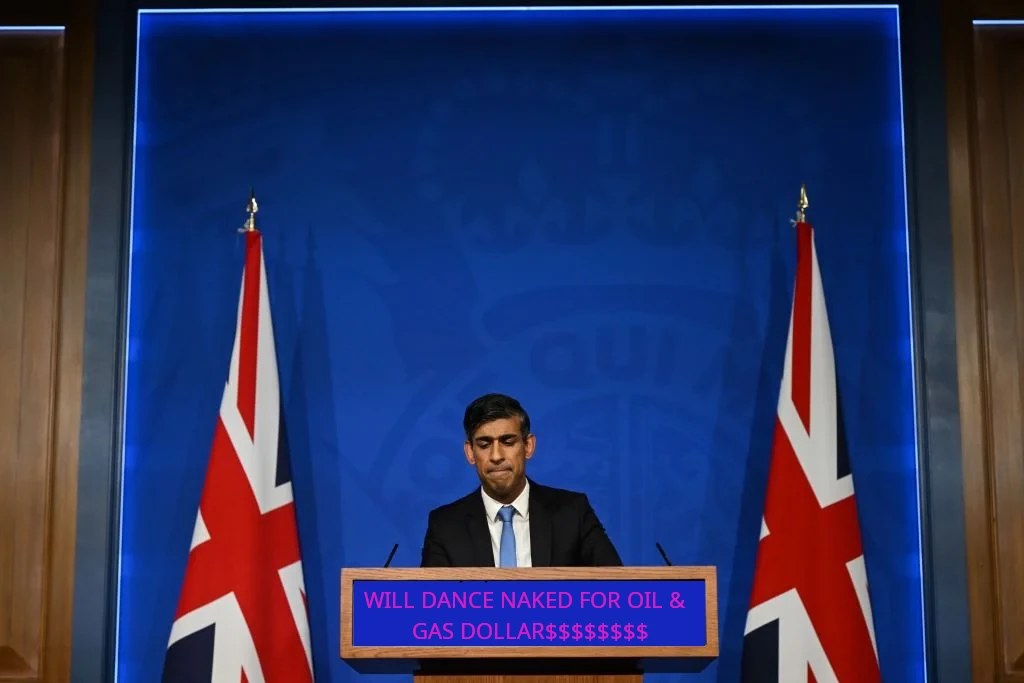
    Rishi Sunak will dance naked for oil a& gas dollar$$$$$$$$
    Rishi Sunak offers to dance

    The UK will water down policies aimed at achieving its target of net-zero carbon emissions by 2050 following Prime Minister Rishi Sunak’s decision, announced on 20 September, to push back the ban on the sale of new petrol and diesel cars in the UK from 2030 to 2035. 

    Sunak also announced an easing of energy efficiency targets for rental properties and backtracked on plans to make homeowners replace gas boilers with heat pumps.

    “We can adopt a more pragmatic, proportionate and realistic approach to meeting net zero” that would bring the UK in line with countries such as France and Germany, he said.

    Reacting to the news, Halima Begum, CEO of ActionAid UK, told our sister site Investment Monitor that the UK Government’s sudden reversal of its net-zero commitments “is reckless and irresponsible”.

    “Climate action is not a political bargaining chip that can be taken on and off the table to satisfy party political squabbles, but a global imperative,” she added. “The climate crisis is not a future event, it is happening now. People are facing flash floods, droughts, rising sea levels and irreversible damage that has already led to tragic deaths around the world this year alone.”

    Meanwhile, Nick Kirsop-Taylor, an expert in environmental governance from the University of Exeter, joined a chorus of other academics in saying it is “truly disappointing news” since time is running out for the global action required to keep global temperatures to below 1.5°C, let alone 2°C.

    …

    https://www.energymonitor.ai/policy/net-zero-policy/uk-net-zero-targets-critics-delay-climate/

  • COP28 host UAE to extract nearly 40 billion barrels of oil and gas over 70 years

    Spread the love
    Dr. Sultan al Jaber. Image: Arctic Circle, CC BY 2.0, via Wikimedia Commons
    Dr. Sultan al Jaber. Image: Arctic Circle, CC BY 2.0, via Wikimedia Commons

    https://www.energymonitor.ai/sectors/industry/exclusive-cop28-host-uae-to-extract-nearly-40-billion-barrels-of-oil-and-gas-over-70-years/

    If all oil-producing nations followed the United Arab Emirates’ strategy, the world’s carbon budget for 1.5°C would be exceeded many times over.

    COP28 host the United Arab Emirates (UAE) has plans in place to extract 38 billion barrels of oil and gas between now and 2085 – with significant further reserves that could also be extracted in that time.

    If all oil producing nations followed such a strategy, the world’s carbon budget for 1.5°C would be exceeded many times over. As one of the wealthiest petrostates in the world – with a gross domestic product (GDP) per capita of $44,000 (Dh161,590) – the “common but differentiated responsibility” clause of the 2015 Paris Agreement could arguably mean that the UAE should end oil and gas production sooner than other, less wealthy nations – but as yet the UAE has no such plans.

    According to exclusive data from Energy Monitor’s parent company, GlobalData, there are some 28.3 billion barrels of oil remaining in active fields in the UAE, with a further 1.5 billion barrels in fields that are currently planned.

    Active fields in the UAE also have some 38.2 trillion cubic feet (trcf) of gas remaining, while planned fields contain 10.5trcf of gas. The combined volume of hydrocarbons in active and planned oil and gas fields in the UAE adds up to 38.4 billion barrels of oil equivalent.

    The UAE is continuing to develop new oil and gas fields despite the International Energy Agency (IEA) repeatedly warning that for the world to meet its target of net zero by mid-century, oil and gas use must go into managed decline, with no new oil and gas fields approved for development beyond those already in existence.

    The UAE’s oil plans are in the spotlight right now given the country’s high-profile role hosting the next annual UN climate conference, COP28, which is taking place in Dubai at the end of November.

    Given that the burning of fossil fuels is by far the largest contributor to global warming, the UAE’s position as the world’s seventh-largest oil producer, and 14th-largest gas producer, is a major point of concern among climate experts. 

    …

    https://www.energymonitor.ai/sectors/industry/exclusive-cop28-host-uae-to-extract-nearly-40-billion-barrels-of-oil-and-gas-over-70-years/

  • Rishi Sunak is wrong: we polled the British public and found it largely supports strong climate policies

    Spread the love
    Campaigners take part in a Stop Rosebank emergency protest outside the U.K. Government building in Edinburgh, after the controversial Equinor Rosebank North Sea oil field was given the go-ahead Wednesday, September 27, 2023. (Photo: Jane Barlow/PA Images via Getty Images)
    Campaigners take part in a Stop Rosebank emergency protest outside the U.K. Government building in Edinburgh, after the controversial Equinor Rosebank North Sea oil field was given the go-ahead Wednesday, September 27, 2023. (Photo: Jane Barlow/PA Images via Getty Images)

    Christian Bretter, University of Leeds and Felix Schulz, University of Leeds

    The UK’s Tory government is rolling back climate legislation and is continuing to fund the expansion of domestic oil and gas reserves. Our new research suggests this might be based on a misreading of public opinion.

    Since winning a July 2023 by-election in the London suburb of Uxbridge, the UK government has made polarising voters on climate policy one of its main strategies. The Tory campaign had focused on opposing a new low emission zone for cars, and prime minister Rishi Sunak took its victory as vindication of a clear “pro-motorist” and anti-climate policy stance.

    The apparent lack of public support for strict climate policies such as a ban of fossil-fuelled cars is now being used as an excuse to roll back policies urgently necessary to reach net zero targets.

    In a recently study in the journal Climate Policy, we demonstrate that, by betting on a public tired of stringent climate policies, the government is backing the wrong horse.

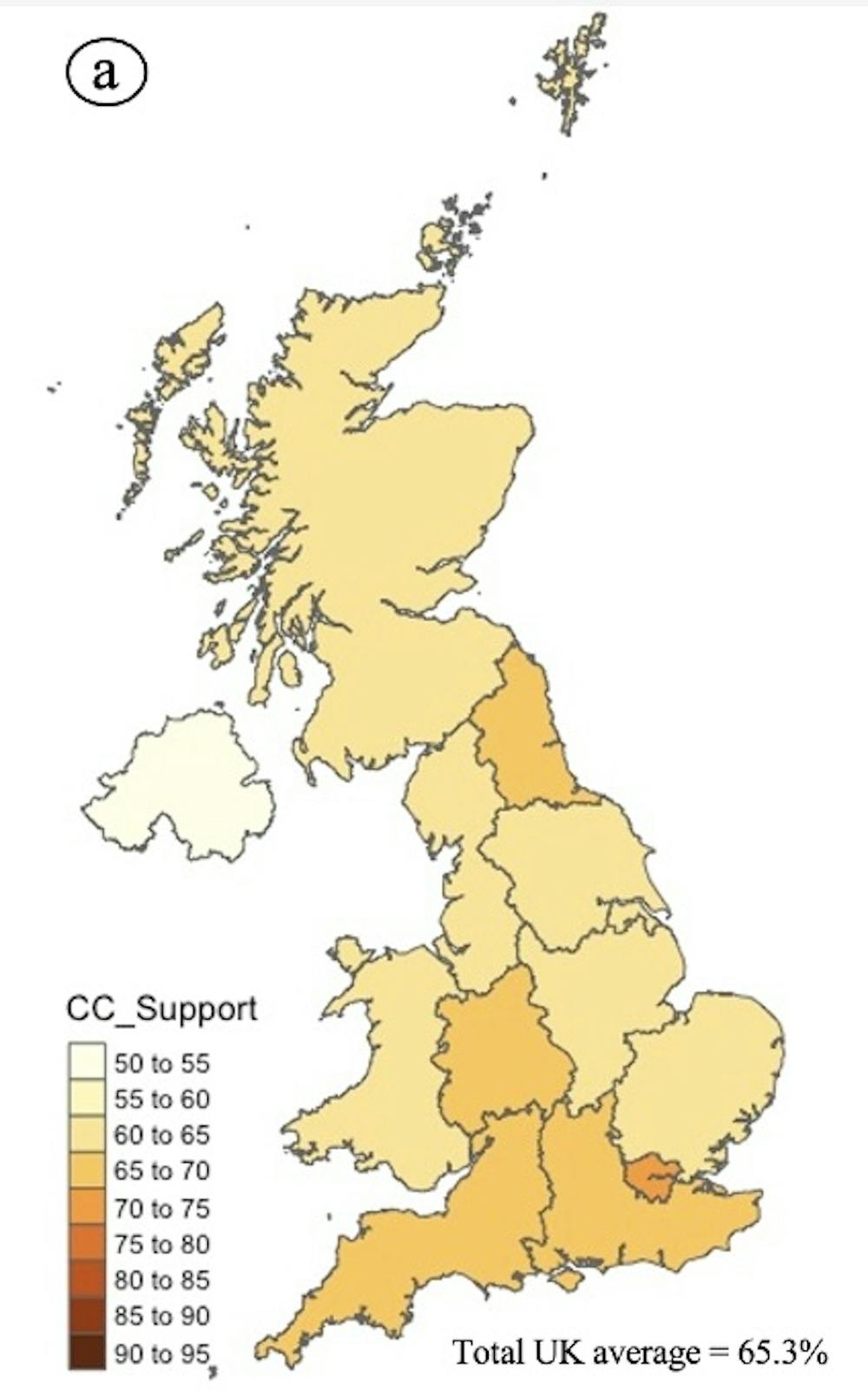
    We asked 1,911 people that are representative of the UK population in terms of age, gender and ethnicity to indicate the extent to which they support different climate policy instruments. Almost two thirds support the most stringent climate policies, while others receive even higher support.

    In short, people in the UK favour all kinds of policy instruments to tackle climate change, even the most stringent ones. There is a lesson here for the opposition too, which should put forward more effective climate policies, and not shy away from regulation.

    A vote in favour of UK climate politics

    In our study, we asked people about actual policy proposals by UK government bodies and political parties (as opposed to hypothetical ones).

    We put each into one of four categories based on the type of policy instrument: regulation (such as banning the sale of fossil-fuel-powered cars or stopping drilling for oil and gas), market instruments (carbon trading, stopping fossil fuel subsidies), informational tools (consumer labels, advertising campaigns), and voluntary initiatives (carbon offsets, non-binding product standards).

    Cars in traffic jam on wet day
    The UK public is mostly happy to support measures like phasing out petrol cars.
    Kittipong33 / shutterstock

    Contrary to the government’s rhetoric, our findings point towards a more optimistic view of the UK’s future climate politics – at least from a voter perspective. A large majority supports strict regulations that mandate or prohibit specific behaviour. An even larger share backs market-based initiatives (78%), information tools (86%) and voluntary measures (87%).

    While the important thing here is that the UK public wants a package of different policy instruments to decarbonise the economy and reach net zero, one could rightly argue that more still needs to be done to increase support for stricter measures. So what drives public support for climate policies?

    Drivers of public support

    In line with previous research, our study found that free market and environmental beliefs have the biggest impact on whether someone supports climate policies.

    The more people believed that a free market acts in the interests of the public, the less they supported all climate policies. Similarly, people that believe nature is important voiced stronger support for all policies.

    Interestingly, support for regulatory and market-based policies didn’t change according to a person’s income. This is important because the current government usually tries to appeal to working class voters in its attempts to demonise ambitious climate policies.

    These are important findings that highlight the need to challenge free market ideologies by publicly and repeatedly scrutinising their validity for a functioning and just society. We also should start recognising their detrimental effect on climate policy preferences.

    Regional variations in public support

    However, only looking at national results might hide important differences. Our research found important regional variation, with London often being an exception compared to the rest of the UK.

    People living in other regions were about 30% less likely to support regulatory and market-based climate policies compared to people in Greater London, for instance.

    Shaded map of UK
    Regulatory measures were the least popular around the country, though still had majority support everywhere and a strong majority in London.
    Bretter and Schulz, CC BY-SA

    Drivers of these differences are both ideological and structural. People living in Greater London tend to believe less in the free market system compared to people in regions which had significantly lower support for climate policies. This indicates that neoliberal ideology favouring free markets is discouraging climate action.

    Yet it is not only what people believe in. Those in more rural regions with higher emissions show less support for stricter climate policies. These tend to be regions with less access to public transport where people have to rely more heavily on high-emitting cars.

    More needs to be done to improve public infrastructure in rural areas. This will require investment in affordable, low-carbon transport networks rather than championing the continuation of the combustion engine.

    How the media may shape policy support

    Of course, our study only captured a snapshot of people’s policy preferences. We are constantly confronted by news stories, particularly through social media.

    These often act as echo chambers to reinforce existing ideologies (and by extension, policy preferences), thereby strengthening existing polarisations. This will make it harder to engage people with contrasting beliefs in a discussion on climate policies.

    On the other hand, being repeatedly confronted with particular views and ideas can shift one’s beliefs. In psychology, this is referred to as “repeated priming”. In Germany, we have seen how newspaper campaigns against the slow phase-out of gas boilers have further undermined public support for this specific climate policy.

    Could something similar happen in the UK? To avoid the gradual weakening of support by particular news outlets, the UK opposition parties need to be consistent and persistent in their communication of climate policies and their effects.


    Imagine weekly climate newsletter

    Don’t have time to read about climate change as much as you’d like?

    Get a weekly roundup in your inbox instead. Every Wednesday, The Conversation’s environment editor writes Imagine, a short email that goes a little deeper into just one climate issue. Join the 20,000+ readers who’ve subscribed so far. The Conversation


    Christian Bretter, Research Fellow in Environmental Psychology, University of Leeds and Felix Schulz, Research Fellow, University of Leeds

    This article is republished from The Conversation under a Creative Commons license. Read the original article.

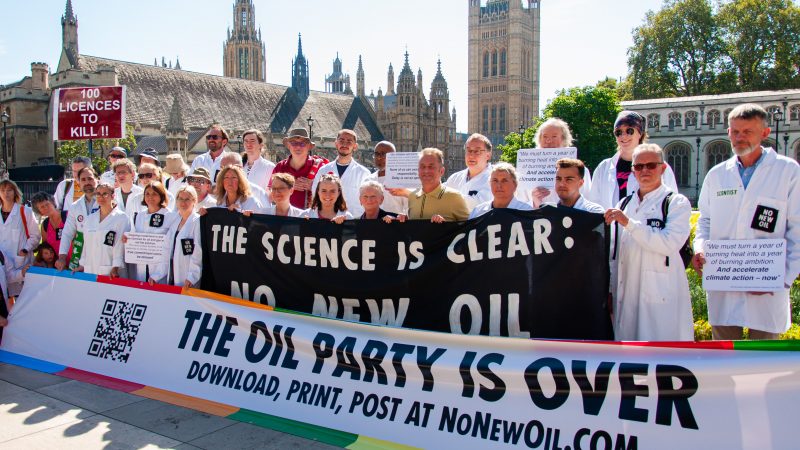
    Scientists protest at UK Parliament 5 September 2023.
    Scientists protest at UK Parliament 5 September 2023.
  • Emmanuel Macron pledges €1bn to fund research into melting ice caps

    Spread the love
    Image of an iceberg
    The tip of the Iceberg

    https://www.theguardian.com/environment/2023/nov/12/emmanuel-macron-pledges-1bn-to-fund-research-into-melting-ice-caps

    The French president has called for action at a climate summit in Paris attended by heads of state and scientists before Cop28

    France will spend €1bn (£880m) on polar research between now and 2030, amid rapidly rising scientific concern over the world’s melting ice caps and glaciers.

    A new polar science vessel will spearhead the effort, and France is calling for a moratorium on the exploitation of the seabed in polar regions, to which the UK, Canada, Brazil and 19 other countries have so far signed up.

    French president Emmanuel Macron told a summit of heads of state and scientists in Paris: “We are not talking about a threat for tomorrow, but one that is already present and accelerating. We are talking about a transformation of the cryosphere [the Earth’s ice] that already threatens millions and will threaten billions of the planet’s inhabitants with multiple direct and indirect consequences.”

    The plight of the Earth’s polar regions and glaciers has sparked alarm among many scientists, as heatwaves at both poles, which were seen for the first time last year, look set to be a regular occurrence.

    This year is already the hottest on record and probably the hottest in 100,000 years, with ocean temperatures so far above normal as to be, in the words of one scientist, “gobsmackingly bananas”.

    …

    They heard from polar and glacier experts that temperatures were rising four times more rapidly in the Arctic than the global average, half the world’s 200,000 glaciers were set to disappear by the end of the century and that the rate of sea level rise had doubled in the last two decades.

    …

    Glaciers were melting across the world, warned the head of the World Meteorological Organisation, Petteri Taalas. As they vanish irrecoverably, more than 1 billion people who depend on them for water and agriculture will face increasingly severe shortages. As well as cutting greenhouse gas emissions overall, there are also urgent measures that scientists believe could be taken now that would reduce or delay the risk of the collapse of glaciers or a tipping point at the poles.

    …

    https://www.theguardian.com/environment/2023/nov/12/emmanuel-macron-pledges-1bn-to-fund-research-into-melting-ice-caps