Category: Green Party

  • The Green party’s plans aren’t perfect but they offer a much-needed attempt at climate leadership

    Spread the love

    The Green party’s plans aren’t perfect but they offer a much-needed attempt at climate leadership

    Richard Sulley, University of Sheffield

    The Green party’s target is to take four seats at the upcoming UK election. Recognising it has no chance of forming a government, its manifesto is written from the perspective of a future pressure group within Westminster.

    In doing so, the party highlights some key ideas and steps that could help the UK achieve meaningful climate action. This provides a refreshing attempt to outline an alternative way forward, at a time when climate leadership is severely lacking from other parties.

    The Greens’ manifesto has climate action woven through it and the wording often emphasises the link between climate and socioeconomic issues, as the impacts of a changing climate could push more people into poverty and disrupt global food supply chains. It states: “The solutions to the climate crisis are the same as those needed to end the cost of living and inequity crises, making the future not just more liveable but fairer for us all too.”

    The Greens argue that a rebalancing of the economy is required to achieve such a just transition. While the party stops short of calling for degrowth (producing fewer unnecessary goods and services in favour of more socially beneficial economic activity), the focus on a carbon tax and push for investment in public services and renewables could deliver a similar impact.

    The party also wants to change how success is measured in the economy, calling for “new indicators that take account of the wellbeing of people and planet, and track our progress towards building a greener and fairer future”. This is the first time an established party has explicitly reframed what the measures of a successful nation should be.

    The manifesto embraces an agreed basic standard of living and a set of planetary boundaries that our activities shouldn’t push us beyond, based on the theory of “doughnut economics”. By comparison, the existing model focuses almost solely on economic growth as the key measure of success.

    Steps to decarbonise

    One of the key issues the Greens want to address is the fact the UK’s housing stock is some of the worst in Europe. A vast programme of insulation and decarbonisation measures is needed across all tenures, and the Greens earmark £50 billion over the length of the parliament for retrofitting buildings. One issue here is that they don’t specify how the current supply chain could be scaled up to achieve this.

    The manifesto does recognise that to reduce the UK’s carbon impact, buildings can’t just be demolished and rebuilt. Circularity is needed with zero extraction of new materials in the construction of new homes and buildings.

    The Greens propose to tackle this with planning applications to include whole-life carbon and energy calculations. Plus, all materials from demolished buildings will need to be considered for reuse, and increased rates for the disposal of builders’ waste would ensure that this is financially viable.

    Significant investment is also needed to upgrade the UK’s energy networks to enable decarbonisation, with another proposed £50 billion assigned to electricity generation, transmission and storage. The manifesto also highlights the potential for greater community involvement in – and direct benefit from – new solar and wind farms, which research suggests can speed up the provision of decentralised energy generation.

    Where the Greens diverge most widely from the current energy decarbonisation orthodoxy is on nuclear. Their proposal to cancel funding for research on new technology, namely small modular reactors, appears reactionary at a time where its potential is still being explored.

    nuclear power station with huge white clouds of smoke, blue sky
    The Green Party would not fund research into small modular nuclear reactors. stocker1970/Shutterstock

    In transport, the Greens recognise that simply rolling out the sale of electric vehicles is not enough. They want to expand public transport and active travel (walking and cycling) through a £13 billion investment to deliver public transport as a service rather than for profit.

    But this would depend on giving local authorities in England the powers that London has to act as bus operators. Combined Authorities in Greater Manchester, South and West Yorkshire are currently transitioning to a franchised system, but a full “London-style” network is some way off.

    The Greens are also the only party to take the bold action of proposing a frequent flyer levy, although they do not detail how it will work. Typically, proposed plans for such levies increase on a sliding scale as the number of flights increases, therefore targeting the 15% of people who make 70% of the trips.

    There are also proposals to remove the aviation fuels exemption from fuel duty and introduce a domestic flight ban on journeys that can be done by rail in less than three hours, making this manifesto is an exemplar of action targeted at reducing high consumption in the form of frequent flights.

    How would they deliver it?

    With all this investment, there’s inevitably a question about how the Greens would pay for their plans. Figures in the manifesto suggest significant government borrowing is needed for such radical changes.

    On environmental measures alone, an average annual capital and revenue spend of £40 billion would be required, including £7 billion to be invested in climate adaptation. The entire manifesto requires a budget deficit of £65 billion a year for the next five years, gambled against the as yet unknown costs of inaction.

    There are some other ideas on funding. A carbon tax would make polluters pay while providing money to invest in the green transition. And taxing multi-millionaires and billionaires could help fund public services, including renationalised utilities such as water companies.

    There is also a question of how practical the plans are. Nothing within the Green party manifesto relies on tech that has yet to be invented or impossible interventions. This is not the stuff of techno-optimism. But there are no cities, regions or devolved nations in the UK that have yet adopted the root and branch transformation this manifesto would require.

    However, surveys show most people in the UK want decisions on the overwhelming evidence for climate change and the nature crisis, in order to create a more resilient society. The Green manifesto, then, is an imperfect but sorely needed attempt at climate leadership that reflects the urgency of significant rather than iterative change. That should be welcomed in an election where you could otherwise be forgiven for thinking that a response to the climate emergency was an optional extra.

    Richard Sulley, Senior Research Fellow, Sustainability Policy, University of Sheffield

    This article is republished from The Conversation under a Creative Commons license. Read the original article.

  • Scrap to the two-child benefit cap urge Greens

    Spread the love
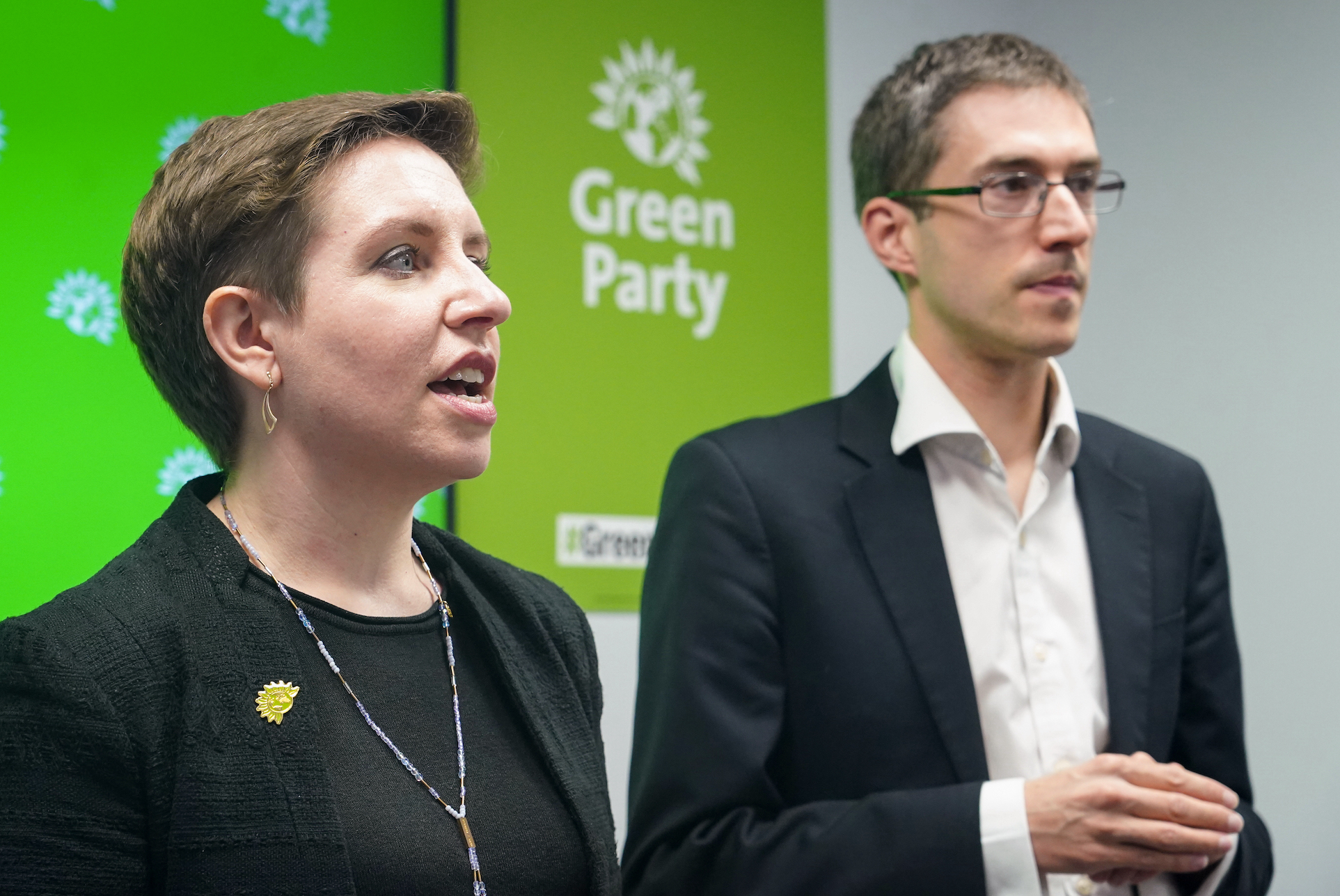
    Green Party Co-leader Adrian Ramsay. Wikipedia CC.
    Green Party Co-leader Adrian Ramsay. Wikipedia CC.

    The IFS (The Institute for Fiscal Studies) have today warned that 250,000 children will be hit by the two-child benefit cap next year, rising to an extra half a million by 2029. Green Party Co-Leader, Adrian Ramsay, responded saying, 

    “Greens have unequivocally pledged to scrap the two-child benefit cap in our fully costed manifesto.

    “Today I am urging the Labour Party to show real strength and conviction and join us in making this pledge.

    “This one decision could lift 250,000 children out of poverty.

    “The power to do this will be in Labour’s hands.

    “But I want to be very clear.

    “If they fail to do this, elected Green MPs will not let this rest.

    “We will push them every day of the next parliament demanding that they do what is right.

    “That is what a Green vote will enable – voices in parliament to keep Labour honest on these important issues.”

  • BRITAIN SPENDS £12,000 A MINUTE ON NUCLEAR WEAPONS

    Spread the love

    https://www.declassifieduk.org/britain-spends-12000-a-minute-on-nuclear-weapons/

    Britain tested nuclear weapons in the Pacific in the 1950s. (Photo: Yui Mok / Alamy)

    The lavish spending would continue under Labour.

    Britain spends a larger portion of its military budget on nuclear weapons than any other state, a major report published today reveals.

    Rishi Sunak’s government is putting 12 per cent of defence expenditure – equivalent to £12,000 every minute – towards the UK’s arsenal of at least 225 warheads.

    Sunak increased spending on nuclear weapons last year by 17 per cent to £6.5 billion – a greater increase than any other nuclear power except the US. 

    Over the last five years UK expenditure rose by a staggering 43 per cent.

    The startling figures appear in new research by the International Campaign to Abolish Nuclear Weapons (ICAN), a widely respected group that was awarded the Nobel Peace Prize in 2017.

    ICAN calculates that Britain is the world’s fourth highest spender on nuclear weapons after the US, China and Russia.

    Nuclear Starmer

    The group’s report comes at a time when the Labour leadership is championing nuclear weapons. The party’s manifesto states: “Our commitment to the UK’s nuclear deterrent is absolute.”

    This spending commitment is in stark contrast to Keir Starmer’s extreme caution when it comes to investing in public services. 

    The party describes the “independent nuclear deterrent” as “the bedrock of Labour’s plan to keep Britain safe”.

    However, it is far from independent. Regular flights from the US carry material that are essential ingredients of Britain’s Trident nuclear missile system.

    A Mutual Defence Agreement (MDA) between Britain and the US enshrines Whitehall’s reliance on the Pentagon for essential technology. 

    The agreement, which is due to be renewed this year, is incorporated in US law. Yet it has no legal status in Britain and has never been the subject of a substantial debate or vote in parliament.

    The Liberal Democrats’ policy is identical to those of the Conservatives and Labour, saying they will “maintain the UK’s nuclear deterrent with four submarines providing continuous at-sea deterrence”. 

    The Scottish National Party has a long record of being opposed to nuclear weapons, which it says are “wrong strategically, morally and financially.” 

    It adds that it supports long-term investment in the Trident submarine base in Faslane as a conventional military base.

    The Green party says it would “dismantle Britain’s entire Trident nuclear deterrent and remove all foreign nuclear weapons from UK soil.”

    …

    https://www.declassifieduk.org/britain-spends-12000-a-minute-on-nuclear-weapons/

  • Andrew Feinstein: what’s wrong with the Labour manifesto

    Spread the love

    Andrew Feinstein is challenging Keir Starmer by standing as the independent candidate for Holborn & St Pancras.

    https://morningstaronline.co.uk/article/andrew-feinstein-whats-wrong-labour-manifesto

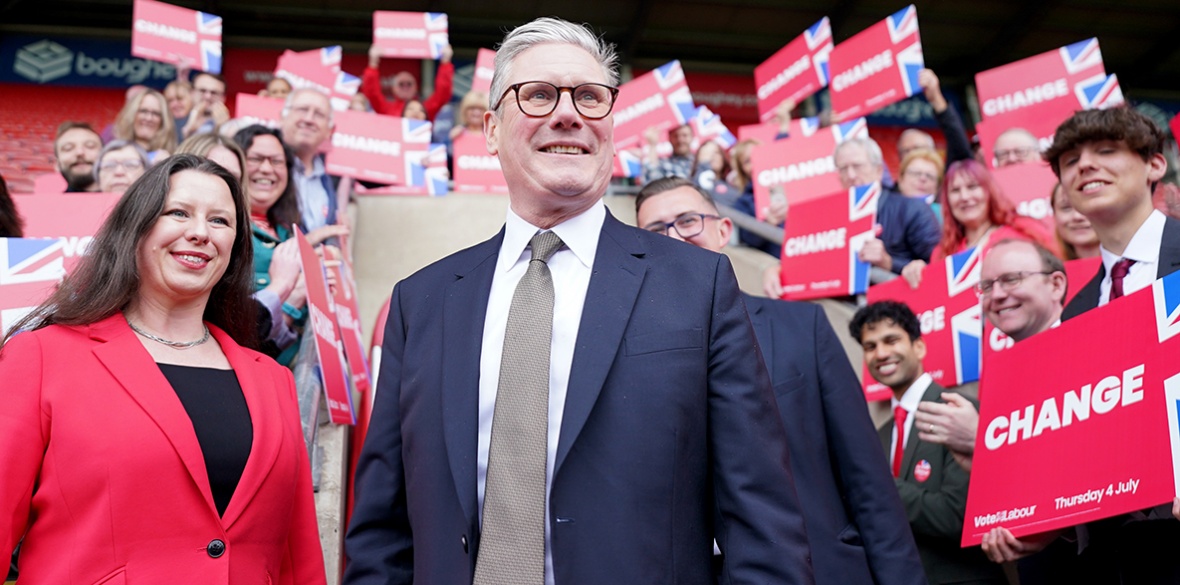
    Labour Party leader Sir Keir Starmer at the Mornflake Stadium, home to Crewe Alexandra while on the General Election campaign trail, June 13, 2024

    From muzzling Palestinian rights to embracing austerity and outsourcing the NHS, Labour’s ‘tough choices’ always seem to hurt normal people while sparing wealthy donors — that’s why I am running to unseat Keir Starmer on July 4

    …[T]he Labour Party launched its election manifesto — a dispiriting Thatcherite promise to continue endless austerity, soaring inequality and forever wars.

    I announced my bid to become the independent MP for Holborn and St Pancras three weeks ago. Then, I was convinced that Keir Starmer’s Labour Party would offer little to improve the lives of this constituency’s amazing and diverse communities, or meaningfully restrain Israel’s genocide of Gaza. Having read this manifesto, I am more convinced than ever.

    Starmer’s election campaign has traded on a series of stock phrases, all of which are profoundly misleading. Starmer promises to bring about “change,” but repeats tired economic shibboleths of the George Osborne variety.

    He also claims to have remade the party “in the service of the working people.” In fact, the party is financially reliant on donations from big business and billionaires and its MPs rake in donations from the private-sector companies who circle the NHS.

    The party’s long-feted New Deal for Working People is so disappointing that the party’s largest affiliated union, Unite, has refused to endorse the Labour Party manifesto.

    But the most galling of all of the current Starmerisms is his invocation of “tough choices.” Starmer deploys the line to explain why the country cannot afford to pull half a million children out of poverty by ending the two-child benefit cap: a decision now confirmed by the manifesto.

    Liz Truss’s mini-Budget, Starmer sadly explains, has made it impossible for the sixth-richest country in human history to lift children out of poverty at a cost little under £2 billion a year, a relatively measly sum in a country with a GDP of £2,274 trillion.

    As the Labour Party manifesto makes clear, there have been plenty of hard choices made by the party — but all of them to the detriment of the poor and to the benefit of the mega-rich and big business.

    Starmer makes the “tough choice” not to substantially increase funding the NHS, to end child poverty or reverse the swingeing cuts of the last decade; but only because he fails to make the “tough choice” to tax billionaires marginally more, even though the 10 richest people in the country are now richer than they have ever been.

    …

    I’m especially angry that the Labour Party, like the Tories, has promised to increase defence spending to 2.5 per cent of GDP: a real-term £7bn a year increase by 2029. This is almost double the entire £4.7bn a year the party intends to spend on its Green Prosperity Plan to tackle the imminent existential threat of climate change.

    What sort of security does this really buy? The party’s offer on Palestine is, frankly, an outrage; the manifesto speaking out of both sides of its mouth. So while it recognises that “Palestinian statehood is the inalienable right of the Palestinian people,” it then makes Palestinian statehood contingent on a meaningless word salad.

    “We are committed to recognising a Palestinian state as a contribution to a renewed peace process which results in a two-state solution with a safe and secure Israel alongside a viable and sovereign state.”

    So much for an inalienable right, which requires Israel to feel “safe” before Palestinians get statehood — just as Israeli leaders claim that Israel will only feel safe when Gaza is cleansed of its citizens because there are “no uninvolved.”

    This offer significantly dilutes the party’s previous commitment to recognising Palestinian statehood on the first day of government — something first brought in by Ed Miliband, appearing in the 2017 and 2019 manifestos. If there was any hope that Labour would be any better than the Tories on Gaza once in power, this should dispel it once and for all.

    Both the Lib Dems and the Green Party, by comparison, have committed to immediately recognising Palestine. The Labour Party now joins the ignominious company of the Tories and Reform in refusing to do so.

    …

    https://morningstaronline.co.uk/article/andrew-feinstein-whats-wrong-labour-manifesto

  • Green Party manifesto pledges to nationalise water, railways and energy companies

    Spread the love

    https://www.politics.co.uk/news/2024/06/12/election-2024-green-party-manifesto-pledges-to-nationalise-water-railways-and-energy-companies/

    The Green Party has unveiled its election manifesto, sold as a plan to “mend broken Britain”.

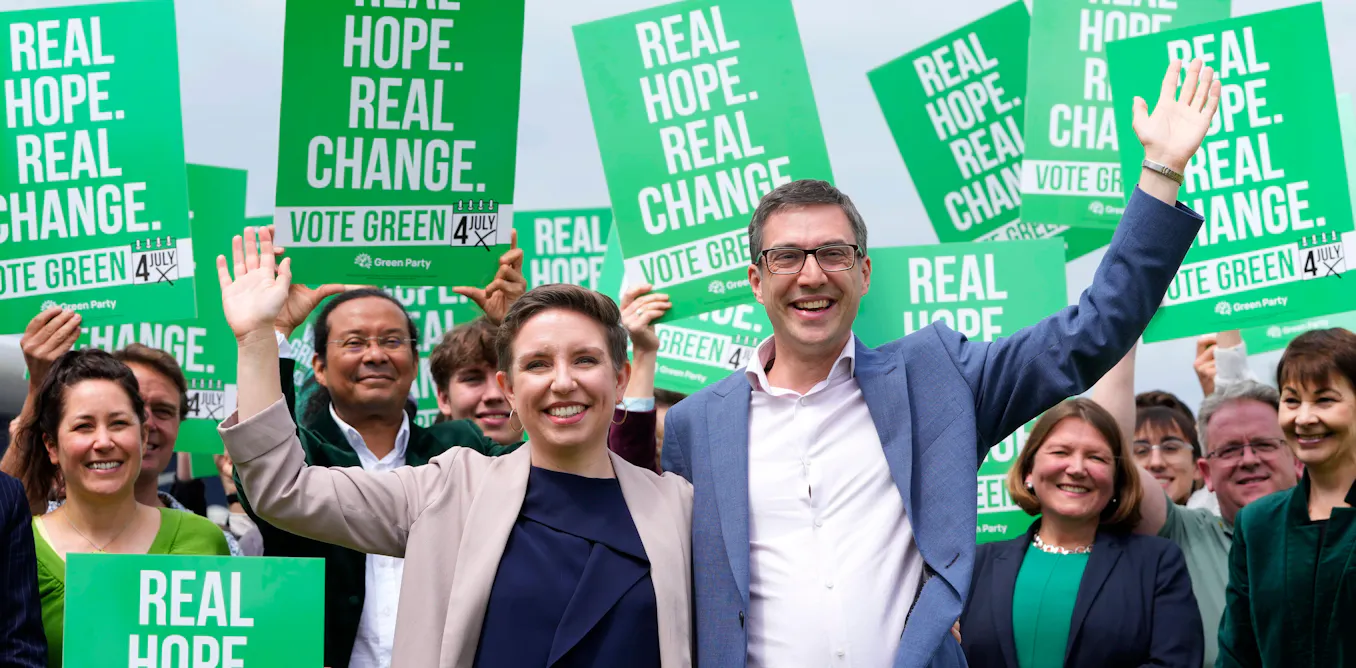
    Addressing the Greens’ launch event in Brighton and Hove, co-leader Carla Denyer said the manifesto contained measures to “offer real hope and real change”.

    “Our manifesto is based on investing to mend broken Britain and offer real hope and real change”, she said, adding: “We can’t go on with an economy where  most people are working harder and yet getting poorer while inequality keeps growing.”

    The Greens’ policies include introducing a new wealth tax of 1 per cent annually on assets above £10 million and 2 per cent on those above £2 billion, banning domestic flights for journeys which would take less than three hours by train, and moving to a four-day working week.

    The party would also bring water companies, railways, and big five retail energy companies into public ownership; end immigration detention for all migrants unless they pose a danger to public safety; invest £50 billion in health and social care “to defend and restore the NHS”; scrap university tuition fees and increase the schools budget; and stop all new fossil fuel projects and cancel those recently licensed, like Rosebank in Scotland.

    …

    https://www.politics.co.uk/news/2024/06/12/election-2024-green-party-manifesto-pledges-to-nationalise-water-railways-and-energy-companies/