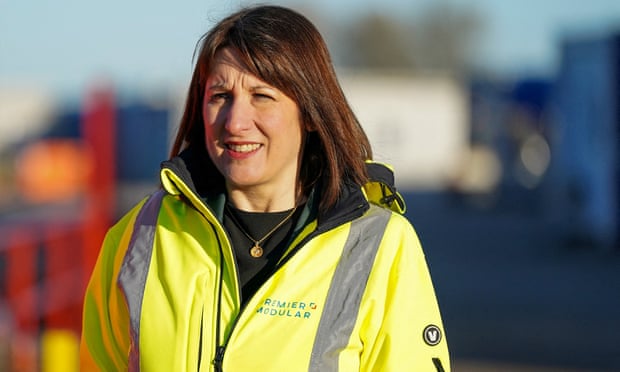
Category: Rachel Reeves

  • Labour is wilfully ignoring that the climate crisis is at a crunch point

    Spread the love

    Original article by Paul Rogers republished from OpenDemocracy under under a Creative Commons Attribution-NonCommercial 4.0 International licence. 

    British chancellor Rachel Reeves has backed ‘catastrophic’ plans to build a third runway at Heathrow
     | Ian Forsyth/Getty Images

    Rachel Reeves and Keir Starmer appear happy to pursue growth at any cost – including the destruction of the planet

    Last weekend the temperature at the North Pole was 20℃ above average, taking it above ice’s melting point in what was described as “a very extreme winter warming event” by Mika Rantanen of the Finnish Meteorological Institute.

    Four days later, things got worse still. The Copernicus Climate Change Service reported that last month was the warmest January ever recorded at 1.75℃ hotter than pre-industrial times. This is especially worrying since scientists expected temperatures to fall this year as La Nina took over from the previous year’s El Nino. We now face the worrying possibility that the impact of cooling La Ninas might be declining.

    Amid these developments, British chancellor Rachel Reeves has backed plans to build a third runway at Heathrow, which climate campaigners warn would be “catastrophic”, and reports have emerged that she is also poised to support the opening of the giant Rosebank oilfield in the North Sea, which energy secretary Ed Miliband has described as “climate vandalism”.

    Reeves’ drive for economic growth at the expense of the planet is a far cry from the strong green agenda that the Labour Party seemed to favour ahead of last year’s general election.

    Labour’s apparent change of heart unfortunately coincides with Donald Trump taking office in the US. The climate science community is now braced for the impact of Trump’s newly appointed Department of Government Efficiency, led by billionaire Elon Musk, running a coach and horses through the US foreign aid programme.

    Trump’s administration has also already started removing or downgrading mentions of climate change from federal government web pages – a sign that we are in a worse position than a decade ago after the 2015 Paris climate summit, when there were indications that the dangers of climate breakdown were at last being appreciated at higher political levels.

    Now, one of the world’s leading climate specialists, professor James Hansen of Columbia University, says that the international target agreed upon at the Paris summit of limiting global temperature rises to 2℃ is “dead”. The pace of global heating had been “significantly underestimated”, he explained.

    The fossil carbon states and corporations with their coal, oil and gas markets, meanwhile, are more certain about their prospects and happy to promote their wares with enthusiasm. There were 2,500 oil, gas and coal lobbyists at the 2023 Dubai COP28 climate summit, four times as many as attended the previous year in Egypt.

    If forced onto the defensive, fossil fuel giants have several options. One is to move the focus away from mitigation to adaptation, another is to boost the potential of carbon capture and storage, and yet another is geoengineering.

    Then, if all else fails they can fall back on direct air capture; removing carbon from the air once it is dispersed in the atmosphere, rather than as it is emitted. In other words, we should accept the likelihood of an “overshoot” of carbon emissions and hope that future technologies can save the day!

    None of these scenarios has any current relevance as none can be developed in anything remotely like the time available given the speed of climate breakdown. There has to be urgent political change at the highest level to engage in emergency decarbonisation.

    At a lower level, there is some good news at least. The cost of producing electricity from renewable sources is continuing to fall and the whole process of embracing renewables could accelerate if just one or two countries demonstrated just how quickly change can come.

    The UK is in a hugely favoured position to do so, having huge scope to expand land-based wind and solar power as well as offshore wind. That should be one of the British government’s two absolute priorities, the other being a rapid programme of home and workplace insulation.

    Further moves would be an immediate tightening up of house building regulations requiring much higher levels of insulation together with grants and loans for home environmental improvements. Transition to electrical vehicles should be accelerated along with much expansion of public transport.

    Changes in agriculture must be brought in to cut down on greenhouse gas emissions, with methane emission control frequently being overlooked. Air and marine transport must also be subject to far greater emissions control. Any plans to expand existing airports must be abandoned as nonsensical, and subsidies for oil and gas production should be transferred to renewables.

    All this, and much more, would cost money, and a lot of it, but there is plenty of that around, readily available from many sources including rigorous control of tax evasion and avoidance, together with new wealth taxes. If climate breakdown is recognised for what it is, the greatest threat to UK security, then the entire ‘defence’ budget should be rethought in this light. More than this, any government that recognises the challenge facing every one of us would see the need to borrow to help fund the response.

    So, what of Labour so far? Regrettably, there is little to applaud despite the efforts of a rather isolated few on the front benches and a handful of backbenchers such as Clive Lewis. The party’s brave words of a year ago are difficult to find and Labour is now about growth at almost any cost – destruction of the planet included. The lobby brigade is winning.

    Even carbon capture and nuclear power are now hailed by the Labour government as part of the answer even though the first is unproven and the second will take decades to bring in while we only have years, not decades, to make the change.

    Perhaps Labour will come to its senses as climate disasters accelerate but it is now a party that has lost any sense of mission. It has forgotten its history, how a Labour government of the late 1940s took on seemingly impossible tasks and succeeded in many respects against the odds. Can the party change now? Perhaps, but don’t hold your breath.

    Original article by Paul Rogers republished from OpenDemocracy under under a Creative Commons Attribution-NonCommercial 4.0 International licence. 

    Keir Starmer, Angela Rayner and Rachel Reeves wear the uniform of the rich and powerful. They have all had clothes bought for them by multi-millionaire Labour donor Lord Alli. CORRECTION: It appears that Rachel Reeves clothing was provided by Juliet Rosenfeld.
    Keir Starmer, Angela Rayner and Rachel Reeves wear the uniform of the rich and powerful. They have all had clothes bought for them by multi-millionaire Labour donor Lord Alli. CORRECTION: It appears that Rachel Reeves clothing was provided by Juliet Rosenfeld.
  • Spread the love
  • Labour MPs at ‘breaking point’ with Keir Starmer over North Sea row

    Spread the love

    https://www.thenational.scot/news/24909299.labour-mps-breaking-point-keir-starmer-north-sea-row

    The Prime Minister is facing a growing internal backlash from Labour MPs after Treasury sources indicated Rachel Reeves is likely to give her backing for the proposed Rosebank development (Image: PA/Henry Nicholls)

    WESTMINSTER politicians are reportedly at “breaking point” with Keir Starmer over the potential of approving a new oil and gas field in the North Sea.

    The Prime Minister is facing a growing internal backlash from Labour MPs after Treasury sources indicated Rachel Reeves is likely to give her backing for the proposed Rosebank development.

    MPs have reportedly called for Starmer to reiterate his own commitments to no further oil and gas licences.

    Last week a judge ruled the Rosebank development, which was given the green light by the previous Tory administration, as unlawful following a legal challenge brought by Greenpeace and Uplift.

    Previously the energy secretary, Ed Miliband, described the licence issued to Rosebank as “climate vandalism”.

    Reeves is reportedly supportive of a new application for environmental consent for the North Sea development, despite Labour’s manifesto promising not to issue any new exploration licences.

    MPs who are concerned about the climate emergency are reported to be likely to make their appeals directly to Keir Starmer about the importance of being seen to stand by the party’s manifesto commitment of no new oil and gas licences.

    …

    https://www.thenational.scot/news/24909299.labour-mps-breaking-point-keir-starmer-north-sea-row

  • Treasury minister: Lobbyists are ‘huge and important part’ of government plans

    Spread the love

    Original article by Ethan Shone republished from OpenDemocracy under a Creative Commons Attribution-NonCommercial 4.0 International licence.

    The Treasury is at the centre of a move to refocus the government’s agenda on ‘growth at all costs’
     | Leon Neal/Getty Images

    Exclusive: Government is inviting lobbyists and their clients to play a major role in the deregulatory agenda

    “Growth comes from business, not the government.”

    That was the message a government minister delivered to hundreds of corporate lobbyists, including those representing banks, arms companies and pharmaceuticals, during a webinar this morning.

    Lord Livermore, the financial secretary to the Treasury, made the comments at the online event, which was the first in a series aimed at encouraging lobbyists to play a major role in the government’s ‘growth at all costs’ agenda.

    In the call, which openDemocracy attended, Livermore made clear that Number 10 sees this agenda as being driven by corporations, while the government is a secondary actor that “work[s] in partnership with business”.

    Also present among the 700 attendees were lobbyists representing tech firms, energy giants and consultancies, and those working for agencies including Hanbury, Headland, Lexington, Brunswick, Cavendish and Grayling.

    These people and their clients are a “huge and important part” of the government’s plans, Livermore said, stressing that ministers are “really keen to draw on… the expertise that exists within your organisations and your clients”.

    He added that the government’s focus is on getting rid of “stifling regulation that has for too long held business back” and “removing barriers to growth that we, in partnership with business, identify”.

    The treasury minister also discussed Great British Energy’s role in “derisking investment” and providing capital for public-private partnerships, to make renewable infrastructure investment more attractive to the market.

    While the government has been unapologetic about its outreach to business as a means to drive growth, Labour’s critics say an ever-closer relationship with lobbyists only heightens the impression of a government that does not have an agenda of its own.

    Speaking to openDemocracy after the call, Green Party deputy leader Zack Polanski said: “With inequality rife, the government should be listening to the people who keep our country running and those suffering, not hosting desperate mass Zoom calls with arms dealers and oil giants.”

    Cutting red tape

    Setting out the government’s priorities, Livermore put a particular focus on achieving major reform to the planning system to encourage more commercial and infrastructure projects, and getting rid of regulations that “stand in the way of businesses investing”.

    Livermore talked up the recent ousting of the head of the competitions regulator and his replacement with a former Amazon executive as evidence that the government is taking seriously its deregulatory agenda.

    He also mentioned the recent push for regulators to submit proposals for growth and said Labour’s National Wealth Fund will “help catalyse private investment into sectors where at the moment, perhaps there’s a too high degree of risk”.

    “We can use the National Wealth Fund to help derisk some of those investments,” said the minister. Economists describe this process as the state stepping in to improve the private returns on infrastructure assets.

    Livermore continued that the fund could be used to “guide investments, particularly into the kind of clean energy investments of the future that we want to see”.

    The government-lobbyist calls are being led by a new partnerships team in No 10 fronted by James Carroll, who has previously worked for the party on external relations and business engagement.

    Also on the call was a senior executive at Anacta UK, described by The Times as the “first Starmerite lobbying firm”, and a banking lobbyist who is also involved in the running of Labour in the City, a group which convenes Labour supporters who work in financial services.

    Lobbyists were able to submit questions during the call. One criticised “some parts of the business community” which have been “vocally critical about the government’s handling of the economy so far,” describing it as “unhelpful”.

    They then asked: “How can firms who don’t want to talk down the UK but would rather promote a more positive narrative about the many opportunities open to British businesses best work with the government to do so?”

    This prompted Carroll to quip: “I promise I haven’t planted that question.”

    Carroll then rounded out the call by reiterating the importance the government places on developing this relationship with lobbyists.

    “Just to emphasise,” he said, “your clients [and] your expertise is critical to delivering these ambitious national missions the prime minister has set out and the chancellor reiterated this week.”

    Polanski, the Green’s deputy leader, said the plans to derisk investment “amounts to privatising the rewards and socialising the risks”.

    He added: “Regulation exists for a reason, Grenfell stands as a towering reminder of lives lost and the total failure of standards.

    “This isn’t growth for the many, just more wealth for the super-rich while the rest of us are told to look up at their private jets and wait for the trickle down.”

    Original article by Ethan Shone republished from OpenDemocracy under a Creative Commons Attribution-NonCommercial 4.0 International licence.
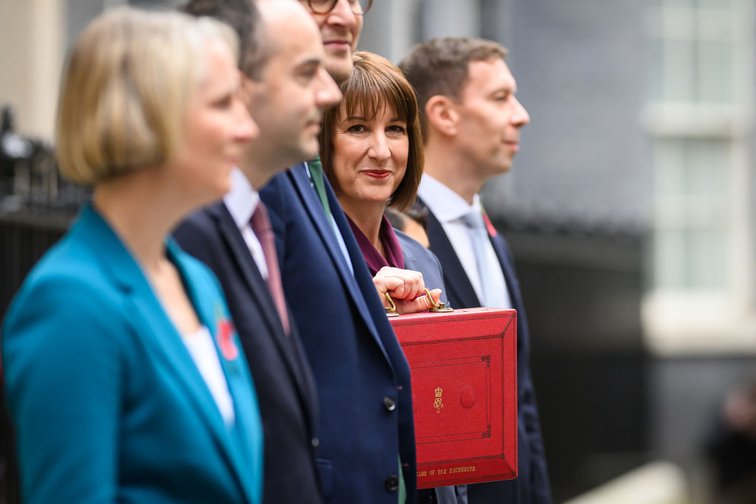
  • Reeves’s Heathrow third runway report was commissioned by London airport

    Spread the love

    https://www.theguardian.com/environment/2025/feb/01/reevess-heathrow-third-runway-report-was-commissioned-by-london-airport

    The chancellor is under fire after a study cited as evidence for expanding the terminal to boost the UK’s economic growth was ordered by Heathrow itself

    Rachel Reeves was facing criticism on Saturday night as it was confirmed that a report she cited as evidence that a third ­runway at Heathrow would boost the UK economy was commissioned by the airport itself.

    Experts and green groups also challenged Reeves’s view that advances in the production of ­sustainable aviation fuel (SAF) had been a “gamechanger” that would substantially limit the environmental damage of flying, ­saying the claims were overblown and did not stand up to scrutiny.

    …

    Alex Chapman, senior economist at the NEF, said: “It is very concerning that the chancellor appears to be basing her support for Heathrow expansion on a figure from a report commissioned by Heathrow airport.

    “Even more worrying is the fact that the methodology they have applied is one that the Department for Transport has previously decided is not fit for purpose, and that the report uses forecast data supplied by the airport itself.

    “Heathrow expansion represents a major threat to the UK’s climate goals and flies in the face of scientific advice. To ensure that the claimed economic benefits are concrete, assessments should be carried out by independent government economists following best-practice methodology.

    “NEF’s analysis has identified a wide range of weaknesses in the economic case, which have emerged since it was last fully appraised in 2015. Not least, the decline of business air travel, the surge in outbound leisure travel and the negative impacts on wider regions of the UK – all of which erode the potential growth benefit.”

    Analysis by climate crisis website Carbon Brief suggests that, using the government’s own figures, SAF will barely cut emissions by 2040, and any reduction will be wiped out by rising flight numbers.

    …

    https://www.theguardian.com/environment/2025/feb/01/reevess-heathrow-third-runway-report-was-commissioned-by-london-airport