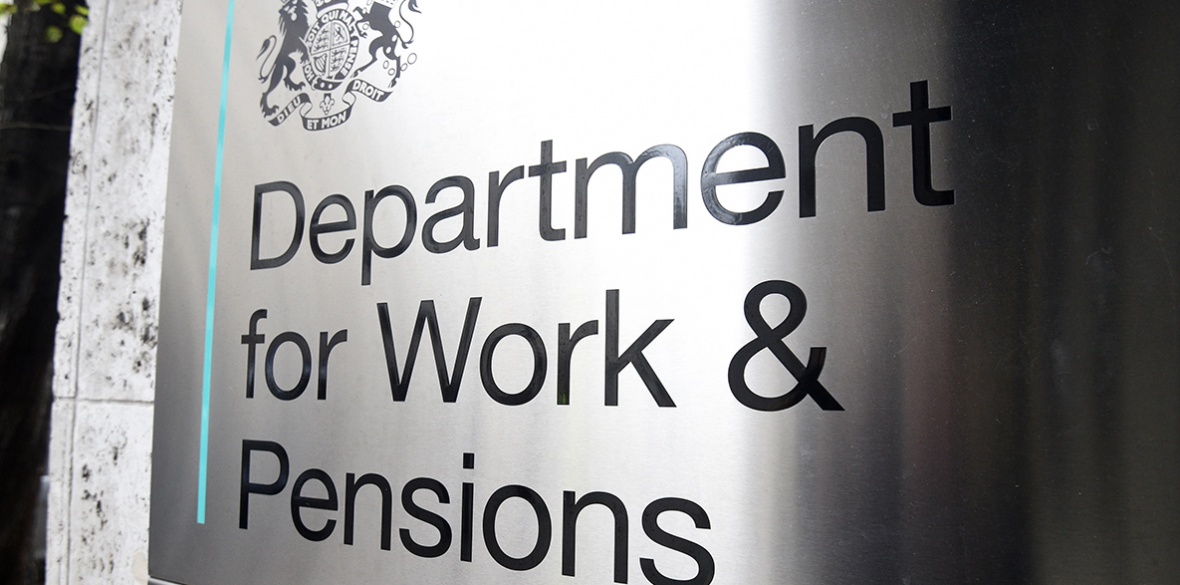
Department for Work & Pensions in Westminster, London
DISABLED activist Ellen Clifford began her legal challenge against the Department for Work and Pensions (DWP) today over the government’s “disingenuous” consultation on tightening the Work Capability Assessment.
Ms Clifford, represented by lawyers from Public Law Project, appeared at the High Court in London for the first of a two-day hearing to argue that the consultation was unlawful as it did not properly explain the conditions of the proposed changes.
The challenge also argues that the primary motive behind the consultation, which ran for eight weeks in 2023, was to reduce spending on disability benefits rather than to get more people into work.
Disability rights campaigners affected by the proposed changes also held a vigil outside the Royal Courts of Justice today.
Ahead of the hearing, Ms Clifford said: “More than 400,000 people will be worse off by £416 a month if the changes proposed in this consultation go ahead.
“And then there is the risk that people will lose even more money if they are sanctioned for not being able to comply with conditions they will now need to fulfil in order to receive their benefits.
“To be blunt, this would be cataclysmic for deaf and disabled people in the UK and would push many into destitution.”
CHANCELLOR Rachel Reeves has ordered 5 per cent cuts across government departments in an “efficiency drive” that resembles austerity.
Announcing the spending review, Ms Reeves said: “I have no doubt that we can find efficiency savings within government spending of 5 per cent and I’m determined to do so.”
She said the cuts would be secured by cracking down on waste and focusing on the five “milestone” policies Prime Minister Sir Keir Starmer outlined in his government relaunch last week.
Those were boosting living standards, building more homes, cutting NHS waiting lists, ensuring children are ready for school and raising military spending to 2.5 per cent of gross domestic product.
…
The 5 per cent reductions are to be achieved over three years, the Treasury said, adding that the Chancellor will “work with departments to prioritise spending that supports the milestones to deliver the plan,” indicating that areas not a “milestone,” such as welfare, will be squeezed.
Ms Reeves denied that her move replicated a similar announcement by her predecessor George Osborne at the height of Tory austerity.
Green Party co-leader Adrian Ramsay said: “Labour call their 5 per cent cuts across government departments ‘efficiency savings.’ We call it what it is: cuts to services.
“This amounts to the continuation of the same damaging, unpopular and unnecessary policy that has so devastated our country over many years.”
The DWP confirms that draconian ‘savings’ are coming down the track. Are we a nation that will repair hospitals, but not help a nurse with long Covid?
In the days after the budget, the headlines were dominated by talk of Rachel Reeves’s “tax and spend” bonanza. The message was clear: austerity is officially over. When there was concern about squeezed incomes, it was solely for workers. As the Mail front page put it: “Reeves’ £40bn tax bombshell for Britain’s strivers”. Almost a week later, there has still barely been a word about the policy set to hit the group long scapegoated as Britain’s skivers: the billions of pounds’ worth of benefit cuts for disabled people.
Making up just a couple of lines in a 77-minute speech, you’d have been forgiven for dozing past Reeves’ blink-and-you’d-miss-it bombshell. With a record number of Britons off work with long-term illness, the government will need to “reduce the benefits bill”, she said, before noting ministers had “inherited” the Conservatives’ plans to reform the work capability assessment (WCA). That plan, let’s not forget, was to take up to £4,900 a year each from 450,000 people who are too sick or disabled to work – a move that the Resolution Foundation says would “degrade living standards” for families already on some of the lowest incomes in the country.
…
Much like when George Osborne aimed to cut the disability benefits bill by a fifth, “welfare reform” based on arbitrary cost-cutting says the quiet part out loud: benefits won’t be awarded based on who needs them – just on what they cost. It is social security by spreadsheet, severing the social contract that promises the state will be there in times of sickness and disability, and adding a footnote that says, “but only if we can afford it”. That last week’s budget revealed huge investment for infrastructure at the same time as disability benefit cuts exposes how even the affordability argument is largely fabricated. There is money to fix hospital buildings but not to feed a nurse bedbound with long Covid.
The financial impact of such “reform” on those relying on benefits is well established but the psychological toll should not be underestimated. Since gaining power, Labour has drip-fed the rightwing press sound bites and op-eds on potential benefit cuts, leaving news outlets to speculate wildly for clicks. The budget’s half-announcement has only added to the confusion and fear, issuing vague dog whistles of “fraud” and high “benefit bills” while forcing millions of people to wait months to find out if they will lose the money they need to live.
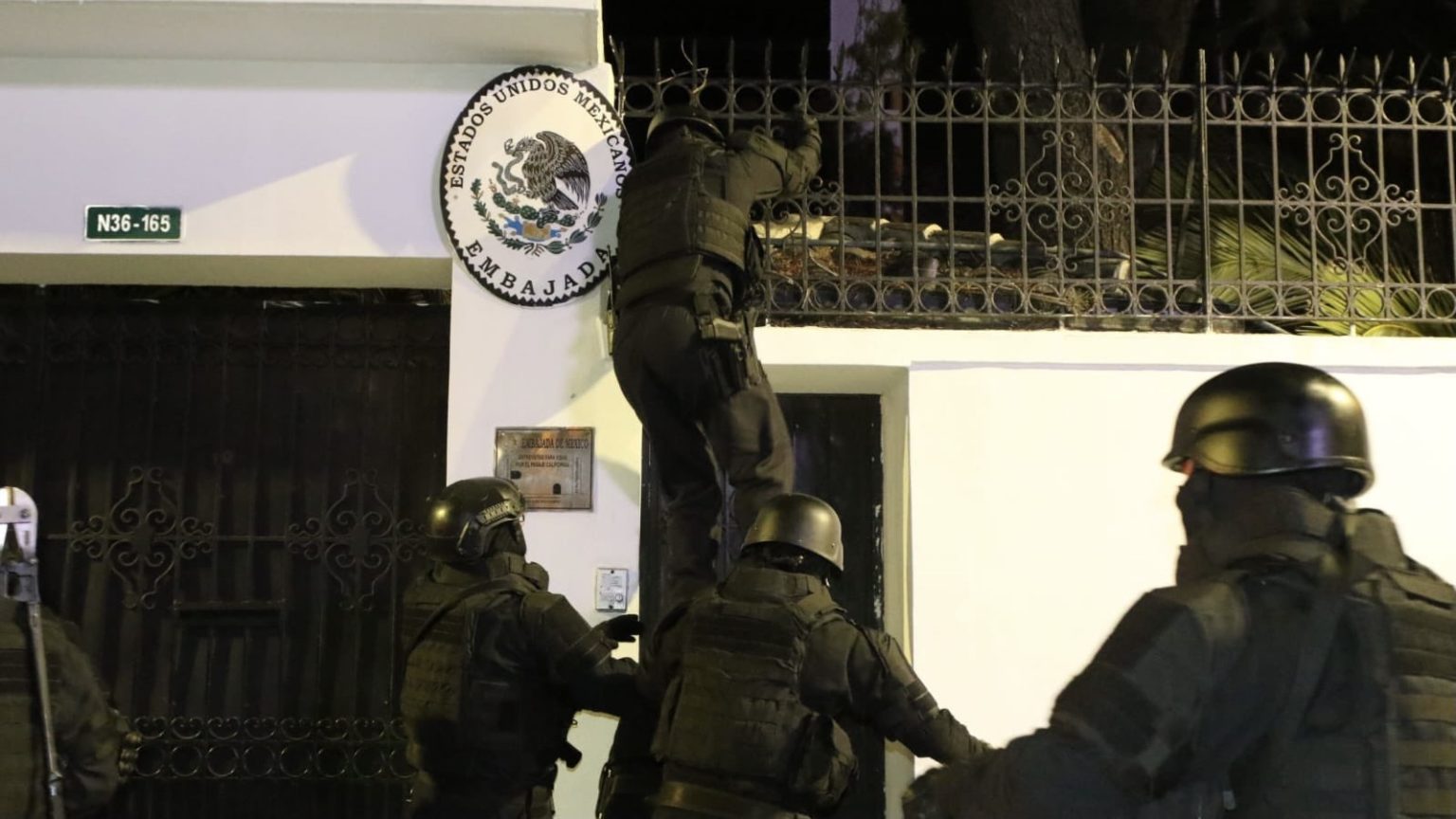
Late on Friday April 5, dozens of Ecuadorian police officers forcibly entered the Mexican Embassy in Quito and detained former Ecuadorian vice president Jorge Glas. Glas had been conceded political asylum by Mexico earlier that day after having applied in December 2023 amid intensified political persecution against him.
The move has been widely condemned by nearly the entire political spectrum in Mexico as a grave violation of Mexican sovereignty and has also been widely condemned by progressives in Ecuador.
Following the incident, Mexican President Andrés Manuel López Obrador and Foreign Minister Alicia Bárcena announced that Mexico was suspending diplomatic relations with the country.
Roberto Canseco, the head of Foreign Ministry and Political Affairs at the Mexican Embassy in Quito who was present when the incursion took place, spoke to the press shortly after the incident. “They threw me to the floor. I tried to physically stop them from entering but like criminals they raided the Mexican Embassy in Ecuador. This is not possible, this cannot be, it is insane,” Canseco told reporters incredulously.
The diplomat told reporters that there had been no prior warning to the police raid, but that it clearly happened because Glas is being persecuted. He also expressed concern over the whereabouts and wellbeing of the former VP.
He added, “Risking my life, I defended the honor and sovereignty of my country.”
The unprecedented incident took place amid rising tensions between the two countries. Jorge Glas had been seeking refuge at the Mexican embassy since December 18, 2023 and residing at the embassy as a “guest” after Ecuadorian authorities began to intensify pressure on Glas and summon him for investigations. This past week, the government of Daniel Noboa announced that it declared the Mexican Ambassador Raquel Serur Smeke a “persona non-grata” allegedly in response to comments made by President López Obrador in his morning press conference which insinuated that Noboa had benefited from the assassination of presidential candidate Fernando Villavicencio. However, many analysts have pointed to Glas’ presence in the embassy as the key factor behind Quito’s attacks on Mexico, and the events of April 5 seem to have confirmed this theory.
Jorge Glas: Victim of lawfare in Ecuador
Glas spent five years in prison, after being convicted of criminal conspiracy in the Odebrecht case, as part of the vicious lawfare campaign against members of Rafael Correa’s administration. Glas was later convicted in April 2020, along with Correa, in the “Bribes Case”, which alleged that they and 18 other government officials accepted bribes from private companies in exchange for public contracts. As prosecutors were unable to find evidence that the two received bribes, Glas and Correa were accused of “psychic influence” on their subordinates who allegedly carried out these deals and sentenced to several years in prison. Correa was also banned from participating in politics for 25 years.
Throughout the intense lawfare campaign against him and others, Glas has maintained that he is innocent and that both the charges and the harsh sentencing of him constitutes political persecution.
During the Correa presidency, Glas was one of the key leaders in the “Citizen’s Revolution” political project, which sought to make important social and economic reforms to better conditions for the majority. During this period, the Correa administration launched a Constituent Assembly to rewrite Ecuador’s constitution to guarantee essential rights for all, among other measures to promote national culture, Indigenous rights; it promoted Latin American regional integration over ties with the US and kicked out the US military base; and maintained anti-neoliberal economic policies, favoring social investment over cuts to public spending and social programs.
This project was brought to a halt in 2017 when Lenín Moreno was elected president and made a volte-face in Ecuador’s policies across the board, taking out a massive loan from the IMF, exiting regional integration spaces and attacking the country’s regional allies and economic partners like Venezuela, and imposing harsh austerity measures and brutally repressing protests against the measures. Under Moreno, the Attorney General also began its targeted attacks on leaders and officials of the Citizen’s Revolution.
Glas was eventually released on November 28, 2022 and granted “provisional freedom” as he had fulfilled over 40% of his prison sentence. However, in December 2023, days after he arrived at the Mexican embassy and weeks after Daniel Noboa took office as president, a judge revoked Glas’ provisional freedom and called for his arrest and imprisonment. Fearing for his life, Glas remained at the embassy and applied for political asylum, which was granted April 5, 2024.
The left in Ecuador responds
Progressive groups in Ecuador immediately expressed outrage at the actions of Noboa’s government and the National Police and issued sharp condemnations.
The Confederation of Indigenous Nationalities (CONAIE) wrote in a statement on X, “The violation of the Mexican embassy in Ecuador is an extremely serious fascist act that threatens diplomatic relations and international law…It is worrying to observe how the authoritarian and fascist government of Ecuador uses force to secure its political trophies. This flagrant violation not only affects bilateral relations between Mexico and Ecuador, but also sends a dangerous message to the international community.”
Pabel Muñoz, the mayor of Quito and a member of the Citizen’s Revolution Movement party, stated, “Unacceptable, a global embarrassment. What just happened in the Mexican Embassy in Quito creates a complex situation for Ecuador before the international system and law. Is there any doubt that Jorge Glas is the victim of terrible persecution? The more concerning part is that he had already been granted political asylum.”
Correa also issued a short statement repudiating the attack on Mexico and the arrest of Glas, “What the government of Noboa has done is unprecedented in Latin American history. Not even in the worst dictatorships was the embassy of a country violated. We do not live under rule of law, it is a state of barbarie, with a guy who improvises [Noboa] that confuses the Homeland with one of his banana farms. We hold Daniel Noboa responsible for the safety and physical and psychological integrity of former Vice President Jorge Glas. To Mexico, its people and its Government, our apologies and eternal admiration.”
Mexico unites in defense of its sovereignty
People across Mexico have expressed outrage in response to the brazen violation of the country’s sovereignty and of international law. In the statement announcing the suspension of diplomatic relations, President López Obrador said it was “an authoritarian act” and a “flagrant violation of international law and Mexican sovereignty”.
Foreign Minister Alicia Bárcena said in an interview with TeleSur that in addition to suspending diplomatic ties, Mexico would take Ecuador to the International Court of Justice and all multilateral bodies over its unprecedented actions.
Presidential candidate for MORENA, Dr. Claudia Sheinbaum called the incident “an attack on diplomacy and international law that is inadmissible”.
Mexico’s Senate also released a statement “energetically condemning” the Ecuadorian government’s actions and demanding “respect to our sovereignty and to the integrity of our Embassy and diplomatic personnel.” They called on the Ecuadorian government to reconsider its actions and resume the diplomatic path to resolve issues.
Both traditional right-wing parties PRI and PAN issued condemnations of the police invasion, while their joint candidate in the upcoming elections released a lukewarm statement saying that diplomatic missions cannot be violated.
When I became Leader, I was proud to be part of a movement that gave its members a voice, fought for a politics of redistribution and anti-imperialism, and mobilised a new generation of voters to believe that a better world was possible.
The decision to block my candidacy is an insult to the millions of people who voted for our Party in 2017 and 2019, and to all those who voted for his leadership on the basis that he would “defend [the] radical values” we put forward.
Keir Starmer has abandoned his pledges to defend trade unions, bring key industries into public ownership, reverse NHS privatisation, raise corporation tax, protect free movement and abolish tuition fees. Solidarity is now saved for CEOs, not striking workers. Trust is placed in corporate interests, not party members.
Human rights issues are cherry picked at the expense of a consistently ethical foreign policy. And empathy for desperate refugees is eschewed to appease the right-wing press.
As the government plunges millions into hardship, Keir Starmer has decided to attack the democratic foundations of his own party and the principles he once proclaimed to support.
However, just because the Labour leader has abandoned his faith in a better world doesn’t mean the rest of the labour movement should follow. There is huge demand for a more hopeful alternative: decent pay rises, democratic public ownership, housing for all, a wealth tax to save our NHS, and a humane immigration system grounded in dignity, empathy and care.