Austerity and alignment to Washington: Two years of President Javier Milei

Spread the love

Original article by Pablo Meriguet republished from peoples dispatch under Creative Commons Attribution-ShareAlike 4.0 (CC BY-SA) license.

Argentina President Javier Milei. Photo: Javier Milei / X

In this article, we review some of the general trends and attitudes of Milei’s government two years into his term.

Thousands of Argentines endured high temperatures as they took to the streets on December 18 to protest the labor reform of Javier Milei’s far-right government. The call to action by the General Confederation of Labor (CGT) was supported by several trade unions, which claimed that the measure seeks to destroy workers’ rights to benefit big business: “This reform will only deepen poverty, social exclusion, and job insecurity. We will not give up our fight for decent work,” the CGT said in a statement.

The government has justified the measure by citing an alleged need to modernize labor relations: “The text also incorporates specific incentives for the formalization of employment, new rules for the platform economy, more efficient employer contribution schemes, and mechanisms that reduce litigation, providing the system with greater predictability and long-term stability.”

However, organized workers claim that this is a labor flexibility project that aligns with President Milei’s neoliberal agenda. Cristian Jerónimo, leader of the CTE, said: “[The labor reform] does nothing to benefit the world of work; it is written in favor of Argentina’s large corporations and does not favor small and medium-sized enterprises.”

But for the protesters, this reform comes as no surprise. Long before becoming president, Milei announced that it was imperative to reform the entire structure of the Argentine state in order to put it on the “path to freedom,” which means neoliberalizing the economy, reducing state participation in the economy to a minimum, strengthening the apparatus of repression, and aligning the South American country geopolitically with Washington’s interests. In short, to return to the path of the Washington Consensus.

After the day of mass mobilization, the government announced that the debate on the reform would be postponed until February, an initial sign that Milei is feeling the pressure of the popular demonstrations. Yet, after two years in office, Milei has done everything possible to push forward his neoliberal agenda even amid many rounds of mass demonstrations. A series of laws, executive decrees, and international diplomatic engagements have been the clearest signs of the path taken by the right-wing libertarian leader who governs a country that, despite his promises, is once again returning to the path of economic crisis and political instability.

Economy: fiscal adjustment and social tension

In line with neoliberal orthodoxy, Milei has implemented a series of fiscal adjustments to eliminate the deficit, even though this has been at the expense of the material stability of the most disadvantaged sectors, who have taken to the streets to protest against cuts in health, education, and other areas that the Argentine state now refuses to cover in full or adjust in line with the current economic reality. Students, teachers, researchers, and university workers have also taken to the streets consistently, demanding improvements in higher education funding, funding for science and health research, and defending free and public education.

Repression of mass protests, ordered by Security Minister Patricia Bullrich, has been severe. Hundreds have been arrested and injured, including Pablo Grillo, a journalist who was nearly killed when a tear gas canister struck him in the head.

Nevertheless, Milei did not slow down. The elimination of subsidies, wage freezes, and widespread privatization of public companies generated the long-awaited fiscal surplus in more than a decade. Year-on-year inflation, which stood at around 211% at the end of 2023, was reduced to 3% at some point in 2025.

Despite this, several analysts have stated that the 2.3% increase in inflation in October 2025 reflects the shortcomings of a neoliberal model in sustaining a long-term surplus.

Furthermore, it is important to remember that this year, Donald Trump’s administration bailed out Argentina with a record payment of more than USD 20 billion, in addition to the IMF’s generous granting of USD 20 billion to Argentina.

In other words, the surplus that the executive branch promotes as its great economic success has been achieved thanks to enormous support from its international allies, who demand neoliberal macroeconomic change not only in Argentina but throughout the region. This, of course, comes at a price that Argentines will have to pay for decades to come. Argentina has the largest IMF debt in the world. Its debt of more than USD 64 billion is “the price of freedom.”

Politics: reduction of the state and open confrontation

Following his economic model, Milei’s government has pushed radical downsizing. More than 10 ministries and 200 government departments were eliminated in one fell swoop. This meant the dismissal of almost 50,000 people who suddenly found themselves thrown into unemployment and precarity.

These decisions were made abruptly and aggressively, political attitudes that the president has adopted as part of his communication strategy. Bypassing parliamentary approval whenever possible, Milei always sought to govern unilaterally whenever possible.

But Milei has also achieved significant legislative victories. At the beginning of his administration, he had the support of only 39 deputies and six senators; however, he managed to pass several laws, such as the Bases Law (which allowed for the radical privatization of the Argentine state) and tax reforms.

He achieved this thanks to the support of the PRO, a right-wing party led by former president Mauricio Macri, and certain dissident Peronists. The formation of the so-called “May Pact,” a major agreement between Argentina’s right-wing parties and governors, allowed him to negotiate and agree on several reforms desired by right-wing libertarianism.

This pact prevented an increase in pensions for the elderly, who have regularly protested to demand more money to buy medicine and food, which are now major obstacles in their lives. Despite this, the Pact has not budged and continues with its neoliberal drift.

Political and judicial scandals

Milei’s administration has also been marked by several scandals. Very early on, he began a dispute with Victoria Villarruel, his vice president, whom he accused of playing into the hands of his political enemies.

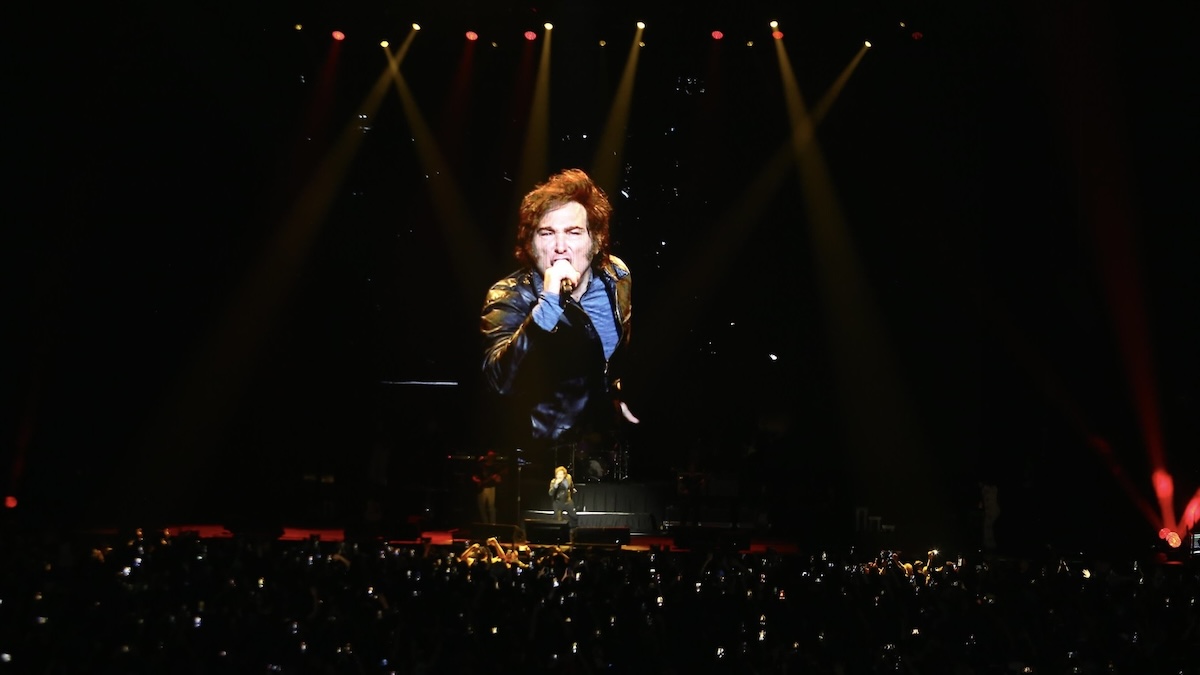
He was also involved in the “$LIBRA” scandal, in which he is accused of being part of an international fraud scheme related to the sale of cryptocurrencies. A parliamentary commission concluded that Milei did use his position as president to promote the scam, which caused millions in losses to investors around the world.

But the event that probably had the greatest impact on Milei’s popularity involved his sister. Karina Milei, who serves as Secretary to the President, is accused of participating in a bribery ring that operated through the National Disability Agency (ANDIS). Many saw the emergence of this scandal as the reason for his resounding defeat in the Buenos Aires Province elections on October 26.

Despite this, Milei managed to recover and his party, La Libertad Avanza (LLA), won the next legislative elections and increased its number of seats in the legislature. His strategy was the usual one: accusing Peronism of destroying Argentina and presenting himself as the only one capable of saving the country. However, this messianic communication strategy has begun to be questioned precisely because of the corruption and fraud scandals that have plagued his government.

Alignment with Washington

Milei has made a significant shift in the country’s foreign policy. Argentina’s vote against the UN resolution condemning the US economic and trade blockade of Cuba reflects an important change. Historically, Argentina has maintained a diplomatic position against any act of imperialism due to its claim over the Malvinas Islands, which, despite being off its coast, are governed by the United Kingdom. The dispute has escalated to military levels despite repeated claims by the Argentine authorities.

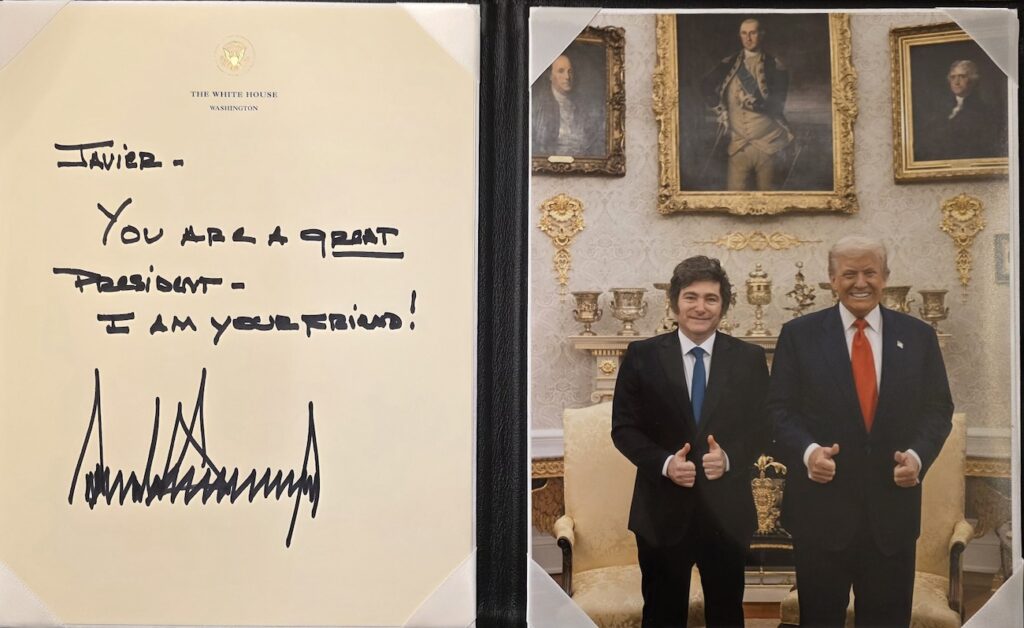
Photo Javier Milei Donald Trump
Donald Trump-signed photo of him and Javier Milei. Photo: Javier Milei / X

But the change is much more than nominal. Argentina has become the Trump administration’s greatest ally in South America. Milei has praised Trump’s personality, and Trump has publicly supported him, like when, in the last legislative elections, he suggested an end to cooperation between Buenos Aires and Washington if Milei lost. In response, the Argentine president has repeatedly declared his loyalty to Trump’s geopolitical project and has supported all of his initiatives both within and outside the region.

In this way, Milei has become a sort of archetype for the leaders of the new Latin American right. With radical fiscal adjustment at the expense of the most impoverished sectors, open confrontation with their opponents, and an international policy fully aligned with Washington (which has initiated a new chapter of the Monroe Doctrine), far-right governments are beginning to gain ground in the region: Kast in Chile, Paz in Bolivia, etc., are examples of an ideological and geopolitical shift in the region that is impossible to understand without the figure of Javier Milei.

Original article by Pablo Meriguet republished from peoples dispatch under Creative Commons Attribution-ShareAlike 4.0 (CC BY-SA) license.

Continue ReadingAusterity and alignment to Washington: Two years of President Javier Milei

Scrapping juries risks ‘damaging politicisation’ say Greens

Spread the love
Green Party MP for Brighton Pavilion Siân Berry. Image by Kelly Hill, Wikimedia CC BY-SA 4.0.

Responding to the announcement from the Justice Secretary, David Lammy, that jury trials in England and Wales for crimes that carry a likely sentence of less than three years are set to be scrapped, Green Party MP, Siân Berry, said:

“The focus on victims’ rights is appreciated, but this Labour Government is taking the wrong steps to try to serve us better, and laying the groundwork for further crackdowns on dissent, whistleblowing and protest if it removes juries from so many charges that have state or corporate victims.

“Juries are also a safeguard against creeping bias and discrimination. Judges are not currently representative of our wider communities and, under these plans, individual decisions will be at risk of damaging politicisation, while individual judges who are women or from minoritised communities risk attacks from the far right.

“More than fifteen years of continuing austerity has caused a backlog in the courts, not juries. Instead of dismantling a centuries-old fundamental legal right, the Government must reverse the neglect and cuts that created this mess in the first place.”

Continue ReadingScrapping juries risks ‘damaging politicisation’ say Greens

Authoritarianism, austerity, repression, and false narratives: the crisis in Ecuador

Spread the love

Original article by Pilar Troya Fernández republished from peoples dispatch under a Creative Commons Attribution-ShareAlike 4.0 (CC BY-SA) license.

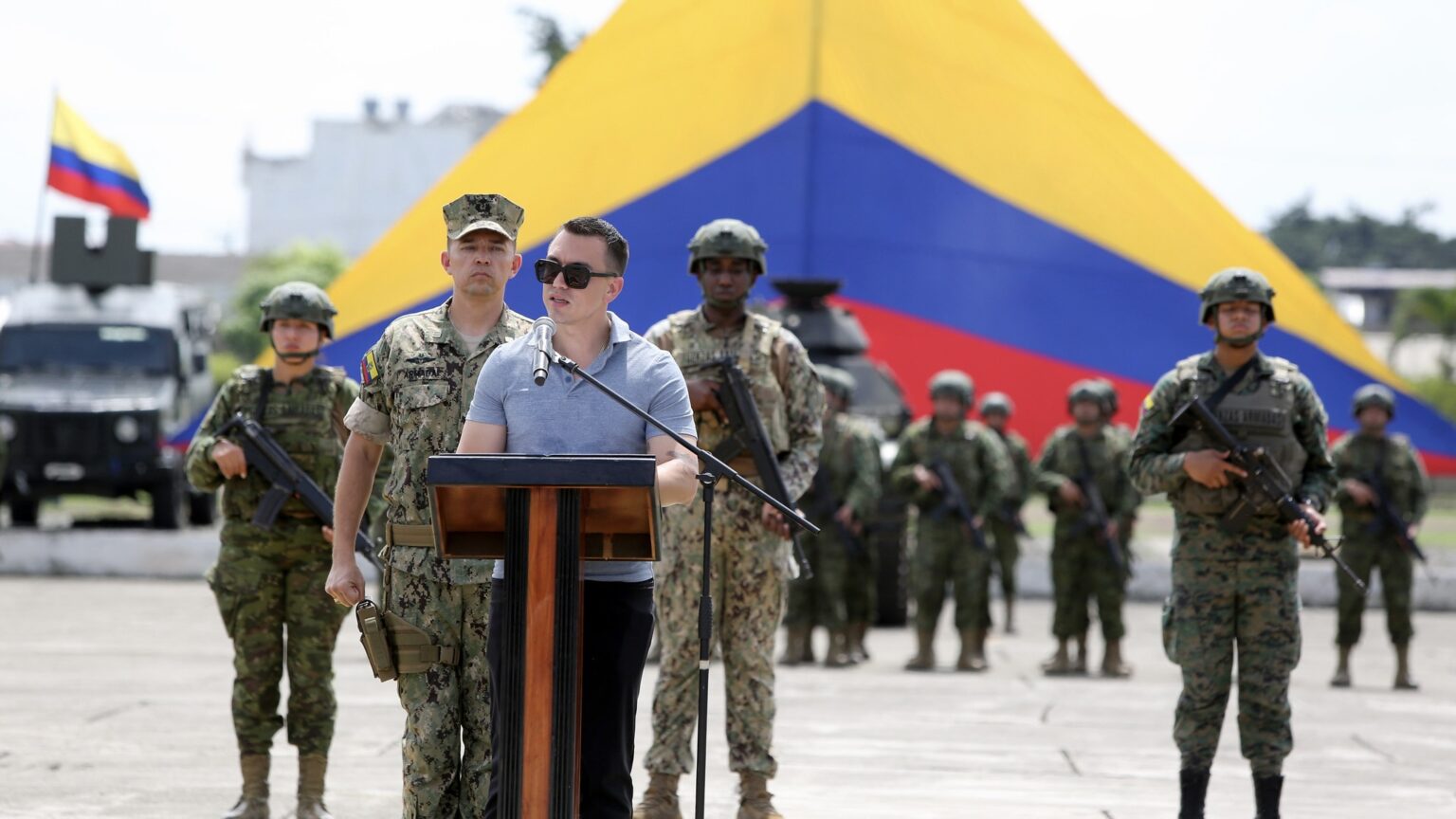
Ecuadorian President Daniel Noboa in January 2025. Photo: Presidencia Ecuador

Ecuadorian President Daniel Noboa has not only deepened the crisis in the country, but is also attempting to change the country’s institutions and laws through loopholes and force.

Daniel Noboa’s government in Ecuador is characterized by the implementation of neoliberal austerity policies dictated by the IMF, the violent repression of social protests, and a series of legal reforms aimed at increasing state authoritarianism, and aligning the country with US foreign policy. All this is taking place amid an unprecedented security crisis.

The security crisis

During the first half of 2025, Ecuador recorded 4,619 homicides, setting a new historical record and representing a 47% increase over the same period in 2024. This figure makes the country the most violent on the continent. No one knows what the Phoenix Plan, implemented by the Noboa government since 2024, consists of, and it has not produced positive results. On the contrary, citizen insecurity has worsened. The constant states of emergency that have militarized the country have also failed to reverse the situation.

Austerity policies

Re-elected in April 2025, Daniel Noboa has implemented a far-right program aligned with the demands of the IMF. In June, he dismissed 5,000 civil servants and merged four ministries. In the most serious case, environmental responsibilities were transferred to the Ministry of Natural Resources and Hydrocarbons, highlighting the government’s extractivist orientation. These measures represent the path toward the minimal state advocated by neoliberalism and respond to the conditions of the latest IMF loan.

On September 12, Noboa withdrew the subsidy on diesel, whose price rose from USD 1.80 to USD 2.80 per gallon until December. Subsequently, the price would depend on a band system tied to international market prices. This measure triggered a national transport strike on September 13, with transport workers quickly reaching an agreement with the government in exchange for subsidies, and subsequently the national strike called by the Confederation of Indigenous Nationalities of Ecuador (CONAIE) on September 18, demanding the repeal of the measure, a reduction in the VAT from 15% to 12%, no mining, respect for prior consultation, and more investment in education and health. It should be noted that public hospitals are in precarious conditions, without medicines or supplies. The media reports that patients who required dialysis treatment died because they did not receive it.

Submission to the United States and constitutional reforms

On June 3, the National Assembly, where the government has a majority, approved an amendment to Article 5 of the Constitution allowing foreign military bases. This amendment required the approval of the Constitutional Court and subsequently a referendum. On September 5, the Constitutional Court rejected four of the eight questions that Noboa had sent for popular consultation and referendum, including this issue.

Authoritarian laws and the Constitutional Court as the last bastion

In June 2025, the government managed to pass three new laws that were sent as economically urgent without actually being so: on Intelligence, National Solidarity, and Public Integrity. The progressive camp filed 23 constitutional challenges with the Constitutional Court because they violate rights related to children and adolescents, freedom of expression, intimacy, and privacy, among others. The Court provisionally suspended 16 articles of these laws, prompting a smear campaign organized by the government, which accused the Court of leaving the country defenseless against crime.

The National Solidarity Law sought to institutionalize the concept of “internal armed conflict” that Noboa used in a decree in January 2024. This implied: free use of the military in police operations; prior pardon for security personnel for potential crimes and human rights violations; criminalization of opposition organizations by classifying them as armed groups; and treatment of areas, movable and immovable property presumed to belong to criminal groups as military targets.

The Intelligence Law sought to intercept any communication without a court order, require information within two days without a court order, access personal data without a court order, reinstate confidential expenses (non-transparent discretionary funds), and incinerate documents rather than keep them on file.

On September 27, the Constitutional Court definitively rejected two of the laws, the National Security Law and the Public Integrity Law, as flagrantly unconstitutional.

The Constitutional Court is the only state body that the Noboa government does not control. The National Court of Justice and the Attorney General’s Office have supported the government by implementing lawfare against the opposition, especially Rafael Correa’s Citizen Revolution party, while failing to investigate any of the signs of corruption in the current government. These include million-dollar contracts with companies owned by Noboa’s relatives, new mining concessions that also lead to his relatives, 48 generators purchased to provide electricity, of which 30 are not compatible with the Ecuadorian system, and the scandal of the contract with Progen for the electrical system, for which USD 149 million was paid without results, leaving open the possibility that last year’s 14-hour daily blackouts will be repeated.

Read more: Ecuador in the dark: Daniel Noboa increases power cuts to 14 hours a day

Abuses, protests, and repression

On September 16, in Cuenca, the country’s third largest city with 800,000 inhabitants, the largest environmental march in the country’s history took place: 100,000 people marched against the Loma Larga mining project in the Quimsacocha area, which would put water sources for agricultural and human use at risk. The project had been suspended by a local court for failing to comply with prior consultation and environmental requirements.

On September 19, Noboa ordered the National Electoral Council, by decree, to organize a National Constituent Assembly without seeking the opinion of the Constitutional Court, which constitutes a violation of the Constitution and was interpreted as an attempted coup d’état. The Court admitted five constitutional challenges and the execution of the decree was blocked, although the CNE quickly launched the call for elections for the Constituent Assembly.

At the time of publication of this article, the national strike called by CONAIE continued after 20 days, with support in several cities, especially from students. Roadblocks, protests, and shutdowns are spreading throughout the country, but are strongest in the Sierra, where the Indigenous movement is the main actor in the popular camp.

Tanks and military vehicles repressed the protests in the province of Imbabura, even firing on unarmed Indigenous communities. The Minister of Government, Zaida Rovira, said that it was a humanitarian convoy “ambushed by terrorist structures”. The convoy arrived without prior warning while all internet communication was interrupted, and there is no terrorist group linked to the incident. Efraín Fuérez was killed by the military in a nearby area. A Spanish journalist reporting from the area, Lautaro Bernat, was deported.

Read more: One dead and nearly 100 arrested amid heavy repression of protests in Ecuador

At least 100 people have been detained and 10 are missing. On September 26, twelve detainees were sent to one of the maximum security prisons where a prison massacre had taken place the day before, killing 17 people. These massacres have been repeated even with prisons under military control since 2024. These people were falsely accused of terrorism and of having criminal records. The government has frozen the bank accounts of popular leaders and organizations without a court order, claiming without evidence that the strike is being financed by the Venezuelan drug trafficking organization, “Tren de Aragua”.

The former president of CONAIE, Leonidas Iza, leader of the 2019 and 2022 uprisings, suffered an attempt on his life by agents of the National Intelligence Directorate on August 18, 2025. Four children from a suburb of Guayaquil were tortured and extrajudicially executed by the military in December 2024. The level of authoritarianism is such that the US State Department itself denounces it in a report that points to serious human rights violations in Ecuador between 2024 and 2025. International reports show that since 2024 there has been an increase in crimes of abuse of power in the execution of official duties, torture, forced disappearances, and extrajudicial executions.

Noboa’s response to the Constitutional Court’s rejection of the two laws was, on September 30, to send a new urgent economic law to facilitate donations to the National Police and the Armed Forces.

There are no negotiations with the actors on strike. Faced with demands for more democracy and state investment, the government responds with austerity, increased repression, and a communication strategy that seeks to establish the false narrative that all protesters are criminals and/or terrorists. In line with this, on October 8, the presidential guard, after attacking an Indigenous demonstration in the province of Cañar, broke the windows of the presidential motorcade’s vehicles and then claimed that it was an attempt to assassinate the president. This would be the first time that an attempt has been made to assassinate a president by throwing stones at the presidential motorcade, which is protected by the military, police, and private security, who had been warned about the protest by the mayor days earlier.

Pilar Troya Fernández is an Ecuadorian anthropologist with a master’s degree in gender studies and a researcher at the Tricontinental Institute for Social Research. She was an advisor to the National Secretariat of Planning, an advisor to the National Secretariat of Higher Education, Science, Technology, and Innovation, and Deputy Secretary General of Higher Education in Ecuador. She currently resides in Brazil.

This article was produced by Globetrotter.

Original article by Pilar Troya Fernández republished from peoples dispatch under a Creative Commons Attribution-ShareAlike 4.0 (CC BY-SA) license.

Continue ReadingAuthoritarianism, austerity, repression, and false narratives: the crisis in Ecuador

It hurt when I crashed my bike into a pothole – and it taught me the true price of austerity George Monbiot

Spread the love
Keir Starmer says pensioners can freeze to death and poor children can starve and be condemned to failure and misery all their lives.

https://www.theguardian.com/commentisfree/2025/oct/04/crashed-bike-pothole-cost-cycling

I was lucky. Last week, I was cycling downhill when I hit a pothole. The front wheel folded into an infinity symbol. I went over the handlebars and, with no time to put my hands out, landed on my face. My helmet and glasses took most of the impact. I emerged, remarkably, with just a few cuts and bruises.

Austerity – which leaves our potholes, alongside many other gaps in public provision, unfilled – does not save money. On the contrary, it costs us a fortune. What the rich might save in taxes, the rest must pay over and over again.

False economies abound. For example, the government may at last be persuaded to remove the Tories’ vicious, Malthusian two-child benefit cap. But what many people have failed to grasp is that behind it stands another brick wall: the household benefits cap. If families now receive money for a third child, it could push them past the household limit, and they’ll be scarcely better off than before. This household cap has extreme and perverse consequences. It ensures that rents, even in the social sector, are almost everywhere unaffordable to the families affected, most of which are headed by lone parents. The result is that they are thrown into temporary accommodation, which local authorities must provide at far greater expense: roughly £2.3bn a year. Being forced into temporary accommodation also curtails adults’ employment opportunities and children’s performance at school, and generates great suffering, which can translate into physical and mental health problems, which of course means further economic impacts.

In 2019, a parliamentary committee called on the government to “conduct a full cost benefit analysis of the benefit cap”. The government rejected the call, but said it would explore the possibility in future. I checked with the Department for Work and Pensions – it still hasn’t happened.

Keir Starmer confirms that he's proud to be a red Tory continuing austerity and targeting poor and disabled scum.
Keir Starmer confirms that he’s proud to be a red Tory continuing austerity and targeting poor and disabled scum.
Keir Starmer says that the Labour Party under his leadership all feel a small part of Scunthorpe.

Continue ReadingIt hurt when I crashed my bike into a pothole – and it taught me the true price of austerity George Monbiot

‘Macron Get Out!’ Unions Lead Massive Anti-Austerity Protests Across France

Spread the love

Original article by Jessica Corbett republished from Common Dreams under Creative Commons (CC BY-NC-ND 3.0). 

At least hundreds of thousands of protesters poured into the streets across France on September 18, 2025 to protest proposed austerity measures. (Photo by Sébastien Delogu/X)

“We’re in a situation of injustice,” one protester said. “Workers can no longer feed themselves, students no longer have future prospects.”

Echoing demonstrations against French President Emmanuel Macron’s pension reforms two years ago, hundreds of thousands of people joined protests across France on Thursday, outraged by the government’s proposed austerity measures.

While the CGT trade union—one of several labor groups that pushed for the mass mobilization—put the count at over 1 million, French authorities, whose figures are usually much lower than unions, said more than 500,000 demonstrated nationwide, including 55,000 in Paris.

Thursday’s demonstrations followed last week’s ”Block Everything” protests, which coincided with French Prime Minister Sébastien Lecornu’s first full day in office. Macron picked Lecornu, his ally and a former defense minister, for the post after François Bayrou lost a no-confidence vote in the National Assembly over the budget plan.

Although “Lecornu quickly scrapped one of the most unpopular proposals—eliminating two public holidays—he has not ruled out the rest,” Euronews noted Thursday. “These include an overhaul of unemployment benefits, delinking pensions from inflation, and raising out-of-pocket medical costs.”

A protester named Alexandre told Euronews that “right now, we have a government that doesn’t listen to us and is even the opposite of what the population needs. A government that robs fellow citizens, and it’s important for everyone to mobilise, for the people of France who want to be dignified and who also want to give others their dignity throughout the world.”

“We’re in a situation of injustice,” he added. “Workers can no longer feed themselves, students no longer have future prospects.”

Hospital staffrailway workers, students, and teachers were among those who poured into the streets across France—including major actions in cities such as Lyon, Marseille, and Paris—rallying behind the message: “Strikes, Blockades, Macron Get Out!”

The Public Service Ministry said that nearly 11% of France’s 2.5 million state employees were on strike. According to Le Monde, “Around 1 in 6 teachers walked out of primary and secondary schools, 9 out of 10 pharmacies were shuttered, and severe disruption occurred on the Paris metro network, where only the three driverless automated lines are working normally.”

Protesters want the government to not only kill the proposed austerity measures but also spend more on public services and impose higher taxes on the wealthy. Sophie Binet, the head of the CGT union, said that “the anger is huge, and so is the determination. My message to Mr. Lecornu today is this: It’s the streets that must decide the budget.”

Multiple elected officials with La France Insoumise (LFI), a party founded by Jean-Luc Mélenchon that is now part of the Nouveau Front Populaire alliance, shared social media posts about them joining the protests.

“The mobilization of youth continues,” said Claire Lejeune, an LFI member of the National Assembly, after speaking with secondary school students in Essonne who “no longer want this policy that is wrecking their future.”

Citing “the dismantling of public education,” “war policy,” and “ecological inaction,” Lejeune said: “They are absolutely right; in the country, no one wants Lecornu or Macron anymore. I was in support of this peaceful mobilization, alongside the unions and teachers, and faced with a completely disproportionate police setup.”

Approximately 80,000 police and gendarmes were deployed for the protests. Early Thursday, LFI’s Clémence Guetté, a vice president in the National Assembly, shared footage of officers kicking and shoving a woman.

“Everywhere this morning, the repression strikes and hits without distinction or restraint,” she wrote. “The images reaching us are shameful. Here in Marseille. To everyone, be careful. France no longer has a government: Macron is the only one responsible.”

After the 1 million estimate began circulating, Guetté called the mass action “immense, everywhere, impressive,” and declared: “The people are in the streets! We are going to win.”

As Al Jazeera reported: “Across the country, Palestinian flags were visible as some protesters also stood in solidarity with Palestinians in Gaza during Israel’s war on the strip. Protesters blocked the Eurolinks arms factory in Marseille, which is believed to supply equipment to Israel, while holding a large banner that read: ‘Shut down the genocidal factory.‘”

Noting the solidarity with the Palestinian people on Thursday, LFI’s Sarah Legrain called for sanctions, an arms embargo, and lifting Israel’s blockade of Gaza, where civilians are starving to death.

Later Thursday, Legrain celebrated the massive turnout and pledged that “we will keep the pressure up until Macron leaves!”

Original article by Jessica Corbett republished from Common Dreams under Creative Commons (CC BY-NC-ND 3.0). 

Continue Reading‘Macron Get Out!’ Unions Lead Massive Anti-Austerity Protests Across France