Labour is Run by DEAD-BEHIND-THE-EYES Soulless Hacks – We Demand Change – Owen Jones

Spread the love

Keir Starmer says that his Labour Party is intensely relaxed about assaulting the very poorest and most vulnerable.
Experiencing issues with this image not appearing. I suspect because it's so critical of Zionist Keir Starmer's support of and complicity in Israel's genocides.
Genocide denier and Current UK Prime Minister Keir Starmer is quoted that he supports Zionism without qualification. He also confirms that UK air force support has been essential in Israel’s mass-murdering genocide. Includes URLs https://www.declassifieduk.org/keir-starmers-100-spy-flights-over-gaza-in-support-of-israel/ and https://youtu.be/O74hZCKKdpA
Continue ReadingLabour is Run by DEAD-BEHIND-THE-EYES Soulless Hacks – We Demand Change – Owen Jones

The UN blasts Labour for its failures to address income inequality and poverty

Spread the love

https://morningstaronline.co.uk/article/un-blasts-labour-its-failures-address-income-inequality-and-poverty

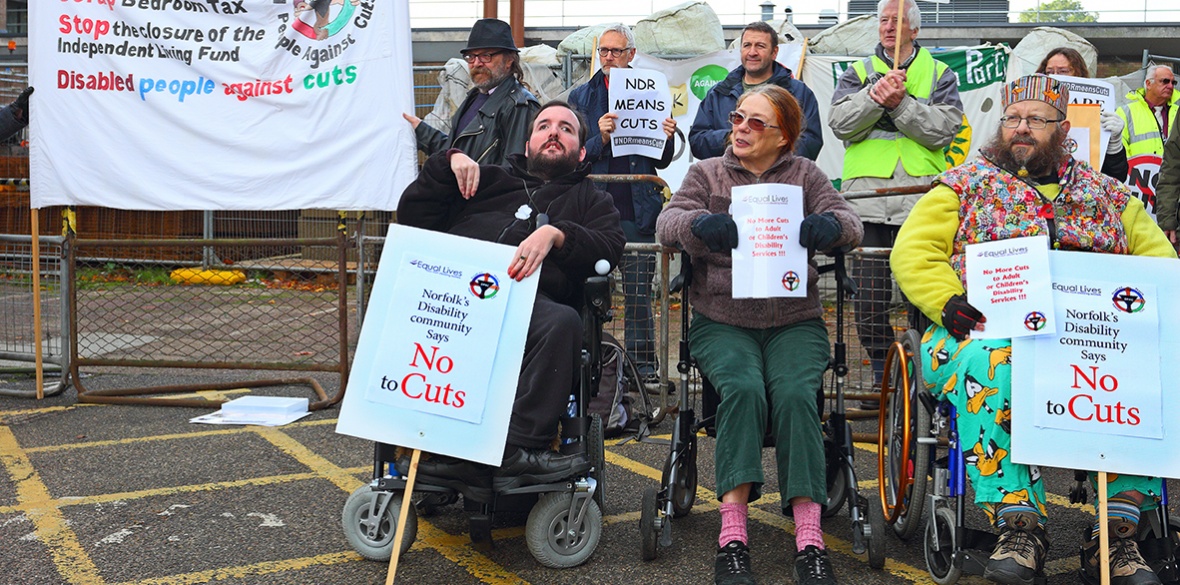
TORY 2015/LABOUR 2025 SPOT THE DIFFERENCE: (Above) Workers and disabled people protesting outside Norfolk County Hall against Norfolk County Council cuts to services on October 2015 Photo: Roger Blackwell/flickr/CC

DR DYLAN MURPHY asks why Labour is continuing the Tory war on the disabled, when viable alternatives have been spelt out in detail

IN LATE February of 2025 the UN Committee on Economic, Social and Cultural Rights issued a damning report into the failures of Labour to address income inequality and the deepening levels of poverty in the UK.

The UN committee criticised Labour for failing to address “income inequality or reducing poverty,” which hamper “the progressive realisation of economic, social and cultural rights.’’

Ironically enough, the UN called on Labour to increase spending on housing, health, education and social security in order to reverse the huge damage caused by blue Tory austerity from 2010 to 2024. Since this call the red Tories in power have announced their intention to make massive cuts to public spending across all government departments except defence and maybe health.

On the issue of social security, over which Labour is determined to make killer cuts, the UN expressed serious concern about the impact of blue Tory austerity which had “resulted in severe economic hardship, increased reliance on food banks, homelessness, negative impacts on mental health and the stigmatisation of benefit claimants.”

Of course, food bank usage under Labour continues to grow as does the stigmatisation of benefit claimants which Starmer and company have engaged in with relish over the last few months.

Starmer, Reeves and Kendall seem to take a sadistic glee in attacking the disabled through the platforms of the Tory media using ultra right-wing rags such as The Telegraph and Sun to stigmatise the sick and disabled.

The biggest irony in this recent UN report is its call for Labour to actually increase the value of disability benefits such as PIP so that the UK can meet “the recommendations made by the special rapporteur on extreme poverty and human rights.”

https://morningstaronline.co.uk/article/un-blasts-labour-its-failures-address-income-inequality-and-poverty

Keir Starmer says pensioners can freeze to death and poor children can starve and be condemned to failure and misery all their lives.
Keir Starmer explains the moral case for cutting disability benefits. He says work will set you free.
Continue ReadingThe UN blasts Labour for its failures to address income inequality and poverty

Morning Star Editorial: What is the point of Labour? The key question

Spread the love

https://morningstaronline.co.uk/article/what-point-labour-key-question

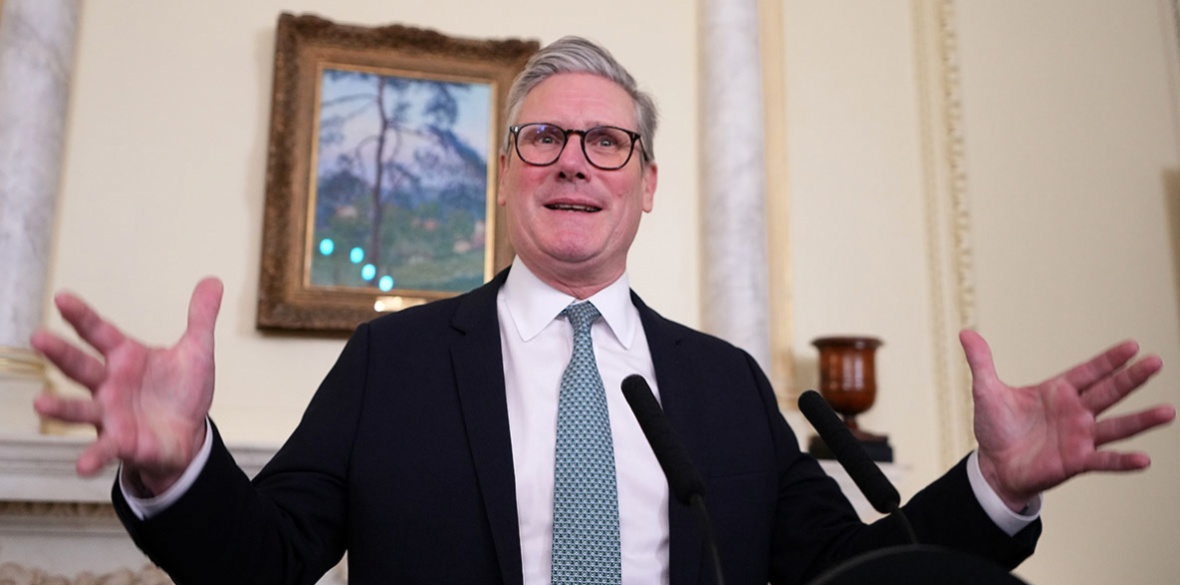
Prime Minister Sir Keir Starmer during a reception to celebrate St Patrick’s Day at 10 Downing Street, London, March 19, 2025

[T]he Starmer-Reeves agenda is entirely dictated by the needs of finance capital, mediated through the Treasury and the military.

There is no question, of course, of arms spending being affected by this renewed austerity — on the contrary it is slated to carry on rising for the next decade. Critics of the welfare cuts should not be reticent about making this connection.

Trying to protect spending on services without challenging this renewed militarism hands the Starmerites a free pass by allowing a key argument to go unchallenged.

Starmer’s priorities have a mounting number of victims. Again in Commons questions, Northern Ireland social democrat Colum Eastwood identified one, a deeply disabled constituent able to access benefits under the Tories but now facing destitution as her personal independence payments are withdrawn.

Eastwood then asked the key question. Given all that — what is the point of Labour?

It is a question millions across the country, including many who voted Labour last July, are now asking. This is governance in the interests of capital, not labour by any stretch.

The left in Labour must transition from protest to action against the government if there is to be any positive answer to Eastwood’s question. Issuing statements is not enough if Starmer and Reeves can continue to count on votes in Parliament and canvassers in the country for their anti-worker programme.

Absent that fighting approach, the logical conclusion must be that something new, articulating the values of socialism, is needed.

Original article at https://morningstaronline.co.uk/article/what-point-labour-key-question

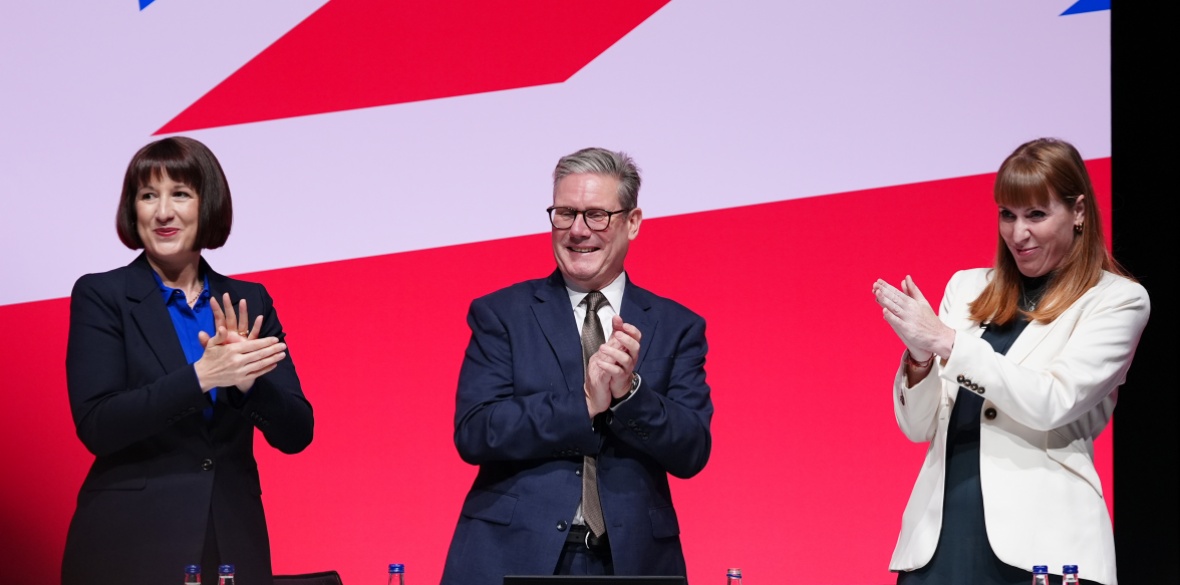
Keir Starmer, Angela Rayner and Rachel Reeves wear the uniform of the rich and powerful. They have all had clothes bought for them by multi-millionaire Labour donor Lord Alli. CORRECTION: It appears that Rachel Reeves clothing was provided by Juliet Rosenfeld.
Keir Starmer commits to play the caretaker role for Capitalism through the "hard times".
Keir Starmer commits to play the caretaker role for Capitalism through the “hard times”.
Continue ReadingMorning Star Editorial: What is the point of Labour? The key question

Keir Starmer to unveil drastic disability benefit cuts despite opposition

Spread the love

https://www.theguardian.com/society/2025/mar/17/keir-starmer-to-unveil-drastic-disability-benefit-cuts-despite-opposition

The prime minister’s official spokesperson said there was a clear case ‘for fixing our broken social security system that’s holding our people back, and our country back’. Photograph: Jordan Pettitt/Reuters

Changes could deny benefits to people who need help to wash or to remember to go to the toilet

Keir Starmer will unveil drastic cuts to disability benefits on Tuesday, despite deep opposition from Labour MPs and poverty campaigners, and warnings from economists against making kneejerk savings to hit fiscal targets.

In the government’s most controversial move yet, it will announce a package of changes expected to affect some of the UK’s most severely disabled people.

The measures could deny benefits for people who need some help washing themselves, preparing food or remembering to go to the toilet, as ministers attempt to overhaul the welfare system and balance the books.

However, Downing Street has denied the plans to cut between £5bn and £6bn from the welfare bill were purely the result of the UK’s difficult fiscal situation, arguing there is a “moral and economic case” for reforming benefits.

Article continues at https://www.theguardian.com/society/2025/mar/17/keir-starmer-to-unveil-drastic-disability-benefit-cuts-despite-opposition

Keir Starmer confirms that he's proud to be a red Tory continuing austerity and targeting poor and disabled scum.
Keir Starmer confirms that he’s proud to be a red Tory continuing austerity and targeting poor and disabled scum.
Keir Starmer says pensioners can freeze to death and poor children can starve and be condemned to failure and misery all their lives.
Continue ReadingKeir Starmer to unveil drastic disability benefit cuts despite opposition

In the struggle to get Britain working, the long shadow of austerity could be part of the problem

Spread the love
pxl.store/Shutterstock

Guilherme Klein Martins, University of Leeds

Austerity is an unusual economic concept. While it is one of the economic terms that attracts the most interest from the public, it remains controversial in policy debates. Advocates argue that reducing government deficits through spending cuts and tax increases restores confidence and stabilises economies. Critics, however, warn that these policies just deepen downturns.

My recent research, using data from 16 countries over several decades, provides new evidence supporting the second view. That is, austerity has significant and persistent negative effects on employment and the size of an economy (measured by GDP), with the damage lasting more than 15 years.

A common defence of austerity is that while it may slow growth in the short term, it ultimately strengthens economies by reducing debt and making room for private-sector expansion. But my findings challenge this assumption.

I analysed episodes of austerity, defined as large fiscal contractions (reduced state spending or large tax increases) across a variety of advanced economies. What I found was the negative impact on GDP remains substantial even after a decade and a half. On average, GDP is more than 5.5% lower 15 years after a large austerity shock than would have been expected if there had been no austerity, based on statistical estimates.

Beyond GDP, austerity has a lasting impact on labour markets (the number of jobs on offer and people available to do them). My research shows that large fiscal contractions lead to a significant drop in the total number of hours worked, which is a key indicator of labour market health.

This is a crucial finding, as policymakers often assume that labour markets will adjust quickly after an economic shock. Instead, results suggest employment levels (which is best measured by the total number of hours worked by everyone in the labour force) remain depressed for more than a decade after major austerity measures.

One reason for this is the connection between investment and employment. When governments cut spending, firms delay investments. This, in turn, lowers productivity growth and reduces job creation.

If businesses anticipate that the economy will remain weak for a long time, they adjust their hiring and investment strategies. This can reinforce a cycle of stagnation. My results suggest that, on average, an austerity shock generates a reduction of 4% in the total worked hours and 6% in the capital stock (the value of physical assets like buildings and machines used to produce goods and services) after 15 years.

The effects of an austerity shock on countries’ GDP:

UK: A case study

Perhaps one of the most striking real-world examples of the long-term effects of austerity is the UK. Following the 2008 global financial crisis, the UK government implemented sweeping austerity measures starting in 2010. These policies were framed as necessary to reduce the budget deficit and restore investor confidence. Spending cuts affected key areas, including welfare, healthcare, education and local government services like social housing, roads and leisure facilities. https://www.youtube.com/embed/Z1g1zGV6vRQ?wmode=transparent&start=0 The 2010 coalition government brought in more than £80 billion of cuts to public spending.

But here’s a conundrum. The UK’s fiscal deficit (the difference between what it spent and what it raised in taxes) after the implementation of these policies was greater than before the austerity cuts. The deficit in 2023/2024 was 5.7% of GDP, while in 2007/2008, it was 2.9%.

What is evident is that these measures are associated with stagnant wages, weakened public services and sluggish GDP growth. Productivity growth has remained weak, and long-term economic damage is evident in underfunded infrastructure and an increasingly fragile NHS.

More than a decade later, real earnings have barely recovered to pre-crisis levels. The past 15 years have been the worst for income growth in generations, with working-age incomes growing by only 6% in real terms from 2007 to 2019, compared to higher growth rates in countries including the US, Germany and Ireland.

My findings contribute to a growing body of research challenging the longstanding view that shocks like austerity have only short-run effects. Traditionally, models assume that economies return to their long-run growth paths after temporary disruptions. But recent evidence, including my research, suggests that demand shocks can have persistent effects on supply by reducing investment and participation in the labour force.

In the wake of the COVID pandemic, many governments responded with generous financial support, temporarily reversing the austerity-driven policies of the previous decade. The strong recovery in some economies suggests that government spending can play a crucial role in sustaining long-run growth. On the other hand, a return to austerity measures could once again lead to prolonged stagnation.

What should policymakers take away from this? First, the assumption that austerity is a path to long-term prosperity needs to be re-evaluated. While reducing excessive public debt might be important, the economic costs of large and rapid cuts to spending can far outweigh the benefits.

Second, policymakers should recognise that timing matters. Gradual adjustments to spending, when really necessary, should be accompanied by measures to support investment and employment in order to reduce the likelihood of causing long-term harm.

Finally, economic policy should prioritise long-term growth over short-term deficit reduction. Governments facing tough spending choices should explore alternative approaches – things like progressive taxation and targeted public investment. And when cuts are needed, they should avoid implementing them during periods of economic recession.

Austerity is often framed as a necessary sacrifice for future prosperity. As governments consider fiscal strategies in an era of rising debt and economic uncertainty, they should take heed of austerity’s long-run costs. The evidence suggests that a more balanced approach – one that prioritises investment and economic stability – may be the wiser path forward.

Guilherme Klein Martins, Lecturer in Economics, University of Leeds

This article is republished from The Conversation under a Creative Commons license. Read the original article.

Continue ReadingIn the struggle to get Britain working, the long shadow of austerity could be part of the problem