Tag: Denmark

  • Trump wants Greenland – but here’s what the people of Greenland want

    Spread the love
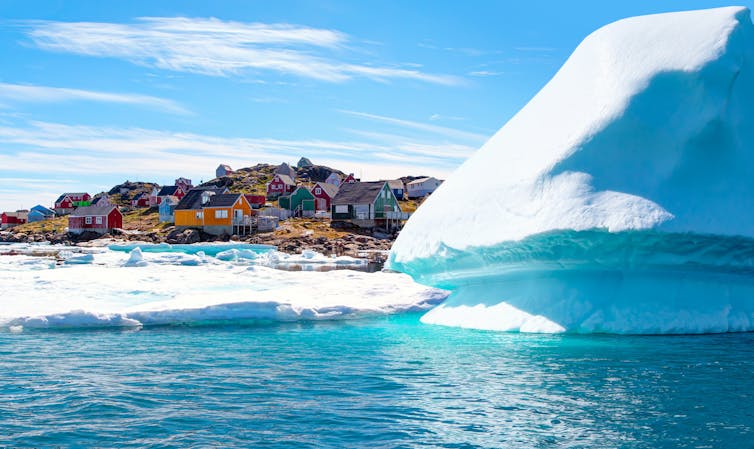
    Kulusuk village in East Greenland. Shutterstock/Muratart

    Gustav Agneman, Norwegian University of Science and Technology

    In 2018, a colleague and I, together with a team of Greenlandic research assistants, conducted one of the most comprehensive surveys to date on public opinion in Greenland. We travelled to 13 randomly selected towns and settlements across the island nation, conducting in-person interviews with a representative sample of adult residents.

    The survey explored a wide range of topics. We asked for views on climate change, economic matters – and the prospect of independence from Denmark. Until recently, this was the latest poll on what the people of Greenland thought about this issue.

    Greenland, a former Danish colony, is currently an autonomous territory within the Kingdom of Denmark. This political arrangement grants Greenland extensive self-rule, including control over most domestic affairs, as well as its own prime minister and parliament. However, Denmark retains authority over foreign policy, defence and monetary policy.

    While our survey results were covered in Greenlandic and Danish media upon their release, they received scant international attention. This changed abruptly on January 15, when newly re-elected US president Donald Trump reposted an old news article about our results. The headline stated that two-thirds of Greenlandic citizens support independence.
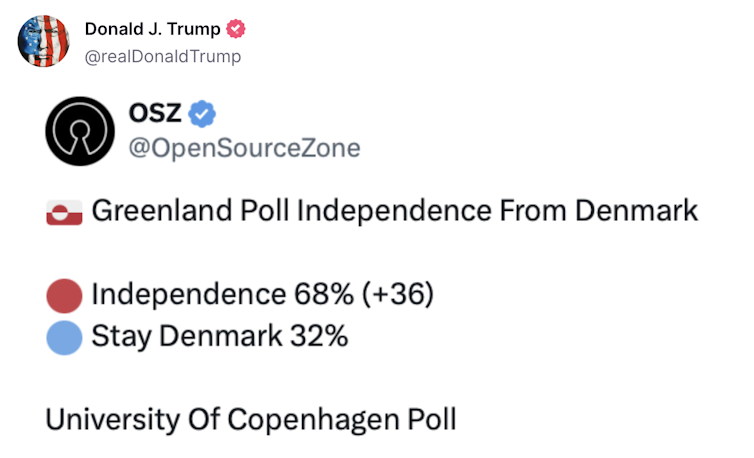
    A Truth Social post in which Donald Trump posts a link to a 2018 survey saying Greenlanders want to be independent from Denmark.
    Trump posting the 2018 poll in 2025. Truth Social

    Trump did not add a comment in the post but the insinuation was clear given his recent statements about annexing Greenland from Denmark: Greenlandic residents want independence from Denmark, and therefore, they might be open to other political or economic arrangements with the US.

    “I think we’re going to have it,” Trump recently said after a phone call with the Danish prime minister, Mette Frederiksen, who told him the land was “not for sale”. Trump has in the past spoken of somehow “purchasing” Greenland but has since moved on towards speaking in more assertive terms about taking control of the territory.

    Back in 2018, when we conducted the survey, Trump had not yet revealed any plans to annex the island nation. It was a scenario we could hardly even have imagined and therefore did not ask our participants about. As such, regardless of how Trump framed them, the survey results in no way indicated that the population harboured a desire to join the US.

    In fact, a recent survey conducted by Sermitsiaq (a Greenlandic newspaper) and Berlingske (a Danish newspaper) directly addressed this question and found that only 6% of respondents wanted Greenland to leave Denmark and instead become part of the US.

    In the study I published based on the 2018 data collection, I reported that a majority of the Greenlandic population aspired to independence. Two-thirds of the participants thought that “Greenland should become an independent country at some point in the future”.

    Opinions were more divergent regarding the timing of independence. When asked how they would vote in an independence referendum if it were held today, respondents who stated a preference were evenly split between “yes” and “no” to independence.

    The Act on Greenland Self-Government, passed in 2009, grants the Greenlandic government the legal authority to unilaterally call a referendum on separating from the political union with Denmark. According to the law, “the decision regarding Greenland’s independence shall be taken by the people of Greenland”.

    During the 15 years since its passage, the option to call a referendum has not been exercised. This is likely due to the potential economic consequences of leaving the union with Denmark.

    Each year, Denmark sends a block grant that covers approximately half of Greenland’s budget. This supports a welfare system that is more extensive than what is available to most Americans. In addition, Denmark administers many costly including national defence.

    This backdrop presents a dilemma for many Greenlanders who aspire to independence, as they weigh welfare concerns against political sovereignty. This was also evident from my study, which revealed that economic considerations influence independence preferences.

    For many Greenlanders, the island nation’s rich natural resources present a potential bridge between economic self-sufficiency and full sovereignty. Foreign investments and the associated tax revenues from resource extraction are seen as key to reducing economic dependence on Denmark. Presumably, these natural resources, which include rare earths and other strategic minerals, also help explain Trump’s interest in Greenland.

    As Greenland’s future is likely to remain at the centre of a geopolitical power struggle for some time, it is crucial to remember that only Greenlanders have the right to determine their own path. What scarce information is available on their views suggests that while many aspire to independence, it is not driven by a desire to join the US.

    Gustav Agneman, Associate Professor, Department of Economics, Norwegian University of Science and Technology

    This article is republished from The Conversation under a Creative Commons license. Read the original article.
  • Greenland is rich in natural resources – a geologist explains why

    Spread the love
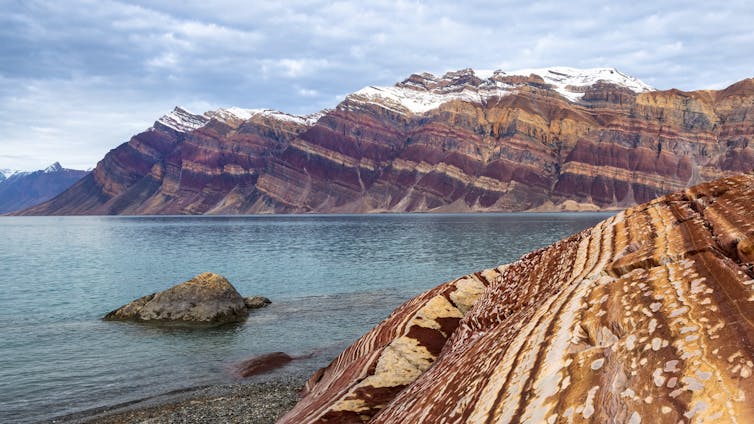
    Greenland’s concentration of natural resource wealth is tied to its hugely varied geological history over the past 4 billion years. Jane Rix/Shutterstock

    Jonathan Paul, Royal Holloway, University of London

    Greenland, the largest island on Earth, possesses some of the richest stores of natural resources anywhere in the world.

    These include critical raw materials – resources such as lithium and rare earth elements (REEs) that are essential for green technologies, but whose production and sustainability are highly sensitive – plus other valuable minerals and metals, and a huge volume of hydrocarbons including oil and gas.

    Three of Greenland’s REE-bearing deposits, deep under the ice, may be among the world’s largest by volume, holding great potential for the manufacture of batteries and electrical components essential to the global energy transition.

    The scale of Greenland’s hydrocarbon potential and mineral wealth has stimulated extensive research by Denmark and the US into the commercial and environmental viability of new activities like mining. The US Geological Survey estimates that onshore northeast Greenland (including ice-covered areas) contains around 31 billion barrels of oil-equivalent in hydrocarbons – similar to the US’s entire volume of proven crude oil reserves.

    But Greenland’s ice-free area, which is nearly double the size of the UK, forms less than a fifth of the island’s total surface area – raising the possibility that huge stores of unexplored natural resources are present beneath the ice.

    Greenland’s concentration of natural resource wealth is tied to its hugely varied geological history over the past 4 billion years. Some of the oldest rocks on Earth can be found here, as well as truck-sized lumps of native (not meteorite-derived) iron. Diamond-bearing kimberlite “pipes” were discovered in the 1970s but have yet to be exploited, largely due to the logistical challenges of mining them.

    Geologically speaking, it is highly unusual (and exciting for geologists like me) for one area to have experienced all three key ways that natural resources – from oil and gas to REEs and gems – are generated. These processes relate to episodes of mountain building, rifting (crustal relaxation and extension), and volcanic activity.

    Greenland was shaped by many prolonged periods of mountain building. These compressive forces broke up its crust, allowing gold, gems such as rubies, and graphite to be deposited in the faults and fractures. Graphite is crucial for the production of lithium batteries but remains “underexplored”, according to the Geological Survey of Denmark and Greenland, relative to major producers such as China and South Korea.

    But the greatest proportion of Greenland’s natural resources originates from its periods of rifting – including, most recently, the formation of the Atlantic Ocean from the beginning of the Jurassic Period just over 200 million years ago.

    Map of Greenland's major geologic provinces with their rock types.
    Greenland’s major geologic provinces with rock types and ages. Geophysical Research Letters, CC BY-NC-SA

    Greenland’s onshore sedimentary basins such as the Jameson Land Basin appear to hold the greatest potential of oil and gas reserves, analogous to Norway’s hydrocarbon-rich continental shelf. However, prohibitively high costs have limited commercial exploration. There is also a growing body of research suggesting potentially extensive petroleum systems ringing the entirety of offshore Greenland.

    Metals such as lead, copper, iron and zinc are also present in the onshore (mostly ice-free) sedimentary basins, and have been worked locally, on a small scale, since 1780.

    Difficult-to-source rare earth elements

    While not as intimately related to volcanic activity as nearby Iceland – which, uniquely, sits at the intersection of a mid-ocean ridge and a mantle plume – many of Greenland’s critical raw materials owe their existence to its volcanic history.

    REEs such as niobium, tantalum and ytterbium have been discovered in igneous rock layers – similar to the discovery (and subsequent mining) of silver and zinc reserves in south-west England, which were deposited by warm hydrothermal waters circulating at the tip of large volcanic intrusions.

    Critically among REEs, Greenland is also predicted to hold sufficient sub-ice reserves of dysprosium and neodymium to satisfy more than a quarter of predicted future global demand – a combined total of nearly 40 million tonnes.

    These elements are increasingly seen as the most economically important yet difficult to source REEs because of their indispensable role in wind power, electric motors for clean road transport, and magnets in high-temperature settings like nuclear reactors.

    The development of known deposits such as Kvanefield in southern Greenland – not to mention those not yet discovered in the island’s central rocky core – could easily affect the global REE market, owing to their relative global scarcity.

    An unfortunate dilemma

    The global energy transition came about due to increasing public recognition of the manifold threats of burning fossil fuels. But climate change has major implications for the availability of many of Greenland’s natural resources that are currently blanketed by kilometres of ice – and which are a key part of that energy transition.

    An area the size of Albania has melted since 1995, and this trend is likely to accelerate unless global carbon emissions fall sharply in the near future.

    Recent advances in survey techniques, such as the use of ground-penetrating radar, allow us to peer with increasing certainty beneath the ice. We are now able to obtain an accurate picture of bedrock topography below up to 2 km of ice cover, providing clues as to the potential mineral resources in Greenland’s subsurface.

    However, progress is slow in prospecting under the ice – and sustainable extraction is likely to prove even harder.

    Soon, an unfortunate dilemma may need to be addressed. Should Greenland’s increasingly available resource wealth be extracted with gusto, in order to sustain and enhance the energy transition? But doing so will add to the effects of climate change on Greenland and beyond, including despoiling much of its pristine landscape and contributing to rising sea levels that could swamp its coastal settlements.

    Currently, all mining and resource extraction activities are heavily regulated by the government of Greenland through comprehensive legal frameworks dating from the 1970s. However, pressures to loosen these controls, and to grant new licences for exploration and exploitation, may increase amid the US’s strong interest in Greenland’s future.

    Jonathan Paul, Associate Professor in Earth Science, Royal Holloway, University of London

    This article is republished from The Conversation under a Creative Commons license. Read the original article.

  • Spanish PM says Gaza, Venezuela and Ukraine territorial unity is not negotiable

    Spread the love

    This work by Middle East Monitor is licensed under a Creative Commons Attribution-NonCommercial-ShareAlike 4.0 International License.

    Spanish Prime Minister Pedro Sanchez holds a press conference following the European Union (EU) Leaders’ Summit in Brussels, Belgium, on October 23, 2025. [Dursun Aydemir – Anadolu Agency]

    Spanish Prime Minister Pedro Sanchez said on Monday that the territorial unity of Ukraine, the Gaza Strip and Venezuela is not open to negotiation.

    In a post on the X platform, Sanchez said that “respect for the sovereignty of all states and their territorial integrity is a non-negotiable principle, from Ukraine to Gaza, including Venezuela”.

    Commenting on remarks by US President Donald Trump, who described Greenland as having a strong strategic position and said the United States needs it for national security reasons, Sanchez expressed his rejection of those statements.

    He added that Spain “will always remain actively committed to the United Nations and will be in full solidarity with Denmark and the people of Greenland”.

    On Sunday, Spain, Brazil, Colombia, Mexico, Uruguay and Chile said in a joint statement that they “reject unilateral US military operations” in Venezuelan territory.

    The statement, distributed by the Spanish authorities, said: “We express our deep concern about what is happening in Venezuela and our rejection of unilateral military actions carried out on Venezuelan territory.” Such actions had violated the “basic principles of international law, in particular the prohibition of the use of force and respect for territorial sovereignty established in the United Nations Charter.”

    READ: Venezuela Vs US: Is Maduro paying the price for his support of Gaza? 

    This work by Middle East Monitor is licensed under a Creative Commons Attribution-NonCommercial-ShareAlike 4.0 International License.

    Elon Musk urges you to be a Fascist like him, says that you can ignore facts and reality then.
    Elon Musk urges you to be a Fascist like him, says that you can ignore facts and reality then.
    Donald Fuhrump says that Amerikkka doesn't bother with crimes or charges anymore, not being 100% Amerikkkan and opposing his real estate intentions is enough.
    Donald Fuhrump says that Amerikkka doesn’t bother with crimes or charges anymore, not being 100% Amerikkkan and opposing his real estate intentions is enough.
    Orcas discuss how Trump was re-elected and him being an obviously insane, xenophobic Fascist.
    Orcas discuss how Trump was re-elected and him being an obviously insane, xenophobic Fascist.

  • European nations, Canada, Japan voice ‘serious concerns’ about ongoing Gaza crisis

    Spread the love

    This work by Middle East Monitor is licensed under a Creative Commons Attribution-NonCommercial-ShareAlike 4.0 International License

    Displaced Palestinians living in makeshift tents are trying to carry on their daily lives under harsh conditions in Deir al Balah, Gaza on December 29, 2025. [Mohammed Nassar – Anadolu Agency]

    Eight European nations, Japan, and Canada on Tuesday expressed “serious concerns” about the renewed deterioration of the humanitarian situation in the Gaza Strip, Anadolu reports.

    In a joint statement, foreign ministers of Canada, Denmark, Finland, France, Iceland, Japan, Norway, Sweden, Switzerland, and the UK recalled the “catastrophic” humanitarian situation in the besieged enclave.

    The statement mentioned the appalling conditions that are exacerbated by winter, noting that 1.3 million Gazans still require urgent shelter assistance.

    The foreign ministers cited the latest Integrated Food Security Phase Classification (IPC) report, which was published earlier in December, as evidence that the situation remains desperate.

    The statement expressed their appreciation for the ceasefire in Gaza but stated that they will not lose sight of the plight of Gaza’s civilian population.

    It called on Israel to ensure that the UN, its partners, and NGOs can continue their vital work and lift unreasonable restrictions on imports considered to have a dual use.

    Saying that many established international NGO partners are at risk of being deregistered because of Israel’s restrictive new requirements, it warned that deregistration could result in the forced closure of humanitarian operations within 60 days in Gaza and the West Bank.

    “This would have a severe impact on access to essential services including healthcare,” said the statement.

    READ: Israeli Knesset passes bill halting electricity, water supply to UNRWA facilities

    Ensuring UN, its partners can continue their vital work is ‘essential’

    It also underlined that ensuring the UN and its partners can continue their vital work is “essential” to the impartial, neutral, and independent delivery of aid throughout Gaza.

    “This includes UNRWA, which provides essential services, such as healthcare and education, to millions of Palestinian refugees,” said the foreign ministers.

    The statement also called on Tel Aviv to open crossings and increase the flow of humanitarian aid into Gaza.

    “The target of 4,200 trucks per week, including an allocation of 250 UN trucks per day, should be a floor not a ceiling,” it said, adding that these targets should be lifted so they can be sure the vital supplies are getting in at the vast scale needed.

    The nations also underlined that ongoing restrictions limit the capacity for aid to be delivered at the scale needed, in accordance with international humanitarian law, or for repairs to be made to support recovery and reconstruction efforts.

    “We now urge the Government of Israel to remove these humanitarian access constraints, and to deliver and honour the Comprehensive Plan to End the Gaza Conflict,” it added.

    Despite the ceasefire, Israel continues to keep Gaza’s crossings largely closed, preventing the entry of mobile homes and reconstruction materials and worsening the humanitarian crisis affecting over 2 million people.

    Palestinian officials say that at least 414 people in Gaza have been killed since the ceasefire deal between Israel and Hamas took place on Oct. 10.

    Since October 2023, Israeli attacks have killed over 71,000 Palestinians in the enclave, most of them women and children, and rendered it largely uninhabitable.

    READ: 25 Palestinians die in Gaza amid severe weather since start of December

    This work by Middle East Monitor is licensed under a Creative Commons Attribution-NonCommercial-ShareAlike 4.0 International License

    Keir Starmer objects to criticism of the IDF. He asks how could anyone object to them starving people to death, forced marches like the Nazis did, bombing Gaza's hospitals and universities, mass-murdering journalists, healthworkers and starving people queuing for food, killing and raping prisoners and murdering children. He calls for people to stop obstructing his genocide for Israel.
    Keir Starmer objects to criticism of the IDF. He asks how could anyone object to them starving people to death, forced marches like the Nazis did, bombing Gaza’s hospitals and universities, mass-murdering journalists, healthworkers and starving people queuing for food, killing and raping prisoners and murdering children. He calls for people to stop obstructing his genocide for Israel.
    Orcas discuss Genocide-supporting and complicit Zionists. Donald Trump, Keith Starmer, David Lammy, Rachel Reeves, Angela Rayner and Wes Streeting are acknowledged as evil genocide-complicit and supporting cnuts.
    Orcas discuss Genocide-supporting and complicit Zionists. Donald Trump, Keith Starmer, David Lammy, Rachel Reeves, Angela Rayner and Wes Streeting are acknowledged as evil genocide-complicit and supporting cnuts.
    Vote Labour for Genocide.
    Vote Labour for Genocide.

  • European countries concerned about new US sanctions on ICC judges

    Spread the love

    This work by Middle East Monitor is licensed under a Creative Commons Attribution-NonCommercial-ShareAlike 4.0 International License.

    European Union flags are seen waving outside the EU Commission Building in Brussels, Belgium. [Dursun Aydemir/Anadolu Agency]

    Several European countries voiced concern Friday about new US sanctions imposed on two judges of the International Criminal Court (ICC), reaffirming their support for the Court’s independence and ability to carry out its judicial mandate without political pressure, Anadolu reports.

    The Finnish Foreign Ministry said on US social media platform X that it “deeply regrets” the US decision to sanction the judges, stressing that the court must be able to function freely.

    In a statement, the French Foreign Ministry said Paris had taken note of the new sanctions targeting, as it urged Washington to withdraw all measures taken against the Court.

    “France condemns all forms of threats and coercive measures against the ICC, its staff and civil society organizations supporting the court,” it said, warning that the sanctions amount to an attack on the institution and the 125 states party to the Rome Statute.

    Belgium expressed concern about the decision, with Foreign Minister Maxime Prevot saying the sanctions “further undermine judicial independence and efforts to fight impunity.”

    READ: ICC rejects Israel’s appeal as arrest warrants for Netanyahu, Gallant remain in force

    “Belgium strongly regrets the new additional sanctions of the US against two judges of the @IntlCrimCourt,” Prevot wrote on X, adding that Brussels would continue to support the Court in carrying out its mandate independently and impartially.

    Denmark echoed similar concerns, with the Foreign Affairs Ministry saying Copenhagen “deeply regrets” the US decision and reaffirmed its unwavering support for the ICC as an independent and impartial judicial institution.

    Other European countries, including Spain, the Netherlands and Norway, have also voiced concern about the sanctions and reiterated their support for the Court’s independence.

    US Secretary of State Marco Rubio announced sanctions Thursday against ICC judges Gocha Lordkipanidze of Georgia and Erdenebalsuren Damdin of Mongolia, accusing them of being “directly engaged” in “the illegitimate targeting of Israel.”

    In response, the ICC said it “strongly rejects” the sanctions and labelled the move a “flagrant attack” against the independence of an impartial judicial institution.

    The latest measures follow previous US sanctions imposed on ICC officials involved in authorizing arrest warrants for Israeli Prime Minister Benjamin Netanyahu and his former Defense Minister Yoav Gallant — warrants accusing both officials of war crimes and crimes against humanity in the Gaza Strip.

    Israel has killed more than 70,600 victims, mostly women and children, and injured over 171,100 people in attacks in Gaza since October 2023, which have continued despite a truce being signed in October.

    READ: US sanctions 2 International Criminal Court judges over rejecting Israel’s appeal of war crimes arrest warrants

    This work by Middle East Monitor is licensed under a Creative Commons Attribution-NonCommercial-ShareAlike 4.0 International License.

    UK Foreign Minister David Lammy confirms that UK government and military are active participants in Israel’s genocides and that the F-35 parts that they suspended from supplying to Israel are instead simply diverted via the United States. He says see https://youtu.be/QILgUHrdWRE
    UK Foreign Minister David Lammy confirms that UK government and military are active participants in Israel’s genocides and that the F-35 parts that they suspended from supplying to Israel are instead simply diverted via the United States. He says see https://youtu.be/QILgUHrdWRE
    Keir Starmer objects to criticism of the IDF. He asks how could anyone object to them starving people to death, forced marches like the Nazis did, bombing Gaza's hospitals and universities, mass-murdering journalists, healthworkers and starving people queuing for food, killing and raping prisoners and murdering children. He calls for people to stop obstructing his genocide for Israel.
    Keir Starmer objects to criticism of the IDF. He asks how could anyone object to them starving people to death, forced marches like the Nazis did, bombing Gaza’s hospitals and universities, mass-murdering journalists, healthworkers and starving people queuing for food, killing and raping prisoners and murdering children. He calls for people to stop obstructing his genocide for Israel.
    Orcas discuss Genocide-supporting and complicit Zionists. Donald Trump, Keith Starmer, David Lammy, Rachel Reeves, Angela Rayner and Wes Streeting are acknowledged as evil genocide-complicit and supporting cnuts.
    Orcas discuss Genocide-supporting and complicit Zionists. Donald Trump, Keith Starmer, David Lammy, Rachel Reeves, Angela Rayner and Wes Streeting are acknowledged as evil genocide-complicit and supporting cnuts.