Tag: media

  • Murdoch to Musk: how global media power has shifted from the moguls to the big tech bros

    Spread the love
    The Conversation, Mary Altaffer/AAP, Frederic Legrand/Shutterstock

    Matthew Ricketson, Deakin University and Andrew Dodd, The University of Melbourne

    Until recently, Elon Musk was just a wildly successful electric car tycoon and space pioneer. Sure, he was erratic and outspoken, but his global influence was contained and seemingly under control.

    But add the ownership of just one media platform, in the form of Twitter – now X – and the maverick has become a mogul, and the baton of the world’s biggest media bully has passed to a new player.

    What we can gauge from watching Musk’s stewardship of X is that he’s unlike former media moguls, making him potentially even more dangerous. He operates under his own rules, often beyond the reach of regulators. He has demonstrated he has no regard for those who try to rein him in.

    Under the old regime, press barons, from William Randolph Hearst to Rupert Murdoch, at least pretended they were committed to truth-telling journalism. Never mind that they were simultaneously deploying intimidation and bullying to achieve their commercial and political ends.

    Musk has no need, or desire, for such pretence because he’s not required to cloak anything he says in even a wafer-thin veil of journalism. Instead, his driving rationale is free speech, which is often code for don’t dare get in my way.

    This means we are in new territory, but it doesn’t mean what went before it is irrelevant.

    A big bucket of the proverbial

    If you want a comprehensive, up-to-date primer on the behaviour of media moguls over the past century-plus, Eric Beecher has just provided it in his book The Men Who Killed the News.

    Alongside accounts of people like Hearst in the United States and Lord Northcliffe in the United Kingdom, Beecher quotes the notorious example of what happened to John Major, the UK prime minister between 1990 and 1997, who baulked at following Murdoch’s resistance to strengthening ties with the European Union.

    In a conversation between Major and Kelvin MacKenzie, editor of Murdoch’s best-selling English tabloid newspaper, The Sun, the prime minister was bluntly told: “Well John, let me put it this way. I’ve got a large bucket of shit lying on my desk and tomorrow morning I’m going to pour it all over your head.”

    MacKenzie might have thought he was speaking truth to power, but in reality he was doing Murdoch’s bidding, and actually using his master’s voice, as Beecher confirms by recounting an anecdote from early in Murdoch’s career in Australia.

    In the 1960s, when Murdoch owned The Sunday Times in Perth, he met Lang Hancock (father of Gina Rinehart) to discuss potentially buying some mineral prospects together in Western Australia. The state government was opposed to the planned deal.

    Beecher cites Hancock’s biographer, Robert Duffield, who claimed Murdoch asked the mining magnate, “If I can get a certain politician to negotiate, will you sell me a piece of the cake?” Hancock said yes. Later that night, Murdoch called again to say the deal had been done. How, asked an incredulous Hancock. Murdoch replied: “Simple […] I told him: look you can have a headline a day or a bucket of shit every day. What’s it to be?”

    Between Murdoch in the 1960s and MacKenzie in the 1990s came Mario Puzo’s The Godfather with Don Corleone, aided by Luca Brasi holding a gun to a rival’s head, saying “either his brains or his signature would be on the contract”.

    Former British Prime Minister John Major fell foul of Rupert Murdoch – and paid the price. Lynne Sladky/AP/AAP

    Changing the rules of the game

    Media moguls use metaphorical bullets. Those relatively few people who do resist them, like Major, get the proverbial poured over their government. Headlines in The Sun following the Conservatives’ win in the 1992 election included: “Pigmy PM”, “Not up to the job” and “1,001 reasons why you are such a plonker John”.

    If media moguls since Hearst and Northcliffe have tap-danced between producing journalism and pursuing their commercial and political aims, they have at least done the former, and some of it has been very good.

    The leaders of the social media behemoths, by contrast, don’t claim any fourth estate role. If anything, they seem to hold journalism with tongs as far from their face as possible.

    They do possess enormous wealth though. Apple, Microsoft, Google and Meta, formerly known as Facebook, are in the top ten companies globally by market capitalisation. By comparison, News Corporation’s market capitalisation now ranks at 1,173 in the world.

    Regulating the online environment may be difficult, as Australia discovered this year when it tried, and failed, to stop X hosting footage of the Wakeley Church stabbing attacks. But limiting transnational media platforms can be done, according to Robert Reich, a former Secretary of Labor in Bill Clinton’s government.

    Despite some early wins through Australia’s News Media Bargaining Code, big tech companies habitually resist regulation. They have used their substantial influence to stymie it wherever and whenever nation-states have sought to introduce it.

    Meta’s founder and chief executive, Mark Zuckerberg, has been known to go rogue, as he demonstrated in February 2021 when he protested against the bargaining code by unilaterally closing Facebook sites that carried news. Generally, though, his strategy has been to deploy standard public relations and lobbying methods.

    But his rival Musk uses his social media platform, X, like a wrecking ball.

    Musk is just about the first thing the average X user sees in their feed, whether they want to or not. He gives everyone the benefit of his thoughts, not to mention his thought bubbles. He proclaims himself a free-speech absolutist, but most of his pronouncements lean hard to the right, providing little space for alternative views.

    Some of his tweets have been inflammatory, such as him linking to an article promoting a conspiracy theory about the savage attack on Paul Pelosi, husband of the former US Speaker, Nancy Pelosi, or his tweet that “Civil war is inevitable” following riots that erupted recently in the UK.

    As the BBC reported, the riots occurred after the fatal stabbing of three girls in Southport. “The subsequent unrest in towns and cities across England and in parts of Northern Ireland has been fuelled by misinformation online, the far-right and anti-immigration sentiment.”

    Nor does Musk bother with niceties when people disagree with him. Late last year, advertisers considered boycotting X because they believed some of Musk’s posts were anti-Semitic. He told them during a live interview to “Go fuck yourself”.

    He has welcomed Donald Trump, the Republican Party’s presidential nominee, back onto X after Trump’s account was frozen over his comments surrounding the January 6 2021 attack on the capitol. Since then both men have floated the idea of governing together if Trump wins a second term.

    Is the world better off with tech bros like Musk who demand unlimited freedom and assert their influence brazenly, or old-style media moguls who spin fine-sounding rhetoric about freedom of the press and exert influence under the cover of journalism?

    That’s a question for our times that we should probably begin grappling with.

    Matthew Ricketson, Professor of Communication, Deakin University and Andrew Dodd, Director of the Centre for Advancing Journalism, The University of Melbourne

    This article is republished from The Conversation under a Creative Commons license. Read the original article.

  • Slamming Israeli Media Lies, Freed Hostage Says IDF Strike—Not Hamas—Wounded Her

    Spread the love

    Original article by Brett Wilkins republished from Common Dreams under a CC licence.

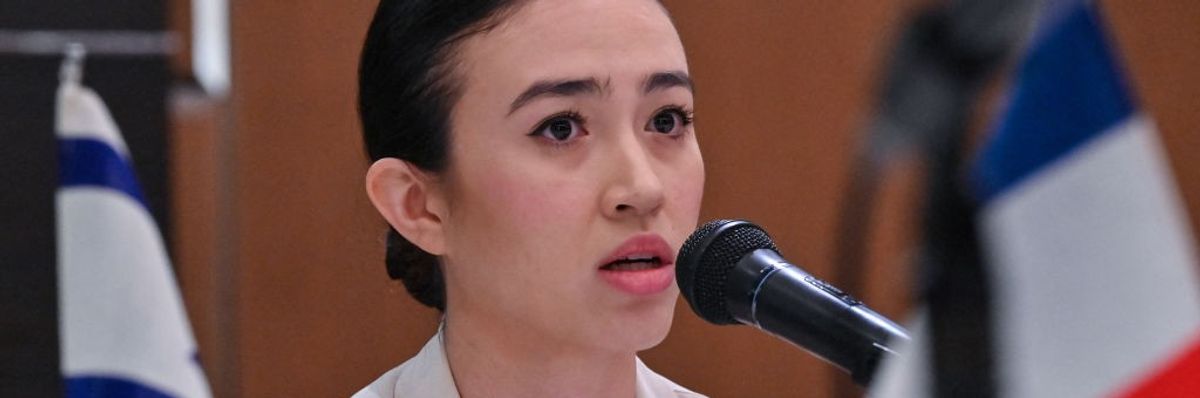
    Noa Argamani, an Israeli woman who spent 245 days in Hamas captivity in Gaza after being kidnapped last October 7, meets with representatives of Group of Seven nations in Tokyo on August 21, 2024. (Photo: Richard Brooks/AFP via Getty Images)

    “I cannot ignore what happened here over the past 24 hours, taking my words out of context,” said Noa Argamani. “As a victim of October 7, I refuse to be victimized once again by the media.”

    An Israeli woman kidnapped by Hamas militants on October 7 and held hostage for 245 days before being rescued lashed out on Friday at Israeli media outlets that twisted her words to make it seem as if she was wounded by her captors when in reality she was injured in an attack by the military in which she once served.

    Responding to reports in outlets including The Jerusalem Post—which on Thursday ran the headline “Hamas Beat Me All Over”—Noa Argamani said on Instagram that “I can’t ignore what happened in the media in the last 24 hours.”

    “Things were taken out of context,” the 26-year-old navy veteran from Be’er Sheva said of her earlier comments to Group of Seven diplomats in Tokyo. “I was not beaten… I was in a building that was bombed by the Air Force.”

    “I emphasize that I was not beaten, but injured all over my body by the collapse of a building on me,” Argamani added. “As a victim of October 7, I refuse to be victimized once again by the media.”

    Prominent Israelis including President Isaac Herzog and pro-Israel voices around the world including writer Aviva Klompas and the Australia Israel and Jewish Affairs Council amplified the false claim that Argamani was “beaten” by her captors.

    Argamani was partying with her boyfriend Avinatan Or at the Nova rave near the Gaza border when the festival was attacked by Hamas-led militants in the early morning hours of October 7. In now-famous video footage, she is seen begging, “Don’t kill me!” as her captors whisk her away toward Gaza on a motorcycle. Or was also kidnapped and is believed to still be in Hamas custody.

    “Every night, I was falling asleep and thinking, this may be the last night of my life,” Argamani said Thursday of her time in captivity.

    Argamani was one of four Hamas captives rescued during a June raid on the Nuseirat refugee camp in Gaza, an operation in which Israeli forces killed at least 236 Palestinians, most of them women and children. Three other Israeli hostages taken from the Nova rave were also rescued in the raid.

    “It’s a miracle because I survived October 7, and I survived this bombing, and I also survived the rescue,” Argamani said in Tokyo on Thursday.

    Argamani’s rescue fulfilled a dying wish from her mother, who had terminal cancer, to be reunited with her daughter before she passed. Argamani was also freed on the birthday of her father, Yakov Argamani, who, from the start of the hostage ordeal, urged Israeli leaders to eschew revenge after the October 7 attack.

    There are believed to be around 109 Israelis and others still held captive by Hamas in Gaza. Argamani implored the government to make freeing them its top priority.

    “Avinatan, my boyfriend, is still there, and we need to bring them back before it’s going to be too late,” she said Thursday. “We don’t want to lose more people than we already lost.”

    More than 1,100 Israelis and others including Thai farmworkers were killed on October 7, at least some of them in so-called “friendly fire” attacks by Israeli forces. The Israel Defense Forces (IDF) employed a protocol known as the “Hannibal Directive” authorizing lethal force against Israeli soldiers in order to prevent them from being taken prisoner by enemy forces. More than 240 Israelis and others were abducted by Hamas and other militants.

    Freed hostages have recounted being fired upon by Israeli aircraft as they were being taken by Hamas militants to Gaza. One former captive said in December that “every day in captivity was extremely challenging. We were in tunnels, terrified that it would not be Hamas, but Israel, that would kill us, and then they would say Hamas killed you.”

    Numerous Israeli hostages have been killed by their would-be rescuers, including a trio of men who managed to escape from their captors and were waving white flags and shouting for help in Hebrew when they were shot dead by IDF soldiers in Gaza in December, and five Israelis who likely suffocated to death due to a fire sparked by an Israeli assault six months ago on the tunnel where the hostages were being held.

    In contrast to former Palestinian prisoners held by Israel—who, along with Israeli whistleblowers, have reported systemic torture, rape, starvation, and even murder committed by their captors—numerous Israelis kidnapped by Hamas have reported being relatively well treated. Other former hostages said they were physically, sexually, and psychologically abused.

    Taking civilian hostages is a war crime in itself.

    Israel’s 322-day retaliation for October 7 has left at least 144,000 Palestinians dead, wounded, or missing. Nearly all of Gaza’s 2.3 million people have been forcibly displaced by Israel’s bombardment and invasion, which has flattened much of the coastal enclave. A crippling siege has pushed hundreds of thousands of Gazans over the brink of starvation, with at least dozens of children dying of malnutrition, dehydration, and lack of medical care. Preventable diseases including measles, hepatitis, and polio threaten public health not only in Gaza but also in Israel and other neighboring nations.

    Israel is currently on trial for genocide at the International Court of Justice.

    Original article by Brett Wilkins republished from Common Dreams under a CC licence.

    hostages News and Opinion | Common Dreams

  • ‘Can’t Make This Up’: Journalist Arrested Under UK Anti-Terror Law Hours After Criticizing It

    Spread the love

    Original article by BRETT WILKINS republished from Common Dreams under Creative Commons (CC BY-NC-ND 3.0).
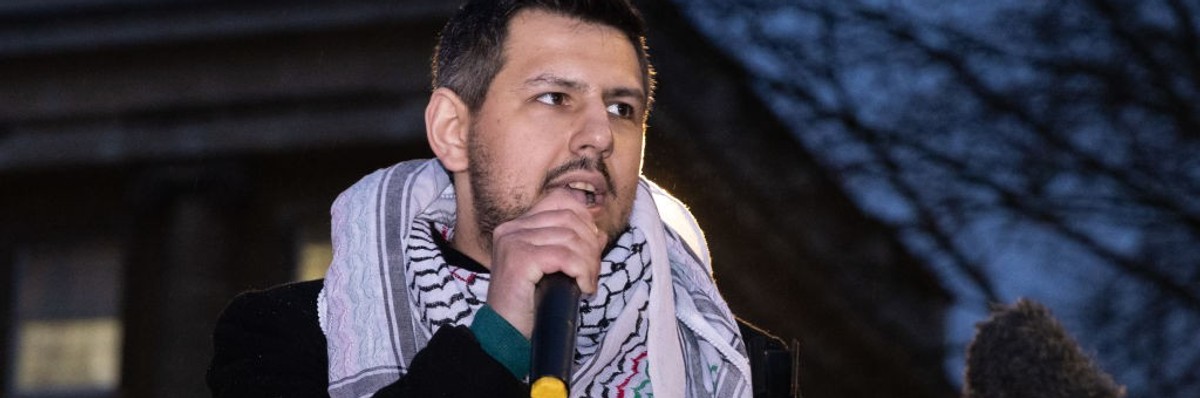
    Journalist Richard Medhurst addresses supporters of jailed WikiLeaks founder Julian Assange outside 10 Downing Street following the second day of his final extradition appeal on February 21, 2024 in London. (Photo: Mark Kerrison/In Pictures via Getty Images)

    “I criticized the Terrorism Act before getting on the plane, then got arrested under the Terrorism Act upon landing.”

    Richard Medhurst, a Syrian-British independent journalist who defends Palestinians’ right to resist Israeli apartheid, occupation, and other crimes, said this week that he was recently arrested at London’s Heathrow Airport and held for nearly 24 hours for allegedly running afoul of a highly controversial anti-terrorism law critics say is used to silence legitimate dissent.

    Medhurst—who is known for his work opposing U.S., British, and Israeli war crimes in the Middle East and for his advocacy for formerly imprisoned WikiLeaks founder Julian Assange—said on social media Tuesday: “I criticized the Terrorism Act before getting on the plane, then got arrested under the Terrorism Act upon landing. Can’t make this up.”

    In a nearly nine-minute video posted Monday night on X, the social network formerly known as Twitter, Medhurst said that “on Thursday, as I landed in London Heathrow Airport, I was immediately escorted off the plane by six police officers who were waiting for me at the entrance of the aircraft.”

    “They arrested me—not detained—they arrested me under Section 12 of the Terrorism Act of 2000 and accused me of allegedly ‘expressing an opinion or belief that is supportive of a prescribed organization,’ but wouldn’t explain what this meant,” he continued.

    The controversial law criminalizes anyone who “invites support for a proscribed organization” or “expresses an opinion or belief that is supportive” of such a group. Violators can be punished with up to 14 years’ imprisonment and a fine.

    As Laura Tiernan explained Tuesday at World Socialist Web Site:

    Introduced by [former U.K. Prime Minister] Tony Blair’s Labour government, the act is a legal dragnet. In Medhurst’s case, it appears that commentary defending the right of Palestinians under international law to resist foreign military occupation and genocide is being defined as support for terrorism.

    Hamas is among the organizations proscribed as terrorist by the U.K. government. While its military wing was proscribed in 2001, Hamas was banned in its entirety in 2021, aimed at criminalizing support for the Palestinian people. The political wing of Hamas won elections held in Gaza in 2006 and the organization also oversees charitable work.

    Medhurst said: “I categorically and utterly reject all the accusations by the police. I am not a terrorist. I have no criminal record. Prior to this incident, I’d never been detained in my entire life.”

    “I’m a product of the diplomatic community, and I’m raised to be anti-war,” he explained. “Both of my parents won Nobel Peace Prizes for their work as United Nations peacekeepers. They had a tremendous effect on my worldview and outlook and instilled in me the importance of diplomacy, international law, and peace.”

    Medhurst said he was searched, handcuffed, and taken in a police van to a station where he was searched again, fingerprinted, photographed, and placed in solitary confinement. His phone and work equipment were seized. When he questioned why he’d been arrested, “the police would say something like: ‘Well, we’re just the arresting officers. We don’t really know.’”

    “No one in the world knew what had happened to me or where I was,” he said. “I had to ask like four or five different guards for several hours until I finally received a call. In total, I spent almost 24 hours in detention. At no point whatsoever was I allowed to speak to a family member or a friend. After waiting 15 hours, I was finally interviewed by two detectives.”

    “I felt that the whole process was designed to humiliate, intimidate, and dehumanize me and treat me like a criminal, even though they must’ve been aware of my background and that I’m a journalist,” Medhurst alleged. He contended that his arrest was “done on purpose to try and rattle me psychologically,” and noted that “many people have been detained in Britain because of their connection to journalism.”

    He named Assange—who was freed in June following a plea deal with the U.S. government—as well as Scottish author Craig MurrayGrayzone correspondent Kit Clarenberg, and Glenn Greenwald’s late partner, Brazilian politician David Miranda, as people who have been targeted for their political beliefs and expression.

    “Freedom of the press, freedom of speech really are under attack,” Medhurst warned in the video. “The state is cracking down and escalating to try and stop people from speaking out against our government’s complicity in genocide.”

    Israel is currently on trial for genocide at the International Court of Justice over its 320-day assault on Gaza, which has killed more than 40,000 Palestinians, wounded at least 93,000 others, starved hundreds of thousands more, and obliterated the coastal enclave.

    “We cannot call ourselves a democracy as long as reporters are dragged off of planes and detained and treated like murderers,” Medhurst concluded. “I am disgusted that I am being politically persecuted in my own country.”

    Original article by BRETT WILKINS republished from Common Dreams under Creative Commons (CC BY-NC-ND 3.0).

  • US Rights Group Urges Media to Condemn Israel’s Killing of Journalists in Gaza

    Spread the love

    Original article by BRETT WILKINS republished from Common Dreams under Creative Commons (CC BY-NC-ND 3.0).

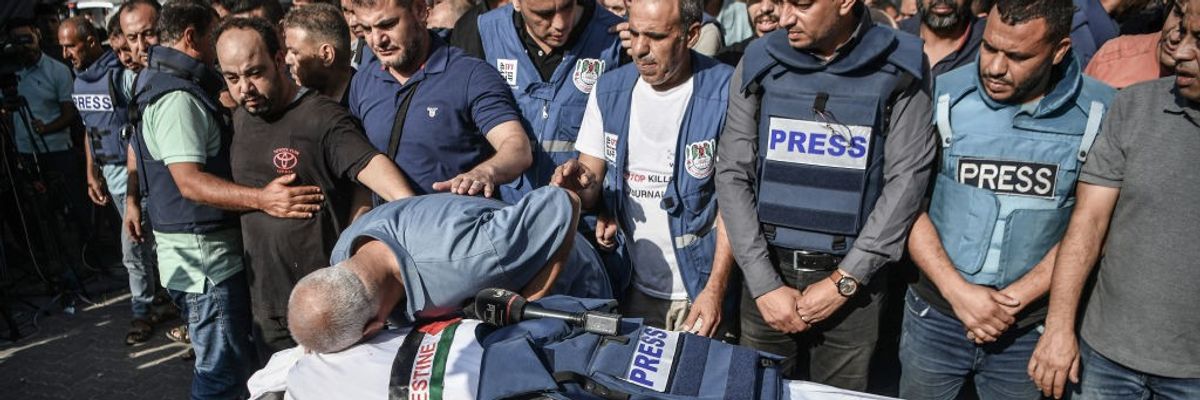
    A funeral ceremony is held for Palestine TV correspondent Mohammed Abu Hatab, who was killed, along with his family members, in an airstrike on his home in Khan Yunis, Gaza on November 3, 2023. (Photo: Abed Zagout/Anadolu via Getty Images)

    “The only thing that can explain the shocking silence of American and international media professionals about the mass killing of their Palestinian colleagues is the decadeslong and systematic dehumanization of the Palestinian people.”

    The largest U.S. Muslim advocacy group on Friday implored American and international media outlets to speak out against Israel’s killing of more than 100 journalists, almost all of them Palestinians, during the ongoing assault on Gaza.

    The Council on American-Islamic Relations (CAIR) renewed its plea following Israeli airstrikes on the homes of Palestine TV journalist Tamim Ma’mmar and Al-Aqsa TV‘s Abdullah Al-Sousi. Ma’mmar was killed along with his wife and two of their children, while the other attack killed Al-Sousi and two of his nephews, according to Quds News Network.

    “The only thing that can explain the shocking silence of American and international media professionals about the mass killing of their Palestinian colleagues is the decadeslong and systematic dehumanization of the Palestinian people, in which the lives of Palestinians have lesser or no value,” CAIR national communications director Ibrahim Cooper said in a statement.

    “Journalists worldwide must begin to speak out about these killings and about the Israeli genocide in Gaza,” he added.

    https://twitter.com/QudsNen/status/1821932693400981588?ref_src=twsrc%5Etfw%7Ctwcamp%5Etweetembed%7Ctwterm%5E1821932693400981588%7Ctwgr%5Eb50525bcbd64fb1a441b5d53fd2d2b071768fd5b%7Ctwcon%5Es1_c10&ref_url=https%3A%2F%2Fwww.commondreams.org%2Fnews%2Fisrael-killing-journalists

    Israel is on trial for genocide at the International Court of Justice in The Hague. Its 308-day assault on Gaza has left more than 142,000 Palestinians dead, wounded, or missing, according to local and international officials.

    Preliminary investigations by the New York-based Committee to Protect Journalists found that at least 113 media professionals—including 108 Palestinians, three Lebanese, and two Israelis—have been killed during the war, “making it the deadliest period for journalists since CPJ began gathering data in 1992.”

    CPJ has condemned what it called an “apparent pattern of targeting journalists and their families,” noting cases in which media workers were killed while wearing press insignia and after being threatened by Israeli officials.

    Gaza’s Government Media Office said this week that Israeli forces have killed 166 journalists since October.

    In May, the Paris-based press freedom group Reporters Without Borders (RSF) filed a third complaint at the International Criminal Court alleging “war crimes against journalists in Gaza.”

    RSF said it had “reasonable grounds for thinking that some of these journalists were deliberately killed and that the others were the victims of deliberate IDF attacks against civilians” and accused Israel of “an eradication of the Palestinian media.”

    The following month, the Gaza Project—led by the Paris-based nonprofit Forbidden Storiespublished a report detailing a “chilling pattern” of Israeli forces apparently targeting journalists during the war.

    Human Rights Watch and Amnesty International have called for official investigations into Israeli killing of journalists including an October 13 attack that killed 37-year-old Lebanese Reuters videographer Issam Abdallah and wounded half a dozen other journalists who were covering cross-border clashes between Israeli troops and Hezbollah fighters in southern Lebanon.

    Dylan Collins, an American deputy editor at Al Jazeera English, was wounded while administering first aid to Christina Assi, an Agence-France Presse journalist who was seriously wounded in the attack. Assi-one of whose legs was amputated—recently carried the Olympic torch in Paris.

    CPJ president Jodie Ginsburg recently told Al Jazeera that the killing of journalists by Israeli forces “appears to be part of a broader strategy that aims to stifle the information coming out of Gaza.”

    Original article by BRETT WILKINS republished from Common Dreams under Creative Commons (CC BY-NC-ND 3.0).

  • War on Want

    Spread the love