Tag: Paris agreement

  • Inside Big Oil’s Business as Usual: Failure on Climate and Profits from War

    Spread the love

    Original article by Stella Levantesi republished from DeSmog.
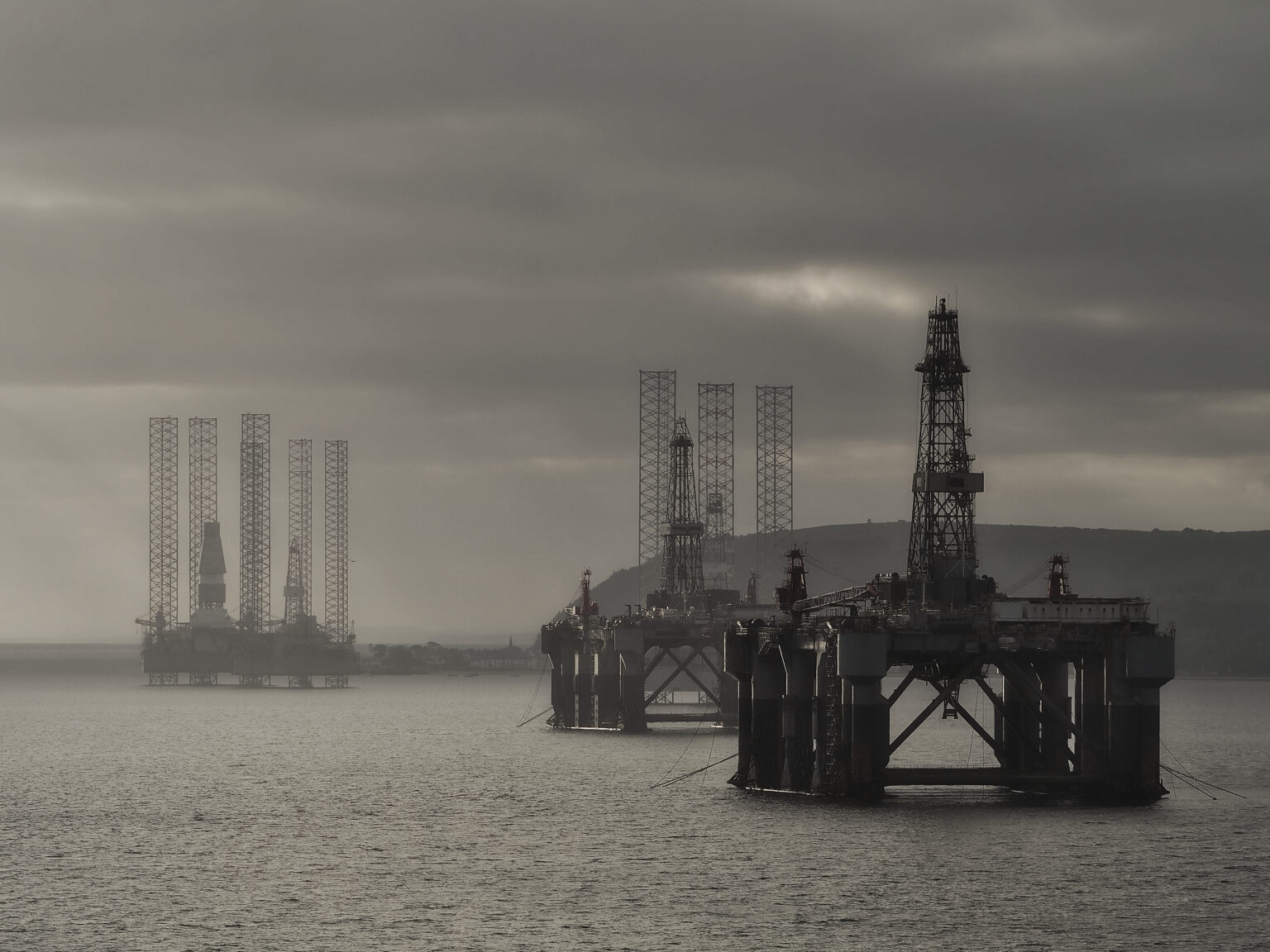
    A new report shows oil majors fall short of meeting Paris Agreement targets while fueling global military conflicts.

    Oil majors are not on track to hit Paris Agreement climate targets that limit global temperature rise to 1.5°C, a new report reveals.

    Eight fossil fuel giants – Chevron, ExxonMobil, Shell, TotalEnergies, BP, Eni, Equinor, and ConocoPhillips – are on course to use 30 percent of the world’s remaining carbon budget for that 1.5°C goal, according to the Big Oil Reality Check report by nonprofit Oil Change International (OCI).

    Combined, the oil and gas companies’ extraction plans are consistent with a temperature rise of over 2.4°C, the report found.That level of warming, according to the Intergovernmental Panel on Climate Change, will reduce food security, risk irreversible loss of ecosystems, and increase heat waves, rainfall, and extreme weather events.

    “We analyzed the climate promises and plans of the largest eight international oil and gas companies that are owned in North America and Europe. What would it take for an oil and gas producer to align their production with limiting warming to 1.5?” David Tong, global industry campaign manager at OCI and co-author of the report, told DeSmog. 

    “If an oil and gas company were serious about transitioning its business model, the first step would be ending all new production and then setting a Paris-aligned phaseout plan,” he added.

    ‘No New Fossil’ Standard

    A recent paper by academics at University College London and the International Institute for Sustainable Development, published in Science in May, calls for stopping fossil fuel expansion and building a “No New Fossil” global norm. According to the authors, this would make it “easier to phase down fossil fuels” and achieve the Paris Agreement climate goals.

    No new fossil fuel projects would be needed in a 1.5°C world, they wrote, because the “existing fossil fuel capital stock” is sufficient to meet energy demand. The authors also note that preventing new fossil fuel projects is, in general, more feasible than closing existing projects from an economic, political, and legal viewpoint.

    In the face of continuing global pressure to stop fossil fuel expansion, Chevron, ConocoPhillips, Equinor, Eni, ExxonMobil, and TotalEnergies have goals to increase oil and gas production within the next three years or beyond, the OCI report finds. While Shell does not quantify a target, the company plans to keep oil production steady while growing gas production in the near future, OCI said.

    “None of those companies came anywhere close to alignment [with climate goals],” said Tong. “Six of the eight companies we analyzed have explicit plans to increase their oil and gas production in this critical decade when we need to be cutting our reliance on fossil fuels, cutting oil, gas, and oil production.”

    Plateauing oil and expanding gas production, like some of these companies plan to do, is “grossly insufficient” compared with the action that’s needed, Tong added. Even commitments to make businesses more efficient aren’t going to cut it alone, he said.

    “It’s like a cigarette company claiming that it will solve lung cancer by producing cigarettes more efficiently,” he noted. “That’s not just not a credible claim. It’s a promise to become a more efficient climate breaker.”

    Big Oil and War

    According to the OCI report, all the oil majors fail to meet basic criteria for just transition plans for workers and communities where they operate. 

    “A number of these companies also face significant ongoing, unresolved allegations of human rights … and Indigenous people’s rights violations,” Tong told me.

    A March 2024 investigation, commissioned by OCI and conducted by DataDesk, revealed that ExxonMobil, Chevron, TotalEnergies, BP, Shell, and Eni are “complicit in facilitating the supply of crude oil to Israel.” These findings are particularly noteworthy in the context of “Israel’s mounting evidence of war crimes” against Palestinians in Gaza, the OCI states in its new report. 

    Diesel and gasoline for tanks and other military vehicles are supplied by Israel’s refineries, which rely on regular imports of crude oil by these companies and, since October 2023, supplies mainly from Azerbaijan, Kazakhstan/Russia, Gabon, and Brazil, the research has found. 

    The fossil fuel industry is “fueling war and military conflicts” in many regions of the world, said Svitlana Romanko, a prominent Ukrainian activist and founder and director of Razom We Stand, a Ukrainian organization campaigning to ban all imports of fossil fuels from Russia. 

    According to Romanko, the OCI Big Oil Reality Check report “reinforces the importance of moving away from fossil fuels and investing into distributed renewable energy.”

    A new analysis by a group of climate experts estimates that the first two years of Russia’s war on Ukraine resulted in greenhouse gas emissions equivalent to around 175 million tonnes of carbon dioxide. The estimated global cost of this warming in extreme weather impacts: $32 billion. 

    After Russia launched its full-scale invasion of Ukraine in February 2022, Russia earned over 681 billion euros in revenue from fossil fuel exports. European Union countries purchased fossil fuels from Russia for more than 195 billion euros.

    Big Oil, as well as Russia, is profiting from the war, Romanko said. After the invasion, BP, Chevron, Equinor, ExxonMobil, Shell, and TotalEnergies raked in $219 billion, more than double their profits compared to the previous year.

    “Most [governments] subsidize fossil fuels, and these subsidies are accounting for trillions of U.S. dollars annually,” Romanko said. “This is a big part of fossil fuel profits, and the more fossil fuels are subsidized, [the] less investments are made available for renewable energies.”

    She pointed out that the partnership between TotalEnergies and Russia’s largest private gas producer, Novatek, was also “instrumental” in helping Russia get access to technologies and engineering services to launch Novatek’s Yamal LNG and Arctic LNG 2 projects.

    Romanko notes that fossil fuel infrastructure can also constitute a liability for military attacks and quickly become a target.

    “Centralized infrastructure endangers energy supply and overall safety of the supply,” she said. In Ukraine, a massive effort to install solar power plants in schools and hospitals helped decentralize this key resource, Romanko explained. “Decentralized energy supply is essential to building true energy independence,” she added. “And this is the future.”

    Pressure for Accountability

    Some of the eight oil majors in OCI’s report have faced more international and national scrutiny than others. Such pressure can facilitate accountability, but that’s less likely when the fossil fuel company is closely intertwined with the institutional, political, and economic life of its country. 

    A BP gas station sign. Credit: Mike Mozart (CC BY 2.0)

    “We need to look at what has succeeded in putting so much pressure on companies like Shell and BP,” OCI’s Tong said. 

    One factor: when communities in a company’s home country work closely in partnership with communities in fossil fuel-producing countries. Tong said that positive results also happen when campaigners use a range of strategies to expose producers, from nonviolent direct action to op-eds, research, and court action.

    “This is particularly challenging with Eni, TotalEnergies, and Equinor in different ways because of the close interactions that each of the companies have with their home states,” he added.

    Public, political, and legal pressure for accountability must also be coupled with industry regulation, according to Tong.

    “We concluded that there is no evidence that the oil and gas sector will voluntarily transition to renewable energy, or voluntarily act to align their production with what’s needed for the Paris Agreement,” Tong said. Instead, governments must no longer license new production sites. 

    The strong right-wing result in the latest EU Parliament elections could also affect Big Oil’s energy transition. 

    “The more the links between the state and big polluters are overt, the more people get out in the streets and protest,” Tong said.

    What is safe to say is that Big Oil’s business as usual will increase climate change effects.

    “Floods, hurricanes, extreme weather events, and the millions of human lives affected and lost – this damage to nature, to human lives and to life on earth will only mount,” Romanko said. “What will be lost in a few more years will also mount if fossil fuel companies are allowed to continue with business as usual.”

    Original article by Stella Levantesi republished from DeSmog.
  • ‘Climate Arsonists’: 8 Major Oil Companies Fail to Align With Paris Agreement

    Spread the love

    Original article by OLIVIA ROSANE republished from Common Dreams under Creative Commons (CC BY-NC-ND 3.0).

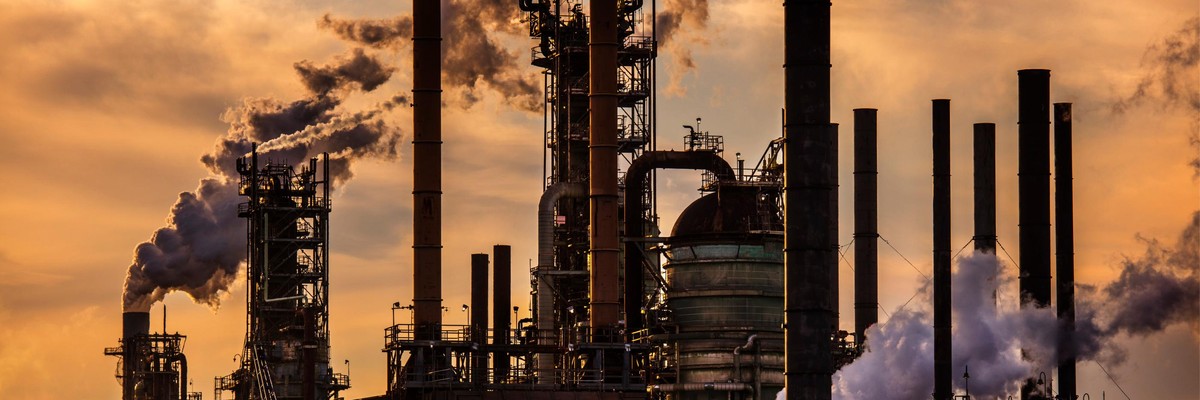
    An ExxonMobil oil refinery is pictured in Baton Rouge, Louisiana. (Photo: Barry Lewis/InPictures via Getty Images)

    “We cannot trust fossil fuel corporations to do anything but line the pockets of their CEOs and investors at the cost of our climate and communities,” one campaigner said.

    The eight largest U.S. and Europe-based oil and gas producing companies are failing to align their plans with the Paris agreement goal of limiting global heating to 1.5°C above preindustrial levels and avoiding ever more catastrophic climate impacts.

    Oil Change International’s Big Oil Reality Check report, released Tuesday, concludes that the plans of BP, Chevron, ConocoPhillips, Eni, Equinor, ExxonMobil, Shell, and TotalEnergies would actually put the world on track for more than 2.4°C of warming and burn through nearly one-third of the global carbon budget for hitting the 1.5°C target.

    “It’s clearer than ever that oil and gas companies—the climate arsonists fueling climate chaos—cannot be trusted to put out the fire,” David Tong, report author and global industry campaign manager at Oil Change International, said in a statement. “There is no evidence that big oil and gas companies are acting seriously to be part of the energy transition.”

    “The Big Oil Reality Check report reveals that oil and gas corporations are more interested in looking like they are acting on climate change than actually acting on climate change.”

    For its fourth annual Big Oil Reality Check, Oil Change International judged the oil companies’ climate plans and pledges against a set of minimum standards for alignment with the Paris agreement. The standards were divided into three main categories: ambition, integrity, and people-centered transitions.

    Under ambition, the companies were assessed on whether they had plans to stop oil and gas exploration, stop approving new extraction projects, decrease production every year through 2030, and stop extraction on a certain date while outlining a long-term plan to end production.

    Under integrity, the companies were assessed on whether their emissions-reduction plans included their entire supply chain, whether they relied on carbon capture or offsets, whether their methane-reduction plans were really in line with climate goals, and whether they lobbied or advertised against climate action.

    For people-centered transitions, they were assessed on whether they had just transition plans for employees and members of frontline communities and whether they respected human rights overall and the rights of Indigenous peoples, including to free, prior, or informed consent to any fossil fuel activities.

    The companies were then rated from “fully aligned” to “grossly insufficient” for how well their plans complied with the Paris goals within the assessment’s framework, but all eight companies scored “insufficient” or “grossly insufficient” for a majority of the criteria.

    Only one company—Eni—scored above “insufficient” in any category, earning a ranking of “partially aligned” for having greenhouse gas-reduction plans that included its supply chains. The three U.S.-based companies—Chevron, ConocoPhillips, and ExxonMobil—scored “grossly insufficient” for all 10 criteria.

    “American fossil fuel corporations are the worst of the worst,” Oil Change International’s U.S. program manager Allie Rosenbluth said. “Chevron, ExxonMobil, and ConocoPhillips perpetuate harm in frontline communities not only across the U.S. but worldwide.”

    Oil Change found that six out of the eight companies have official plans to increase oil and gas production. The only two that did not were BP and Shell; however, these companies employ a misleading strategy. They compensate for new oil and gas projects by selling off polluting assets. While the emissions from the sold operations no longer count toward company emissions, they still count toward the planet’s total. This practice is out of line with the GHG Protocol on corporate emissions accounting and may violate the United Nations Guiding Principles on Business and Human Rights.

    Four of the companies assessed in the report—BP, Shell, Exxon, and Chevron—were also the subject of a recent U.S. House investigation and Senate hearing detailing how the fossil fuel industry playbook has shifted from outright denial of climate science to greenwashing its activities by presenting itself as part of the solution to the climate crisis while its day-to-day operations continue to raise global temperatures.

    “The efforts of climate and social movements have forced oil and gas companies to acknowledge that fossil fuels are dirty and dangerous, leading to a variety of climate pledges and ‘plans,’” said Oil Change campaigner Myriam Douo. “The Big Oil Reality Check report reveals that oil and gas corporations are more interested in looking like they are acting on climate change than actually acting on climate change.”

    “They spend billions on smoke and mirrors to try to fool us into believing they have solutions for a livable planet when, in reality, they are perpetuating harm to the climate and local communities while trying to suck every last ounce of profit out of their dirty fossil fuel business,” Douo concluded.

    All told, Rystand energy data suggests that the combined production of the eight companies will be 17% by 2030 than they were last year.

    “Such an increase in production on a global scale would put the world on a path towards global heating well beyond 2°C, locking in destruction of vulnerable communities and ecosystems,” the report authors wrote.

    The report finds that all of the companies intend to rely on unproven carbon capture technology or offsets schemes to meet their claimed emission-reduction goals and have continued to spend money on lobbying against climate action and greenwashing their own activities since the agreement in Paris.

    Further, no company has plans consistent with ensuring a just transition or protecting human rights. In one recent and urgent example, ExxonMobil, Chevron, TotalEnergies, BP, Shell, and Eni all continue to provide Israel with crude oil despite “the Israeli military’s ongoing assault on Palestinian civilians, ecosystems, and infrastructure in Gaza and mounting evidence of war crimes,” a March Oil Change investigation found.

    The report comes nearly half a year after world leaders agreed to contribute to “transitioning away from fossil fuels” at the COP28 U.N. climate change conference in Dubai. In light of its conclusions, Oil Change called on governments to take action to further a just transition:

    1. Stop permitting or approving new fossil fuel projects or infrastructure;
    2. Set a Paris-aligned date for phasing out fossil fuel production;
    3. End subsidies and financing for fossil fuels and false solutions like carbon capture;
    4. Use tax policy to incentivize against investing in fossil fuels;
    5. Craft a just transition, including by making polluters pay for cleanup and reparations; and
    6. Passing laws to protect human rights and Indigenous rights and giving communities a legal mechanism to seek redress from corporate polluters.

    Oil Change also argued that governments in the Global North should hold companies headquartered within their borders accountable for harm abroad and put money into funds to enable the Global South to transition to renewable energy, adapt to climate change, and pay for inevitable loss and damage.

    “This year’s Big Oil Reality Check makes it clearer than ever—we cannot trust fossil fuel corporations to do anything but line the pockets of their CEOs and investors at the cost of our climate and communities,” Rosenbluth said. “People around the world are rising up to end the era of fossil fuels and build a just energy system that puts climate and communities first.”

    Original article by OLIVIA ROSANE republished from Common Dreams under Creative Commons (CC BY-NC-ND 3.0).

  • 77% of Top Climate Scientists Think 2.5°C of Warming Is Coming—And They’re Horrified

    Spread the love

    Original article by OLIVIA ROSANE republished from Common Dreams under Creative Commons (CC BY-NC-ND 3.0).

    Scientists engage in civil disobedience on the steps of the Congress of Deputies in Madrid, Spain on April 6, 2022. 
    (Photo: Scientist Rebellion)

    “I expect a semi-dystopian future with substantial pain and suffering for the people of the Global South,” one expert said.

    Nearly 80% of top-level climate scientists expect that global temperatures will rise by at least 2.5°C by 2100, while only 6% thought the world would succeed in limiting global heating to 1.5°C above preindustrial levels, a survey published Wednesday by The Guardian revealed.

    Nearly three-quarters blamed world leaders’ insufficient action on a lack of political will, while 60% said that corporate interests such as fossil fuel companies were interfering with progress.

    “I expect a semi-dystopian future with substantial pain and suffering for the people of the Global South,” one South African scientist told The Guardian. “The world’s response to date is reprehensible—we live in an age of fools.”

    “What blew me away was the level of personal anguish among the experts who have dedicated their lives to climate research.”

    The survey was conducted by The Guardian‘s Damian Carrington, who reached out to every expert who had served as a senior author on an Intergovernmental Panel on Climate Change (IPCC) report since 2018. Out of 843 scientists whose contact information was available, 383 responded.

    He then asked them how high they thought temperatures would rise by 2100: 77% predicted at least 2.5°C and nearly half predicted 3°C or more.

    “What blew me away was the level of personal anguish among the experts who have dedicated their lives to climate research,” Carrington wrote on social media. “Many used words like hopeless, broken, infuriated, scared, overwhelmed.”

    The 1.5°C target was agreed to as the most ambitious goal of the Paris agreement of 2015, in which world leaders pledged to keep warming to “well below” 2°C. However, policies currently in place would put the world on track for 3°C, and unconditional commitments under the Paris agreement for 2.9°C.

    The survey comes on the heels of the hottest year on record, which already saw a record-breaking Canadian wildfire season as well as extreme, widespread heatwaves and deadly floods. The first four months of 2024 have also been the hottest of their respective months on record, and the year has already seen the fourth global bleaching event for coral reefs.

    “They can say they don’t care, but they can’t say they didn’t know.”

    “I think we are headed for major societal disruption within the next five years,” Gretta Pecl of the University of Tasmania told The Guardian. “[Authorities] will be overwhelmed by extreme event after extreme event, food production will be disrupted. I could not feel greater despair over the future.”

    Scientists said that governments and companies that profit from the burning of fossil fuels had prevented action. Many also blamed global inequality and the refusal of the wealthy world to step up, both in terms of reducing their own emissions and helping climate vulnerable nations adapt.

    “The tacit calculus of decision-makers, particularly in the Anglosphere—U.S., Canada, U.K., Australia—but also Russia and the major fossil fuel producers in the Middle East, is driving us into a world in which the vulnerable will suffer, while the well-heeled will hope to stay safe above the waterline,” Stephen Humphreys at the London School of Economics said.

    Despite their grim predictions, many of the scientists remained committed to researching and speaking out.

    “We keep doing it because we have to do it, so [the powerful] cannot say that they didn’t know,” Ruth Cerezo-Mota, who works on climate modeling at the National Autonomous University of Mexico, told The Guardian. “We know what we’re talking about. They can say they don’t care, but they can’t say they didn’t know.”

    Others found hope in the climate activism and awareness of younger generations, and in the finding that each extra tenth of a degree of warming avoided protects 140 million people from extreme temperatures.

    “I regularly face moments of despair and guilt of not managing to make things change more rapidly, and these feelings have become even stronger since I became a father,” said Henri Waisman of France’s Institute for Sustainable Development and International Relations. “But, in these moments, two things help me: remembering how much progress has happened since I started to work on the topic in 2005 and that every tenth of a degree matters a lot—this means it is still useful to continue the fight.”

    Peter Cox of the University of Exeter added: “Climate change will not suddenly become dangerous at 1.5°C—it already is. And it will not be ‘game over’ if we pass 2°C, which we might well do.”

    “I’m not despairing, I’m not giving up. I’m pissed off and more determined to fight for a better world.”

    Many of the scientists who still saw a hope of keeping 1.5°C alive pinned it on the speeding rollout and falling prices of climate-friendly technologies like renewable energy and electric vehicles. Also on Wednesday, energy think thank Ember reported that 30% of global electricity came from renewables in 2023 and predicted that the year would be the “pivot” after which power sector emissions would start to fall. Experts also said that abandoning fossil fuels has many side benefits such as cleaner air and better public health. Though even the more optimistic scientists were wary about the unpredictable nature of the climate crisis.

    “I am convinced that we have all the solutions needed for a 1.5°C path and that we will implement them in the coming 20 years,” Henry Neufeldt of the United Nations’ Copenhagen Climate Center told The Guardian. “But I fear that our actions might come too late and we cross one or several tipping points.”

    Several scientists gave recommendations for things that people could do to move the needle on climate. Humphreys suggested “civil disobedience” while one French scientist said people should “fight for a fairer world.”

    “All of humanity needs to come together and cooperate—this is a monumental opportunity to put differences aside and work together,” Louis Verchot, based at the International Center for Tropical Agriculture in Colombia, told The Guardian. “Unfortunately climate change has become a political wedge issue… I wonder how deep the crisis needs to become before we all start rowing in the same direction.”

    The publication of The Guardian‘s survey prompted other climate scientists to share their thoughts.

    “As many of the scientists pointed out, the uncertainty in future temperature change is not a physical science question: It is a question of the decisions people choose to make,” Texas Tech University climate scientist Katharine Hayhoe wrote on social media. “We are not experts in that; And we have little reason to feel positive about those, since we have been warning of the risks for decades.”

    Aaron Thierry, a graduate researcher at the Cardiff School of Social Sciences, pointed out that The Guardian‘s results were consistent with other surveys of scientific opinion, such as one published in Nature in the lead-up to COP26, in which 60% of IPCC scientists said they expected 3°C of warming or more by 2100.

    James Dyke of the University of Exeter’s Global Systems Institute argued that there was room for scientists to share more negative thoughts without succumbing to or encouraging defeatism.

    “I hear the argument that we must temper these messages because we don’t want people to despair and give up. But I’m not despairing, I’m not giving up. I’m pissed off and more determined to fight for a better world,” Dyke said on social media.

    NASA climate scientist Peter Kalmus shared the article with a plea to “please start listening.”

    “Elected and corporate ‘leaders’ continue to prioritize their personal power and wealth at the cost of irreversible loss of essentially everything, even as this irreversible loss comes more and more into focus. I see this as literally a form of insanity,” Kalmus wrote, adding that “capitalism tends to elevate the worst among us into the seats of power.”

    However, he took issue with the idea that a future of unchecked climate change would be only “semi-dystopian.”

    “We’re also at risk of losing any gradual bending toward progress, and equity, and compassion, and love,” Kalmus said. “All social and cultural struggles must recognize this deep intersection with the climate struggle.”

    Original article by OLIVIA ROSANE republished from Common Dreams under Creative Commons (CC BY-NC-ND 3.0).

    [dizzy: It is generally accepted by knowledgeable parties that 2.5C is “locked-in” in the sense that emissions already made will cause it. We need immediate reduction in climate heating gases by abandoning fossil fuels. Politicians worldwide are neglecting this necessary action and are indeed creating a worse situation by promoting fossil fuels through widespread and generous subsidies.]

    14/5/24 I’m trying to verify the “locked-in” claim that I make above. It’s not particularly supported by this report.

    14/5/24 8.30 pm BST

    …

    If greenhouse gas emissions stopped but greenhouse gases stayed at a fixed level then there’d be another ~0.5-0.6°C of slow warming in the pipeline, but in reality CO₂ would fall due to natural carbon sinks once emissions stop and largely cancel out this warming.

    Aerosols mask ~0.6°C of warming, but even in the unlikely scenario of their sudden elimination models show only ~0.2-0.4°C of extra warming by 2100 as a result. A gradual partial phase-out of aerosol emissions could limit this unmasking effect to ~0.1-0.2°C spread over time, and cuts in non-CO₂ greenhouse gases like methanes could entirely counteract aerosol removal, minimising its impact.

    Overall this likely reduces “locked-in” warming from the climate lag and aerosols to a negligible amount on top of the current (2021) warming of ~1.2°C – in contrast to the extra ~1.4°C sometimes claimed – and any short-term warming from aerosol reductions can be reduced and compensated for by reducing other short-lived greenhouse gases like methane.

    …

    All of this is quite academic of course – politicians do not intend to address global warming and instead intend to continue trashing the planet.

  • New report accuses fossil fuel companies of greenwashing, but profits are up

    Spread the love

    https://www.energymonitor.ai/features/new-report-accuses-fossil-fuel-companies-of-greenwashing-but-profits-are-up

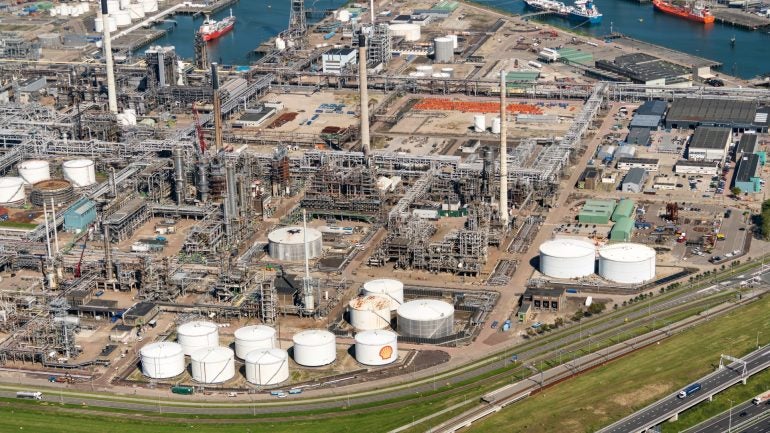
    Aerial view of Shell Pernis in Rotterdam, Holland, taken 7 September 2023. Photo: Aerovista Luchtfotografie/Shutterstock.

    A new report by the Senate Committee on the Budget details how fossil fuel companies have avoided tackling the climate crisis.

    Last week, US Democrats released a report three years in the making detailing the ways that large fossil fuel producers including Shell, BP and Exxon have sought to avoid responsibility for the climate crisis.

    The 65 page-long report, jointly authored by the Democrats House Committee On Oversight And Accountability and the Senate Committee on the Budget, contains files subpoenaed from big oil companies that “demonstrate for the first time that fossil fuel companies internally do not dispute that they have understood since at least the 1960s that burning fossil fuels causes climate change and then worked for decades to undermine public understanding of this fact and to deny the underlying science”.

    Previous documentation has shown that companies including Exxon knew about human-made climate change since at least 1981, and files released earlier this year suggest it may have been known since the 1950s. The importance of this report lies in proving that fossil fuel companies not only knew, but privately believed the science despite public rejection.

    The files also show the tactics used by major fossil companies to discredit climate activism, the report says, among them “pivot[ing] from outright climate denial to a new strategy of deception. Instead of misrepresenting the science and the consequences of climate change, they pivoted to misrepresenting their business plans, their investments in low carbon technologies, the alleged safety of natural gas, and their support for various climate policies and emission reduction targets”.

    Net zero?

    Most major oil companies have made net zero pledges based on the Paris Agreement goal of net zero by 2050, but the report claims they are unlikely to be met. BP, for instance pledged to reach net zero on oil and gas by 2050, but is at the same time ramping up oil production.

    The New York Times reported earlier this year that BP’s interim CEO Murray Auchincloss was clear that it would pursue an increase in fossil fuel production to meet demand, and internal documents gathered by the committees show that it was unwilling to publicly state a commitment to net zero in 2019.

    In an internal email thread discussing a press request for comment, an official said “it goes a bit too far to state or imply support for net zero by 2050, because that would require policy likely to put some existing assets at risk, and we haven’t discussed that internally”.

    This lack of action is further highlighted in a report released by thinktank Carbon Tracker in March, which suggests that companies including Shell and BP are far from hitting Paris Agreement goals.

    …

    https://www.energymonitor.ai/features/new-report-accuses-fossil-fuel-companies-of-greenwashing-but-profits-are-up

  • Revealed: UK ‘double counting’ £500m of aid for war-torn countries as climate finance

    Spread the love

    Original article by JOSH GABBATISS republished from Carbon Brief under a CC license.

    The UK government has reclassified nearly £500m of aid for war-torn and impoverished countries as “climate finance”, in a bid to meet its international commitments under the Paris Agreement.

    This follows reports that the UK’s pledge to spend £11.6bn on climate aid between 2021-22 and 2025-26 is slipping out of reach, due to government cuts.

    A freedom-of-information (FOI) request by Carbon Brief reveals how, after the reclassification, money for humanitarian work in nations including Afghanistan, Yemen and Somalia is now being double-counted as climate finance to help the UK hit its goal.  

    The projects being double-counted include work to provide food and basic necessities that have no explicit link to climate action, Carbon Brief’s analysis reveals. Some of their internal reports even state clearly that they are not climate-finance projects. 

    This is part of a wider revision of climate-finance accounting, introduced by the government in 2023 to ensure the UK achieves its £11.6bn target. 

    By redefining existing funds pegged for development banks, investment in foreign businesses and humanitarian aid as “climate finance”, the government expects to add £1.72bn to its total.

    Experts tell Carbon Brief it is “problematic” and “unjust” to relabel existing funds as climate finance rather than providing new money. One says the UK could meet its target, at least in part, by “double counting development and climate finance”.

    The chair of the Least Developed Countries (LDC) group at UN climate talks says the UK’s actions are a “clear deviation from the path to climate justice”.

    ‘Moving the goalposts’

    The UK government has committed to spending £11.6bn on international climate finance (ICF) between 2021-22 and 2025-26. This is the nation’s contribution to climate action in developing countries, which it is obliged to provide under the Paris Agreement. 

    Developed countries, such as the UK, have committed to sending “new and additional” climate finance to developing countries. This is generally interpreted as spending extra money on top of existing foreign aid.

    The UK government itself has described the £11.6bn goal as “dedicated ring-fenced funding that is distinguishable from non-climate [aid]”.

    However, reports began to emerge in 2023 that the government was not on track to meet its target.

    Experts attributed this to the government cutting its overall foreign aid budget. In November 2020, the government suspended a target to give 0.7% of national income as overseas aid – reducing it to 0.5% as a “temporary measure”. 

    The government is also spending more of the remaining funds on supporting refugees within the UK. The latest figures show that in 2023, the UK spent more of its aid budget on supporting asylum seekers and refugees in the country than on overseas projects.

    In order to remain on track for the £11.6bn goal, development minister Andrew Mitchell announced in October 2023 that the government was changing the way it calculated ICF spending.

    This immediately sparked concerns that the government was inflating its climate-finance figures without providing any new aid money for developing countries. Mitchell provided limited details of how the government was getting its target back on track.

    More information came in a report released in February by the Independent Commission for Aid Impact (ICAI). It concluded that, by “moving the goalposts”, the government had reclassified £1.72bn of spending as climate finance between 2021-22 and 2025-26.

    This figure includes four tranches of funding that had not previously been considered ICF:

    • £746m from assuming that a share of the “core” funding the UK gives to the World Bank and other multilateral development banks (MDBs) will be assigned to climate-related projects.
    • £497m from automatically labelling 30% of the humanitarian aid spent in the 10% of countries that are most vulnerable to climate change as ICF.
    • An estimated £266m from defining more payments into British International Investment (BII), the UK’s overseas development finance institution, as ICF.
    • £215m from civil servants “scrubbing” the aid portfolio – namely, going back over existing projects and adding any climate-relevant funding they had previously missed.

    The figures cited by ICAI are based on unpublished government analysis, which Carbon Brief has now obtained via FOI. 

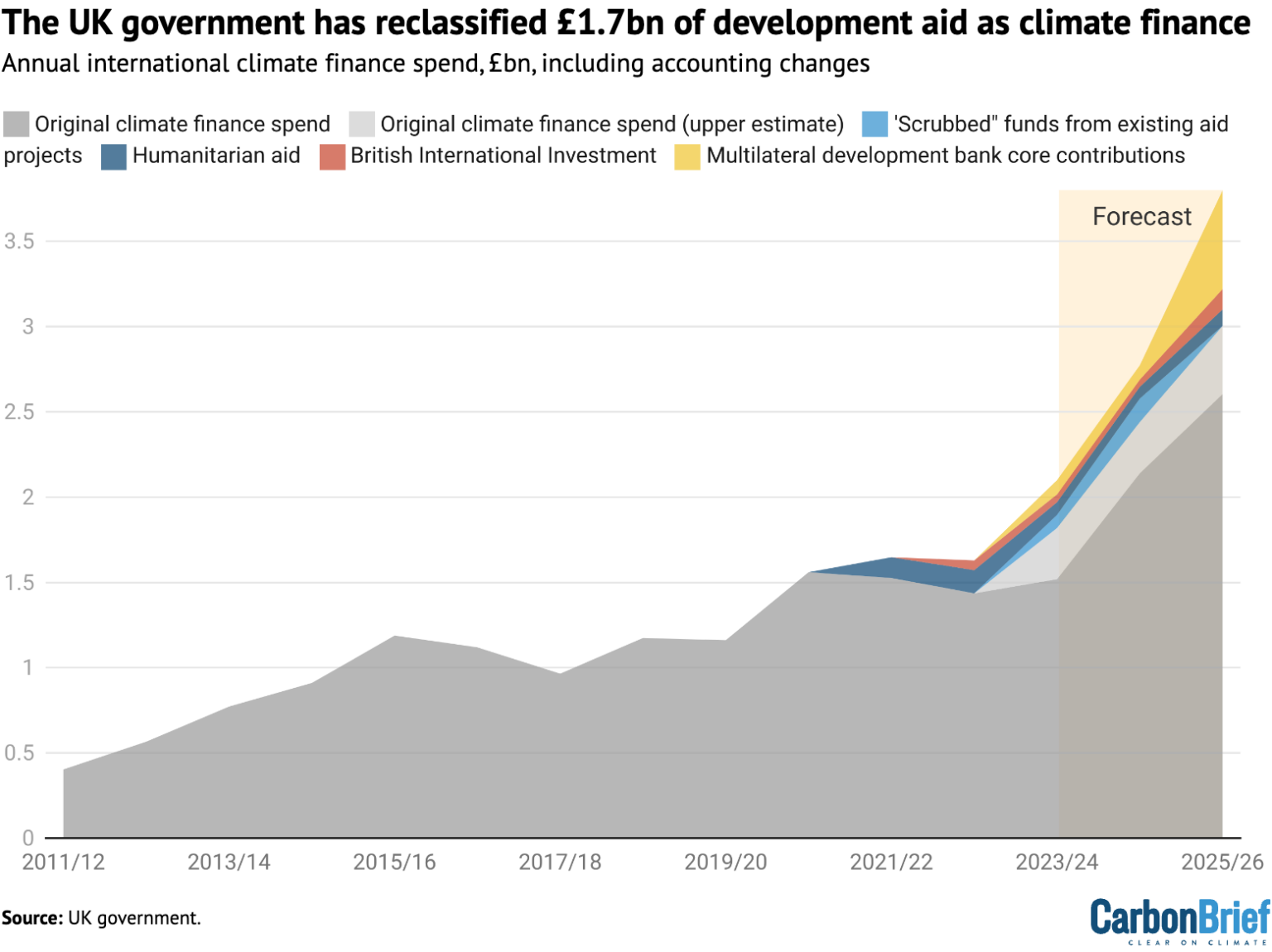
    The analysis includes the annual contributions each of these sources are expected to provide over the period from 2021-22 to 2025-26, which can be seen in the coloured sections of the chart below.

    Annual UK ICF spending, £bn, by financial year for the period 2011/12 to 2025/26. The grey area indicates ICF spending under the original accounting methodology used until October 2023. Beyond 2022/23 the figures are forecasts, with the light grey area indicating the upper bound and the darker grey indicating the lower bound. The coloured areas indicate the funding newly reclassified as counting towards ICF, following methodology changes introduced in October 2023. For multilateral development bank contributions, Carbon Brief understands that the UK will pledge £495m to the World Bank in 2025/26, and the remaining contributions that make up the £746m total are spread evenly across the 2011/12-2025/26 period. Source: UK government.

    As the chart indicates, even with the methodology changes, the £11.6bn target is still “backloaded”, with a significant uptick in ICF spending required beyond 2023-24 to meet it. 

    ICAI notes that, since the government cut its aid spending from the UN-backed benchmark of 0.7% to 0.5% of gross national income (GNI), “serious concerns remain over whether the heavily backloaded spending plan can be delivered”.

    Core funding

    The largest tranche of redefined ICF – some £740m – comes from the government starting to assume that a share of its “core” MDB funding counts as climate finance.

    This is money that the UK government already hands to these organisations to distribute according to their own priorities, primarily through loans. None of this money has previously been counted by the UK government as ICF, even though some went towards climate action.

    MDBs, including the World Bank, the African Development Bank (AfDB) and others have placed a growing emphasis on climate change in recent years. The World Bank, for example, has a target of spending 35% of its finance on climate-related projects.

    Following the reclassification, the UK government will simply assume that 35% of the money it gives to the World Bank – some £495m of £1.4bn total due in 2025/26 – counts as ICF.

    It will use a similar approach for its funding of other MDBs, with these changes adding a total of £740m to the amount of the UK’s aid spending that is classified as ICF.

    This move will not result in the UK providing any new funds for climate action, as it was already planning on distributing this money. In fact, the government has cut its spending on MDBs in recent years, due to the overall cut in the UK’s foreign aid budget.

    Humanitarian aid

    The second-largest tranche of newly reclassified climate finance is from projects in climate-vulnerable countries, an additional £497m of which is being counted as ICF.

    The government dataset obtained by Carbon Brief via FOI reveals the 28 humanitarian projects and five more general, country-specific funds that will contribute to this additional £497m. 

    The projects are based in some of the poorest and most war-torn countries in the world – Afghanistan, the Democratic Republic of the Congo (DRC), Somalia, Sudan, Uganda, Yemen and Zimbabwe.

    They largely focus on essential provisions, such as food and basic infrastructure.

    Prior to the recent changes, these programmes would have contributed just £47.5m to ICF, according to the government data released to Carbon Brief.

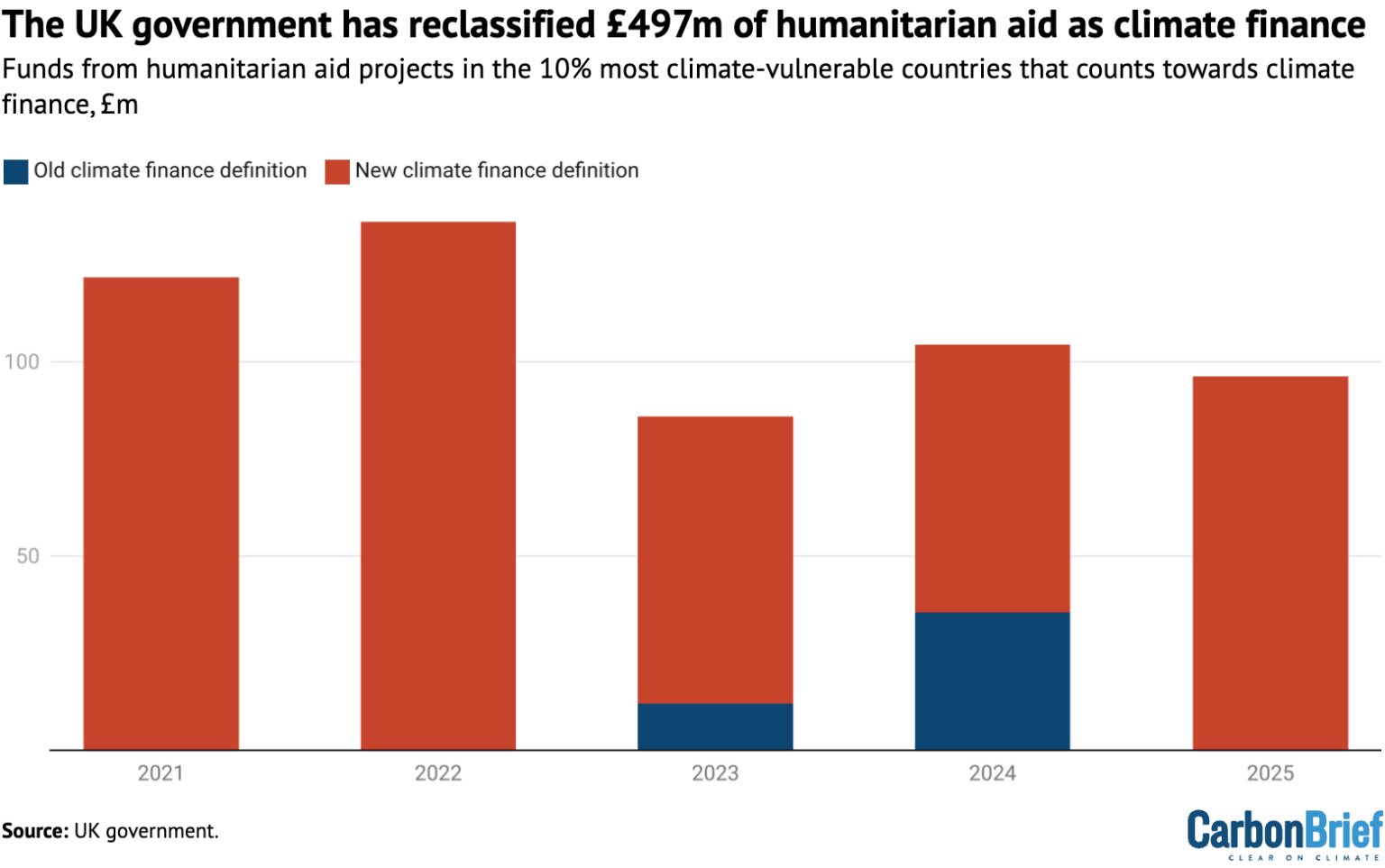
    By automatically counting 30% of their spend as ICF, this figure has now multiplied more than 10 times. The chart below shows, in red, these additional ICF funds.

    Annual UK ICF spending, £m, sourced from humanitarian aid projects for the 10% most climate-vulnerable countries, as defined by the Notre Dame Global Adaptation Initiative. Blue columns indicate the ICF spending that was expected from these projects prior to the methodology change, and red columns indicate ICF spending from these projects after the change. Source: UK government.

    For the 23 of the 28 projects with documentation available online, Carbon Brief assessed the relevant sections of their “business case and summary” documents for evidence that they were related to climate action.

    Many of the project documents reference climate change and say they will provide climate benefits. For example, all four projects in Somalia, a nation that has faced devastating drought and floods in recent years, mention the importance of climate resilience in their work.

    However, some of the projects explicitly state that they are not intended to provide climate-finance. 

    The summary document for the Assurance and Learning Programme (ALP) in Afghanistan, published in 2021, states: “The programme will not be eligible for ICF nor will it monitor ICF funded programmes.”

    Similarly, the Congo Humanitarian, Resilience and Protection (CHRESP) Programme summary document, also published in 2021, notes “we do not anticipate that any of our programming under this programme will be eligible as ICF”.

    Another project, titled Yemen: Access, Logistics, Liaison, and Accountability, will provide “few opportunities” to address climate change, according to the summary document. A further four project documents do not contain any reference to climate change. 

    Despite this, following the government’s reclassification, these seven projects will collectively contribute £166.9m of UK climate finance in the coming years.

    Euan Ritchie, a senior development finance policy advisor at the thinktank Development Initiatives, says blanket approaches to assigning climate finance are “problematic”. He tells Carbon Brief:

    “Just because humanitarian aid is going to a country that is vulnerable to climate change doesn’t mean it addresses that vulnerability. And these projects have already been screened for their climate focus.”

    He points to one of the projects, the Somalia Humanitarian and Resilience Programme, as an example. Ritchie says, based on International Aid Transparency Initiative data, that officials had already decided around 12% of this programme’s spending was ICF, and asks:

    “So what rationale is there for bumping it up to 30%? Were officials wrong the first time?”

    Fatuma Hussein, a programme manager at the thinktank Power Shift Africa, tells Carbon Brief such an approach is “unfair and unjust” as it “risks conflating” the “distinct needs” of climate aid and other humanitarian objectives.

    In its guidance for categorising what counts as climate finance, the Organisation for Economic Co-operation and Development’s Development Assistance Committee recommends scoring many humanitarian projects “zero”, indicating programmes that “generally do not qualify” as climate aid.

    More private investment

    The third-largest tranche of reclassified development aid relates to state-backed private sector investment under British International Investment (BII).

    The UK government will also now count more of its payments into BII as climate finance, amounting to around an extra £266m by 2025-26. Unlike aid spending, these are investments in the private sector and are expected to yield a financial return for the UK.

    Previously, the government counted a fixed 30% of BII spending as climate finance. It now intends to include a higher percentage to reflect a growing focus on climate investments.

    The new approach to BII investments assesses the share of each project that should count towards UK climate finance case-by-case, rather than using a blanket 30% share.

    It will record 100% of investments in a programme covering the Philippines, Indonesia and other parts of south-east Asia as ICF, as part of the government’s “Indo-Pacific tilt”. Investments in other regions also contribute a higher share of ICF – rising as high as 46% in 2022-23.

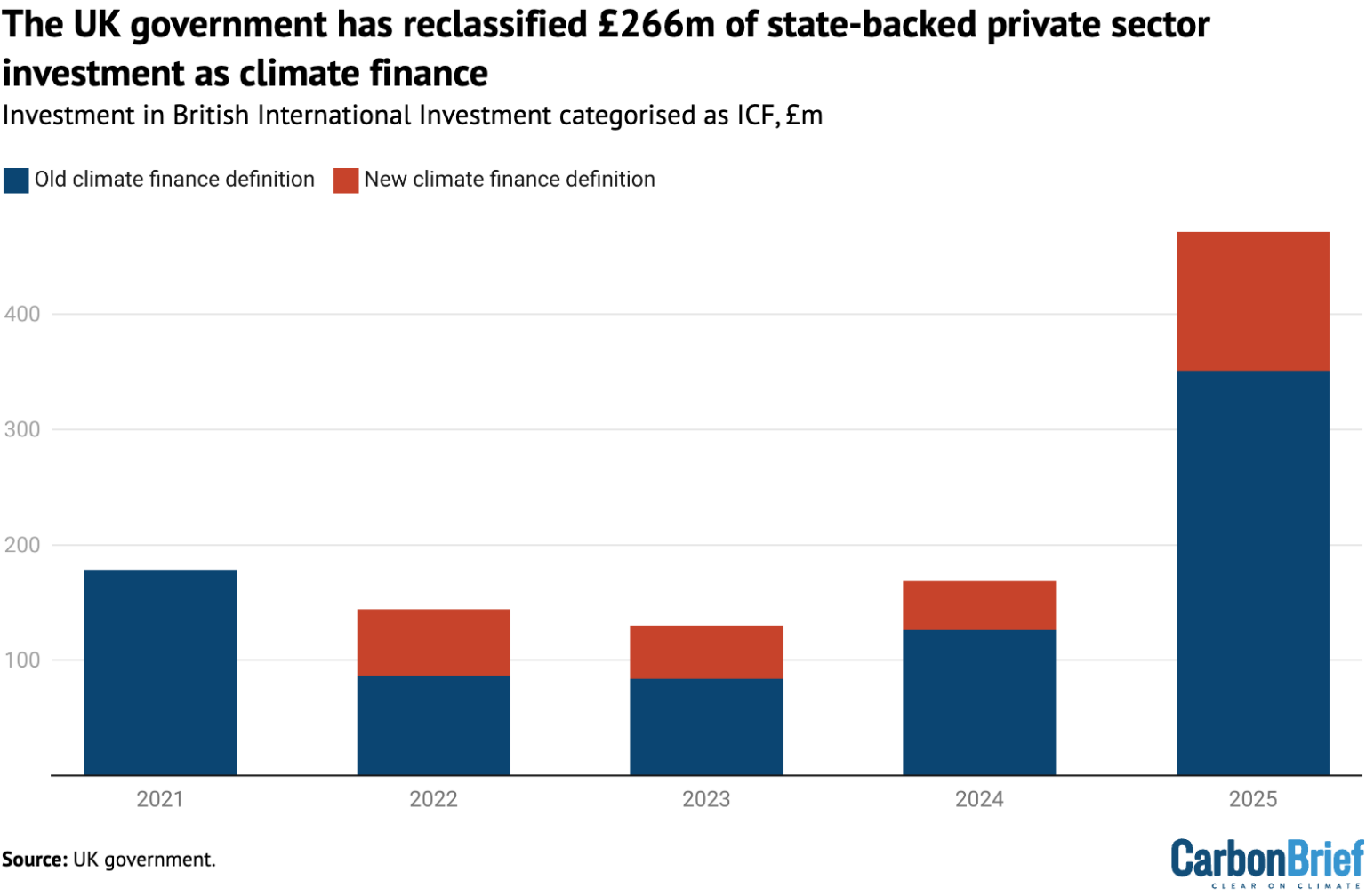
    The chart below shows the extra BII investment money (red) that now counts as ICF.

    Annual UK ICF spending, £m, from British International Investment (BII) contributions. Blue columns indicate the ICF spending that was expected from BII prior to the methodology change and red columns indicate ICF spending from BII after the change. Source: UK government.

    The figure above shows that the government expects private sector investment via BII to play an increasingly large role in its climate finance in the future.

    Many observers have expressed concerns about the government leaning more on private investment through BII to boost its ICF spending. 

    A report last year by the parliamentary international development committee criticised BII’s investment in, among other things, fossil fuels and “high-net-worth individuals”.

    BII prioritises loans and projects in middle-income nations where there is money to be made, rather than the nations that are most in need of climate finance. 

    ICAI highlighted this in its review of the UK’s climate finance commitments earlier this year, stating that private investment “is not always the most appropriate, realistic or preferred form of climate finance in the poorest and most fragile contexts”.

    Not new, not additional

    Developing countries will require trillions of dollars of investment in the coming years to meet their climate goals. 

    To help achieve this, developed countries, such as the UK, are expected to provide finance under the UN climate system that is “new and additional”. Discussions around a new climate finance goal will take centre stage this year at the COP29 climate summit in Baku.

    Experts tell Carbon Brief that the UK government’s changes to its ICF undermine the notion that it is providing new, “ring-fenced” funding. Regarding the “arbitrary” labelling of humanitarian funds as ICF, Ritchie says:

    “If the UK is counting a fixed share of projects as ICF it can no longer claim that ICF is distinguishable from non-climate [aid].” 

    Gideon Rabinowitz, director of policy and advocacy at the international development network Bond, tells Carbon Brief:

    “The change of definition means they will be able to reach the target by spending less money than they would have done otherwise through double counting development and climate finance.”

    Development NGOs say the best way for the UK to scale up its climate finance would be to return its foreign aid budget to 0.7% of GNI. However, with an election looming, neither the ruling Conservatives nor their Labour challengers have indicated a willingness to do this.

    There will be considerable pressure on developed countries in the coming months to commit to providing plentiful, high-quality climate finance in the run up to COP29. 

    Evans Njewa, the chair of the LDC group, to which nearly all of the UK’s humanitarian aid ICF recipients belong, tells Carbon Brief:

    “Reclassifying existing donor aid as climate finance is a clear deviation from the path to climate justice, and closing the finance gap cannot be achieved this way.” 

    Climate-finance reporting has been described as a “wild west”, with countries announcing figures based on vastly different definitions. This has led to nations counting money for coal, hotels and films in their totals, as there is no binding international standard to guide them.

    The UK government noted last year that its changes are in line with other countries’ methods. But experts point out that the UK was previously viewed as setting a high standard for other countries to reach. 

    In contrast, the new approach “risks breeding cynicism and mistrust because you are going to find programmes that have very little to do with climate change, but end up being reported in the pot as climate finance”, Rabinowitz says.

    Hussein agrees, telling Carbon Brief:

    “This not only highlights the disparity between western countries’ rhetoric on climate finance and their actual financial commitments to developing countries but also risks undermining trust that underpins global climate action.”

    She argues that nations should agree on common definitions and accounting methodologies for climate finance to ensure that governments cannot backslide as the UK has.

    Responding to Carbon Brief’s questions about the government’s methodology changes, a spokesperson from the Foreign, Commonwealth and Development Office (FCDO) said:

    “Since 2011, UK funding has helped more than 100 million people cope with the effects of climate change, given 70 million people access to clean energy and reduced or avoided over 86m tonnes of greenhouse gas emissions.

    “The UK remains on track to meet the £11.6bn international climate finance commitment.”

    Original article by JOSH GABBATISS republished from Carbon Brief under a CC license.