Tag: Paris agreement

  • COP28: how bad is climate change already and what do we need to do next to tackle it?

    Spread the love

    As the global stocktake has found, policies on cutting emissions remain a long way off what is needed to hold temperatures to well below 2°C – let alone 1.5°C. The recently published 2023 UN emissions gap report, which tracks our progress in limiting global warming, echoes the same concern. The report revealed that the world is on track for 2.9°C of global warming, and maybe considerably more, before the end of this century.
    Olga Gordeeva/Shutterstock

    Piers Forster, University of Leeds

    As the latest UN climate change summit (COP28) gets underway in Dubai, conversations around limiting global warming to 1.5°C will confront a harsh reality. Global temperatures have surged over the past year, with the monthly global average surpassing 1.5°C above pre-industrial levels during the summer. Some days in November have even breached 2°C of warming for the first time.

    Since the Glasgow Climate Summit in 2021, the UN has been conducting a review of our progress towards limiting temperature rise in line with the Paris Agreement. This review, which is set to conclude in Dubai, aims to make countries ratchet up their emission reduction commitments.

    The evidence from this two-year “stocktake” is now available, and it shows just how far off track we are. To restrict global warming to 1.5°C, countries must reduce greenhouse gas emissions by more than 40% by 2030, yet emissions are currently on the rise.

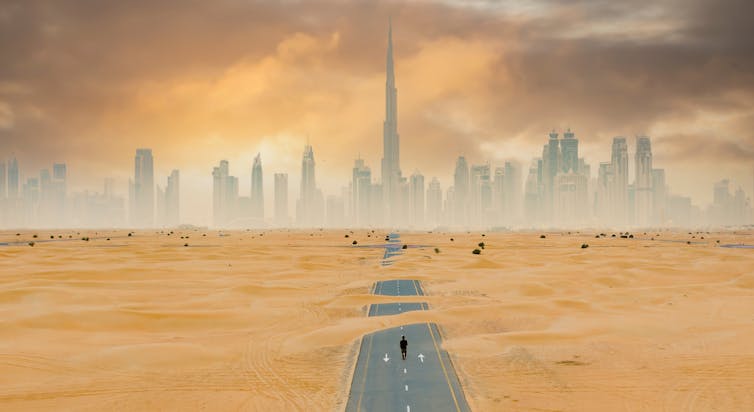
    Countries around the world have borne the human and economic toll. The United Arab Emirates itself is one of the latest countries to be hit by severe flooding, with parts of Dubai under water for the first time. This has led some, including the legendary climate scientist James Hansen, to speculate that climate scientists have underestimated the pace of change.

    The evidence itself presents a more balanced view. Climate change has indeed accelerated, but this uptick in pace was entirely predicted by climate models and is expected due to greenhouse emissions being at an all-time high.

    The potential for confusion as we approach 1.5°C of global warming makes it all the more crucial to track rising temperatures and climate change as they develop between the comprehensive Intergovernmental Panel on Climate Change assessments. The next assessment isn’t expected until around 2030.

    A broken record

    As the global stocktake has found, policies on cutting emissions remain a long way off what is needed to hold temperatures to well below 2°C – let alone 1.5°C. The recently published 2023 UN emissions gap report, which tracks our progress in limiting global warming, echoes the same concern. The report revealed that the world is on track for 2.9°C of global warming, and maybe considerably more, before the end of this century.

    If this sounds like a broken record – as emphasised by the report’s cover art – it is. The message that we need urgent action and stronger emissions cuts to avoid the worst climate impacts is far from new, but still somehow needs to hit home.
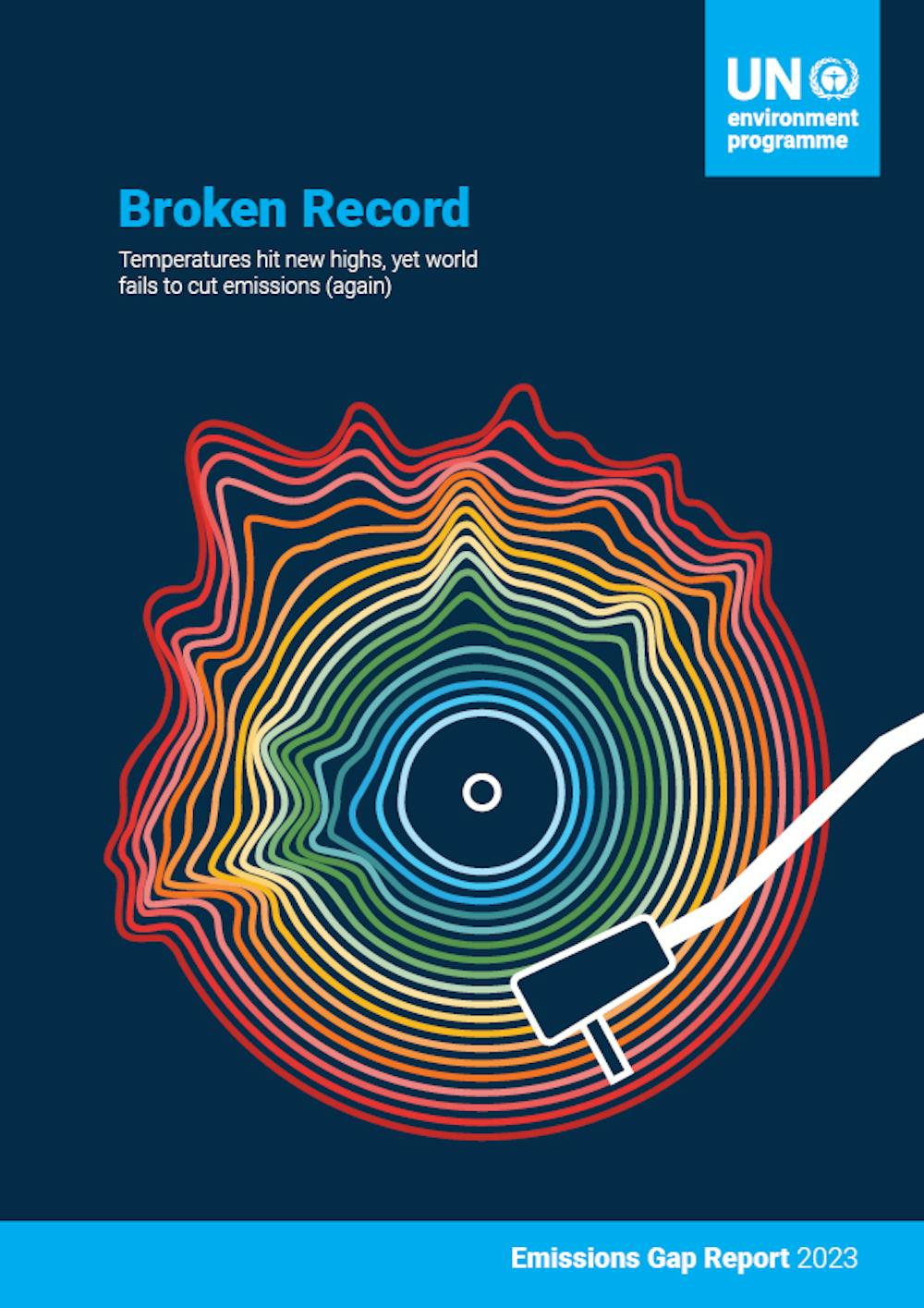
    The front cover of the UN's 2023 emissions gap report.
    The emission gap report’s cover art.
    UN Environment Programme / Emissions Gap Report 2023, CC BY-NC-SA

    The UN emissions gap report finds that 80% of climate change can be attributed to G20 countries, a group consisting of the world’s major economies. Within the bloc, western countries generally have ambitious emissions reduction targets, but are failing to deliver on them. By contrast, countries including China, India, Mexico and Indonesia are largely overachieving much weaker targets, but are failing on ambition.

    This divide is evident in national submissions to the global stocktake process. Western countries are urging the rest of the world to increase ambition, while other nations are urging western governments to deliver on their finance and other commitments, especially in providing sufficient funding to help developing countries adapt to the harmful effects of climate change.

    Inequalities in how emissions vary across a country’s population were highlighted in the UN Emissions Gap report and also in a dedicated report by Oxfam. The report revealed that the world’s wealthiest 1% account for 16% of global emissions. These wealthy people each emit more than 100 tonnes of CO₂ every year, 15 times the global average.

    Inequality drives vulnerability. The same report showed that floods kill seven times as many people in countries with higher levels of inequality than they do in more equal ones.

    A crucial period

    The gloomy picture places a clear focus on the need for transformative progress at COP28 and beyond. In a report that was released ahead of COP, the International Energy Agency places the challenge firmly at the door of the oil and gas sector.

    This report found that only 1% of clean energy investment comes from the industry, and that oil and gas use needs to decline by 75% or more to be compatible with net zero targets. The industry needs to undergo radical change.

    If oil and gas firms urgently remove emissions from their operations, especially around methane leaks, and invest in trebling global renewable energy capacity by 2030 instead of extraction, they can be a force for change.

    Discussions around the role of oil and gas will be a recurring theme both at COP28 and at future climate change summits. But concerted efforts to reduce methane emissions, build renewable energy infrastructure, roll out electric vehicles and halt deforestation globally could also see emissions fall significantly by 2030, consequently slowing down the rate of warming.
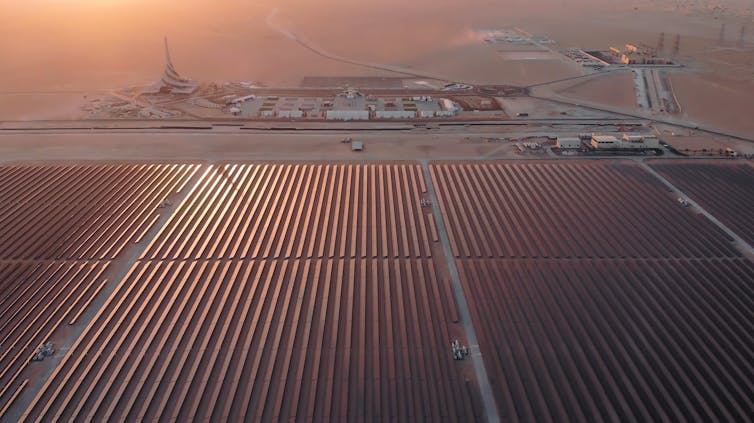
    Aerial view of a huge solar power plant in the UAE.
    Investment in global renewable energy capacity needs to be trebled by 2030.
    SkyMediaPro/Shutterstock

    Whether the discussions in Dubai lead to the transformative change we need remains to be seen. However, it is essential to continue offering independent, expert and respected advice to governments through organisations like the UK Climate Change Committee, which I currently chair, and the International Climate Councils Network. This effort is crucial in advocating for transformative change across all sectors and in providing consistent and ambitious national emission reduction policies that are based on evidence.

    As we approach 1.5°C of global warming, we need to work even harder. To quote from a recent article in US magazine Scientific American: “Declarations that 1.5°C is dead make no sense. Global temperature limits don’t die if we surpass them. People do.”


    Imagine weekly climate newsletter

    Don’t have time to read about climate change as much as you’d like?

    Get a weekly roundup in your inbox instead. Every Wednesday, The Conversation’s environment editor writes Imagine, a short email that goes a little deeper into just one climate issue. Join the 20,000+ readers who’ve subscribed so far.The Conversation


    Piers Forster, Professor of Physical Climate Change; Director of the Priestley International Centre for Climate, University of Leeds

    This article is republished from The Conversation under a Creative Commons license. Read the original article.
  • As disasters and heat intensify, can the world meet the urgency of the moment at the COP28 climate talks?

    Spread the love

    Shutterstock

    Brendan Mackey, Griffith University

    Eight years ago, the world agreed to an ambitious target in the Paris Agreement: hold warming to 1.5°C to limit further dangerous levels of climate change.

    Since then, greenhouse gas emissions have kept increasing – and climate disasters have become front page news, from mega-bushfires to unprecedented floods.

    In 2023, the world is at 1.2°C of warming over pre-industrial levels. Heatwaves of increasing intensity and duration are arriving around the world. We now have less than 10 years before we reach 1.5°C of warming.

    This week, the COP28 climate talks will begin against a backdrop of evermore strident warnings from climate scientists and world leaders. United Nations chief António Guterres has warned climate action is “dwarfed by the scale of the challenge” and that we have “opened the gates of hell”. In his latest climate letter, Pope Francis quotes bishops from Africa who dub the climate crisis a “tragic and striking example of structural sin”.

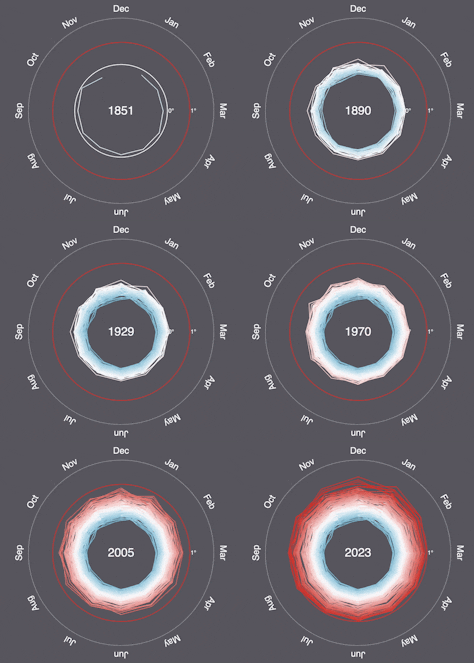
    Global monthly land and ocean anomalies from 1850, relative to the 1901-2000 average
    Global monthly land and ocean anomalies from 1850, relative to the 1901-2000 average.
    NOAA, CC BY-SA

    In the United Arab Emirates, the 198 nations in the UN’s climate framework will gather for COP28. Can we expect to see real progress – or half-measures?

    Watch for these three key issues facing negotiators.

    1. Taking stock of progress on climate action

    This year, a critical issue will be the global stocktake, the key mechanism designed to ratchet up climate ambition under the 2015 Paris Agreement. This is the first time each nation’s emission cut targets and benefits from climate adaptation or economic diversification plans have been assessed.

    The stocktake reveals what track we are on. Do the combined emission cut promises from all countries mean we can limit warming to 1.5°C? If not, what is the “emissions gap” – and how much more ambitious do nation’s emission reductions need to be?

    There’s been progress, but not nearly enough. If all national emissions pledges became a reality, global warming would peak between 2.1-2.8°C.

    That leaves an emissions gap of around 22.9 gigatonnes of carbon dioxide equivalent over the period to 2030.

    It is very good that the worst-case scenarios – unchecked warming and 4+ degrees of global heating by 2100 are now looking unlikely. But a 2°C world would bring unacceptable harm and irreversible damage.

    We’ll need much more ambitious targets and support to cut global greenhouse gas emissions 43% by 2030 and 60% by 2035 compared with 2019 levels if we are to reach net zero CO₂ emissions by 2050 globally. A major measure of COP28’s success will be whether the major emitting nations agree on more ambitious emission reduction actions.

    2. Who pays for climate loss and damage?

    For decades, nations have wrestled over the fraught question of who should pay for loss and damage resulting from climate change.

    Now we’re close to finalising arrangements for the new Loss and Damage Fund. This will be the second major issue for negotiators at COP28.

    So far, governments have drawn up a blueprint for the new fund. Expect to see debate over who will manage the fund – the World Bank? A UN agency? – and whether emerging economies such as China will provide funds. To date, there’s no target for how much money the fund will hold and disburse. The blueprint must be formally adopted at COP28 before it can begin operating.

    Why a new fund? Other climate finance commitments are aimed at cutting emissions or helping societies adapt to climate impacts. This fund deals specifically with the loss and damage from the unavoidable impacts of climate change, like rising sea levels, prolonged heatwaves, desertification, the acidification of the sea, extreme weather and crop failures.

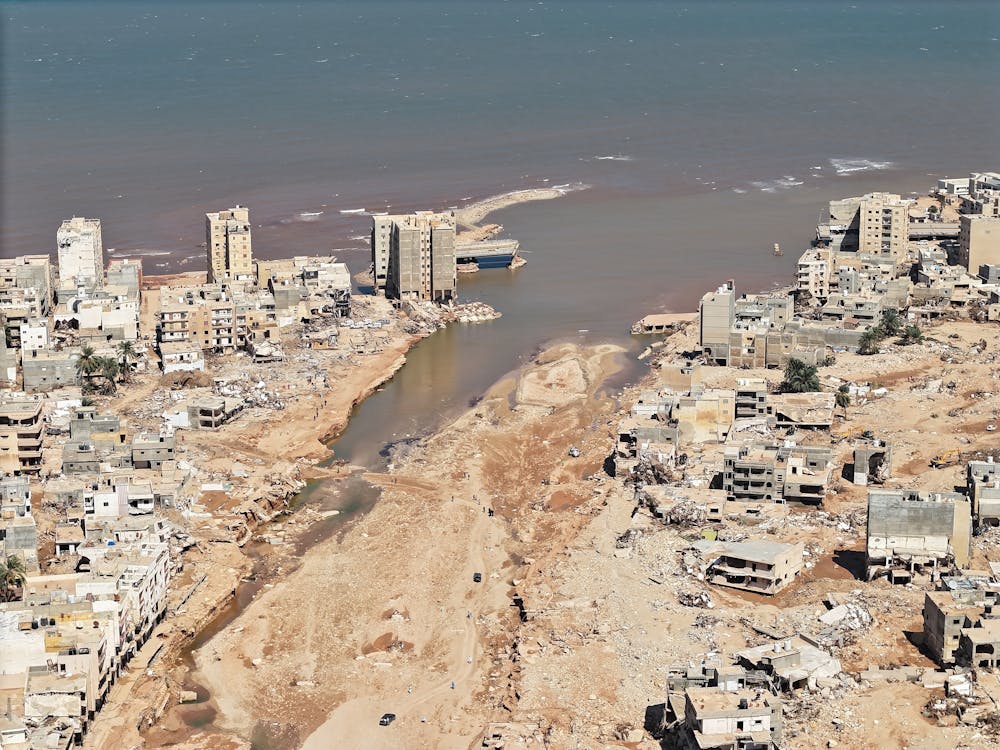
    Think of the damage from the unprecedented floods in Pakistan or Libya, for instance.

    libya flood, image of destroyed city with floodwater from air
    Libya’s devastating floods in September killed thousands.
    Shutterstock

    3. Where’s the climate finance?

    A major issue in climate negotiations is how countries can transform their economies so they are “climate ready”, with lower emissions and boosted resilience. For developing countries, this requires massive levels of investment and new technologies to let them “leapfrog” fossil fuel dependency.

    This is likely to be a critical sticking point. To date, climate finance has flowed too slowly. Under the Paris Agreement, rich countries promised to provide funds of A$150 billion a year every year. This has been slow in coming, though it is nudging closer, with $130 billion flowing in 2021.

    Unless we see significant progress on climate finance – including making the Loss and Damage Fund a reality and meeting the existing commitments – we’re unlikely to see progress on other key issues such as ratcheting up emission cuts under the stocktake mechanism, phasing out fossil fuels and work on preserving biodiversity.

    How do you build a 198-government consensus?

    One reason climate negotiations advance slowly is the need for consensus.

    All 198 governments must agree on each decision. This means any one nation or group of countries can block a proposal or force the wording to be changed in order for it to be approved.

    The votes of less wealthy countries – including small island nations and least developed countries – therefore carry as much weight as the G20 nations, who account for about 85% of global GDP. This has in the past worked to increase the level of climate action, including the focus on 1.5°C as the global warming target.

    The COP28 President is Sultan Ahmed al-Jaber, who has attracted controversy due to the fact he heads the Abu Dhabi National Oil Company. Expect to see considerable debate over wording. Will governments agree to the “phasing down of fossil fuels” or just the “phasing down of unabated fossil fuels”?

    It might sound like quibbling but it’s not – the second option, for instance, implies the heavy use of yet-to-be-proven carbon capture and storage technologies and offsets.

    Sultan al-Jaber has, to his credit, promoted some progressive agenda items including a focus on the conservation, restoration, and sustainable management of nature to help achieve the goals of the Paris Agreement.

    Here, there are welcome commonalities with the major global biodiversity pact struck late last year, the Global Biodiversity Framework, aimed at stemming the extinction of species and degradation of ecosystems. Healthy ecosystems store carbon and help people adapt to the climate change already here.

    As nations prepare for a fortnight of intense negotiation, the stakes are higher than they have ever been. Now the question is – can the world community seize the moment? The Conversation

    Brendan Mackey, Director, Griffith Climate Action Beacon, Griffith University

    This article is republished from The Conversation under a Creative Commons license. Read the original article.
  • Five Key Narratives to Watch For at COP28

    Spread the love

    Original article republished from DeSmog.

    Here’s DeSmog’s take on what to expect at this year’s climate summit, from Big Oil’s influence, to a new Big Ag agenda, to promotion of sketchy solutions that would keep oil and gas burning for decades to come.

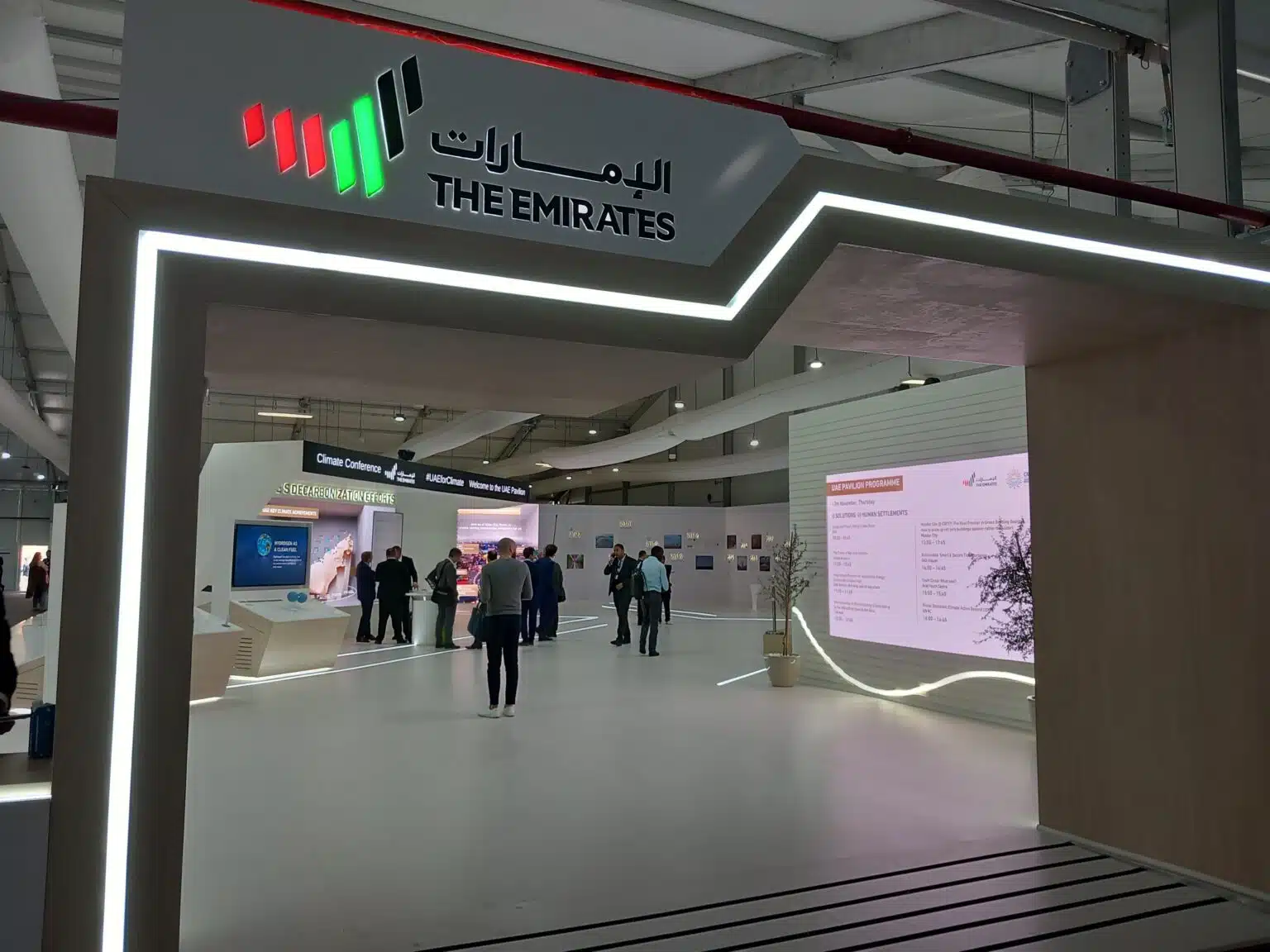
    The United Arab Emirates’ pavilion at COP27. Credit: Adam Barnett

    The annual United Nations climate negotiations are just a week away. Known as COP28 — since it’s the 28th year of the “conference of the parties” to the United Nations climate agreement — it will be hosted by the United Arab Emirates in Dubai from November 30 through December 12. 

    COP28 will be especially significant, as it will feature the first-ever “global stocktake,” of how much progress — or lack thereof — countries and other stakeholders have made toward meeting the goal established in 2015’s Paris Agreement of limiting warming to “well below” 2º degrees Celsius. 

    Negotiators at COP28 will also aim to make progress on key climate issues including loss and damage finance, a just energy transition, and closing the emissions gap.

    As the climate crisis accelerates, so, too, do efforts by the fossil fuel industry to derail steep reductions in carbon pollution by mid-century, in part by promoting false solutions. Below, we’ve rounded up recent coverage to help you make sense of the key denial and greenwashing narratives that will be front and center during the event.

    A Big Presence from Big Oil

    After all, this is the first annual climate conference with a Big Oil exec at the top: COP28 President Sultan Ahmed Al Jaber. 

    Al Jaber, the person leading these global climate negotiations, is the CEO of the Abu Dhabi National Oil Company (ADNOC). He has openly called for fossil fuel companies’ “help to drive the solutions,” and advocated overcoming “the hurdles to scale up and commercialize hydrogen and carbon capture technologies” — two so-far unproven climate solutions being heavily promoted by the fossil fuel industry. A big presence from Big Oil would be in line with trends at the past two summits: 636 fossil fuel lobbyists registered to attend last year’s conference in Sharm el-Sheikh, Egypt, while 503 registered for 2021’s gathering in Glasgow.

    Dive deeper with our Climate Disinformation Database profile of Sultan Ahmed Al Jaber, our coverage of his appointment as COP28 president, and our reporting last year on fossil fuel lobbyists at COP27.

    An Industry Push for CCS

    The fossil fuel industry will paint carbon capture and storage (CCS) as a climate solution during this year’s conference. Critics argue it is anything but. 

    Of the 32 commercial CCS facilities operating worldwide, 22 use most, or all, of their captured carbon dioxide (CO2) to pump more oil out of depleted wells. Burning that oil creates far more CO2 than what is captured. 

    DeSmog recently analyzed 12 large-scale CCS projects around the world and found countless missed carbon capture targets, as well as cost overruns, with taxpayers picking up the tab via billions of dollars in subsidies. Despite these failures, Big Oil publicly champions CCS and pushes projects over communities’ objections. Privately, the industry shares critics’ concerns.

    With the Biden administration channeling billions of dollars into investments and tax credits for CCS, the United States is likely to be a key CCS supporter at the conference.

    Dive deeper with our explainer on how CCS is used for “enhanced oil recovery,” our investigation into CCS’s biggest fails, hear what Big Oil is saying about CCS in private.

    Greenwashing by Big Agriculture

    This year’s climate conference is coming on the heels of the world’s hottest year, with devastating floods around the world affecting the global food supply, and more than 330 million people worldwide facing famine. So COP28 leaders have released a four-point “food and agriculture” agenda for the summit that calls for governments and industry to collaborate on finding new solutions to climate change–driven food insecurity. 

    However, some of the biggest companies in agribusiness, are using greenwashing to shift the debate away from meaningful action. DeSmog has debunked six concepts that the world’s largest food and farming companies will be co-opting in hopes of swaying debates and discussions in  Dubai — including “regenerative agriculture,” “nature-based solutions,” and “climate neutrality.” Stay tuned for DeSmog’s coverage from Dubai — our team will be keeping a close eye on Big Ag.

    Dive deeper with our coverage of how food systems are linked to fossil fuel consumption, investigations into the meat and dairy groups downplaying their industries’ climate impacts, and the ties between Big Ag and right-wing politicians in the EU.

    PR Spin That Promotes Denial and Delay

    Ever wonder how a top oil-producing nation like the United Arab Emirates earned hosting duties for this year’s climate summit, or why the chief of UAE’s state oil company ADNOC, Sultan Ahmed Al Jaber, has ascended to one of the top roles in global climate negotiations? Reporting by DeSmog revealed that from 2007 to 2009, Edelman, the largest public relations firm in the world, ran a campaign to bolster the UAE and Al Jaber’s green images. 

    Advertising and PR agencies like Edelman have long burnished the public’s perceptions of fossil fuel interests, and are still creating advertising campaigns for big polluters that distract from and delay climate action — such as sponsored-content for a pesticides giant or leading climate communications while catering to Big Oil. Still, within the ad industry, pressure is mounting to stop working with fossil fuel clients. Some companies and organizations are even dropping ad and PR firms for taking on new fossil fuel industry accounts. 

    Follow DeSmog’s coverage as we highlight the PR spin at COP28.

    Dive deeper with our Climate Disinformation Database profiles of PR and ad firms Edelman, Ogilvy, and FleishmanHillard, our investigation into Edelman’s campaign to burnish Al Jaber and the UAE’s green creds, and our coverage of the backlash to Havas winning Shell’s business.

    Anticipate Disinformation 

    Disinformation strategies and narratives will be on display throughout the summit — much as we reported during COP27, where fossil fuel-linked groups spent around $4 million on social media ads that spread false climate claims. 

    The disinformation may flow thicker and faster than ever during COP28. As DeSmog has reported, over the past five years climate greenwashing has “gone through the roof,” as major polluters turn to greenwashing to avoid accountability for the climate crisis. In part, this may be a response to the increasing number of climate lawsuits and legal complaints against misleading climate claims. Attorneys general across the U.S. have charged fossil fuel companies with defrauding consumers by lying about the impacts of burning coal, oil, and gas — while activists and campaigners in Europe seek to hold Big Oil accountable under regulations against misleading advertising.

    To understand disinformation tactics and where they come from, dig into DeSmog’s reporting about past greenwashing campaigns. We recently shone a light on the way the gas industry borrowed Big Tobacco’s tactics to promote doubt over the health effects of gas stoves. Or read our investigation into how corporate polluters and their political allies have been using the same rhetoric of delay for the past six decades when faced with the prospect of regulation.

    Dive deeper with our column on why greenwashing works and how to fight it, our Q&A with Climate Investigations Center researcher Rebecca John, and our investigation into Shell’s knowledge of climate change.

    Original article republished from DeSmog.

  • ‘Five-Alarm Fire’ as Global Temps Breach 2°C Threshold

    Spread the love
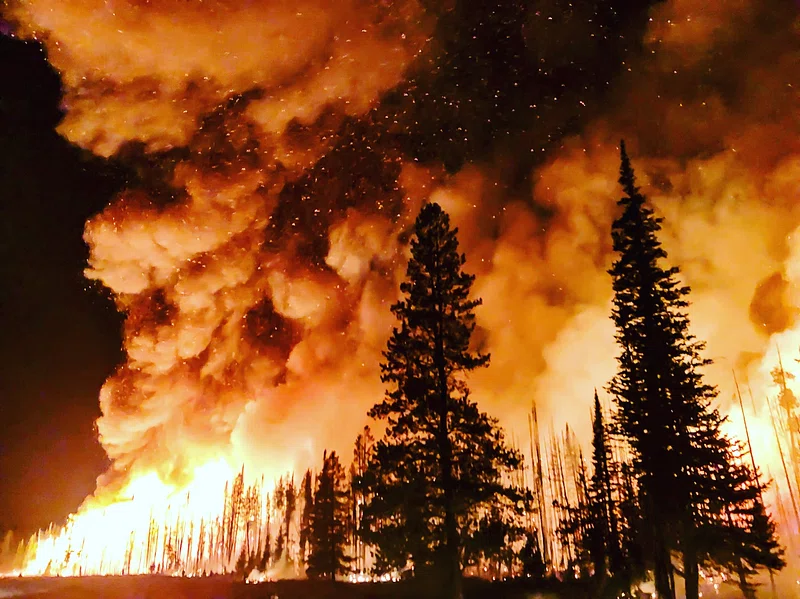
    Canadian wildfire 2023
    Canadian wildfire 2023

    Original article by OLIVIA ROSANE republished from Common Dreams under Creative Commons (CC BY-NC-ND 3.0). 

    While scientists were quick to point out that this was just a daily anomaly, not a permanent shift, it is a “canary in the coalmine” that “underscores the urgency of tackling greenhouse gas emissions.”

    Global temperatures surpassed 2°C above preindustrial levels for the first time Friday, according to preliminary data from the European Union’s Copernicus Climate Change Service.

    The European Centre for Medium-Range Weather Forecasts’ ERA5 data set showed global service air temperatures rising 2.07°C above the 1850-1900 average on Friday and 2.06°C above that average on Saturday, the service said.

    “This is a five-alarm fire for humanity,” the group Climate Defiance tweeted in response to the figures.

    In the 2015 Paris agreement, world leaders set out to keep warming to “well-below” 2°C above preindustrial levels. Allowing warming to breach that point increases several climate risks, according to the Intergovernmental Panel on Climate Change (IPCC): 2°C of warming compared with 1.5°C would raise sea levels by an additional 0.1 meters by 2100, destroy 99% of coral reefs instead of 70% to 90%, and expose several hundred million more people to poverty and climate-related hazards by 2050.

    Friday’s 2°C breach was first noted by Copernicus Climate Change Service deputy director Samantha Burgess on social media Sunday. She said the day was also 1.17°C above the 1991-2020 average, making it the warmest November 17 on record.

    Scientists were quick to point out that this doesn’t mean global heating has breached the 2°C threshold long-term.

    “The 1.5°C and 2°C warming thresholds have been defined in terms of the trend line,” University of Pennsylvania climate scientist Michael Mann tweeted. “Not individual years, let alone months, weeks, or days (the shorter the time period, the larger the random fluctuations). Those who imply otherwise are misleading you.”

    Richard Allan, professor of climate science at the University of Reading in the U.K., told CNN that it was “entirely expected that single days will surpass 2°C above preindustrial well before the actual 2°C target is breached over many years.”

    “We are blowing past warning signs with wild abandon. We are approaching the precipice and flooring the gas.”

    That said, the reading was a “canary in the coalmine” that “underscores the urgency of tackling greenhouse gas emissions,” Allan said.

    It also comes in a year of dropping canaries: The 12 months from November 2022 to October 2023 were the 12 hottest on record, according to a Climate Central analysis. 2023 saw the hottest Northern Hemisphere summer on record, the hottest month in July, and is likely to be the hottest year not just since record-keeping began, but in the last 125,000 years. And it’s not just numbers. The record-breaking temperatures fueled deadly heatwaves, wildfires, and floods around the world.

    “The indicators are flashing red,” Climate Defiance wrote. “The planet’s vital signs are clear. Humanity is on life support. With the El Niño cycle just beginning, this 2°C breach sadly represents not a climax but a small taste of what is to come.”

    “This is happening faster than expected,” the group continued. “We are blowing past warning signs with wild abandon. We are approaching the precipice and flooring the gas. This is madness. Utter madness.”

    The 2°C breach comes a little less than two weeks from the start of the next United Nations Climate Change Conference in the United Arab Emirates. A recent report from U.N. Climate Change found that national plans were still incompatible with limiting warming to 1.5°C and that world leaders must take “bold strides forward” at the conference “to get on track.” More than 650 scientists have signed a letter to President Joe Biden urging him to back a fossil-fuel phaseout at the talks.

    “It’s just one day (so far) above 2°C, but it highlights again that the world is approaching the limits set out by the Paris Agreement,” IPCC scientist Ed Hawkins tweeted. “We already have many of the solutions to rapidly reduce emissions and halt the rise in global temperatures. We just need to choose to use them.”

    Original article by OLIVIA ROSANE republished from Common Dreams under Creative Commons (CC BY-NC-ND 3.0). 

  • ‘This Is Absurd’: Major Banks Continue to Fund Climate Chaos in Global South

    Spread the love

    Original article by OLIVIA ROSANE republished from Common Dreams under Creative Commons (CC BY-NC-ND 3.0). 

    ActionAid found that since the Paris agreement, banks have funded the largest Big Ag companies doing business in the Global South to the tune of $370 billion and the fossil fuel sector to the tune of $3.2 trillion.

    Since the international community promised to limit global heating to 1.5°C above preindustrial levels, the world’s major banks have funneled 20 times more money to climate-polluting industries in the Global South than Global North governments have given those same countries to address the climate emergency.

    That’s just one of the findings of How the Finance Flows: The Banks Fueling the Climate Crisis, an ActionAid report released Monday.

    “This report names the biggest offenders in the banking world and calls on them to see that they are destroying the planet, while harming the present and future for their children,” Ugandan climate activist Vanessa Nakate wrote in the foreword. “It’s time to hold financial institutions to account, and demand that they end their funding of destructive activity.”

    https://twitter.com/vanessa_vash/status/1698683769710952796?ref_src=twsrc%5Etfw%7Ctwcamp%5Etweetembed%7Ctwterm%5E1698683769710952796%7Ctwgr%5E21ba57345d6aeb813133d6ed52f516caddebf1a7%7Ctwcon%5Es1_c10&ref_url=https%3A%2F%2Fwww.commondreams.org%2Fnews%2Fbanks-fund-climate-chaos

    The report focuses on the financing of two major climate-heating industries in the 134 nations of the Global South: fossil fuels and industrial agriculture.

    “People generally know that fossil fuels are the number one cause of greenhouse gas emissions. But what is less understood is that industrial agriculture is actually the second biggest cause of climate emissions,” Teresa Anderson, the global lead on climate justice at ActionAid International, said during a press briefing ahead of the report’s release.

    This is because of the sector’s link to deforestation, as well as the emissions required to produce industrial fertilizers, she added.

    In total, since the 2015 Paris agreement, banks have funded the largest Big Ag companies doing business in the Global South to the tune of $370 billion and the oil, gas, and coal sectors to the tune of $3.2 trillion.

    “Global banks often make public declarations that they are addressing climate change, but the scale of their continued support of fossil fuels and industrial agriculture is simply staggering.”

    The top three banks that invested the most in these sectors were the Industrial and Commercial Bank of China at $154.3 billion, China CITIC Bank at $134.7 billion, and the Bank of China at $125.9 billion. Citigroup came in fourth at $104.5 billion, followed by HSBC at $80.8 billion.

    While China features prominently in the report as the world’s largest economy, Anderson noted that much of what it produces ends up purchased by consumers in the Global North.

    The top three banks in the Americas funding big agriculture and fossil fuels were Citigroup, JPMorgan Chase, and Bank of America. While Citigroup was the leading regional funder of fossil fuels, JP Morgan Chase gave the most to industrial agriculture.

    In Europe, the top funders after HSBC were BNP Paribas, Société Générale, and Barclays, while Mitsubishi UFJ Financial rounded out the top Asian funders.

    Where is all that money going? When it comes to agriculture, the leading recipient was Bayer, which bought out Monsanto in 2018. Banks have given it $20.6 billion to do business in the Global South since 2016.

    Much of the fossil fuel money went to China’s State Power Investment Corporation and other Chinese companies; commodities trader Trafigura; and the usual fossil fuel suspects like ExxonMobil, BP, Shell, Saudi Aramco, and Petrobras.

    “This is absurd,” Anderson said of the findings. “Global banks often make public declarations that they are addressing climate change, but the scale of their continued support of fossil fuels and industrial agriculture is simply staggering.”

    ActionAid called the report the “flagship” document of its Fund Our Future campaign to redirect global money from climate crisis causes to climate solutions. The report calls on banks to make good on their climate promises and stop funding fossil fuels and deforestation, as well as to put additional safeguards in place to protect the rights of local communities, raise the ambition of their goals to reach “real zero” emissions, and improve transparency and other measures to make sure the projects they fund are behaving ethically.

    “This can be stopped,” Farah Kabir, the country director of ActionAid Bangladesh, said during the press briefing. “The banks cannot continue to fund fossil fuel industries and industrial agriculture.”

    In addition, the report offers recommendations to Global North governments to ensure a just transition to a sustainable future for everyone. These included setting stricter regulations for the banking, fossil fuel, and agricultural industries as well as ending public subsidies for these sectors and channeling the money to positive solutions like renewable energy and agroecology.

    However, the form that funds take when sent to the Global South makes a big difference, said ActionAid USA executive director Niranjali Amerasinghe. Instead of coming in the form of private loans, it needs to be in the form of public money.

    “Providing more loans to countries that are already in significant debt distress is not going to support their transition to a climate-compatible future,” she said.

    One reason that loans are counterproductive is that nations that accept them are forced to provide a return on investment, and currently the main industries that offer this are in fact fossil fuels and industrial agriculture.

    In addition to public funds, debt forgiveness or restructuring and new taxes could also help these countries with their green transition. If companies like Exxon or Bayer doing business in the Global South “were taxed in an equitable way, that would allow those governments to raise public revenue that can then be used to support climate action,” Amerasinghe said.

    In particular, the report emphasizes agroecology as a climate solution that should be funded in Global South countries.

    “Climate change is real in Zambia.”

    Mary Sakala, a frontline smallholder farmer from Zambia, spoke at the press briefing about how the climate crisis and current agricultural policy put a strain on her community.

    “Climate change is real in Zambia,” she said, adding that it had brought flooding, droughts, pests, and diseases that meant that “families currently, as I’m speaking right now, sleep on an empty stomach.”

    Sakala saw hope in agroecology, which would help with food security and resilience, and make farmers less dependent on the government and large companies.

    “We need policies to allow [us] to conserve our environment in a cultural way, to help us eat our food,” Sakala said. “We want… every seed to be utilized and saved and shared in solidarity.”

    And she said that the companies and governments of the Global North have a duty to help them get there.

    “Those people who are continuing to pollute and let the climate change increase, those people need to pay us, because we are suffering from the things that others are doing,” she said.

    Original article by OLIVIA ROSANE republished from Common Dreams under Creative Commons (CC BY-NC-ND 3.0).