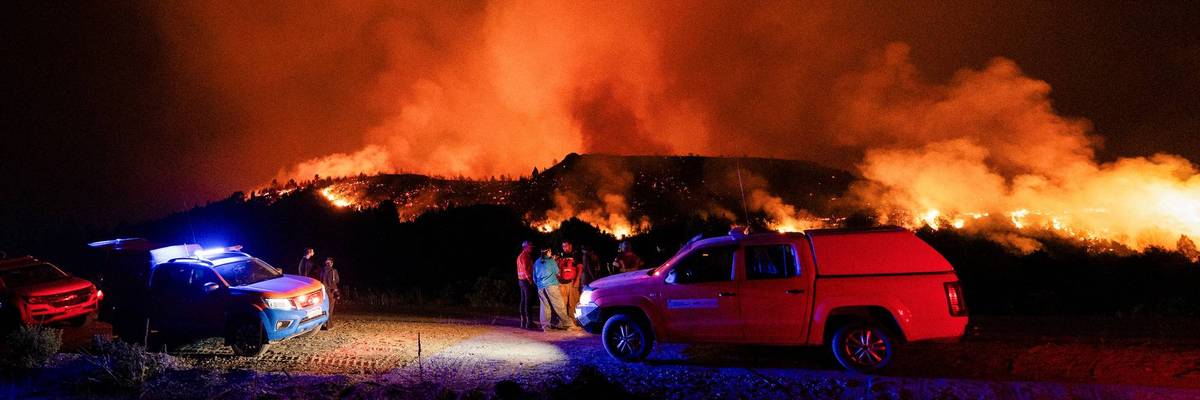
Volunteers and firefighters work to extinguish a forest fire burning in the Patagonian region of Chubut province, Argentina, on February 1, 2026. (Photo by Gonzalo Keogan/AFP via Getty Images)
“Existing climate mitigation approaches, including scaling up renewable energy and protecting carbon-storing ecosystems, are critical to limit the increase in global temperatures,” said the lead author.
In the lead-up to the Trump administration effectively destroying the US Environmental Protection Agency’s ability to combat the fossil fuel-driven climate emergency, an international team of scientists warned Wednesday that “Earth’s climate is now departing from the stable conditions that supported human civilization for millennia.”
Various institutions, including in the United States, have confirmed that 2025 was among the hottest years on record, and January continued that trend. Meanwhile, governments and polluting industries have repeatedly refused to impose policies that adequately heed experts’ calls for action.
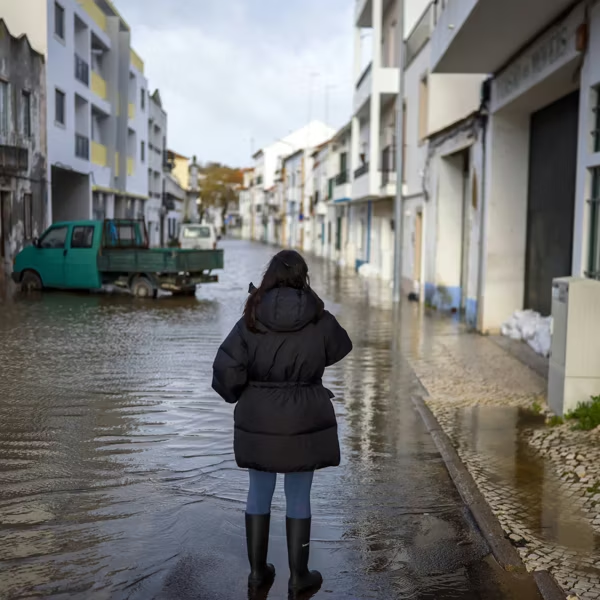
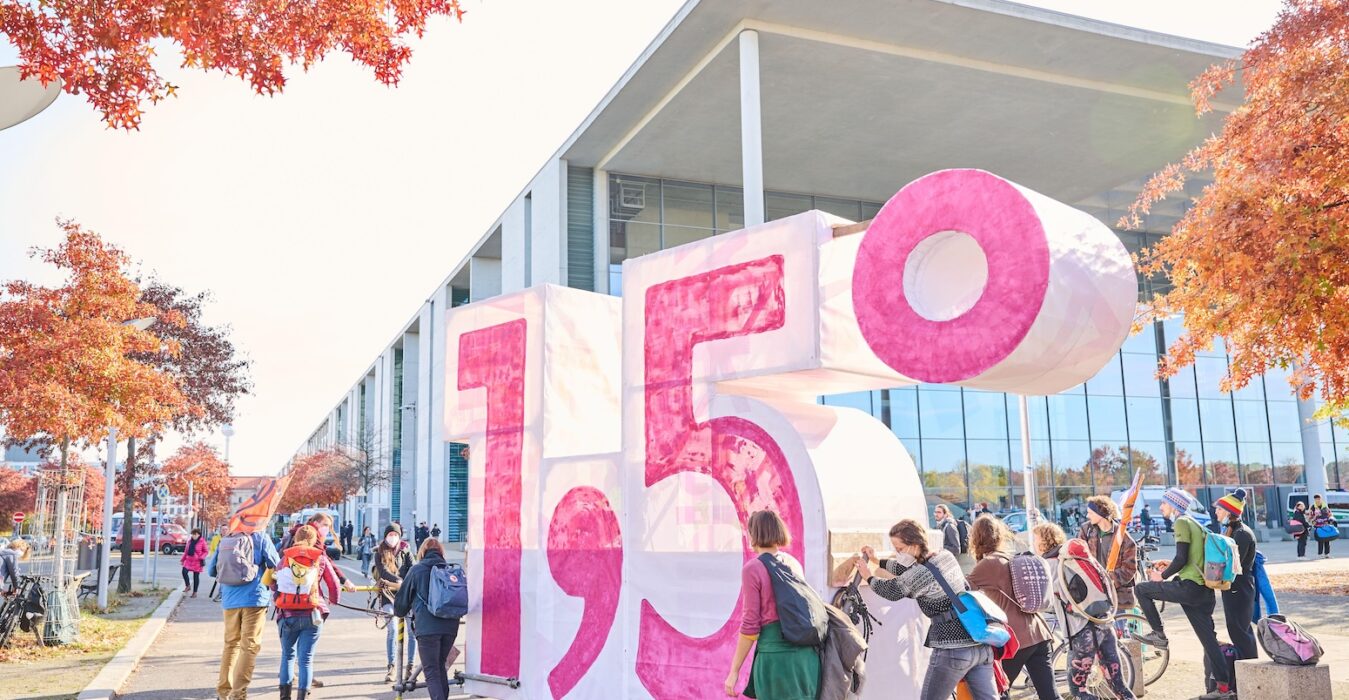
“In an effort to mitigate dangerous levels of warming, the Paris Agreement formalized the aim of limiting warming to 1.5°C above preindustrial levels, yet global temperatures have recently breached this limit for 12 consecutive months, coinciding with record-breaking heat, wildfires, floods, and other extremes,” the scientists noted Wednesday in the journal One Earth.
They wrote that “crossing critical temperature thresholds may trigger self-reinforcing feedbacks and tipping dynamics that amplify warming and destabilize distant Earth system components. Uncertain tipping thresholds make precaution essential, as crossing them could commit the planet to a hothouse trajectory with long-lasting and potentially irreversible consequences.”
A “hothouse trajectory,” they wrote, is “a pathway in which self-reinforcing feedbacks push the climate system past a point of no return, committing the planet to substantially higher long-term temperatures, even if emissions are later reduced.”
“Sixteen major tipping elements have been identified, 10 of which could add to global temperature if triggered,” the experts detailed. “Tipping may already be underway or could occur soon for the Greenland and West Antarctic ice sheets, boreal permafrost, mountain glaciers, and parts of the Amazon rainforest.”
As an example, they pointed to ice melt in the Arctic, explaining that the resulting water “could perturb the Atlantic Meridional Overturning Circulation (AMOC), which is already showing signs of weakening. A weakened AMOC could alter global atmospheric circulation, shifting tropical rain belts and drying parts of the Amazon. This cascade of events could trigger large-scale Amazon forest dieback, with major consequences for the region’s carbon storage and biodiversity.”
Concerned about the Point of No Return? Today we published a paper on the risk of a hothouse Earth trajectory. You can read it here: authors.elsevier.com/c/1mbW49C~Iu…
Ripple, distinguished professor of ecology at Oregon State University (OSU), said in a Wednesday statement that “after a million years of oscillating between ice ages separated by warmer periods, the Earth’s climate stabilized more than 11,000 years ago, enabling agriculture and complex societies.”
“We’re now moving away from that stability and could be entering a period of unprecedented climate change,” he stressed. “Existing climate mitigation approaches, including scaling up renewable energy and protecting carbon-storing ecosystems, are critical to limit the increase in global temperatures.”
Study co-author Christopher Wolf, a former OSU postdoctoral researcher who is now a scientist with Terrestrial Ecosystems Research Associates (TERA), noted that already, “climate model simulations suggest the recent 12-month breach indicates the long-term average temperature increase is at or near 1.5°C.”
“It’s likely that global temperatures are as warm as, or warmer than, at any point in the last 125,000 years and that climate change is advancing faster than many scientists predicted,” he said.
“Policymakers and the public remain largely unaware of the risks posed by what would effectively be a point-of-no-return transition,” Wolf added. “And while averting the hothouse trajectory won’t be easy, it’s much more achievable than trying to backtrack once we’re on it.”
🆕 Several Earth system components may be closer to destabilisation than previously thought. Crossing key temperature thresholds could trigger feedback loops, pushing the planet toward a “Hothouse Earth” trajectory. Study by @oregonstate.edu, @iiasa.ac.at & PIK: www.sciencedirect.com/science/arti…
The team’s warnings came in the wake of Big Oil-backed President Donald Trumpclaiming in a United Nations speech last year that climate change is “the greatest con job ever perpetrated on the world,” and ditching dozens of relevant organizations and treaties, including the Paris Agreement.
On Thursday, the Trump administration continued its war on the climate, revoking the “endangerment finding” that allowed the EPA to pass regulations fighting the global emergency—which was forcefully condemned by scientists and activists.
“In case there was any remaining doubt, the truth is very clear: Trump cares nothing for the health and well-being of our communities or our climate,” said Erin Doran, senior staff attorney at the advocacy group Food & Water Watch. “He is concerned only with making more money for the billionaire fossil fuel polluters that help to fund his dangerous political agenda.”
“The notion that the EPA shouldn’t regulate climate emissions is inconsistent with the law, the science, and the realities of the climate crisis,” Doran added. “EPA is charged with protecting human health and the environment, yet this rule does neither, benefiting only the fossil fuel industry at our expense. It’s absurd, and we’ll be fighting back.”
Power-mad orange gasbag Donald Trump says Burn, Baby, Burn.Nigel Farage urges you to ignore facts and reality and be a climate science denier like him and his Deputy Richard Tice. He says that Reform UK has received £Millions and £Millions from the fossil fuel industry to promote climate denial and destroy the planet.Orcas comment on killer apes destroying the planet by continuing to burn fossil fuels. [This was the first appearance of the Orcas.]
Jeff Bezos’s superyacht ‘Koru’ often travels accompanied by a smaller ‘support’ superyacht. Image by Conmat13 under the Creative Commons Attribution-Share Alike 4.0 International license via wikimedia.
In response to the UNEP Emissions Gap Report published 4th November 2025, Nafkote Dabi, Climate Policy Lead at Oxfam, said:
“Just days before global leaders arrive in Brazil for COP30, this report is a blaring siren calling for greater climate action.
“Since the Paris Agreement, the richest 1% have used up more than twice the carbon budget of the poorest half of humanity. This inequality is more than unjust—it’s deadly. The extreme emissions of the richest people and countries are burning through the little remaining the amount of CO2 that can be emitted while avoiding climate disaster. Meanwhile, the poorest communities suffer the most devastating impacts.
“Governments cannot close the emissions gap without slashing the carbon footprint of the super-rich and addressing extreme inequality. COP30 must be a turning point. Global leaders must cut the emissions of the richest, tax rich polluters and their profits, and deliver a just transition—one that creates decent green jobs, builds resilient economies, and puts people and planet before profit.”
Image of a private jet by Andrew Thomas from Shrewsbury, UK.
Oxfam’s recent report, “Climate Plunder: How a powerful few are locking the world into disaster”, presents new data which finds that a person from the richest 0.1% produces more carbon pollution in a day than the poorest 50% emit all year. If everyone emitted like the richest 0.1%, the carbon budget would be used up in less than 3 weeks.
The “UN Emissions Gap report: Off Target” finds that global warming projections over this century, based on full implementation of updated government climate pledges, are 2.3-2.5°C, while those based on current policies are 2.8°C.
Elon Musk urges you to be a Fascist like him, says that you can ignore facts and reality then.Donald Trump urges you to be a Climate Science denier like him. He says that he makes millions and millions for destroying the planet, Burn, Baby, Burn and Flood, Baby, Flood.Nigel Farage urges you to ignore facts and reality and be a climate science denier like him and his Deputy Richard Tice. He says that Reform UK has received £Millions and £Millions from the fossil fuel industry to promote climate denial and destroy the planet.
Ellie Chowns, Green Party MP for North Herefordshire. CC image Wikipedia.
Responding to a warning from the UN Secretary General that the world has failed to limit global heating to 1.5C and his call on global leaders to urgently change course at the forthcoming COP30 climate summit in Brazil, Green Party MP Ellie Chowns said:
“It is vital we pay heed to the warnings by the UN Secretary General on the risks posed to the world of breaking through the 1.5C limit, set by the Paris Agreement ten years ago.
“As the birthplace of the industrial revolution, and its legacy of high carbon emissions, the UK has a special responsibility to be a global leader in the shift towards a green economy – and leading by example at home.
“It’s welcome that the PM is attending COP 30 and Keir Starmer must use his voice to demand action that closes the global emissions gap. He must also stand firm against the reckless and dangerous attempts to undermine climate action by Reform UK and the Conservatives. True climate leadership also means resisting pressure from the fossil fuel lobby.
“COP30 is taking place against a backdrop of continued financial support from governments for the fossil fuel industry. This includes an estimated £17.5 billion every year here in the UK.
“The government must also refuse permission for the giant Rosebank oilfield, which would create more emissions than the combined annual CO2 emissions of all 28 low-income countries in the world – the very countries that are bearing the brunt of climate breakdown.”
Nigel Farage urges you to ignore facts and reality and be a climate science denier like him and his Deputy Richard Tice. He says that Reform UK has received £Millions and £Millions from the fossil fuel industry to promote climate denial and destroy the planet.UK Conservative Party leader Kemi ‘not a genocide’ Badenoch explains her reality that the Earth is flat, the Moon is made of cheese and that she was born from
Unicorn horn dustOrcas discuss Donald Trump and the killer apes’ concept of democracy. Front Orca warns that Trump is crashing his country’s economy and that everything he does he does for the fantastically wealthy.
Last week, around 180 scientists, researchers and legal experts gathered in Luxenburg, Austria to attend the first-ever international conference focused on the controversial topic of climate “overshoot”.
This hypothesised scenario would see global temperatures initially “overshoot” the Paris Agreement’s aspirational limit of 1.5C, before they are brought back down through techniques that would remove carbon dioxide from the atmosphere.
(For more on the key talking points, new research and discussions that emerged from the three-day conference, see Carbon Brief’s full write-up of the event.)
On the sidelines of the conference, Carbon Brief asked a range of delegates what they consider to be the key “unknowns” around overshoot.
Below are their responses, first as sample quotes, then, in full:
Dr James Fletcher: “Yes, there will be overshoot, but at what point will that overshoot peak? Are we peaking at 1.6C, 1.7C, 2.1C?”
Prof Shobha Maharaj: “There are lots of places in the world where adaptation plans have been made to a 1.5C ceiling. The fact is that these plans are going to need to be modified or probably redeveloped.”
Sir Prof Jim Skea: “There are huge knowledge gaps around overshoot and carbon dioxide removal.”
Prof Kristie Ebi: “If there is going to be a peak – and, of course, we don’t know what that peak is – then how do you start planning?”
Prof Lavanya Rajamani: “To me, a key governance unknown is the extent to which our current legal and regulatory architecture…will actually be responsive to the needs of an overshoot world.”
Prof Nebojsa Nakicenovic: “One of my major concerns has been for a long time…is whether, even after reaching net-zero, negative emissions can actually produce a temperature decline.”
Prof Debra Roberts: “For me, the big unknown is how all of these areas of increased impact and risk actually intersect with one another and what that means in the real world.”
Dr Oliver Geden: “[A key unknown] is whether countries are really willing to commit to net-negative trajectories.”
Dr Carl-Friedrich Schleussner: “This is a bigger concern that I have – that we are pushing the habitability in our societies on this planet above that limit and towards maybe existential limits.”
Dr Anna Pirani: “I think that tracking global mean surface temperature on an overshoot pathway will be an important unknown.”
Prof Richard Betts: “One of the key unknowns is are we going to continue to get the land carbon sink that the models produce.”
Prof Hannah Daly: “The biggest unknown is whether countries can translate these global [overshoot] pathways into sustained domestic action…that is politically and socially feasible.”
Dr Andrew King: “[W]e still have a lot of uncertainty around other elements in the climate system that relate more to what people actually live through.”
Dr James Fletcher Former minister for public service, sustainable development, energy, science and technology for Saint Lucia and negotiator at COP21 in Paris.
The key unknown is where we’re going to land. At what point will we peak [temperatures] before we start going down, and how long will we stay in that overshoot period? That is a scary thing. Yes, there will be overshoot, but at what point will that overshoot peak? Are we peaking at 1.6C, 1.7C, 2.1C? All of these are scary scenarios for small island developing states – anything above 1.5C is scary. Every fraction of a degree matters to us. Where we peak is very important and how long we stay in this overshoot period is equally important. That’s when you start getting into very serious, irreversible impacts and tipping points.
Prof Shobha Maharaj Adjunct professor at the University of Fiji and a coordinating lead author for Working Group II of the IPCC’s seventh assessment
First of all, there is an assumption that we’re going to go back down from overshoot. Back down is not a given. And secondly, we are still in the phase where we are talking about uncertainty. Climate scientists don’t like uncertainty. We are not acknowledging that uncertainty is the new normal… But because we’re so bogged down in terms of uncertainties, we are not moving towards [the issue of] what we do about it. We know it’s coming. We know the temperatures are going to be high. But there is little talk about the action.
The focus seems to be more on how we can understand this or how we can model this, but not what we do on the ground. Especially when it comes to adaptation planning – [and around] how does this modify whatever the plans are? There are lots of places in the world where adaptation plans have been made to a 1.5C ceiling. The fact is that these plans are going to need to be modified or probably redeveloped. And no one is talking about this, especially in the areas that are least resourced in the world – which sets up a big, big problem.
There are huge knowledge gaps around overshoot and carbon dioxide removal. As it’s very clear from the themes of this conference, we don’t altogether understand how the Earth would react in taking carbon dioxide out of the atmosphere. We don’t understand the nature of the irreversibilities and we don’t understand the effectiveness of CDR techniques, which might themselves be influenced by the level of global warming, plus all the equity and sustainability issues surrounding using CDR techniques.
There are all kinds of questions about adaptation and how to approach effective adaptation. At the moment, adaptation is primarily assuming a continual increase in global mean surface temperature. If there is going to be a peak – and of course, we don’t know what that peak is – then how do you start planning? Do you change your planning? There are places, for instance when thinking about hard infrastructure, [where overshoot] may result in a change in your plan – because as you come down the backside, maybe the need would be less. For example, when building a bridge taller. And when implementing early warning systems, how do you take into account that there will be a peak and ultimately a decline? There is almost no work in that. I would say that’s one of the critical unknowns.
I think there are several scientific unknowns, but I would like to focus on the governance unknowns with respect to overshoot. To me, a key governance unknown is the extent to which our current legal and regulatory architecture – across levels of governance, so domestic, regional and international – will actually be responsive to the needs of an overshoot world and the consequences of actually not having regulatory and governance architectures in place to address overshoot.
One of my major concerns has been for a long time – as it was clear that we are heading for an overshoot, as we are not reducing the emissions in time – is whether, even after reaching net-zero, negative emissions can actually produce a temperature decline…In other words, there might be asymmetry on the way down [in the global-temperature response to carbon removal] – it might not be symmetrical to the way up [as temperature rise in response to carbon emissions]. And this is really my major concern, that we are planning measures that are so uncertain that we don’t know whether they will reach the goal.
The last point I want to make is that I think that the scientific community should, under all conditions, make sure that the highest priority is on mitigation.
Well, I think coming from the policy and practitioner community, what I’m hearing a lot about are the potential impacts that come from the exceedance component of overshoot. What I’m not hearing a lot about is the responses to overshoot and their impacts – and how those impacts might interact with the impacts from temperature exceedance. So there’s quite a complex risk landscape emerging. It’s three dimensional in many ways, but we’re only talking about one dimension and, for policymakers, we need to understand that three dimensional element in order to understand what options remain on the table. For me, the big unknown is how all of these areas of increased impact and risk actually intersect with one another and what that means in the real world.
[A key unknown] is whether countries are really willing to commit to net-negative trajectories. We are assuming, in science, global pathways going net negative, with hardly any country saying they want to go there. So maybe it is just an academic thought experiment. So we don’t know yet if [overshoot] is even relevant. It is relevant in the sense that if we do, [the] 1.5C [target] stays on the table. But I think the next phase needs to be that countries – or the UNFCCC as a whole – needs to decide what they want to do.
I’m convinced that there’s an upper limit of overshoot that we can afford – and it might be not far outside the Paris range [1.5C-2C] – before human societies will be overwhelmed with the task of bringing temperatures back down again. This [societal limit] is lower than the geophysical limits or the CDR limit.
The impacts of climate change and the challenges that will come with it will undermine society’s abilities to cooperatively engage in what is required to achieve long-term temperature reversal. This is a bigger concern that I have – that we are pushing the habitability in our societies on this planet above that limit and towards maybe existential limits. We may not be able to walk back from it, even if we wanted to. That is a big unknown to me.
I’m convinced that there is an upper limit to how much overshoot we can afford, and it might be just about 2C or a bit above – it might not be much more than that. But we do not have good evidence for this. But I think these scenarios of going to 3C and then assuming we can go back down – I have doubts that future societies grappling with the impacts of climate change will be in the position to embark on such an endeavour.
I think that tracking global mean surface temperature on an overshoot pathway will be an important unknown – how to take account of natural variability in that context, to inform where we are on an overshoot pathway and how well we’re doing on it. I think, methodologically, that would prove to be a challenge. The fact that it occurs over many, many years – many decades – and, yet, we sort of think about it as a nice curve. We see these graphs that say “by the 2050s, we will be here and we’ll start declining and so on”. I think that what that actually translates to in the evolution of global surface temperatures is going to be very difficult to measure and track. Even how we report on that, internationally, in the UNFCCC [UN Framework Convention on Climate Change] context and what the WMO [World Meteorological Organization] does in terms of reporting an overshoot trajectory, that would be quite a challenge.
One of the key unknowns is are we going to continue to get the land carbon sink that the models produce. We have got model simulations of returning from an overshoot.
If you are lowering temperatures, you have got to reduce emissions. The amount you reduce emissions depends on how much carbon is taken up naturally by the system – by forests, oceans and so on. The models will do this; they give you an answer. But we don’t know whether they are doing the right thing. They have never been tested in this kind of situation.
In my field of expertise, one of the key [unknowns] is how these carbon sinks are going to behave in the future. That is why we are trying to get real-world data into the models – including through the Amazon FACE project – so we can really try and narrow the uncertainties in future carbon sinks. If the carbon sinks are weaker than the models think, it is going to be even harder to reduce emissions and we will need to remove even more by carbon capture and removal.
We know ever more about the profound – and often irreversible – damages that will be felt as we overshoot 1.5C. Yet we seem no closer to understanding what will unlock the urgent decarbonisation that remains our only way to avoid the worst impacts of climate change.
Global models can show, on paper, what returning temperatures to safer levels after overshoot might look like. The biggest unknown is whether countries can translate these global pathways into sustained domestic action – over decades and without precedent in history – that is politically and socially feasible.
I think, firstly, can we actually achieve net-negative emissions to bring temperatures down past a peak? It’s a completely different world and, unfortunately, it’s likely to be challenging and we’re setting ourselves up to need to do it more. So I think that’s a huge unknown.
But then, beyond that, I think also, whilst we’ve built some understanding of how global temperature would respond to net-zero or net-negative emissions, we still have a lot of uncertainty around other elements in the climate system that relate more to what people actually live through. In our warming world, we’ve seen that global warming relates to local warming being experienced by everyone at different amounts. But, in an overshoot climate, we would see quite diverse changes for different people, different areas of the world, experiencing very different changes in our local climates. And also definitely worsening of some climate hazards and possibly reversibility in others, so a very different risk landscape as well, emerging post net-zero – and I think we still don’t know very much about that as well.
Nigel Farage urges you to ignore facts and reality and be a climate science denier like him and his Deputy Richard Tice. He says that Reform UK has received £Millions and £Millions from the fossil fuel industry to promote climate denial and destroy the planet.Donald Trump urges you to be a Climate Science denier like him. He says that he makes millions and millions for destroying the planet, Burn, Baby, Burn and Flood, Baby, Flood.Elon Musk urges you to be a Fascist like him, says that you can ignore facts and reality then.
We are living in a world that is warming at the fastest rate since records began. Yet, governments have been slow to act.
The annual global climate change conference of the parties (COP30) is just months away. All of the 197 countries that belong to the United Nations were supposed to have submitted updated national climate plans to the UN by February this year. These plans outline how each country will cut its greenhouse gas emissions in line with the legally binding international Paris Agreement. This agreement commits all signatories to limiting human-caused global warming to no more than 1.5°C above pre-industrial levels.
Governments must also bring their newly updated national climate action plans to COP30 and show how they plan to adapt to the impacts that climate change will bring.
The nationally determined contributions are very important in setting out countries’ short- to medium-term commitments on climate change. They also provide a direction of travel that can inform broader policy decisions and investments. Aligning climate plans with development goals could lift 175 million people out of poverty.
But arguably only one of the submitted plans – the UK’s – is compatible with the Paris Agreement.
We are climate scientists, and one of us (Piers Forster) leads the global science team that publishes the annual Indicators of Global Climate Change report. This report gives an overview of the state of the climate system. It is based on calculations of the net emissions of greenhouse gases globally, how these are concentrating in the atmosphere, how temperatures are rising on the ground, and how much of this warming has been caused by humans.
The report also looks at how extreme temperatures and rainfall are intensifying, how much the sea levels are rising, and how much carbon dioxide can still be emitted before the planet’s temperature exceeds 1.5°C more than it was in pre-industrial times. This is important because staying within 1.5°C is needed to avoid the worst impacts of climate change.
Our report shows that human-caused global warming reached 1.36°C in 2024. This boosted average global temperatures (a combination of human-induced warming and natural variability in the climate system) to 1.52°C. In other words, the world has already reached the level where it has warmed so much that it cannot avoid significant impacts from climate change. There is no doubt we are in dangerous waters.
Our dangerously hot planet
Although last year’s global temperatures were very high, they were also alarmingly unexceptional. The data speaks for itself. Continued record high levels of greenhouse gas emissions have led to rising atmospheric concentrations of carbon dioxide, methane and nitrous oxide.
The result is rising temperatures that are rapidly eating into the remaining carbon budget (the amount of greenhouse gases that can be emitted within an agreed time). This will be exhausted in less than three years at current levels of emissions.
We need to face this head on: the window to stay within 1.5°C is essentially shut. Even if we can bring temperatures back down in future, it will be a long and difficult road.
At the same time, climate extremes are intensifying, bringing long-term risks and costs to the global economy but also, importantly, people. The African continent is now facing its deadliest climate crisis in over a decade.
It would be impossible to imagine economies operating without fast access to trusted data. When share prices plummet or growth stalls, politicians and business leaders act decisively. None would tolerate outdated intelligence on sales or the stock market.
But when it comes to climate, the speed of climate change often outpaces the data available. This means fast decisions can’t be made. If we treated climate data as we do financial reports, panic would ensue after each dire update. But while governments routinely pivot when faced with an economic downturn, they have been far slower to respond to what key climate indicators – the Earth’s vital signs – are telling us.
What needs to happen next
As more countries develop their climate plans, it’s time for leaders across the globe to face the hard truths of climate science.
Governments need to have fast access to trusted climate data so that they can develop up-to-date national climate plans. The national climate plans need to take a global perspective too. This is really important for fairness and equity. For example, developed countries must acknowledge that they’ve emitted more greenhouse gases and take the lead in presenting ambitious mitigation efforts and in providing finance for other countries to decarbonise and adapt.
In Africa, the UN is hosting UNFCCC Climate Week in Addis Ababa in September. As well as making plans for COP30, there will be sessions on accessing climate finance and ensuring that the transition to zero human-caused carbon emissions by 2050 (net zero) is just and equitable. The summit also aims to support countries that are still working on their national climate plans.
If nationally determined contributions are implemented, the pace of climate change will slow down. This is vital not just for the countries – and economies – currently on the frontline against climate change, but for a functioning global society.
Just five of the G20 countries have submitted their 2035 plans: Canada, Brazil, Japan, the United States and the United Kingdom. But the G20 is responsible for around 80% of global emissions. This means that South Africa’s current G20 presidency can help to ensure that the world prioritises efforts to help developing countries finance their transition to a low-carbon economy.
Another worrying factor is that just 10 of the updated nationally determined contributions have reaffirmed or strengthened commitments to move away from fossil fuels. This means that national climate plans from the European Union, China and India will be key in testing their climate leadership and keeping the Paris Agreement’s 1.5°C temperature goals alive. Many other countries will be scrutinising what these countries commit to before they submit their own national climate plans.
The data in our report helps the world to understand not just what’s happened in recent years, but also what to expect further down the track.
Our hope is that these and other countries submit ambitious and credible plans well before COP30. If they do, this will finally close the gap between acknowledging the climate crisis and making decisive efforts to address it. Every tonne of greenhouse gas emissions matters.
Piers Forster, Professor of Physical Climate Change; Director of the Priestley International Centre for Climate, University of Leeds and Debbie Rosen, Research and Innovation Development Manager for the Priestley Centre for Climate Futures, University of Leeds
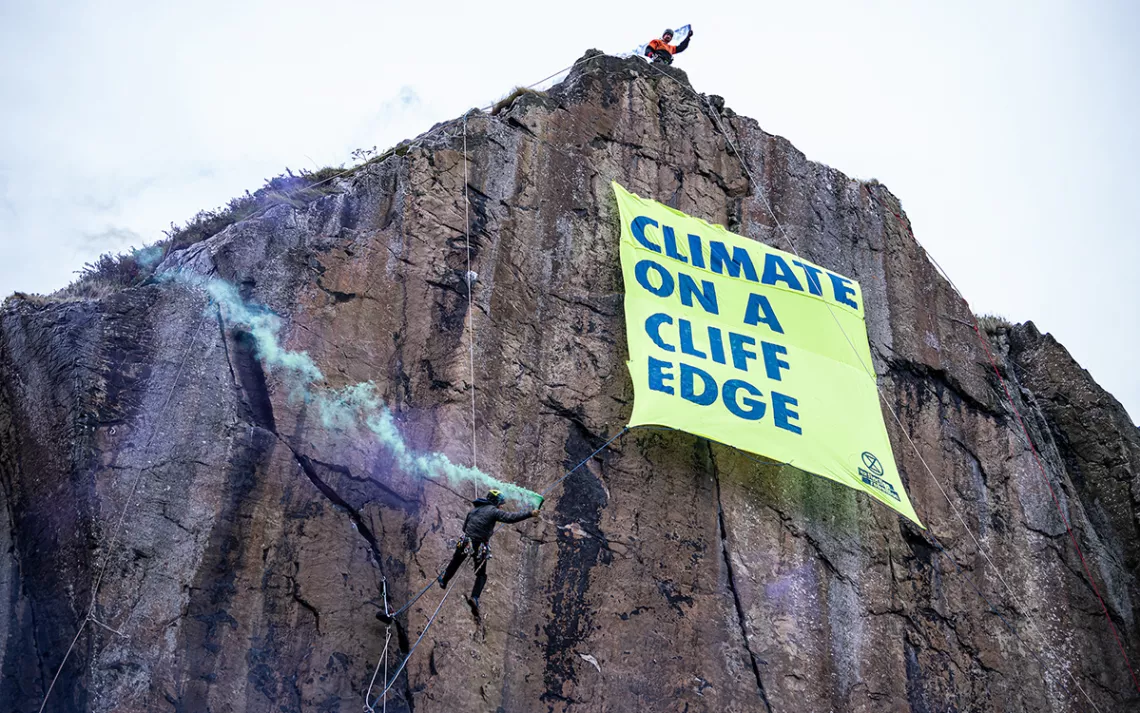
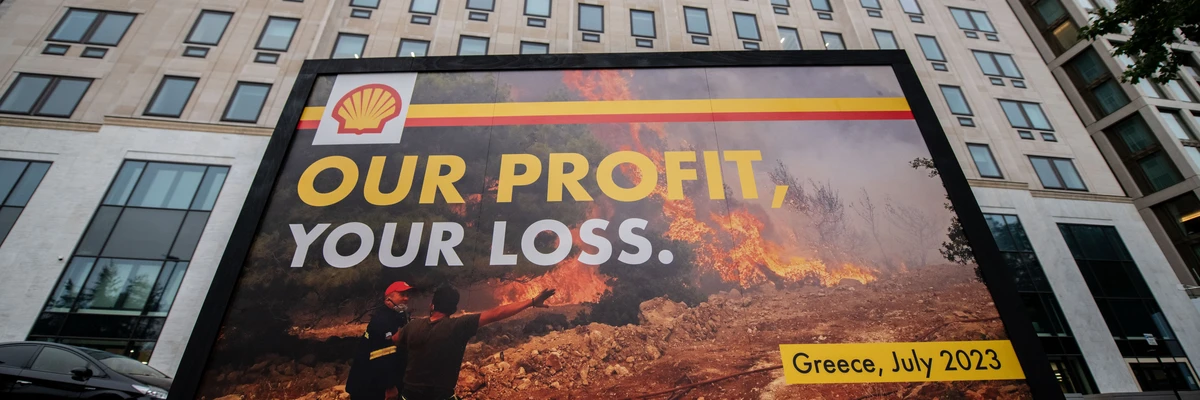
Experienced climbers scale a rock face near the historic Dumbarton castle in Glasgow, releasing a banner that reads “Climate on a Cliff Edge.” One activist, dressed as a globe, symbolically looms near the edge, while another plays the bagpipes on the shores below. | Photo courtesy of Extinction Rebellion and Mark RichardsGreenpeace activists display a billboard during a protest outside Shell headquarters on July 27, 2023 in London. (Photo: Handout/Chris J. Ratcliffe for Greenpeace via Getty Images)