10 reasons why US president-elect Donald Trump can’t derail global climate action

Spread the love
Ahn Young-joon/AP

Wesley Morgan, UNSW Sydney and Ben Newell, UNSW Sydney

If you care about saving Earth from catastrophe, you might be feeling a little down about the re-election of Donald Trump as United States president. Undeniably, his return to the White House is a real setback for climate action.

Trump is a climate change denier who has promised to increase fossil fuel production and withdraw the US from the Paris climate deal, among other worrying pledges.

But beyond Trump and his circle, there remains deep concern about climate change, especially among younger people. Support for climate policy remains high in the US and around the world. And studies based on data from 60,000 people in more than 60 countries suggest individuals’ concern about climate change is widely underestimated.

So now is a good time to remember that efforts to tackle the climate crisis – both in Australia and globally – are much bigger than one man. Here are ten reasons to remain hopeful.

Beyond Trump and his circle, there remains deep concern about climate change around the world. HAYOUNG JEON/EPA

1. The global clean energy transition can’t be halted

The global shift to clean energy is accelerating, and Trump can’t stop it. Investment in clean energy has overtaken fossil fuels, and will be nearly double investment in coal, oil and gas in 2024. This is a historic mega-trend and will continue with or without American leadership.

2. Clean energy momentum is likely to continue in the US

Much of the Biden-era spending on clean energy industries went to Republican states and Congressional districts. New factories for batteries and electric vehicles will still go ahead under the Trump administration. After all, entrepreneur Elon Musk – who is expected to join the Trump administration – makes electric vehicles.

Some of Trump’s financial backers are receiving subsidies for clean energy manufacturing and 18 Republican Congress members have gone on record to oppose cuts to clean energy tax credits.

The clean energy shift will continue in the US. Piictured: a solar panel array floats on a water storage pond in New Jersey. Seth Wenig/AP

3. The US still wants to beat China

There is bipartisan concern in Washington about the US losing a technological edge to Beijing. China currently dominates global production of electric vehicles, batteries, wind turbines and solar panels. So internal pressure in the US to counter China’s manufacturing might will continue.

4. The federal government is not everything in the US

When Trump was last in power, he withdrew the US from some climate commitments, such as the Paris Agreement. But many state and local governments powered ahead with climate policy, and that will happen this time around, too. For example, California – the world’s fifth largest economy – plans to eliminate its greenhouse gas footprint by 2045. Even Texas, a Republican heartland, is leading a shift toward wind and solar power.

5. The US climate movement will be more energised than ever

During Trump’s first presidency, the US climate movement developed policy proposals for a “Green New Deal”. Many of these proposals were later implemented by the Biden administration. Initial reactions to Trump’s re-election suggest we can expect similar policy advocacy this time around.

Efforts to tackle the climate crisis are much bigger than one man in the White House. Kevin Wolf/AP

6. Global climate cooperation is bigger than Trump

If Trump makes good on his promise to leave the Paris Agreement (again), he will only be leaving the room where the world’s future is being shaped. The US has walked away from global climate agreements before – for example, refusing to join the Kyoto Protocol in 2001. But other nations rallied for global action, and will do so again.

7. The rules-based global order will remain

When a nation walks away from rules that have been agreed after decades of negotiation, responsible countries must work together to bolster global cooperation. This applies to trade and security – and climate is no different.

As our Foreign Minister Penny Wong recently explained, Australia, as a middle power on the world stage, wants:

a world where disputes are resolved by engagement, negotiation and by reference to rules [and] norms […] We don’t want a world in which disputes are resolved by power alone.

8. Australian diplomacy matters

Australia is seeking to co-host the United Nations climate talks with Pacific island countries in 2026, and is emerging as the favourite. Hosting the conference, known as COP31, would be a chance for Australia to help broker a new era of international climate action, even if the US opts out under Trump.

Hosting the talks would also help cement Australia’s place in the Pacific and assist our Pacific neighbours to deal with the climate threat.

Co-hosting COP31 would help assist our Pacific neighbours to deal with the climate threat. Mick Tsikas/AAP

9. Australia’s clean energy shift is accelerating

About 40% of Australia’s main national electricity grid is powered by renewables and this is set to rise to 80% by 2030. Some states are surging ahead – for example, South Australia is aiming for 100% renewables by 2027.

Australians love clean energy at home, too. One in three households have rooftop solar installed, making us a world-leader in the technology’s uptake. Trump’s occupation of the Oval Office cannot stop this momentum.

10. Trump cannot change the science of climate change

The science is clear – burning coal, oil and gas fuels climate change and increases the risk of disasters that are harming communities right now. In Australia, we need look no further than the Black Summer bushfires in 2019-20 and unprecedented Lismore floods in 2022.

And the damage is happening across the globe. In October, twin hurricanes in the US – made stronger by the warming ocean – left a damage bill of more than US$100 billion. And hundreds of people died when a year’s worth of rain fell in one day in Spain last month.

The devastating floods in Spain remind us that climate change has arrived. ANA ESCOBAR/EPA

On gloomy days – like, say, the election of a climate denier to the White House – it might feel humanity won’t rise to Earth’s biggest existential challenge. But there are many reasons for hope. The vast majority of us support policies to tackle climate change, and in many cases, the momentum is virtually unstoppable.

Wesley Morgan, Research Associate, Institute for Climate Risk and Response, UNSW Sydney and Ben Newell, Professor of Cognitive Psychology and Director of the UNSW Institute for Climate Risk and Response, UNSW Sydney

This article is republished from The Conversation under a Creative Commons license. Read the original article.

Continue Reading10 reasons why US president-elect Donald Trump can’t derail global climate action

Spain to block Maersk ships bound to Israel after pressure from activists

Spread the love

Original article by Ana Vračar republished form peoples dispatch under a Creative Commons Attribution-ShareAlike 4.0 (CC BY-SA) license.

Source: Wikimedia Commons

Mask off Maersk campaign exposes shipping giant’s use of Algeciras Port for transporting military cargo to Israel despite Spain’s stated arms embargo

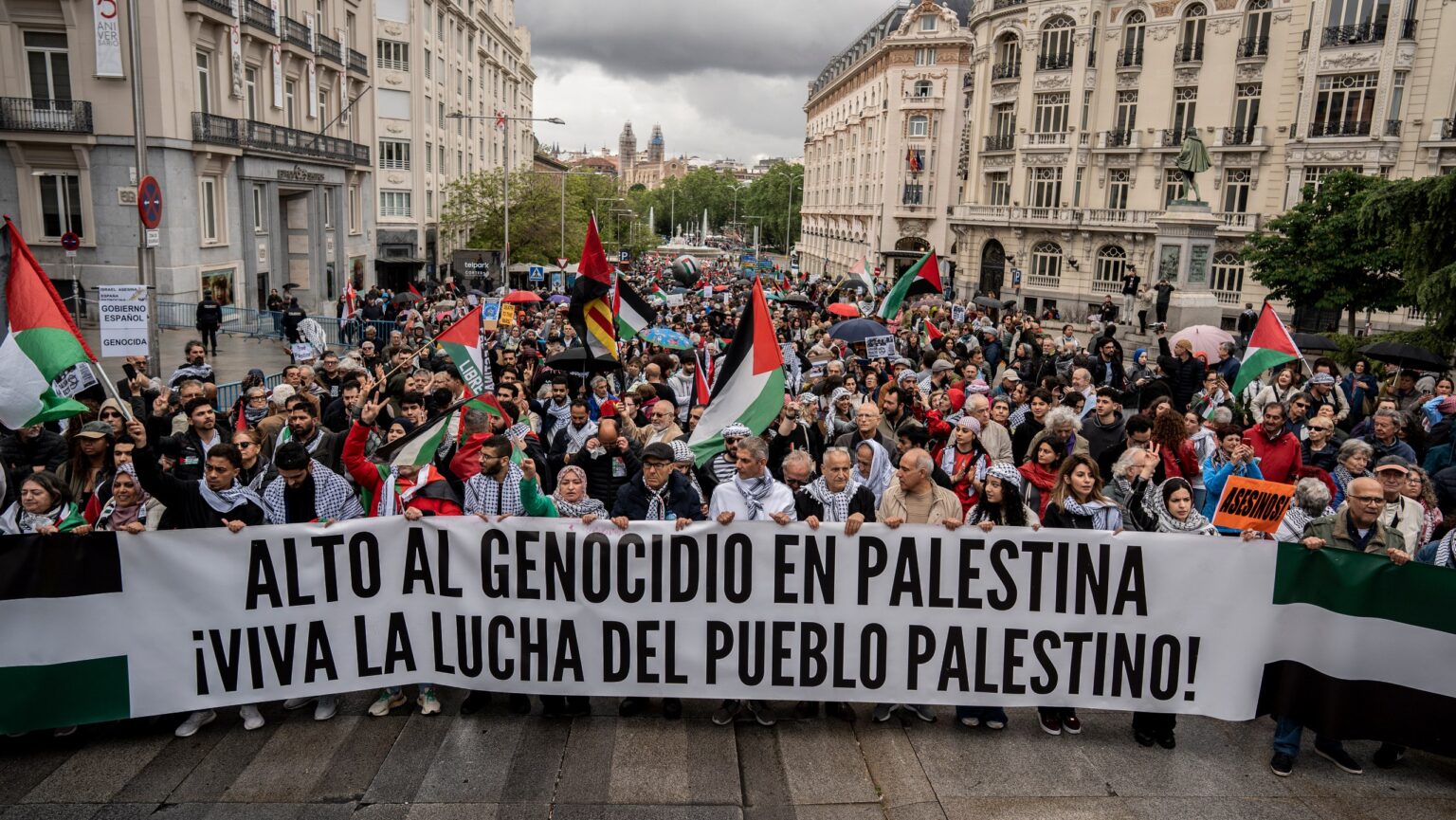
The Spanish government has announced it will block two ships—Denver and Seletar—operated by shipping giant Maersk and carrying military cargo bound for Israel, from docking at the port of Algeciras. This decision comes just days after the Mask off Maersk campaign released a report exposing the company’s regular use of the Spanish port for transferring cargo that enables the ongoing genocide against Palestinians, despite Spain’s stated arms embargo.

Researchers from the Palestinian Youth Movement (PYM) and Progressive International (PI), who contributed to the report, told Peoples Dispatch that it is unclear whether Pedro Sánchez’s administration was genuinely unaware of the shipments or deliberately chose to look the other way. What is clear, however, is that since Sánchez announced the embargo in May, Maersk has succeeded in delivering thousands of tons of military cargo to Israel. It appears that Maersk typically sends one ship per week from New Jersey to Spain, carrying around 1,000 tons of military cargo destined for the Israeli military, the report states.

These shipments end up being used in Gaza, facilitating the killing, torture, and kidnapping of Palestinians. In recent months, Maersk has transported aircraft parts, armored vehicles, and projectile bodies—much of which has been essentially subsidized by US tax dollars. The shipments also included nearly 300 tons of goods labeled as “diplomatic cargo,” a classification that, according to PYM and PI researchers, is undoubtedly being used to obscure the true nature of the containers. This is one of several strategies used to evade oversight over shipments bound for Israel; others include submitting blank designations and relying on freight forwarders to mask the trace of what is being transported.

These entities, including Interglobal Forwarding Services (IFS) used by Israel, can get very creative in how they describe cargo. The Mask off Maersk report documents such practices and makes it clear that shipments bound for Israel should undergo regular oversight and inspection in order to stop ammunition and other military cargo being transported there. Between 2011 and 2014, for example, IFS managed to transport over 16,000 tons of “diplomatic” cargo on Maersk ships, according to the report. This designation appears to establish a stable supply chain of goods whose true nature remains concealed from customs authorities and the public, PYM and PI warn.

Read more: Mask off Maersk targets the suppliers of Israel’s genocide in Gaza

Maersk is fully aware of these operations, as well as of the nature of the cargo its ships transport, and could halt them immediately if it chose to, the report’s authors told Peoples Dispatch. However, it continues to enable this flow of deadly cargo, fueling the genocide. As a result, responsibility to block these shipments now lies with the governments of the countries whose ports are used in the transfers. Researchers noted that Morocco, Egypt, Italy, and Turkey must all be held to the same scrutiny as Spanish authorities. For instance, after being denied access to Spanish ports, the Maersk Denver sought permission to dock in Tangier, Morocco, sparking a BDS call urging local activists to mobilize and prevent this. Reports that Mediterranean ports might allow these ships to dock are deeply troubling and, moreover, stand in violation of several UN resolutions and recommendations.

The researchers emphasize that pressure must continue on the Sánchez administration until it commits to inspect every Maersk vessel originating from the US and carrying cargo to Israel, given the practices highlighted in the report. “These vessels must be blocked from docking—nothing more and nothing less,” stated PYM and PI activists.

Without grassroots pressure, governments are likely to ignore public opposition and continue allowing military cargo to flow to Israel through their logistical hubs. What’s needed now, according to the researchers, is a stronger mobilization of trade unions and workers’ actions against these shipments. For example, in October, dockworkers at Athens’ Piraeus port successfully blocked a shipment of ammunition destined for Israel.

Though such direct action triggers government repression, PYM and PI researchers argue that it remains one of the few effective ways to disrupt and halt Israel’s arms supply chain. The two Maersk ships Spain decided to block are not the only ones expected to bring more weapons to Israel—but the full list can be stopped through strong workplace mobilizations. Advocacy alone will not be enough to get the governments to act against the genocide in Palestine; only a people-led strategy, with trade unions playing a central role, can accomplish this goal.

Original article by Ana Vračar republished form peoples dispatch under a Creative Commons Attribution-ShareAlike 4.0 (CC BY-SA) license.

Continue ReadingSpain to block Maersk ships bound to Israel after pressure from activists

‘This Is Climate Change’: Devastating Flooding Kills More Than 70 in Spain

Spread the love

Original article by Olivia Rosane republished from Common Dreams under Creative Commons (CC BY-NC-ND 3.0).

A view of the damaged area after a deluge brought up to 200 liters of rain per square meter (50 gallons per square yard) in hours in towns across the region of Valencia, Spain on October 30, 2024. (Photo: Alex Juarez/Anadolu via Getty Images)

“These disasters are only getting worse, and stopping the industries and systems driving climate collapse is the only rational response,” one climate group said.

Spain’s deadliest flooding in 30 years killed at least 72 people as torrential rain slammed the eastern region of Valencia on Tuesday, with some towns recording a year’s worth of rain in a single day.

The flooding sent churning muddy water down narrow streets, tossing cars, downing trees, bulldozing bridges and buildings, and trapping people in rising flood waters.

“The neighborhood is destroyed, all the cars are on top of each other, it’s literally smashed up,” Christian Viena, who owns a bar in Valencia’s Barrio de la Torre, told The Associated Press. “Everything is a total wreck, everything is ready to be thrown away. The mud is almost 30 centimeters (11 inches) deep.”

https://x.com/MatthewCappucci/status/1851377469942562964?ref_src=twsrc%5Etfw%7Ctwcamp%5Etweetembed%7Ctwterm%5E1851377469942562964%7Ctwgr%5Ecee4dacd5fa098e03f39569643b409cc286a36a7%7Ctwcon%5Es1_c10&ref_url=https%3A%2F%2Fwww.commondreams.org%2Fnews%2Fclimate-deadly-flooding-spain

Sorry, this content could not be embedded.

X

As of Wednesday morning, officials reported 70 deaths in Valencia and two in the bordering region of Castilla La Mancha. However, the death toll could rise as search and rescue operations continue amid difficult conditions, such as power outages and blocked roadways. Many people remain missing with their fates uncertain.

This includes residents of Utiel in Valencia, whose mayor, Ricardo Gabaldón, told Spanish broadcaster RTVE that Tuesday was the “worst day of my life.”

“We were trapped like rats,” Gabaldón said. “Cars and trash containers were flowing down the streets. The water was rising to 3 meters (9.8 feet).”

One person who was rescued was Denis Hlavaty, who spent the night perched on the edge of the roof of a gas station where he works.

“It’s a river that came through,” Hlavaty told Reuters, adding, “The doors were torn away and I spent the night there, surrounded by water that was 2 metres (6.5-feet) deep.”

“The fossil fuel industry increases the climate emergency, destroys the balance of critical ecosystems, and puts people’s lives in danger.”

The storm also canceled high-speed rail travel between Valencia and Madrid and Barcelona, and derailed one high-speed train near Malaga, though no one was injured.

While the rains had tapered off in Valencia by Wednesday morning, the rest of the country is not out of danger, as the storm is projected to move northeast.

“We mustn’t let our guard down because the weather front is still wreaking havoc and we can’t say that this devastating episode is over,” Spanish Prime Minister Pedro Sánchez told the nation on television Wednesday.

Even if the death toll does not rise, Tuesday’s floods are already the deadliest in Spain since 1996, when a flood near the Pyrenees killed 87. They are also the deadliest in Europe since floods in 2021 that killed at least 185.

In the immediate term, Tuesday’s deluge was caused by a phenomenon called a gota fría, or “cold drop,” a storm formed as cold air moves over the warm Mediterranean. In Spain, these kinds of storms are also commonly referred to with the acronym DANA—for Depresión Aislada en Niveles Altos, or isolated high-level depression.

However, scientists observe that the climate crisis is making rainstorms like this one more extreme, as warmer air can hold more moisture to dump when conditions are right. For Europe specifically, the warming of the Mediterranean causes more water to evaporate from its surface, super-charging rainstorms.

“Events of this type, which used to occur many decades apart, are now becoming more frequent and their destructive capacity is greater,” Ernesto Rodriguez Camino, senior state meteorologist and a member of the Spanish Meteorological Association, told Reuters.

https://twitter.com/DaveThroup/status/1851315836239110151?ref_src=twsrc%5Etfw%7Ctwcamp%5Etweetembed%7Ctwterm%5E1851315836239110151%7Ctwgr%5Ecee4dacd5fa098e03f39569643b409cc286a36a7%7Ctwcon%5Es1_c10&ref_url=https%3A%2F%2Fwww.commondreams.org%2Fnews%2Fclimate-deadly-flooding-spain

Sorry, this content could not be embedded.

X

The Spanish flooding comes a little more than a month after record rainfall swamped Central Europe and Eastern Europe, in an event that scientists concluded was made approximately twice as likely and 7% more severe by the climate crisis fueled primarily by the burning of fossil fuels.

“When we talk about climate change and climate emergency, it’s often perceived as an abstract concept far from our daily reality,” Eva Saldaña, the executive director of Greenpeace Spain, said in a statement. “Unfortunately, this is climate change: the intensification of extreme weather phenomenons like what happened tonight, with the level of destruction greater each time. Ignoring it causes deaths that we cannot allow.”

In a post on social media, Greenpeace Spain said that fossil fuel companies including the Spanish Repsol should pay for the damages.

“DANAS are more intense every time due to climate change,” the group wrote. “The fossil fuel industry increases the climate emergency, destroys the balance of critical ecosystems, and puts people’s lives in danger.”

Extinction Rebellion Global agreed. “These disasters are only getting worse, and stopping the industries and systems driving climate collapse is the only rational response,” the group wrote on social media.

The U.S.-based Climate Defiance, meanwhile, shared images of flood-ravaged streets with dismissals often leveled at climate activists.

https://x.com/ClimateDefiance/status/1851390346145788144?ref_src=twsrc%5Etfw%7Ctwcamp%5Etweetembed%7Ctwterm%5E1851390346145788144%7Ctwgr%5Ecee4dacd5fa098e03f39569643b409cc286a36a7%7Ctwcon%5Es1_c10&ref_url=https%3A%2F%2Fwww.commondreams.org%2Fnews%2Fclimate-deadly-flooding-spain

Sorry, this content could not be embedded.

X

https://twitter.com/ClimateDefiance/status/1851605825346764852?ref_src=twsrc%5Etfw%7Ctwcamp%5Etweetembed%7Ctwterm%5E1851605825346764852%7Ctwgr%5Ecee4dacd5fa098e03f39569643b409cc286a36a7%7Ctwcon%5Es1_c10&ref_url=https%3A%2F%2Fwww.commondreams.org%2Fnews%2Fclimate-deadly-flooding-spain

Sorry, this content could not be embedded.
X

Yellow Dot Studios, Don’t Look Up director Adam McKay’s climate-focused media studio, also shared an image of cars dropped in piles in the street by the flood waters to call out the double-standard in how direct-action climate protests and the corporate crimes of the fossil fuel industry are punished.

https://twitter.com/weareyellowdot/status/1851637056126308480?ref_src=twsrc%5Etfw%7Ctwcamp%5Etweetembed%7Ctwterm%5E1851637056126308480%7Ctwgr%5Ecee4dacd5fa098e03f39569643b409cc286a36a7%7Ctwcon%5Es1_c10&ref_url=https%3A%2F%2Fwww.commondreams.org%2Fnews%2Fclimate-deadly-flooding-spain

Sorry, this content could not be embedded.

X

Friends of the Earth Spain focused on the human impacts, arguing that urgent climate action meant “putting people’s lives, and not economic models, at the center.”

“Don’t prioritize sending people to work in extreme and dangerous conditions,” the group wrote. “It is a priority to take effective, ambitious, and urgent measures in response to the climate crisis we are living through.”

Original article by Olivia Rosane republished from Common Dreams under Creative Commons (CC BY-NC-ND 3.0).

dizzy: It’s almost as if Elon Musk’s X is censoring the climate crisis!

Continue Reading‘This Is Climate Change’: Devastating Flooding Kills More Than 70 in Spain

Calls Grow for ‘European Arms Embargo’ on Israel After Dutch F-35 Ruling

Spread the love

Original article by JULIA CONLEY republished from Common Dreams under Creative Commons (CC BY-NC-ND 3.0). 

A protester occupies the roof of Howmet Fastening Systems in Leicester, U.K., which makes components for Israeli F-35s, in October 2023.  (Photo: Palestine Action)

“Surely it’s time to stop all arm shipments to Israel,” said one British lawmaker, “and implement targeted sanctions against members of the Israeli leadership.”

While the White House has claimed U.S. President Joe Biden is growing increasingly “frustrated” with Israel’s bombardment of Gaza—largely made possible by U.S. military aid—calls are growing in Europe for governments to halt arms exports to stop their own contributions to the mass killing.

After a Dutch court ordered the Netherlands to stop exporting F-35 fighter jet parts to Israel on Monday, ruling that the country was running a “clear risk” of helping Israel to violate international human rights law, several British lawmakers intensified their demands that the U.K. also halt arms exports.

“Selling arms to Israel for its war on Gaza is incompatible with U.K. and international law,” said Diane Abbott, a Labour Party member in British Parliament. “[Prime Minister Rishi] Sunak should follow suit and ban weapon sales to Israel.”

Natalie Bennett, a member of the Green Party in the British House of Lords, spoke on Tuesday about six-year-old Hind Rajab, whose body was found last week in a car in which her family members had tried to flee Gaza City. The car was riddled with bullet holes, and an ambulance nearby, which paramedics had sent to rescue Hind, had been bombed.

“Is the government challenging the Israeli government about risks to hundreds of thousands of children in Rafah, now in the path of the Israeli offensive?” said Bennett. “Surely it’s time to stop all arm shipments to Israel… and implement targeted sanctions against members of the Israeli leadership.”

The U.K. provides about 15% of the components of Israel’s F-35 bombers—the Israeli Air Force’s “flagship asset,” according to the Royal United Services Institute—and has licensed more than $594 million in military exports to Israel since 2015.

While the U.S. Senate on Tuesday passed a $95 billion foreign aid bill, including $14.1 billion for Israel, some European governments are working to end their complicity in Israel’s mass killing of at least 28,576 Palestinians so far in attacks that have also wounded at least 68,291 and left at least 17,000 children orphaned.

On February 6, the Walloon regional government in Belgium suspended two licenses for the export gunpowder to Israel, citing the International Court of Justice’s (ICJ) interim ruling last month which found that Israel is “plausibly” committing a genocide in Gaza.

Italian Foreign Minister Antonio Tajani said in late January that the government had halted all arms sales to Israel in October, when Israel began its bombardment of Gaza in retaliation for a Hamas-led attack on October 7.

José Albares, Spain’s foreign minister, also said last month that the Spanish government had done the same, but El Diarioreported on Sunday that the country had actually exported $1.1 million in ammunition to Israel in November.

“The suspension of arms transfers to Israel must be comprehensive and permanent, and not just temporary,” said Alberto Estévez, a spokesperson on weapons issues at Amnesty International Spain. “The Spanish government has wanted to be an example in this crisis in the face of other much more complicit governments, but it must be more forceful to promote a European arms embargo on Israel and Hamas and other Palestinian armed groups, in addition to pressuring the United States to stop the supply of arms to Israel and support the imposition of a global embargo on the U.N. Security Council.”

On Wednesday, Spanish Prime Minister Pedro Sánchez joined Irish Prime Minister Leo Varadkar in writing to European Commission President Ursula von der Leyen and demanding an “urgent review” of Israel’s compliance with human rights obligations under its trade deal with the European Union.

“Against the background of the risk of an even greater humanitarian catastrophe posed by the imminent threat of Israeli military operations in Rafah, and given what has occurred, and continues to occur in Gaza since October 2023, including widespread concern about possible breaches of international humanitarian law and international human rights laws by Israel, we ask that the Commission undertake an urgent review of whether Israel is complying with its obligations, including under the E.U./Israel Association Agreement, which makes respect for human rights and democratic principles an essential element of the relationship,” wrote Sánchez and Varadkar.

The two leaders reiterated their call for an immediate humanitarian cease-fire, which was supported by a large majority of countries in a vote at the U.N. General Assembly in December, “including by 17 E.U. member states.”

Varadkar and Sánchez also pointed to the ICJ’s interim ruling in South Africa’s case last month, in which the country accused Israel of genocidal violence against Palestinians.

The orders of the ICJ, which demanded that Israel ensure that humanitarian aid can reach Gaza residents and that its military is not committing acts of genocide, “are binding,” the leaders reminded the European Union.

Original article by JULIA CONLEY republished from Common Dreams under Creative Commons (CC BY-NC-ND 3.0). 

Continue ReadingCalls Grow for ‘European Arms Embargo’ on Israel After Dutch F-35 Ruling

Europe’s olive oil supply running out after drought – and the odd hailstorm

Spread the love

https://www.theguardian.com/world/2023/sep/28/europes-local-olive-oil-supply-runs-almost-dry-after-summer-of-extreme-weather

Heatwaves around Mediterranean have damaged harvests and forced producers to import from South America

Olive grove
Olive oil groves by Birding In Spain, CC BY-SA 4.0 <https://creativecommons.org/licenses/by-sa/4.0>, via Wikimedia Commons

Europe has almost run out of local olive oil supplies and is set for more shortages, after extreme weather damaged harvests for a second year.

The world’s largest producer has said it is having to import supplies from South America to keep up with demand.

“Today it is almost physically impossible to buy olive oil. It is sold out,” Walter Zanre, the chief executive of the UK arm of Filippo Berio, said.

Olive trees have been cultivated around the Mediterranean for thousands of years, with Spain alone producing half of the world’s supply of olive oil, but wildfires and soaring summer temperatures mean the future of this ancient industry is looking increasingly uncertain.

Global production is expected to fall to 2.4m tonnes according to the International Olive Council, less than last year’s harvest and well short of global demand of about 3m tonnes, after drought and heatwaves of more than 40 degrees hit production in Spain.

Extreme weather in other important growing regions including Greece, Italy and Portugal as well as Turkey and Morocco has added to the crisis.

https://www.theguardian.com/world/2023/sep/28/europes-local-olive-oil-supply-runs-almost-dry-after-summer-of-extreme-weather

Continue ReadingEurope’s olive oil supply running out after drought – and the odd hailstorm