Members of This Is Rigged covered the Sainsbury’s branch in Glasgow’s Buchanan Street with red paintPhoto: This is Rigged / Twitter
CLIMATE and social justice activists in Scotland have highlighted their opposition to food poverty by staging a series of stunts.
Members of This Is Rigged covered the Sainsbury’s branch in Glasgow’s Buchanan Street with red paint today as they demanded an end to “profiteering” by supermarkets.
The day before, the group entered Edinburgh Castle and smashed the glass case housing the Stone of Destiny, which had recently been returned to Scotland following the coronation of Charles Windsor.
Near the end of a year of high-profile interventions pressing for decisive action on climate change and a fair net-zero transition for workers, the group’s latest stunts are focused on the cost-of-greed crisis, which they argue is indivisible from the climate crisis.
The group warned that it would escalate actions in support of its demands that the Scottish government provide “food hubs” in every community and that supermarkets reverse their 24 per cent increase in baby food prices over the last two years.
‘Climate change is the idiot socialist get-out-of-jail-free card,’ Peterson recently tweeted. Image: Gage Skidmore, Flickr, CC.
Fringe climate crisis deniers who claim that the earth is “cooling” and greenhouse emissions are good for “biological productivity” are getting exposed to millions more people than they normally would on YouTube thanks to conservative influencer Jordan Peterson.
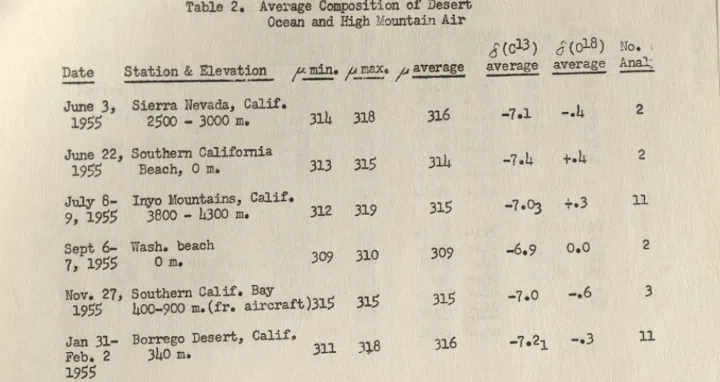
That’s according to viewership data newly reviewed by DeSmog, which reveals a massive visibility boost for public figures who’ve been active in the climate denial movement for years but whose ideas — such as the claim that plants are growing much better due to increased carbon dioxide in the atmosphere — are now rarely taken seriously by most legacy media outlets.
They include climate crisis deniers like Judith Curry, Steven Koonin, Richard Lindzen, Alex Epstein and Bjorn Lomborg. Despite having either a modest YouTube presence or none at all, these figures have collectively garnered nearly five million views after being interviewed on Peterson’s channel, which has 7.31 million subscribers. The New York Times, by comparison, has 4.33 million YouTube subscribers.
This is especially worrying to climate scientists and disinformation experts because Peterson for years has been actively courting alienated males in their 20s and younger. Traditionally, people who are “doubtful” or “dismissive” of climate change have tended to skew older. Peterson is now planting doubt via his podcast and social media posts about the severity and urgency of global warming in the minds of younger generations.
“‘Climate change,’” he tweeted in June, is “the idiot socialist get-out-of-jail-free card.”
And he is now in the process of putting real political power behind the climate crisis denial movement. In late October and early November, a new group Peterson founded called the Alliance for Responsible Citizenship (ARC) will hold in London, England, its first ever meetings. It has on its advisory board Republican presidential candidate Vivek Ramaswamy, who during GOP debates in August said that “the climate change agenda is a hoax.”
ARC advisor Ramaswamy: ‘the climate change agenda is a hoax.’ Image: Gage Skidmore, Flickr, CC.
Advisors to the group include Lomborg, a Danish political scientist who earlier this year argued on Peterson’s podcast that “climate change is a real problem, but it’s not this catastrophic end of the world.” Lomborg didn’t respond to questions from DeSmog. Other advisors are Texas Republican congressmember Dan Crenshaw; Utah Republican Senator Mike Lee; former Australian prime minister Tony Abbott; and dozens of conservative policymakers, financiers, activists and journalists from the U.S., Canada, the U.K. and Australia.
The Alliance for Responsible Citizenship is being supported by founders and leaders of the Legatum Group, a Dubai-based investment firm behind The Legatum Institute, a pro-Brexit think tank in London with close ties to the U.K. Conservative Party. The Legatum Group is a leading investor in the rightwing British television network GB News. Read DeSmog’s in-depth report on ARC’s U.K. links here.
Experts argue this makes Peterson a key organizer at the global level for efforts to oppose and delay action on climate change. “I would say that Jordan Peterson has become a central cog in the denial machine,” Michael Mann, director of the Penn Center for Science, Sustainability and the Media at the University of Pennsylvania, told DeSmog.
“It’s concerning that he’s poisoning the minds of so many influenceable people with his pseudo-intellectual and pseudoscientific drivel, drivel that is being weaponized in the right-wing assault on science and reason,” Mann added, referring to Peterson’s frequent downplaying of climate risks, including the conservative influencer’s insistence that rising levels of carbon dioxide are good for the planet.
Spreading Denial, Making Money
Peterson’s influence depends to a significant degree on his gigantic YouTube following, which is larger than that of the liberal-leaning news network MSNBC. It also surpasses the following of The Daily Wire, a digital conservative outlet co-founded by Ben Shapiro that has a partnership with Peterson, which last year claimed a yearly revenue of $100 million.
Google, which owns YouTube, announced a policy in October 2021 prohibiting advertisements on content that “contradicts well-established scientific consensus around the existence and causes of climate change.” Elaborating on the policy in an email to DeSmog, a Google spokesperson wrote that “Debate or discussion of climate change topics is allowed, but when content crosses the line to climate change denial, we stop showing ads on those videos.”
Yet a Peterson interview from this year entitled “The Great Climate Con,” during which he framed rising greenhouse gas emissions as a positive for making the planet “green in the driest areas,” was accompanied by ads for Birch Gold and Masterworks. Climate scientists say that is a misleading argument because it doesn’t take into account the massively negative effects that intensified droughts, wildfires and heatwaves due to global warming have on plants and ecosystems.
“Debate or discussion of climate change topics is allowed, but when content crosses the line to climate change denial, we stop showing ads on those videos.”— Google spokesperson
“We’ve reviewed the videos,” the Google spokesperson wrote, “and did not take action on them.”
“What’s the point of having policies if you’re not going to enforce them?” Claire Atkin, co-founder of the anti-disinformation watchdog group Check My Ads, told DeSmog. “YouTube and its ecosystem of marketing tools allow Jordan Peterson to not only spread [misleading statements], but to make money off them.”
Peterson didn’t respond to questions from DeSmog about his current income nor his recent shift towards promoting climate crisis denial online.
‘Twisted Symbiotic Relationship’
One example of Peterson’s amplifying effect is his interview with Judith Curry, a former Georgia Institute of Technology climatologist who now does consulting work for clients including petroleum companies and natural gas traders. In testimony to Congress in 2015 she claimed incorrectly that recent data “calls into question the conclusion that humans are the dominant cause of recent climate change.”
While appearing on Peterson’s podcast earlier this year she argued that due to “natural variability” the planet could grow cooler over the next three decades rather than warmer, a position with no credible scientific basis, especially considering that July was the hottest month in recorded human history. Posted to YouTube, where Curry has no official channel, the interview garnered more than 960,000 views. She didn’t respond to questions from DeSmog.
Conservative author and fossil fuel activist Alex Epstein had a modest YouTube following of 15.2 thousand subscribers when he was interviewed by Peterson. “It’s out!” he tweeted after the video was posted. It now has over 1.04 million views, a significant boost considering that the vast majority of videos on his page have under 500 views.
“I think Jordan Peterson has become more interested in humanistic thinking about fossil fuels,” Epstein wrote in an email to DeSmog. “He has become even more convinced, thanks to my work and others, that the popular movement to rapidly eliminate fossil fuel use is based on invalid thinking methods, false assumptions, and anti-human values.”
During his interview with Peterson, Epstein claimed that “It’s kind of obvious if you have a warmer world with more CO2, it’s a more tropical world with more life. It’s a more green world in the life sense of green. And yet the green movement hates it.”
Peterson has echoed that statement frequently in his podcast, despite actual scientists saying that greening caused by rising greenhouse gases shouldn’t be celebrated. He claimed during his interview with Steven Koonin, author of a book on climate change science called Unsettled, that “since the year 2000 the world has greened by 15 percent … why the hell isn’t that good news?” That interview has since been viewed more than 1.1 million times. Koonin didn’t respond to a media request.
“Peterson—who doesn’t appear to know much at all about the science or politics of global warming—has become an influential promoter of illogical ideas,” Benjamin Franta, a senior research fellow in climate litigation at the Oxford Sustainable Law Programme, told DeSmog.
During an interview in 2022 on Joe Rogan’s podcast, for instance, Peterson argued that the climate is too complex a system to be modeled accurately, “and that’s a huge problem when you’re trying to model over 100 years because the errors compound just like interest.” “He sounds intelligent, but he’s completely wrong,” one climate scientist told the Guardian.
Though Peterson is among the most visible promoters of climate crisis denial, he’s also part of a wider digital network. Researchers with Climate Action Against Disinformation and the Center for Countering Digital Hate earlier this year found 200 videos on YouTube promoting delay or skepticism around measures to address the climate emergency, garnering nearly 74 million views altogether.
“[There’s] a twisted symbiotic relationship between these platforms and climate denial content,” Erika Seiber, a climate disinformation spokesperson at the nonprofit Friends of the Earth who is part of the disinfo coalition, told DeSmog. “YouTube runs ads on the content, incentivizing the creation of yet more misleading content, which allows deniers like Peterson to flourish and for their networks to grow.”
Enabled by Google and YouTube, climate crisis denial could be having real-world influence, disinformation experts say. A poll this summer suggested that 72 percent of U.S. Republican supporters think that the economy should be prioritized over addressing climate change, a 13 point increase from 2018, even as cities sweltered under record heat waves. Conservatives are opposing coastal wind turbines under the pretense of protecting whales. Republican Congressmembers in June passed bills protecting gas stoves in people’s homes.
“You can see how climate denial content from Peterson and others has informed policy discussions,” Seiber said. “It’s incredibly concerning.”
[A}nti-net zero think tanks, such as the Global Warming Policy Foundation and Institute for Economic Affairs, both housed at the infamous 55 Tufton Street, are known to be highly influential in shaping government policy – yet their funding sources remain largely opaque.
Until last year that is, when an investigation by openDemocracyrevealed the GWPF to have accepted money from US-based groups with interests in fossil fuels. As Bob Ward of the Grantham Institute told the Guardian following the revelations, “it is disturbing that the Global Warming Policy Foundation is acting as a channel through which American ideological groups are trying to interfere in British democracy”.
It is particularly disturbing when that influence leads to us being left behind in the transition to the post-fossil age.
As the world moves on to cheaper and better technologies, we must not allow fossil fuel-backed interests to dictate our energy and economic decisions – to do so would be to act like a newspaper board that decided not to invest in desktop computers because it was in thrall to the typewriter lobby.
I haven’t even mentioned climate change, because I haven’t needed to. In a world of rapidly evolving technology, it makes sound economic sense to move beyond the fossil fuel era and onto better, cleaner ways of powering our activity. We must not listen to the anti-green extremists trying to hold us back.
A heat dome occurs when a persistent region of high pressure traps heat over an area. The heat dome can stretch over several states and linger for days to weeks, leaving the people, crops and animals below to suffer through stagnant, hot air that can feel like an oven.
Typically, heat domes are tied to the behavior of the jet stream, a band of fast winds high in the atmosphere that generally runs west to east.
Normally, the jet stream has a wavelike pattern, meandering north and then south and then north again. When these meanders in the jet stream become bigger, they move slower and can become stationary. That’s when heat domes can occur.
Heat domes involve high-pressure areas that trap and heat up the air below. NOAA
When the jet stream swings far to the north, air piles up and sinks. The air warms as it sinks, and the sinking air also keeps skies clear since it lowers humidity. That allows the sun to create hotter and hotter conditions near the ground.
If the air near the ground passes over mountains and descends, it can warm even more. This downslope warming played a large role in the extremely hot temperatures in the Pacific Northwest during a heat dome event in 2021, when Washington set a state record with 120 degrees Fahrenheit (49 Celsius), and temperatures reached 121 F in British Columbia in Canada, surpassing the previous Canadian record by 8 degrees F (4 C).
The human impact
Heat domes normally persist for several days in any one location, but they can last longer. They can also move, influencing neighboring areas over a week or two. The heat dome involved in the June 2023 heat wave in Texas and Mexico was forecast to expand deeper into the Southwest and South Central U.S.
On rare occasions, the heat dome can be more persistent. That happened in the southern Plains in 1980, when as many as 10,000 people died during weeks of high summer heat. It also happened over much of the United States during the Dust Bowl years of the 1930s.
A heat dome can have serious impacts on people, because the stagnant weather pattern that allows it to exist usually results in weak winds and an increase in humidity. Both factors make the heat feel worse – and become more dangerous – because the human body is not cooled as much by sweating.
The heat index, a combination of heat and humidity, is often used to convey this danger by indicating what the temperature will feel like to most people. The high humidity also reduces the amount of cooling at night. Warm nights can leave people without air conditioners unable to cool off, which increases the risk of heat illnesses and deaths. With global warming, temperatures are already higher, too.
It’s “the most extreme event ever seen in European climatology,” said one climatologist. “Nothing stands close to this.”
As Europe closed the books on its warmest year ever recorded, an exceptionally potent winter heat dome descended on much of the continent over the holiday weekend, with thousands of daily and monthly high-temperature records shattered from Spain to Russia.
“The intensity and extent of warmth in Europe right now is hard to comprehend,” meteorologist Scott Duncan toldThe Times of London. “There are too many records to count. Literally thousands. Overnight minimum temperatures are like summer.”
The Times reported:
Bilbao in northern Spain reached 24.9°C, the hottest temperature recorded for the city in January and more akin to a summer’s day than the start of the year. Records were broken throughout Germany, including Dresden in the east where it was 13.5°C. Temperatures in Switzerland were at 20°C. The Czech Republic recorded a January national record of 19.6°C at the town of Javornik.
The Washington Postnoted that at least seven countries—Belarus, the Czech Republic, Denmark, Latvia, Lithuania, the Netherlands, and Poland—recorded their warmest January temperatures ever.
The New Year's heatwave stands as "the most extreme event ever in European climatology." In Poland, the old January record was broken before sunrise–in one town it was 65.7 degrees at 4 a.m., which is warmer than its average low temperature in midsummer https://t.co/FKa0NGBgbJ
Poland’s Institute of Meteorology and Water Management (IMGW) said Sunday that “the average daily temperature for Słubice was 15.3°C for the last day, and 15°C in Warsaw and Wrocław.”
“This means that we have a one-day thermal summer in the middle of winter,” IMGW added. “The thermal anomaly is over 15°C. This is an unprecedented situation in our climate.”
Climatologist Maximiliano Herrera, who specializes in extreme weather, called the temperatures “totally insane” and “absolute madness.”
It’s “the most extreme event ever seen in European climatology,” Herrera told the Post. “Nothing stands close to this.”
We just observed the warmest January day on record for many countries in Europe.
This exceptional wintertime warmth comes on the heels of the warmest 2022 in many parts of Europe, including in the U.K., Germany, and Switzerland. Extreme heat visited Europe in waves throughout the year and was intensified by a historically severe summer drought. The combination helped push the United Kingdom to 104°F (40°C) for the first time on record in July.
Climatologists said that while weather conditions caused the heat dome currently over Europe, there is a proven link between the continued burning of fossil fuels and rising global temperatures.
“The record-breaking across Europe over the new year was made more likely to happen by human-caused climate change,” Imperial College of London climate scientist Friederike Otto told The Times, “just as climate change is now making every heatwave more likely and hotter.”