If you care about saving Earth from catastrophe, you might be feeling a little down about the re-election of Donald Trump as United States president. Undeniably, his return to the White House is a real setback for climate action.
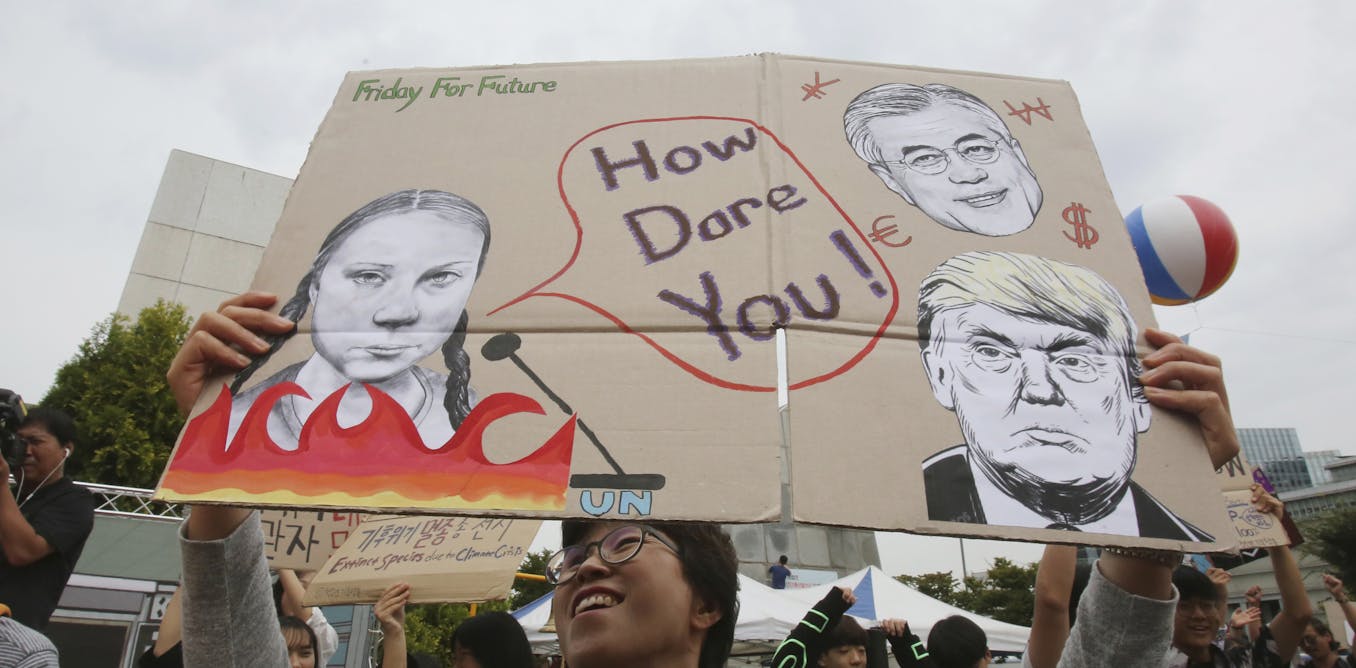
But beyond Trump and his circle, there remains deep concern about climate change, especially among younger people. Support for climate policy remains high in the US and around the world. And studies based on data from 60,000 people in more than 60 countries suggest individuals’ concern about climate change is widely underestimated.
So now is a good time to remember that efforts to tackle the climate crisis – both in Australia and globally – are much bigger than one man. Here are ten reasons to remain hopeful.
Beyond Trump and his circle, there remains deep concern about climate change around the world. HAYOUNG JEON/EPA
1. The global clean energy transition can’t be halted
4. The federal government is not everything in the US
When Trump was last in power, he withdrew the US from some climate commitments, such as the Paris Agreement. But many state and local governments powered ahead with climate policy, and that will happen this time around, too. For example, California – the world’s fifth largest economy – plans to eliminate its greenhouse gas footprint by 2045. Even Texas, a Republican heartland, is leading a shift toward wind and solar power.
5. The US climate movement will be more energised than ever
During Trump’s first presidency, the US climate movement developed policy proposals for a “Green New Deal”. Many of these proposals were later implemented by the Biden administration. Initial reactions to Trump’s re-election suggest we can expect similar policy advocacy this time around.
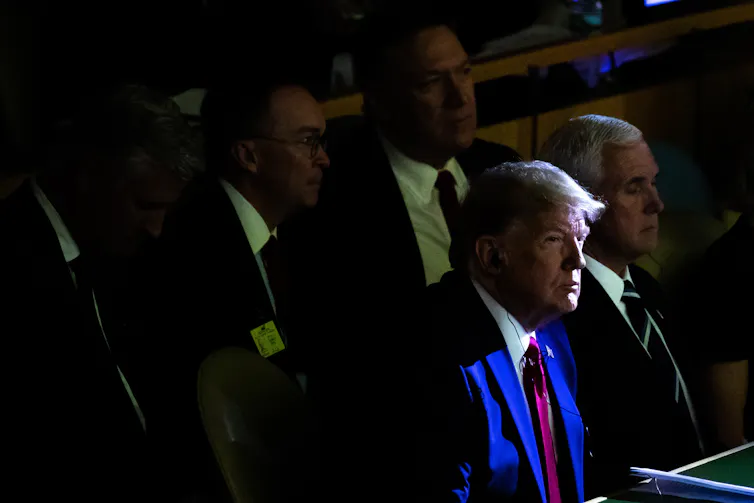
Efforts to tackle the climate crisis are much bigger than one man in the White House. Kevin Wolf/AP
6. Global climate cooperation is bigger than Trump
If Trump makes good on his promise to leave the Paris Agreement (again), he will only be leaving the room where the world’s future is being shaped. The US has walked away from global climate agreements before – for example, refusing to join the Kyoto Protocol in 2001. But other nations rallied for global action, and will do so again.
7. The rules-based global order will remain
When a nation walks away from rules that have been agreed after decades of negotiation, responsible countries must work together to bolster global cooperation. This applies to trade and security – and climate is no different.
As our Foreign Minister Penny Wong recently explained, Australia, as a middle power on the world stage, wants:
a world where disputes are resolved by engagement, negotiation and by reference to rules [and] norms […] We don’t want a world in which disputes are resolved by power alone.
8. Australian diplomacy matters
Australia is seeking to co-host the United Nations climate talks with Pacific island countries in 2026, and is emerging as the favourite. Hosting the conference, known as COP31, would be a chance for Australia to help broker a new era of international climate action, even if the US opts out under Trump.
Hosting the talks would also help cement Australia’s place in the Pacific and assist our Pacific neighbours to deal with the climate threat.
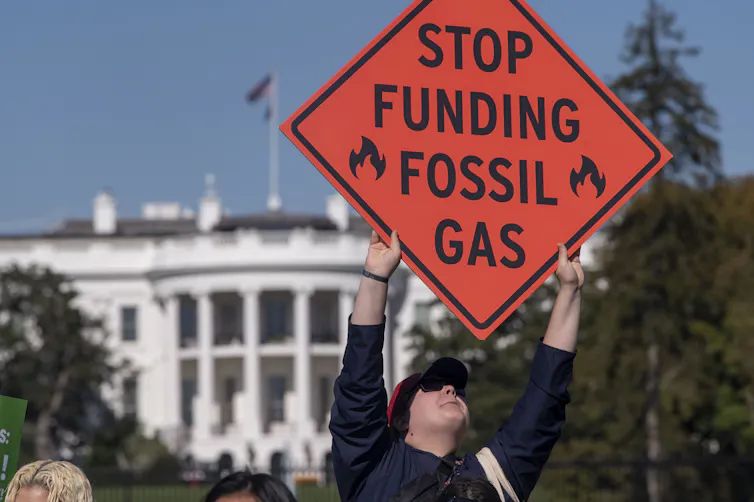
Co-hosting COP31 would help assist our Pacific neighbours to deal with the climate threat. Mick Tsikas/AAP
9. Australia’s clean energy shift is accelerating
About 40% of Australia’s main national electricity grid is poweredby renewables and this is set to rise to 80% by 2030. Some states are surging ahead – for example, South Australia is aiming for 100% renewables by 2027.
Australians love clean energy at home, too. One in three households have rooftop solar installed, making us a world-leader in the technology’s uptake. Trump’s occupation of the Oval Office cannot stop this momentum.
10. Trump cannot change the science of climate change
The science is clear – burning coal, oil and gas fuels climate change and increases the risk of disasters that are harming communities right now. In Australia, we need look no further than the Black Summer bushfires in 2019-20 and unprecedented Lismore floods in 2022.
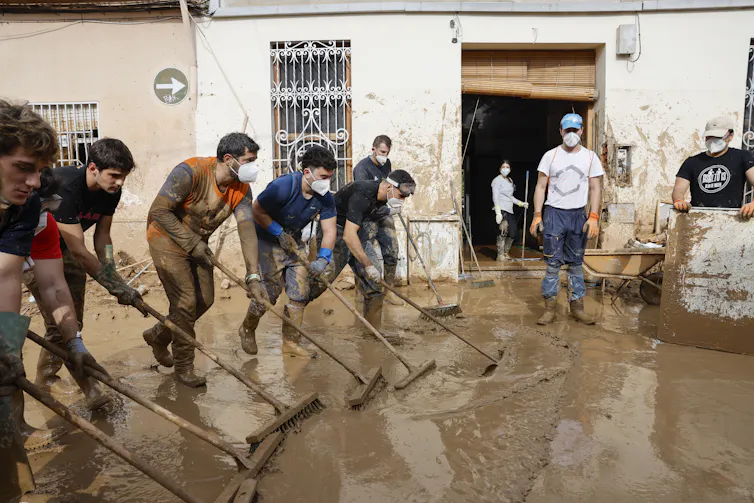
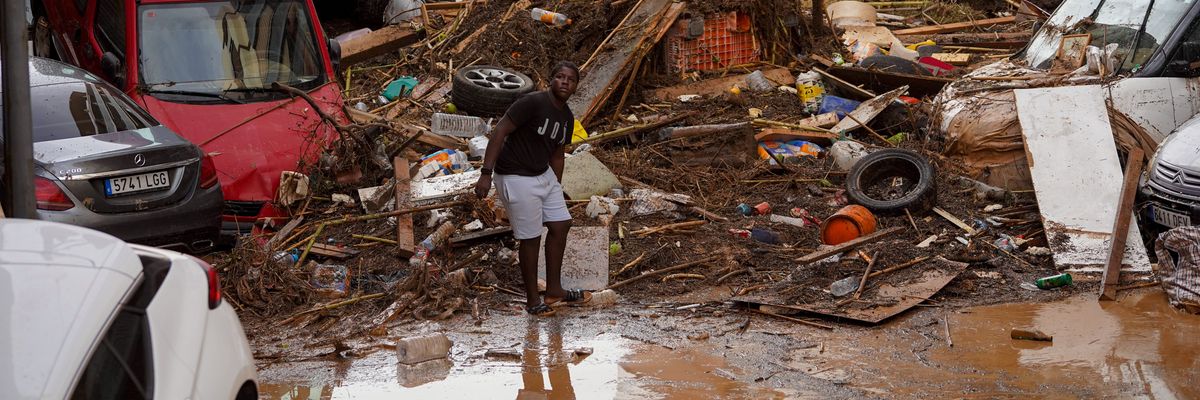
The devastating floods in Spain remind us that climate change has arrived. ANA ESCOBAR/EPA
On gloomy days – like, say, the election of a climate denier to the White House – it might feel humanity won’t rise to Earth’s biggest existential challenge. But there are many reasons for hope. The vast majority of us support policies to tackle climate change, and in many cases, the momentum is virtually unstoppable.
Wesley Morgan, Research Associate, Institute for Climate Risk and Response, UNSW Sydney and Ben Newell, Professor of Cognitive Psychology and Director of the UNSW Institute for Climate Risk and Response, UNSW Sydney
I know that, like me, many of you will be feeling fearful this morning. So on this dark day, we stand in solidarity with all those who dreaded this moment and must now live with its consequences, including those in Gaza and in Ukraine. The struggle for truth, peace, and justice… pic.twitter.com/u0TMUUajHL
Ed Davey, the leader of the Liberal Democrats, hit out at the apparent Trump victory, claiming it marks a “dark, dark day for people around the globe.”
He said: “This is a dark, dark day for people around the globe. The world’s largest economy and most powerful military will be led by a dangerous, destructive demagogue.
“The next President of the United States is a man who actively undermines the rule of law, human rights, international trade, climate action and global security. Millions of Americans – especially women and minorities – will be incredibly fearful about what comes next. We stand with them.
…
Sadiq Khan, the mayor of London, struck a similar tone. He said: “I know that many Londoners will be anxious about the outcome of the US Presidential election. Many will be fearful about what it will mean for democracy and for women’s rights, or how the result impacts the situation in the Middle East or the fate of Ukraine. Others will be worried about the future of NATO or tackling the climate crisis.
…
“The lesson of today is that progress is not inevitable. But asserting our progressive values is more important than ever – re-committing to building a world where racism and hatred is rejected, the fundamental rights of women and girls are upheld, and where we continue to tackle the crisis of climate change head on.”
A view of the damaged area after a deluge brought up to 200 liters of rain per square meter (50 gallons per square yard) in hours in towns across the region of Valencia, Spain on October 30, 2024. (Photo: Alex Juarez/Anadolu via Getty Images)
“These disasters are only getting worse, and stopping the industries and systems driving climate collapse is the only rational response,” one climate group said.
Spain’s deadliest flooding in 30 years killed at least 72 people as torrential rain slammed the eastern region of Valencia on Tuesday, with some towns recording a year’s worth of rain in a single day.
The flooding sent churning muddy water down narrow streets, tossing cars, downing trees, bulldozing bridges and buildings, and trapping people in rising flood waters.
“The neighborhood is destroyed, all the cars are on top of each other, it’s literally smashed up,” Christian Viena, who owns a bar in Valencia’s Barrio de la Torre, told The Associated Press. “Everything is a total wreck, everything is ready to be thrown away. The mud is almost 30 centimeters (11 inches) deep.”
As of Wednesday morning, officials reported 70 deaths in Valencia and two in the bordering region of Castilla La Mancha. However, the death toll could rise as search and rescue operations continue amid difficult conditions, such as power outages and blocked roadways. Many people remain missing with their fates uncertain.
This includes residents of Utiel in Valencia, whose mayor, Ricardo Gabaldón, told Spanish broadcaster RTVE that Tuesday was the “worst day of my life.”
“We were trapped like rats,” Gabaldón said. “Cars and trash containers were flowing down the streets. The water was rising to 3 meters (9.8 feet).”
One person who was rescued was Denis Hlavaty, who spent the night perched on the edge of the roof of a gas station where he works.
“It’s a river that came through,” Hlavaty told Reuters, adding, “The doors were torn away and I spent the night there, surrounded by water that was 2 metres (6.5-feet) deep.”
“The fossil fuel industry increases the climate emergency, destroys the balance of critical ecosystems, and puts people’s lives in danger.”
The storm also canceled high-speed rail travel between Valencia and Madrid and Barcelona, and derailed one high-speed train near Malaga, though no one was injured.
While the rains had tapered off in Valencia by Wednesday morning, the rest of the country is not out of danger, as the storm is projected to move northeast.
“We mustn’t let our guard down because the weather front is still wreaking havoc and we can’t say that this devastating episode is over,” Spanish Prime Minister Pedro Sánchez told the nation on television Wednesday.
Even if the death toll does not rise, Tuesday’s floods are already the deadliest in Spain since 1996, when a flood near the Pyrenees killed 87. They are also the deadliest in Europe since floods in 2021 that killed at least 185.
In the immediate term, Tuesday’s deluge was caused by a phenomenon called a gota fría, or “cold drop,” a storm formed as cold air moves over the warm Mediterranean. In Spain, these kinds of storms are also commonly referred to with the acronym DANA—for Depresión Aislada en Niveles Altos, or isolated high-level depression.
However, scientists observe that the climate crisis is making rainstorms like this one more extreme, as warmer air can hold more moisture to dump when conditions are right. For Europe specifically, the warming of the Mediterranean causes more water to evaporate from its surface, super-charging rainstorms.
“Events of this type, which used to occur many decades apart, are now becoming more frequent and their destructive capacity is greater,” Ernesto Rodriguez Camino, senior state meteorologist and a member of the Spanish Meteorological Association, told Reuters.
The Spanish flooding comes a little more than a month after record rainfall swamped Central Europe and Eastern Europe, in an event that scientists concluded was made approximately twice as likely and 7% more severe by the climate crisis fueled primarily by the burning of fossil fuels.
“When we talk about climate change and climate emergency, it’s often perceived as an abstract concept far from our daily reality,” Eva Saldaña, the executive director of Greenpeace Spain, said in a statement. “Unfortunately, this is climate change: the intensification of extreme weather phenomenons like what happened tonight, with the level of destruction greater each time. Ignoring it causes deaths that we cannot allow.”
In a post on social media, Greenpeace Spain said that fossil fuel companies including the Spanish Repsol should pay for the damages.
“DANAS are more intense every time due to climate change,” the group wrote. “The fossil fuel industry increases the climate emergency, destroys the balance of critical ecosystems, and puts people’s lives in danger.”
Extinction Rebellion Global agreed. “These disasters are only getting worse, and stopping the industries and systems driving climate collapse is the only rational response,” the group wrote on social media.
The U.S.-based Climate Defiance, meanwhile, shared images of flood-ravaged streets with dismissals often leveled at climate activists.
Yellow Dot Studios, Don’t Look Up director Adam McKay’s climate-focused media studio, also shared an image of cars dropped in piles in the street by the flood waters to call out the double-standard in how direct-action climate protests and the corporate crimes of the fossil fuel industry are punished.
Friends of the Earth Spain focused on the human impacts, arguing that urgent climate action meant “putting people’s lives, and not economic models, at the center.”
“Don’t prioritize sending people to work in extreme and dangerous conditions,” the group wrote. “It is a priority to take effective, ambitious, and urgent measures in response to the climate crisis we are living through.”
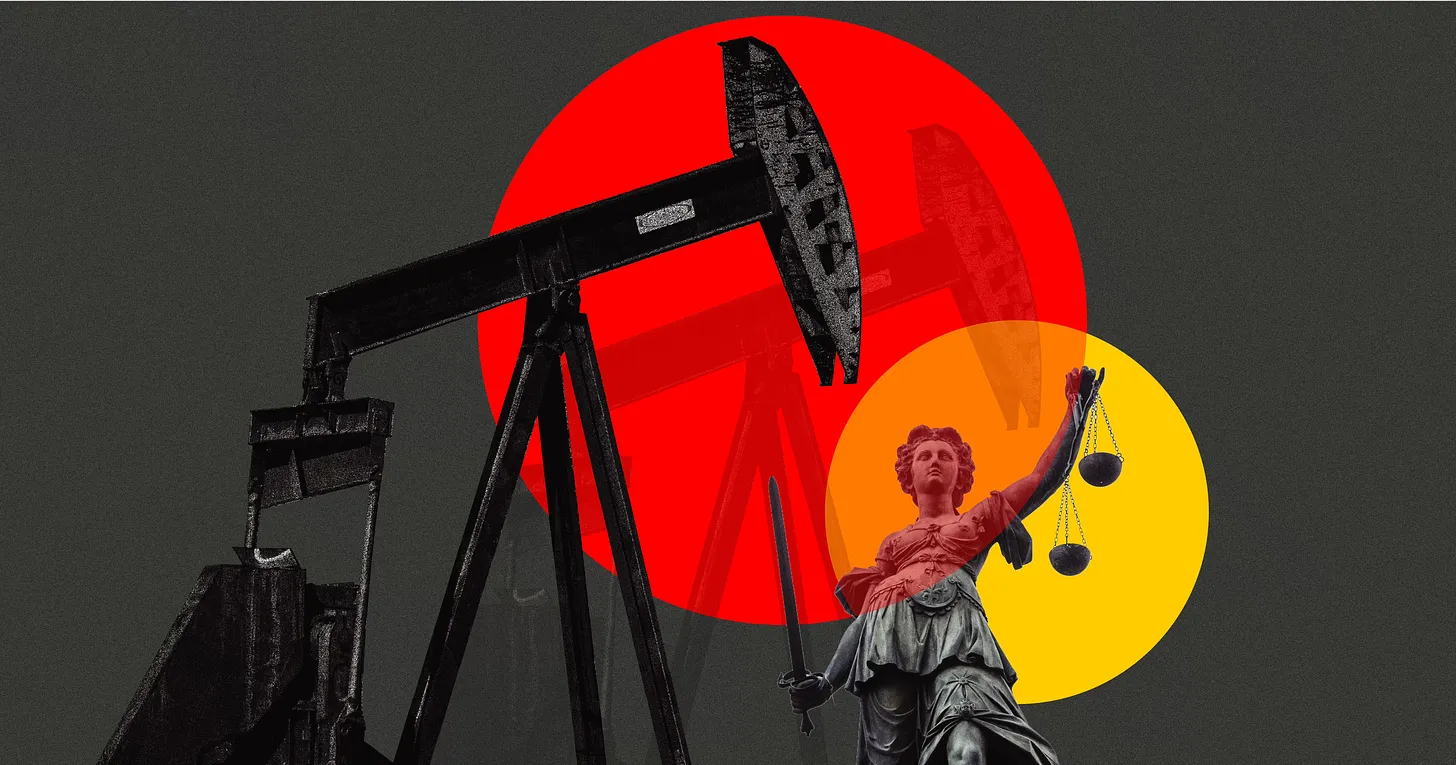
Far-right industry allies with ties to Chevron have mounted an “unprecedented” pressure campaign calling on the Supreme Court to stop a potentially historic climate deception lawsuit against oil majors from going to trial. Graphic design by Tess Abbot
Fossil fuel interests are deploying unprecedented strategies to hide evidence of companies’ deception and block liability lawsuits before they reach trial.
This article by ExxonKnews is published here as part of the global journalism collaboration Covering Climate Now.
In the face of mounting scrutiny from local, state, and federal officials, fossil fuel companies and their allies are deploying a range of tactics to obstruct ongoing lawsuits and investigations concerning evidence that the industry has misled the public about the harms it knew its products would cause to the climate, environment, and human health.
Far-right industry allies with ties to Chevron have mounted an “unprecedented” pressure campaign calling on the Supreme Court to stop a potentially historic climate deception lawsuit against oil majors from going to trial. Republican attorneys general are separately urging the Supreme Court to throw out similar climate fraud lawsuits from five states. Plastics industry trade associations are suing the California state attorney general’s office to block an investigation into whether oil companies lied about plastic recycling. And fossil fuel giants and their trade groups have responded to congressional subpoenas with highly redacted records and “baseless” First Amendment legal defenses.
“I think we’re seeing an escalation by the industry to do anything it can to avoid being held accountable for the consequences of climate change,” said Lisa Graves, executive director of investigative watchdog group True North Research and an expert on dark money special interest groups. “It continues to try to thwart efforts to try to mitigate climate change and it continues to try to stop efforts to get any compensation for the harms it has caused, not just through the burning of fossil fuels but also by the delay and deceit that it has promoted through front groups.”
State and local climate lawsuits, which accuse oil and gas majors of lying about the dangers of fossil fuels and seek to hold them accountable for the resulting damages, are advancing in state courts despite the industry’s efforts. Most recently, a Colorado judge denied nearly all motions by ExxonMobil and Suncor Energy to dismiss the City and County of Boulder’s case against them.
It’s the fifth time to date that a court has rejected Big Oil’s efforts to dismiss climate accountability lawsuits — bringing the companies closer to facing trial and potentially billions of dollars in liability. If any of the cases go to trial, said Michael Gerrard, director of the Sabin Center for Climate Change Law at Columbia University, “it will shine a very harsh light on the fossil fuel companies and it could lead to crushing monetary judgments.”
“Clearly the defendants here are using everything they can think of to derail these cases,” Gerrard said. That attitude has been most evident in Big Oil’s response to a lawsuit from Honolulu, which could be among the first communities to put the companies on trial.
In February, oil company defendants — including Exxon, Chevron, BP, and Shell — petitioned the U.S. Supreme Court to review a Hawai‘i state Supreme Court ruling that allowed Honolulu’s case to move toward trial. The case, the companies argued in their petition, is preempted by federal law and should be dismissed.
But after traditional legal arguments have failed to shield the industry to date, allies seem to be turning to more extreme and novel measures.
Leonard Leo to the Rescue?
In the weeks and months before the Supreme Court was scheduled to hear Big Oil’s petition in Honolulu’s lawsuit, a flood of social media ads and op-eds called for the Supreme Court justices to take up — and throw out — the case.
“To end this nuisance charade, the Supreme Court needs to take up the Honolulu case and declare once and for all that public nuisance is for local issues, not global climate change,” reads the narrator of one such video ad posted to X.
The name behind that ad, the Alliance for Consumers, is part of an organization called the Concord Fund, formerly known as the Judicial Crisis Network. Those groups, Graves and others have pointed out, are projects of billionaire Leonard Leo, head of the far-right legal advocacy group the Federalist Society and known as the architect of the current Supreme Court. CRC Advisors — one of the Leo-backed companies in the effort — appears to have had Chevron, a defendant in Honolulu’s case, as a client.
The fossil fuel industry also helped fund the Federalist Society, and partners at major law firms representing oil and gas companies — including Theodore Olson of Gibson Dunn,the law firm representing Chevron against Honolulu and other communities’ climate liability cases — sit on its board.
Former Hawai‘i Supreme Court Justice Michael Wilson, who served on the state’s highest court for a decade, called the pressure campaign targeting the Supreme Court a “powerful intervention” by “the strongest special interest group in the history of human civilization.”
“This is the most important case in the United States from the point of view that it will allow a jury of citizens to see the fraud and to decide what to do about it,” said Wilson. “This is a high-risk strategy that shows that the fossil fuel industry is desperate.”
Oil companies, which quietly funded front groups like the American Legislative Exchange Council (ALEC) to sow climate denial and oppose climate action on their behalf, are now rallying their allies and benefactors to strike at lawsuits that seek to hold them accountable, explained Graves. In April, 20 Republican attorneys general filed a brief with the U.S. Supreme Court in support of the oil companies’ petition.
“The Leo-tied groups are a soup-to-nuts intervention machine, from the Republican attorneys general to the judges he helped put on the court,” said Graves.
In June, the Supreme Court delivered a one-line order asking the U.S. Justice Department to weigh in on the case — an “extraordinary” response at this stage, according to Wilson, considering that the case has not yet gone to trial. If the Solicitor General neglects to weigh in before the election, that response could be in the hands of a Trump administration. Trump has promised that if re-elected, he will “stop the wave of frivolous litigation from environmental extremists.”
A ‘Highly Unusual’ Request
In May, 19 members of RAGA made a “highly unusual” request to the Supreme Court: to intervene in and undermine climate accountability lawsuits filed by five states — California, Connecticut, Minnesota, New Jersey, and Rhode Island — claiming that their cases would impose “ruinous liability” on fossil fuel companies and threaten “our basic way of life.”
The Supreme Court has original jurisdiction over disputes between states — meaning it can hear a case without it first being heard by another court — but such challenges are more commonly brought over issues like water rights, said Gerrard of Columbia’s Sabin Center. “I’ve never previously heard of an instance where there’s an effort to invoke the original jurisdiction of the [U.S.] Supreme Court to swat down litigation,” he said.
RAGA obtains some of its largest donations from the fossil fuel industry — including Koch Industries, Exxon, and the American Petroleum Institute, all of whom are defendants in climate liability cases — according to an analysis by the Center for Media and Democracy.
“These AGs have now placed their allegiance directly with the special interest group that is threatening the survival of future generations,” said Wilson.
The filing argues that “oil and natural gas have supported improvements in environmental quality and have reduced weather-related deaths,” and claims that “America’s air is cleaner than a century ago thanks in part to the increased use of oil and natural gas.”
It isn’t the first time Republican attorneys general have rushed to shield oil companies from accountability for their climate deception — and overtly used climate denialist talking points first leveraged by Big Oil in their defense. In 2016, Exxon sued the attorneys general of New York and Massachusetts in an attempt to block investigations into the company’s private research and public communications about climate change, claiming the probe was an attack on their free speech and other constitutional rights.
Republican attorneys general from 12 states filed a 2018 brief in support of the oil giant, arguing that “Climate change is the subject of legitimate international debate.”
“[T]he most undeniable fact about climate change is that, like so many other areas of science and public policy, the debate remains unsettled, the research is far from complete, and the path forward is unclear,” they wrote.
A(nother) First Amendment Fight
Another industry strategy to block accountability is playing out in response to California Attorney General Rob Bonta’s investigation into whether Exxon and other petrochemical companies deceived the public about the efficacy of plastic recycling as a solution to plastic waste. In May, the American Chemistry Council and Plastics Industry Association — two major trade groups representing oil and chemical giants including Exxon, Chevron, Amoco, Dow, and DuPont — filed a lawsuit against the attorney general in federal court, claiming the investigation violates their free speech rights.
Bonta, who had said he would decide whether to sue Exxon by the summer, responded with petitions asking the Sacramento County Superior Court to order the groups to comply with his office’s subpoenas.
“For years, the plastics industry has engaged in an aggressive campaign to deceive the public, perpetuating a myth that recycling can solve the plastics waste and pollution crisis,” Bonta said in a statement. “The continuous delay tactics are failing to comply with our subpoena. Enough is enough: What are they trying to hide?”
Members of Congress have similarly accused the Big Oil companies of trying to obstruct investigations.
When Senate Budget Chairman Sheldon Whitehouse (D-RI) and House Oversight Ranking Member Jamie Raskin (D-MD) referred their years-long investigation into the industry’s climate deception to the Justice Department, the lawmakers wrote that “some companies claimed that the First Amendment or undefined ‘privilege’ protected them from the House Oversight Committee’s subpoena.” The main subjects of that investigation have been Exxon, Shell, Chevron, BP, API, and the U.S. Chamber of Commerce.
“The companies further obstructed the investigation by significantly redacting or entirely withholding more than 4,000 documents without any valid basis,” the lawmakers wrote, adding that their refusal to comply “provides a basis to infer that there is even more damning evidence of deceptive practices by the companies and their trade associations waiting to be uncovered.”
Fossil fuel companies and the law firms representing them have used a First Amendment defense to try to dismiss the climate accountability lawsuits, claiming company statements on climate change are protected political speech. One of the most prominent voices for that argument have been attorneys at Gibson Dunn, the firm that represents Chevron, and whose partner Theodore Olson sits on the Federalist Society board.
If these “overt” and “brazen” efforts to escape accountability can be overcome, the industry will no doubt face a reckoning, said Wilson, the former Hawai‘i Supreme Court justice. Communities like Honolulu “are being ravaged by climate” and “will apply the rule of law fairly,” he said.
“Hawai‘i is not a place that can be manipulated by the fossil fuel industry. That is a very big threat to the most powerful special interest group that’s now maintaining its power based on complicity.”
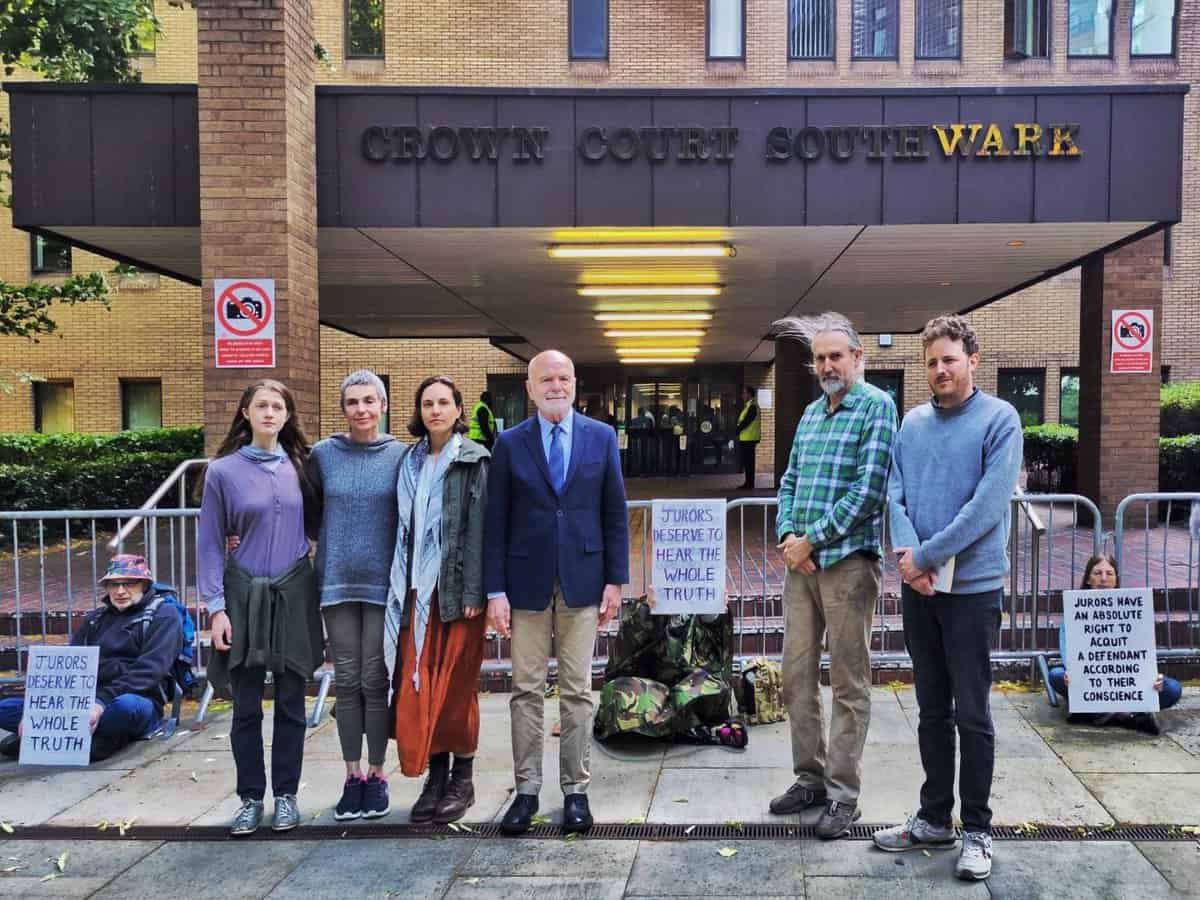
UN Special Rapporteur on Environmental Defenders under the Aarhus Convention Michel Forst attended the trial of five Just Stop Oil supporters at Southwark Crown Court. He attended as an observer because of his serious concerns.
Silencing defendants is the courtroom parallel to the wider attack on protest rights by the last government, including the “public nuisance” offence the Just Stop Oil five have been found guilty of and other measures that allow the police to shut down demonstrations before they have even begun, or haul peaceful citizens off marches for carrying placards or wearing imagery they object to.
Both reveal the collapse of ruling-class confidence in the people they rule. Grasping, after the shocks of Brexit and the Corbyn movement, that people are deeply dissatisfied with the system, their only answer is to ban protest and silence dissidents.
We cannot be silenced. The stakes are too high: as the Just Stop Oil cause illustrates, climate change, in the form of erratic weather, increasingly severe droughts and floods and crop failure, is already upon us. British farms saw a 19 per cent income drop in the last year because of mass flooding. The disruption to our lives from upsets to food production and the water supply will outweigh that from halting traffic on a motorway. The five must be freed.
Labour in power has a chance to change course from the crazy authoritarianism of the Tories. It is committed to restoring workers’ strike rights — but it must be made to restore protest rights too. Like the Tolpuddle Martyrs, we must “raise the watchword, liberty,” defying a state that tramples on our freedoms.