Tag: Venezuela

  • UN Experts Say Those Ordering and Carrying Out US Boat Strikes Should Be ‘Prosecuted for Homicide’

    Spread the love

    Original article by Julia Conley republished from Common Dreams under Creative Commons (CC BY-NC-ND 3.0).
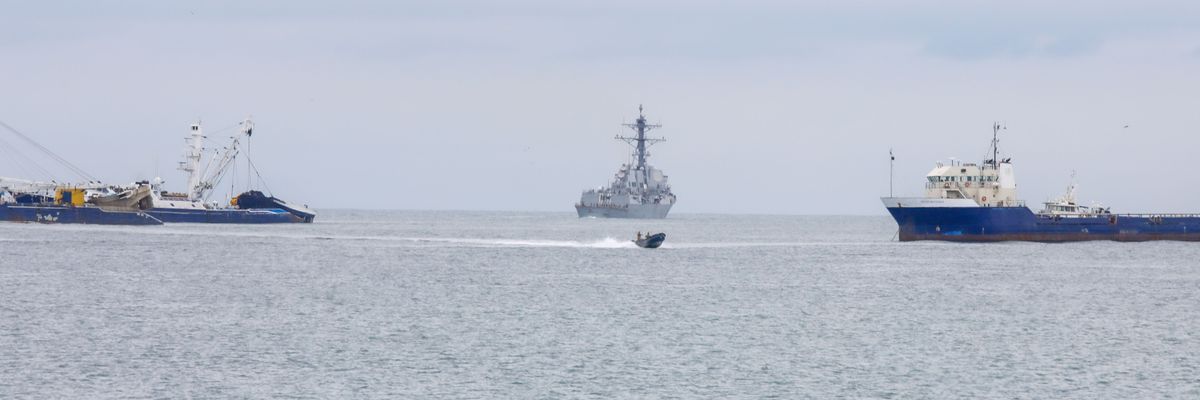
    A small boat is seen near the USS Sampson, a US Navy missile destroyer, off the coast of Panama City, Panama, on September 2, 2025. 
    (Photo by Daniel Gonzalez/Anadolu via Getty Images)

    “US military attacks on alleged drug traffickers at sea,” said two human rights experts, “are grave violations of the right to life and the international law of the sea.”

    Two United Nations rights experts warned that in numerous ways in recent weeks, the Trump administration’s escalation toward Venezuela has violated international law—most recently when President Donald Trump said he had ordered the South American country’s airspace closed following a military buildup in the Caribbean Sea.

    But the two officials, independent expert on democratic and international order George Katrougalos and Ben Saul, the UN special rapporteur on protecting human rights while countering terrorism, reserved their strongest condemnation and warning to the US for the administration’s repeated bombings of boats in the Caribbean and the Pacific, which have targeted at least 22 boats and killed 83 people since September as the White House has claimed without evidence it is combating drug traffickers.

    RECOMMENDED…
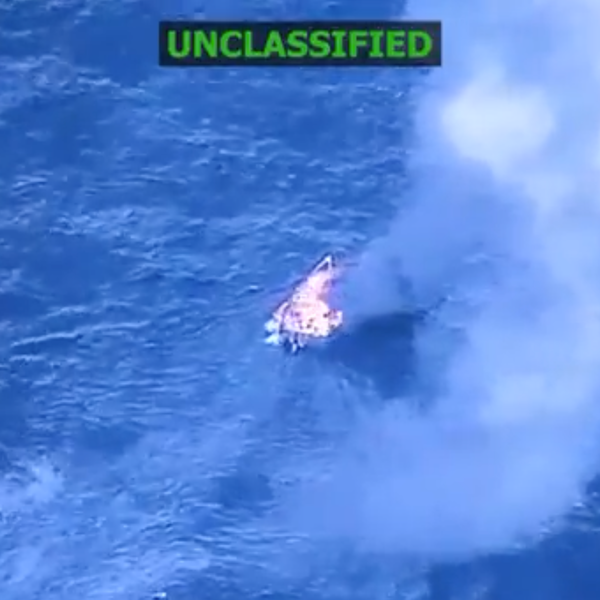
    Bombed boat

    Second US Strike on Boat Attack Survivors Was Illegal—But Experts Stress That the Rest Were, Too
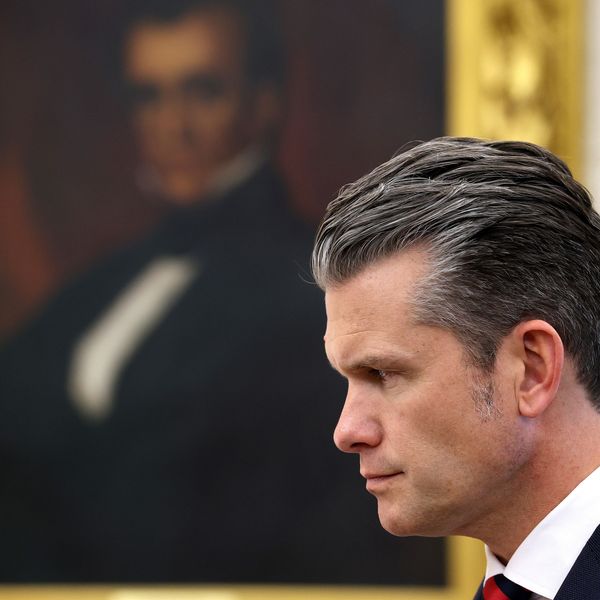
    Pete Hegseth

    Legal Experts Accuse Hegseth of ‘War Crimes, Murder, or Both’ After New Reporting on Boat Strike Order

    The strikes, said Katrougalos and Saul, “are grave violations of the right to life and the international law of the sea. Those involved in ordering and carrying out these extrajudicial killings must be investigated and prosecuted for homicide.”

    Human rights advocates have warned for months that the strikes are extrajudicial killings. Trump has claimed the US is in an “armed conflict” with drug cartels in Venezuela—even though the country is not significantly involved in drug trafficking—but Congress has not authorized any military action in the Caribbean.

    Typically, the US has approached drug trafficking in the region as a criminal issue, with the Coast Guard and other agencies intercepting boats suspected of carrying illegal substances, arresting those on board, and ensuring they receive due process in accordance with the Constitution.

    The Trump administration instead has bombed the boats, with the first operation on September 2 recently the subject of particular concern due to reports that Defense Secretary Pete Hegseth issued an order for military officers to “kill everybody” on board a vessel, leading a commander to direct a second “double-tap” strike to kill two survivors of the initial blast.

    Hegseth and Trump have sought to shift responsibility for the second strike onto Adm. Frank “Mitch” Bradley, the commander who oversaw the attack under Hegseth’s orders. Bradley was scheduled to brief lawmakers Thursday on the incident.

    The White House has maintained Bradley had the authority to kill the survivors of the strike and to carry out all the other bombings of boats, even as reporting on the identities of the victims has shown the US has killed civilians including an out-of-work bus driver and a fisherman, and the family of one Colombian man killed in a strike filed a formal complaint accusing Hegseth himself of murder.

    The UN experts suggested that everyone involved in ordering the nearly two dozen boat strikes, from Trump and Hegseth to any of the service members who have helped carry out the operations, should be investigated for alleged murder.

    After Hegseth defended the September 2 strike earlier this week, Saul emphasized in a social media post that contrary to the defense secretary’s rhetoric about how the boat attacks are “protecting” Americans, he is carrying out “state murder of civilians in peacetime, like executing alleged drug traffickers on the streets of New York or DC.”

    As Common Dreams reported last month, a top military lawyer advised the White House against beginning the boat bombings weeks before the September 2 attack, saying they could expose service members involved in the strikes to legal challenges.

    Katrougalos and Saul urged the administration to “refrain from actions that could further aggravate the situation and ensure that any measures taken fully comply with the UN Charter, the Chicago Convention, and relevant rules of customary international law.”

    They also emphasized that Trump had no authority to declare that Venezuela’s airspace was closed last week—an action that many experts feared could portend imminent US strikes in the South American country.

    “International law is clear: States have complete and exclusive sovereignty over the airspace above their territory. Any measures that seek to regulate, restrict, or ‘close’ another state’s airspace are in blatant violation of the Chicago Convention,” said the experts. “Unilateral measures that interfere with a state’s territorial domain, including its airspace, risk fully undermining the stability of the region and are seriously undermining Venezuela’s economy.”

    Saul and Katrougalos further called on the White House not to repeat “the long history of external interventions in Latin America.”

    “Respect for sovereignty, nonintervention, and the peaceful settlement of disputes,” they said, “are essential to preserving international stability and preventing further deterioration of the situation.”

    Original article by Julia Conley republished from Common Dreams under Creative Commons (CC BY-NC-ND 3.0).

    Orcas discuss Donald Trump and the killer apes' concept of democracy. Front Orca warns that Trump is crashing his country's economy and that everything he does he does for the fantastically wealthy.
    Orcas discuss Donald Trump and the killer apes’ concept of democracy. Front Orca warns that Trump is crashing his country’s economy and that everything he does he does for the fantastically wealthy.
    Donald Fuhrump says that Amerikkka doesn't bother with crimes or charges anymore, not being 100% Amerikkkan and opposing his real estate intentions is enough.
    Donald Fuhrump says that Amerikkka doesn’t bother with crimes or charges anymore, not being 100% Amerikkkan and opposing his real estate intentions is enough.

  • Top Dem Says Video of Military ‘Attacking Shipwrecked Sailors’ Among ‘Most Troubling Things’ He Has Ever Seen

    Spread the love

    Original article by Brad Reed republished from Common Dreams under Creative Commons (CC BY-NC-ND 3.0).

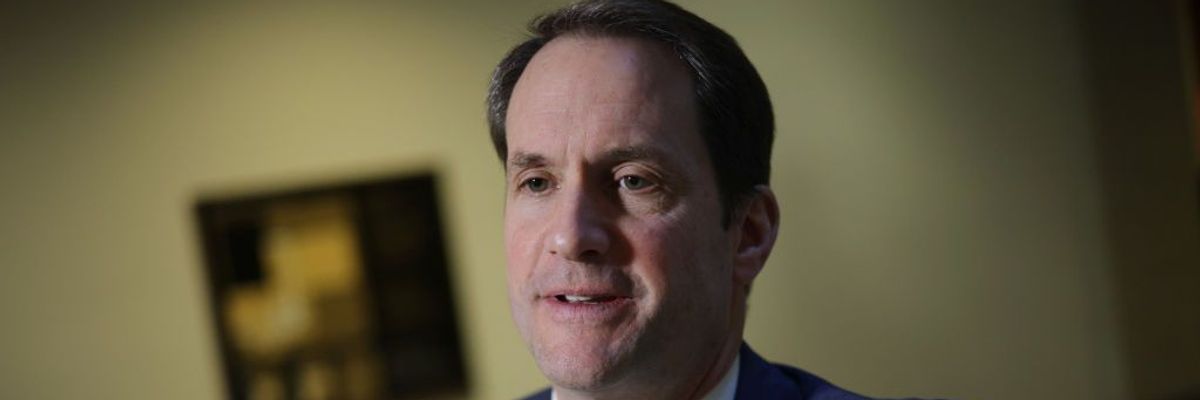
    US Rep. Jim Himes (D-Conn.) speaks to members of the press after a briefing at the US Capitol on February 14, 2024 in Washington, DC. 
    (Photo by Alex Wong/Getty Images)

    “Two individuals in clear distress, without any means of locomotion, with a destroyed vessel, were killed by the United States.”

    US Rep. Jim Himes, the ranking member of the House Permanent Select Committee on Intelligence, expressed horror on Thursday after watching a video of the September 2 double-tap strike on a suspected drug trafficking vessel off the coast of Trinidad and Tobago.

    Speaking to reporters after a briefing on the strike delivered by Adm. Frank Bradley, Himes (D-Conn.) called the video he saw of the attack “one of the most troubling things I’ve seen in my time in public service.”

    Himes proceeded to describe the video, which showed the US military firing missiles at two men who had survived an initial attack on their vessel and who were floating in the water while clinging to debris.

    “You have two individuals in clear distress, without any means of locomotion, with a destroyed vessel, [who] were killed by the United States,” he said.

    Himes then started to walk away before a reporter asked him to describe more of what he saw in the video. The Connecticut Democrat then said the video showed a clear “impermissible action,” according to the laws of armed conflict.

    “Any American who sees the video that I saw will see its military attacking shipwrecked sailors,” he said. “Now, there’s a whole set of contextual items that the admiral explained. Yes, they were carrying drugs. They were not in position to continue their mission in any way… People will someday see this video and they will see that that video shows, if you don’t have the broader context, an attack on shipwrecked sailors.”

    Himes finished his talk with reporters by saying that Bradley told lawmakers there had not been a “kill them all” or “no quarter” order given to him by higher-ups. Asked by a reporter if he thought the full video should be released to the public, Himes said, “I do.”

    Himes’ reaction to the video stood in stark contrast to the reaction of Sen. Tom Cotton (R-Ark.), the chairman of the Senate Intelligence Committee, who praised the military for its actions.

    According to HuffPost reporter Jen Bendery, Cotton described the strikes on the two survivors as “righteous strikes” that were “entirely lawful.”

    Cotton also claimed that the video showed “two survivors trying to flip a boat, loaded with drugs, bound for the United States, back over, so they could stay in the fight.”

    Reports from the US government and the United Nations have not identified Venezuela as a significant source of drugs that enter the United States, and the country plays virtually no role in the trafficking of fentanyl, the primary cause of drug overdoses in the US.

    Additionally, many legal scholars have said that a strike on the two men who survived the initial attack on the boat is very likely either an act of murder or a war crime, regardless of whether they were intending to traffic illegal drugs in the US.

    Original article by Brad Reed republished from Common Dreams under Creative Commons (CC BY-NC-ND 3.0).

    Donald Fuhrump says that Amerikkka doesn't bother with crimes or charges anymore, not being 100% Amerikkkan and opposing his real estate intentions is enough.
    Donald Fuhrump says that Amerikkka doesn’t bother with crimes or charges anymore, not being 100% Amerikkkan and opposing his real estate intentions is enough.
  • UN chief: Israel committed war crimes in Gaza

    Spread the love

    This work by Middle East Monitor is licensed under a Creative Commons Attribution-NonCommercial-ShareAlike 4.0 International License.

    UN Secretary-General Antonio Guterres hold a press briefing on the 9th African Union–United Nations annual conference at UN Headquarters in New York City, United States on November 12, 2025. [Selçuk Acar – Anadolu Agency]

    United Nations Secretary-General António Guterres said on Wednesday that there was a “fundamental wrong” in Israeli management of its military operation in the Gaza Strip. He added that there are “strong reasons” to believe war crimes have been committed there.

    In an interview at the Reuters NEXT conference in New York, Guterres said: “I think there was something fundamentally wrong in the way this operation was conducted with total neglect in relation to the deaths of civilians and to the destruction of Gaza,”

    He also stressed that ending the Russian-Ukrainian war should abide by international law and the territorial integrity of states,” adding: “I believe we are still far from a solution.”

    Regarding recent US strikes on ships near Venezuela, Guterres said they were not compatible with international law.

    Gaza: Hundreds of reports of unexploded bombs as engineering teams work with almost no resources

    This work by Middle East Monitor is licensed under a Creative Commons Attribution-NonCommercial-ShareAlike 4.0 International License.

    Experiencing issues with this image not appearing. I suspect because it's so critical of Zionist Keir Starmer's support of and complicity in Israel's genocides.
    Genocide denier and Current UK Prime Minister Keir Starmer is quoted that he supports Zionism without qualification. He also confirms that UK air force support has been essential in Israel’s mass-murdering genocide. Includes URLs https://www.declassifieduk.org/keir-starmers-100-spy-flights-over-gaza-in-support-of-israel/ and https://youtu.be/O74hZCKKdpA
    Orcas discuss Genocide-supporting and complicit Zionists. Donald Trump, Keith Starmer, David Lammy, Rachel Reeves, Angela Rayner and Wes Streeting are acknowledged as evil genocide-complicit and supporting cnuts.
    Orcas discuss Genocide-supporting and complicit Zionists. Donald Trump, Keith Starmer, David Lammy, Rachel Reeves, Angela Rayner and Wes Streeting are acknowledged as evil genocide-complicit and supporting cnuts.
    Keir Starmer objects to criticism of the IDF. He asks how could anyone object to them starving people to death, forced marches like the Nazis did, bombing Gaza's hospitals and universities, mass-murdering journalists, healthworkers and starving people queuing for food, killing and raping prisoners and murdering children. He calls for people to stop obstructing his genocide for Israel.
    Keir Starmer objects to criticism of the IDF. He asks how could anyone object to them starving people to death, forced marches like the Nazis did, bombing Gaza’s hospitals and universities, mass-murdering journalists, healthworkers and starving people queuing for food, killing and raping prisoners and murdering children. He calls for people to stop obstructing his genocide for Israel.

  • Mass mobilization in Caracas rejects US threats of intervention

    Spread the love

    Original article by Pablo Meriguet republished from peoples dispatch under a Creative Commons Attribution-ShareAlike 4.0 (CC BY-SA) license.

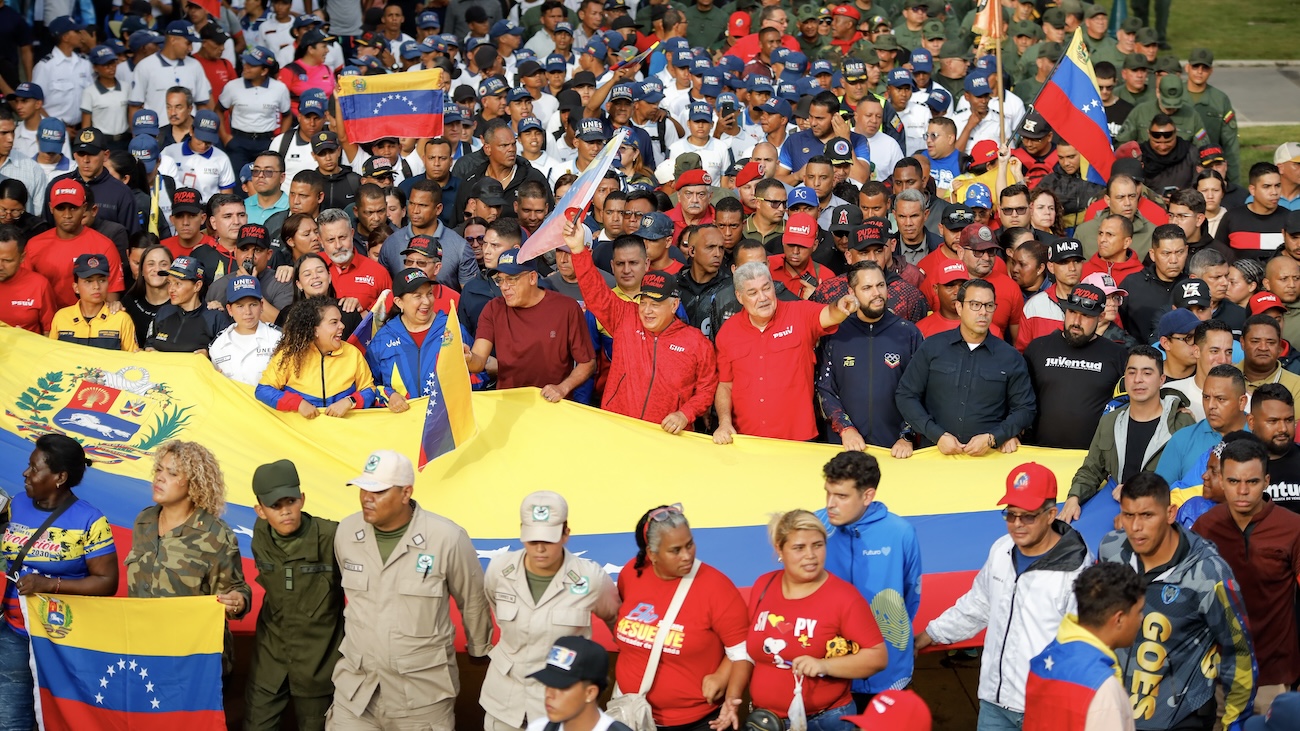
    Interior minister and PSUV leader Diosdado Cabello flanked by party militants in a mass demonstration in Caracas on November 25, 2025. Photo: Francisco Trias

    Demonstrators marched through central Caracas and demanded an end to military threats against Venezuela. For his part, Trump is keeping the lines of communication open with Caracas while increasing pressure on Chavista leaders.

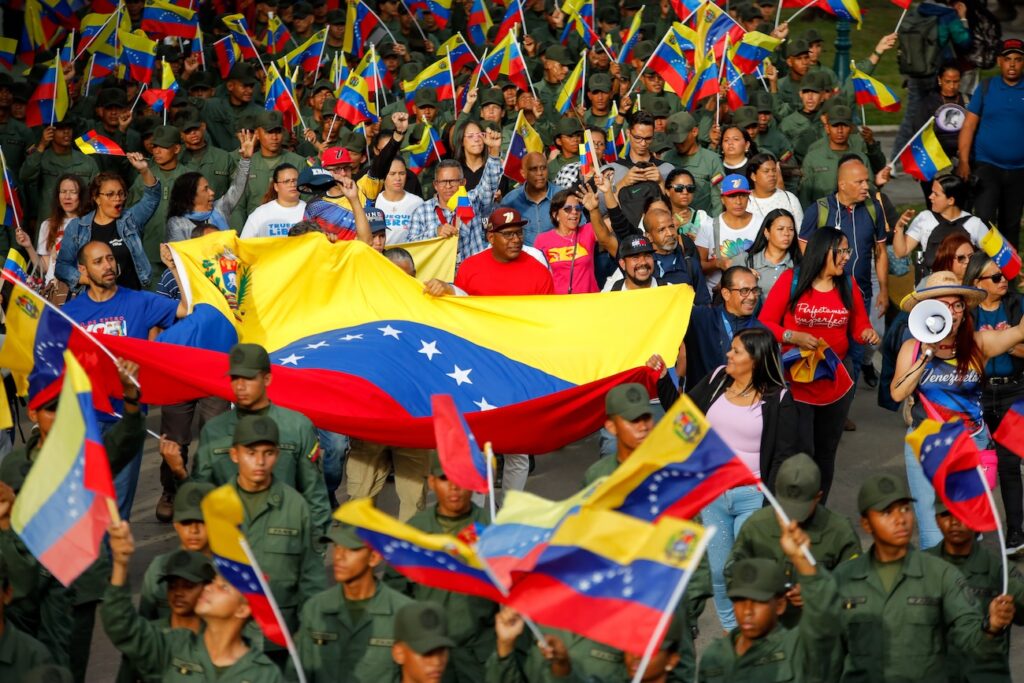
    On November 25, tens of thousands of Venezuelans marched to defend national sovereignty. The event, dubbed the “Great Civic-Military, Police March for our National Flag and the Sword of Bolívar”, brought together various groups of military personnel, police, and civilians who demanded an end to Washington’s pressure on the Caribbean country.

    Since August, the Pentagon has deployed its troops in the Caribbean Sea to, according to the Trump administration, stop the entry of drugs which allegedly come out of Venezuela. At the same time, they have declared the Cartel de los Soles an international terrorist organization and identified the Venezuelan government leadership as part of that organization.

    Read more: US deploys aircraft carrier and threatens invasion of Venezuela, while expanding “drug” war to Colombia

    However, Caracas has categorically rejected the accusations, which, according to Chavismo, are a crude and false attempt to pave the way for the overthrow of President Nicolás Maduro and establish a puppet government allied with the demands and needs of the United States, which would be after Venezuela’s mineral and oil reserves, the largest in the world.

    Tuesday’s demonstration took place in the center of Caracas, the country’s capital, and sought to showcase and strengthen the mass popular defense of Venezuela’s sovereignty in the face of possible US military intervention. “Bolívar is more alive than ever among us, the anti-imperialist Bolívar, the genius Bolívar…” said PSUV secretary and Interior Minister Diosdado Cabello.

    For several weeks, Chavismo has been preparing for a possible scenario in which it must face an invasion by the world’s largest military power. To this end, it has carried out coordination exercises between the organized bases of Chavismo, the National Bolivarian Militia, and the army and police.

    In this regard, Defense Minister Vladimir Padrino emphasized that Washington’s recent actions are intended to cause fear and intimidate the Venezuelan people: “Bombers, ships, destroyers, submarines, all equipped with guided missiles; fighter planes approaching the coast, trying to intimidate a people.” Despite this, he affirmed that Venezuelan forces are ready to respond to any scenario.

    During the mobilization, Maduro told attendees: “Venezuela faces a decisive moment for its existence… There is no excuse for anyone, whether civilian, politician, military, or police, to make excuses. Failure is not an option! Our homeland demands our utmost effort and sacrifice.”

    Caracas march
    Thousands participated in a mass mobilization in the center of Caracas on November 25, 2025. Photo: Francisco Trias

    Trump’s ambiguity

    For its part, the Trump administration continues to maintain an ambiguous stance on the situation in Venezuela. On the one hand, it has ordered the Cartel de los Soles to be declared a terrorist organization, which, according to Washington’s official line, makes Maduro the leader of a terrorist group.

    However, Trump is aware of the enormous political damage that an attack on Venezuela could cause his administration. Perhaps that is why he is not ruling out the possibility of forcing Maduro out through hard diplomacy, namely through the pressure his troops are exerting on Venezuela’s borders in the Caribbean Sea.

    On November 25, Trump said: “If we can save lives, if we can do things the nice way, that’s fine… [But] if we have to do it the hard way, that’s fine too.”

    Many have seen the upcoming visit to the Dominican Republic by Pete Hegseth, the US Secretary of War, as a new maneuver to strengthen their military positions. Dominican President Luis Abinader, an ally of Washington, reported that the purpose of the visit is to strengthen the joint fight against drug trafficking in the region, which can be interpreted as an alliance in preparation for a war scenario in the Caribbean Sea.

    Similarly, the Chief of Staff of the United States, Dan Caine, has been touring the Caribbean. Caine is one of the architects of Operation Southern Spear, the US Southern Command (SOUTHCOM) mission launched on November 13, 2025 by US Secretary of War Pete Hegseth to “removes narco-terrorists from our Hemisphere, and secures our Homeland from the drugs that are killing our people.” Presumably, though it is not clarified, the operation is a continuation of the military deployment and pressure campaign that began in August which has seen 15,000 soldiers stationed in the Caribbean and the launching of attacks on dozens of boats, resulting in the extrajudicial killings of over 80 people in international waters who, according to Washington, were carrying drugs in their boats, although several human rights organizations have strongly questioned these claims.

    For his part, Albert Ramdin, the Secretary General of the Organization of American States, has called for a halt to a possible attack on Venezuela, despite his critical stance against the Chavista government: “We do not want any war in our hemisphere. Peace is, ultimately, what everyone in this hemisphere wants. No one wins in a war.”

    Original article by Pablo Meriguet republished from peoples dispatch under a Creative Commons Attribution-ShareAlike 4.0 (CC BY-SA) license.

    Donald Fuhrump says that Amerikkka doesn't bother with crimes or charges anymore, not being 100% Amerikkkan and opposing his real estate intentions is enough.
    Donald Fuhrump says that Amerikkka doesn’t bother with crimes or charges anymore, not being 100% Amerikkkan and opposing his real estate intentions is enough.
    Elon Musk urges you to be a Fascist like him, says that you can ignore facts and reality then.
    Elon Musk urges you to be a Fascist like him, says that you can ignore facts and reality then.

  • The Caribbean faces two choices: join the US attempt to intimidate Venezuela or build its own sovereignty

    Spread the love

    Original article by Vijay Prashad republished from peoples dispatch under a Creative Commons Attribution-ShareAlike 4.0 (CC BY-SA) license.

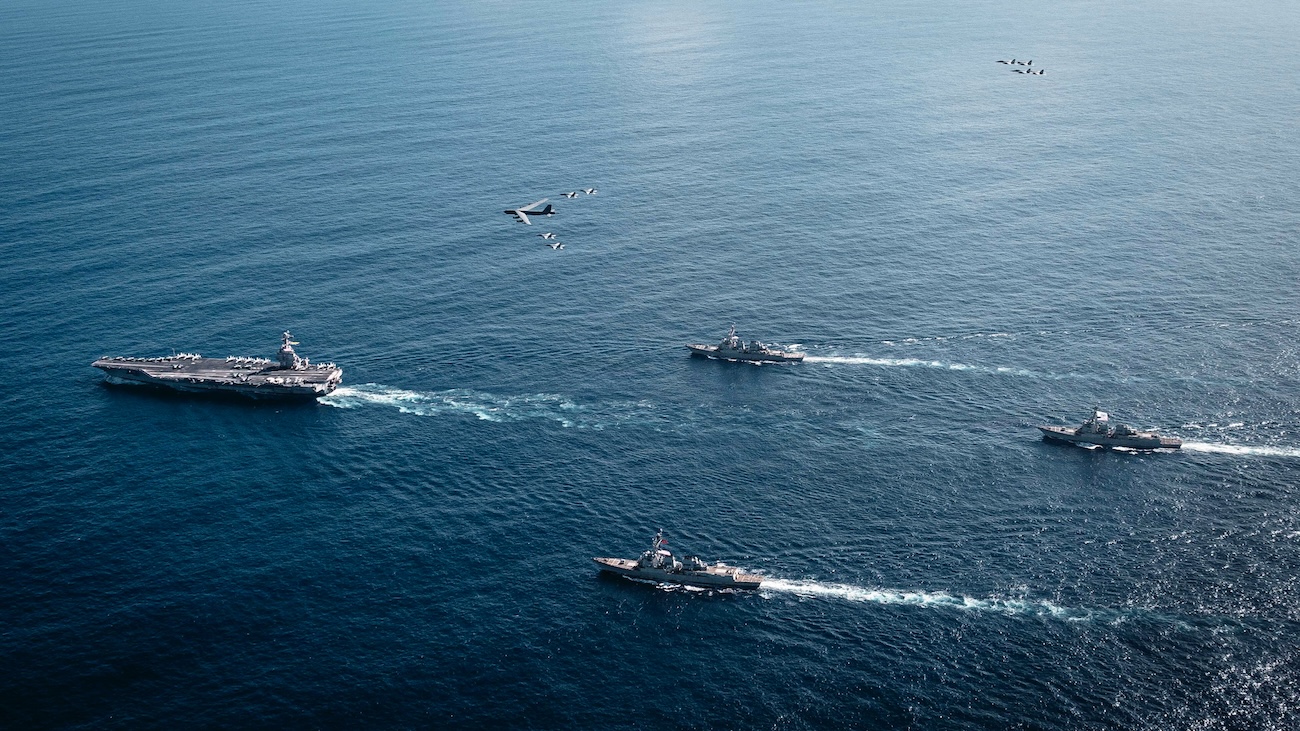
    US war ships in the Caribbean. Photo: US Secretary of Defense/War

    The US aggression against Venezuela has fomented divisions within the Caribbean, with many calling on countries like Trinidad and Tobago to refuse cooperation with the US in its military endeavors against the peoples of the region

    US President Donald Trump has authorized the USS Gerald R. Ford to enter the Caribbean. It now floats north of Puerto Rico, joining the USS Iwo Jima and other US navy assets to threaten Venezuela with an attack. Tensions are high in the Caribbean, with various theories floating about regarding the possibility of what seems to be an inevitable assault by the US and regarding the social catastrophe that such an attack will occasion. CARICOM, the regional body of the Caribbean countries, released a statement affirming its view that the region must be a “zone of peace” and that disputes must be resolved peacefully. Ten former heads of government from Caribbean states published a letter demanding that “our region must never become a pawn in the rivalries of others”.

    Former Trinidad and Tobago Prime Minister Stuart Young said on August 21, “CARICOM and our region is a recognized zone of peace, and it is critical that this be maintained”. Trinidad and Tobago, he said, has “respected and upheld the principles of non-intervention and non-interference in the internal affairs of other countries and for good reason”. On the surface, it appears as if no one in the Caribbean wants the United States to attack Venezuela.

    However, the current Prime Minister of Trinidad and Tobago, Kamla Persad-Bissessar (known by her initials as KPB), has openly said that she supports the US actions in the Caribbean. This includes the illegal murder of eighty-three people in twenty-one strikes since September 2, 2025. In fact, when CARICOM released its declaration on the region being a zone of peace, Trinidad and Tobago withdrew from the statement. Why has the Prime Minister of Trinidad and Tobago gone against the entire CARICOM leadership and supported the Trump administration’s military adventure in the Caribbean?

    Backyard

    Since the Monroe Doctrine (1823), the United States has treated all Latin America and the Caribbean as its “backyard”. The United States has intervened in at least thirty of the thirty-three countries in Latin America and the Caribbean (90 percent of the countries, in other words) – from the US attack on Argentina’s Malvinas Islands (1831-32) to the current threats against Venezuela.

    The idea of the “zone of peace” emerged in 1971 when the UN General Assembly voted for the Indian Ocean to be a “zone of peace”. In the next two decades, when CARICOM debated this concept for the Caribbean, the United States intervened in, at least, the Dominican Republic (after 1965), Jamaica (1972-1976), Guyana (1974-1976), Barbados (1976-1978), Grenada (1979-1983), Nicaragua (1981-1988), Suriname (1982-1988), and Haiti (1986).

    In 1986, at the CARICOM summit in Guyana, the Prime Minister of Barbados, Errol Barrow, said “My position remains clear that the Caribbean must be recognized and respected as a zone of peace… I have said, and I repeat, that while I am prime minister of Barbados, our territory will not be used to intimidate any of our neighbors be that neighbor Cuba or the USA.” Since Barrow made that comment, Caribbean leaders have punctually affirmed, against the United States, that they are nobody’s backyard and that their waters are a zone of peace. In 2014, in Havana, all members of the Community of Latin American and Caribbean States (CELAC) approved a “zone of peace” proclamation with the aim “of uprooting forever [the] threat or use of force” in the region.

    Persad-Bissessar or KPB has rejected this important consensus across political traditions in the Caribbean. Why is this so?

    Betrayals

    In 1989, trade union leader Basdeo Panday formed the United National Congress (UNC), a centre-left formation (whose former name was the Caucus for Love, Unity, and Brotherhood). KPB joined Panday’s party and has remained in the UNC since then. Throughout her career till recently, KPB stayed at the center of the UNC, arguing for social democratic and pro-welfare policies whether as opposition leader or in her first term as Prime Minister (2010-2015). But even in her first term, KPB showed that she would not remain within the bounds of the centre-left but would tack Far-Right on one issue: crime.

    In 2011, KPB declared a State of Emergency for a “war on crime”. At her home in Phillipine, San Fernando, KPB told the press, “The nation must not be held to ransom by groups of thugs bent on creating havoc in our society”, “We have to take very strong action”, she said, “very decisive action”. The government arrested seven thousand people, most of them released for lack of evidence against them, and the government’s Anti-Gang Law could not be passed: this was a policy that mimicked the anti-poor campaigns in the Global North. Already, in this State of Emergency, KPB betrayed the legacy of the UNC, which she dragged further to the Right.

    When KPB returned to power in 2025, she began to mimic Trump with “Trinidad and Tobago First” rhetoric and with even harsher language against suspected drug dealers. After the first US strike on a small boat, KPB made a strong statement in support of it: “I have no sympathy for traffickers, the US military should kill them all violently”. Pennelope Beckles, who is the opposition leader in Trinidad and Tobago, said that while her party (the People’s National Movement) supports strong action against drug trafficking, such action must be “lawful” and that KPB’s “reckless statement” must be retracted. Instead, KPB has furthered her support of the US militarization of the Caribbean.

    Kamla Persad-Bissessar Dan Caine
    Trinidad and Tobago PM Kamla Persad-Bissessar with US Joint Chief of Staff General Dan Caine on November 25, 2025. Photo: US Embassy / X

    Problems

    Certainly, Trinidad and Tobago faces a tight knot of economic vulnerability (oil and gas dependence, foreign exchange shortages, slow diversification) and social crises (crime, inequality, migration, youth exclusion). All of this is compounded by the weakness of State institutions to help overcome these challenges. The weakness of regionalism further isolates small countries such as Trinidad and Tobago, which are vulnerable to pressure from powerful countries. But KPB is not only acting due to pressure from Trump; she has made a political decision to use US force to try and solve her country’s problems.

    What could be her strategy? First, get the United States to bomb small boats that are perhaps involved in the centuries-old Caribbean smuggling operations. If the US bombs enough of these little boats, then the small smugglers would rethink their transit of drugs, weapons, and basic consumer commodities. Second, use the goodwill generated with Trump to encourage investment into Trinidad and Tobago’s essential but stagnant oil industry. There might be short-term gain for KPB. Trinidad and Tobago requires at least USD 300 million if not USD 700 million a year for maintenance and for upgrading its petrochemical and Liquified Natural Gas plants (and then it needs USD 5 billion for offshore field development and building new infrastructure). ExxonMobil’s massive investment in Guyana (rumored to be over USD 10 billion) has attracted attention across the Caribbean, where other countries would like to bring in this kind of money. Would companies such as ExxonMobil invest in Trinidad and Tobago? If Trump wanted to reward KPB for her unctuousness, he would tell ExxonMobil CEO Darren Woods to expand on the deepwater blocks investment his company has already made in Trinidad and Tobago. Perhaps KPB’s calculation to set aside the zone of peace ideas will get her some more money from the oil giants.

    But what does this betrayal break? It certainly disrupts further any attempt to build Caribbean unity, and it isolates Trinidad and Tobago from the broader Caribbean sensibility against the use of the waters for US military confrontations. There are real problems in Trinidad and Tobago: rising gun-related violence, transnational trafficking, and irregular migration across the Gulf of Paria. These problems require real solutions, not the fantasies of US military intervention. US military interventions do not resolve problems, but deepen dependency, escalate tensions, and erode every country’s sovereignty. An attack on Venezuela is not going to solve Trinidad and Tobago’s problems but might indeed amplify them.

    The Caribbean has a choice between two futures. One path leads toward deeper militarization, dependency, and incorporation into the US security apparatus. The other leads toward the revitalization of regional autonomy, South-South cooperation, and the anti-imperialist traditions that have long sustained the Caribbean’s political imagination.

    Vijay Prashad is an Indian historian, editor, and journalist. He is a writing fellow and chief correspondent at Globetrotter. He is an editor of LeftWord Books and the director of Tricontinental: Institute for Social Research. He has written more than 20 books, including The Darker Nations and The Poorer Nations. His latest books are On Cuba: Reflections on 70 Years of Revolution and Struggle (with Noam Chomsky), Struggle Makes Us Human: Learning from Movements for Socialism, and (also with Noam Chomsky) The Withdrawal: Iraq, Libya, Afghanistan, and the Fragility of US Power.

    Original article by Vijay Prashad republished from peoples dispatch under a Creative Commons Attribution-ShareAlike 4.0 (CC BY-SA) license.

    Donald Fuhrump says that Amerikkka doesn't bother with crimes or charges anymore, not being 100% Amerikkkan and opposing his real estate intentions is enough.
    Donald Fuhrump says that Amerikkka doesn’t bother with crimes or charges anymore, not being 100% Amerikkkan and opposing his real estate intentions is enough.
    Elon Musk urges you to be a Fascist like him, says that you can ignore facts and reality then.
    Elon Musk urges you to be a Fascist like him, says that you can ignore facts and reality then.