Tag: Venezuela

  • Trump’s Venezuela Drug War Gambit and the Militarization Playbook at Home

    Spread the love

    This article by Michelle Ellner republished from Common Dreams under Creative Commons (CC BY-NC-ND 3.0).

    National Guard troops are deployed to the Washington Monument as part of US President Donald Trump’s mobilization of law enforcement on August 12, 2025 in Washington, DC. (Photo by Andrew Leyden/Getty Images)

    Whether it’s a wall in the desert or barricades in front of the White House, the message is the same: Perceived threats, real or manufactured, are met with troops, not talks.

    US President Donald Trump has quietly authorized the Pentagon to carry out military operations against what his administration calls “narco-terrorist” networks in Latin America. On paper, it’s a counter-narcotics policy. In practice, it serves as a green light for open-ended US military action abroad, bypassing congressional approval, sidestepping international law, and stretching the definition of “national security” until it becomes a catchall justification for the use of force.

    The directive allows the US to target groups unilaterally labeled as both criminal and terrorist. Once that designation is made, the military can operate without the consent of the targeted country, a move that violates international law. In a region with a long history of US-backed coups, covert wars, and destabilization campaigns, the risk of abuse isn’t hypothetical; it’s inevitable.

    While the order applies across Latin America, Venezuela stands at the top of the list. The Trump administration has accused President Nicolás Maduro’s government of working with transnational cartels, and has doubled the bounty on him to $50 million (double the bounty for Osama bin Laden). It’s a lawfare tactic designed to criminalize a head of state and invite mercenaries and covert operatives to participate in regime change. The accusations fueling this escalation have grown increasingly far-fetched casting Maduro in turn as a partner of Colombia’s FARC, the head of the “Cartel de los Soles,” a patron of Venezuela’s Tren de Aragua, and now, as an ally of Mexico’s Sinaloa Cartel. a charge even Mexico’s own president says has no evidence, revealing how politicized and unfounded this allegation is.

    The core premise of the accusation is that Maduro is involved in a cocaine trafficking network of Venezuelan military and political figures called Cartel de los Soles. The Venezuelan government denies the cartel’s existence, calling it a fabrication to justify sanctions and regime change efforts. Multiple independent investigations have shown no hard evidence exists and that this narrative thrives in a media-intelligence echo chamber. Reports from outlets like Insight Crime cite anonymous US sources; those media stories are then cited by policymakers and think tanks, and the cycle repeats until speculation becomes policy.

    The communities in Caracas and Los Angeles, in the Venezuelan plains, and in the US-Mexico border may seem worlds apart, but they are facing the same war machine.

    Fulton Armstrong, a professor at American University and a former longtime US intelligence officer, has stated that he knows no one in the intelligence community, apart from those currently in government, who believes in the existence of the Cartel de los Soles.

    Drug monitoring data also contradict this narrative. The Washington Office on Latin America (WOLA) reports that only about 7% of US-bound cocaine transits through the Eastern Caribbean via Venezuela, while approximately 90% takes Western Caribbean and Eastern Pacific routes. The United Nations Office on Drugs and Crime’s 2025 World Drug Report likewise confirms that trafficking remains concentrated in major Andean corridors, not through Venezuela. Yet Venezuela is targeted anyway, not for its actual role in the drug trade, but because neutralizing its government has become a pillar of US foreign policy, seen in Washington as a step toward reshaping the country’s political system and prying open its economy to foreign control.
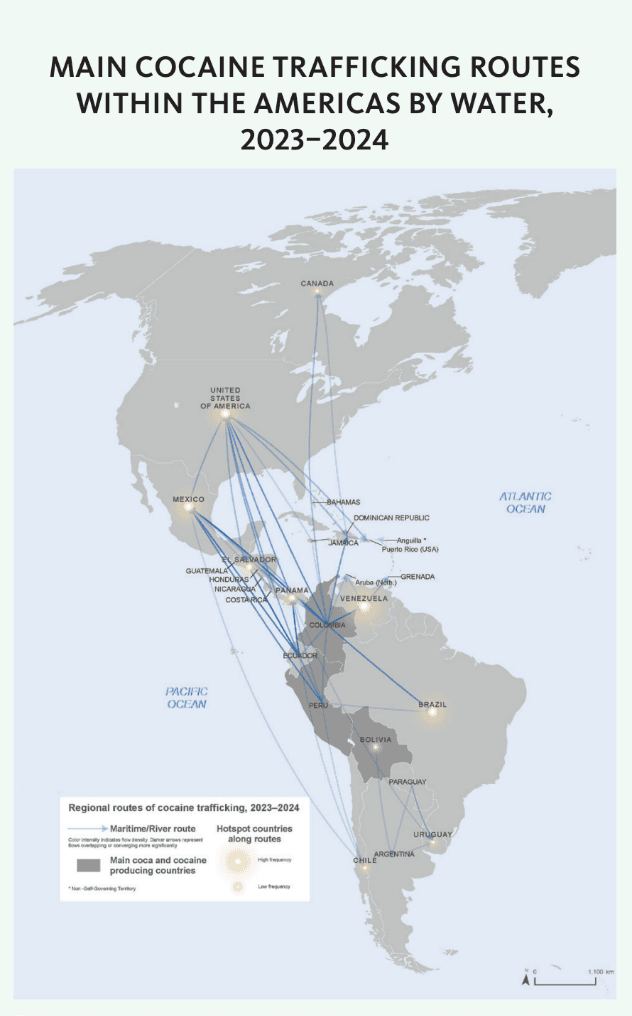
    The “narco-terror” label put on Venezuela also attempts to rope Venezuela into the US fentanyl crisis, despite the absence of evidence that the country plays any role in fentanyl trafficking. Even US drug enforcement assessments make no mention of Venezuela as a source or transit point.

    This link exists only in political rhetoric, a way to fold Venezuela into a domestic public health crisis and recycle the same logic used to brand it a “national security threat.” That accusation dates back to 2015 when then-President Barack Obama created the legal and political scaffolding for an open-ended campaign of coercion. Once the “narco-terror” framework is in place, Washington can sustain and escalate military measures over time, regardless of the immediate pretext.

    This framing turns a political standoff into a declared security imperative. It broadens the range of permissible military tools, from ISR (intelligence, surveillance, reconnaissance) to direct action.

    The pattern is familiar. In Panama (1989), Colombia (2000s), and Honduras (2010s), US militarized antidrug campaigns failed to dismantle supply chains or reduce trafficking volumes. What they did accomplish was shifting routes, militarizing criminal actors, and destabilizing governments, and left societies more fragile—costing lives and destroying communities in the process.

    The Mirror at Home: Militarization and Communities of Color

    The same militarized logic driving US policy in Venezuela is being applied inside the United States. In August 2025, President Trump signed an executive order placing the DC Metropolitan Police Department under federal control and deployed the National Guard, citing a public safety “emergency,” despite official data showing violent crime at multiyear lows. Even US law enforcement statistics contradict the White House narrative, but the administration dismissed them, casting the city as overrun by “roving mobs,” “wild youth,” and “drugged-out maniacs.”

    DC is only one example. The same militarized logic has sent thousands of troops to the US-Mexico border, converted military bases into detention centers from Texas to New Jersey, and stationed soldiers inside Immigration and Customs Enforcement detention facilities in over 20 states. In Los Angeles, Marines and National Guard units patrolled immigrant neighborhoods in a show of force, a deployment beaten back only by mass community resistance and the threat of labor action.

    Whether it’s a wall in the desert or barricades in front of the White House, the message is the same: Perceived threats, real or manufactured, are met with troops, not talks. The playbook never changes: In Venezuela, the “threat” is cast as narco-terrorism; in the US, it’s a “border surge” or a manufactured public safety emergency built on racially coded depictions of Black and brown communities. In both cases, the logic is identical: Treat political disputes and social crises as security emergencies, sideline diplomacy and community solutions, usurp greater executive powers, and make military force a routine tool of governance.

    The Real Threat

    Trump’s “narco-terror” authorization uses the language of fighting drugs and crime to mask a deeper project: expanding the military’s role in governance and normalizing its use as a tool of political control both at home and abroad.

    In Latin America, that means more interventions against governments the US wants to topple. At home, it means embedding the military deeper into civilian life, particularly in Black and brown neighborhoods.

    The communities in Caracas and Los Angeles, in the Venezuelan plains, and in the US-Mexico border may seem worlds apart, but they are facing the same war machine. Until we reject militarization in all its forms, the targets will keep shifting, but the people under the gun will look the same.

    This article by Michelle Ellner republished from Common Dreams under Creative Commons (CC BY-NC-ND 3.0).

  • Venezuela mobilizes 4.5 million militia members as US deploys troops to the Caribbean

    Spread the love

    Original article by Devin B. Martinez republished from peoples dispach under a Creative Commons Attribution-ShareAlike 4.0 (CC BY-SA) license.

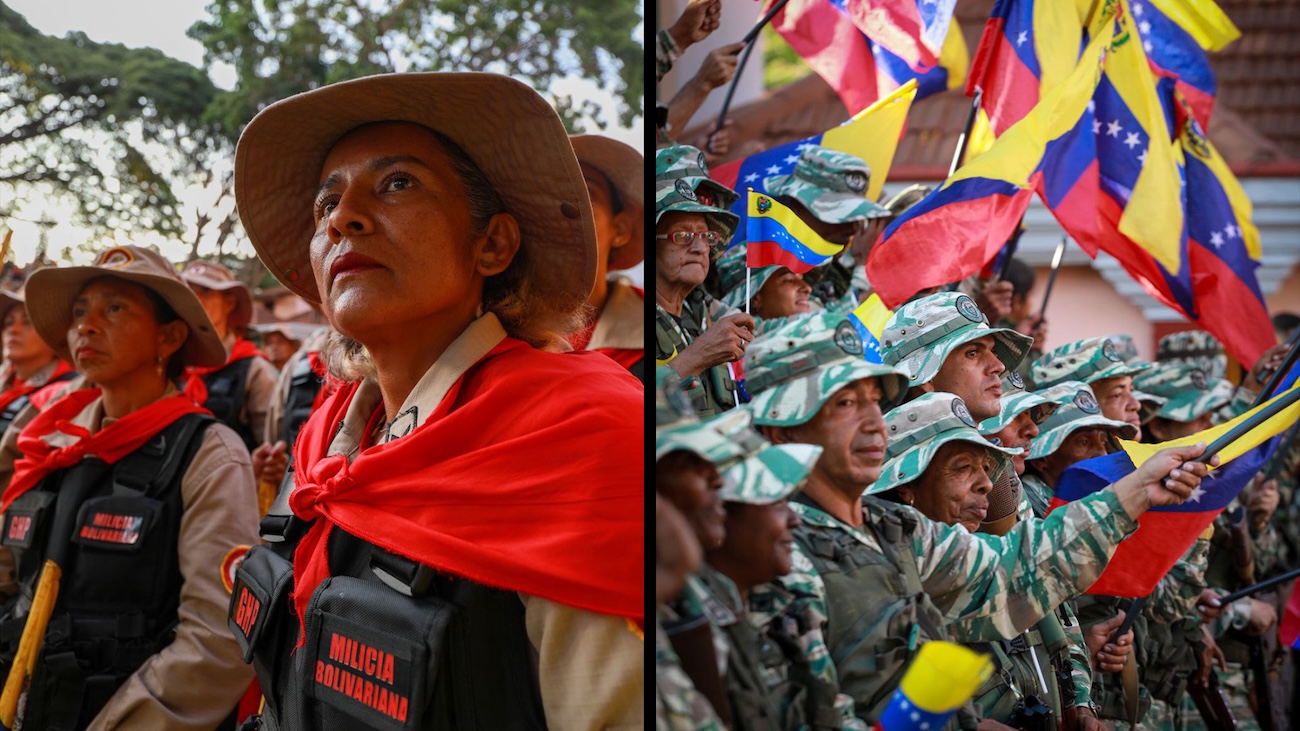
    Mobilization of the Bolivarian Militia in April 2025. Photo: Prensa Presidencial / Telegram

    President Nicolás Maduro announced on Monday, August 18, that he is activating “over 4.5 million militia members across the entire national territory” of the Bolivarian Republic of Venezuela, in response to the US deployment of three Navy guided-missile destroyers and 4,000 military personnel to the Caribbean. The White House has described the deployment as an anti-drug trafficking operation in the region, while some analysts have called it a new threat against Venezuela – the country with the largest oil reserves in the world. 

    The US military deployment comes after Washington raised its bounty on the Venezuelan president from USD 25 million to USD 50 million, alleging links to drug cartels.

    The “extravagant, bizarre, and outlandish threats” of the United States have been firmly rejected by the Venezuelan government.

    Minister of Foreign Affairs Yván Gil described the accusations as a sign of desperation, revealing Washington’s “lack of credibility and the failure of its policies in the region”. He also pointed out that Venezuela has made major gains against drug trafficking after expelling the United States’ Drug Enforcement Agency (DEA) – who many Venezuelans call “the planet’s chief drug traffickers” – from the country in 2005.

    No US agency or international body has produced concrete evidence of drug production and distribution being concentrated in Venezuela or linked to Maduro. In fact, available global drug data makes almost no mention of the Caribbean nation or the alleged “Cartel of Suns” at all. According to the United Nations Office on Drugs and Crime (UNODC), the epicenter of activity is in Colombia, Ecuador, and Peru, with the US identified as the main destination for distribution, recording the highest level of drug consumption in the world.

    UNODC data reports that only 5% of Colombian drugs transit through Venezuela, and that the country is free of coca leaf cultivation, and marijuana and cocaine processing. The Trump administration, on the other hand, has maintained its position that the Venezuelan government is a “narco-terror cartel”.

    Venezuela mobilizes as the US bares its teeth

    Last week, mass protests across Venezuela denounced the “interventionist policies of the US government” following the bounty increase on Maduro and the accusation of cartel ties. However, US Secretary of State Marco Rubio confirmed the deployment of US troops to the region on August 14. On Tuesday, August 19, White House Press Secretary Karoline Leavitt was asked if the administration was open to “boots on the ground” in Venezuela, to which she responded, “[Trump] is prepared to use every element of American power to stop drugs from flooding into our country.”

    This week, Venezuela’s “prepared, activated, and armed” militia members are being deployed “throughout the entire territory, and meticulously, sector by sector”, as part of what the government is calling a peace plan to defend the principles of sovereignty and shared economic development.

    “The Bolivarian National Militia is the people in arms, it is the genuine expression of civic-military union,” said Maduro in 2019, as he announced the incorporation of the militia that Hugo Chávez created – which has surged to nearly 5 million members, according to the government – into the Armed Forces as an official “combat unit”.

    “We are also deployed throughout the Caribbean,” Venezuela’s Interior Minister Diosdado Cabello reminded the public. “Our sea, which is Venezuelan territory.”

    The Venezuelan government is not alone in speaking out against the escalation of tensions in the Caribbean. When asked about the US military deployment during a regular press conference, President Claudia Sheinbaum said Mexico’s message to the region is, “No to interventionism. This is not just a conviction, it’s in the Constitution.”

    To this day, the US does not recognize President Nicolás Maduro as the winner of the July 28 elections in Venezuela, claiming that opposition figure Edmundo González is the true president. In the months following the election, Washington targeted dozens of officials in the Venezuelan National Electoral Council (CNE) and other government departments with sanctions and visa bans, on top of the long-standing US economic blockade of the Bolivarian nation.

    Despite the mounting pressure, Venezuelan officials are confident that the nation can defend its sovereignty. “It’s not about Maduro, it’s about the ordinary people, the people in the neighborhoods, the communities,” says Nahum Fernández, head of government in Caracas.

    “This country belongs to Venezuelans; in the face of any threat, the Venezuelan people will not remain silent.”

  • US increases bounty on Venezuelan President Nicolás Maduro to 50 million

    Spread the love

    Original article by Pablo Meriguet republished from peoples dispatch under a Creative Commons Attribution-ShareAlike 4.0 (CC BY-SA) license.

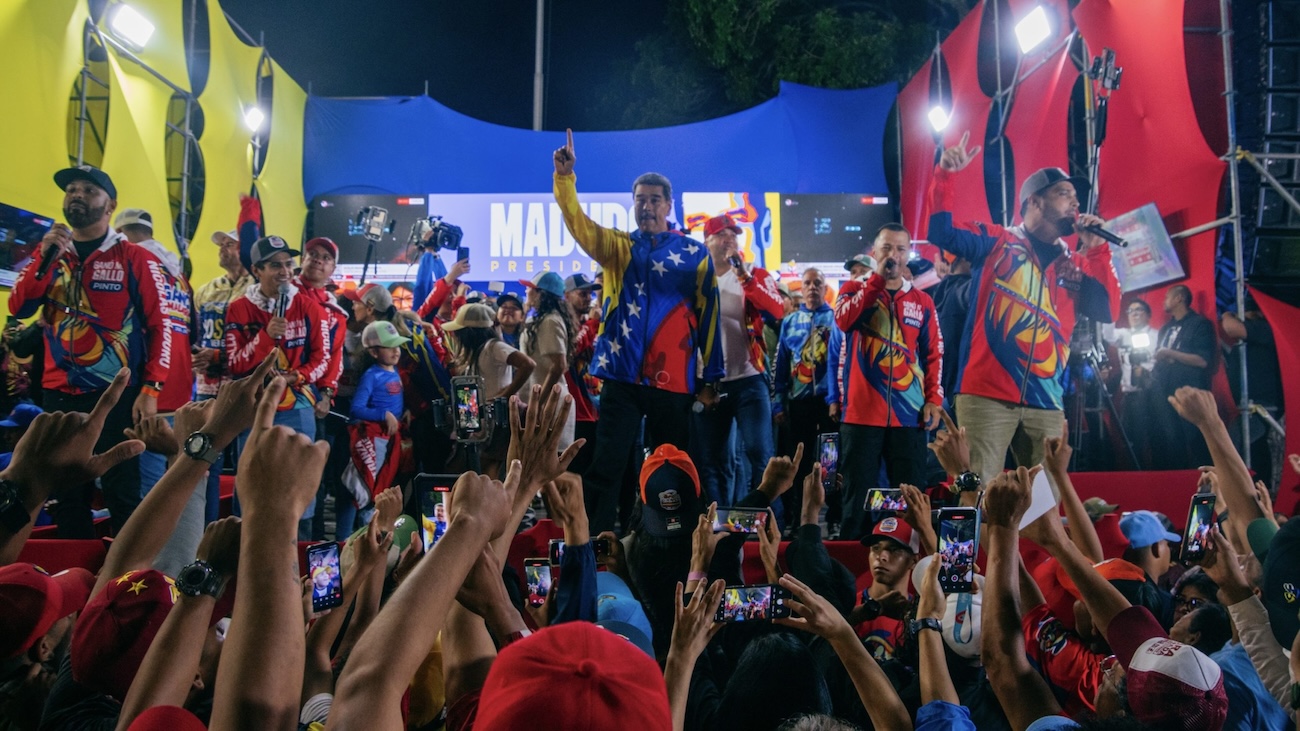
    Nicolás Maduro greets thousands of supporters outside of MIraflores Palace on July 28, 2024. Photo: Zoe Alexandra

    The reaction came after the US Attorney General increased the reward to USD 50 million for information leading to the arrest of the Venezuelan president.

    The Venezuelan government has said that the increase in the reward for the arrest of President Nicolás Maduro by US Attorney General Pam Bondi is “ridiculous” and that it is part of a “propaganda operation” and a “desperate distraction” from the internal problems facing the United States.

    Bondi published a video on August 7, announcing that the US Department of Justice and Department of State are offering USD 50 million for “information leading to the arrest of Nicolás Maduro”.

    This is not the first time the US government has tried to pressure the Bolivarian government in this way. In 2020, the US Department of Justice offered USD 15 million for Maduro’s arrest. The accusations were based on alleged acts of “narco-terrorism” by the Venezuelan government.

    According to the US government, Maduro allegedly collaborated with the Revolutionary Armed Forces of Colombia (FARC) “to use cocaine as a weapon to ‘flood’ the United States”.

    During the Biden administration, this figure was increased to USD 25 million (the same amount offered for the capture of Osama Bin Laden after the attacks of September 11, 2011).

    This time, Washington is doubling the “bet” to USD 50 million. According to the Trump administration, Maduro is one of the world’s most prominent drug traffickers, as he allegedly works closely with the criminal gangs the Sinaloa Cartel, the Tren de Aragua, and the Cartel de Los Soles. 

    “Under President Trump’s leadership, Maduro will not escape justice, and he will be held accountable for his despicable crimes,” said US Attorney General Pamela Bondi in a video. Bondi accused Maduro of using Foreign Terrorist Organizations (FTO) Tren de Aragua, Sinaloa Cartel, and the Cartel de Los Soles to “to bring deadly drugs and violence into our country”.

    For his part, Venezuelan Foreign Minister Yván Gil said the accusations are nothing more than a media show aimed at satisfying Trump’s most extremist supporters.

    “Pamela Bondi’s pathetic ‘reward’ is the most ridiculous smokescreen we have ever seen. While we dismantle the terrorist plots orchestrated from your country, this lady comes out with a media circus to please Venezuela’s defeated far right,” Gil affirmed in response to Bondi’s statements.

    According to Caracas, the accusations have no real basis and are part of a smear campaign against the Venezuelan government, in addition to the sanctions and economic and trade blockades imposed by the United States on Venezuela.

    Maduro also reacted to Bondi’s accusations, describing them as part of a “fascist conspiracy” to destabilize his government: “Colombian drug trafficking linked to [ex-President Álvaro] Uribe, criminal gangs and recycled criminals that still exist in the country, and the fascist conspiracy financed by the United States, are a disastrous equation against Venezuela.”

    The Cuban government also rejected the decision to increase the reward for Maduro’s “head”. The country’s Foreign Minister, Bruno Rodríguez, posted on X: “We condemn the fraudulent reward announced by the US government against the legitimate President of Venezuela, Nicolás Maduro, which constitutes a new act of aggression against that sister nation. The US government lacks the legal and moral authority to take such a measure.”

    Original article by Pablo Meriguet republished from peoples dispatch under a Creative Commons Attribution-ShareAlike 4.0 (CC BY-SA) license.

  • 12 countries commit to arms embargo on Israel to stop its attacks on Gaza

    Spread the love

    Original article by Pablo Meriguet republished from peoples dispatch under a Creative Commons Attribution-ShareAlike 4.0 (CC BY-SA) license.

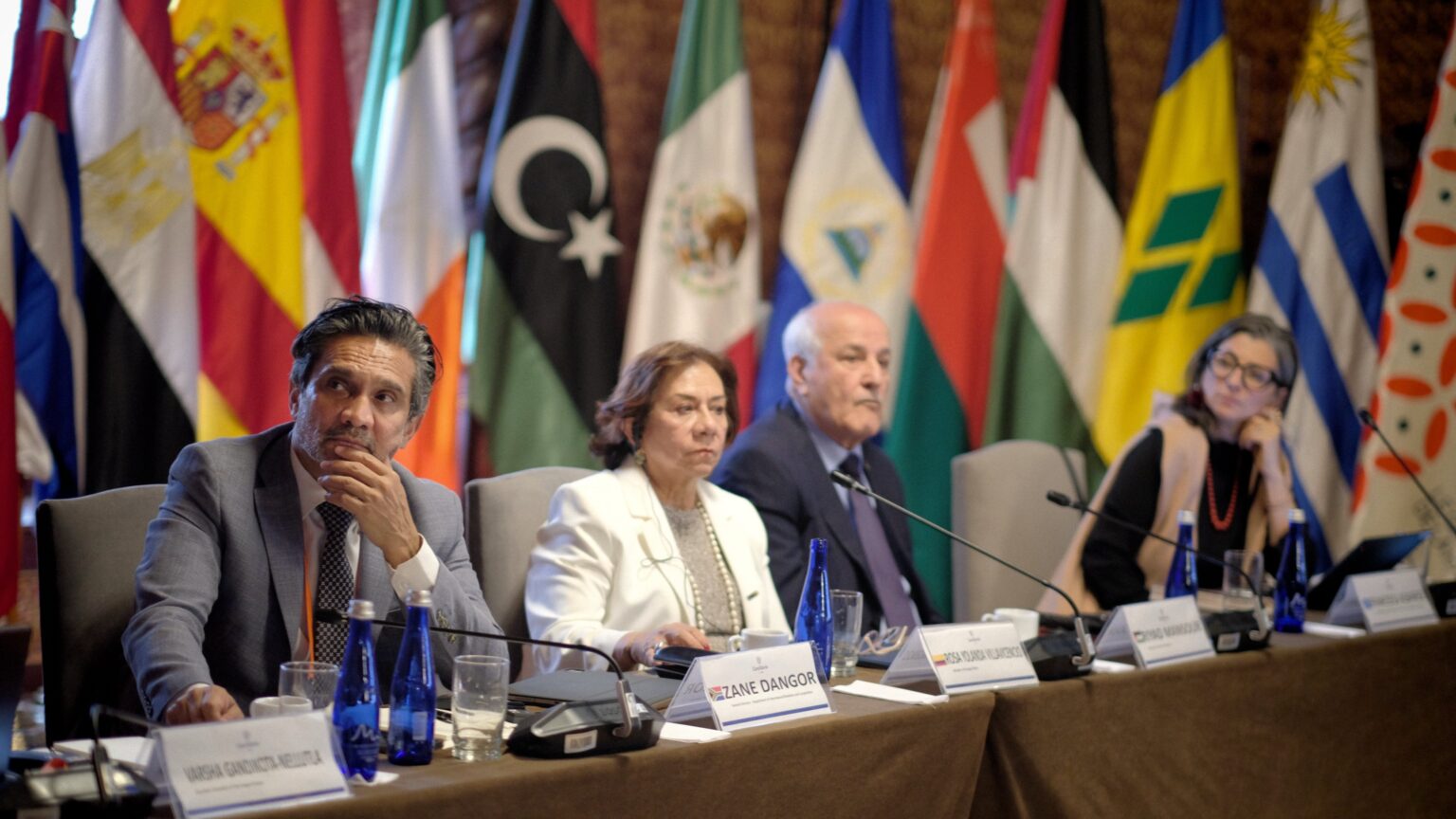
    Hague Group Summit in Bogotá, Colombia. Photo: Abby Martin

    In the final document, the signatory countries commit, among other things, to cease arms trade with Israel, review public contracts with that country, and seek accountability for war crimes.

    Countries of the Global South have expressed their solidarity with the Palestinian people at the Emergency Ministerial Conference on Palestine organized by The Hague Group, which took place on July 15 and 16 in Bogotá, Colombia. The multilateral meeting was attended by representatives from Algeria, Bangladesh, Botswana, Brazil, Chile, China, Djibouti, Egypt, Slovenia, Spain, Honduras, Indonesia, Iraq, Ireland, Lebanon, Libya, Malaysia, Mexico, Namibia, Nicaragua, Norway, Oman, Pakistan, Palestine, Qatar, Saint Vincent and the Grenadines, South Africa, Turkey, Uruguay, and Venezuela.

    Regarding the meeting, Colombia’s deputy secretary of state, Mauricio Jaramillo, said: “This conference is being convened by the Hague Group, but it is not an exclusive meeting of this group. Given the urgency of what is happening in the occupied territories, especially in Gaza, where today, for example, we have passed the threshold of 58,000 fatalities, we must commit ourselves to action.”

    The conference, which was organized by the governments of Colombia and South Africa and attended by 30 countries, agreed that: “The era of impunity must end – and that international law must be enforced without fear or favor through immediate domestic policies and legislation – along with a unified call for an immediate ceasefire.”

    The agreements

    According to an official press release, the meeting laid out several measures to stop the genocide in Gaza:

    1. Prevent the provision or transfer of arms, munitions, military fuel, related military equipment, and dual-use items to Israel.
    2. Prevent the transit, docking, and servicing of vessels at any port … in all cases where there is a clear risk of the vessel being used to carry arms, munitions, military fuel, related military equipment, and dual-use items to Israel.
    3. Prevent the carriage of arms, munitions, military fuel, related military equipment, and dual-use items to Israel on vessels bearing our flag … and ensure full accountability, including de-flagging, for non-compliance with this prohibition.
    4. Commence an urgent review of all public contracts to prevent public institutions and funds from supporting Israel’s illegal occupation of the Palestinian Territory and entrenching its unlawful presence.
    5. Comply with obligations to ensure accountability for the most serious crimes under international law, through robust, impartial, and independent investigations and prosecutions at national or international levels, to ensure justice for all victims and the prevention of future crimes.
    6. Support universal jurisdiction mandates, as and where applicable in national legal frameworks and judiciaries, to ensure justice for victims of international crimes committed in the Occupied Palestinian Territory.

    Although 30 countries attended the meeting, only 12 countries committed to immediately complying with the agreements outlined in the final declaration: Bolivia, Cuba, Colombia, Indonesia, Iraq, Libya, Malaysia, Namibia, Nicaragua, Oman, Saint Vincent and the Grenadines, and South Africa. The others expected to join them by September 20, 2025 – the date of the 80th UN General Assembly. The group will also be consulting various other states on an ongoing basis for participation in the measures against Israel.

    Colombia’s President Gustavo Petro stated: “We came to Bogotá to make history — and we did … Together, we have begun the work of ending the era of impunity. These measures show that we will no longer allow international law to be treated as optional, or Palestinian life as disposable.”

    “What we have achieved here is a collective affirmation that no state is above the law … The Hague Group was born to advance international law in an era of impunity. The measures adopted in Bogotá show that we are serious — and that coordinated state action is possible,” said South African Secretary of State Ronald Lamola.

    The final agreement is historic as it is the first multilateral agreement that seeks to influence the Israeli government’s actions in its offensive against Gaza. In this sense, it is the first time that several countries have challenged the apparent immunity of the Israeli state in its actions in Gaza, which could have unpredictable diplomatic repercussions. It could also become the starting point for other countries to demand an end to the violence in Palestine jointly.

    Original article by Pablo Meriguet republished from peoples dispatch under a Creative Commons Attribution-ShareAlike 4.0 (CC BY-SA) license.

  • Global South leaders join Victory Day events in Moscow as Europe stays away

    Spread the love

    Original article by Ana Vračar republished from peoples dispatch under a Creative Commons Attribution-ShareAlike 4.0 (CC BY-SA) license.

    Marking the 80th anniversary of Nazi Germany’s defeat, Global South leaders are gathering in Moscow, while EU remains absent

    Source: Ministry of Foreign Affairs of Russia/X

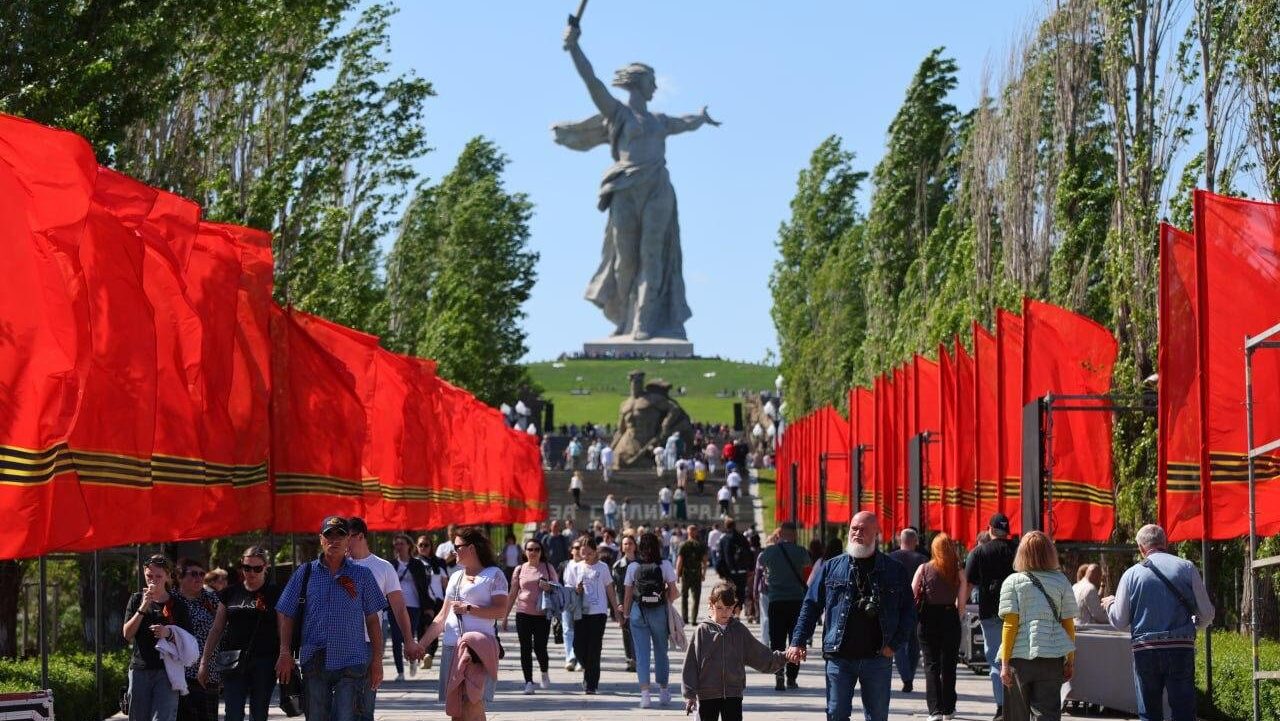
    Early high-level events marking the 80th anniversary of the defeat of Nazi Germany are underway in Russia, where the traditional Victory Parade on Friday, May 9, will welcome a host of world leaders and other guests to commemorate the Red Army’s role in the liberation of Europe. According to Russian authorities, 29 countries have confirmed their leaders will attend the event, including Brazil, Burkina Faso, China, Cuba, Venezuela, and Vietnam.

    Victory Day, falling on May 8 in most of Europe and on May 9 in Russia due to time zone differences, marks the official surrender of Nazi Germany in 1945. Although the date holds deep historical significance for Europe, its political leaders will be largely absent from this year’s events in Moscow. Slovakia is the only EU country to appear on the latest list of attendees, ignoring warnings from the bloc’s High Representative for Foreign Affairs, Kaja Kallas, who implied there would be ‘consequences’ for European officials participating in the event. Her threats mark the latest episode in a long-standing campaign of historical revisionism led by the EU, aimed at minimizing and obscuring the Soviet Union’s role in the liberation of Europe in World War II.

    Honoring Red Army’s role in defeating Nazi Germany

    In contrast to the EU, Global South leaders attending the events expressed their respect and acknowledged those who fought for liberation. At the beginning of his visit, Venezuelan President Nicolás Maduro stated simply: “It was the Red Army that liberated Europe.” Similarly, Chinese President Xi Jinping emphasized the importance of maintaining an accurate historical perspective on World War II and applying its lessons to the present, particularly when it comes to resisting Western domination.

    “Eighty years ago, the forces of justice around the world, including China and the Soviet Union, united in courageous battles against their common foes and defeated the overbearing fascist powers,” Xi wrote in an article for the Russian Gazette. “Eighty years later today, however, unilateralism, hegemonism, bullying, and coercive practices are severely undermining our world.”

    Despite efforts by Western governments to demonize the Red Army, many around the world still remember the USSR’s decisive role in the antifascist struggle, the immense sacrifices it made during the war, and the international solidarity it championed. “The peoples of the world have not forgotten who, in 1945, liberated them from Nazi enslavement and destruction,” stated Gennady Zyuganov, leader of the Communist Party of the Russian Federation, ahead of Victory Day.

    “Celebrating the 80th anniversary of the great victory over fascism, we must remember the origins of Nazism,” he added. “Imperialism, which gave birth to that plague, is not a thing of the past. It is no coincidence that today our former allies in the anti-Hitler coalition are erasing us from the list of victorious countries.”

    Left movements reclaim antifascist legacy for today’s struggles

    Although communist groups across Europe circulated statements honoring the Red Army’s role in World War II, some also voiced concern about the context of this year’s central commemoration in Russia – just as much as the revisionism of core EU countries

    Read more: Italy marks 80 years since liberation with calls against genocide and militarism

    It is in the spirit of reclaiming the resistance, that left and progressive groups across the region are organizing their own events. In Belgium, for example, activists have rallied around long-standing demands to re-establish May 8 as a public holiday. In former Yugoslav countries, actions will affirm the relevance of antifascism today, particularly in connection with solidarity for Palestine and mobilizations against genocide. All these events are not limited to remembrance: they aim to resist efforts to rewrite history in service of the Global North’s current political agenda.

    Original article by Ana Vračar republished from peoples dispatch under a Creative Commons Attribution-ShareAlike 4.0 (CC BY-SA) license.